Skil PWR CORE 20 Brushless Drill Review: Compact Power on a Budget
 Abdulwahab Suleiman·August 2, 2026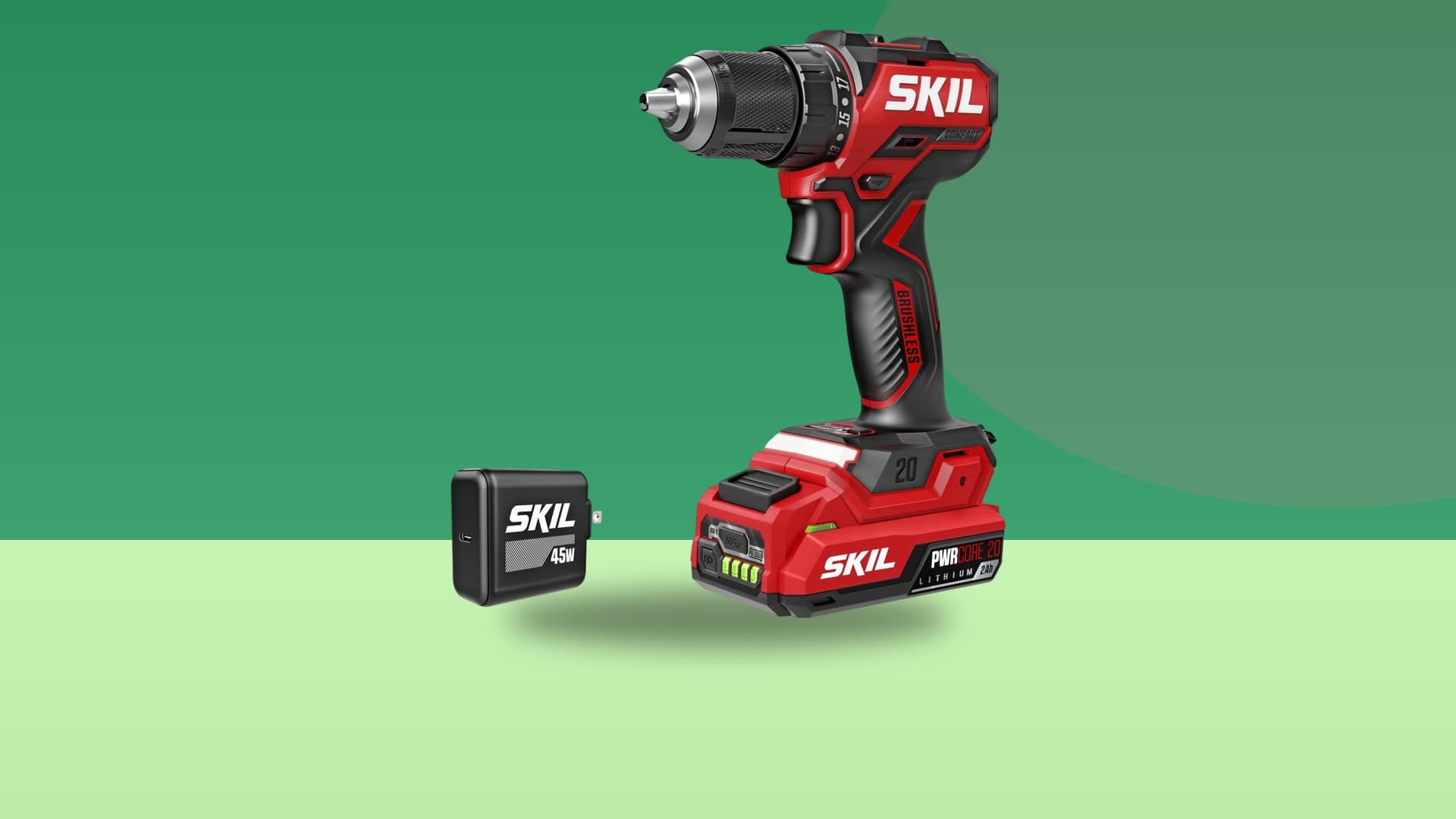
Skil PWR CORE 20 Brushless Drill Review: The Short Version
The Skil PWR CORE 20 brushless drill driver has a simple pitch: give a homeowner most of what a mid-tier name-brand drill does, in a lighter body, for meaningfully less money. After digging through Skil's published specs and independent bench data, that pitch mostly holds up. This is a genuinely compact, genuinely light drill with a real brushless motor and one of the more useful battery designs in the budget tier. It is not the drill you buy to bore endless holes through framing lumber all day, and the "up to 450 in-lbs" number on the box deserves a footnote. But for hanging shelves, assembling furniture, driving deck screws, and the hundred small jobs a home actually generates, it is an easy drill to recommend.
If you are still deciding between brands and price points, this review pairs with our roundup of the best cordless drills of 2026, which puts the Skil next to picks from DEWALT, Milwaukee, and BLACK+DECKER.
Where to Buy
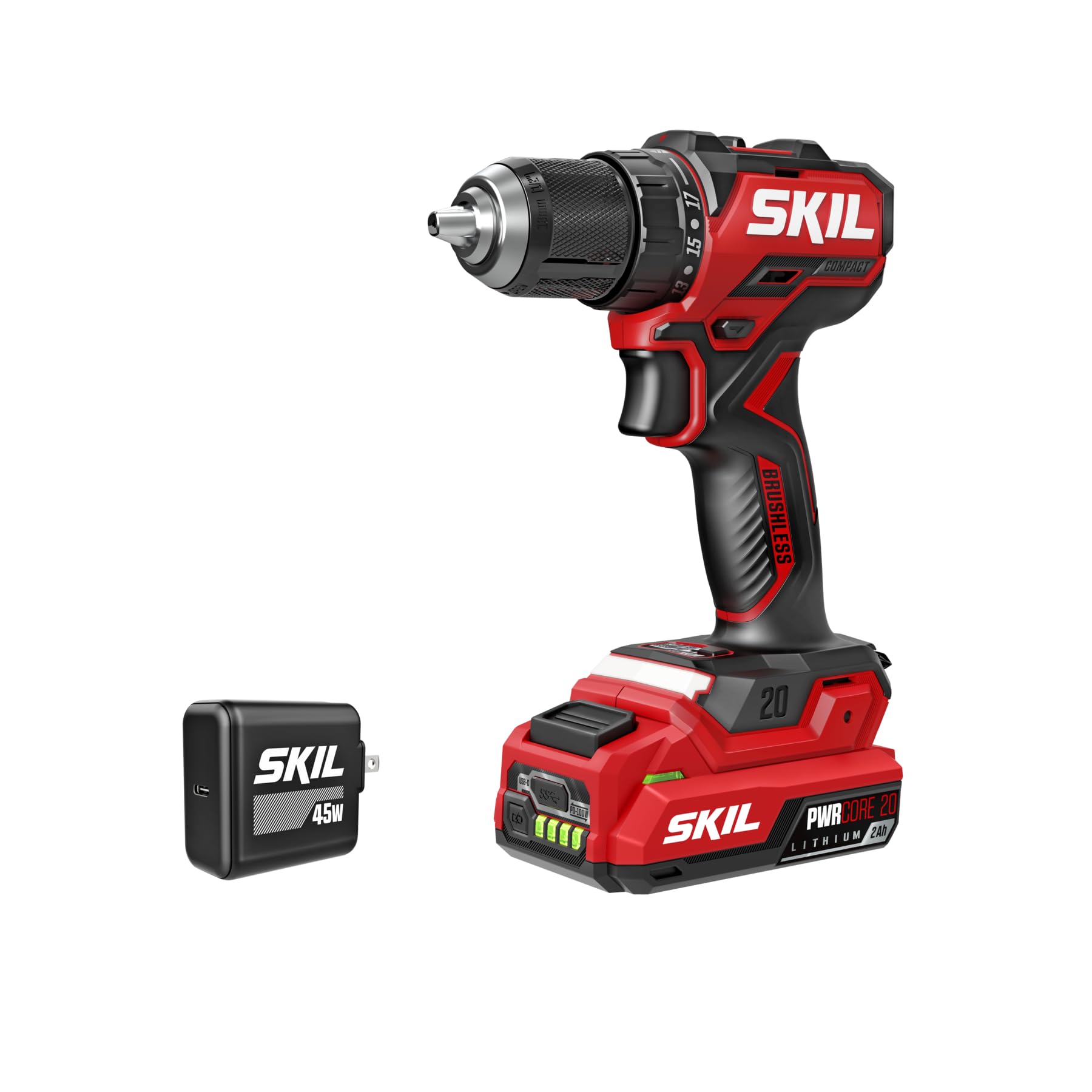
The PWR CORE 20 kit ships with a brushless drill, a 2.0Ah battery, and a USB-C PWR JUMP charger.
Skil PWR CORE 20 Brushless Drill Specs
Skil sells this drill under the PWR CORE 20 line (model DL529302), and the headline is the "digital brushless motor." A brushless motor swaps the carbon brushes of an older-style motor for electronic commutation, which usually means better efficiency, less heat, and longer tool life. If that trade-off is new to you, our explainer on brushless vs brushed cordless drills walks through what actually changes for the user.
Here is what the manufacturer publishes for this kit, per Skil's official product page:
- Motor: digital brushless
- No-load speed: 0-480 rpm (low gear) / 0-1800 rpm (high gear)
- Clutch: 17+1 settings (17 torque steps plus a drill mode)
- Chuck: 1/2 in. keyless metal chuck
- Battery: 20V, 2.0Ah lithium with PWR ASSIST mobile (USB-C) charging
- Charger: automatic PWR JUMP charger
- Light: LED with pre-light and after-glow
- Bare weight: 2.23 lbs (1.01 kg), before the battery
Speed, chuck, and clutch settings
The two-speed gearbox is the practical part. Low gear tops out around 480 rpm and trades speed for grunt, which is where you want to be for driving fasteners and running larger bits. High gear runs up to 1,800 rpm for clean, fast drilling in wood and metal. The all-metal 1/2-inch keyless chuck is the size you want on a primary drill because it swallows larger bits than the 3/8-inch chucks common on cheaper models, and metal jaws hold rounds shanks more reliably than plastic. Seventeen clutch positions give you enough resolution to sink a screw flush in soft pine without stripping it, then step up for harder stock.
Weight and size: this is the real selling point
Numbers on a spec sheet do not always translate to a tool you enjoy using, but weight does. Pro Tool Reviews measured this Skil at 3.01 lbs with its battery installed, which made it the second-lightest compact drill in a field of the models they tested, and clocked its footprint at 7.4 inches tall and 7.1 inches long (Pro Tool Reviews). That combination of low weight and short head length is exactly what you notice when you are working overhead, reaching into a cabinet, or driving screws for an hour. It is a drill your wrist forgives.
Performance and Torque: How Much Can It Actually Handle?
This is where an honest review earns its keep, because the torque story has two numbers and they are far apart.
Retailer listings, including Lowe's, advertise the PWR CORE 20 as delivering up to 450 in-lbs of torque. That is a peak, stall-style figure, and it is the kind of rated maximum most brands quote. When Pro Tool Reviews ran the same drill through their standardized rundown test, they recorded 160.4 in-lbs, which placed it seventh out of the fifteen drills in that comparison and fourth within the compact class of their larger 50-plus drill shootout (Pro Tool Reviews). Those two numbers are not a contradiction so much as two different measurements: the rated figure is a brief peak, while the tested figure reflects sustained, repeatable output under a controlled load. The takeaway is to trust the independent bench result for real-world expectations, not the box.
In practical terms, the same testing put the Skil at 1,212 rpm while boring with a 3/4-inch auger bit and 358 rpm with a demanding 1-1/2-inch self-feed bit. Those speeds under load say the drill has enough muscle for the jobs a homeowner throws at it, and enough restraint that you would want a dedicated impact driver or a beefier 20V-max drill if your day job is framing.
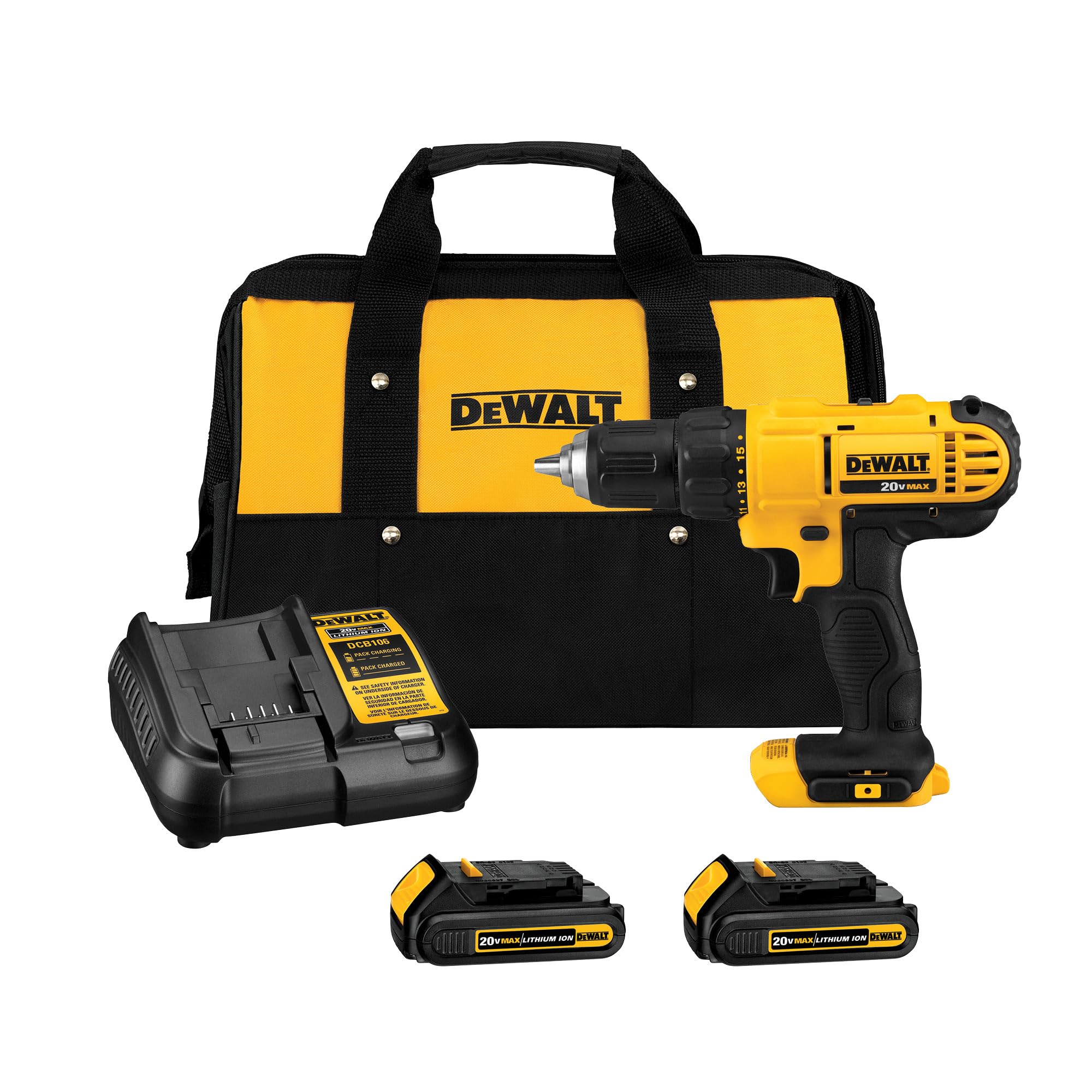
DEWALT's DCD771C2 is the classic budget-tier benchmark the Skil competes against.
Skil PWR CORE 20 vs DEWALT DCD771C2
The most common cross-shop for this Skil is DEWALT's DCD771C2, the long-running 20V MAX compact kit that sits in the same price neighborhood. It is worth a close look, and we cover it in depth in our DEWALT DCD771C2 review. Here is how the two line up on the specs that matter:
Spec | Skil PWR CORE 20 (DL529302) | DEWALT DCD771C2
Motor | Brushless | Brushed
High-gear speed | 0-1,800 rpm | 0-1,500 rpm
Clutch settings | 17+1 | 16
Chuck | 1/2 in. metal, keyless | 1/2 in. ratcheting
Measured torque (Pro Tool Reviews) | ~160 in-lbs | ~221 in-lbs
Battery | 2.0Ah, USB-C rechargeable | Two 1.3Ah
Warranty | 5-year tool | 3-year
The trade is clear. DEWALT's brushed motor still out-muscled the Skil on the bench, pulling roughly 221 in-lbs in the same style of test (Pro Tool Reviews), and it ships with two batteries so one is always charging. The DCD771C2's specs, including its 300 unit-watts-out rating and 0-1,500 rpm top speed, are confirmed on DEWALT's spec data as tracked by Consumer Reports. The Skil answers with a brushless motor, a faster high gear, a longer five-year tool warranty, and a battery that doubles as a phone charger. If maximum drilling power is the priority, DEWALT edges it. If you value lighter weight, brushless efficiency, and the USB-C battery trick, the Skil makes a strong case at a similar price.
The Battery Story: PWR CORE 20, PWR ASSIST, and PWR JUMP
Skil put more thought into the battery than most budget brands. The included 2.0Ah PWR CORE 20 pack carries a USB-C port, which Skil brands as PWR ASSIST, so you can top up a phone from the battery or recharge the battery itself over USB-C. The kit's automatic PWR JUMP charger is designed to push a quick boost of runtime into a low pack in minutes, which is handy when you realize mid-project that you are almost out. All of this is documented on Skil's product page.
Two caveats keep this honest. First, a single 2.0Ah battery means there is no spare in the box, unlike DEWALT's two-pack, so heavy users will want to buy a second. Second, PWR CORE 20 is Skil's own battery platform, so the packs are not interchangeable with other brands' tools. If you already own DEWALT or Milwaukee batteries, factor in that you are starting a new platform.
Who Should Buy the Skil PWR CORE 20?
This drill is built for the homeowner and weekend DIYer, and it is honest about that. If your project list is shelves, flat-pack furniture, curtain rods, light deck and fence work, and the occasional foray into a stud, the Skil has the torque, the speed range, and the clutch control to do all of it without wearing out your arm. The five-year tool warranty is unusually generous for the price and signals real confidence in the brushless drivetrain.
Look elsewhere if you are a tradesperson or a serious remodeler who needs to bore large holes repeatedly or wants to standardize on a battery platform you already own. In that case a higher-output 20V-max drill, or a brand you are already invested in, is the smarter buy. Budget shoppers weighing other value kits, such as BLACK+DECKER's 20V MAX bundles, should compare on measured torque and battery count rather than the marketing figures.
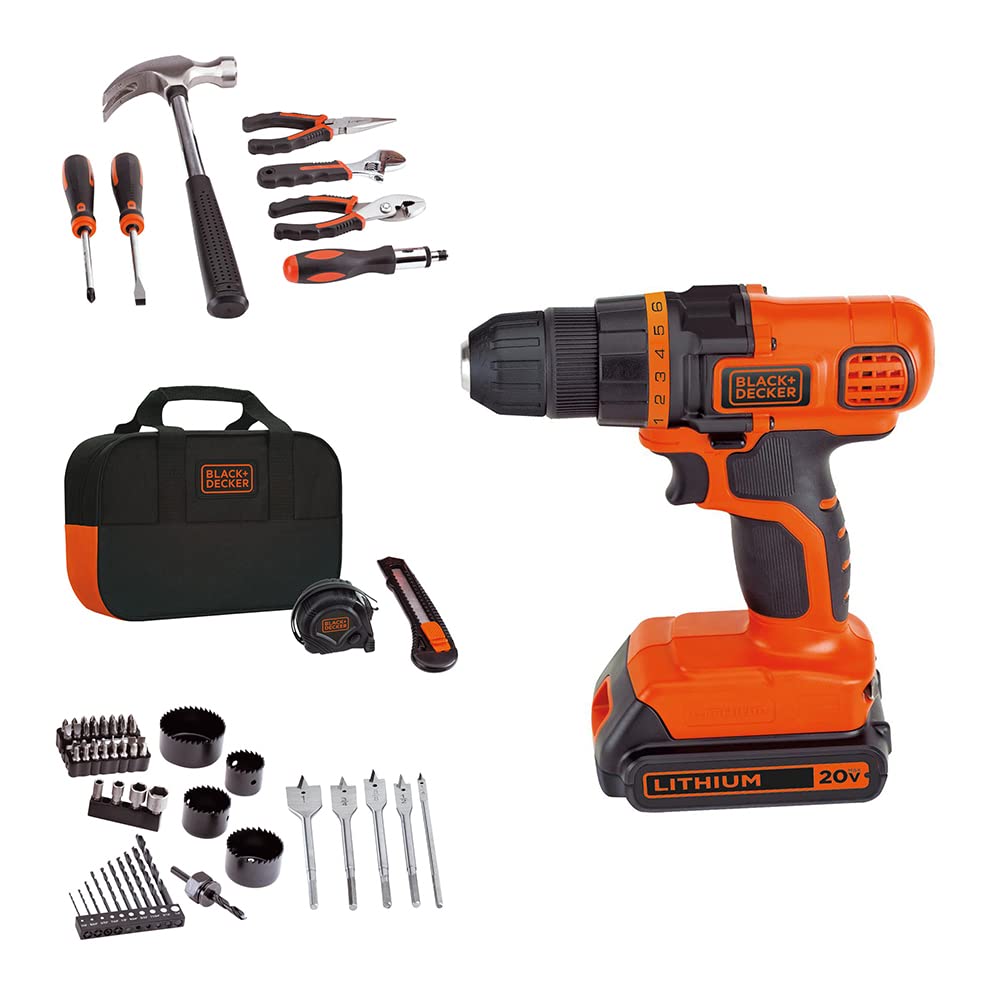
Budget shoppers often cross-shop the Skil against value bundles like BLACK+DECKER's 20V MAX kits.
How We Research
We do not rely on a single source for any claim in this review. Every specification here is anchored to the manufacturer's official documentation, then cross-checked against independent testing and third-party technical data. For the Skil PWR CORE 20, that meant three layers of evidence: Skil's published specs for model DL529302, standardized bench measurements from Pro Tool Reviews' drill testing, and retailer product data for pricing and configuration. Where the manufacturer's rated number and the independent bench number disagreed, as they did on torque, we reported both and explained why they differ rather than quoting the more flattering figure. That cross-checked, three-layer method is how we keep a research-based review as trustworthy as a hands-on one, and it is why we flag the gap between "up to 450 in-lbs" on the box and roughly 160 in-lbs on the bench.
Bottom Line
The Skil PWR CORE 20 brushless drill is one of the better value picks in the compact class. It is light, well balanced, and backed by a five-year warranty, and its brushless motor and USB-C battery are features you usually pay more to get. Just calibrate your expectations to the tested torque, not the rated peak: this is a homeowner's drill, and a very good one, rather than a jobsite workhorse. For most people building a first real cordless kit, it is money well spent. To see how it ranks against every other pick, head back to our best cordless drills of 2026 guide.
Where to Buy
Specifications
- Motor
- Digital brushless
- No-load speed
- 0-480 / 0-1,800 rpm (2 speeds)
- Measured torque (Pro Tool Reviews)
- ~160 in-lbs
- Chuck
- 1/2 in. keyless metal
- Clutch settings
- 17 + drill mode
- Battery
- 20V 2.0Ah, USB-C rechargeable
- Weight with battery
- 3.01 lbs
- Warranty
- 5-year tool
Related Posts