Brushless vs Brushed Cordless Drill: Which Should You Buy?
 Abdulwahab Suleiman·August 1, 2026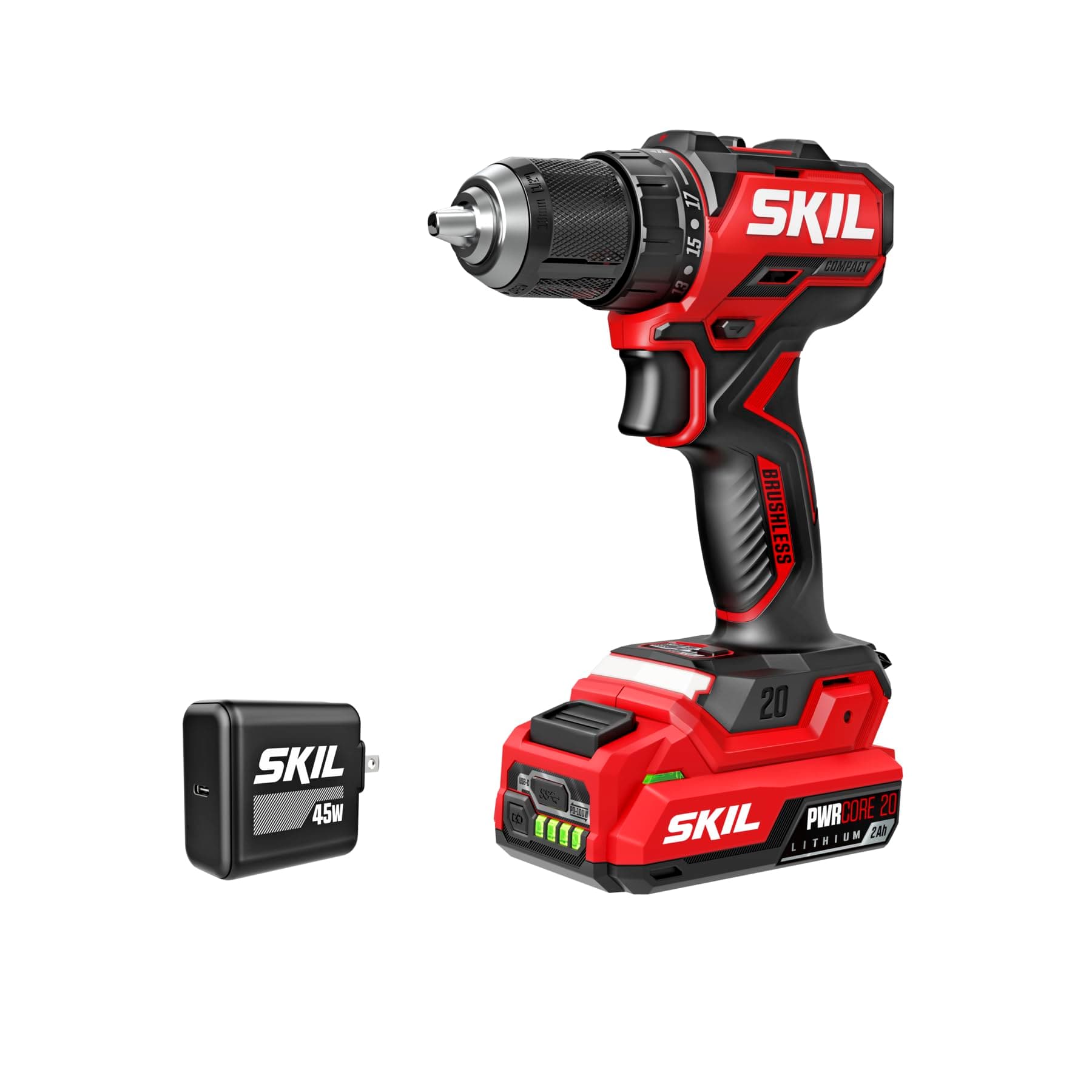
The One-Line Answer, Then the Nuance
If you reach for a drill more than a handful of times a year, a brushless cordless drill is the better long-term buy: it squeezes more work out of every battery charge, runs cooler, and lasts longer because there are no carbon brushes to wear down. If you only assemble the occasional flat-pack shelf or hang a picture twice a season, a brushed drill will do the job for less money and probably outlive your interest in it.
That is the short version. But "brushless vs brushed cordless drill" is one of those questions where the honest answer is it depends on how you use it, and the marketing on the box rarely explains why one motor commands a higher price than the other. Below, we translate the engineering into plain shopping advice: what the two motor types actually are, how much extra runtime and durability you really get, when the premium is worth paying, and when it is money you do not need to spend.
If you already know you want the technology and just need a shortlist, jump to our roundup of the best cordless drills for 2026. Otherwise, read on.
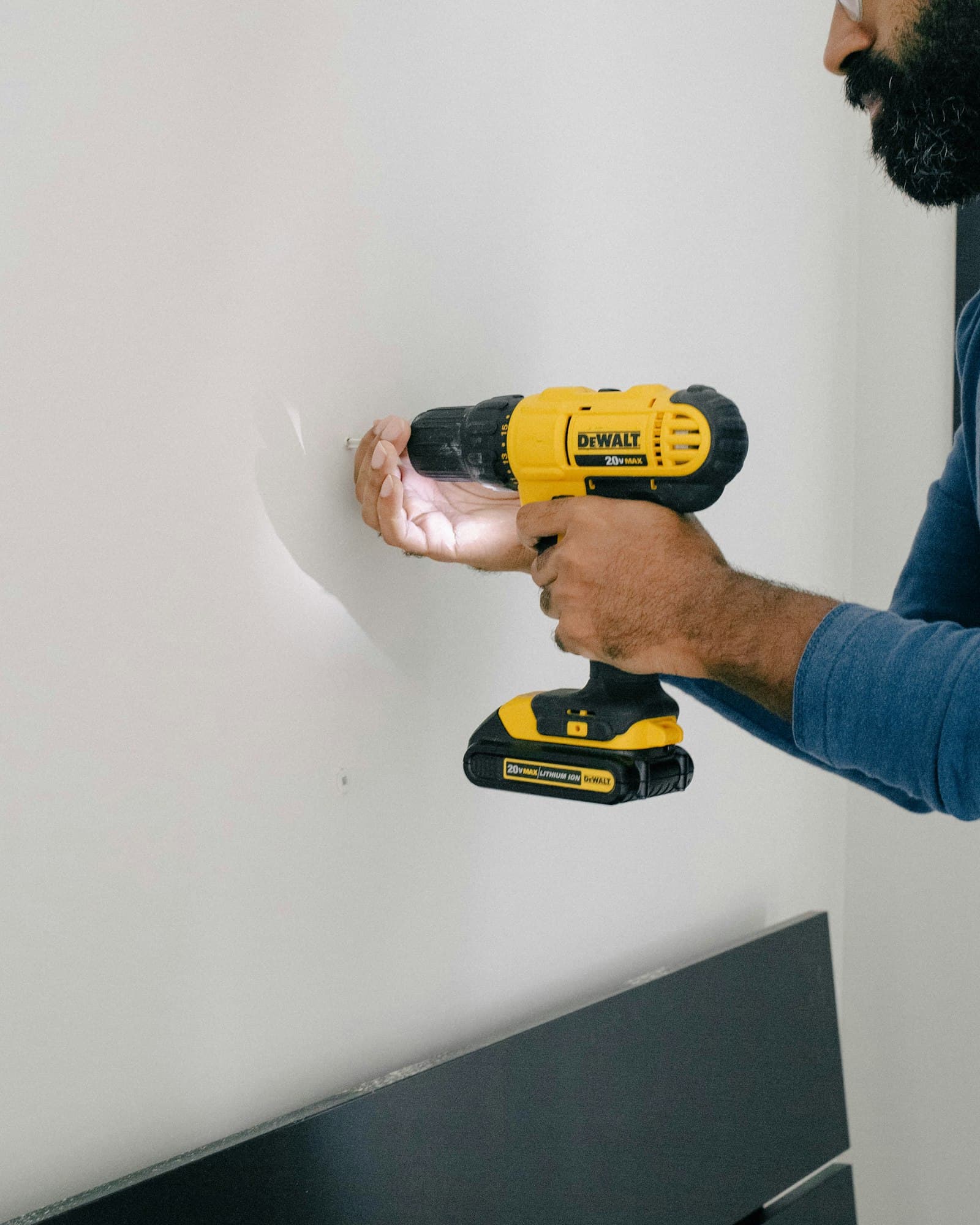
A modern brushless drill driver kit. The "digital" motor is the headline upgrade over older brushed designs.
What Is the Difference Between Brushless and Brushed Drills?
Both motor types do the same fundamental thing: they turn battery power into rotation that spins your chuck. The difference is in how they keep that rotation going, and that single design choice ripples out into runtime, heat, durability, and price.
How a Brushed Motor Works
A brushed motor is the older, simpler design that has powered cordless tools for decades. Inside, a set of spring-loaded carbon blocks called brushes press against a rotating copper ring known as the commutator. As the motor spins, the brushes physically slide across the commutator to switch the direction of electrical current at the right moments, which is what keeps the rotor turning. This mechanical switching is called commutation, and in a brushed motor it happens through direct, sliding metal-on-carbon contact, as motor engineers at ADVANCED Motion Controls describe.
The upside of that simplicity is cost. Brushed motors are cheap to manufacture, proven, and easy to repair, which is exactly why budget drills still use them. The downside is friction. Those brushes are always dragging against the commutator, and that contact generates heat, wastes energy, and slowly wears the brushes away.
How a Brushless Motor Works
A brushless motor deletes the brushes and the commutator entirely. Instead of switching current mechanically, it uses a small electronic controller to energize the motor's coils in sequence, timing each pulse to the position of the rotor. In most designs the controller reads rotor position through Hall-effect sensors and adjusts the current on the fly. The team at Pro Tool Reviews frames it well: the controller can both pull the rotor toward a coil and actively push it away, so it wrings more torque out of the same electricity.
Because nothing is physically rubbing to switch the current, a brushless motor loses far less energy to friction and heat. It is, in effect, a smarter motor that only draws the power it needs for the task in front of it, rather than gulping a constant high current the way a brushed motor tends to.
The Analogy That Makes It Click
Pro Tool Reviews compares a brushed motor to riding a bike with the brake lightly applied the whole time. You are always fighting a little drag you cannot see. A brushless motor releases that brake. Same rider, same legs, but suddenly the same effort carries you farther. That is the mental model to hold onto as we get into the numbers, because almost every practical advantage of brushless traces back to eliminating that constant, quiet friction.
Brushless vs Brushed Drill Runtime and Battery Life
For most buyers, runtime is the headline reason to consider going brushless, so it is worth being precise about the size of the gain rather than repeating vague "lasts longer" claims.
How Much Longer Does a Brushless Drill Run?
Because a brushless motor converts more of the battery's stored energy into actual turning of the chuck instead of into wasted heat, it gets more work done per charge. Editorial and manufacturer sources consistently land in the same range: brushless cordless tools deliver roughly 25 to 50 percent longer runtime than comparable brushed tools on the same battery, a figure echoed in buying-guide coverage from Do it Best and in woodworking-tool comparisons from Woodsmith.
In everyday terms, that can be the difference between cycling through three battery packs to get through a morning of deck screws with a brushed drill versus finishing the same job on two with a brushless one. If you have ever stopped mid-project to wait on a charger, you already understand why that gap matters.
Why Efficiency Drives the Runtime Gap
The runtime advantage is not marketing magic; it is efficiency, and efficiency is measurable. According to the engineering breakdown at ADVANCED Motion Controls, a typical brushed motor runs around 60 percent efficient, meaning roughly 40 percent of the energy it draws is lost, largely as heat. A slotted brushless motor climbs to about 80 percent, and premium slotless designs exceed 90 percent. Every percentage point of efficiency you gain is energy that goes into your work instead of warming up the tool, which is exactly why the battery lasts longer.
There is a second, subtler runtime benefit. A brushed motor loses power more dramatically as its battery drains, because it cannot compensate for the falling voltage. A brushless controller actively adjusts current delivery as the pack discharges, so the tool holds usable power deeper into the charge instead of going soft in the last quarter of the battery.
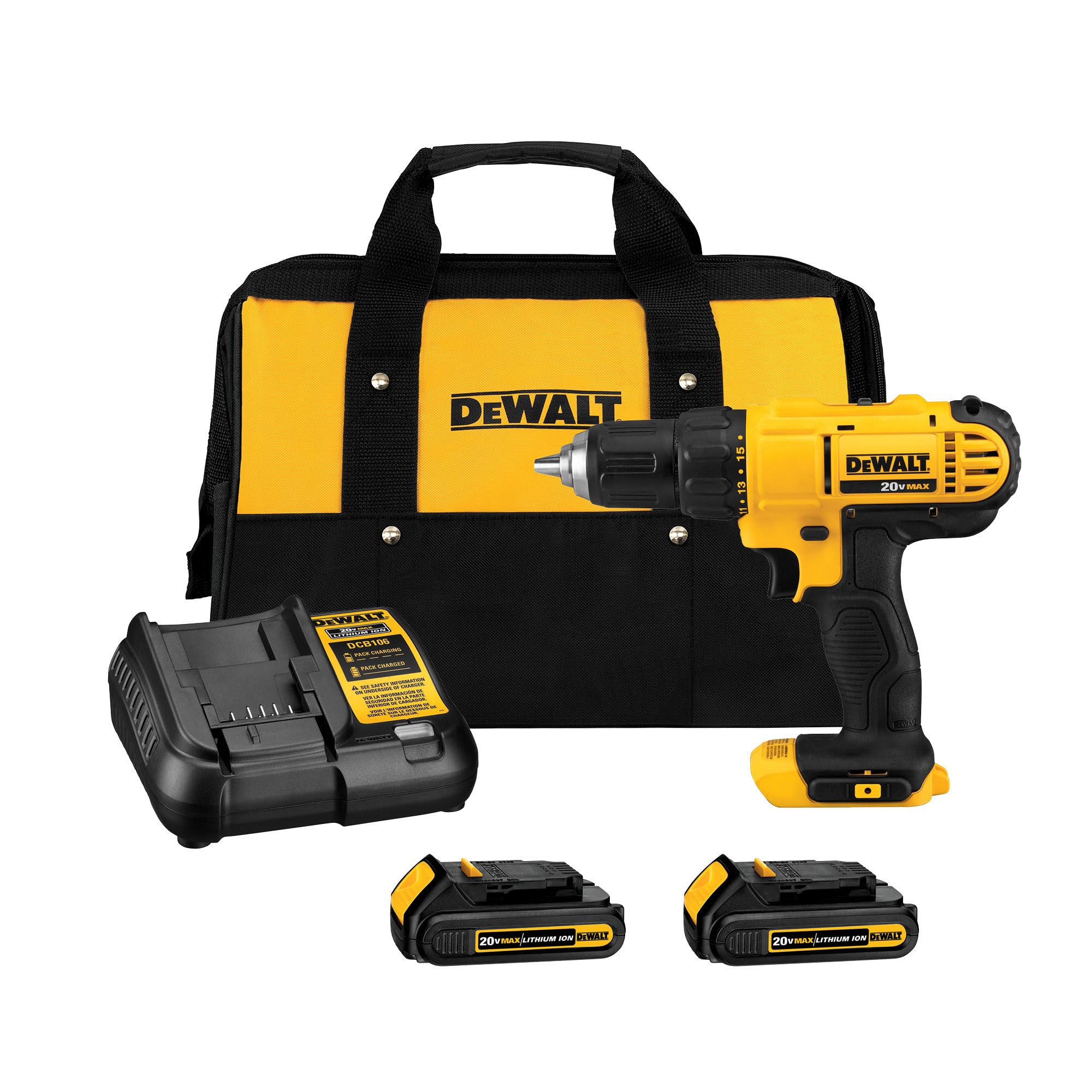
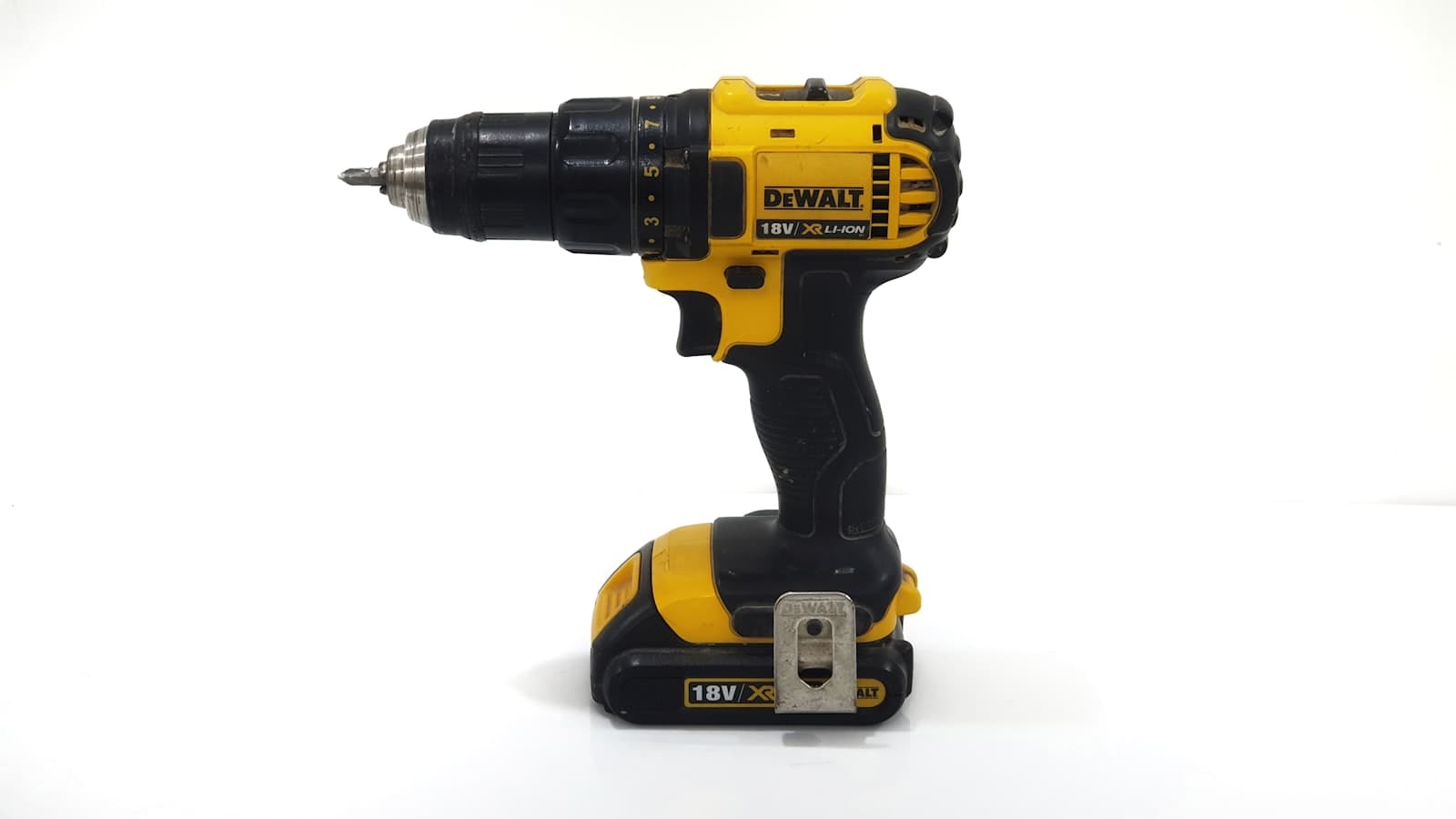
Brushed drills like DEWALT's popular DCD771C2 remain strong value picks for lighter, occasional use.
Brushless vs Brushed Drill Power and Torque
Runtime tends to get the spotlight, but the power story is just as important, and it is where the two designs feel genuinely different in the hand.
More Consistent Power Under Load
Raw torque numbers on paper do not tell the whole story, because what you feel while working is how well a drill holds its speed when the material fights back. Here the brushless controller earns its keep. Because it can sense load and modulate current in real time, a brushless drill maintains speed and torque more steadily when you bury a large bit in dense hardwood or drive a long lag screw. A brushed drill, by contrast, tends to bog down sooner as the load climbs.
For a concrete sense of what a capable brushed drill offers, DEWALT's own spec page for the DCD771C2 compact drill/driver lists 300 unit watts out of power, a two-speed transmission of 0 to 450 and 0 to 1,500 rpm, and 16 clutch settings. That is plenty for the vast majority of home tasks. A brushless unit in the same class, such as the brushless motor in the Skil PWR CORE 20 review we cover in this cluster, does not necessarily win on a single peak-torque figure so much as on how gracefully it delivers and sustains that power across a full workday.
Smaller, Lighter, Same Punch
Efficiency also lets engineers do more with less. Because a brushless motor wastes less energy as heat, it can produce comparable power in a smaller, lighter package. That is why many of the most compact drills that still drive serious fasteners are brushless: the technology lets the tool shed bulk without giving up capability, which matters when you are working overhead or in a cramped cabinet.
Brushless Drill Durability and Maintenance
If runtime is the reason enthusiasts upgrade, durability is the reason the upgrade often pays for itself. This is the least glamorous part of the comparison and arguably the most consequential.
Carbon Brushes Wear Out; Brushless Motors Do Not Have Them
The carbon brushes in a brushed motor are, by design, a consumable. They are in constant sliding contact, so they erode with use and eventually need replacing. As the brushes wear and the motor spins faster, the electrical contact degrades and wear accelerates, which is the classic failure mode ADVANCED Motion Controls attributes to brushed designs. On a cheap drill, many owners simply retire the whole tool when the brushes go rather than service it.
A brushless motor has no brushes and no commutator to wear, so it sidesteps that entire failure path. Pro Tool Reviews notes plainly that brushless motors do not require the periodic brush replacement that brushed motors do; maintenance drops to little more than the bearings.
The Lifespan Gap Is Large
The durability difference is not marginal. ADVANCED Motion Controls pegs a brushed motor's operating life at roughly 3,000 hours at full duty, versus more than 10,000 hours for a brushless motor. Broader industry figures from IBT Industrial Solutions put brushed motor life anywhere from 1,000 to 8,000 operating hours and brushless motors between 10,000 and 100,000 hours. However you slice the ranges, a brushless motor is built to outlast a brushed one by a wide margin, which is a meaningful part of the value math for anyone who uses a drill regularly.
Heat Is the Hidden Villain
The reason both efficiency and lifespan favor brushless comes back to one culprit: heat. Friction between the brushes and commutator generates heat, heat wastes energy, and sustained heat is hard on any motor's components. A brushless motor runs cooler because it removes that friction source, and a cooler motor is a longer-lived motor. When you read that brushless tools are "more durable," running cooler is a big part of why.
Are Brushless Drills Worth It?
Here is where the engineering meets your wallet. The honest answer depends less on which motor is "better" in the abstract and more on how often you will actually pull the trigger.
The Price Premium, and Why It Keeps Shrinking
Brushless drills cost more, primarily because the electronic controller and sensors add parts and complexity a brushed motor simply does not have. For years that premium was steep. It has narrowed considerably as the technology matured and volumes grew, a trend both Woodsmith and Do it Best note in their buying guidance, which is exactly why brushless is now common in mid-priced kits rather than reserved for flagship tools. Always check the current spread between a brand's brushed and brushless drill before deciding, because the gap in 2026 is often smaller than shoppers expect. Prices and availability change often, so treat any figure you see as a snapshot rather than a fixed rule.
When the Brushless Premium Pays Off
Choose brushless if you recognize yourself in any of these:
- You use a drill regularly, not just for rare one-off chores.
- You take on longer or heavier projects: decking, framing, cabinetry, repeated driving of large fasteners.
- You value runtime and hate stopping to swap or charge batteries mid-task.
- You want a tool that will still be going strong in a decade, and you are buying into a battery platform you plan to grow.
For that user, the extra runtime, sustained power, and long lifespan make the higher sticker price a sound investment rather than an indulgence. The brushless drivers we highlight in the best cordless drills for 2026 are aimed squarely at this buyer.
When to Choose a Brushed Cordless Drill
It would be easy to end here and declare brushless the winner across the board, but that would be dishonest advice, and plenty of shoppers are genuinely better served by a brushed drill.
Occasional Use Is the Sweet Spot for Brushed
If your drilling life amounts to assembling flat-pack furniture a couple of times a year, hanging pictures, or the odd small repair, a brushed drill is perfectly adequate and the more economical choice. Do it Best and Woodsmith both make the same point in different words: for light, infrequent household tasks, a brushed drill gets the job done, and paying the brushless premium buys you capabilities you will rarely tap. There is no prize for owning a 100,000-hour motor if you use it for twenty minutes a quarter.
Where Brushed Still Makes Sense
- You are a casual homeowner with an occasional to-do list rather than an ongoing project pipeline.
- You want the lowest up-front cost to get a capable tool in the drawer.
- You are buying a first drill or a gift for someone who is unsure how much they will use it.
- The specific brushed kit you want bundles extra batteries or accessories that offset the runtime gap for your light workload.
A well-regarded budget kit such as a BLACK+DECKER 20V MAX brushed drill bundled with a home tool set covers the essentials without overspending; you can compare it against pricier options in our best cordless drills for 2026 roundup. The goal is to match the tool to the work, not to buy the most advanced motor for its own sake.
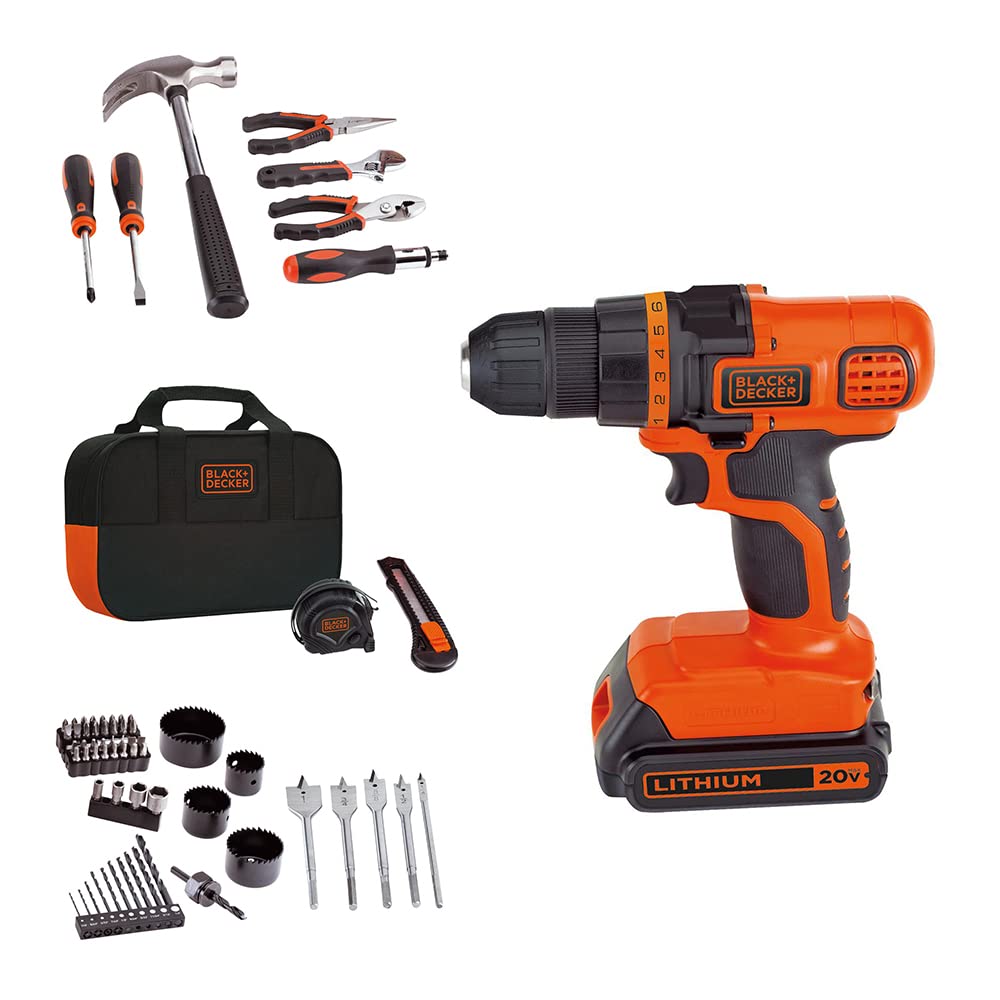
For occasional DIY, a brushed drill bundled with bits and accessories is often the smarter spend.
Quick Comparison: Brushed vs Brushless at a Glance
Factor | Brushed Drill | Brushless Drill
How it switches current | Mechanical carbon brushes on a commutator | Electronic controller with sensors
Typical motor efficiency | ~60% | ~80% (slotted) to 90%+ (slotless)
Runtime per charge | Baseline | ~25–50% longer
Power under load | Bogs down sooner | Holds speed and torque better
Heat | Runs hotter (brush friction) | Runs cooler
Maintenance | Brushes wear and need replacing | No brushes; effectively maintenance-free motor
Typical operating life | ~1,000–8,000 hours | ~10,000–100,000 hours
Up-front cost | Lower | Higher, but gap is narrowing
Best for | Occasional light DIY | Regular or heavy use
Efficiency and lifespan figures above are drawn from ADVANCED Motion Controls and IBT Industrial Solutions; runtime ranges from Do it Best and Woodsmith.
Common Questions
Do brushless drills have more torque than brushed drills?
Not automatically. A brushless drill of the same class often lists similar or somewhat higher peak torque, but the more meaningful advantage is that it sustains torque and speed better under load thanks to its electronic controller. Two drills can share a torque rating on paper and still feel different once a big bit meets hard material.
Can you replace the brushes in a brushed drill to make it last longer?
On some tools, yes. Brushes are a consumable, and higher-quality brushed tools are designed so the brushes can be swapped once they wear down. On inexpensive drills, brush replacement is often impractical or not supported, so the tool is simply retired. A brushless motor removes the question entirely by having no brushes to replace.
Is a brushless drill worth it for a beginner?
If a beginner expects to grow into regular projects, buying brushless early avoids a second purchase later and locks them into a battery platform they can expand. If the beginner is unsure they will use a drill much at all, a brushed kit is the lower-risk, lower-cost way to start, and they can always upgrade once they know their habits.
Why does a brushless drill's battery seem to last longer as it drains?
Because the electronic controller compensates for the battery's falling voltage as it discharges, adjusting current to keep power steady. A brushed motor has no such control, so it noticeably loses punch in the last portion of a charge. That is a real, felt difference, not just a spec-sheet one.
How We Research
Our verdicts come from disciplined research rather than staged demos, and we would rather show our work than ask you to take it on faith. The reasoning in this piece leans on primary engineering and manufacturer documentation, checked against independent editorial coverage, and only the claims that survive that comparison make it into the article.
The technical backbone here is manufacturer and motor-engineering source material: DEWALT's own spec listing for the DCD771C2 for the hard numbers, and motor-design references from ADVANCED Motion Controls and IBT Industrial Solutions for efficiency and lifespan. We treat those as the primary record, because they trace back to the engineers who design and build the hardware.
Those figures then get pressure-tested against tool-focused editorial that watches how the specs behave in actual drilling, drawing on Pro Tool Reviews, Woodsmith, and Do it Best. Where a number could only be traced to a marketing headline or an unattributed forum post, it did not make the cut; where credible sources disagreed, we quote the range instead of inventing a tidy single figure.
The last move is turning all of that into advice that maps to how people really shop for a drill: how often the trigger gets pulled, what gets built, and how much the buyer wants to spend. That is the standard behind every recommendation we publish, and it is why we can point you toward a brushless or a brushed drill without overstating what the evidence supports.
The Bottom Line
The brushless vs brushed cordless drill decision comes down to one honest question: how much will you really use it? Brushless motors win on efficiency, runtime, sustained power, and lifespan because they trade sliding carbon brushes for a smart electronic controller, and for anyone who drills regularly those advantages are well worth a premium that keeps shrinking. But a brushed drill remains a genuinely good buy for occasional, light-duty work, where its lower cost matters more than a runtime edge you will rarely need.
Match the motor to your habits, and you will not overspend or under-buy. When you are ready to pick a specific model, start with our shortlist of the best cordless drills for 2026, which spans both motor types across every budget.
Related Posts