

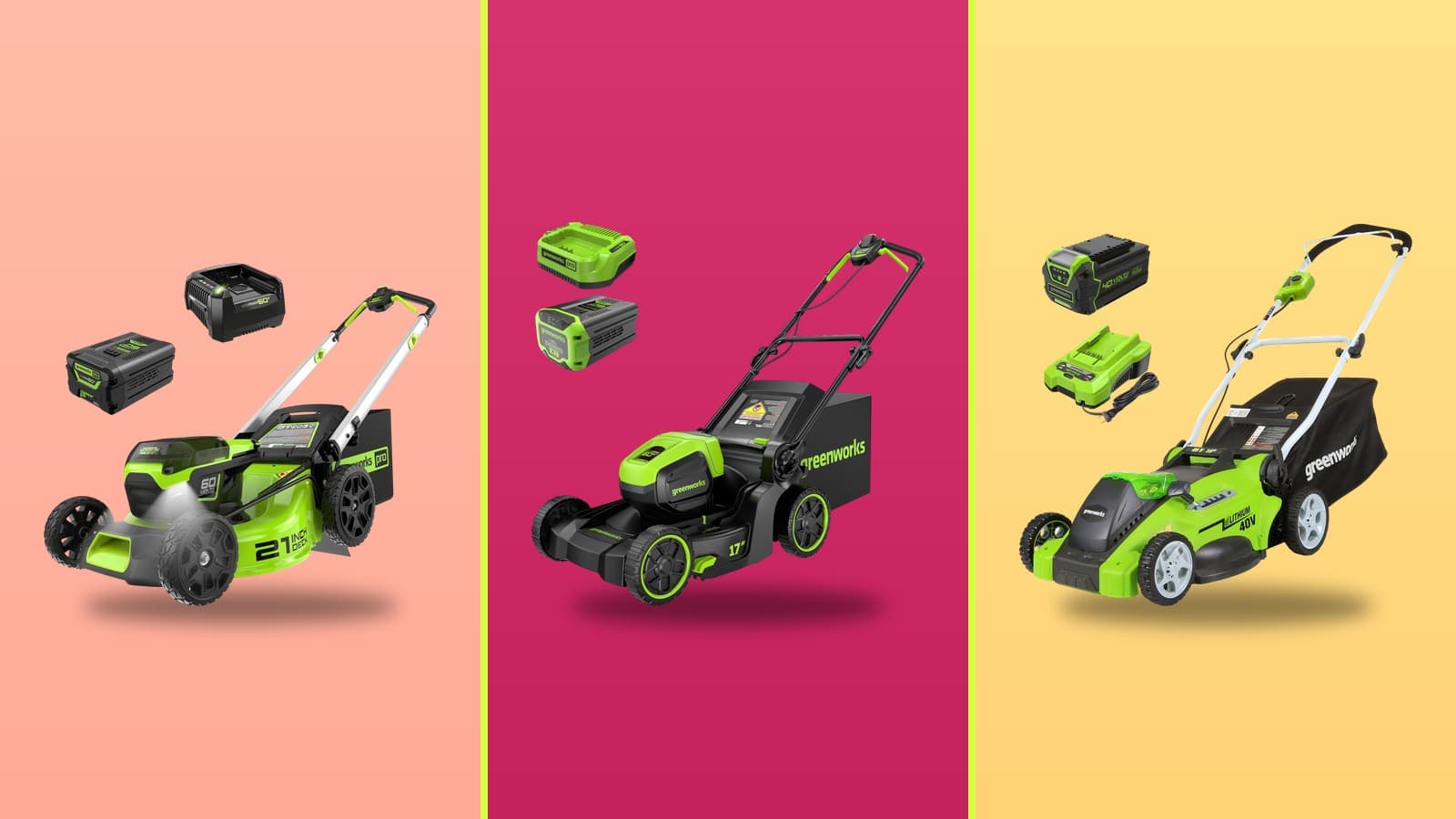
A cordless mower is decided by two numbers: deck width and battery runtime. Match them to your lot and the rest is comfort. This ranking covers four Greenworks mowers on the 40V and 60V platforms, from a budget 16-inch push model for a small flat lawn to a 21-inch self-propelled machine rated for three-quarters of an acre. Because they share battery families, the comparison is clean: the differences come down to deck width, runtime, and whether the wheels drive themselves. Specs are drawn from Greenworks' official product pages and cross-checked against Consumer Reports lab testing and independent buyer guides, so the rankings rest on documented performance rather than a single opinion.
Quick Comparison
 1
1Credit: Amazon
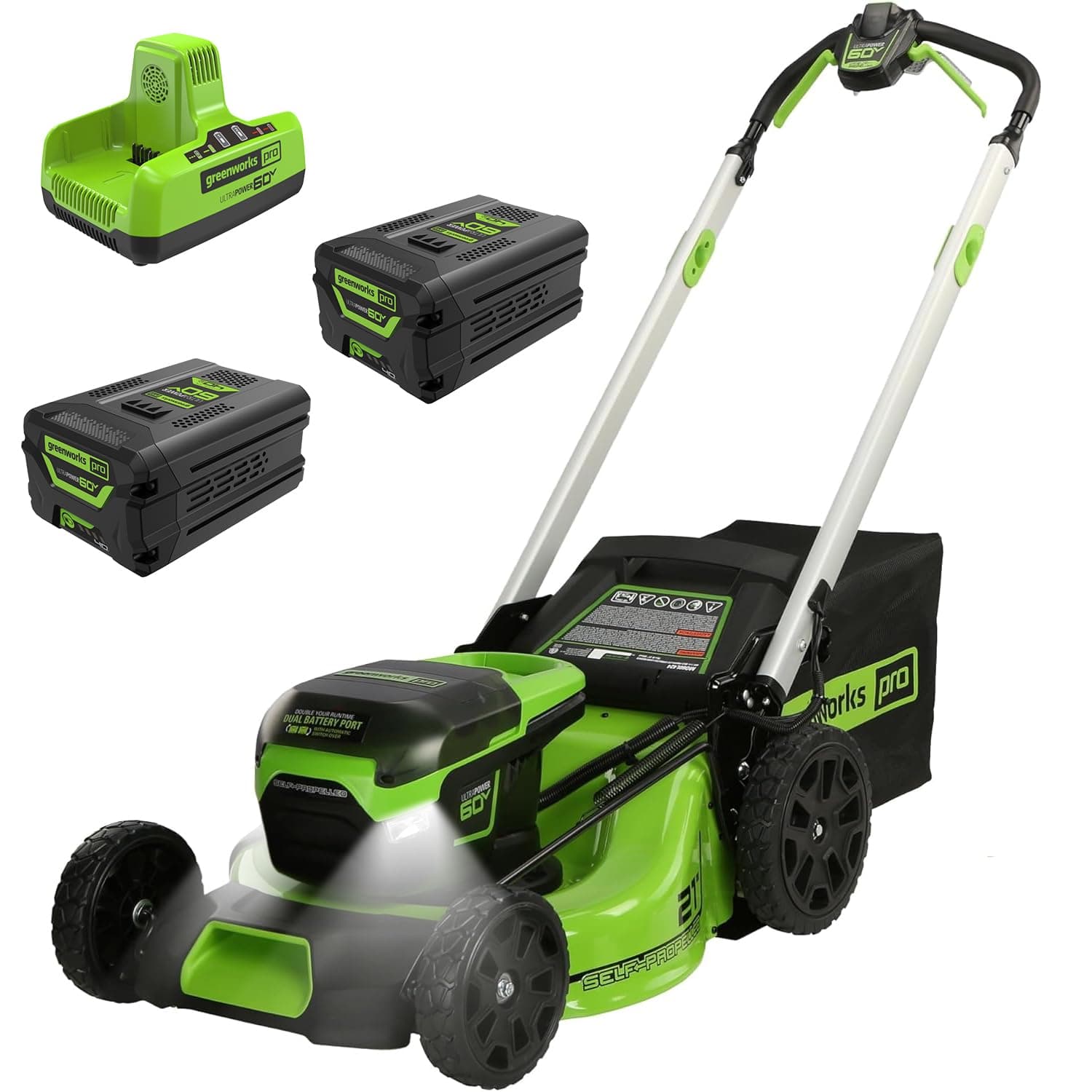
Greenworks 60V 21" Self-Propelled Cordless Lawn Mower
 2
2Credit: Amazon
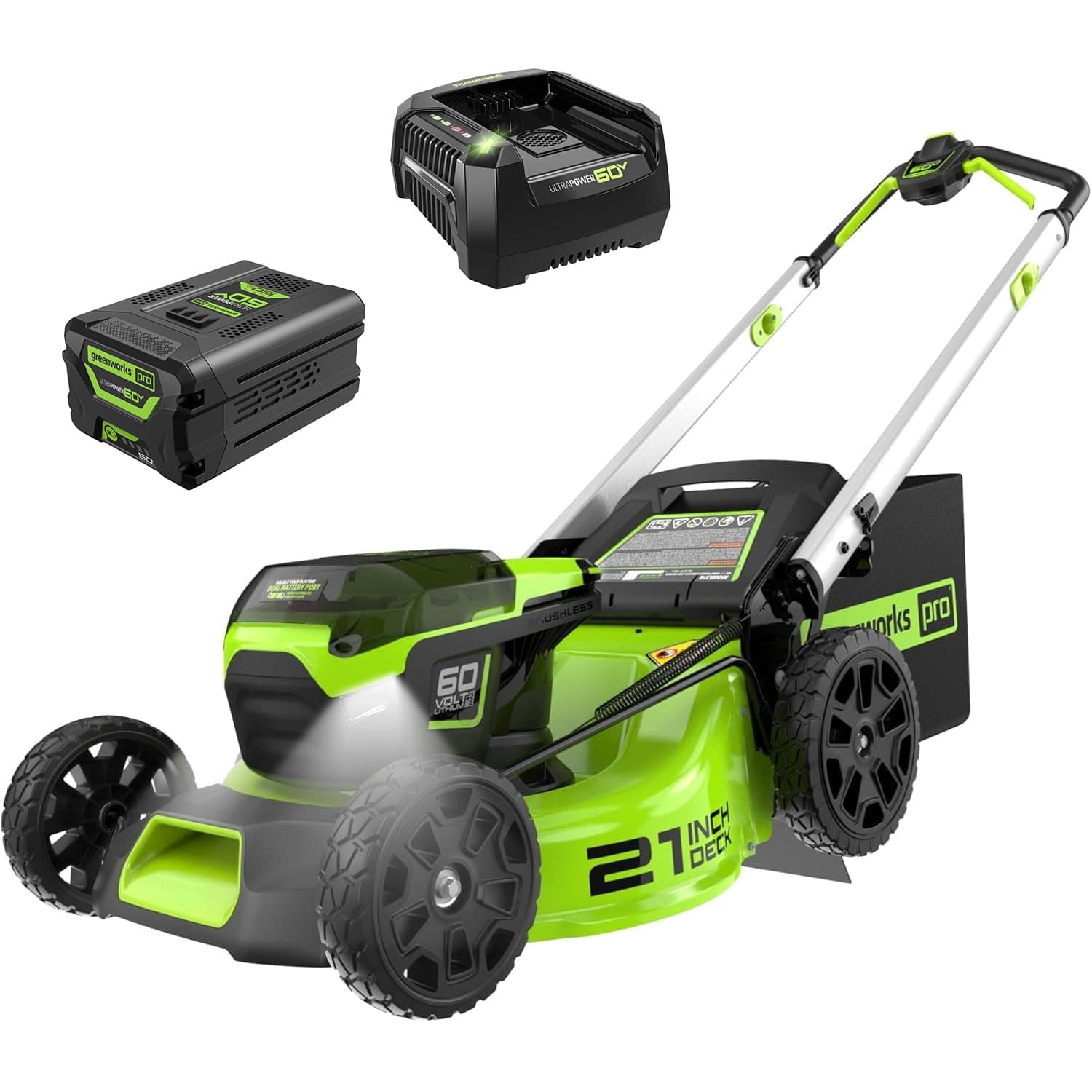
Greenworks 60V 21" Brushless Cordless Push Lawn Mower
 3
3Credit: Amazon
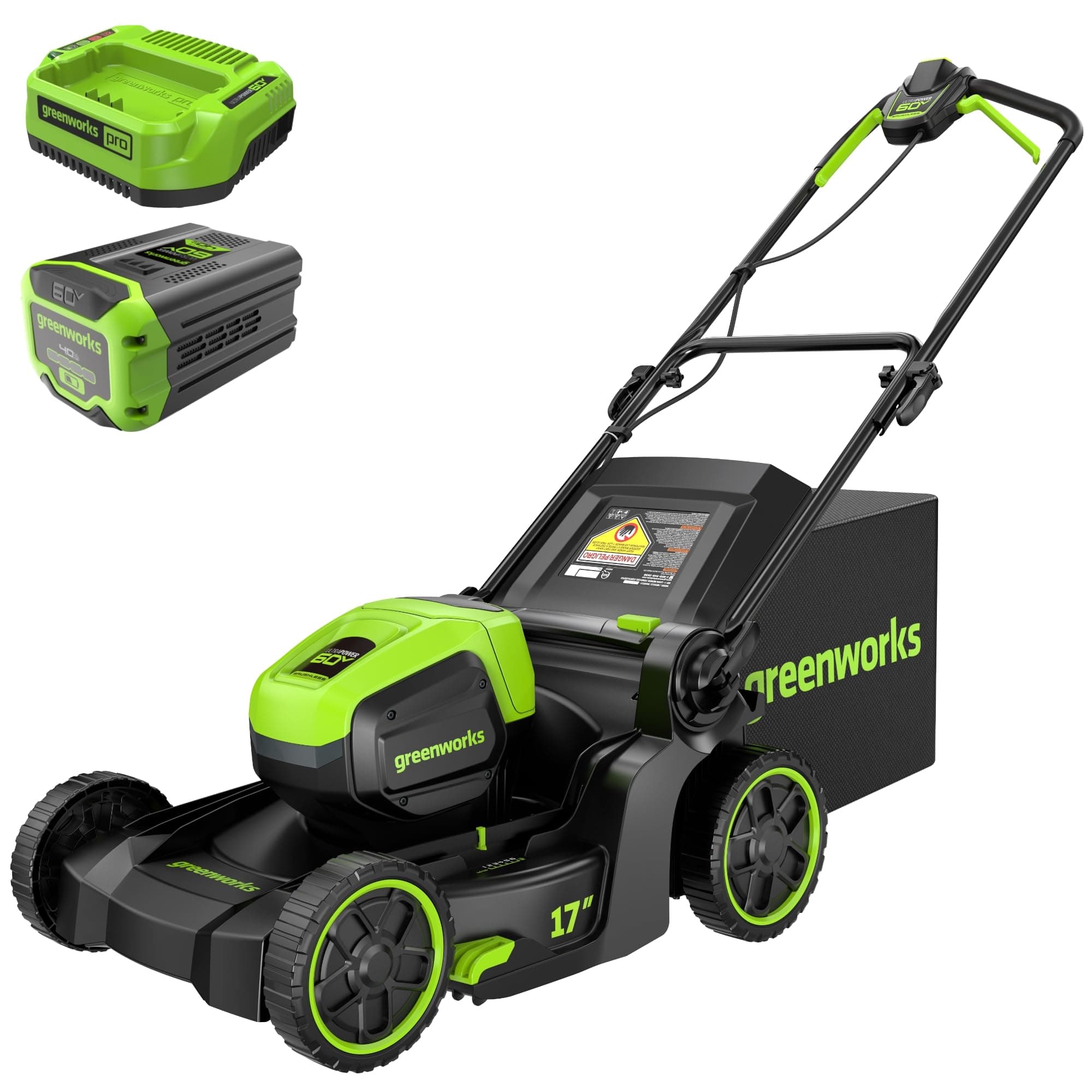
Greenworks 60V 17" Brushless Cordless Push Lawn Mower
 4
4Credit: Amazon
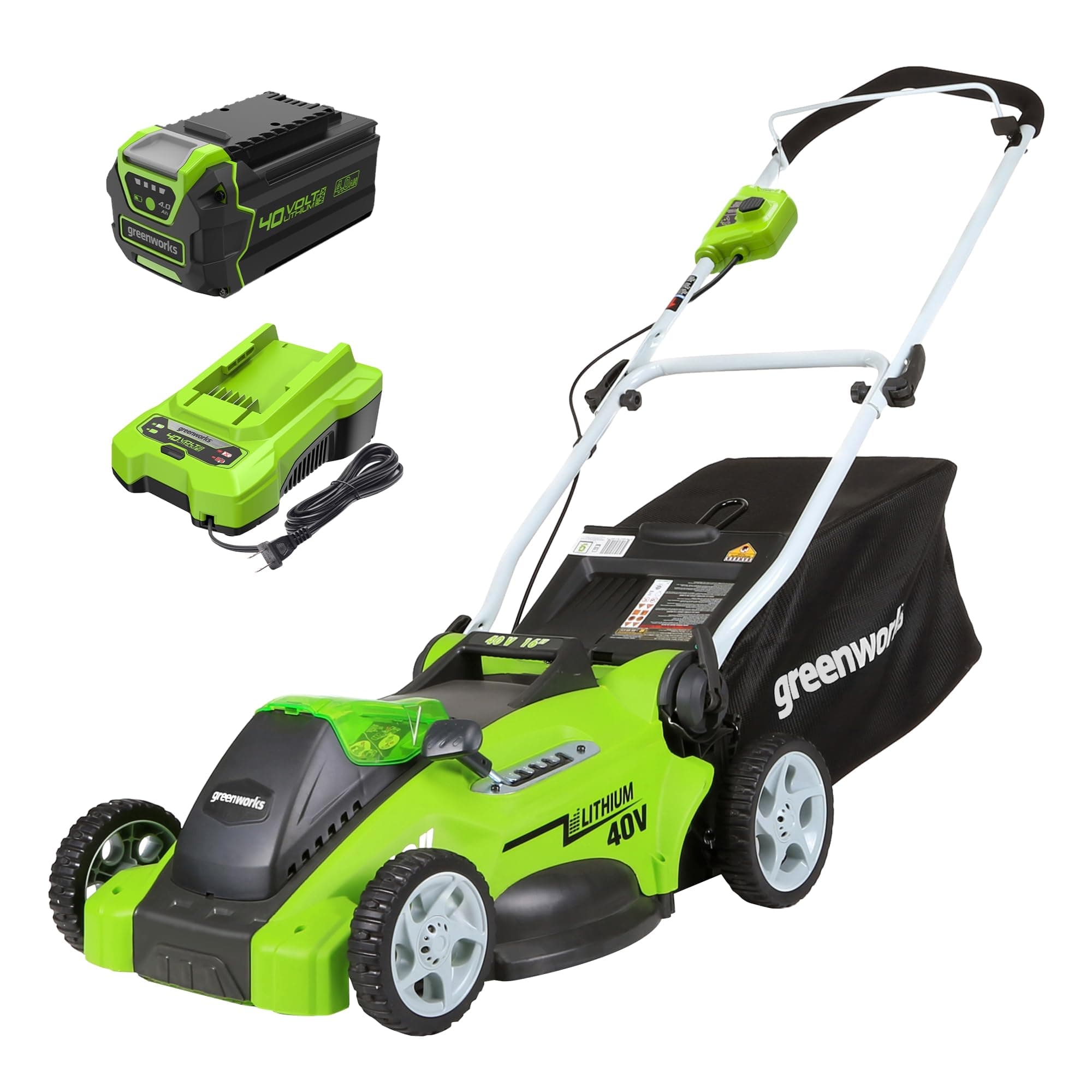
Greenworks 40V 16" Cordless Push Lawn Mower
Greenworks 60V 21" Self-Propelled Cordless Lawn Mower
Credit: Amazon
Where to Buy
Key Specs
What We Like
- Widest 21-inch deck for fewer passes on big lawns
- Two 60V 4.0Ah batteries with auto-switchover for the longest rated runtime
- Self-propelled drive handles slopes up to 15 degrees
- 4-in-1 mulch, bag, side discharge, and leaf pickup
What Could Improve
- Heaviest and priciest of the group
- More mower than a small flat yard needs
What to Know
Greenworks 60V 21" Brushless Cordless Push Lawn Mower
Credit: Amazon
Where to Buy
Key Specs
What We Like
- Same wide 21-inch deck and 60V torque for less money
- Fast 50-minute recharge
- Lighter than the self-propelled model at 59.5 lbs
- 4-in-1 cutting and 7-position height adjustment
What Could Improve
- Single battery only; a steep yard may want a spare
- No drive assist on slopes
What to Know
Greenworks 60V 17" Brushless Cordless Push Lawn Mower
Credit: Amazon
Where to Buy
Key Specs
What We Like
- Narrow deck is easy to maneuver in tight yards
- Lighter and nimbler than the 21-inch models
- Brushless motor for more torque and longer life
- Same 60V battery platform as the top picks
What Could Improve
- 90-minute recharge per battery is slow
- More passes needed on a large lawn
What to Know
Greenworks 40V 16" Cordless Push Lawn Mower
Credit: Amazon
Where to Buy
Key Specs
What We Like
- Lowest up-front price of the four
- Lightest machine, easy to push and store
- Powers 75-plus other 40V tools
- Push-button start, no maintenance
What Could Improve
- Less power for thick or damp grass
- Slowest 120-minute recharge
- Older 40V platform if you plan to expand
What to Know
How to Choose a Cordless Mower
What to consider before you buy
Who This Is For
Lawns under about a third of an acre with few obstacles, where a narrow 16-17 inch deck and a single battery finish the job without overspending.
Mid-size lots that want a 20-21 inch deck for fewer passes and a 5.0Ah-or-larger battery to clear the lawn on one charge.
Three-quarter-acre yards or hilly ground that benefit from self-propelled drive and a two-battery system with auto-switchover for uninterrupted runtime.
Buyers who already own (or plan to grow into) a brand's battery ecosystem and want batteries that carry over to trimmers, blowers, and other tools.
Key Factors to Consider
A 16-17 inch deck is nimble in tight yards but needs more passes; 20-21 inches clears quarter- to half-acre lots faster. Match width to lot size and obstacle density, not to the biggest number.
Amp-hours set how long you cut per charge; most 4.0-7.5Ah packs run roughly 40-70 minutes. A typical quarter-acre takes 20-35 minutes, so size the battery to finish in one charge with margin for tall or damp grass.
Higher voltage (e.g., 60V vs. 40V) generally means more torque headroom for thick, wet, or tall grass and a brushless motor extends both power and motor life. For thin, flat lawns, lower voltage is often enough.
Powered wheels ease fatigue on larger lawns and slopes but add weight, cost, and a small runtime penalty. Push models stretch a charge further and suit flat yards.
Recharge times range from under an hour to two hours. If the lawn outlasts one charge, a second battery (or auto-switchover) matters more than a faster charger.
Staying on one voltage platform lets batteries and chargers carry across tools. Worth weighing if you own or plan to add other cordless yard equipment.
Quick Checklist
How We Research
How We Test
Compared manufacturer specs
Pulled deck width, voltage, amp-hours, rated runtime, charge time, and coverage from Greenworks' official product pages for each model.
Surveyed expert reviews
Reviewed professional buyer guides and lab outlets, including Consumer Reports, for measured performance on power, runtime, and cut quality.
Cross-checked owner-feedback themes
Read across verified buyer feedback to confirm recurring patterns on real-world runtime, ease of use, and durability.
Matched picks to yard profiles
Aligned each mower to a yard size, slope, and budget so the ranking reflects who each model actually suits.
Important Warnings
- Don't store batteries in a freezing or baking garage over winter; extreme temperatures shorten lithium-ion cell life and can cause premature failure.
- Avoid leaving a battery at full or empty charge for long-term storage; roughly 40-60% is the recommended state for idle lithium-ion packs.
- Never pressure-wash the deck or hose down the battery and motor housing; water intrusion can damage electronics. Use a moderate hose stream or damp cloth.
- Don't mow with a dull or bent blade; it tears grass instead of cutting and strains the motor and battery. Replace blades with deep nicks or warping rather than over-sharpening.
Maintenance Schedule
Remove the battery, then scrape caked grass from under the deck so airflow and discharge stay clean and rust doesn't build up.
Clean the deck and wheels and check the blade for nicks; wipe battery terminals with a dry cloth to clear dirt or corrosion.
Sharpen once or twice a season, or sooner if the mower tears rather than cuts; rebalance after sharpening and replace blades that won't hold an edge.
Bring the battery inside to a cool, dry spot around 40-70 degrees F at roughly half charge; a light rust preventative on the blade guards against corrosion in storage.
Related Posts


Buying Guides — Best Back to School Dorm Essentials 2026: 6 Research-Backed Picks
Skip the 75-item packing list. These six research-backed dorm essentials solve the problems every residence-hall student actually hits, from communal bathrooms to outlet shortages, all verified at July 2026 deal prices.