
Start With How You Actually Cook, Not the Spec Sheet
Most pellet-grill regret starts the same way: someone buys on price or on a single headline number, gets it home, and discovers it is either too small for a weekend cookout or too fiddly to hold a low, steady smoke. Learning how to choose a pellet grill is really about matching a handful of concrete specs to the way you cook, entertain, and store the thing the other 360 days of the year.
The good news is that pellet grills are refreshingly legible once you know what to look at. Unlike a charcoal kettle, where technique is everything, a pellet grill is a small appliance: a hopper full of compressed hardwood pellets, an auger that feeds them into a fire pot, an igniter, a fan, and a controller that decides how fast to feed. Get the size, the controller, and the build right, and the machine does most of the work. Get them wrong and no amount of technique fully rescues it.
This guide walks through the decisions in the order they actually matter: how much cooking area you need, how long the hopper lets you cook, how tightly the controller holds temperature, how wide the temperature range is, how the grill is built, and which "smart" features earn their keep. Along the way we point to two real machines from opposite ends of the size spectrum so the trade-offs stay concrete rather than abstract.
How a Pellet Grill Works (and Why It Changes What Matters)
It helps to understand the mechanism before you shop, because the mechanism explains which specs are load-bearing and which are marketing. A pellet grill burns food-grade hardwood pellets. Those pellets sit in a hopper on the side of the barrel. An auger, which is a rotating corkscrew-shaped shaft, drops a metered number of pellets into a fire pot, where an igniter lights them and a fan keeps them burning. As Yoder Smokers explains in its primer on the mechanism, the auger motor turns at a predetermined rate to deliver fuel, and the controller speeds it up or slows it down to hold your target temperature.
Two things follow from that design. First, the controller is the brain of the whole system, so how it manages the feed rate is arguably the single most important spec, more than any headline temperature number. Second, because the fire is fed continuously from a finite hopper, hopper size and cook length are linked in a way they never are on a gas grill. Those two realities drive most of the decisions below.
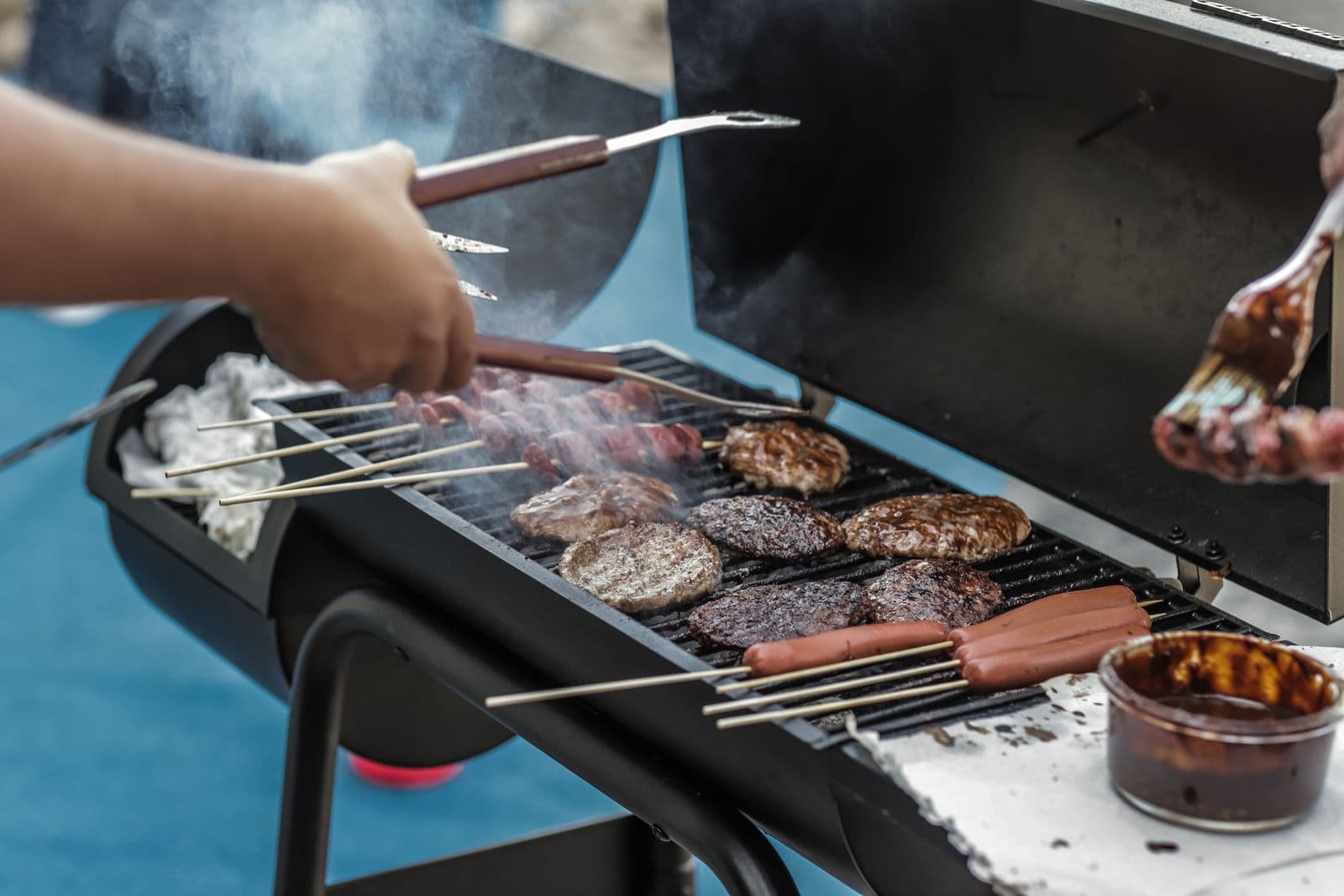
Pellet grills are also, functionally, convection ovens with a wood-smoke bonus. The fan circulates hot air around the food, which is why they excel at "set it and walk away" cooks like brisket, pork shoulder, ribs, and whole chickens. They are less naturally suited to blistering, steakhouse-style searing, though many newer models close that gap. Knowing that up front keeps your expectations honest and points you toward the specs that match your menu.
What Size Pellet Grill Do I Need?
Cooking area is where most buyers either overspend or, more painfully, underbuy. It is measured in square inches, and manufacturers usually quote a "primary" grate figure plus a "total" figure that includes upper warming racks.
A widely used rule of thumb is roughly 72 square inches of cooking space per person. Lowe's pellet-grill buying guide suggests that internal dimensions of 400 to 600 square inches suit a family of about four, while anyone who likes to entertain should look at 700 square inches or more for real food capacity. Those numbers are a starting point, not a law, but they keep you from the two classic mistakes.
The family-of-four sweet spot
If you are cooking weeknight dinners and the occasional weekend spread for a household of four to six, something in the 500 to 700 square-inch range is the comfortable middle. You can fit two racks of ribs or a couple of chickens without playing Tetris, and the grill still fits on a normal patio. This is the volume most mainstream models target, and it is where competition is fiercest, so you get the best value here.
When to size up
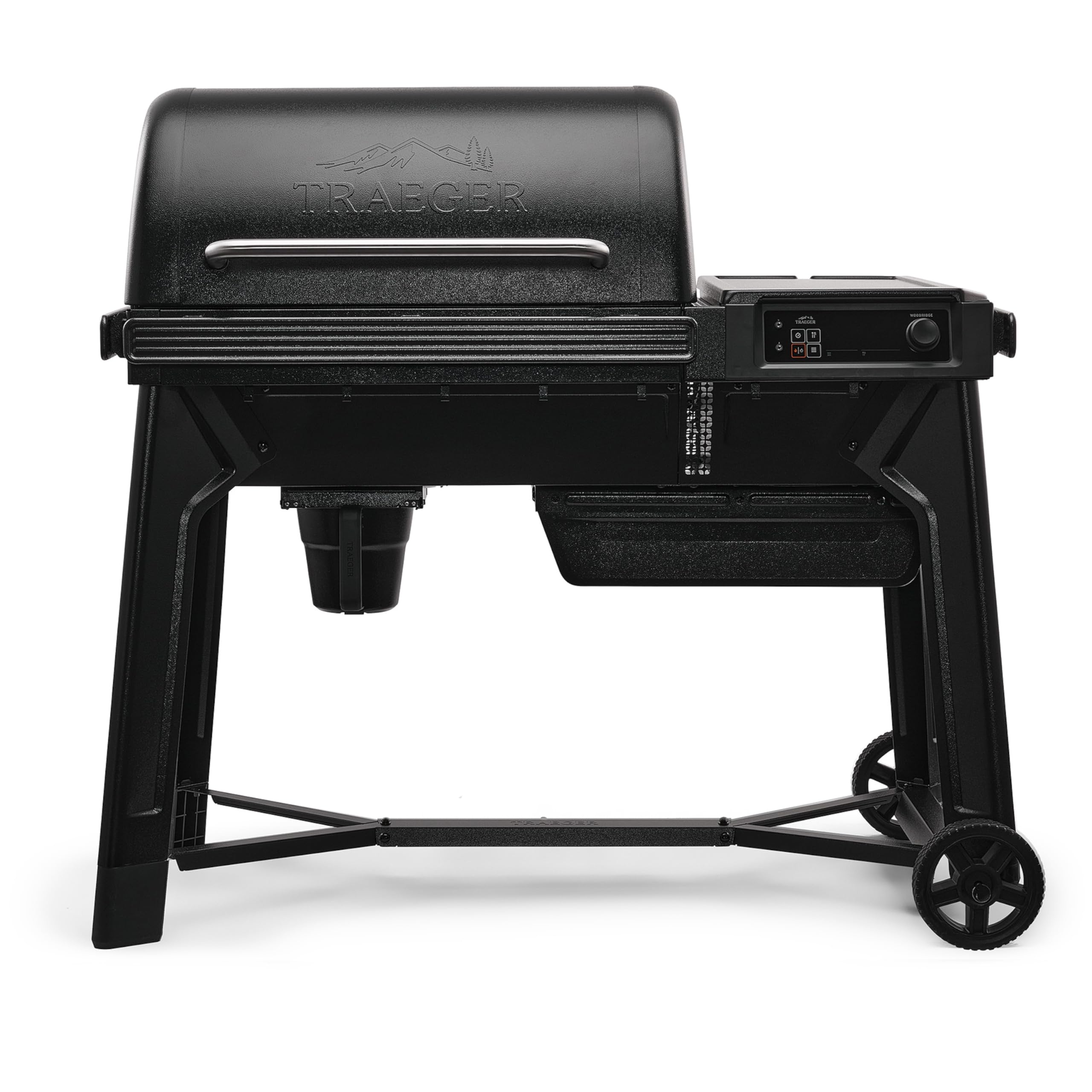
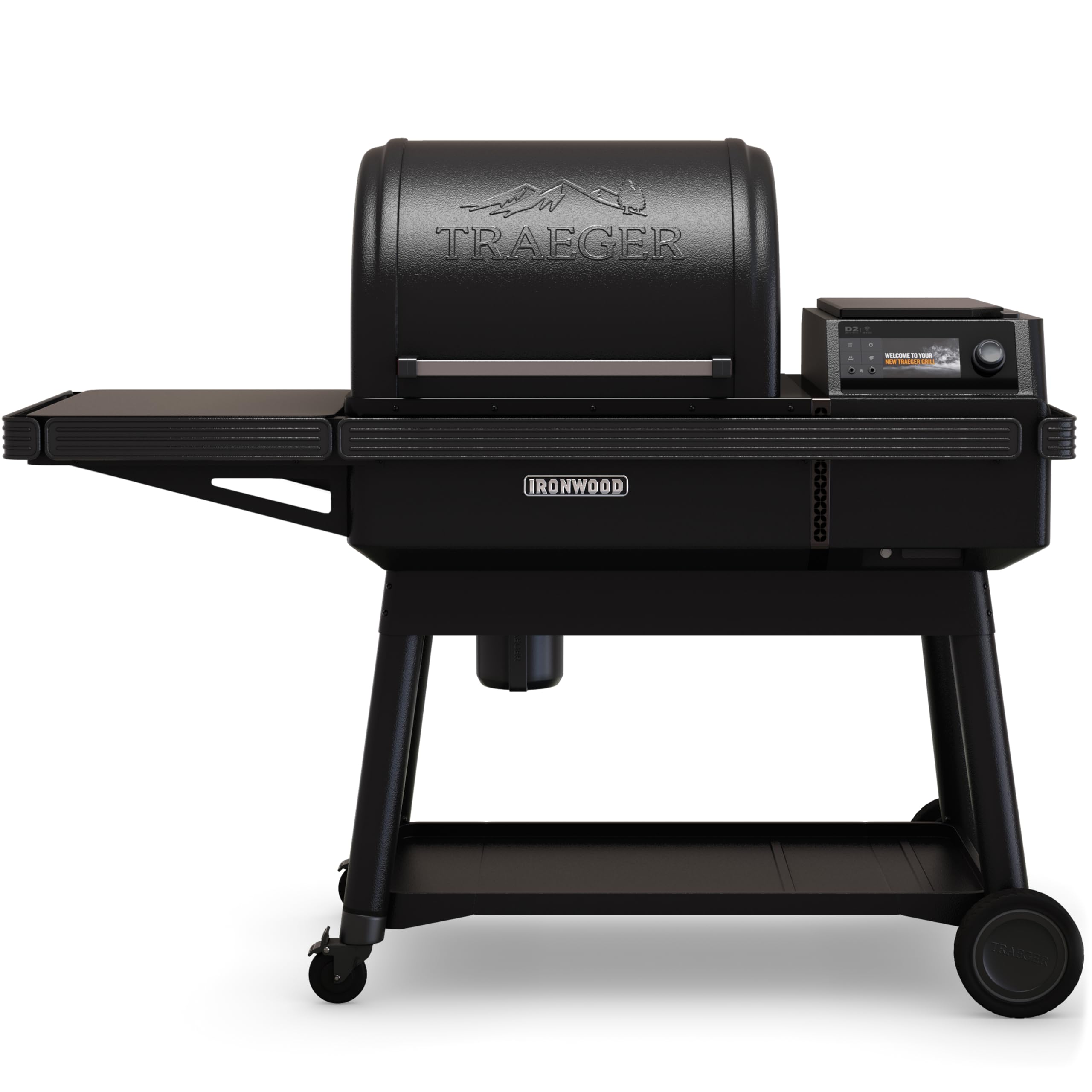
If you host, cater, or cook for a crowd, the math changes fast. A single brisket and a few sides can swallow a mid-size grate on its own. Large-capacity models exist precisely for this. The Traeger Ironwood XL, for example, offers 924 square inches of total cooking area, enough to run multiple large cuts at once without crowding. That headroom matters more than it looks: crowding a grate restricts airflow and produces uneven cooks, so buying a little large is safer than buying a little small.
When to size down
The opposite case is just as real. If you live in an apartment, camp, tailgate, or simply have a tiny balcony, a full-size barrel is a burden, not a feature. Portable models trade grate space for the ability to move. The Z Grills 200A is a good example, with a 202 square-inch tabletop footprint and a body that weighs around 40 pounds, which is enough for a couple of steaks or a small rack of ribs and light enough to carry to a campsite. If your reality is small spaces and occasional cooks, a compact grill you will actually use beats a big one that lives under a cover.
Hopper Capacity: How Long Can It Cook Without a Refill?
The hopper is the pellet reservoir, and its capacity determines how long the grill can run unattended before you have to top it off. This is not a vanity spec. A brisket can take twelve hours or more at low temperature, and running out of pellets mid-cook means a temperature crash and a scramble.
As the BBQGuys pellet-grill buying guide notes, hopper capacities range widely, from around 10 pounds on compact units to 40 pounds or more on large grills. Pellet consumption depends on temperature and weather, but a rough planning figure is one to three pounds per hour, higher in cold or windy conditions.
Match the hopper to your longest realistic cook. If you mostly grill burgers and chicken for an hour, a small hopper is fine. If you dream of overnight briskets, you want enough capacity to sleep through the cook, or at least a large hopper plus a pellet-level sensor so the app can warn you before you run dry. On the compact end, the Z Grills 200A pairs its small footprint with an 8-pound hopper that its listing rates for up to roughly 10 hours of low-and-slow cooking, which shows that a modest hopper can still cover a long smoke if you cook cool and out of the wind. On the other end, a 20-plus-pound hopper like the Ironwood XL's 22-pound reservoir buys you long, uninterrupted cooks with margin to spare.
The Controller Is the Most Important Part
If you only optimize one thing, optimize the controller. It is the difference between a grill that drifts and one that locks onto a number and holds it through a cold snap or a gust of wind.
PID vs. standard controllers
There are two broad camps. A standard, time-based controller feeds pellets on a fixed schedule to approximate your set temperature. A PID controller (proportional, integral, derivative) uses a feedback loop that measures the actual temperature and adjusts the feed rate continuously, anticipating overshoot and reacting to outside conditions.
The practical gap is large. As Pit Boss explains in its PID primer, a time-based controller can swing roughly 25 degrees around your set point, while a PID controller typically holds much tighter, with many rated around plus or minus 5 to 15 degrees. For hot-and-fast grilling that swing barely matters. For low-and-slow smoking, where a stable 225 degrees for hours defines the result, tight control is the whole game. A PID controller also compensates automatically for cold weather by feeding more fuel, so it earns its keep most in exactly the conditions where a basic controller struggles.
What "good control" buys you
Tighter temperature control means more predictable cooks, less babysitting, and better bark and smoke rings on long cooks. If you are choosing between two otherwise similar grills, the one with a genuine PID controller is usually the better buy even at a small premium. It is worth confirming the controller type in the specs rather than assuming, because "digital" and "PID" are not synonyms.
Temperature Range: Match It to Your Menu
The temperature range tells you what the grill can and cannot do. A typical pellet grill spans roughly 180 to 500 degrees Fahrenheit, and the BBQGuys buying guide breaks the useful bands down cleanly: 160 to 225 degrees for long, slow smoking, 225 to 275 for ribs and brisket, 300 to 400 for chicken and vegetables, and 400 to 500 for higher-heat grilling of steaks and burgers.
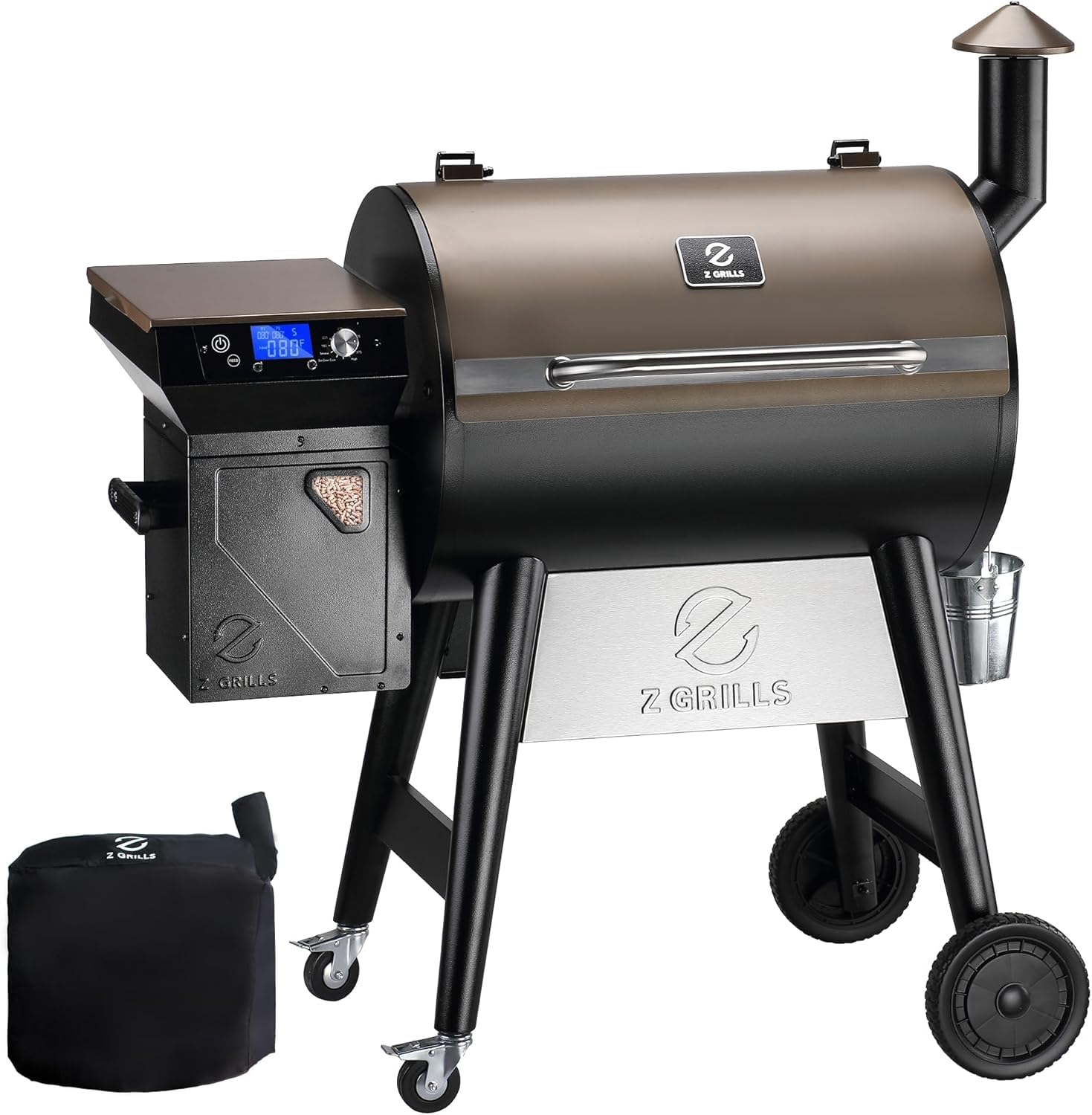
Two ends of that range deserve attention. On the low end, a grill that can genuinely hold down near 180 degrees is better for cold-ish smoking, cheeses, and jerky. On the high end, if searing matters to you, look for a model that reaches 500 degrees or offers a dedicated high-heat or direct-flame mode, because a grill that tops out around 450 will grill competently but never truly sear. The Ironwood XL, for instance, spans 165 to 500 degrees, while the portable 200A runs roughly 180 to 450 degrees, a reasonable range that leans toward smoking over steakhouse searing. Neither is wrong; they are simply tuned for different cooks. Decide which end of the range you will lean on and buy accordingly.
Build Quality: What Separates a 3-Year Grill From a 10-Year One
Specs get the attention, but build quality decides whether your grill is still holding temperature in five years. A pellet grill lives outdoors, cycles through heat and cold, and collects grease and ash, so materials and construction matter.
Materials and insulation
Look for heavy-gauge steel and, ideally, double-wall or insulated construction, which the Home Depot buying guide highlights for better heat retention and steadier performance in cold weather. Stainless steel resists rust better than painted steel, especially on lids and grates, though it adds cost. A well-sealed lid keeps smoke and heat inside where they belong; a leaky one wastes pellets and smoke. Casters that lock, sturdy legs, and a hopper lid that actually seals against rain are small things that separate a grill that ages gracefully from one that rattles apart.
Grease and ash management
This is the unglamorous spec that saves your weekends. Cleaning a pellet grill means dealing with rendered grease and spent pellet ash, and designs vary enormously in how easy they make it. Systems that funnel grease into an external, removable container and let you clear ash quickly, like Traeger's EZ-Clean grease-and-ash keg on the Ironwood line, turn a chore into a two-minute job. A grill that is a pain to clean is a grill you will use less, so weigh cleanup ergonomics as a real feature, not an afterthought.
Smart Features: Which Ones Actually Earn Their Keep
Modern pellet grills are increasingly connected, and the marketing leans hard on it. Some of these features are genuinely useful and some are gloss. Here is how to tell them apart.
WiFi and app control
WiFi connects the controller to a phone app so you can monitor and adjust temperature, get probe and pellet-level alerts, and step away from the grill. As the search results across manufacturer materials describe it, WiFi lets you track cooks remotely, and in practice most WiFi-equipped grills also carry the better PID controllers, so the feature often signals a more capable machine overall. For long, overnight smokes, remote monitoring is a legitimate quality-of-life upgrade: you can check the cook from bed instead of standing over it. For quick weeknight grilling, it matters far less. Buy it if you plan long cooks; do not overpay for it if you do not.
Meat probes and probe ports
Built-in meat probes let the grill (and the app) track internal food temperature and alert you when the food hits target, which is the difference between guessing and knowing. Look for at least one included probe and, ideally, multiple probe ports so you can monitor several cuts at once. This is a high-value, low-cost feature; prioritize it.
Everything else
Pellet-level sensors, super-smoke modes, and induction side burners range from genuinely handy to nice-to-have. Judge each against your actual cooking. A pellet sensor pairs beautifully with overnight smoking; a side burner is great if you cook sauces and sides outdoors and irrelevant if you do not. The rule is simple: pay for the features that match cooks you will really do, and treat the rest as tie-breakers rather than reasons to spend more.
A Simple Framework to Decide
Put the pieces together and the decision tree is short. Start with cooking area sized to your typical crowd, using the roughly 72 square inches per person rule as a floor and sizing up if you host. Match hopper capacity to your longest realistic cook so you never run dry mid-brisket. Insist on a real PID controller if low-and-slow smoking is your goal. Check that the temperature range covers both ends you care about, especially searing if that matters. Weigh build quality and cleanup ergonomics as durability and sanity features. Then add smart features only where they map to cooks you will actually do.
Run through those six factors in order and the field narrows quickly. If you want to see how specific machines stack up against this framework, our best pellet grills guide applies these same criteria across a range of models and price points. For the two extremes referenced above, our deeper looks at the large-capacity Traeger Ironwood XL and the portable Z Grills 200A show how the trade-offs play out at opposite ends of the size spectrum. And if you are still deciding whether a pellet grill is the right category at all, it is worth reading a clear-eyed take on whether pellet grills are worth it before you spend.
Common Questions
How many square inches do I really need?
Use roughly 72 square inches per person as a baseline. A family of four is comfortable in the 400 to 600 square-inch range per Lowe's guidance, and 700-plus is the entertaining tier. When in doubt, size up slightly, because a crowded grate cooks unevenly.
Is a PID controller worth paying more for?
For low-and-slow smoking, yes. A PID controller holds temperature far tighter than a time-based one, roughly plus or minus 5 to 15 degrees versus swings around 25 degrees, and it compensates automatically for cold weather, as Pit Boss describes. For hot-and-fast grilling only, the difference is smaller.
How much hopper capacity do I need for a brisket?
Enough to run your longest cook without refilling. At roughly one to three pounds of pellets per hour, a twelve-hour brisket can consume a lot of fuel, so a 20-pound-plus hopper or a smaller hopper paired with a pellet-level sensor is the safe path for overnight smoking.
Can a pellet grill sear a steak?
Some can. Look for a model that reaches around 500 degrees or offers a dedicated high-heat or direct-flame mode. Grills that top out near 450 degrees grill well but do not deliver a true steakhouse sear.
Does WiFi actually matter?
It matters most for long, unattended cooks, where remote monitoring and pellet or probe alerts genuinely improve the experience. For quick weeknight grilling it is a minor convenience. It often correlates with a better controller, so treat it as a signal of overall capability rather than a standalone must-have.
How We Research
Zuqqis builds its buying advice by triangulating three independent evidence layers and cross-checking them against each other. The first layer is the manufacturer's own published specifications: cooking area, hopper capacity, temperature range, controller type, and construction details taken directly from official product pages, such as Traeger's Ironwood XL specifications and the Z Grills 200A product page. Primary-source specs anchor every number we cite.
The second layer is reputable retail and category expertise, including established buying guides from BBQGuys, Lowe's, and Home Depot, which codify the sizing rules, hopper math, and material trade-offs that apply across brands. The third layer is technical explanation of the underlying mechanism, drawing on sources like Yoder Smokers on how pellet grills work and Pit Boss on PID control, so our advice explains not just what to buy but why it behaves the way it does.
Where a claim about specifications, price, or performance cannot be corroborated across at least two of these layers, we leave it out. Prices and specific model specs change over time, so we date and qualify them and point you to the manufacturer's page as the live source of truth before you buy.
Related Posts
Buying Guides — Best Back to School Dorm Essentials 2026: 6 Research-Backed Picks
Skip the 75-item packing list. These six research-backed dorm essentials solve the problems every residence-hall student actually hits, from communal bathrooms to outlet shortages, all verified at July 2026 deal prices.