

Are Pellet Grills Worth It? The Short Answer, Then the Honest Long One
Yes, a pellet grill is worth it if you care most about steady temperatures, effortless long cooks, and real wood-smoke flavor with almost no babysitting. It is a weaker buy if your top priority is a fast, blistering-hot sear or the cheapest possible way to cook a couple of burgers on a weeknight. That is the whole question in two sentences, but the reason so many people still hesitate at the checkout is that the trade-offs are genuinely nuanced, and the marketing rarely spells them out.
A pellet grill is essentially an outdoor convection oven that burns compressed hardwood pellets. A motorized auger feeds those pellets into a fire pot, a fan circulates the heat and smoke, and a digital controller holds your target temperature the way a kitchen oven does. That design is the source of every pro and every con below. According to Consumer Reports, pellet grills are "exceptionally easy to start and offer a level of temperature control without equal," which is exactly why they have surged in popularity. The same design that makes them so easy is also what caps their searing heat. Understanding that single tension is how you decide whether one belongs on your patio.
This guide walks through cost, flavor, convenience, the searing question, running expenses, reliability, and who each type of griller actually is. By the end you should be able to answer the question for your own kitchen rather than for a generic buyer. If you already know a pellet grill is right and just want models, our best pellet grills guide ranks the current picks.

What a Pellet Grill Actually Does Well
The strongest case for a pellet grill is not flavor and it is not price. It is repeatability. Because a controller manages the fire for you, the grill holds a set temperature for hours without adjustment. Consumer Reports describes them as able to maintain "a low, steady temperature for hours on end without the need to make any adjustments," and notes they are "far more even-heating than gas grills." For anyone who has fought a charcoal smoker to hold 225°F through a nine-hour brisket, that alone is the pitch.
Set-it-and-forget-it convenience
The everyday appeal is that a pellet grill behaves like an appliance. You set a number, the grill gets there, and it stays there. Traeger, which popularized the category, markets this as "Set-It & Forget-It" cooking and pairs it with app control on its higher tiers. Per Traeger's own description, "consistent temperature gives you consistent results, meaning you can focus on flavor rather than tending to the fire." That is not just brand copy. The mechanism genuinely removes the two hardest parts of traditional barbecue: lighting the fire and holding the temperature.
For a busy household, this changes what is realistic on a weeknight. Smoking a chicken or a rack of ribs stops being an all-day project you have to hover over and becomes something you can start, walk away from, and check on your phone. The Wi-Fi models push a notification when the food hits your target internal temperature, so the grill effectively watches dinner for you.
There is a quieter benefit here too: consistency across time, not just within a single cook. Because the controller reproduces the same conditions every session, a recipe you nail once is a recipe you can nail again next month. Traditional barbecue rewards the cook who has internalized how a specific pit behaves in specific weather. A pellet grill front-loads that expertise into the electronics, so the gap between a first cook and a tenth cook is much smaller. For people who want great results without treating barbecue as a skill to grind, that flattening of the learning curve is the whole point.
Genuine wood-smoke flavor without the fuss
Pellet grills burn actual hardwood, so they impart real smoke rather than the neutral heat of a gas burner. Consumer Reports found they deliver "a distinctly smoky flavor, reminiscent of foods painstakingly cooked for hours over stoked coals." In blind tasting, the flavor gap between grill types is smaller than tribal loyalties suggest. A Consumer Reports taste test of chicken cooked on gas, charcoal, and pellet grills split almost evenly: gas took 36 percent of the vote, the pellet grill a close 34 percent, and charcoal 30 percent. In other words, a pellet grill produces food that tasters rated just as highly as the other two, while asking far less of the cook.
Versatility across cooking styles
Because it is a convection oven with smoke, a pellet grill does more than barbecue. Traeger markets its grills as "6-in-1," able to "grill, smoke, bake, roast, braise, and BBQ." That is not marketing inflation. People genuinely bake bread, roast whole chickens, cook pizza, and even make desserts on them. If you want one outdoor cooker that replaces a smoker and doubles as a second oven, the pellet grill covers more ground than a dedicated charcoal smoker or a plain gas grill.
The Real Downsides Nobody Puts on the Box
An honest verdict has to weigh the compromises, and pellet grills have three that matter. None is a dealbreaker on its own, but together they explain why a pellet grill is not automatically the right pick for everyone.
They do not sear like a hot grill
This is the single most important limitation. Most pellet grills top out around 450°F to 500°F. Consumer Reports notes that "most max out at around 500°F," while "many of the gas and charcoal grills tested get as high as 800°F." For the deep, crusty, restaurant-style sear on a thick steak, that difference is real. You can get a respectable crust using a reverse-sear technique, smoking the steak low and then cranking the grill to its maximum to finish, but you are working around the ceiling rather than blowing past it.
Newer designs are closing this gap. Some models now advertise higher searing temperatures, and a few use a direct-flame mode to expose food to the fire pot. But if searing steaks is genuinely your top priority, be clear-eyed: a standard pellet grill is a compromise there, and Consumer Reports found most "receive middling marks for temperature range." A dedicated gas grill or a charcoal chimney does that one job better.
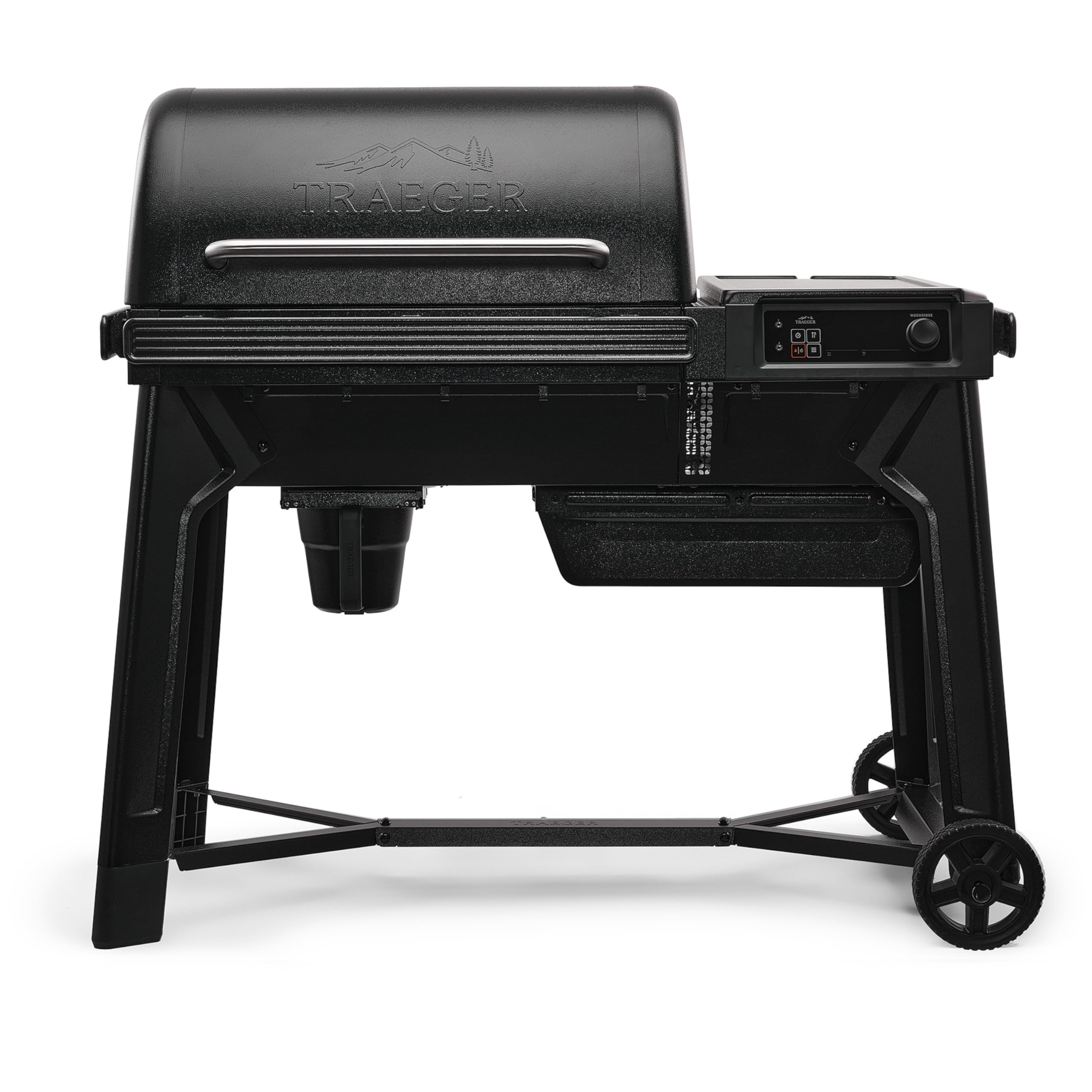
Premium pellet grills like the Traeger Woodridge add app control and larger hoppers, but still cap around 500°F.
They need electricity
A pellet grill is not a fire in a box. The auger, fan, igniter, and controller all run on power, so you need an outlet or a battery/inverter setup. That rules out cooking in a spot with no electricity, and it means a power cut mid-cook can stall a long smoke. It is a modest limitation for most backyards, but worth naming, because a charcoal kettle or a propane grill will happily cook through a blackout and a pellet grill will not.
The smoke can be milder than charcoal
Purists sometimes find pellet smoke subtle. Consumer Reports observes that the smoke "may seem tame compared with the flavor profile you get by loading up your charcoal or kamado grill." If you chase an intense, heavy smoke ring and a bark that tastes like a competition pit, a pellet grill's clean, controlled burn can feel gentle. Many people prefer that balance. Some do not. It comes down to taste, and it is one reason charcoal die-hards stay charcoal die-hards.
Pellet Grill vs Gas vs Charcoal: Which Trade-Off Is Yours?
Rather than crown a universal winner, it helps to line up the three by what each does best. All three make great food. They just ask different things of you.
Pellet vs gas
Gas is the convenience champion for fast, hot, direct grilling. It lights instantly, hits high heat quickly, and is unbeatable for a weeknight batch of burgers or a quick sear. What it does not give you is real wood flavor or effortless low-and-slow smoking. In Taste of Home's testing, pellet grills "tend to deliver more flavor," while gas wins on speed and simplicity for quick cooks. If your grilling is mostly fast and hot, gas is the more sensible spend. If it is mostly low and slow with real smoke, pellet pulls ahead.
Pellet vs charcoal
Charcoal delivers the most assertive flavor and the highest live-fire heat, which is why it remains the sentimental favorite. The cost is effort: lighting a chimney, managing vents, and babysitting the temperature for the length of a long cook. A pellet grill trades a little of that intensity for a lot of consistency and a lot less work. If you love the ritual of tending a fire, charcoal rewards you. If you want brisket-quality results without the vigil, the pellet grill is the easier road to the same table.
The honest summary
Buy gas for speed and high heat. Buy charcoal for maximum flavor and hands-on fire craft. Buy a pellet grill when you want real smoke, oven-like consistency, and the freedom to walk away during a long cook. Most people who "graduate" to a pellet grill do so because they want to smoke and roast more than they want to sear, and they value their time on cook day.
What Does It Actually Cost to Run a Pellet Grill?
The sticker price is only part of the math. Pellet grills also carry ongoing fuel and electricity costs that gas and charcoal owners should weigh honestly.
Up-front price
Pellet grills cost more on average than a comparable gas or charcoal model, largely because they include a controller, motor, and fan. Consumer Reports lists prices from roughly $200 up to about $1,400, with capable models available for $400 or less and premium Wi-Fi units from brands like Traeger and Weber exceeding $1,000. There is a wide, competent middle. You do not need a four-figure grill to get the core benefits, and Consumer Reports has repeatedly found that a pricier pellet grill "isn't always a better one."
Fuel cost per cook
Pellets are the ongoing expense, and consumption scales with temperature. Industry figures compiled by Pellet Grill Pros put usage at roughly 1 pound per hour when smoking low at 180°F to 225°F, about 1.75 pounds per hour at roasting temperatures of 250°F to 350°F, and around 2.5 pounds per hour above 375°F for hotter grilling. With a 20-pound bag of pellets running about $20, that works out to roughly $1 to $2 per hour for low-and-slow smoking and closer to $3 per hour when grilling hot. Cold weather and wind push consumption higher, because the grill feeds pellets faster to hold temperature. For most households the fuel cost is minor per cook, but a heavy weekend smoker should budget for it.
Electricity and upkeep
The electrical draw is small, mostly the igniter at startup and the auger and fan during the cook, but it is a real line item on top of pellets. Cleaning is easier than charcoal, since ash and grease collect in trays you empty out, which Consumer Reports highlights as a genuine convenience. Add it all up and the running cost is competitive with charcoal for occasional use and only meaningfully higher if you smoke often and long.
One cost worth planning for is pellet storage. Wood pellets are sensitive to moisture, and a bag left open in a damp garage can swell and jam the auger, which turns a cheap consumable into a mid-cook headache. Keeping pellets sealed in a dry bin protects both your fuel budget and your grill's reliability. It is a small habit, but it is the difference between a fuel cost that stays predictable and one that quietly balloons through waste. Factor a sealed container into your first-purchase budget alongside the grill and a starter bag or two of pellets, and the true cost of entry stays close to the sticker.
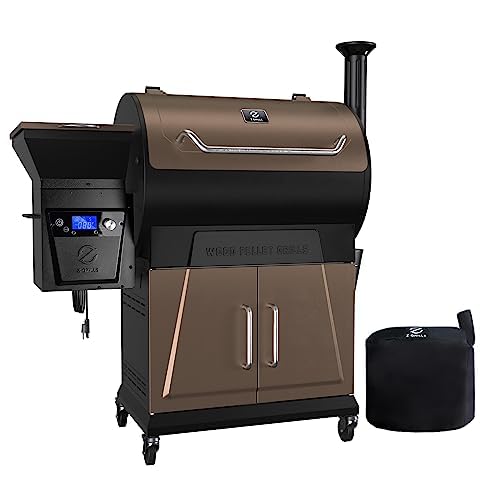
Budget-friendly pellet grills like the Z Grills electric smoker deliver the core set-and-forget experience at a lower entry price.
Are Pellet Grills Good for Beginners?
This is where the pellet grill quietly makes its best case. Traditional barbecue has a steep learning curve: fire management, vent control, and temperature stalls trip up newcomers constantly. A pellet grill removes most of that. You set a temperature, the controller holds it, and a meat probe tells you when the food is done. That is a forgiving on-ramp for someone who wants competition-style ribs without a season of practice.
Consumer Reports frames the ideal owner as someone who likes "the taste of smoke and don't care too much about searing," and that describes a lot of first-time smoker buyers precisely. The consistency also makes results repeatable, so once you dial in a recipe you can reproduce it. For a beginner, that predictability is worth more than the last few degrees of searing heat.
If you are early in the decision and weighing capacity, hopper size, and features, our companion piece on how to choose a pellet grill breaks down the specs that actually matter versus the ones that are just marketing.
Where a beginner might still want something else
If your realistic use is two burgers and a couple of hot dogs on a Tuesday, a simple gas grill is faster and cheaper, and you will not miss the smoke. And if you already love tending a charcoal fire, the pellet grill's automation may feel like it removes the part you enjoy. The pellet grill shines specifically for the beginner who wants to smoke and roast, not for the one who only ever grills fast and hot.
Who Should Buy a Pellet Grill (and Who Should Skip It)
The clearest way to close the "worth it" question is to match the tool to the cook.
Buy a pellet grill if you:
- Want real wood-smoke flavor without managing a live fire.
- Cook low and slow often: ribs, brisket, pork shoulder, whole chickens.
- Value walk-away convenience and app notifications over hands-on fire craft.
- Want one versatile outdoor cooker that also bakes and roasts.
- Are new to smoking and want forgiving, repeatable results.
Think twice if you:
- Rank a screaming-hot steak sear as your number-one job.
- Grill mostly fast and simple on weeknights and never smoke.
- Need to cook where there is no reliable power.
- Chase the heaviest possible charcoal-pit smoke intensity.
For the value-minded buyer who wants in without a big spend, a budget model like the Z Grills electric pellet smoker delivers the core set-and-forget experience for less. If you would rather spend once on a do-everything grill with app control and a bigger cook area, a premium option like the Traeger Woodridge shows what the extra money buys. Manufacturer spec sheets are the place to confirm the exact numbers before you buy: Traeger publishes full specs on its Woodridge product page, and Z Grills lists model details on its official site.
The Verdict: Worth It for the Right Cook
So, are pellet grills worth it? For the person who wants smoke, consistency, and convenience, yes, comfortably. The set-and-forget temperature control is genuinely without equal at its price, the flavor holds its own against gas and charcoal in blind tests, and the versatility means one grill covers smoking, roasting, and everyday grilling. Those are real, durable advantages, not marketing gloss.
The honest caveats are equally real. You give up top-end searing heat, you need an outlet, and the smoke is cleaner and milder than a charcoal pit. If any of those three is a hard requirement for you, another grill will serve you better. But for the large and growing group of home cooks who want brisket-quality results without brisket-level effort, a pellet grill is one of the most sensible outdoor-cooking purchases you can make. It is not the right grill for everyone. It is the right grill for a lot of people who used to think great barbecue was out of reach.
Ready to pick a specific model? Start with our ranked best pellet grills guide, which lines up current options by budget, capacity, and features.
How We Research
Our recommendations come from a structured synthesis of three independent evidence layers, cross-checked against each other so no single source drives a conclusion. First, we anchor every specification, price band, and temperature figure to primary sources: the manufacturers' own published spec sheets and product pages, such as Traeger's and Z Grills' official documentation. Second, we weigh independent editorial and lab-based testing from established authorities, including Consumer Reports' grill ratings and taste tests and Taste of Home's head-to-head grill comparisons, to validate real-world performance claims. Third, we quantify running costs and consumption using published industry usage data rather than estimates, so figures like pellet usage per hour and cost per cook trace back to documented sources.
When those three layers agree, we report the claim with confidence. When they diverge, we say so and explain the range instead of forcing a single number. We deliberately exclude anecdote and unverified social-media chatter from our sourcing, and we date or qualify prices because they move. This approach lets us give you rigorous, primary-anchored buying guidance grounded in the strongest publicly available evidence.
Related Posts