Fenix HM65R Review: A Dual-Beam Rechargeable Work Headlamp
 Abdulwahab Suleiman·August 1, 2026
Our Verdict
Quality
Value
Features
Design
Performance
The Good
- Independent spot and flood switches make it genuinely versatile
- Long, regulated runtimes at the mid-levels you actually work under
- USB-C recharging plus swappable standard 18650 and CR123A backup
- Tough IP68 magnesium body rated for 2-meter drops and submersion
The Bad
- Heavier and bulkier than trail-running headlamps
- Turbo (1000 lm) lasts only about 2 hours
- No dedicated red night-vision mode
- Front-mounted battery puts all the weight over your forehead
Zuqqis rates this 3.6 out of 5. The score is derived from our own assessment of quality, value, features, design, performance, weighted by what matters most to buyers. We research published specifications, independent testing and verified owner feedback — we do not accept payment for ratings. How we rate
Why the Fenix HM65R keeps showing up on "best work headlamp" lists
Most rechargeable headlamps ask you to pick a lane: a tight spotlight for spotting a trail marker at distance, or a soft flood for close work at arm's length. The Fenix HM65R refuses to choose. It carries two separate emitters behind two separate switches, so you can run a long-throw beam, a wide wash of light, or both at once. That single design decision is the reason this headlamp lands on so many shortlists for garage work, hunting, and after-dark yard projects.
This Fenix HM65R review pulls together the manufacturer's published specifications and independent editorial coverage to explain what the light actually does, where it fits, and who should skip it. If you are still deciding how much output you even need, our companion guide on how many lumens you need for a headlamp is a useful starting point before you commit.
Where to Buy
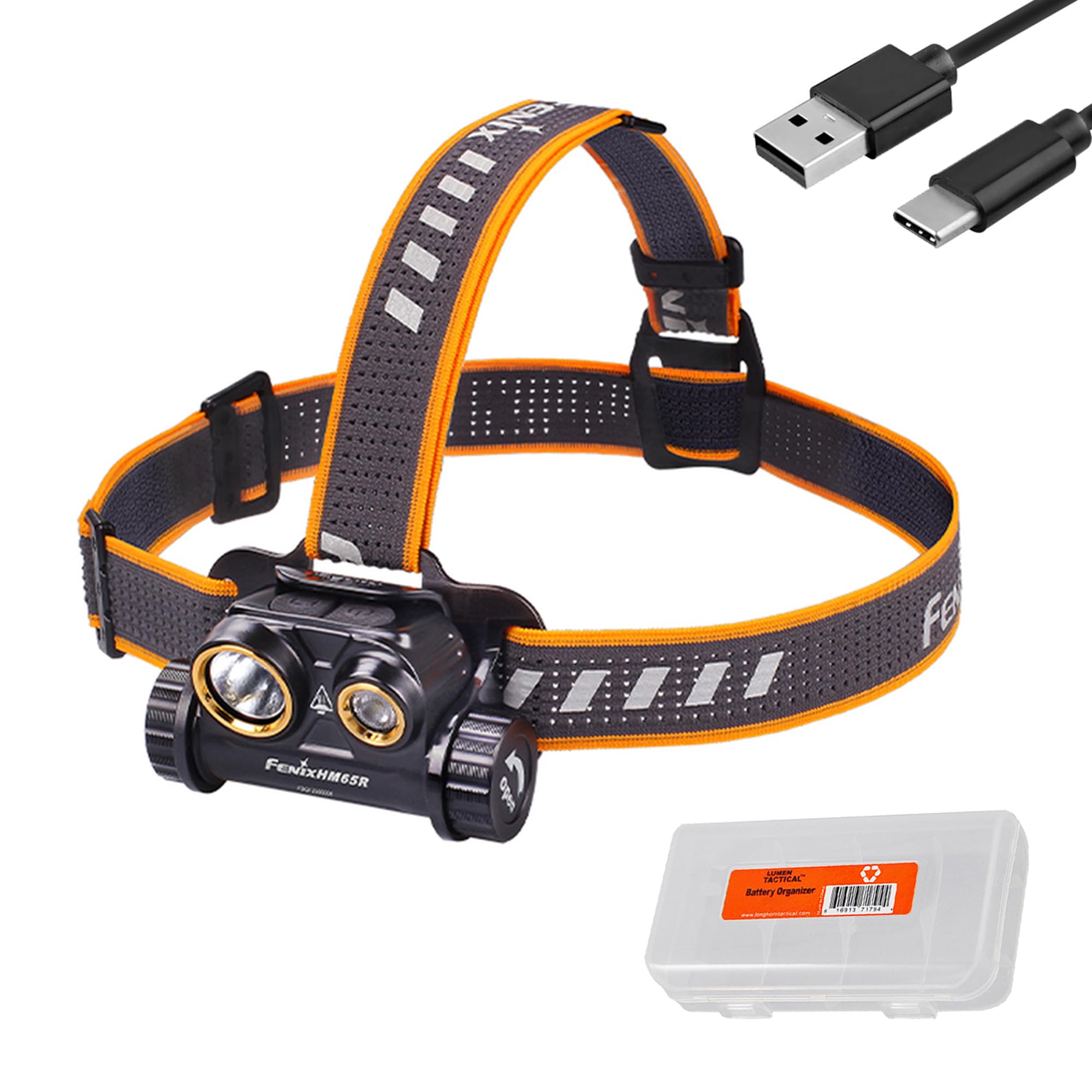
The HM65R pairs a throw-focused spotlight with a wide floodlight, each on its own switch.
Fenix HM65R specifications at a glance
The HM65R is built around two LEDs working in tandem: a Luminus SST40 driving the spotlight and a Cree XP-G2 R5 neutral-white emitter behind the floodlight, according to Fenix's official product page. Combined, they reach a rated maximum of 1400 lumens, with the spotlight topping out at 1000 lumens and the floodlight at 400 lumens.
The headline numbers
- Max output: 1400 lumens (combined spot + flood)
- Spotlight max: 1000 lumens, up to 163 meters of throw
- Floodlight max: 400 lumens for close, wide coverage
- Power: one 18650 rechargeable cell (3400 mAh included) or two CR123A lithium cells
- Charging: onboard USB-C
- Protection: IP68 rated (IPX8 waterproof, IP6X dust-proof), 2-meter impact resistance
- Body: lightweight magnesium alloy, 97 g (3.4 oz) without the battery
That 163-meter throw figure and the tri-proof rating both come straight from Fenix's spec sheet, which is the primary source we anchor every claim to. Magnesium is the detail worth underlining. It is stiffer and lighter than the polymer housings most headlamps use, which is a large part of why the HM65R survives the kind of drops and knocks that come with real work.
Fenix HM65R brightness and runtime
Peak lumens make for good marketing, but working light is about the levels you actually leave it on. Here the HM65R holds up well, because its regulated output keeps brightness steady rather than fading as the cell drains.
Spotlight runtimes
Per the mode table published by authorized retailer Fenix Store, the spotlight runs:
- Turbo: 1000 lumens for about 2 hours (534 ft throw)
- High: 400 lumens for roughly 22 hours
- Medium: 130 lumens for about 42 hours
- Low: 50 lumens for around 90 hours
Floodlight runtimes
The flood side is tuned for endurance at close range:
- High: 400 lumens for about 20 hours
- Medium: 130 lumens for roughly 48 hours
- Low: 8 lumens for up to 280 hours
The practical takeaway: turbo is a burst tool, good for a quick scan across a field or a distant fence line, not something you leave running. For a night of steady work you will live on the 130-lumen medium or 400-lumen high settings, and the HM65R will comfortably outlast a full shift there. The independent tools publication ToolGuyd, which named the HM65R its favorite rechargeable headlamp, makes the same point about the mid levels being the ones that matter for real jobs.
One honest caveat on the lumen figures: enthusiast lab site 1Lumen measures headlamp output on a DIY ANSI-standard integrating sphere, and measured numbers for Fenix's dual-beam family tend to track close to the rated spec, with the usual small step-down after the initial turbo burst as the light manages heat. Treat 1400 lumens as a genuine peak rather than a number you hold indefinitely.
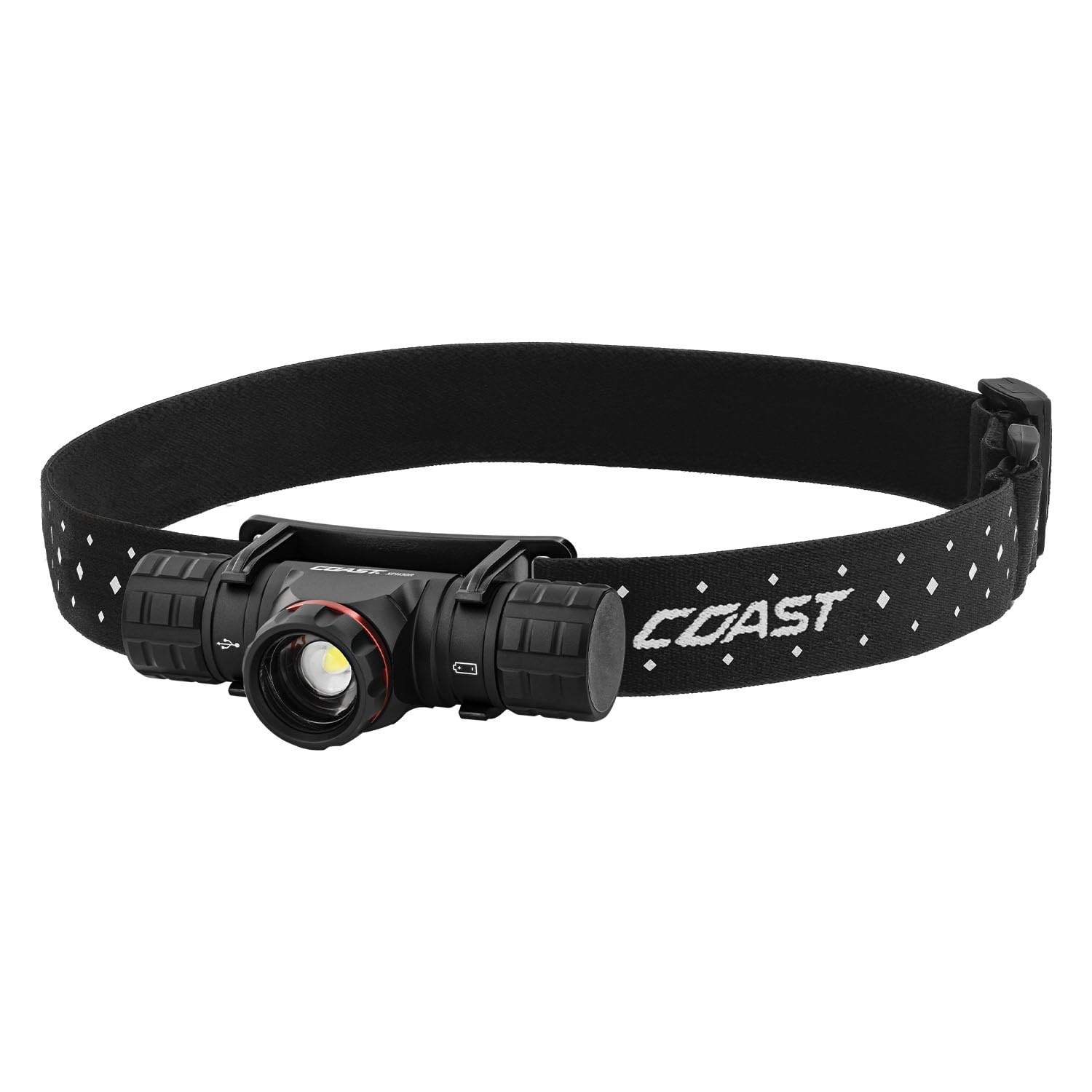
Dual-power 18650 rivals like the Coast XPH30R chase the same work-and-outdoor buyer.
Fenix HM65R build quality and waterproofing
This is where the HM65R earns its reputation. The IP68 rating means it is both fully dust-tight and rated for submersion, not just splash resistance, and Fenix backs that with a 2-meter impact-resistance rating on the magnesium housing.
Is it actually built for work?
The combination that matters for a jobsite is straightforward: a metal body that shrugs off drops, a sealed shell that ignores rain and dust, and a beam bright enough to work under a vehicle or across a yard. The HM65R checks all three. The reflective, ventilated headband spreads the load, and because the battery sits in the main housing rather than a separate rear pack, there is nothing extra to snag or dangle. The trade-off is that all the weight lives up front, which some people notice on long wears.
Fenix HM65R vs other rechargeable headlamps
The HM65R competes in a crowded field, and the right pick depends on what you value.
Against other dual-power 18650 lights
The Coast XPH30R (pictured above) chases the same buyer with a dual-power design and USB-C charging, and it is the closest direct rival in output and format. If you want the full field, our roundup of the best rechargeable headlamps for work and outdoor use lines these models up side by side on brightness, runtime, and build.
Against lightweight trail headlamps
If your nights are mostly running, hiking, or fast-and-light camping, the HM65R is more headlamp than you need. Something like the Black Diamond Spot 400-R is dramatically lighter on the forehead and still bright enough for the trail.
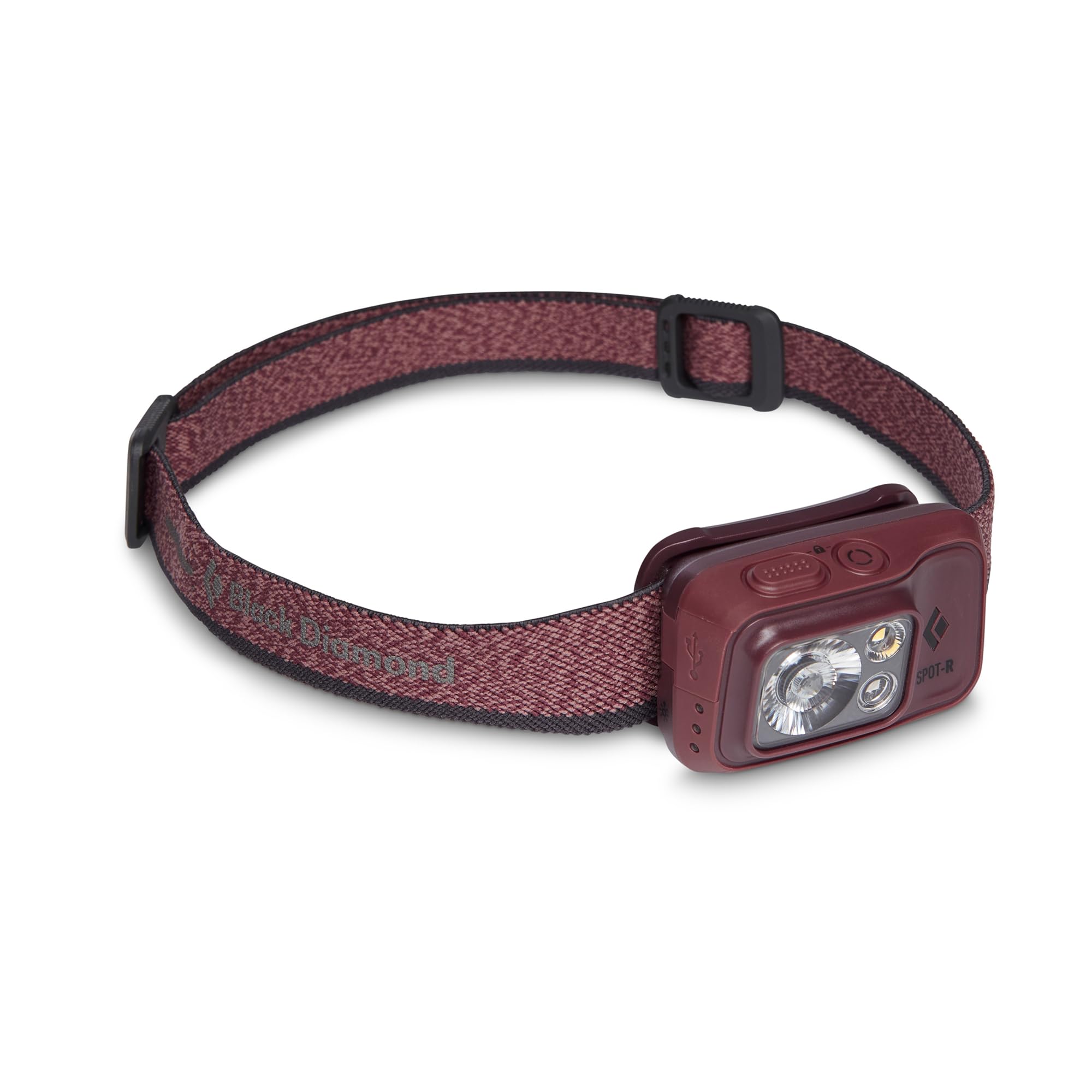
For trail running or ultralight camping, a lighter headlamp like the Spot 400-R makes more sense than the HM65R.
The honest framing is weight versus toughness. The HM65R is heavier and bulkier than a trail-oriented light, and it has no dedicated red night-vision mode. What you get in exchange is a magnesium tank that takes abuse, a swappable standard 18650 cell you can carry spares of, and the flexibility of two independent beams. If you are unsure which category you belong in, our walkthrough on how to choose a rechargeable headlamp breaks the decision down by use case.
Who the Fenix HM65R is best for
Buy it if you are a mechanic, tradesperson, hunter, angler, or camper who wants one durable, genuinely bright headlamp and does not mind a bit of front-heavy weight. The dual-switch spot-and-flood layout is the standout feature: floodlight for the engine bay or the tent, spotlight for the distant treeline, both together when you want maximum reach.
Skip it if you are primarily a trail runner or ultralight hiker counting grams, or if a red-light preserve-your-night-vision mode is non-negotiable for you. For those users, a lighter dedicated running headlamp is the smarter buy.
Is the Fenix HM65R worth it?
For work-and-outdoor use, yes. The HM65R does the one thing a versatile headlamp should: it adapts. Independent spot and flood beams cover the full range from close-up detail work to long-distance scanning, the regulated mid-levels run for a full shift, and the IP68 magnesium body is built to survive the environments where cheaper lights quietly die. The weight and the missing red mode are real limitations, but they are the price of a headlamp engineered as a tool rather than a trail accessory. If durability and dual-beam flexibility top your list, the Fenix HM65R remains one of the safest picks in its class.
Where to Buy
Specifications
- Max output
- 1400 lumens (combined spot + flood)
- Spotlight / throw
- 1000 lumens max, up to 163 m
- Floodlight
- 400 lumens max
- Battery
- 1x 18650 (3400 mAh, included) or 2x CR123A
- Charging
- Onboard USB-C
- Water & dust rating
- IP68 (IPX8 waterproof, IP6X dust-proof)
- Impact resistance
- 2 meters
- Weight
- 97 g / 3.4 oz (without battery)
- Body material
- Lightweight magnesium alloy
- LEDs
- Luminus SST40 (spot) + Cree XP-G2 R5 (flood)
Related Posts