
Packing cubes only work if you use them right
Plenty of people buy a set of packing cubes, stuff their clothes in the way they always have, and quietly conclude the cubes did nothing. That is the wrong verdict from the wrong test. A cube is not a magic space machine. It is a system for turning a chaotic pile of clothing into stackable, sortable bricks that hold their shape when your bag gets tossed onto a conveyor belt. Learn how to use packing cubes properly and two things change at once: your suitcase gets more organized, and, if you reach for the right technique, it can also get noticeably roomier.
This guide walks through the whole process, from picking sizes to loading the bag, with the roll-versus-fold and compression questions answered along the way. The short version is that packing cubes reward a little method. The longer version is below, one step at a time, so you can pack once and stop repacking at the gate.
If you are still deciding whether a set belongs in your cart at all, our companion piece on whether packing cubes are worth it tackles the value question head-on. This article assumes you already have cubes, or are about to, and want to get the most out of them. For the specific sets we rate highest, see our roundup of the best packing cubes.
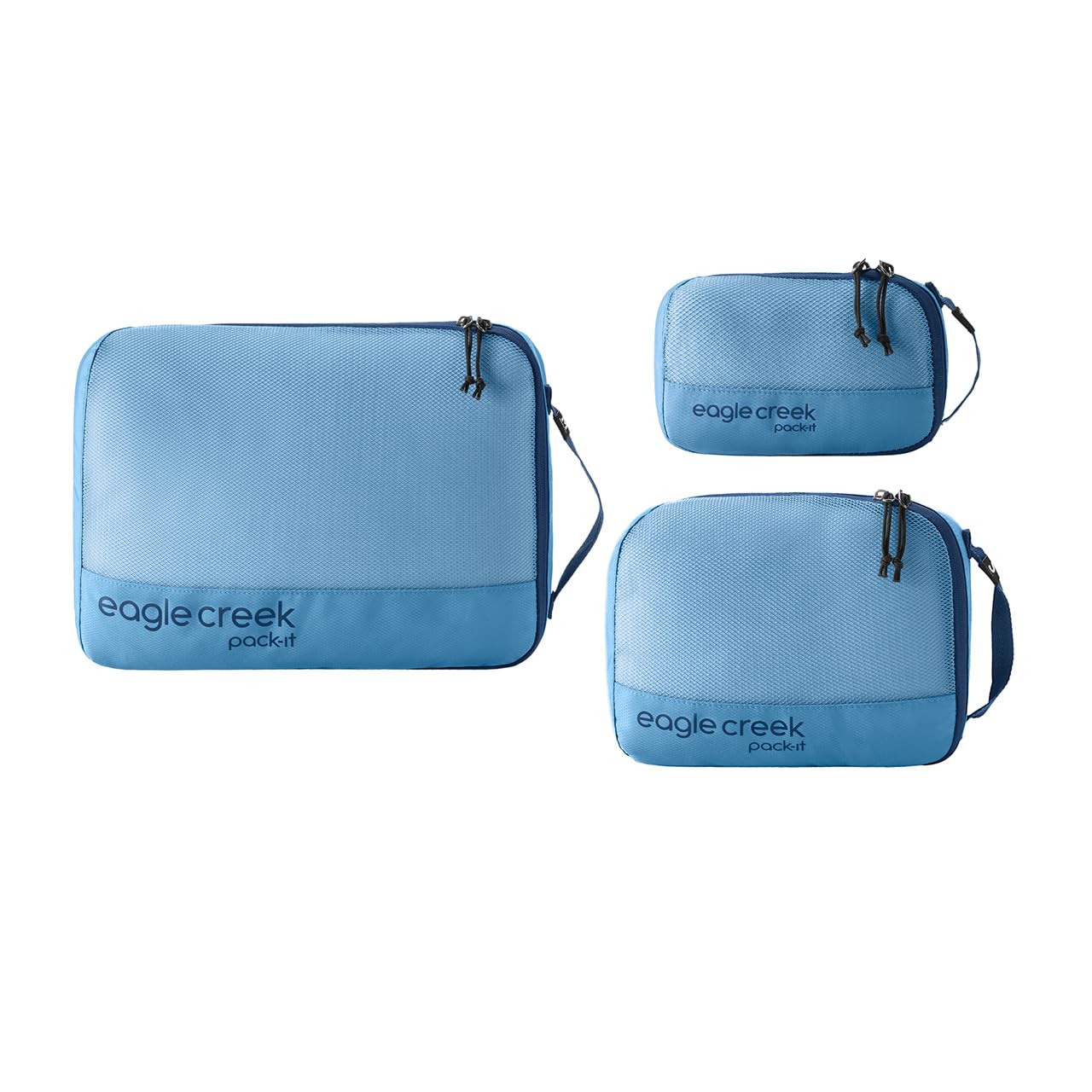
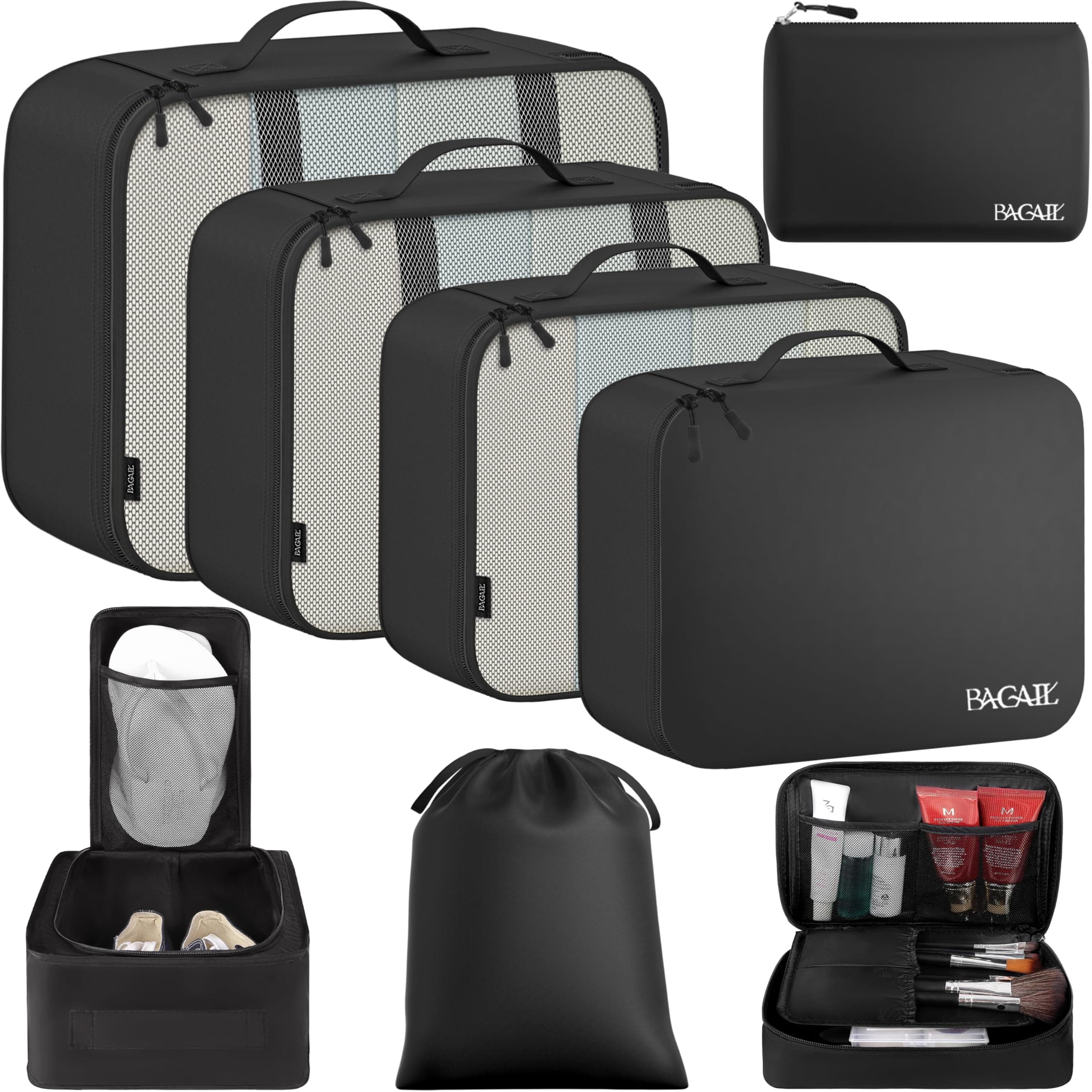
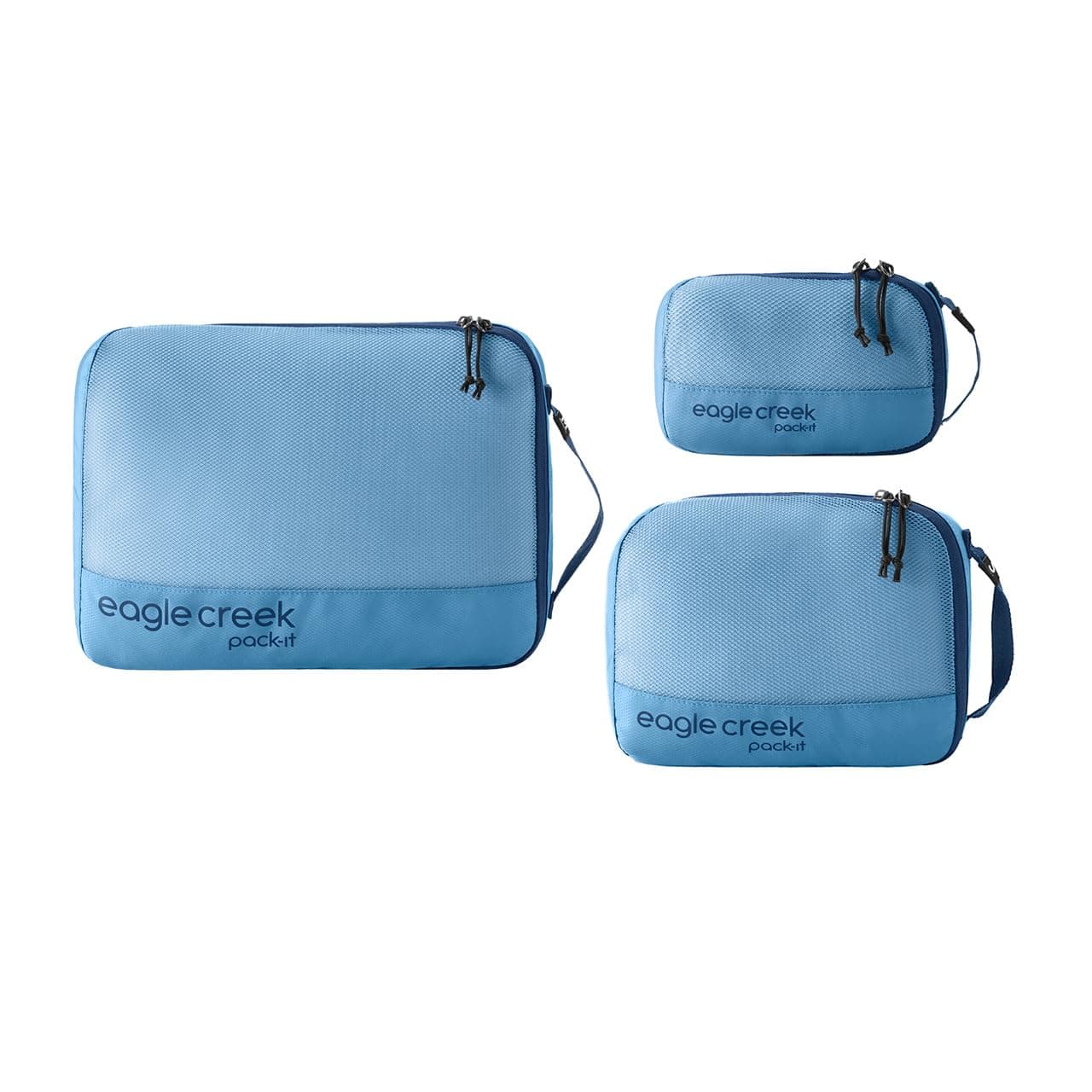
A graduated three-cube set: one large cube for tops, a medium for bottoms, and a small for socks and underwear covers most short trips.
What packing cubes actually do (and what they don't)
It helps to be clear-eyed about the job before you start, because the technique that follows depends on it.
A packing cube does three reliable things. It compartmentalizes, so your shirts, your bottoms, and your underwear live in separate zippered boxes instead of migrating into one shifting heap. It stabilizes, so when the airline stacks your bag sideways your neat layers stay put instead of sliding into a wrinkled avalanche. And it standardizes, turning oddly shaped garments into uniform rectangles that tessellate into a suitcase far better than loose clothing ever will. In its own hands-on comparison, AAA found that standard cubes delivered excellent organization, and that grouping items by clothing type was the habit that kept a bag findable.
What a plain, non-compression cube does not do is shrink your clothes. If you take a folded pile and drop it into a soft cube of the same volume, you have moved the pile, not compressed it. Space savings come from two things layered on top of the cube: the way you fold or roll before the clothes go in, and, in a compression cube, the second zipper that squeezes the air out afterward. Keep those two levers straight in your head and the rest of this guide clicks into place.
How we research these recommendations
A quick word on where this advice comes from, because you should know before you trust it. Every technique in this guide rests on three independent layers of evidence, cross-checked against each other, and a recommendation only makes the cut when all three point the same way.
First, manufacturer guidance: the folding, rolling, and compression instructions published by the companies that design these products, such as Eagle Creek's own roll-and-fold breakdown. Second, reputable third-party editorial and consumer testing, including AAA's side-by-side space comparison and the wrinkle-focused analysis from outlets like Family Handyman. Third, the consensus of experienced travel editors on the practical mechanics, drawn from expert packing guides such as this Contiki walkthrough. When those three layers agree, we present the point plainly. When they disagree, we tell you where the trade-off sits rather than picking a winner for you. That is the standard behind every step below.
Step 1: choose the right cube sizes for your trip
Most sets arrive in graduated sizes, commonly a small, a medium, and a large, and sometimes an extra-small that is really a socks-and-underwear box. The instinct to grab the biggest cube and cram everything in is the first mistake to unlearn. Large cubes are useful, but a bag packed entirely in large cubes loses the sorting benefit that made cubes worth buying.
A workable default for a week of travel looks like this. Use one large cube for the bulky, low-frequency category: sweaters, a pair of jeans, anything you pull out once and leave. Use a medium cube for the daily-rotation layer, usually tops or a mix of tops and bottoms. Use a small cube for the fiddly stuff that otherwise disappears, meaning socks, underwear, and a swimsuit. If your set includes a slim, flat cube, save it for flat items like a swim towel or a light layer you want ready at the top.
How many packing cubes do you actually need
The honest answer is fewer than most sets contain. A weekend trip rarely needs more than two cubes, one for clothes and one for the small stuff. A week of mixed-weather travel is comfortable in three to four. Anything past that and you are usually sorting for the sake of sorting, which adds bulk from the empty fabric and zippers of half-filled cubes. A cube earns its place in the bag only when it is close to full. A cube that is a third full is just a bag inside a bag, wasting the very space you were trying to save.
Match cube count to categories, not to the number of cubes in the box. If you can name what goes in each cube before you pack it, you have the right number. If two cubes would hold identical contents, you have one too many.
Step 2: sort before you pack
Do not pack straight from the closet or the laundry basket. Lay everything you plan to bring on the bed first, then sort it into piles that map to your cubes. This thirty-second step is the difference between a bag you can navigate blind at 6 a.m. and one you have to excavate.
There are two sorting philosophies, and both are valid. Packing by category puts all tops together, all bottoms together, all underthings together. It is the easiest to maintain across a trip and the fastest to repack, which is why it is the default recommendation in most expert guides. Packing by outfit or by day puts a complete outfit into a section of a cube, so you grab one bundle and you are dressed. Outfit packing shines for tightly scheduled trips, a wedding weekend or a conference, where you do not want to think in the morning. For general travel, sort by category and let the cube's zipper, not your memory, keep order.
A small refinement that pays off: keep one cube deliberately empty or half-empty on the way out. It becomes your dirty-laundry cube at the destination, so worn clothes never touch clean ones. Many sets include a mesh or drawstring laundry bag for exactly this, and if yours did not, an empty cube does the job.
Step 3: rolling versus folding, and which belongs in which cube
This is the question everyone asks, and the correct answer is not one method, it is knowing when to use each.
Roll casual, fold formal
The most reliable rule of thumb, echoed across manufacturer and editorial sources alike, is roll casual, fold formal. Rolling works beautifully for soft, forgiving items: t-shirts, casual knits, leggings, activewear, socks, and underwear. Rolled tightly, these items pack without hard creases, and they let you see the whole contents of a cube at a glance instead of lifting layers. Family Handyman's analysis notes that rolling keeps lightweight clothes wrinkle-free precisely because there are no sharp fold lines to set in.
Folding wins for the opposite kind of garment. Dress shirts, blazers, tailored trousers, and anything in crisp cotton or linen hold their shape best when folded along their existing seams, because folding supports the fabric's natural structure rather than twisting the fibers. A rolled dress shirt is a wrinkled dress shirt. Fold those flat, ideally with the fold falling where a crease is supposed to be anyway.
For most travelers the practical outcome is a hybrid cube: rolled casual clothes in one, flat-folded nicer pieces in another, so the two techniques never fight for the same box.
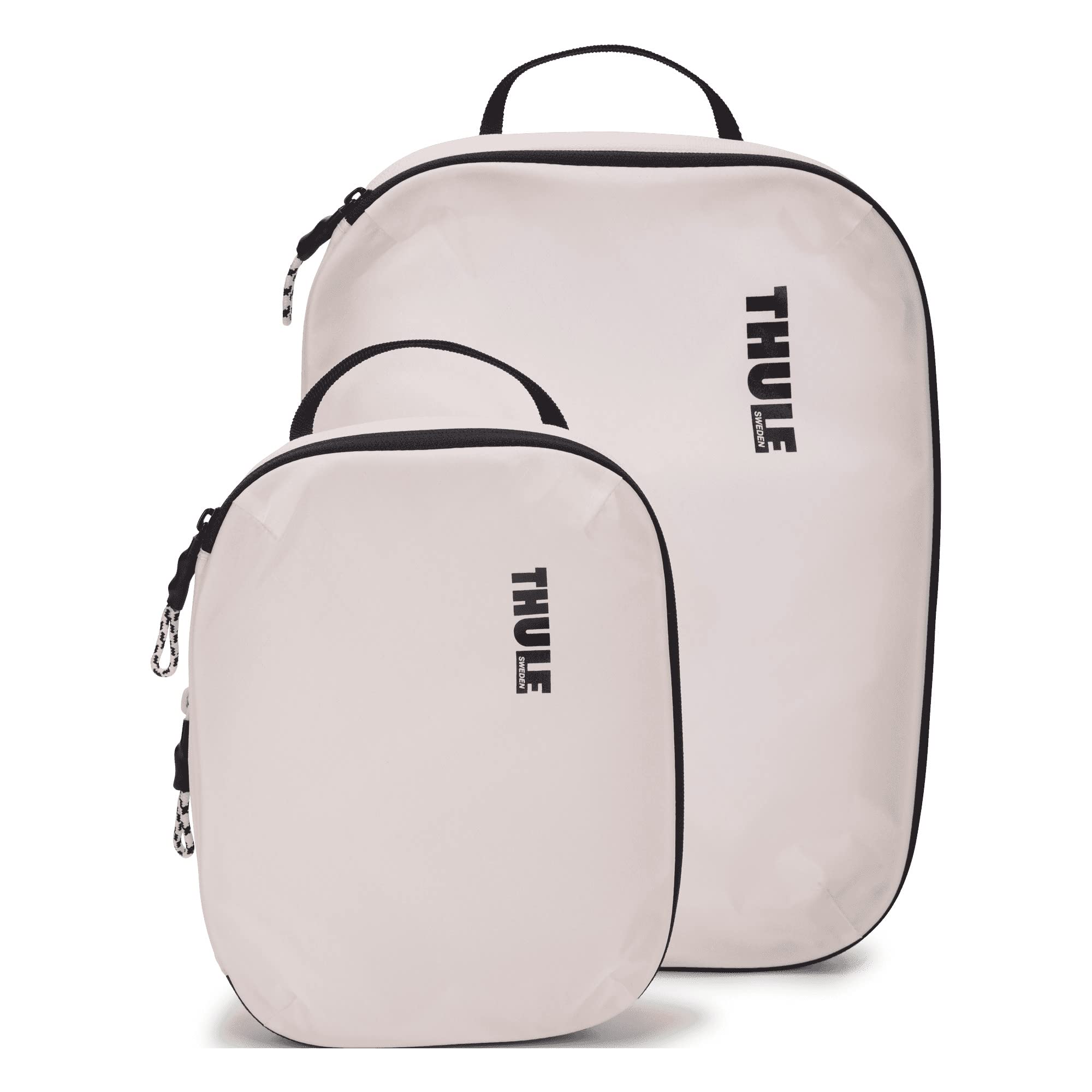
Semi-transparent cubes let you fold flat and still see what is inside, which suits dress shirts and anything you want to keep crease-free.
The bundle method for the truly wrinkle-averse
There is a third technique worth knowing for a bag of nice clothes: bundle wrapping. Instead of folding each garment on its own, you wrap items around a central core, largest and least wrinkle-prone on the outside, most delicate in the middle, building one soft parcel that drops into a single cube. Bundling all but eliminates hard creases because nothing gets a sharp individual fold. The trade-off is that you unwrap the whole bundle to reach any one item, so it suits a garment-heavy trip where you unpack fully on arrival, not a hop between cities where you live out of the bag.
Step 4: how to use compression packing cubes
Compression cubes are where the real space savings live, and they work differently from standard cubes, so the technique changes.
A compression cube has two zippers. The first closes the cube the normal way. The second runs around the whole perimeter, and zipping it cinches the cube down, forcing trapped air out through the fabric or a mesh panel so the packed height drops. That second zipper is the entire point, and skipping it, or half-zipping it because the cube feels stuffed, is the most common way people waste a compression set.
The counterintuitive part: fold, do not roll, inside a compression cube. Flat-folded clothes stacked in even layers present a uniform surface for the zipper to press down. A cube full of loose rolls has air pockets between the rolls that the zipper cannot fully evacuate, so it compresses less and lumpily. Lay the folded stack in, close the main zipper, then run the compression zipper slowly and evenly all the way around. Press the cube flat with your hand as you go to help the air escape.
Fill the cube properly before you compress. Compression needs something to work against. A cube packed to maybe eighty percent of its loose volume, then cinched, gives you the satisfying flat brick. A half-empty cube just folds in on itself and saves nothing. This is why the budget-friendly Gonex compression set, with its double-zip design and included shoe and laundry bags, is a sensible first compression cube: it teaches the technique without a premium price, and the mechanics are identical to pricier sets.
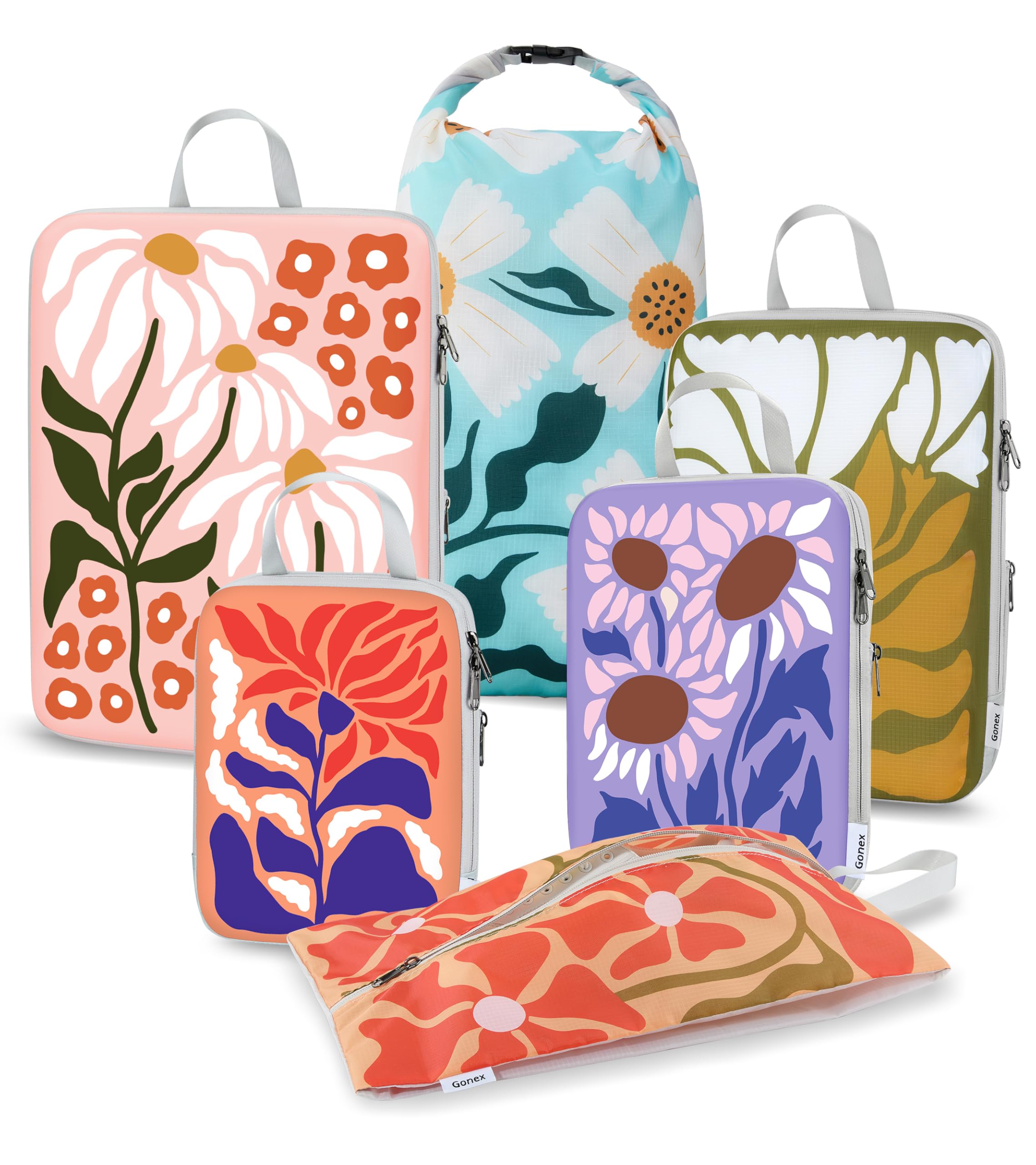
A compression set folds flat and then zips down a second time; the included shoe and laundry bags keep dirty and clean items apart.
Do compression cubes really save space?
Yes, with honest caveats. Independent testing generally puts the volume reduction from compression in the range of roughly a quarter to a half, depending heavily on what you pack. Soft, air-trapping fabrics compress the most: t-shirts, knits, activewear, and underwear. Stiff denim, structured jackets, and bulky outerwear compress far less because there is little air to squeeze out in the first place. In AAA's comparison, compression cubes conserved the most space of any method tested, ahead of plain rolled packing.
Two caveats keep this honest. First, a compressed cube is no longer a tidy rectangle. It squeezes hardest at the edges and bulges in the middle, so compressed cubes stack together less neatly than uncompressed ones, and you can lose a little of the gained space to the gaps between bulging cubes. Second, tightly compressed clothes wrinkle more, which is the same trade-off AAA flagged. Compression buys volume at the cost of crispness, so keep dress clothes in a standard cube and reserve compression for casual layers.
Step 5: load the cubes into your bag
Packed cubes still need to go into the suitcase in a sensible order, and the order depends on your bag type.
For a roll-aboard or checked suitcase that lies flat and opens like a clamshell, treat it like a shelf laid on its back. Put the heaviest, densest cube, usually shoes or the large clothing cube, at the end that will sit at the bottom when the bag stands upright, which is the wheel end. That keeps the bag's center of gravity low so it rolls upright instead of tipping. Lay the remaining cubes flat in a single even layer, filling the footprint before you stack, so nothing shifts in transit. Slot soft items and the small-stuff cube into the gaps around the edges.
For a backpack or top-loading duffel, think in vertical layers instead. Heaviest cube near your back and toward the bottom-middle for comfortable load carriage, lighter cubes toward the outside and top. Cubes are a gift in a backpack precisely because they turn a formless sack into stackable blocks you can lift out in one motion.
Shoes deserve their own note. Bag them, in the set's shoe pouch or a spare cube, so soles never touch clothes, and stuff socks or a charger inside each shoe to reclaim the hollow. Set them at the bottom or the wheel end, never on top of folded shirts.
Step 6: living out of your cubes at the destination
The payoff arrives when you reach the hotel. Done right, you do not unpack at all. Lift the cubes out, set them in a drawer or on a shelf, and you have a functioning dresser. Unzip the top of each cube and the whole category is visible.
This is where the sorting from Step 2 earns its keep. The tops cube stays the tops cube all week. Worn clothes go straight into the laundry cube you left empty on the way out, quarantined from the clean ones. Repacking to leave is a matter of zipping cubes shut and dropping them back into the bag in the same order, not refolding a week of chaos. A set with mesh top panels, like the Eagle Creek Pack-It Reveal, makes this even faster because you can read every cube's contents through the window without opening it.
Packing cube mistakes to avoid
A handful of habits quietly undo the benefits. Skip these and you are most of the way to packing like someone who has done it a hundred times.
- Overstuffing a single cube. A cube crammed past its zipper is a cube that bulges, refuses to lie flat, and strains its seams. Distribute across cubes instead. This is doubly true for lightweight budget cubes, whose thin panels bulge first.
- Using only large cubes. You lose the sorting benefit and end up excavating. Mix sizes so each category has a right-sized home.
- Forgetting the second zipper. On a compression cube, an un-cinched compression zipper means you paid for compression and got a plain cube.
- Rolling inside compression cubes. Rolls leave air pockets the compression zipper cannot evacuate. Fold flat for compression.
- Packing cubes only half full. Empty fabric and zippers add bulk without holding anything. Consolidate until each packed cube is close to full.
- Compressing your good clothes. Compression and crispness are opposites. Keep the blazer in a standard cube.
- Treating cubes as the whole system. Cubes organize; your fold or roll technique does the space-saving. You need both.
How to use packing cubes for different kinds of trips
The method flexes with the trip. A few tuned setups:
Weekend carry-on. Two cubes is plenty. One medium for rolled casual clothes, one small for socks, underwear, and a charger pouch. Skip compression unless you are squeezing in a bulky layer; for two days it adds fuss without much payoff.
One-week mixed-weather trip. Three to four cubes. A large for bulky knits and jeans, a medium of rolled daily tops, a small for underthings, and one compression cube to swallow a fleece or a second pair of jeans. Leave the small cube's twin empty as your laundry cube.
Business travel. Lean on folding and one flat cube or garment folder for shirts and a blazer, kept uncompressed and crease-supported. A separate small cube handles casual and gym clothes. Bundle the dressy pieces if wrinkles are the enemy.
Long-haul, one-bag travel. This is where compression cubes earn their keep. Fold casual layers flat, compress hard, and reserve one standard cube for anything you refuse to wrinkle. Keep the densest cube at the wheel end for balance.
Frequently asked questions
Do packing cubes save space on their own? Not by themselves. Standard cubes organize and stabilize; the space saving comes from how you fold or roll and, above all, from a compression cube's second zipper. Pair a good folding technique with compression and the volume gain is real.
Should I roll or fold in a packing cube? Roll casual, forgiving items to save space and see the contents; fold structured or dressy items along their seams to prevent wrinkles. In a compression cube specifically, fold flat so the cube can squeeze evenly.
How full should a packing cube be? Close to full, but not straining the zipper. A near-full cube holds its shape and, in a compression cube, gives the zipper something to press against. A half-full cube wastes space.
Can I put shoes in a packing cube? Yes, ideally in a dedicated shoe bag or a spare cube so soles stay off your clothes. Stuff socks inside the shoes to use the hollow, and pack them at the bottom or wheel end.
Do compression cubes wrinkle clothes? More than standard cubes, because the squeeze that saves space also presses in creases. Keep dress clothes uncompressed and save compression for casual fabrics.
The bottom line
Using packing cubes well is not complicated, it is just deliberate. Choose sizes that match your categories, sort before you pack, roll the casual clothes and fold the formal ones, and remember that a plain cube organizes while your technique and a compression zipper do the shrinking. Load the densest cube low and near the wheels, quarantine your laundry in a spare cube, and unpack by simply setting the cubes on a shelf. Do that, and the cubes stop being fabric boxes you bought on a whim and start being the reason your bag is tidier and, when you want it, smaller. When you are ready to pick a set that fits how you travel, our guide to the best packing cubes breaks down the standouts by budget, compression, and durability.
Related Posts