
Can you get a genuinely good cordless drill for under $100?
Short answer: yes, and it is not close. The sub-$100 shelf is where most people should be shopping, not settling. A hundred dollars now buys a two-speed, lithium-ion drill/driver from a major brand, often with a battery and charger in the box, that will hang shelves, assemble furniture, build a raised garden bed, and drive deck screws for years. The gap between one of these and a $250 professional drill is real, but it only shows up in work most homeowners never do.
The confusion comes from marketing that pushes torque numbers and "MAX" voltage badges as if bigger is always better. For the projects a typical DIYer actually takes on, a budget compact drill is not a compromise. Consumer Reports makes the same point in its roundup of cordless drills for $100 or less, where testing engineer John Banta notes that a lower-priced drill "can do most of the same tasks as a pricier model, just for a shorter period of time between battery charges." Runtime, not capability, is usually the thing you give up.
This guide explains what "good" means at this price, which specs actually change your results, and which specific drills are worth your money right now. If you want the full ranked lineup with side-by-side specs, our pillar guide to the best cordless drills of 2026 covers picks at every budget. This piece focuses on the under-$100 tier and how to shop it without overpaying for numbers you will never use.
What "good" actually means under $100
At this price, "good" is less about a single hero spec and more about a sensible balance. A drill that gets the fundamentals right beats one that wins a torque contest on paper. The four things worth caring about are the motor and gearing, the battery situation, the chuck, and the platform you are buying into. Everything else is secondary.
The specs that matter, and the ones that don't
Manufacturers love to lead with a maximum torque figure or a voltage badge because they are easy to compare and easy to inflate. In practice, here is where your attention pays off:
- Two speeds. A high/low gear selector is the single most useful feature in this class. Low gear gives you controlled, high-torque driving; high gear gives you fast drilling. A single-speed drill can still work, but it forces a compromise on every job.
- Whether a battery and charger are included. A "bare tool" price can look like a bargain until you add a battery and charger, which often costs more than the drill itself.
- The battery platform. Your first drill decides which future tools and batteries fit. This matters more than any spec on the box.
- Weight and length. A drill you can hold overhead without your wrist giving out is a drill you will actually use.
The specs that get oversold are raw torque above roughly 450 in-lbs, "MAX" voltage marketing (a 20V MAX pack is a nominal 18V battery), and RPM figures beyond what you can control. None of these are lies, exactly, but chasing them mostly buys you a heavier, pricier tool.
How much torque and power do you actually need?
This is the question that saves you the most money, because the honest answer is "less than you think." Drill power is quoted a few different ways, which makes cross-shopping harder than it should be. DEWALT rates its popular budget kit at 300 "unit watts out" (UWO), a combined measure of speed and torque, on the DEWALT DCD771C2 product page. Most other brands publish a maximum torque figure in inch-pounds (in-lbs). BLACK+DECKER, for example, lists 115 in-lbs for its entry drill on the LDX120C product page, while Craftsman quotes 280 UWO for the V20 CMCD700C1 kit.
For the work most homeowners do, anything in the 250 to 450 in-lbs range is plenty. Consider what those jobs actually demand:
- Hanging shelves and pictures: very little torque; a pilot hole and a screw.
- Assembling flat-pack furniture: low torque, lots of repetitive driving, where a clutch matters more than power.
- Building a raised bed or a simple bookcase: moderate torque, occasional pilot holes in softwood.
- Driving deck screws: the heaviest common household job, and still well within a good budget drill's range.
You only need the 600-plus in-lbs figures on heavier "hammer" drills when you regularly bore large-diameter holes in hardwood, drive long lag bolts, or mix mortar and thin-set. If that describes your projects, you are shopping in a different category. For everyone else, a bigger torque number is a heavier tool and a lighter wallet with no practical payoff. Even a modest drill like the BLACK+DECKER, at 115 in-lbs, handles light-duty assembly and small repairs comfortably; it only runs out of headroom on tougher driving.
12V versus 20V on a budget
Higher voltage generally means more available power and longer runtime, but it also means a bigger, heavier tool. A 12V platform keeps a drill short and light enough to fit inside a kitchen cabinet, which is exactly why finish carpenters and electricians reach for compact 12V models. A 20V MAX drill from DEWALT, Craftsman, Skil, or BLACK+DECKER gives you more headroom for the occasional tougher job.
Under $100, most of the best-value options are 20V MAX (nominal 18V) tools, because that is where the volume is and where kits with two batteries land at this price. A 12V drill can be an excellent choice if maneuverability is your priority, but budget 12V kits are less common, so you will more often find yourself comparing 20V-class drills. Neither platform is better in the abstract. The right pick depends on whether you value muscle and runtime or a tiny, light tool that fits anywhere. We dig into the trade-off across platforms in our comparison of the two systems most budget shoppers weigh against each other.
Single-speed versus two-speed
This is the line that most often separates a genuinely capable budget drill from a beginner toy. A two-speed transmission gives you a low gear for high-torque driving and a high gear for fast drilling. The DEWALT and Craftsman kits are two-speed; BLACK+DECKER's entry LDX120C is a single-speed, variable-trigger drill, which is the main reason it sits in the true-beginner tier rather than the all-rounder tier.
Single-speed is not useless. With a variable-speed trigger and a clutch, it handles light assembly and small repairs fine. But if you expect to drill and drive across a range of materials, spending a few extra dollars to get two speeds is the upgrade that pays off most often.
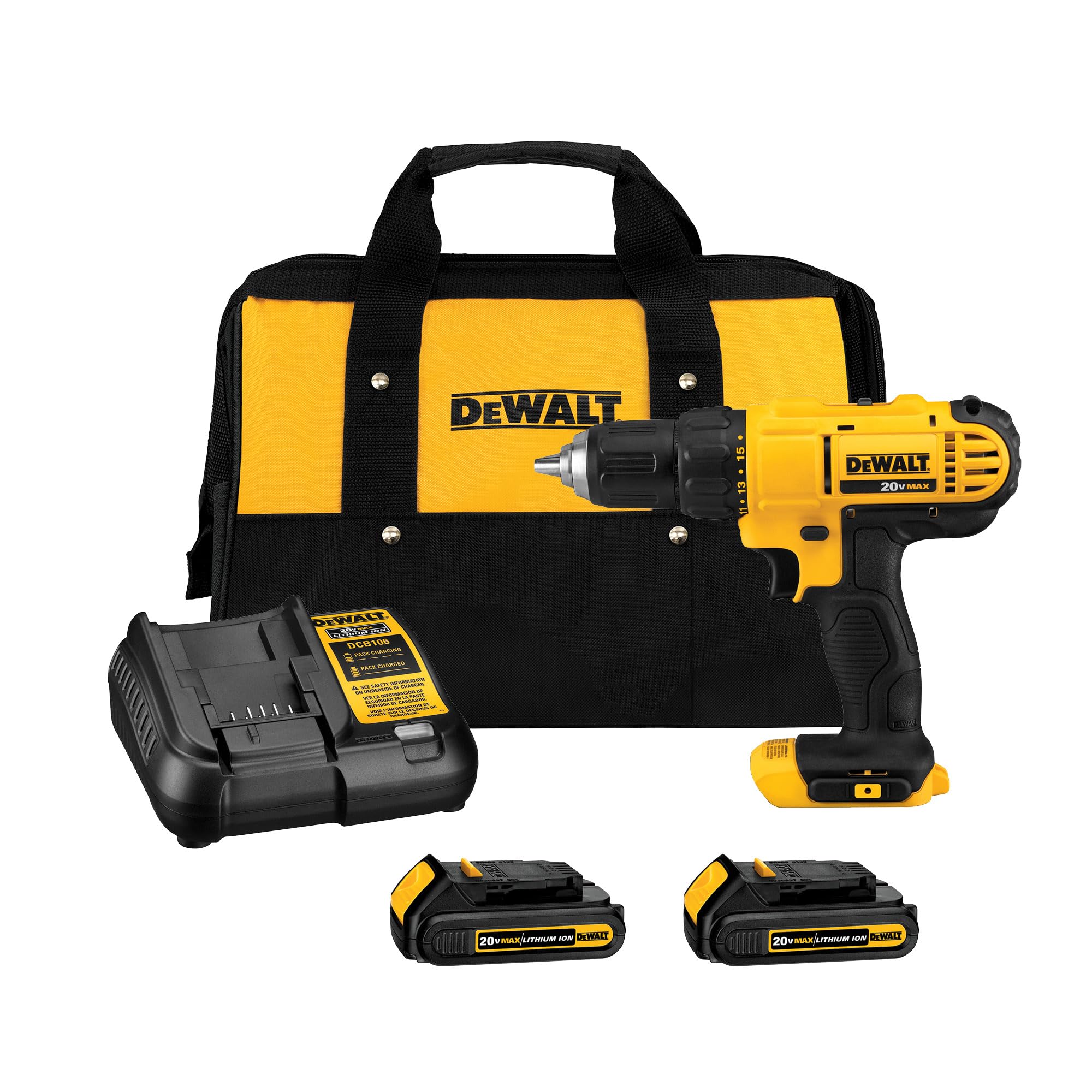
The DEWALT DCD771C2 pairs a two-speed motor with two batteries and a charger, which is why it is the safe under-$100 all-rounder.
Battery, charger, and what's actually in the box
The single biggest way to overpay, or to score a great deal, is misreading what comes with the drill. Two listings at the same price can be wildly different value once you account for batteries.
Batteries included versus bare tools
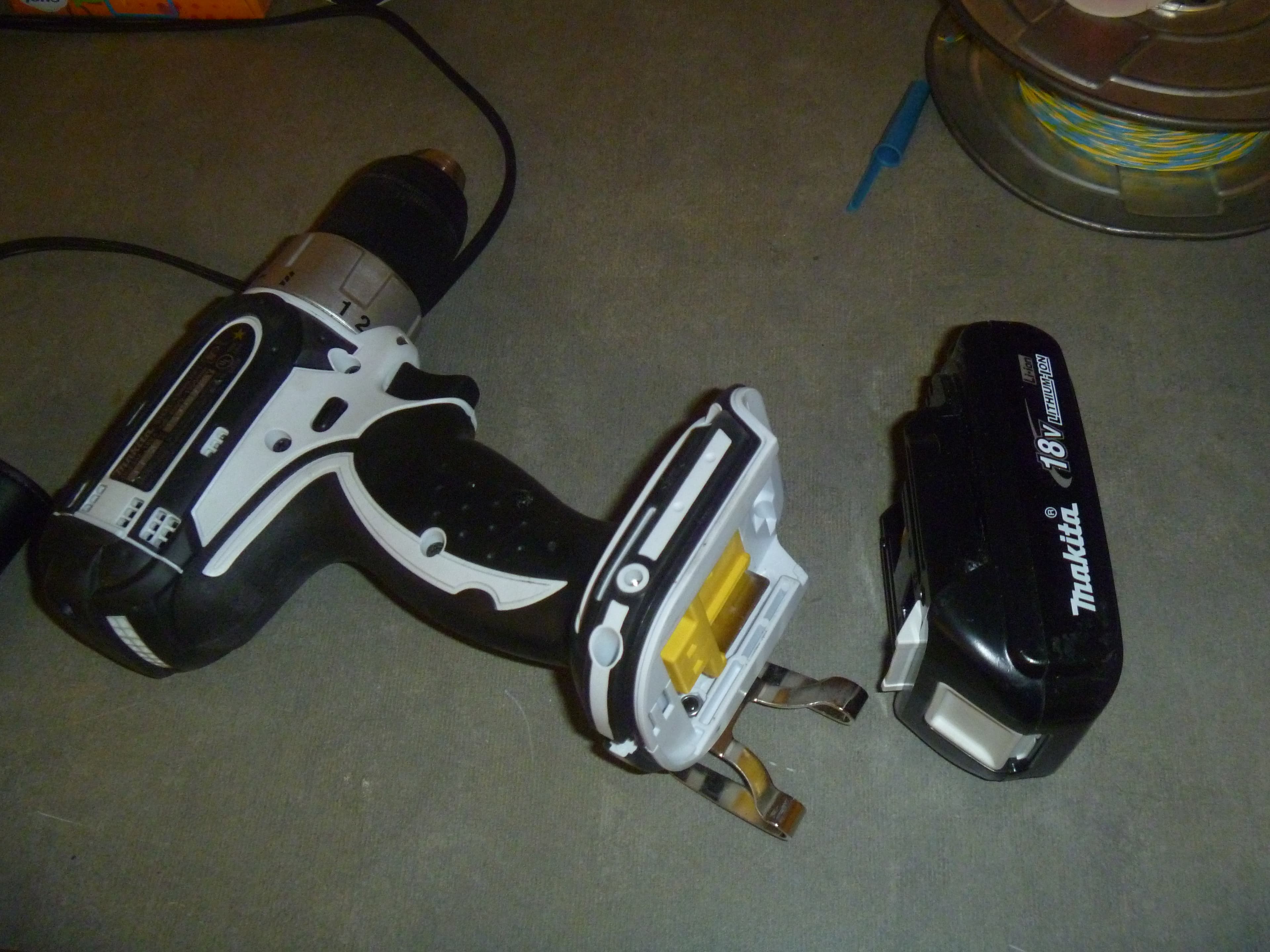
A "bare tool" is the drill only, no battery and no charger. Bare tools look cheap because they are meant for people already invested in a platform who have spare batteries lying around. If you are buying your first drill, a bare tool is usually a false economy: a single battery and charger can add $60 to $100 to the real cost.
The best budget kits include everything you need to start immediately. The DEWALT DCD771C2 is popular partly because it ships with two 1.3Ah batteries, a charger, and a bag, so you always have a spare charging while you work, per DEWALT. Two batteries in the box is a genuine value marker at this price. Craftsman's V20 kit and BLACK+DECKER's LDX120C both include a single battery and charger, which is enough to get started but means you will pause to recharge on longer sessions.
USB-C charging and battery capacity
Battery capacity is measured in amp-hours (Ah); a higher number runs longer between charges. Under $100 you will typically see 1.3Ah to 2.0Ah packs, which are sized for intermittent home use rather than all-day work. That is the runtime compromise Consumer Reports describes: the drill does the job, you just recharge more often.
One modern convenience worth flagging is USB-C charging. Some newer budget brushless kits, like Skil's PWR CORE 20 line, use a battery that tops up over USB-C, so a laptop charger or power bank can refill it, which is genuinely handy for occasional users who do not want to keep a proprietary charger on the wall. If you already live in a USB-C world, it is a small quality-of-life win that costs nothing extra.
Brushed versus brushless under $100
Motor type used to be the clean dividing line between budget and premium, but that line has blurred. Brushless motors run cooler, waste less energy, and typically deliver more runtime per charge because there is no friction from carbon brushes. That efficiency is why a compact brushless drill can post a higher torque figure from a smaller frame.
Historically, everything under $100 was brushed. Today you can find brushless drills near or under the $100 line, especially as bare tools or in single-battery kits. Skil's PWR CORE 20 brushless kit and Ryobi's ONE+ HP brushless compact drill both bring brushless efficiency into budget reach. Ryobi's tool, for instance, uses a brushless motor rated for high torque in a notably compact body, per Ryobi.
That said, brushed motors are not obsolete. They cost less, they are perfectly adequate for intermittent home use, and a quality brushed drill can last for years if you are not running it hard all day. If you pick up a drill a handful of times a year, paying extra for brushless is optional. If you expect weekly use or want the longest runtime per charge, brushless is worth the small premium. We break the trade-off down in full in our guide to brushless versus brushed cordless drills, including where the efficiency gap actually shows up in real projects.
The best cordless drills under $100 right now
Prices move, so treat the figures below as a snapshot; the strengths and trade-offs are what stay constant. Each of these is a real, currently available drill that fits a distinct kind of buyer. Anchor your decision on which description sounds like you, not on which has the biggest number.
DEWALT DCD771C2 — the safe all-rounder
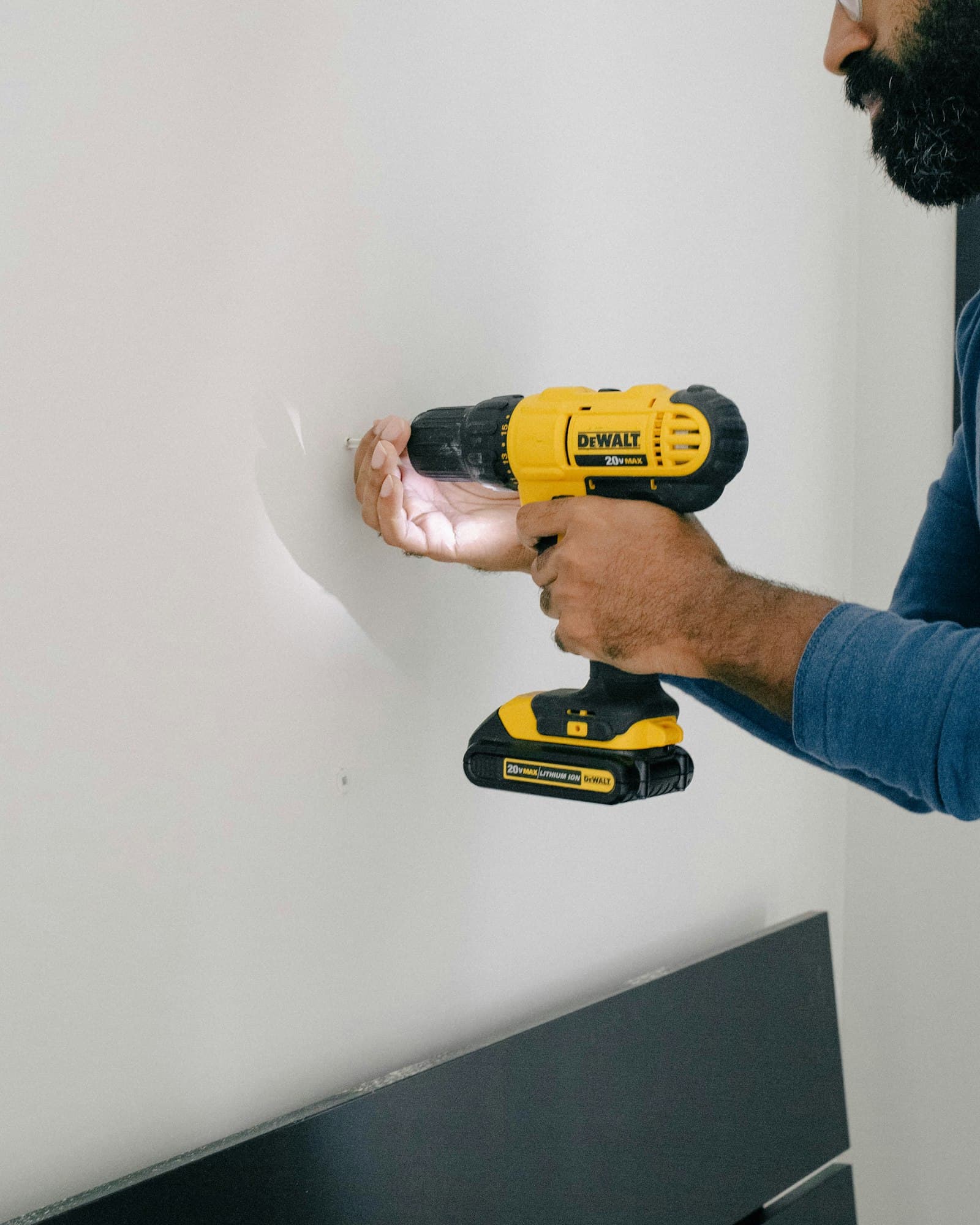
If you want one recommendation and no further homework, this is it. The DCD771C2 pairs a 300 UWO two-speed motor with a 1/2-inch keyless chuck and, crucially, includes two batteries and a charger, so there is nothing else to buy. It drives screws and bores typical holes without complaint, and it opens the door to DEWALT's 20V MAX platform, the largest tool ecosystem in the category, so adding an impact driver or a circular saw later is painless. Consumer Reports rates it as a capable general-use drill for the money in its DCD771C2 review. It is a brushed motor, so it is not the most efficient option here, but for the price and the two-battery kit it is the easiest drill to recommend. Full details are in our in-depth breakdown, the DEWALT DCD771C2 review.
BLACK+DECKER LDX120C — the true budget pick
When your budget is closer to $50 than $100, BLACK+DECKER's LDX120C is the sensible floor. It is a single-speed, variable-trigger 20V MAX drill with a 3/8-inch keyless chuck, 11 clutch settings, an LED work light, and 115 in-lbs of torque, per BLACK+DECKER. It will not tackle heavy driving, but for hanging shelves, assembling furniture, and small household repairs it is light, forgiving, and easy to live with. If you want tools and a drill together, the same drill comes in the LDX120PK 68-piece kit, which bundles the drill with dozens of hand tools and accessories, though that bundle typically pushes just past $100.
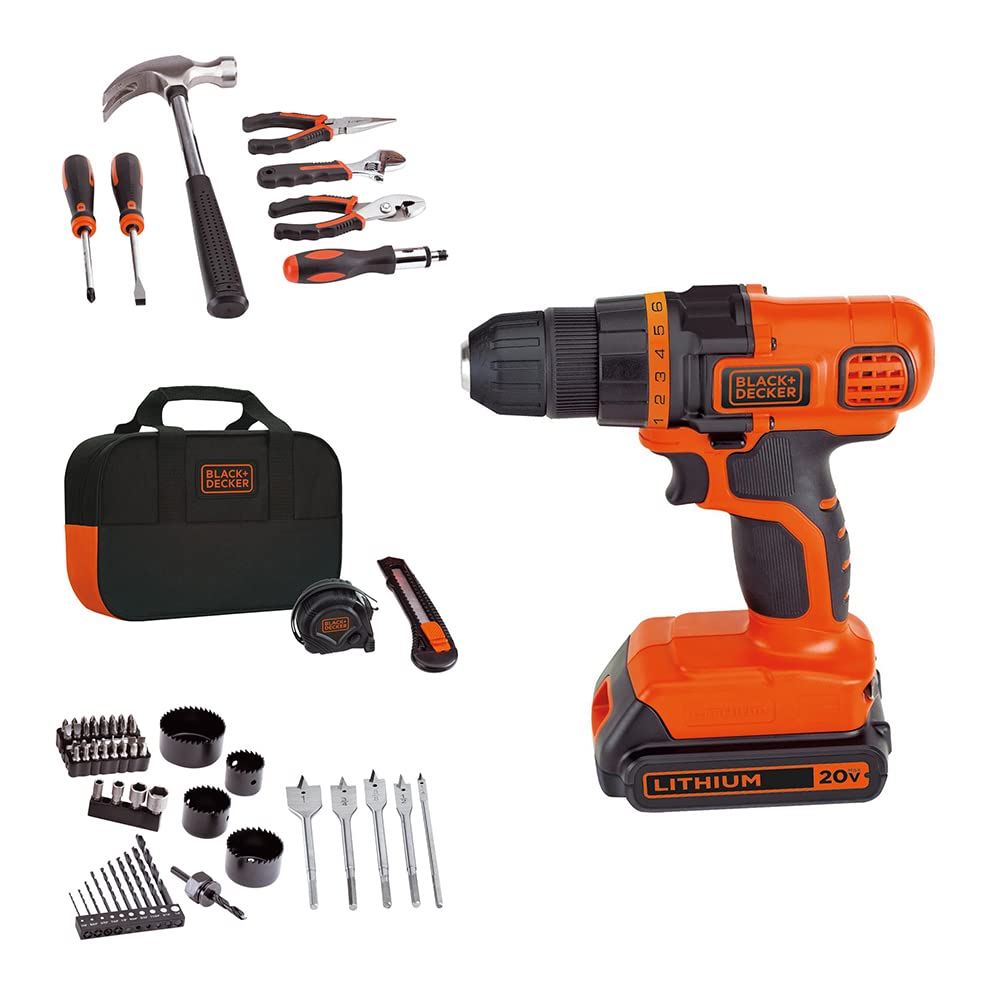
BLACK+DECKER's 20V MAX drill is the budget floor, and its 68-piece kit turns one purchase into a starter toolbox.
Craftsman V20 CMCD700C1 — best bang for the buck
Craftsman's V20 kit is the value sweet spot that frequently sells for well under the DEWALT. It brings a 280 UWO two-speed motor (0-350 / 0-1,500 RPM), a 1/2-inch keyless chuck, and an LED light, and it ships with a battery and charger, per Craftsman. You get two-speed capability and a full-size chuck at a price that often undercuts everything else here. The trade-off versus the DEWALT is a single battery instead of two and a smaller aftermarket platform, but for pure capability per dollar it is hard to beat.
Skil PWR CORE 20 — brushless value
If you specifically want a brushless motor without leaving the budget tier, the Skil PWR CORE 20 kit is the standout. It is efficient, light, and its battery charges over USB-C, and Skil rates the brushless drill notably higher on torque than most brushed rivals in this price band. Its platform is smaller than DEWALT's or Milwaukee's, and it typically ships with a single battery, but for the lowest-priced brushless kit with modern conveniences it is a strong pick. Our full write-up covers where it shines and where it does not.
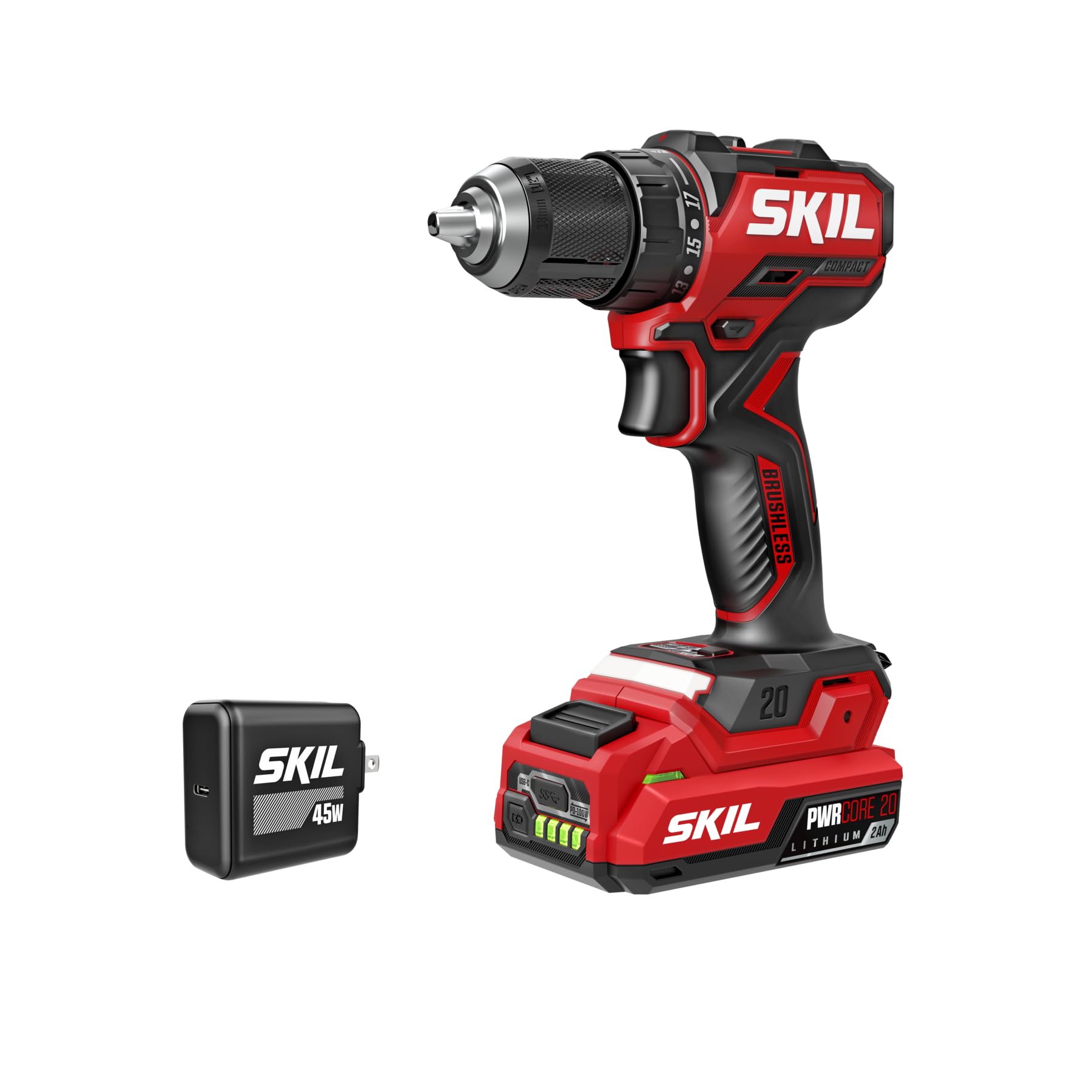
The Skil PWR CORE 20 brings brushless efficiency and USB-C charging into the under-$100 tier.
Ryobi ONE+ HP — brushless with room to grow
Ryobi's ONE+ HP compact brushless drill is the pick if you want brushless efficiency plus one of the deepest budget-friendly tool ecosystems around. The ONE+ platform spans hundreds of tools, so your first battery keeps paying off. The catch is pricing: the full brushless kit with two batteries tends to sit just above $100, and the bare tool needs a battery to run, per Ryobi. If you can catch the kit on sale or already own ONE+ batteries, it is an excellent long-term value.
Chuck size and clutch: small details that change the feel
Two details separate a forgiving drill from a fussy one, and both are easy to overlook.
The chuck is the jaw that grips your bit. A 3/8-inch chuck, like the one on the BLACK+DECKER, covers the vast majority of household bits. A 1/2-inch chuck, found on the DEWALT and Craftsman, accepts larger-shank bits and spade bits for bigger holes, so it is the more versatile choice if you think you will grow into bigger projects. All of these use keyless chucks, so you change bits by hand without a separate key.
The clutch is the numbered collar behind the chuck. It lets the drill slip before it overdrives and strips a screw or snaps the head off, and more settings mean finer control. For furniture assembly and delicate driving, a multi-position clutch is worth more than raw torque, because it is what keeps you from splitting a cabinet panel or camming out a screw. When two budget drills look similar on paper, the one with two speeds and a good clutch will feel noticeably better in the hand.
Where a sub-$100 drill falls short
Being honest about the limits helps you decide whether $100 is enough for you. A budget drill gives up ground in a few predictable places:
- Runtime. Smaller 1.3Ah to 2.0Ah batteries mean more frequent recharges on long sessions. This is the main compromise, and it is why a second battery is such a valuable inclusion.
- Sustained heavy work. Brushed motors heat up under continuous load. Boring dozens of large holes back to back is where a pricier brushless or higher-voltage drill pulls ahead.
- Metal chucks and premium build. Many budget drills use plastic-bodied chucks and lighter housings. They hold up fine for home use but lack the all-metal ratcheting chucks and rugged feel of pro tools.
- Warranty and service. Coverage varies. DEWALT's DCD771C2 carries a three-year limited warranty, which is generous for the price; some budget tools offer less.
None of these matter for typical homeowner projects. They only become deciding factors if you are drilling and driving for hours at a stretch or working in tougher materials regularly. If that is you, step up to a mid-tier brushless drill; if it is not, your money is better kept in your pocket.
How we research these picks
Our recommendations come from triangulating three separate bodies of evidence rather than a single opinion. We start with each manufacturer's published specifications, weigh them against findings from established review outlets and consumer-testing organizations, and then read for the patterns that recur across large volumes of verified owner feedback. Where those layers agree, we recommend with confidence; where they disagree, we say so and explain the trade-off.
For this guide that meant pulling torque, speed, chuck, battery, and weight figures directly from DEWALT, BLACK+DECKER, Craftsman, Skil, and Ryobi so every number traces to a primary source, then cross-referencing consumer-testing coverage such as Consumer Reports to see how each drill performs beyond its spec sheet. We recheck pricing and availability regularly because street prices in this category move often, especially around sales. The goal is a shortlist you can trust without wading through the spec-sheet noise yourself.
Frequently asked questions
Is a cordless drill under $100 actually worth buying?
Yes, for the vast majority of homeowners. A budget drill handles hanging shelves, assembling furniture, building simple projects, and driving deck screws. As Consumer Reports notes in its under-$100 drill guide, a lower-priced drill can do most of what a pricier one does, just with shorter runtime between charges. You only need to spend more if you regularly do heavy-duty drilling.
Which cordless drill under $100 comes with two batteries?
The DEWALT DCD771C2 is the standout, shipping with two 1.3Ah batteries and a charger, per DEWALT. Two batteries let you keep working while one charges, which is a meaningful convenience on longer projects. Most other budget kits, including Craftsman's V20 and BLACK+DECKER's LDX120C, include a single battery.
Do I need a brushless drill, or is brushed fine under $100?
Brushed is fine for occasional home use, and it is where most budget kits land. Brushless runs cooler and gives more runtime per charge, so it is worth the small premium if you will use the drill weekly or want the longest battery life. Budget brushless options like the Skil PWR CORE 20 and Ryobi ONE+ HP exist if you want the efficiency. Our brushless versus brushed comparison covers exactly where the difference shows up.
How much torque do I need in a budget cordless drill?
For typical household drilling and driving, 250 to 450 in-lbs is plenty, and even the modest 115 in-lbs BLACK+DECKER handles light assembly. You only need higher figures for boring large holes in hardwood, driving long lag bolts, or mixing mortar. Chasing a bigger torque number than your projects require mostly buys a heavier, more expensive tool.
What is the best cordless drill under $100 for a beginner?
For a first-timer who wants a capable, expandable tool, the two-speed DEWALT DCD771C2 or Craftsman V20 kit is the safest choice. If your budget is tighter or you want the simplest possible tool, the single-speed BLACK+DECKER LDX120C is light and forgiving. Whichever you choose, our beginner walkthrough on how to use a cordless drill covers pilot holes, clutch settings, and bit selection so you get clean results from day one.
12V or 20V for a cheap drill?
A 20V-class drill gives you more power and runtime headroom, and most of the best budget kits are 20V MAX. A 12V drill is smaller and lighter, ideal for tight spaces and overhead work, but budget 12V kits are less common. If you want one do-everything drill, 20V is the safer default; choose 12V only if compact size is your top priority.
Related Posts