Cordless Drill Battery Platforms Compared: How to Pick the System You'll Live With
 Abdulwahab Suleiman·August 2, 2026
Why the battery platform matters more than the drill
Here is the counterintuitive truth about buying a cordless drill: the drill itself is often the least important part of the decision. What you are really choosing is a battery platform, a proprietary family of batteries and chargers that only works with tools from that same brand and voltage line. Buy a drill today and you have quietly committed to a system that decides which impact driver, circular saw, leaf blower, or work light you can add later without buying another charger and another battery.
That commitment is why cordless drill battery platforms deserve a careful comparison before you spend a cent. A $99 drill is a small decision. A battery platform is a five-year decision. Get it right and every future tool drops onto the same packs you already own. Get it wrong and you end up with a drawer full of incompatible chargers and a nagging sense that you paid twice for the same convenience.
This guide compares the platforms behind the most popular compact drills, with a close look at the two systems our review coverage keeps returning to: DEWALT's 20V MAX and Milwaukee's M12. We will translate the confusing spec language (volts, amp-hours, UWO, brushless), map out how the major ecosystems differ in size and lock-in, and give you a plain framework for picking the one you will actually be happy living with. For the head-to-head drill picks, our best cordless drills of 2026 guide ranks the individual tools; this piece is about the systems underneath them.
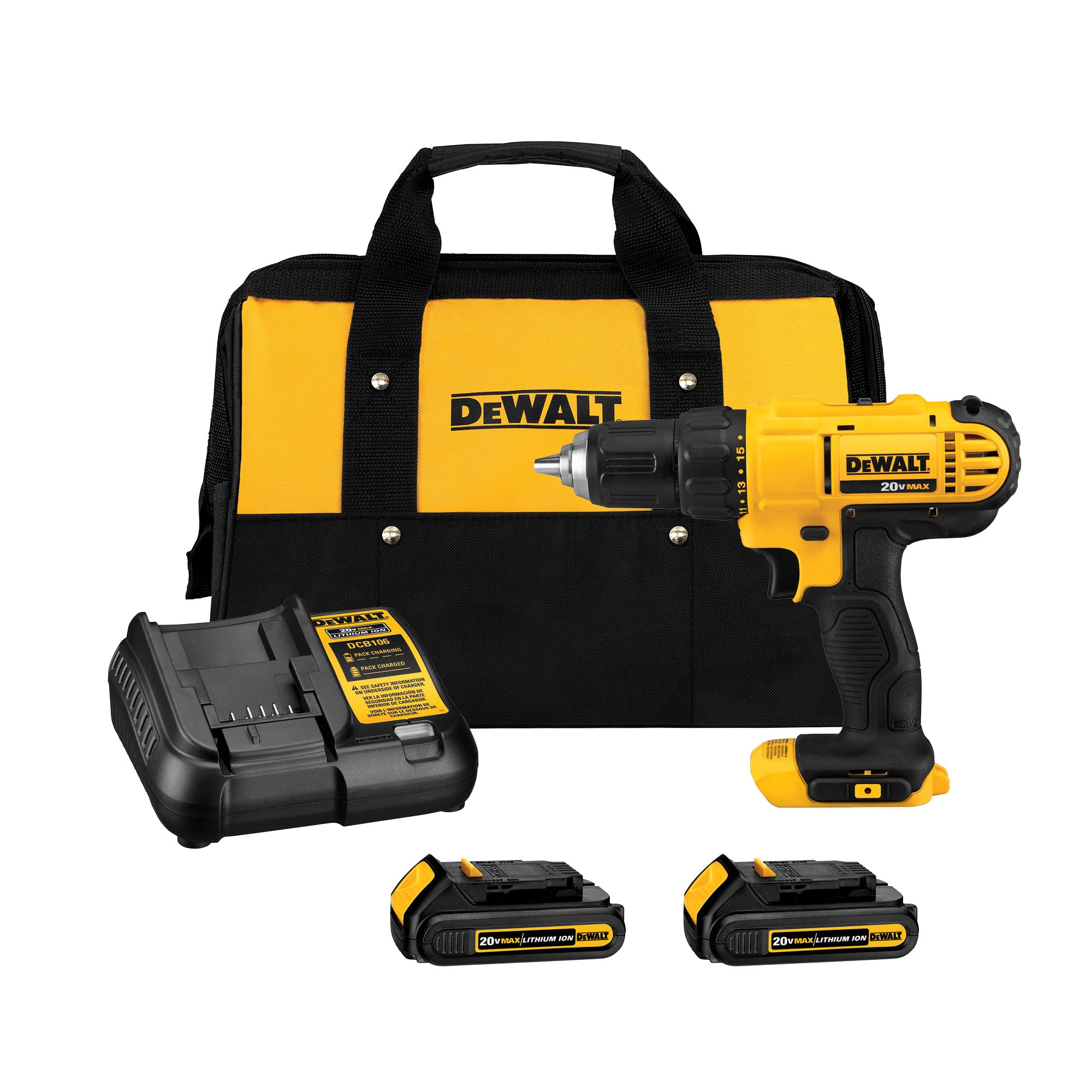
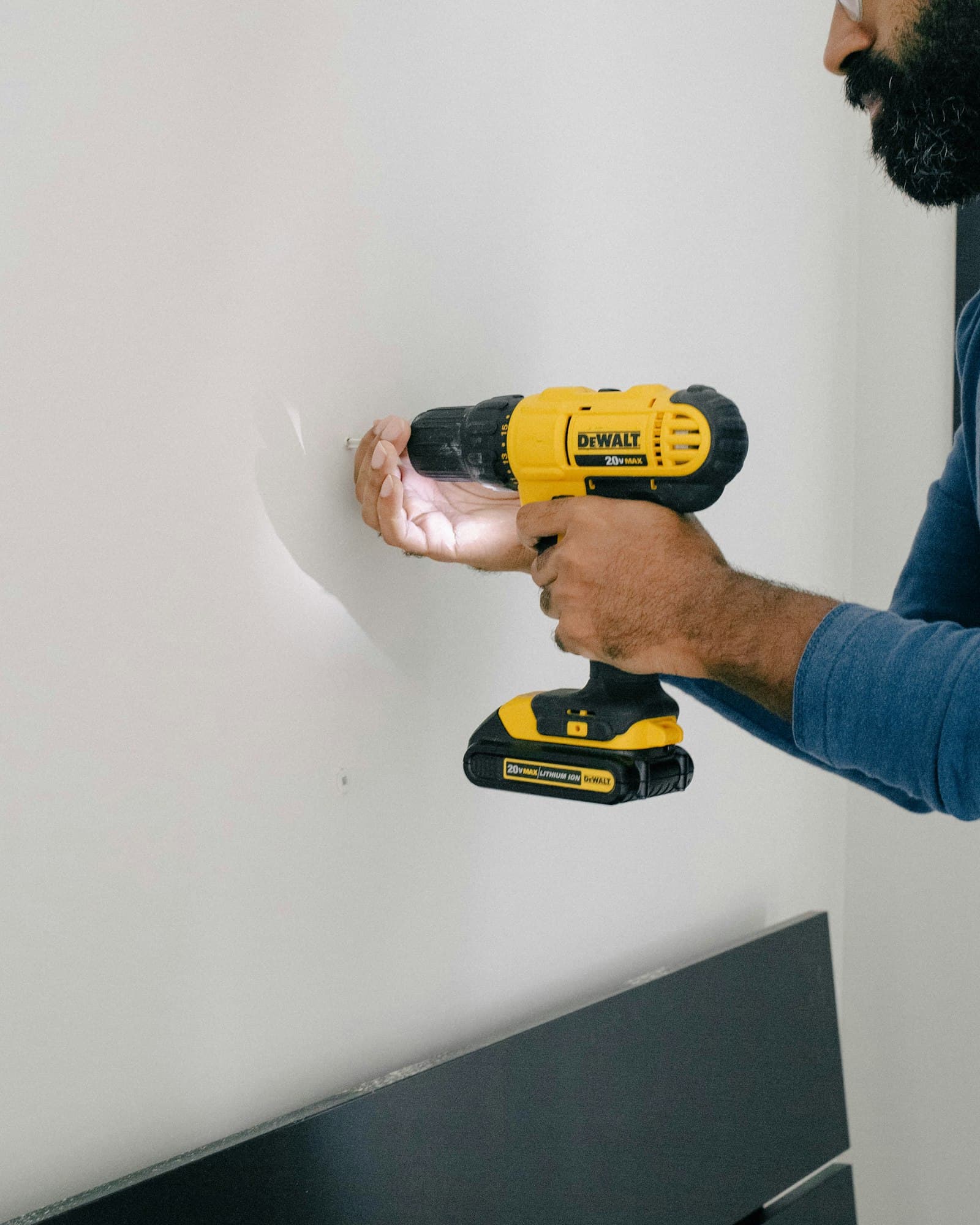
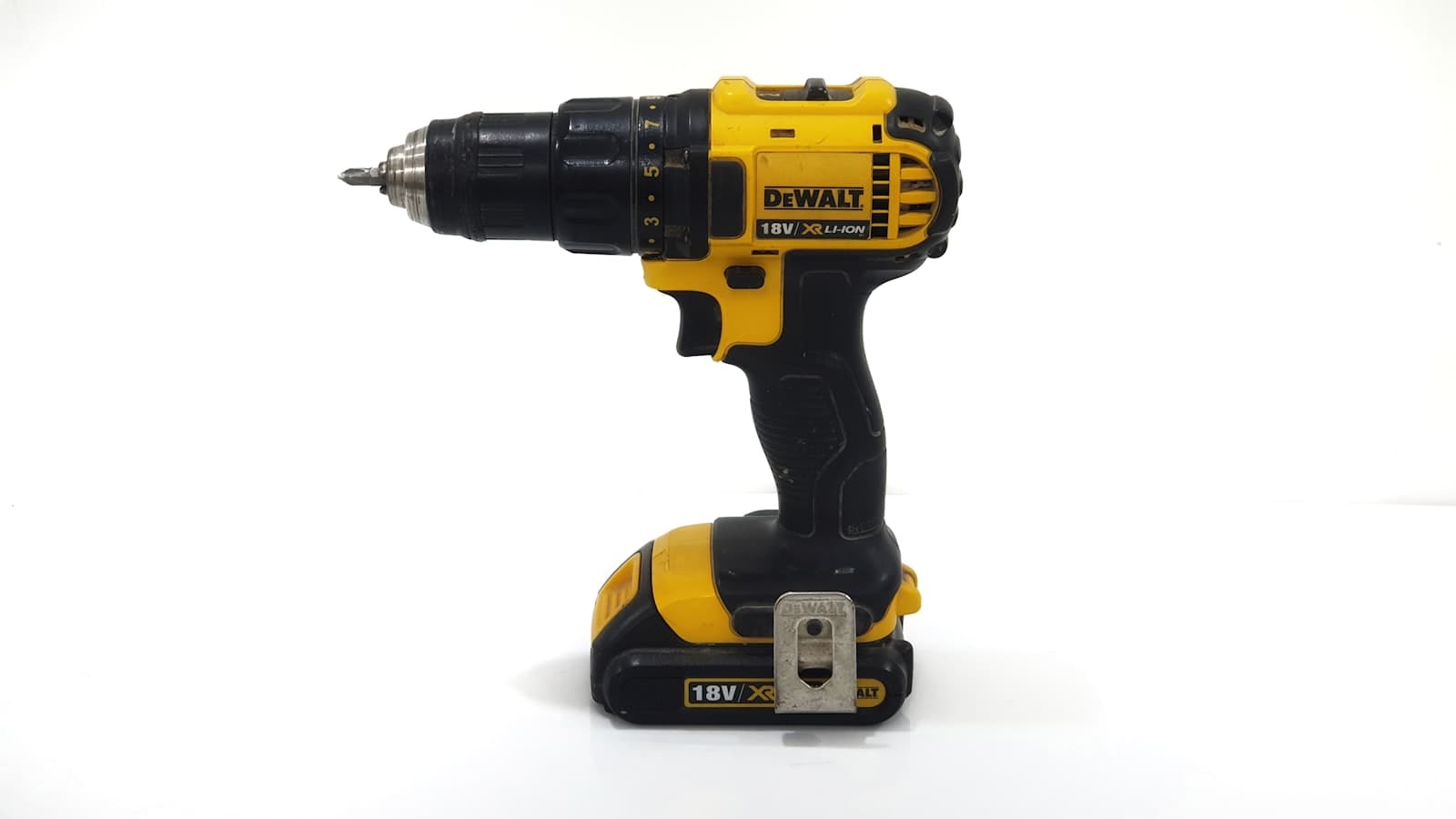
A drill kit is really an entry point into a battery platform; the DEWALT DCD771C2 buys you into the 20V MAX system.
What a battery platform actually is
A battery platform is a matched set of three things: a battery pack with a specific voltage and physical connector, a charger built for that pack, and every tool the brand designs to accept it. The mechanical rail-and-latch interface and the electronics inside are proprietary, so a DEWALT 20V MAX pack physically will not seat in a Milwaukee tool, and vice versa.
The appeal is real. Consumer Reports frames it plainly in its battery platforms ratings: the point of a platform is that "you can buy all of your tools from a single brand, then use the batteries interchangeably and save about 30 percent on the purchase price" because you stop paying for a battery and charger with every new tool. Buy the drill as a kit, and every bare tool afterward is cheaper because you already own the expensive part.
The catch is equally real. Each brand's platform is a walled garden. Consumer Reports notes that "each major power tool brand utilizes its own proprietary battery platform, meaning you can't use them interchangeably with tools from other systems." That is the lock-in. Once you have three or four packs of one brand, switching means re-buying batteries and chargers you already have, which is why the first platform you invest in tends to be the one you stay with for years.
Platforms are not always one per brand
A common trap: the same manufacturer often runs several incompatible platforms. Milwaukee sells both M12 (12-volt, compact) and M18 (18-volt, full-size), and the two do not share batteries. DEWALT runs 12V MAX, 20V MAX, and the higher-end FLEXVOLT line. The lesson is to compare platforms, not brand names. "I use Milwaukee" tells you almost nothing until you know whether it is M12 or M18.
Reading the specs: voltage, amp-hours, and torque
Before comparing platforms you need to decode the three numbers that dominate every drill listing, because marketing leans on all three interchangeably even though they measure different things.
What voltage tells you (and what it does not)
Voltage is the headline figure, and it is the most misunderstood. Higher voltage generally supports more available power and higher torque, which is why an 18V or 20V drill can bore bigger holes and drive longer fasteners than a 12V model. But voltage also drives size and weight: more cells in series means a bigger battery and a bulkier tool.
That trade-off is the whole story of 12V versus 20V. A 20V MAX drill like the DEWALT DCD771C2 gives you headroom for the occasional tough job, while a 12V tool like the Milwaukee M12 2407-20 trades some muscle for a body short enough to fit inside a kitchen cabinet. Neither is "better." One prioritizes power, the other maneuverability. Note too that "20V MAX" and "18V" often describe near-identical batteries: 20V MAX is the peak no-load voltage of a pack that nominally runs at 18 volts, a labeling choice, not a performance gap.
What amp-hours (Ah) tell you
If voltage is roughly power, amp-hours are roughly runtime. The Ah rating measures how much charge a pack stores, so a 4.0Ah battery runs a given tool about twice as long as a 2.0Ah pack of the same voltage before it needs charging. As the tool-industry site ToolGuyd explains in its primer on amp-hours, Ah is a capacity measure, and the honest way to compare packs across brands is watt-hours, which is simply volts multiplied by amp-hours.
This matters for platform shopping because batteries within a platform usually come in a range of capacities. Milwaukee's M12 line, for example, spans compact packs up to larger high-output cells, and every one of them fits every M12 tool. So the practical question is not "does this drill come with a big battery" but "does this platform offer the battery sizes I will eventually want," from a light 1.5Ah pack for overhead work to a heavy pack for sustained runtime.
Torque, UWO, and why brands do not agree
Torque is turning force, quoted in inch-pounds (in-lbs) by most brands. DEWALT muddies this by rating the DCD771C2 at 300 "unit watts out" (UWO), a combined speed-and-torque figure, on its official product page. Milwaukee lists 275 in-lbs for the M12 model on its spec page, and Skil publishes 450 in-lbs for its brushless drill on the SKIL product page. Because the units differ, cross-brand torque numbers are only loosely comparable. For typical homeowner work, anything in the 250 to 450 in-lbs range is plenty; Consumer Reports reaches a similar conclusion in its DCD771C2 ratings, where the compact DEWALT handles ordinary drilling and driving comfortably.
DEWALT 20V MAX vs Milwaukee M12: the two platforms up close
These two systems anchor our drill coverage because they represent the two most common reasons people buy a compact drill: a do-everything home platform with the widest tool selection, and a compact pro platform built for tight spaces. They are not really competitors so much as answers to different questions.
DEWALT 20V MAX: the widest on-ramp
DEWALT's 20V MAX is the closest thing to a default choice in the category, and the reason is selection. On its own 20V MAX system page, DEWALT advertises "300+ products and growing" that share the platform, spanning drills, impact drivers, saws, grinders, nailers, outdoor equipment, lighting, and more. That breadth is the platform's core value: whatever tool you need next, there is almost certainly a 20V MAX version that runs on the packs you already own.
The DEWALT DCD771C2 is the natural entry point. It ships as a kit with two 1.3Ah 20V MAX batteries, a charger, and a bag, so there is nothing else to buy to start, and the two-speed brushed motor is rated at 300 UWO with a 1/2-inch chuck. Buy that kit and you own two packs and a charger; every bare 20V MAX tool afterward is just the tool. For a homeowner who expects to accumulate tools over years, that on-ramp plus the enormous catalog is hard to beat.
The honest trade-offs: the DCD771C2 uses a brushed motor, which is less efficient than the brushless motors now common at similar prices, and 20V MAX tools are physically larger than 12V equivalents. If you want the efficiency argument in depth, our explainer on brushless versus brushed motors covers why brushless runs cooler and longer per charge.
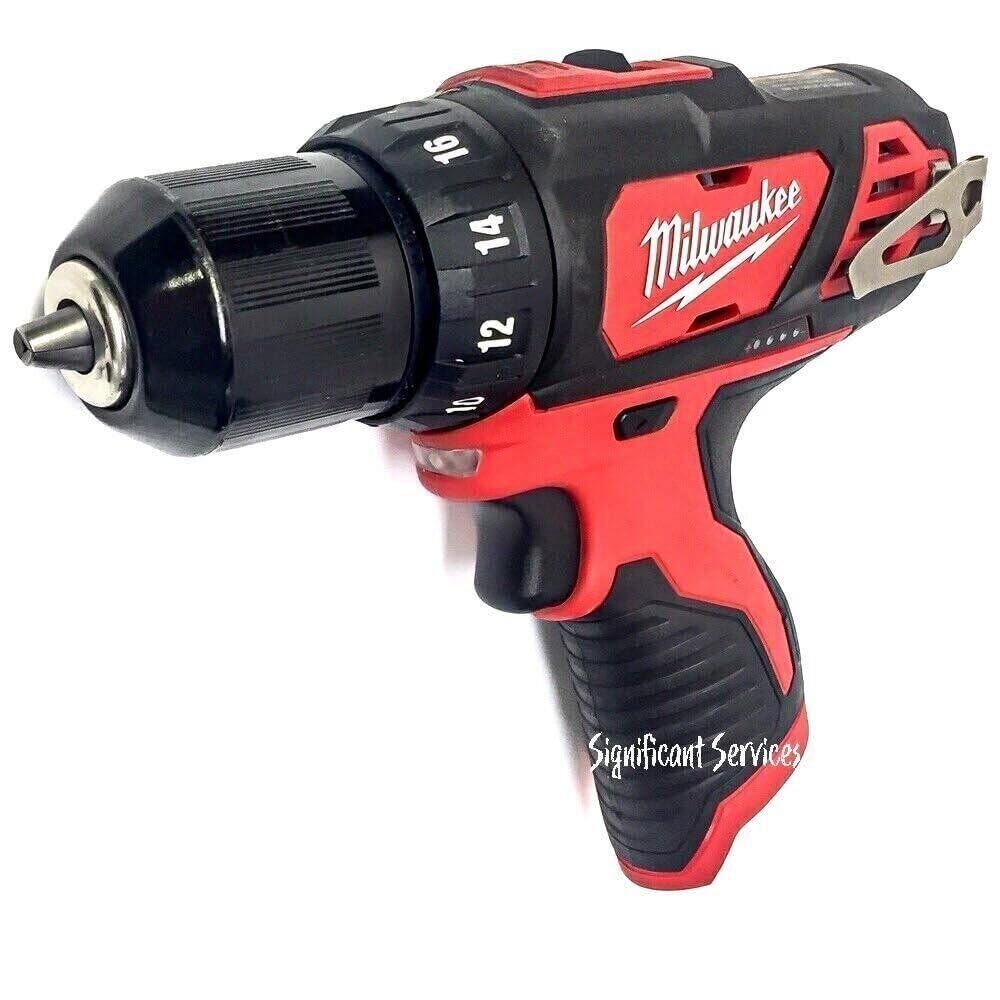
The Milwaukee M12 2407-20 is sold bare because it assumes you are already invested in the M12 battery platform.
Milwaukee M12: compact, pro-grade, and deliberately bare
Milwaukee's M12 answers a different question: what if the priority is size and access rather than raw power? On its M12 system page, Milwaukee describes a subcompact platform of well over 100 solutions and growing, engineered around tools that fit where full-size gear cannot. This is the system electricians, plumbers, HVAC techs, and finish carpenters reach for, because an M12 drill is short and light enough for cabinets, junction boxes, and overhead work.
The Milwaukee M12 2407-20 is emblematic. At roughly 7.4 inches long with an all-metal ratcheting 3/8-inch chuck, a two-speed transmission, and a 5-year warranty, it is a genuinely professional tool. It is also sold as a bare tool, no battery or charger in the box, which is the platform philosophy in a nutshell: Milwaukee assumes an M12 buyer already owns M12 packs, so it sells the drill cheaper and lets you skip paying for batteries you already have. A key convenience is backward and forward compatibility, meaning every M12 REDLITHIUM pack, from the smallest compact cell to the largest high-output, works in every M12 tool.
The trade-offs are the flip side of its strengths. Twelve volts is not built for heavy hardwood boring or lag bolts, and the bare-tool model is only economical once you are already on the platform; a first-time buyer has to add a battery and charger, which erases the price advantage. If you are new to cordless tools and want everything in one box, M12's bare-tool approach works against you.
Which of the two fits you
Choose 20V MAX if you want the broadest future tool selection, prefer buying a complete kit, and occasionally tackle heavier jobs. Choose M12 if compact size is the whole point, you value pro-grade build and warranty, and you either already own M12 packs or are willing to buy into a smaller, more specialized ecosystem. Many tradespeople end up owning both a compact 12V system for access work and a full-size 18V system for demanding tasks, which is a legitimate strategy, just an expensive one.
The wider landscape: how the major platforms compare
DEWALT and Milwaukee are not the only games in town, and the platform you choose should reflect what else you might power over time. Here is how the systems behind popular compact drills stack up on the dimensions that matter.
Ecosystem size
Selection is where the big two general-purpose platforms separate from the specialists. DEWALT's 20V MAX advertises 300+ compatible products, and Milwaukee's M18 (the full-size sibling of M12) is comparably vast. These deep catalogs are the reason so many buyers default to them: the platform is unlikely to leave you stranded when you want an obscure tool.
Smaller platforms trade catalog depth for other advantages. Skil's PWR CORE 20 line, behind the brushless Skil drill, is a much smaller ecosystem, but it counters with modern hardware, a brushless motor, and USB-C charging on the battery, so a laptop charger or power bank can top it up. BLACK+DECKER's 20V MAX targets the light-duty home market with lower prices and simpler tools rather than a professional catalog.
Outdoor and high-power expansion
If you might add lawn equipment, the platform question widens. Consumer Reports notes that some platforms "can power larger lawn equipment, such as a mower or snow blower, as well as smaller gear, like a cordless drill." Its battery platforms ratings put outdoor-focused systems like Ego Power+ and Stihl AP at the top, alongside Makita platforms that bridge both construction tools and yard equipment. If a single battery running both your drill and your mower appeals to you, that changes the calculus toward those broader systems.
Compact vs full-size within a brand
Nearly every major brand offers both a compact 12V-class platform and a full-size 18V/20V-class platform, and they do not share batteries. Milwaukee M12 vs M18 is the clearest example, but DEWALT, Makita, and Bosch all run parallel lines. The decision here is honest self-assessment: if most of your work is light and access-constrained, a compact platform keeps everything small; if you anticipate heavier jobs, start on the full-size line so you do not outgrow it.
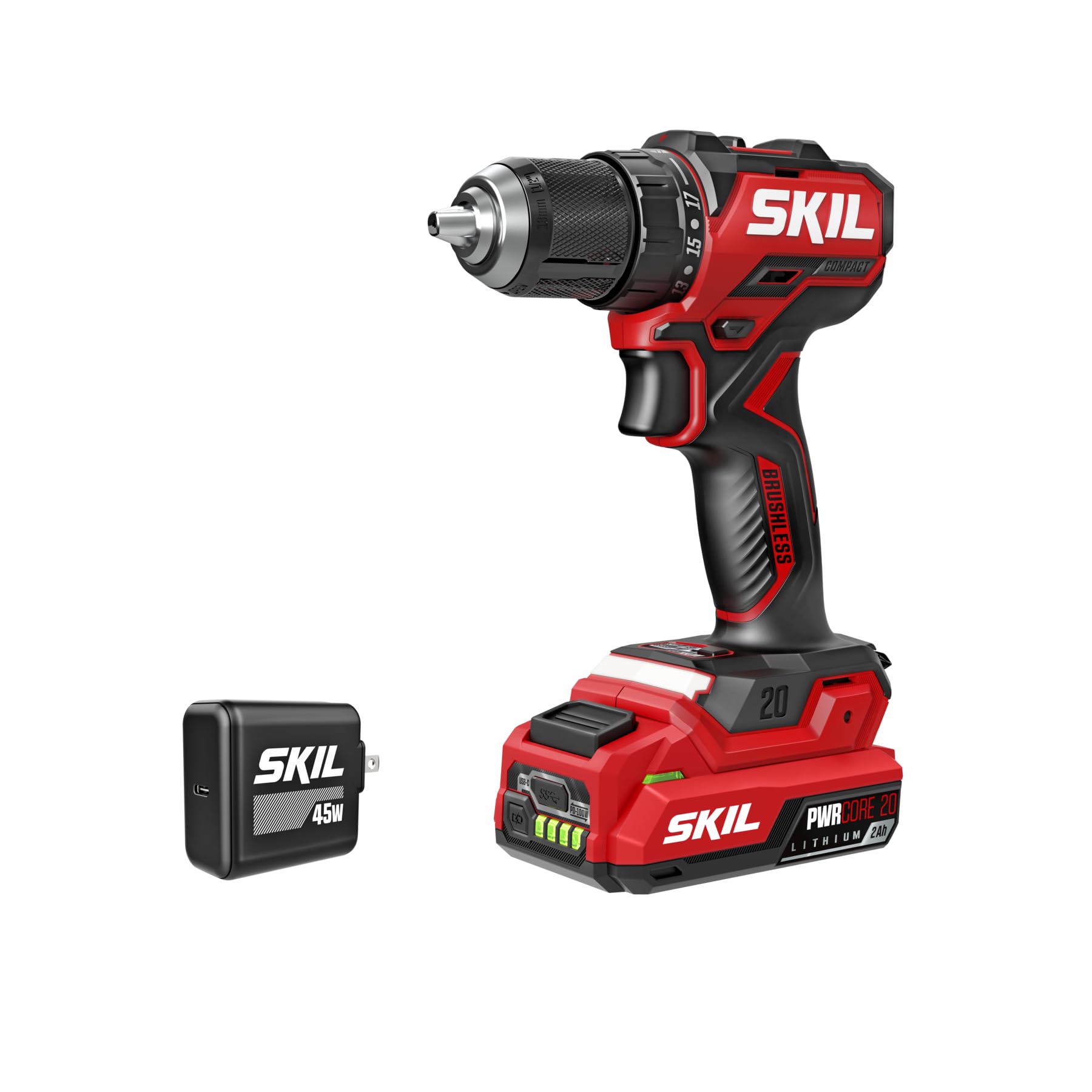
Smaller platforms like Skil's PWR CORE 20 compete on modern features such as USB-C battery charging rather than catalog size.
Ecosystem lock-in: the real long-term cost
The single most important idea in platform shopping is lock-in, and it is worth being clear-eyed about it. Because batteries and chargers are the expensive, proprietary parts, your first few tool purchases effectively cast a vote you cannot easily undo.
Consider the math. If you own four batteries and two chargers of one brand, and a competing brand releases a tool you like, switching does not cost only that one tool; it costs the tool plus at least one battery and a charger before it is even usable, and every subsequent tool on the new platform starts from scratch again. That is why the practical advice is to weight your very first purchases heavily toward the platform you expect to grow into, even if a rival's individual drill looks slightly better on paper. The drill is a one-time choice; the platform compounds.
Are power tool batteries interchangeable between brands?
Not without caveats. Natively, no: each brand's rail, latch, and battery electronics are proprietary, so packs do not cross brands. Third-party adapters exist that physically let one brand's battery run another brand's tool, but they carry genuine risk. Adapters can bypass the communication and protection circuitry that manages temperature and discharge, and using them typically voids the tool and battery warranties. For anyone who values reliability and safety, the safe assumption is that batteries stay within their own platform, which is exactly why choosing the right platform up front matters so much.
Do all batteries from the same brand fit the same tools?
Only within the same platform. This is the trap that catches new buyers: a Milwaukee M18 battery will not run an M12 tool, and a DEWALT 12V MAX pack will not run a 20V MAX drill, even though both come from the same company. Within a single platform, though, compatibility is usually excellent. Milwaukee, for instance, designs every M12 pack to work in every M12 tool. Always confirm you are matching the platform, not just the brand name on the box.
How to choose the right platform for you
Strip away the marketing and platform choice comes down to matching a system to how you actually work. Here is a framework rather than a single winner, because the honest answer depends on you.
If you only need a drill and maybe one or two more tools
Buy the platform with the best complete kit at your budget and do not overthink the ecosystem. A 20V MAX kit like the DCD771C2, or a beginner-oriented multi-tool kit, gets you batteries, charger, and drill in one purchase. When your tool count will stay low, the size of the wider catalog barely matters; value and what is in the box matter most.
If you are building a tool collection over years
Prioritize catalog breadth and battery availability above the specific drill. A large general-purpose platform such as DEWALT 20V MAX or Milwaukee M18 almost guarantees that whatever tool you want later exists on the packs you already own, and that batteries in multiple capacities are easy to find. Paying a little more now for the right platform saves real money across a dozen future tools.
If you work in tight spaces or on your feet all day
A compact 12V-class platform like Milwaukee M12 is purpose-built for you. The smaller, lighter tools reduce fatigue and reach into cabinets, panels, and ceilings that a full-size drill cannot. Tradespeople frequently run a compact platform for access work and accept that heavy tasks need a second, full-size system.
If budget is the tightest constraint
Look hard at what is included and at brushless efficiency. A brushless kit at a low price, like the Skil PWR CORE 20, delivers modern efficiency and, in Skil's case, USB-C charging, for less than some brushed rivals. A beginner-focused kit such as the BLACK+DECKER 68-piece bundle stretches a first purchase across a drill plus a starter set of hand tools. Just remember a low sticker on a bare tool is not a bargain if you still have to buy a battery and charger to use it.
Common questions about drill battery platforms
Is a higher-voltage platform always more powerful?
Not necessarily in the way people assume. Higher voltage raises the ceiling on power and torque, but a well-designed 12V brushless tool can out-drive an older 20V brushed one, and voltage says nothing about runtime, which is set by amp-hours. Judge a platform by whether it offers the power class and battery sizes your work needs, not by the voltage number alone.
Should I buy a bare tool or a kit?
Buy a kit if you do not already own that platform's batteries; buy bare only when you do. A bare tool is cheaper precisely because it omits the battery and charger, so it is a bargain for someone already invested and a false economy for a newcomer. The Milwaukee M12 2407-20's bare-tool pricing is a perfect illustration.
How many tools does a platform need to have?
Enough to cover what you realistically plan to own, plus a margin. For most homeowners, any of the major platforms has far more tools than they will ever buy, so raw catalog size is a tiebreaker rather than a deciding factor. It becomes decisive only if you have a specific, unusual tool in mind and need to confirm the platform makes it.
Does the drill brand affect resale or longevity?
Indirectly. Established platforms with long track records and strong warranties, like Milwaukee's 5-year coverage on M12 tools, tend to hold value and keep parts and batteries available for longer. A platform that is discontinued leaves you unable to buy fresh batteries, so choosing a widely adopted, actively expanding system is a quiet form of future-proofing.
The bottom line
When you compare cordless drill battery platforms, you are really comparing the futures they unlock. The drill in your hand today is a small purchase; the system it plugs into shapes every tool decision you make for years. DEWALT's 20V MAX wins on sheer breadth and a beginner-friendly kit, making it the safest general-purpose on-ramp. Milwaukee's M12 wins on compact, professional access work, provided you are willing to buy into a specialized ecosystem, often bare-tool. Smaller platforms like Skil PWR CORE 20 compete on modern features rather than catalog size, and outdoor-capable systems change the math entirely if a single battery for your drill and your mower appeals to you.
Pick the platform that matches how you work and what you expect to own, weight your first purchases toward it, and let compatibility do the rest. To compare the individual drills that ride on these systems, see our best cordless drills of 2026 guide, and for the two systems examined here in tool form, the DEWALT DCD771C2 review and Milwaukee M12 2407-20 review go deeper on each.
How we research
Our platform comparisons come from triangulating three independent bodies of evidence rather than a single opinion. We begin with each manufacturer's published specifications and system pages, pulling voltage, torque, battery capacities, and stated ecosystem size directly from primary sources such as DEWALT's and Milwaukee's own product documentation. We weigh those figures against findings from established consumer-testing and editorial outlets, including Consumer Reports' battery-platform ratings and specialist tool publications, to see how each system performs and holds up beyond its spec sheet. Finally, we read for the patterns that recur across large volumes of verified owner feedback, keeping only the strengths and complaints that show up consistently. Where those layers agree, we make a confident recommendation; where they disagree, we say so and explain the trade-off. Pricing and availability shift constantly, so treat any figures as a snapshot and confirm current specs on the manufacturer's page before you buy.
Related Posts