
The Short Answer: It Depends on How You Travel, Not on the Hype
Walk through any airport and you will see the same thing: rows of glossy, color-matched hardside suitcases gliding on four wheels behind their owners. They look modern, feel substantial, and the two- or three-piece sets often cost less than a single premium softside bag. So the question is fair, and a lot of people are asking it: are hardside spinner luggage sets actually worth it, or are you paying for a look?
The honest answer is that a hardside spinner luggage set is worth it for most travelers who fly a few times a year, want matching pieces for different trip lengths, and value impact protection and built-in security over the squeeze-it-in flexibility of a soft bag. It is not automatically the best choice for road warriors who drag bags over cobblestones every week, for people who chronically overpack, or for anyone with no room to store a nesting set of three suitcases.
This guide breaks down the real tradeoffs using published material data, manufacturer specifications, and reputable travel and consumer-testing sources, so you can decide whether the format fits your travel life. A note on how we work: we did not physically stress-test these suitcases ourselves. Everything below is synthesized from manufacturer spec sheets and independent editorial and testing sources, each linked where the claim is made, so you can check the primary source yourself.
If you want our specific picks after reading the reasoning, we keep a maintained shortlist in our guide to the best hardside spinner luggage sets. This article is about the decision itself: hardside or not, spinner or not, set or single.
Is Hardside or Softside Luggage Better?
This is the first fork in the road, and it is the wrong question if you phrase it as "which is better." Neither material is universally superior. They fail in different ways and excel at different things.
What a Hard Shell Actually Protects
Hardside luggage is built from molded plastic, most commonly ABS, polycarbonate, or polypropylene. The shell forms a rigid box around your belongings. According to Consumer Reports' comparison of hard-shell and soft-sided luggage, the rigid design has a real upside for fragile cargo: a hard shell "can't be ripped open as easily" and usually ships with integrated locks. If you travel with electronics, ceramics, a bottle of wine, or anything you would wince to hear crunch, the box geometry distributes impact in a way a fabric bag does not.
That same rigidity is also the most common complaint. Consumer Reports notes plainly that "hard-shell luggage scuffs and scratches easily." Those scuffs are cosmetic, not structural, but if you expect a suitcase to look pristine after a few belt rides, a hard shell will disappoint you. A textured or brushed finish hides this better than a high-gloss one, which is why many manufacturers, including Samsonite on its Omni line, market a "scratch-resistant" micro-texture shell.
What a Soft Bag Does Better
Softside luggage is made from woven fabrics such as ballistic nylon, Cordura, or ripstop. The Travelpro shell-material guide describes these fabrics as lightweight and flexible, and that flexibility is the whole point. A soft bag can compress into a tight overhead bin, accept one more sweater than it should, and survive being shoved into a packed car trunk by yielding rather than cracking.
Soft bags also tend to carry external pockets, which hardside cases almost never have because you cannot cut a zippered pocket into a molded shell without compromising it. If you like grabbing your passport, charger, or a magazine from an outside pocket without opening the whole bag, that is a softside-only convenience.
The Honest Verdict on Material
Consumer Reports' bottom line, and ours, is that this is a use-case decision. Choose hardside for impact protection, built-in security, and a clean wipe-down exterior. Choose softside for packing flexibility, exterior pockets, and shrugging off overstuffing. For the specific question of a spinner set, hardside dominates the market simply because rigid shells pair naturally with the symmetrical four-wheel base, which is why most matching sets you will shop are hardside.
Do Hardside Suitcases Crack? The Polycarbonate vs ABS Question
This is the fear that stops most people from buying hardside, and it is a legitimate one. The honest answer is: yes, hardside suitcases can crack, but which plastic changes the odds dramatically, and that single spec is the most important thing to check before you buy.
ABS: Lightest and Cheapest, but Brittle
ABS (acrylonitrile butadiene styrene) is the budget hardside material. It is the lightest of the common plastics and keeps prices low, which is why you see it in inexpensive sets. The tradeoff, per Travelpro's material breakdown, is that ABS is comparatively rigid and can crack under sharp impact, especially at the corners after rough handling. The bigger problem is that a cracked ABS shell is generally not repairable. Once it splits, the bag is done.
Polycarbonate: Flexes Instead of Shattering
Polycarbonate is the upgrade material, and the reason is physics. As the guide from Carl Friedrik on polycarbonate luggage explains, polycarbonate flexes under pressure and springs back rather than shattering, making it far more crack-resistant than ABS. It costs more and weighs slightly more than ABS, but for a bag you intend to keep for years and check on flights, that premium buys real durability.
This is the single most useful filter when you shop. If a hardside set is suspiciously cheap and the listing does not say "100% polycarbonate," it is very likely ABS or an ABS blend. That is not automatically a dealbreaker for occasional, gentle use, but you should price it accordingly and not expect it to survive a decade of checked-bag abuse.
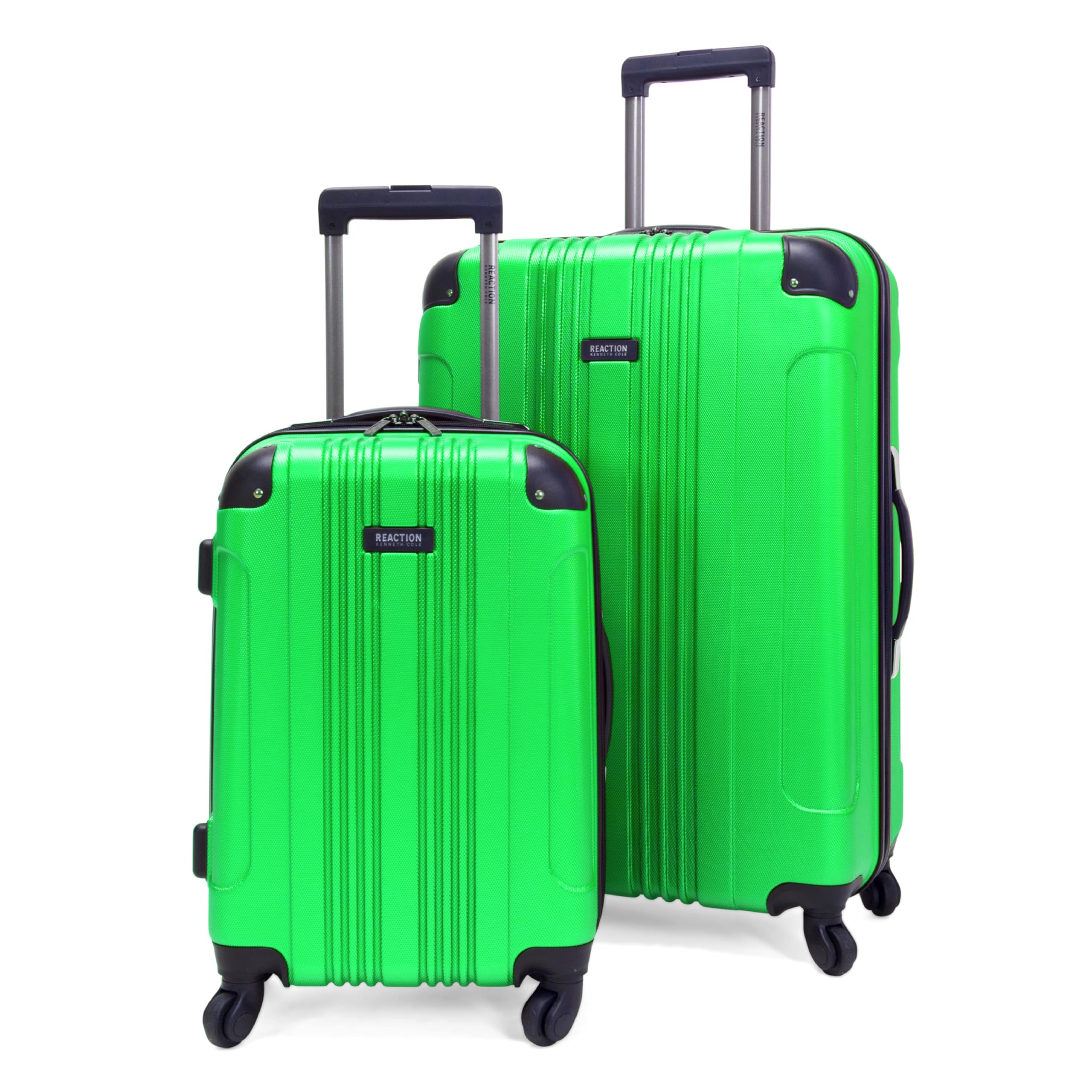
Budget hardside spinners like the Kenneth Cole Reaction line use lightweight shells; check whether it is polycarbonate or ABS before buying.
A premium example of getting this right is the Samsonite Omni 2, which Samsonite specs as a 100% polycarbonate shell and backs with a 10-year limited warranty against defects in materials and workmanship, per its official Omni hardside collection page. A long warranty is not a guarantee against airline gorillas, but a manufacturer willing to stand behind a shell for a decade is signaling confidence in the material. We dig into that set specifically in our Samsonite Omni 2 review.
Is Hardside Luggage More Durable? Honest Pros and Cons
"Durable" means two different things, and conflating them is where most online arguments go wrong. There is structural durability (will it crack, will the wheels survive) and cosmetic durability (will it still look new). Hardside wins one and loses the other.
Pros of Hardside Luggage
- Impact protection. The rigid shell shields fragile contents better than fabric, and a quality polycarbonate shell resists cracking by flexing, per Carl Friedrik.
- Built-in security. Hardside cases usually integrate TSA-approved combination locks and cannot be slit open with a knife the way a fabric panel can, as Consumer Reports notes.
- Easy to clean. A wipe with a damp cloth handles most exterior grime. Fabric bags hold stains.
- Weather resistance. A sealed shell shrugs off rain on the tarmac better than woven fabric, which can wick moisture at the seams.
- It forces discipline. Consumer Reports points out there is "no chance of overstuffing hard-shell luggage," so you are far less likely to blow past an airline's weight limit.
Cons of Hardside Luggage
- Scuffs and scratches. Cosmetic wear is inevitable and shows quickly on glossy finishes.
- No external pockets. You must open the whole case to reach anything.
- Zero flex. That same rigidity that prevents overstuffing also means you cannot squeeze in one extra item, and the case cannot compress to fit a tight bin or trunk.
- Storage bulk. A hard shell cannot collapse, so an empty set demands dedicated closet space.
- Cheap shells crack. An ABS bargain bag genuinely can split at the corner and become unrepairable.
The fair summary is that a good hardside bag, meaning polycarbonate with a textured finish, is more structurally durable than an average soft bag and less cosmetically durable. A cheap ABS hardside bag can be less durable overall than a well-made soft bag. The material spec matters more than the hardside-vs-softside category.
Are Spinner Wheels Worth It on Luggage?
The "spinner" in "hardside spinner luggage set" refers to the four-wheel base where each wheel rotates a full 360 degrees, letting you push the bag upright beside you instead of tilting and dragging it. This is a genuine convenience with a genuine cost, and it deserves its own honest look.
The Case For Spinner Wheels
The big win is maneuverability in tight, flat spaces. As Travelpro's 2-wheel vs 4-wheel guide puts it, wheels on every corner give you "360 degrees of motion, which makes them great for zig-zagging through crowds and turnstiles." Pushing an upright spinner alongside you in a crowded airport, down a narrow plane aisle, or through a hotel lobby is noticeably easier than dragging a tilted bag, and it takes the load off your shoulder and wrist because you are not bearing part of the weight at an angle.
For the typical traveler whose journey is mostly smooth terminal floors, jet bridges, and hotel hallways, spinner wheels are the format that makes the bag feel effortless. That is exactly why nearly every hardside set on the market is a spinner set.
The Honest Case Against Spinner Wheels
There are two real drawbacks, and pretending otherwise would do you a disservice.
First, durability of the wheels themselves. The same Travelpro guide notes that because the recessed wheels of a two-wheel rollaboard "don't protrude as much as 4-wheel spinner models," the two-wheel design is "less susceptible to damage by baggage handlers and general wear and tear." Spinner wheels stick out at the corners, exactly where bags get thrown and crushed, so on a frequently checked bag they are the most common point of failure.
Second, terrain and inclines. The smaller wheels on a spinner can struggle on cobblestone, gravel, broken pavement, and curbs, where a two-wheel bag's larger, partially recessed wheels roll through more confidently. And an upright spinner left unattended on any slope will happily roll away from you, while a tilted two-wheel bag stays put.
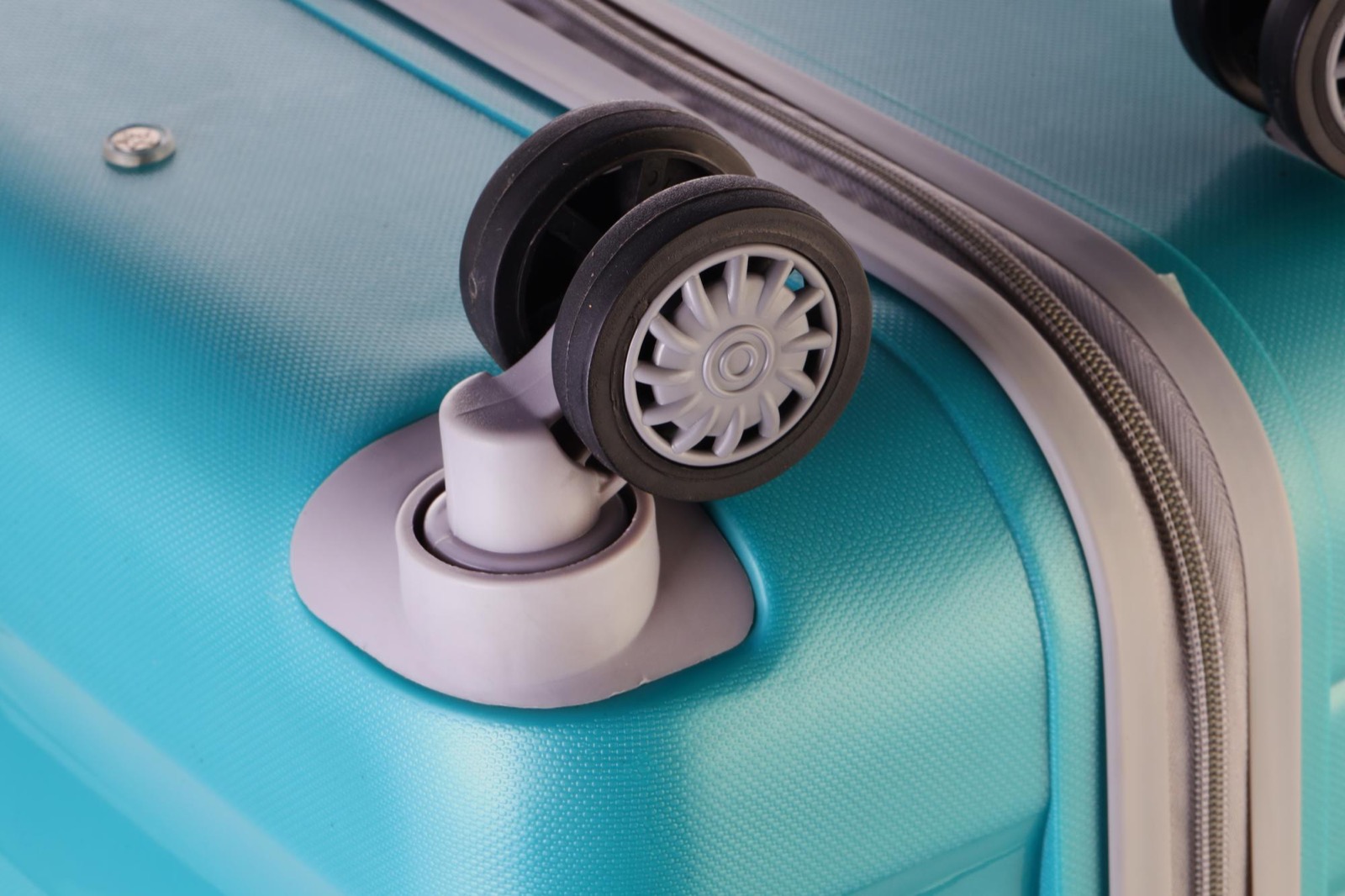
Spinner wheels shine on smooth terminal floors; they struggle on cobblestone and protrude where baggage handlers can damage them.
So Are They Worth It?
For most people, yes. If your travel is predominantly airports, hotels, and paved cities, the daily convenience of a spinner outweighs the wheel-durability risk. If you regularly travel through old European city centers, gravel, or rough terrain, or you check your bag on most trips and want maximum wheel longevity, a two-wheel rollaboard is the more rugged tool. Many seasoned travelers split the difference by using a spinner carry-on and a more rugged checked bag, which is one more argument for buying a set with the right mix of pieces.
Hardside vs Softside for International Travel
International trips raise the stakes, because you are often dealing with strict checked-bag weight limits, long transfers, cobblestone-heavy old cities, and a higher chance of rough handling across multiple airlines. Here the answer genuinely shifts depending on your destination and style.
Where Hardside Wins Abroad
For long-haul flights with multiple connections, the impact protection and built-in TSA lock security of a quality polycarbonate hardside case are real advantages. More handlers and more transfers mean more chances for a bag to be dropped or tampered with, and Consumer Reports' point that hard shells "can't be ripped open as easily" matters more on a three-leg international itinerary than on a domestic hop. The fixed capacity also helps you stay under tight international weight allowances, since you physically cannot overstuff the case past its limit.
Where Softside Wins Abroad
If your trip involves a lot of street-level travel over cobblestones and uneven pavement, the terrain problem we covered above applies to any spinner, hardside or soft, because it is a wheel-size issue, not a shell issue. But softside bags add packing flexibility that frequent international travelers prize: the ability to compress for a packed regional flight's smaller bins, expand for souvenirs on the way home, and access an external pocket for documents at a border crossing. For backpacking-style or multi-city trips where you are constantly repacking, that flexibility can outweigh the hard shell's protection.
The Realistic International Take
For most international leisure travelers flying point-to-point and staying in hotels, a polycarbonate hardside spinner set is an excellent, secure, low-stress choice. For rugged, multi-city, street-heavy itineraries, lean toward softside, or at minimum toward larger, more terrain-capable wheels and a checked bag you do not mind scuffing. Match the bag to the trip, not to the trend.
Are Luggage Sets Worth It, or Should You Buy Single Pieces?
Even if you have decided hardside spinner is right for you, there is a second purchase question: buy the matching two- or three-piece set, or buy individual bags as you need them? The set is not automatically the smarter buy, and the honest answer hinges on whether you will actually use every piece.
The Real Advantages of a Set
The genuine benefits, drawn from frequent-flyer guidance compiled by Pack Hacker's luggage-set roundup, are threefold:
- Cost. Buying pieces bundled as a set is usually cheaper per bag than buying each one separately, sometimes substantially so.
- Consistency. Every piece in a quality set shares the same shell material, wheel type, and lock standard, so you are not gambling on one flimsy bag undermining the collection. With a polycarbonate set, your carry-on and your checked bag are equally crack-resistant.
- Nesting storage. A well-designed set nests, with the smaller bags tucking inside the larger ones for storage, which saves closet space when the bags are idle.
The Honest Caveats
The same guidance is refreshingly clear-eyed about the downsides. The savings on a set are "often modest, and sometimes illusory," and what actually matters is whether you will use each suitcase. A three-piece set is a poor deal if the 28-inch checked bag lives in your closet forever because you only ever take weekend trips.
Two more real risks: storage and replacement. A full hardside set, which cannot collapse, demands significant dedicated space, a genuine problem for apartment dwellers. And manufacturers frequently discontinue or recolor models within a year or two, so if one piece breaks after a couple of years, finding a matching replacement can be difficult. The "matching" appeal has a shelf life.
Set or Single: The Decision Rule
Buy the set if you realistically take trips of varying lengths, so each piece earns its keep, and you have somewhere to store nested bags. Buy a single piece if you almost always travel the same way, for example carry-on only, in which case one excellent bag beats a half-used set. A two-piece set (carry-on plus one checked) is the sweet spot for most travelers, which is why it is the most common configuration you will see, including in sets like the Samsonite Omni 2 carry-on plus checked bundle.
So, Are Hardside Spinner Luggage Sets Worth It?
Bringing it all together, here is the honest decision framework:
A hardside spinner luggage set is worth it if you:
- Fly a few times a year on mostly point-to-point or hotel-based trips
- Want matching pieces for different trip lengths and will actually use them
- Value impact protection and a built-in TSA lock for electronics or fragile items
- Are willing to accept cosmetic scuffs as the cost of structural protection
- Have storage space for a nesting set
- Buy a 100% polycarbonate shell rather than the cheapest ABS option you can find
It is probably not worth it if you:
- Travel weekly and check your bag every time, where protruding spinner wheels are a liability and a rugged two-wheel rollaboard lasts longer
- Routinely cross cobblestones, gravel, and curbs, where small spinner wheels struggle
- Chronically overpack and need a bag that flexes and compresses
- Live somewhere with no room to store three rigid suitcases
- Only ever travel carry-on only, in which case one great bag beats a partial set
The format itself is sound. The mistakes people regret are buying a brittle ABS shell expecting polycarbonate durability, buying a three-piece set when they only use one bag, or buying spinner wheels for terrain that punishes them. Get the material right, get the piece count right, and match the wheels to where you actually walk, and a hardside spinner set is one of the better-value purchases in travel gear.
If you are ready to compare specific options, our maintained shortlist of the best hardside spinner luggage sets covers picks at different price points, and our hands-on-style breakdown of the premium Samsonite Omni 2 set shows what a well-specced polycarbonate set looks like in practice.
Frequently Asked Questions
Do hardside suitcases really crack?
Cheap ABS shells can crack at the corners under sharp impact, and the crack is usually unrepairable. Polycarbonate shells are far more resistant because the material flexes and springs back rather than shattering, per Carl Friedrik. Check the listing for "100% polycarbonate" to avoid the brittle-shell problem.
Are spinner wheels less durable than two wheels?
On a frequently checked bag, yes, in the sense that spinner wheels protrude at the corners where handlers crush bags, while two-wheel rollaboard wheels are more recessed and protected, as Travelpro notes. For mostly-smooth-terminal travel, the convenience usually outweighs the risk.
Is hardside or softside better for international travel?
Hardside is better for security and impact protection on multi-leg long-haul flights. Softside is better for cobblestone-heavy, multi-city trips where packing flexibility and external pockets matter more. Match it to your itinerary, not to a blanket rule.
Are matching luggage sets a better deal than buying single bags?
Sets are usually cheaper per piece and give you consistent quality across bags, but only if you actually use every piece. If you mostly travel the same way, a single excellent bag is the smarter buy than a partially used set, per Pack Hacker.
Related Posts