Are Washable Rugs Worth It? An Honest 2026 Buyer's Reality Check
 Abdulwahab Suleiman·June 7, 2026
The Short Answer: Worth It for the Right Room, Oversold for Others
If you have kids, pets, a dining table, or an entryway that eats dirt for breakfast, a washable rug is one of the few floor coverings that genuinely earns its keep. The ability to peel a coffee-stained rug off the floor and run it through a wash cycle is not a gimmick. It removes the single biggest reason people stop using rugs in busy rooms: the fear of ruining them.
But "worth it" is not a universal yes. Washable rugs are a trade-off product. You gain convenience and stain recovery; you give up some plushness, some longevity at the very high end, and you inherit a hard physical limit that the marketing rarely puts front and center: your washing machine has to be big enough to actually wash the thing. A 9x12 rug does not fit in a typical home washer, full stop.
So the honest framing is not "are washable rugs good." It is: are they the right tool for your room, your traffic, and your laundry setup? This guide walks through where they shine, where they disappoint, what the so-called Ruggable controversy actually is, how long they really last, and how to decide before you spend the money.
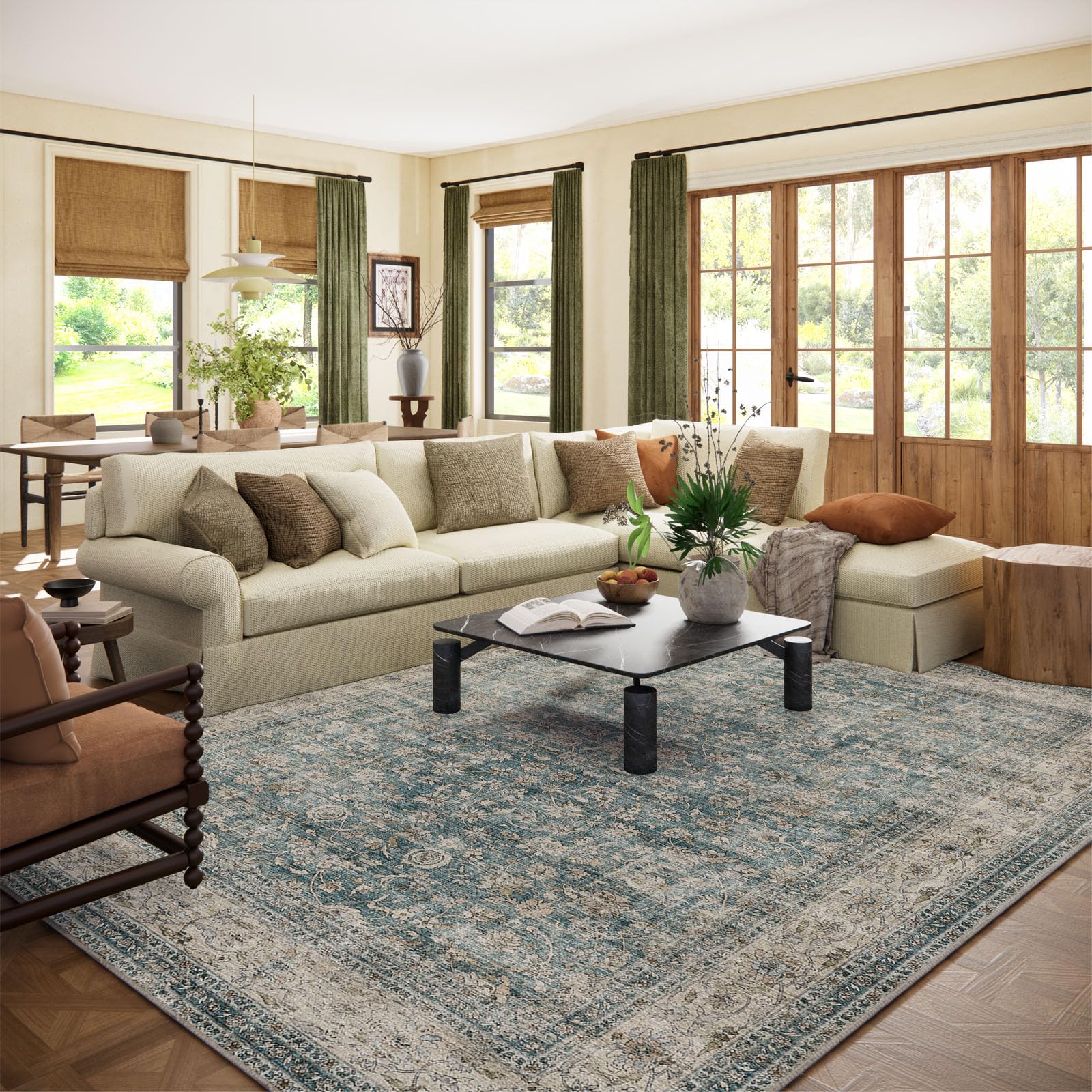
A washable rug earns its place fastest in rooms where spills and paws are a daily reality.
How We Evaluated This (And What We Did Not Do)
A quick note on method, because it affects how much you should trust what follows. We did not run rugs through our own washing machines or stain them with red wine in a lab. This is a research-based synthesis. We weighed published findings from independent testers, manufacturer specification pages, and home-and-garden editorial coverage, then cross-checked the recurring claims against each other.
Where a number matters (pad thickness, washer capacity, expected lifespan), we anchored it to a primary source and linked it inline so you can verify it yourself. Where a "fact" only showed up in anecdotal corners of the internet with no editorial or lab backing, we left it out. That is a deliberate filter: a buying decision this size deserves sources you can actually check.
What Exactly Is a Washable Rug?
The category is broader than most people assume, and the differences matter for the worth-it question.
The Two-Piece System (Ruggable-Style)
The most famous design is a two-part system: a thin, low-profile rug cover that sits on top of a separate non-slip pad. The cover grips the pad through a gentle cling backing, and only the top layer goes in the wash. Ruggable popularized this with what it calls its Cling Effect technology, where the cover adheres to the pad somewhat like a very mild hook-and-loop.
This is clever engineering. The thin top layer is exactly what makes the rug fit in a home washer at all, and the pad provides the cushion and grip that a paper-thin cover could never deliver on its own. Ruggable sells a thicker cushioned rug pad for people who want more underfoot softness, and independent coverage notes that this cushioned version runs roughly 2/5 of an inch thick versus about 1/8 of an inch for the original pad, at a meaningful price premium per Design Morsels' breakdown of the pad upgrade.
The One-Piece "Tumble" Style
A second wave of brands, including names like Tumble, sells a single-piece washable rug with the cushion built in but still thin enough to wash. These trade the swap-the-cover flexibility of the two-piece design for a more traditional, plusher feel. The PASF terms shoppers search most around this category — tumble washable rugs, Revival washable rugs, and the various Amazon listings — mostly fall into either this one-piece camp or the two-piece camp, and the distinction is the first thing to nail down before you buy.
What They Are Made Of
The overwhelming majority of washable rug tops are polyester or a polyester blend, often with a chenille-style face for softness. Consumer Reports describes typical washable rugs as having "a thin synthetic topside attached to a bottom pad," and notes that most of Ruggable's rugs are flat, thin, and made from polyester, in its washable rug testing coverage. A smaller, pricier slice of the market uses natural fibers like cotton or wool, which feel better but complicate washing as size goes up.
That material choice is the hidden driver of almost every pro and con below. Polyester is what makes these rugs cheap to produce, machine-washable, and reasonably stain-resistant. It is also what makes them prone to matting and what caps their high-end longevity.
The Real Upsides (Where They Genuinely Win)
Let us give the category its due, because for a lot of homes the answer really is yes.
Stain Recovery That Traditional Rugs Cannot Match
This is the headline benefit and it holds up. Consumer Reports' methodology is worth understanding here: testers ran a two-phase evaluation, first living with the rugs for months and then deliberately staining them with coffee, wine, beets, and marinara before washing, as described in their best washable rugs report. The whole point of the category is that a stain that would permanently mar a conventional rug becomes a wash cycle.
For a dining room, a kid's playroom, a kitchen-adjacent runner, or an entryway, that single capability changes how you live with the floor. You stop hovering. You let people eat over it.
Lower Lifetime Cleaning Cost
Professional rug cleaning is not cheap, and it adds up year after year on a conventional rug in a high-use room. A washable rug folds that cost into a load of laundry. Quality washable rugs commonly land in the rough $150 to $300 range for mainstream sizes, which is competitive with comparable traditional rugs while removing the recurring cleaning bill, a point echoed across buyer guides including Rossi Furniture's washable rug overview.
Hygiene and Allergens
Because you can actually wash the whole top layer, you can reset the allergen and odor load in a way vacuuming alone never achieves. For households with pets or allergy sufferers, regular washing meaningfully reduces what builds up in the fibers. This is one of the clearer, less-hyped advantages.
Low Profile for Doors and Furniture
The thinness that makes these rugs washable is also genuinely useful: a low-profile rug clears swinging doors, slides under furniture cleanly, and is easy to roll a chair across. In an office or entryway, that flat profile is a feature, not a compromise.
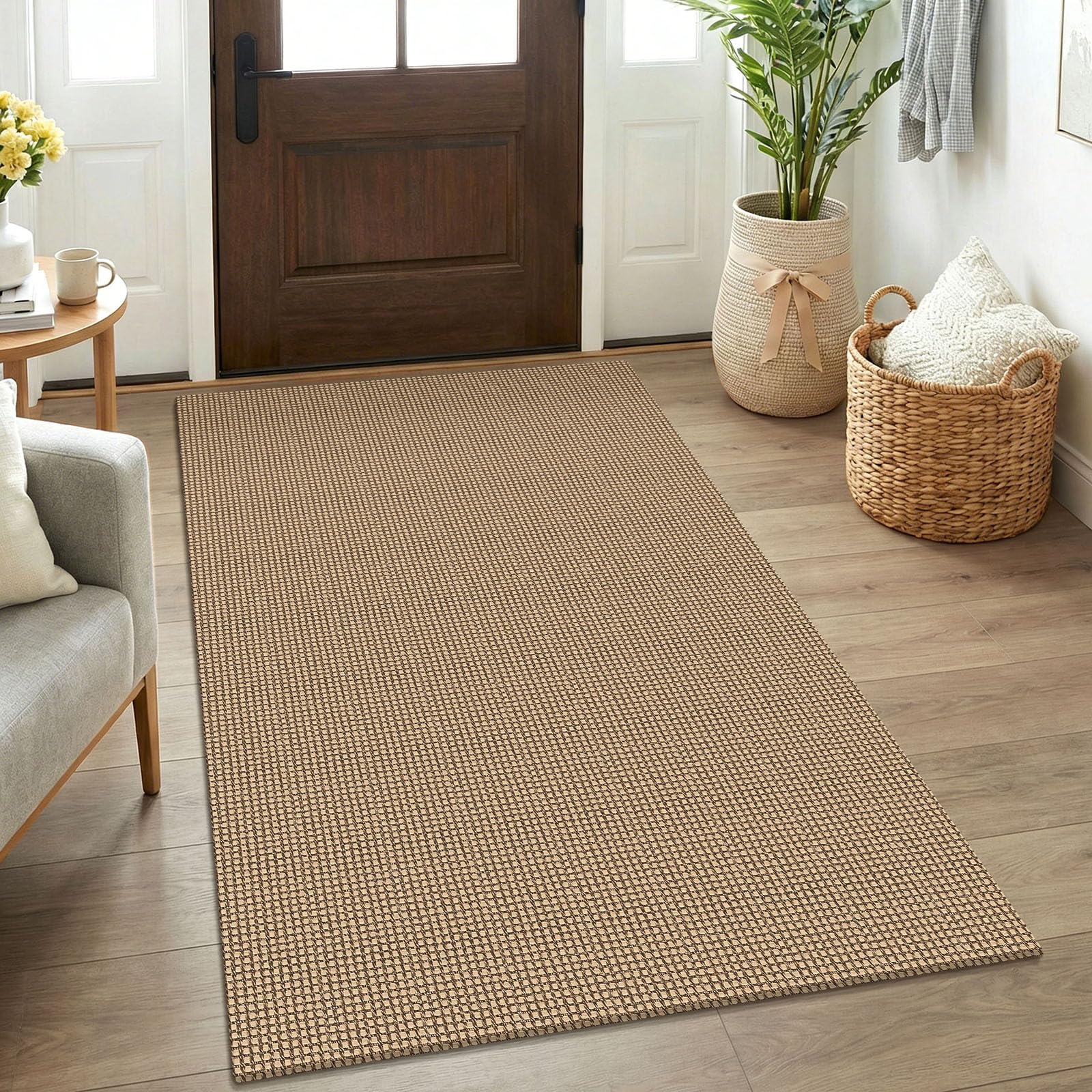
The thin build that makes washable rugs launderable also lets chairs roll and doors clear the edge.
The Real Downsides (What the Ads Skip)
This is the section most marketing pages bury, so here is the honest accounting. These are the recurring, source-backed cons — the actual answer to "what are the downsides of washable rugs."
The Washing Machine Problem Is Bigger Than You Think
This is the dealbreaker nobody mentions until after you have bought. A washable rug is only washable if it fits in your machine. Ruggable's own washing machine size guide lays out the thresholds plainly: a 2.4 cubic foot washer handles runners up to about 4x6; you need roughly 3.1 cubic feet to reach a 5x7; and a 4.5 cubic foot machine is required to cover sizes up to 6x9, 8x10, and 8-foot rounds.
Here is the kicker. The 9x12 and 10x14 sizes exceed even a large 4.5 cubic foot home washer, meaning they have to go to a laundromat with commercial machines. Most standard home washers in the US fall between 3.5 and 5.0 cubic feet, and guidance across the category is consistent that 8x10 may squeak into a big home machine while 9x12 and up belong in commercial equipment, as reporting on washable rug machine fit reinforces.
If you bought a washable rug specifically so you would never have to leave the house to clean it, a large size quietly defeats the entire premise. Before you buy, measure your washer's cubic-foot capacity and match it to the size you actually want. This is the number one reason buyers feel let down.
Matting and Flattening in Walkways
Polyester is the workhorse fiber here, and polyester mats. In walkways and under furniture, the pile compresses, and once flattened it is hard to revive. Buyer guidance repeatedly flags that polyester rugs are "prone to matting and flattening, especially in walkways or under furniture," and that the look does not fully bounce back, a limitation detailed in My Magic Carpet's durability explainer. The thin, low-profile build that makes these rugs convenient also gives them less cushion to mask wear paths.
Fading Over Time and in Sun
Washable rugs are not immune to fading. UV exposure and repeated harsh washing dull colors over time, with reports of colors losing roughly 10 to 20 percent of their vibrancy after prolonged sun or aggressive cycles, as covered in My Magic Carpet's guide to fading and longevity. The mitigation is simple — wash cold, dry low, and rotate the rug — but the vulnerability is real and worth factoring into a sun-drenched room.
Wash Wear Is a Trade-Off, Not a Free Lunch
Every wash is a small withdrawal from the rug's lifespan. Frequent washing, the very thing you bought the rug to allow, gradually weakens fibers, fades color, and softens shape. The same sources that praise the convenience are candid that washing often, especially due to constant spills, wears the rug faster. So the practical reality is a balance: wash when you need to, not reflexively.
The Cushion Compromise (Two-Piece Systems)
With two-piece systems, the thin standard pad can feel hard underfoot, and the cushioned upgrade costs more. Reviewers also note that reassembling a large cover onto its pad alone is awkward, and that if liquid soaks through the cover, the pad itself has limited cleaning options. None of this is a dealbreaker, but it is the kind of friction the unboxing photos never show.
What Is the Ruggable Controversy?
Shoppers search this phrase a lot, so let us be precise rather than dramatic, because "controversy" overstates what the evidence actually supports.
There is no single scandal. What people are usually pointing at is a cluster of legitimate gripes about the two-piece system, plus sticker shock on larger configurations.
The recurring substantive complaints are practical, not ethical:
- The thin standard pad. Many buyers expect plush and get flat, then learn the plusher feel requires the more expensive cushioned pad. Independent coverage confirms the cushioned pad is notably thicker but adds meaningful cost, per Design Morsels.
- Cover-on-pad hassle at large sizes. The cling system that makes the design work also makes it fiddly to line up a big cover by yourself.
- Liquid getting past the cover. If a spill is heavy enough to soak through, the pad underneath is not as easy to launder as the cover.
- Total cost climbing fast across multiple rooms. Buy several, add cushioned pads, and the bill grows quickly, which is the source of most "is this really worth it" sentiment.
What the controversy is not, based on reputable coverage, is a durability or safety scandal. The fairest read is that Ruggable is a well-engineered, convenient product whose marketing sets a plushness expectation the base configuration does not always meet, and whose pricing scales steeply. That gap between expectation and base reality is what people are reacting to. Knowing it in advance defuses most of it.
If you want a concrete, fully spec'd example of how one washable rug performs against this checklist, our KOZYFLY washable entryway rug review walks through pile, backing, wash behavior, and where it fits — a useful sideways read while you are weighing the category.
How Long Does a Washable Rug Last?
This is the third big question, and the honest answer is a range that depends heavily on traffic and care.
The Realistic Lifespan Numbers
Across buyer guides, the durable consensus looks like this. In heavy-use rooms, expect roughly 3 to 5 years; with gentle use and good care, a quality washable rug can reach 7 to 10 years. By fiber, polyester blends tend to endure about 5 to 8 years, while cotton options often last 3 to 7 years and do best in lower-traffic rooms. These figures are laid out in Rossi Furniture's durability guide.
On the wash-count axis, well-made washable rugs are commonly rated to withstand on the order of 50 to 100 washes or more before showing serious wear, per My Magic Carpet's longevity guide. For most households that wash a few times a year, that headroom is comfortable.
What Actually Determines Your Number
Lifespan is not a fixed property of the rug; it is a result of how you treat it. The levers that matter most:
- Traffic. A hallway runner ages far faster than a guest-room accent.
- Wash temperature and dry heat. Cold wash and low or no heat drying dramatically reduce shrinkage and fiber stress; cotton blends can shrink up to around 5 percent from heat, per the fading-and-shrink coverage above.
- Wash frequency. Necessary washes are fine; reflexive over-washing is the fastest way to age a rug.
- Sun exposure. Rotating the rug evens out both fade and wear paths.
The practical takeaway: a washable rug is a multi-year purchase, not a disposable one, but its ceiling is lower than a hand-knotted wool heirloom and its floor is higher than a cheap non-washable synthetic that you would have to throw away after the first bad stain.
So, Should You Buy One? A Decision Framework
Skip the blanket verdict and run your own situation through these four questions.
1. What Room Is It For?
Washable rugs make the most sense exactly where mess happens: dining rooms, kitchens, entryways, mudrooms, playrooms, home offices with rolling chairs, and covered outdoor spaces. In a formal living room you rarely spill in, the convenience premium buys you less, and a traditional rug may feel and last better. Match the tool to the room.
2. What Size Do You Need, and Will It Fit Your Washer?
Re-read the washer section and do the measurement before anything else. If you need a 9x12 and you are not willing to haul it to a laundromat, the washable promise is hollow for you. If you need an entry runner or a 5x7, almost any home machine handles it and the value proposition is strong.
3. How Much Traffic and Cushion Do You Want?
If you want plush underfoot, budget for a cushioned pad on a two-piece system or look at a one-piece design built for softness, and accept the higher cost. If you want a thin profile for doors and chairs, the standard build is a feature.
4. What Is Your Total Budget Across Rooms?
The per-rug price looks reasonable; the multi-room, multi-pad total is where buyers get surprised. Add it all up first.
The whole value proposition rests on one thing — the rug actually fitting in the machine you own.
A Simple Rule of Thumb
Washable rugs are worth it when convenience is the point — when the room is messy, the size fits your washer, and you value stain recovery over maximum plushness or heirloom longevity. They are oversold when you buy a large size you cannot actually wash at home, or when you expect a thin synthetic top layer to feel like a thick wool rug. Buy for the job, size for your machine, and the category delivers.
If you are ready to compare specific models against these criteria, start with our roundup of the best washable indoor area rugs, which ranks current options by traffic level, washer fit, and feel so you can shortlist the right one for your room.
Frequently Asked Questions
Are washable rugs durable enough for high-traffic areas?
For moderate-to-heavy use they hold up reasonably, typically 3 to 5 years in busy rooms, but the polyester face will mat in walkways over time and the look does not fully recover once flattened. For the highest-traffic strips of your home, expect to replace sooner or rotate the rug to spread the wear.
Do washable rugs fade?
Yes, gradually. UV light and repeated hot or harsh washing dull colors over time. Washing cold, drying on low or no heat, and rotating the rug to even out sun exposure all slow the fade considerably.
Can I wash any size in my home machine?
No. This is the most common letdown. Runners and small-to-medium rugs fit typical home washers, but 9x12 and 10x14 sizes exceed even large 4.5 cubic foot home machines and require a commercial laundromat washer. Check your washer's cubic-foot capacity against the manufacturer's size guide before buying.
Is a one-piece or two-piece washable rug better?
Two-piece systems let you swap and wash only the thin top cover and are easiest to fit in a home washer, but the base pad can feel thin. One-piece designs feel plusher and more traditional but are bulkier to wash. Choose based on whether you prioritize wash-ability and a low profile, or underfoot softness.
Are washable rugs worth the money overall?
For homes with kids, pets, dining areas, or busy entryways where spills are routine, yes — the stain recovery and folded-in cleaning cost justify the price. For low-mess formal rooms, or for large sizes that will not fit your washer, the value is weaker and a traditional rug may serve you better.
Related Posts