Are Outdoor Patio Cushions Waterproof? What "Water-Resistant" Really Means
 Abdulwahab Suleiman·June 8, 2026
The short answer: almost certainly not, and that's by design
If you're standing in the patio aisle squinting at a tag that says "weather-proof" or "water-resistant," here's the honest version: the cushions you're looking at are almost certainly not waterproof in the way a rain jacket or a tarp is waterproof. Most outdoor patio cushions are water-resistant, which is a different promise. They shrug off a passing shower, a sprinkler overspray, and morning dew. They do not seal water out the way a dry bag does, and a long, soaking storm will eventually get into the fabric and the foam.
That isn't a defect or marketing dishonesty. It's the whole strategy. A genuinely waterproof seat cushion would trap any water that did get in (through a seam, a zipper, or the bottom) and turn into a sponge that grows mildew. Good outdoor cushions are built to do the opposite: repel most water at the surface, let the rest pass through, and dry fast so nothing sits wet long enough to rot. As the team at F&J Outdoors puts it, outdoor cushions "do not need to keep water out entirely — they need to let water move through and dry rapidly."
A quick note on how we put this together, because it matters for trust: we did not hose down cushions in a lab. This is a research-based explainer. We synthesized manufacturer specifications (Sunbrella, Arden Selections), reputable upholstery and marine-fabric suppliers (Sailrite), and editorial cleaning-and-care guidance, then cross-checked the claims against each other. Where a number or a material claim appears below, it's linked to its source so you can verify it yourself. Anything we couldn't ground in a credible source, we left out.
If you just want the buying takeaway and the deeper buying breakdown, our guide to the best outdoor patio seat cushions for 2026 ranks specific picks, and our companion piece on how to choose outdoor patio seat cushions walks through sizing, fill, and ties. This article answers the narrower question almost everyone asks first: will these actually survive the rain?
A typical "weather-proof" deep-seat cushion. The label means water-resistant and quick-drying, not sealed against water.
"Waterproof" vs "water-resistant" vs "water-repellent": the words actually mean different things
These three terms get used almost interchangeably on product tags, which is exactly why shoppers end up confused (and occasionally annoyed when a "waterproof" cushion gets damp inside). Here's the practical hierarchy.
Water-repellent
The fabric has a finish that makes water bead up and roll off instead of soaking in. Most quality outdoor fabrics are repellent. The key word is finish. It's a treatment applied to the threads, and like any coating, it wears down with sun, rain, and cleaning over time. We'll come back to that, because it's the single most fixable reason an old cushion "stopped being waterproof."
Water-resistant
A broader, looser claim: the fabric and construction resist water intrusion up to a point and for a limited time. A water-resistant cushion handles drizzle and dew comfortably. Park it in a downpour for an hour and water will find the seams and the underside. This is the category the overwhelming majority of patio cushions fall into, including most cushions marketed as "weather-proof."
Waterproof
A true barrier: water does not pass through, period, even under sustained pressure. Almost no woven seat cushion is genuinely waterproof, and the fabric makers say so plainly. The reason is structural, not lazy manufacturing: a woven fabric has tiny gaps between the threads, plus stitched seams where panels meet. As one fabric retailer explains, "no woven fabric is truly waterproof because there are spaces between the weaved threads and also seams where material panels have been sewn together."
So when a listing says "waterproof," read it as shorthand for "highly water-resistant and quick-drying." If a product is actually impervious, it's usually a vinyl/PVC-coated cushion or a sealed cover, and that comes with its own trade-off (less breathable, can trap condensation, often less comfortable to sit on). For most patios, water-resistant-plus-fast-drying is the sweet spot, not a compromise.
Are Sunbrella cushions waterproof? (the question behind the question)
Sunbrella shows up in nearly every "waterproof outdoor cushion" search, so it deserves a direct answer: standard Sunbrella is water-resistant, not waterproof. That comes straight from the brand. Sunbrella's solution-dyed acrylic fabric is engineered to be fade-, mildew-, and water-resistant, and the company is upfront that the fabric "is not waterproof; it is water repellent." A durable water-repellent finish makes water bead and run off the surface.
Two practical consequences fall out of that.
First, the finish is consumable. Years of sun and rain, and even routine cleaning, gradually strip the fluorocarbon repellent. The good news is it's restorable. Sunbrella and other fabric makers point to 303 Fabric Guard, a fluorocarbon spray treatment, as the recommended way to bring water and stain repellency back to factory-fresh levels on clean, dry fabric. A simple field test: splash a little water on the cushion. If it beads, you're fine; if it soaks in, it's time to re-treat. (Note for the chemically-cautious: since 2020 some Sunbrella lines are produced fluorine-free using a bio-based formula that builds water resistance into the solution-dye process rather than a topical PFAS coating.)
Second, if you genuinely need "leave it out in the rain" performance, Sunbrella makes a separate product for that. Sunbrella Rain, introduced in 2016, pairs the performance fabric with a waterproof backing and is built to shed water and dry quickly. Frontgate notes the Rain line is engineered to repel moisture and become usable again within minutes of getting wet. Even then, the brand stops short of calling it "waterproof," because the foam and seams still matter. Which brings us to the part most shoppers overlook entirely.
The fabric is only half the story: the foam decides whether it stays soggy
Here's the thing that surprises people: you can buy the most water-repellent fabric on the market and still end up with a cushion that stays wet for days. Why? Because what's inside the cushion matters at least as much as what's on the outside. Once any water gets past the fabric (and over a long enough rain, some always does), the fill determines whether it drains and dries or sits and sours.
There are three broad fill types, and they behave very differently in the wet.
Standard polyurethane foam (the cheap default)
This is what most budget cushions are stuffed with. It's comfortable and inexpensive, and it acts like a sponge. Once water gets in, it holds it, stays heavy, and is a prime candidate for mildew if it can't dry out. If you live somewhere dry and your cushions are under cover, fine. If they're exposed, standard foam is the weak link.
Reticulated (open-cell) "quick-dry" foam
This is the foam engineered specifically for getting rained on. Reticulated foam has large, open, interconnected pores, so instead of absorbing water it lets water drain straight through. According to foam and upholstery supplier Sailrite's breakdown of outdoor foam, the open-cell structure means water "passes right through the foam without being absorbed," so cushions don't go heavy and soggy and there's far less chance of mildew. The trade-off worth knowing: if sunlight reaches reticulated foam through a very open cover (like vinyl mesh), the foam degrades faster, so there's a drainage-versus-longevity balance.
Closed-cell foam
Dense and firm, closed-cell foam blocks water from passing through at all, which is why it's used in boat seats and flotation. It's extremely water-resistant but stiffer and less plush, so it's more common in marine and high-exposure settings than on a backyard sofa.
The takeaway for a shopper: if a cushion is going to live in the weather, you want quick-dry/reticulated foam, or at least a design that drains, not standard foam sealed inside a water-repellent shell, which is the worst of both worlds (water eventually gets in, then can't get out).
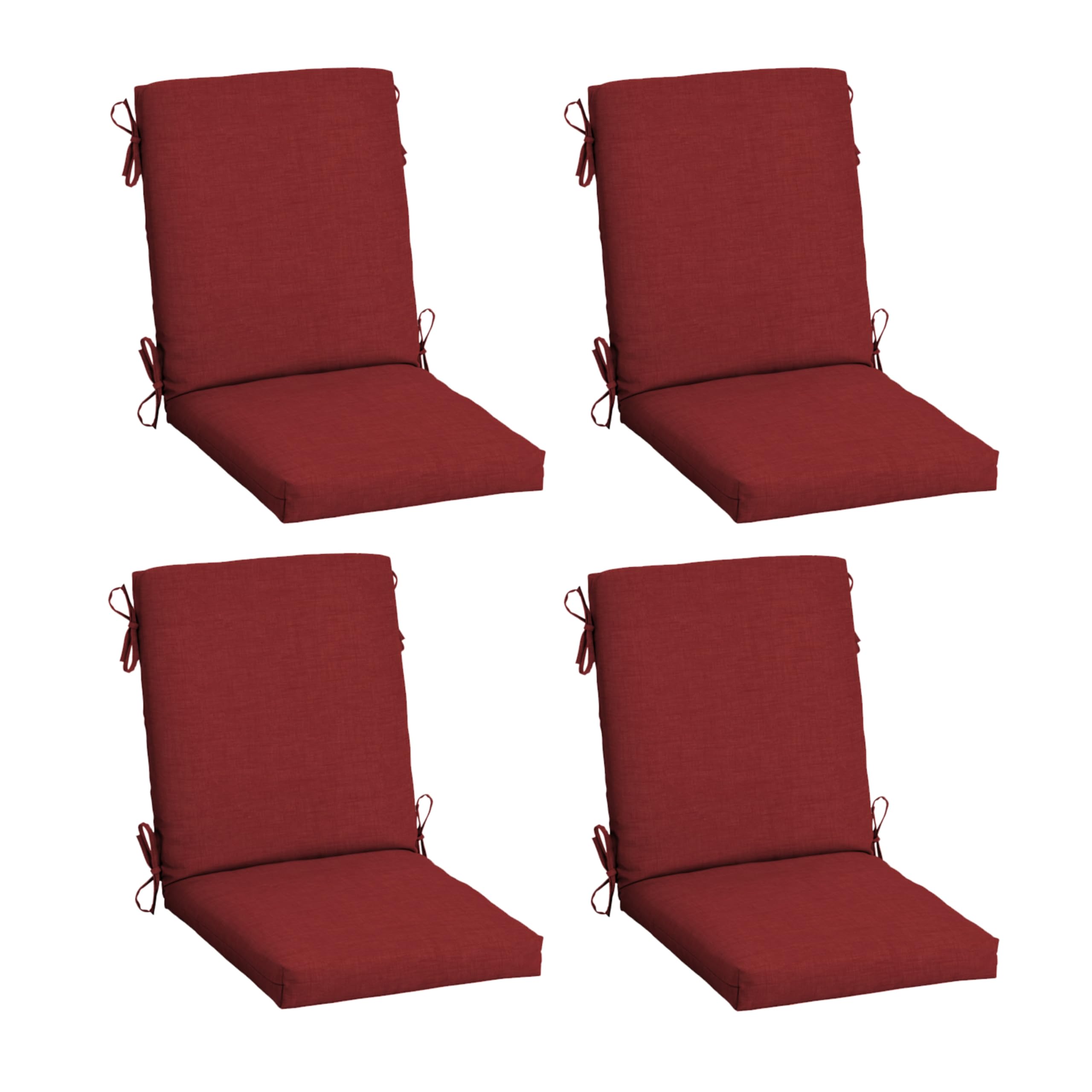
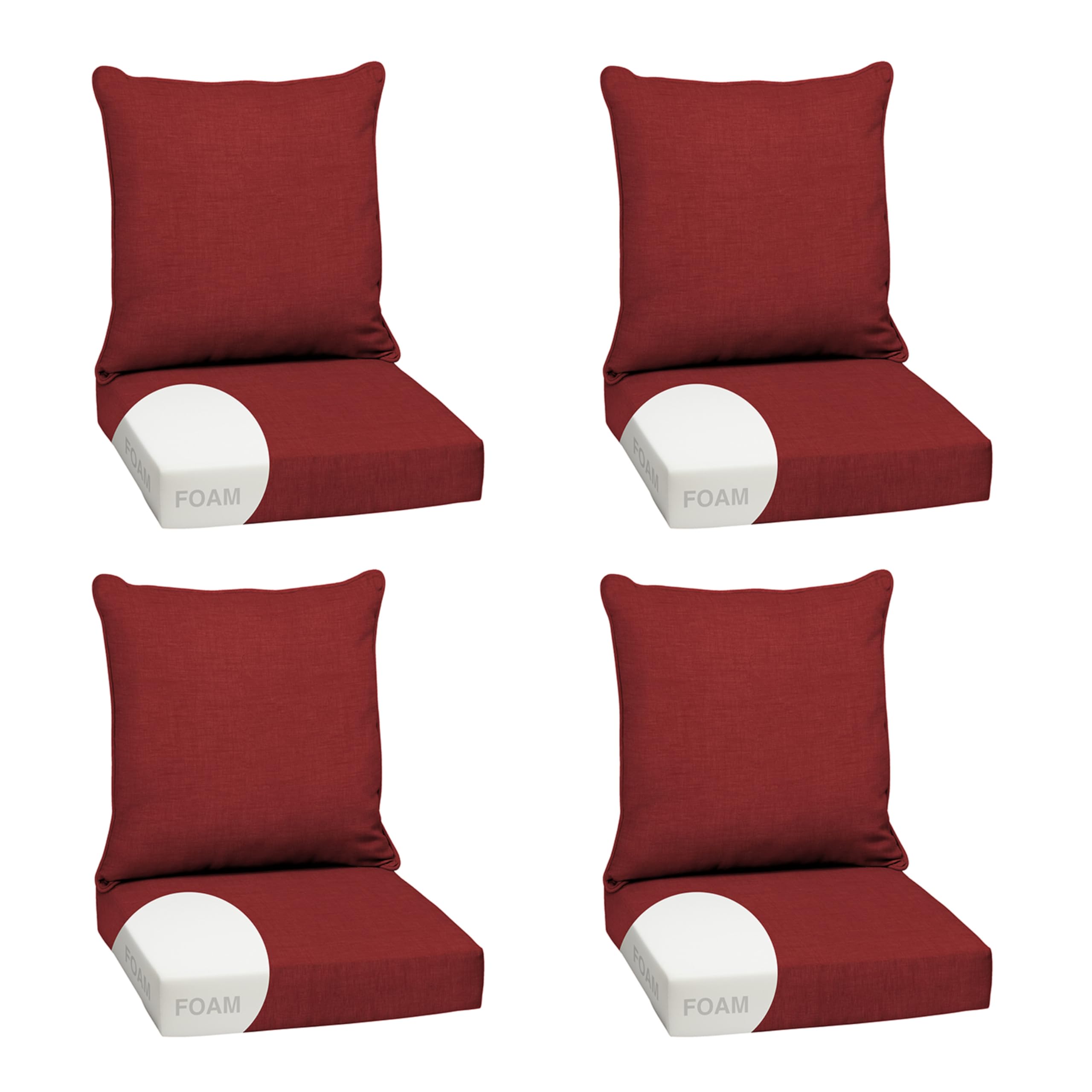
Dining-chair pads like this one lean on a fade- and water-resistant fabric finish plus fast drying rather than a true waterproof seal.
How "weather-proof" cushions actually earn the label: a real-world example
It helps to look at what a mainstream "weather-proof" cushion really is under the marketing, because it makes the whole water-resistant-not-waterproof idea concrete.
Take Arden Selections, a common patio-cushion brand you'll see on Amazon, Target, and Home Depot. Their Leala-texture outdoor cushions are described on the manufacturer's own product pages as made from weather- and UV-resistant fabric that resists fading and "resists water for comfort and long-lasting use." The fabric is an EverTru printed polyester treated with a PFAS-free C0 water and stain treatment, which in plain English is a topical finish that makes water bead and roll off, applied without the longer-chain "forever chemicals" that older repellents used.
Notice the language the manufacturer uses: "weather-resistant," "water-resistant," "resists water." Not "waterproof." That's not a loophole; it's accurate. A cushion like Arden's deep-seat set (a 24x24 set marketed as "weather-proof, rain-proof, fade-resistant") will comfortably handle the dew, the sprinkler, and the surprise ten-minute shower. It is not engineered to be left out through a multi-day storm and stay bone-dry inside. We dig into how a specific cushion like that actually performs, and where it fits, in our Arden Outdoor deep-seat cushion review, the most weather-forward option in the cluster and a useful case study for exactly this question.
The pattern repeats across the category. Competing sets advertised as "waterproof and fade-resistant" with a removable cover use the same toolkit: a repellent-treated fabric, a cover you can take off and wash, and a fill that's meant to handle moisture. The "waterproof" word on the box is doing more aspirational work than literal work. What you're really buying is a system designed to get wet and recover quickly.
Waterproof outdoor cushion covers: the closest thing to truly waterproof
If you've decided you want maximum protection, there are two legitimate routes, and they solve different problems.
Removable, washable cushion covers
Many quality cushions ship with a zip-off cover. This is underrated. A removable cover means you can wash out salt, pollen, and the start of any mildew before it sets, and you can re-treat the cover with a repellent spray as it ages. It doesn't make the cushion waterproof, but it makes it maintainable, which over a few seasons matters more.
Separate waterproof storage covers (the actual barrier)
If you want something that genuinely keeps rain off, the answer usually isn't a "waterproof cushion." It's a waterproof furniture cover or a deck box you deploy when you know weather is coming, plus a cushion that dries fast for the times you get caught out. A true PVC/vinyl-backed cover is the only part of this system that's honestly waterproof. Pairing a quick-dry cushion with an on-demand waterproof cover gives you both comfort when you're using the patio and protection when you're not.
A word of caution that the care experts stress: do not seal a damp cushion inside an airtight cover or bin. That's a mildew incubator. Cleaning specialists recommend storing cushions only when fully dry, in ventilated containers, and keeping them off solid wet surfaces so air can circulate. A breathable storage bag beats a sealed plastic one every time.
"Do I really have to dry them out?" Yes, and it's the single most important habit
This is where most cushion lifespans are won or lost, and it has nothing to do with the price you paid. Damp cushions stored in dark, enclosed spaces can grow mildew within days. The fabric's water resistance buys you time; it does not buy you immunity. The cushions still need to dry.
The routine is genuinely simple:
- Stand them up after rain. Tipping cushions on edge so all sides get airflow dramatically speeds drying. Per editorial cleaning guidance, even 30 minutes of air circulation makes a real difference, and you should towel off, hang, or sun-dry them whenever they get soaked.
- Don't stack wet cushions. Stacking traps moisture between them, exactly the dark, still, damp condition mildew loves.
- Brush off organic debris. Pollen, leaves, and bird droppings are food for mildew. A quick brush-down beats a deep clean later. Most fabric makers suggest a proper clean 2–4 times a season.
- Store fully dry, ventilated, under 50% humidity. For winter or a long wet stretch, get them indoors or somewhere climate-controlled, in a breathable bag, never sealed wet.
Do that, and a water-resistant cushion will outlast a "waterproof" one that's left to sit soggy. The maintenance is the differentiator, which is honestly good news: it means you don't have to chase the most expensive cushion to get a long life out of it.
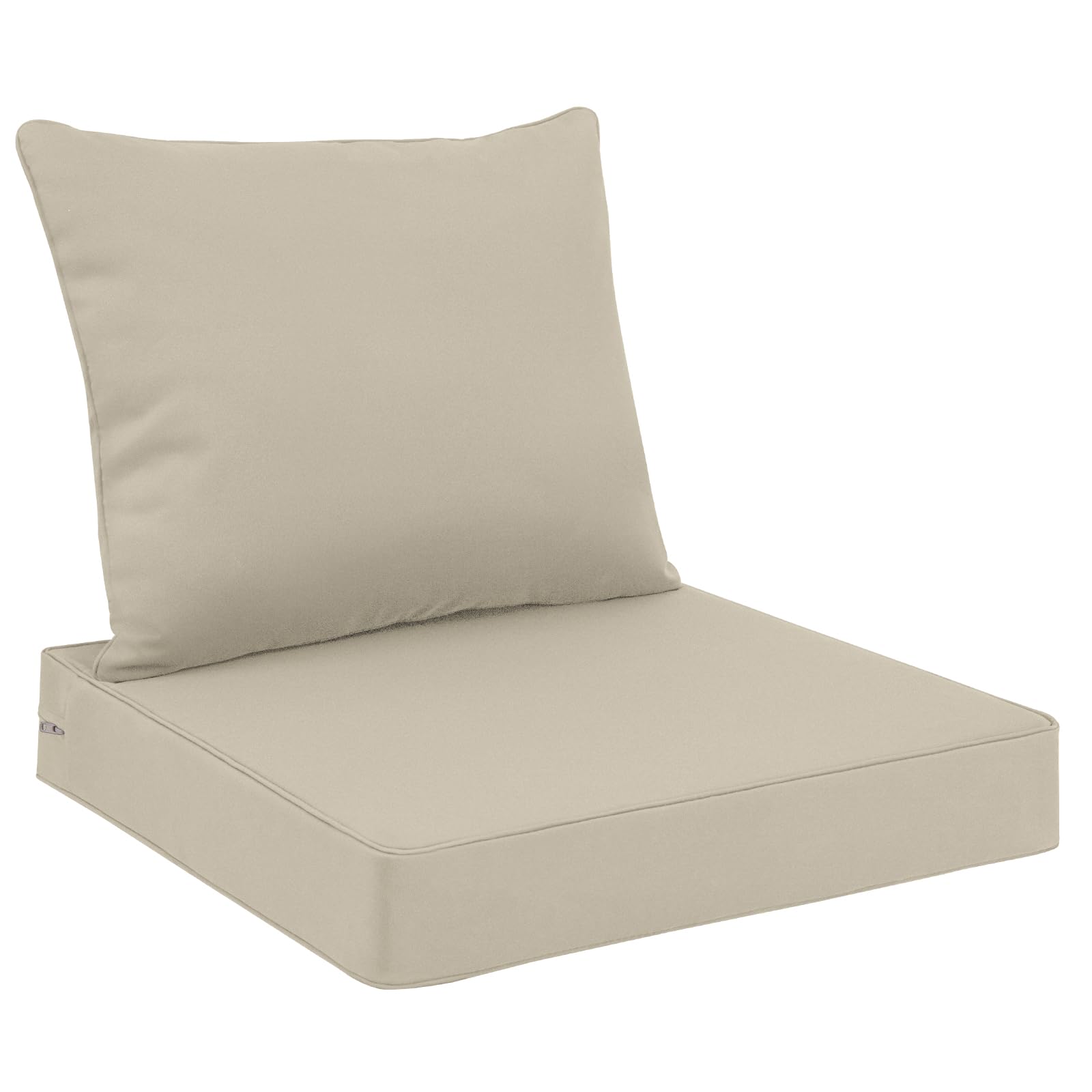
Removable, washable covers make a cushion maintainable: you can clean and re-treat the shell as its water repellency fades.
What about the cushions that really do say "waterproof"? Are they lying?
Not exactly. They're using "waterproof" as a category descriptor, not a lab-grade rating. There's no legal standard forcing a patio-cushion listing to prove an IPX rating the way there is for, say, a phone. So "waterproof outdoor cushions" on a clearance rack almost always means "treated to repel water and built to dry fast." A few do better than others, and the difference comes down to the three things we've covered:
- The fabric finish. Solution-dyed acrylic (like Sunbrella) and well-treated polyester (like Arden's PFAS-free C0 finish) repel water well and can be re-treated. Cheaper, untreated polyester wets out faster.
- The construction. Removable covers, drainage-friendly designs, and quality seams resist intrusion and recover better than glued, sealed-foam blocks.
- The fill. Quick-dry/reticulated foam is the real "rainproof" upgrade; standard foam is the part that turns a wet cushion into a soggy one.
If a listing brags "waterproof" but is vague about the fabric and silent about the foam, treat the claim as optimistic. If it names a real performance fabric and specifies a quick-dry or reticulated fill, the "waterproof" label is at least pointing at something genuine.
How to choose for your specific climate and setup
The right answer depends less on a single spec and more on how much weather the cushions will actually take.
Mostly covered patio, occasional drizzle. You have the most freedom. A standard water-resistant cushion with a treated fabric is plenty. Even standard foam is acceptable if it rarely gets truly soaked and can dry between wettings.
Open patio, regular rain, four seasons. Prioritize the fill. Look for quick-dry/reticulated foam (or a clearly drainage-oriented design), a solution-dyed or well-treated fabric, and ideally a removable cover. Plan to re-treat the fabric once a year and to stand cushions up after storms. Consider a waterproof furniture cover for the off-season.
Coastal, humid, or heavy-shade (mildew-prone). Drainage and airflow win. Quick-dry foam plus a removable, washable cover plus disciplined drying is the formula. Humidity, not just rain, is the enemy here; cushions in damp shade can mildew even without a downpour.
You want true "set it and forget it" rain performance. This is the niche for a dedicated waterproof-backed fabric (Sunbrella Rain or similar) or a marine-grade closed-cell setup, accepting that you'll trade a little plushness or pay more for the upgrade.
Once you know which bucket you're in, the rest is sizing and fill comfort, which is exactly what our how-to-choose guide for outdoor patio seat cushions covers, and our 2026 buyer's guide translates into specific recommendations.
Quick FAQ
Can I leave outdoor cushions out in the rain?
For a quick shower, yes; water-resistant cushions are made for that. For a long or repeated soaking, it's better to bring them in or cover them, then stand them up to dry afterward. The fabric resists water; it doesn't make the cushion immune to staying wet.
Are Sunbrella cushions waterproof?
Standard Sunbrella is water-resistant (water-repellent finish), per the manufacturer, not waterproof. Sunbrella Rain is a separate, waterproof-backed product if you need to leave cushions exposed.
Why did my "waterproof" cushion stop repelling water?
The repellent finish wears off with sun, rain, and cleaning. Splash-test it; if water soaks in instead of beading, re-treat with a fabric guard. This restores most of the original performance.
Is foam or fabric more important for rain?
Both matter, but foam is the more common failure point. A great fabric over standard sponge foam still gives you a soggy cushion if water gets in. Quick-dry/reticulated foam is the real rain upgrade.
Do waterproof cushion covers make a cushion waterproof?
A removable fabric cover makes a cushion maintainable, not waterproof. A separate PVC/vinyl furniture cover or storage box is the only genuinely waterproof part, so use it when weather is coming.
The honest bottom line
So, are outdoor patio cushions waterproof? No, and they're better for it. The good ones are highly water-resistant: they repel most water at the surface, let the rest pass through, and dry quickly so nothing sits wet long enough to rot. "Waterproof" on a tag is marketing shorthand for that whole system, not a literal seal.
What actually protects your cushions is a combination you can control: a quality treated fabric you re-treat once a year, a quick-dry fill (or at least a drainage-friendly design), a removable cover for cleaning, and the simple habit of standing them up to dry and storing them dry. Get those right and a "water-resistant" cushion will quietly outlast a pricier "waterproof" one that nobody bothered to dry out.
When you're ready to pick one, start with the best outdoor patio seat cushions for 2026, and if you want to see how a specific weather-forward option holds up, the Arden Outdoor deep-seat cushion review is the closest match to the questions in this article.
Related Posts