AIPER Seagull SE Review: Is This Budget Pool Vacuum Worth It?
 Abdulwahab Suleiman·July 11, 2026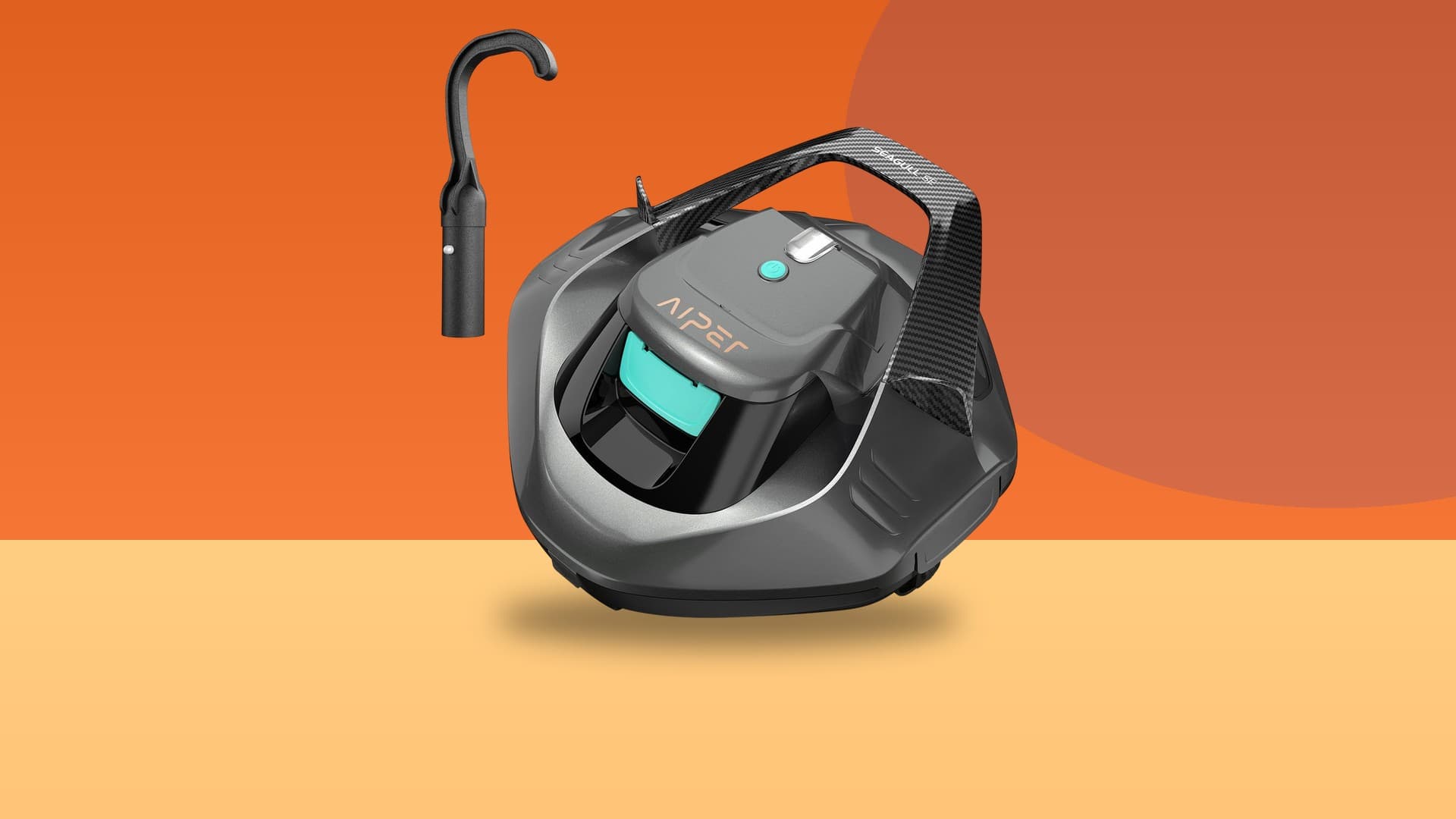
The AIPER Seagull SE at a glance
The AIPER Seagull SE is one of the cheapest ways to put a cordless robot to work in an above-ground pool. There are no hoses to uncoil, no booster pump to prime, and no floating cable to snag. You charge it, drop it in, press one button, and lift it back out when it parks itself near the wall. For a pool owner who is tired of pushing a manual vacuum head around, that simplicity is the whole pitch.
It is also a machine built to a price, and the compromises show up quickly once you look past the marketing. The Seagull SE cleans the floor and only the floor, it wants a flat bottom, and its debris basket is shallow. Understanding exactly where those lines fall is the difference between a satisfying budget buy and a returned box. This review pulls together AIPER's published specifications and independent hands-on testing from established outlets so you can see both the promise and the ceiling before you spend anything.
Where to Buy
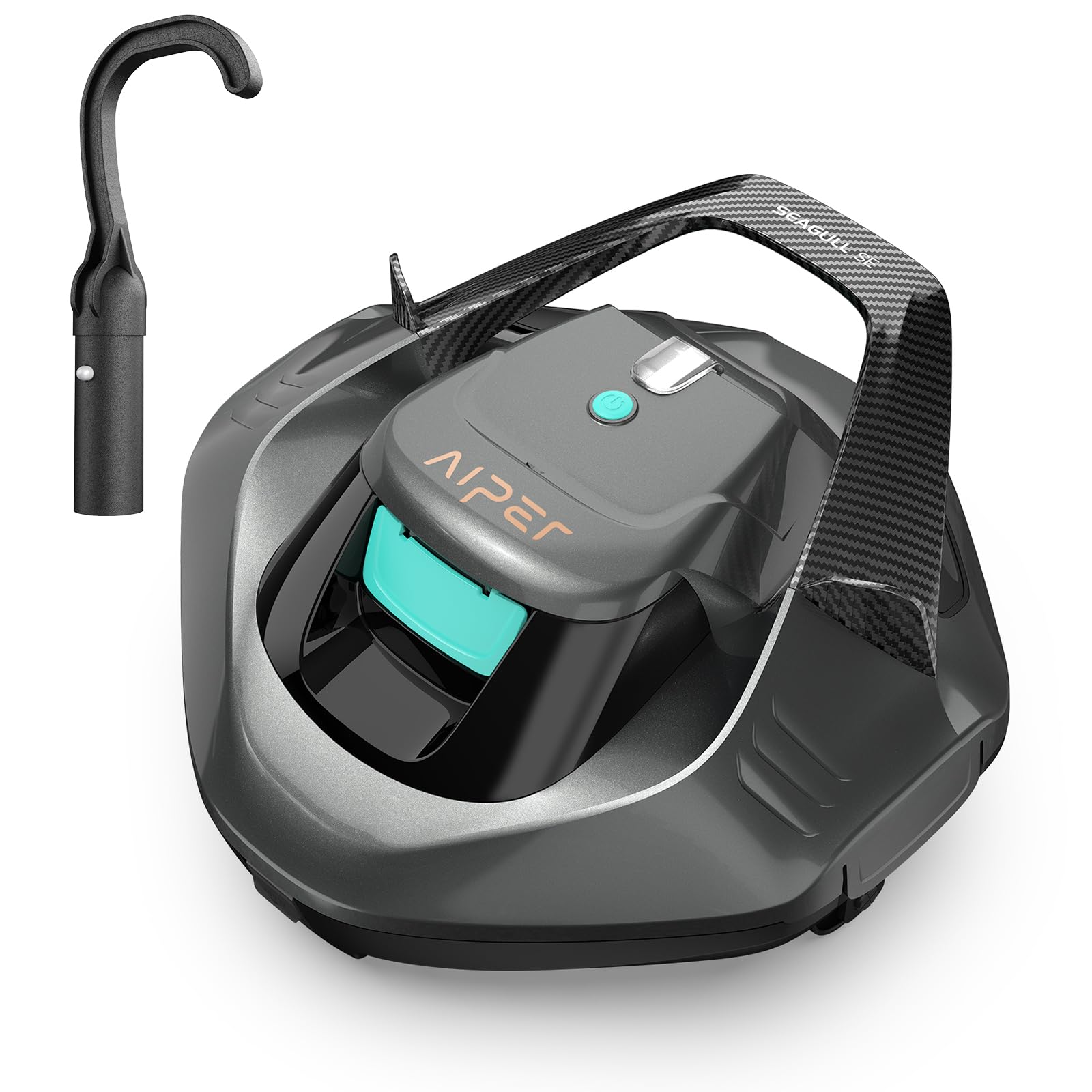
The Seagull SE keeps the design deliberately simple: one button, a carry handle, and a lift-out hook.
AIPER Seagull SE specs and what they mean
On paper the Seagull SE reads like a scaled-down version of AIPER's pricier robots. The full specs are published on AIPER's Seagull SE product page, and the current listing is sold through Amazon where it typically runs around $150 as of mid-2026, down from a $179.99 list price. That puts it firmly in entry-level territory, well below the $500-plus climbing robots that dominate the rest of this category.
Runtime and battery
AIPER rates the Seagull SE at up to 90 minutes of cleaning on a charge that the company says takes roughly two and a half hours. That is a reasonable window for a small pool. The caveat is that rated runtime and delivered runtime are not the same thing. Testing at PCWorld landed close to the 90-minute figure on a fresh unit, but longer-term coverage at The Pool Nerd reported real-world sessions nearer an hour, and noted battery capacity fading after weeks of regular use. If your pool genuinely needs a full 90 minutes to cover, plan for the robot to slow down as the battery ages rather than assuming the headline number is permanent.
Suction and filtration
The 2025 Seagull SE is rated at 1,200 GPH of suction, which is enough to lift sand, silt, and light leaf litter off a smooth floor. Where it gets tested is fine, settled debris. The filter is a shallow, flat basket rather than a deep cartridge, so its capacity is modest and it clogs faster in a dirty pool. Independent reviewers consistently flag the filtration as the weakest link in the design, and the practical upshot is that you will be rinsing the basket after most cycles. That is manageable, but it is a chore, not a set-and-forget arrangement.
Navigation and self-parking
There is no smart mapping here. The Seagull SE drives a semi-random pattern of long arcs, relying on coverage over time rather than a planned route. AIPER pairs this with an auto-parking feature that is supposed to bring the robot to the pool wall when the battery runs low so you can grab it with the included hook. PCWorld's testing found the parking behavior inconsistent, with the unit sometimes stopping mid-pool instead of at the edge. On a 40-foot above-ground pool that is a minor annoyance rather than a dealbreaker, but it is worth knowing the feature is not bulletproof.
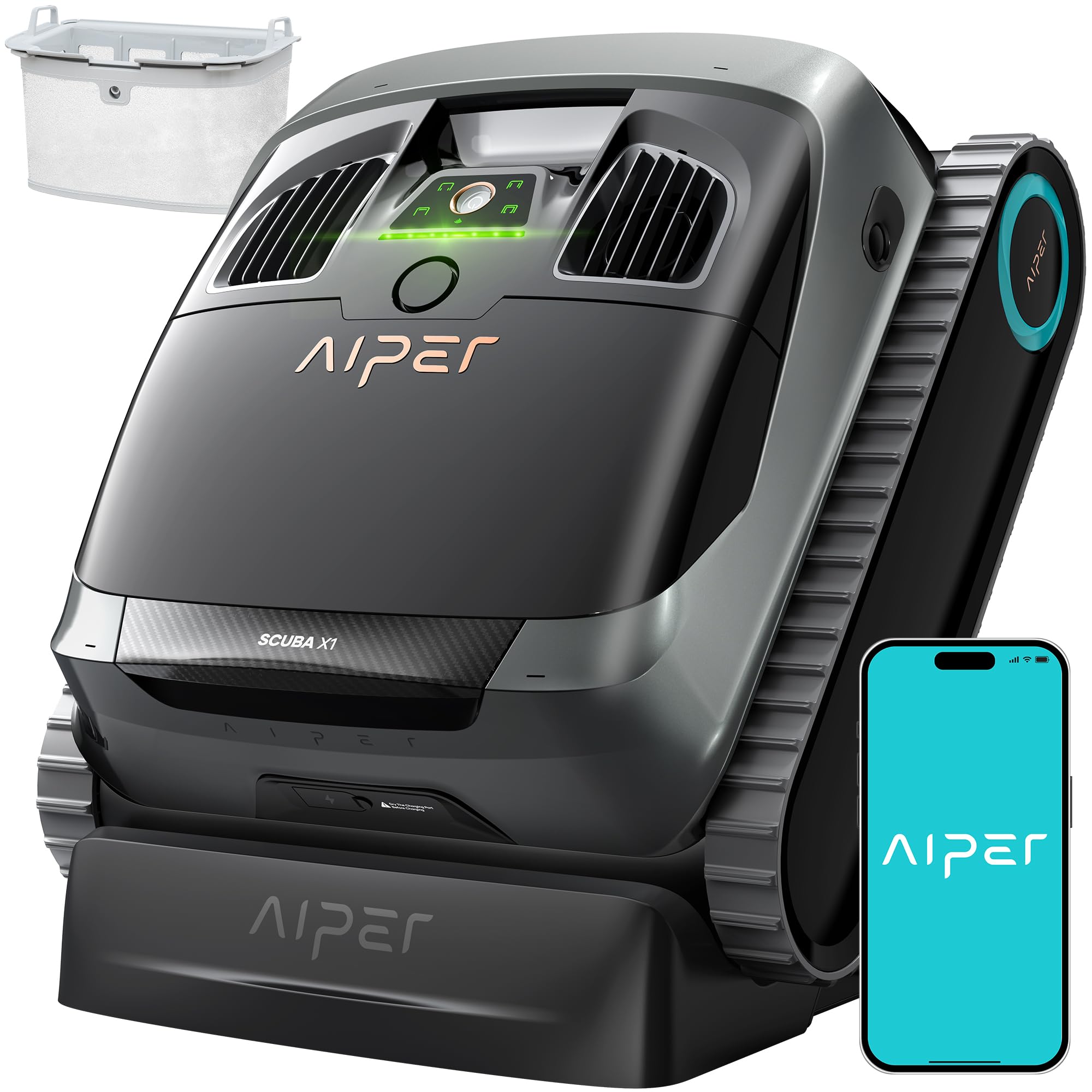
Step up to a robot like the Scuba X1 and you gain wall and waterline climbing plus a deeper filter.
How well does the AIPER Seagull SE actually clean?
For its intended job, the Seagull SE does fine work. On a flat-bottomed above-ground pool, reviewers found it picked up the large majority of loose floor debris within a cycle, and PCWorld estimated roughly 90 percent of debris collected over a 90-minute run. After a storm drops leaves and grit into the water, dropping the robot in and walking away is a real time-saver compared with a manual vacuum head.
The performance falls off the moment conditions stray from that ideal. Sloped floors, rounded corners, and the cove where a vinyl wall meets the floor are all places the Seagull SE tends to miss, because it has no wall-climbing ability and cannot pivot up an incline. It will not touch the waterline scum or the steps. Heavier or larger leaves can also defeat the intake. Treat it as a floor sweeper for calm, flat pools and it delivers; expect whole-pool coverage and it disappoints. That gap between marketing and reality is the single most important thing to internalize before buying, and it echoes the broader case we make in our breakdown of whether robotic pool cleaners are worth it.
Who the AIPER Seagull SE is best for
The Seagull SE has a clear sweet spot. It is a good match for an owner of a small-to-medium, flat-bottomed above-ground pool up to about 850 square feet who wants a cheap, cordless helper for floor debris and does not need walls, waterline, or steps cleaned. At 7.5 pounds it is light enough for almost anyone to lift out, and the single-button operation means there is nothing to learn. As a supplementary cleaner that runs after windy days, it earns its keep.
Where it struggles
If your pool has a sloped or hopper bottom, a curved liner, or you expect the robot to handle walls and the waterline, the Seagull SE is the wrong tool. Its one-year warranty is also on the short side for a category where two-year coverage is common, so factor in less long-term protection than a Dolphin or a higher-end AIPER. Anyone with an in-ground pool or a demanding cleaning routine should size up rather than trying to stretch this model past its design limits. If you are still weighing options across brands, our roundup of the best robotic pool cleaners of 2026 compares coverage, filtration, and pool-shape fit in more depth.
AIPER Seagull SE vs. the alternatives
Step up: AIPER Scuba X1
Inside AIPER's own range, the Scuba X1 is the obvious upgrade path. It adds floor, wall, and waterline cleaning, a longer rated runtime, a wireless charging dock, and dual filtration, and it is built for both above-ground and in-ground pools. It costs several times more, which is exactly the tradeoff: the Seagull SE buys simplicity and a low price, the Scuba X1 buys coverage and capacity. If you know you need walls and waterline done, spend once rather than twice. Our full AIPER Scuba X1 review digs into whether the jump is justified.
Corded reliability: Dolphin Nautilus CC Pro
If cordless convenience is not a hard requirement, a corded workhorse like the Dolphin Nautilus CC Pro is worth a look. Corded robots sidestep the battery-fade problem entirely, climb walls, and generally carry a two-year warranty. The catch is the trailing cable and the need for a nearby outlet. For an owner who values consistent, all-surface cleaning over the tidiness of a cordless unit, it is a more capable long-term buy.
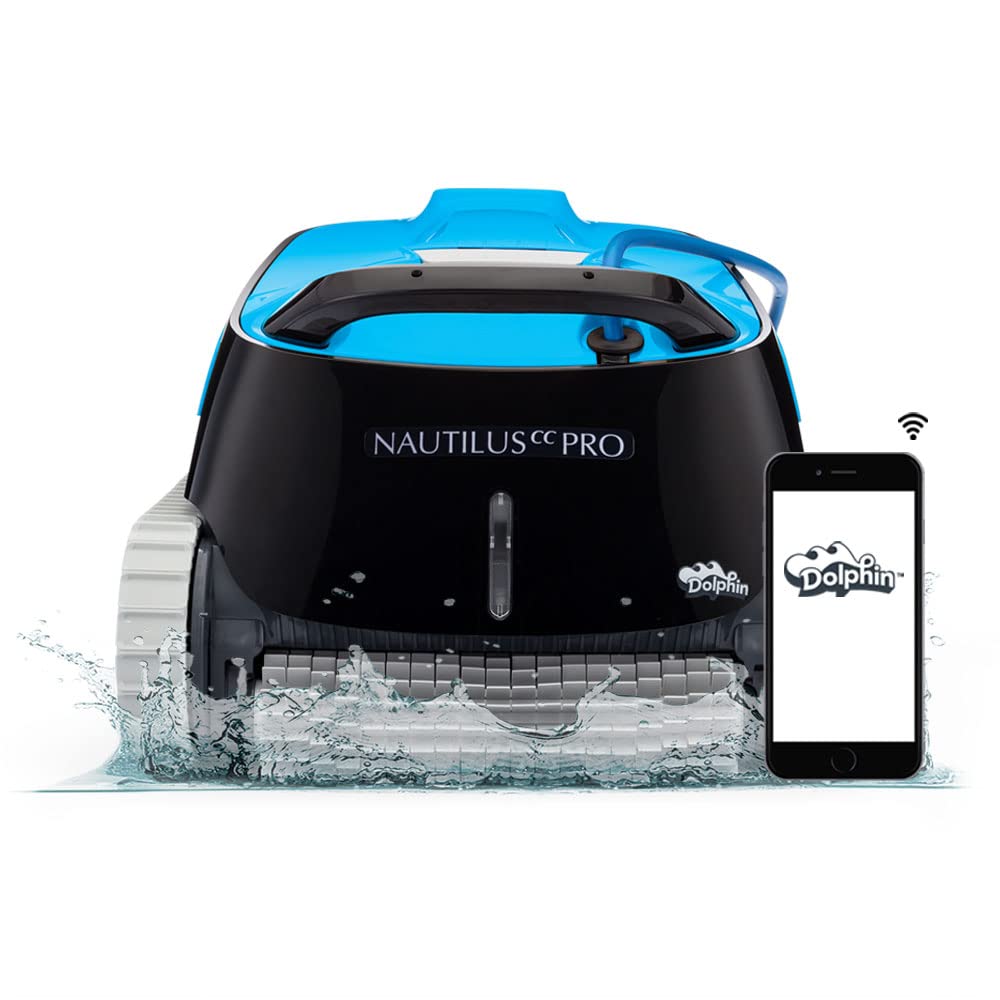
A corded robot such as the Dolphin Nautilus CC Pro trades cable-free convenience for wall climbing and a longer warranty.
How We Research
Zuqqis reviews are built on research, not marketing claims. For the Seagull SE we cross-checked three independent layers of evidence: the manufacturer's own published specifications, the retail listing where the current price and configuration live, and hands-on testing from established product-review outlets. When AIPER's rated runtime met resistance in independent testing, we reported the gap rather than the brochure number. When multiple reviewers independently flagged the same weakness, such as the shallow filter basket or the inconsistent auto-parking, we treated that consensus as the signal. A claim that could not be traced to a credible source did not make the review. That standard is why our verdict on this robot is measured rather than glowing.
Verdict: Is the AIPER Seagull SE worth it?
The AIPER Seagull SE is worth it for the right pool and the wrong choice for the wrong one. Buy it if you own a small, flat-bottomed above-ground pool and want a genuinely cheap, cordless, one-button way to keep loose debris off the floor. Skip it if your pool has slopes or curves, if you need walls and the waterline cleaned, or if you expect the battery to hold its rated runtime for years. Within its narrow lane it is a likeable, useful little machine; asked to do more, it runs out of both suction and stamina. Match it to the job it was built for and it is a fair-value entry point into cordless pool cleaning.
Where to Buy
Specifications
- Rated runtime
- Up to 90 minutes per charge
- Suction
- 1,200 GPH
- Charge time
- Approx. 2.5 hours
- Weight
- 7.5 lbs
- Max pool size
- Flat floor up to ~850 sq ft / 40 ft length
- Cleaning coverage
- Floor only (no walls or waterline)
- Navigation
- Random-path with auto-parking
- Connectivity
- None (single-button, no app)
- Warranty
- 1 year
Related Posts