Ultenic Cordless Robotic Pool Cleaner Review: Budget Pick, Real Trade-offs
 Abdulwahab Suleiman·July 11, 2026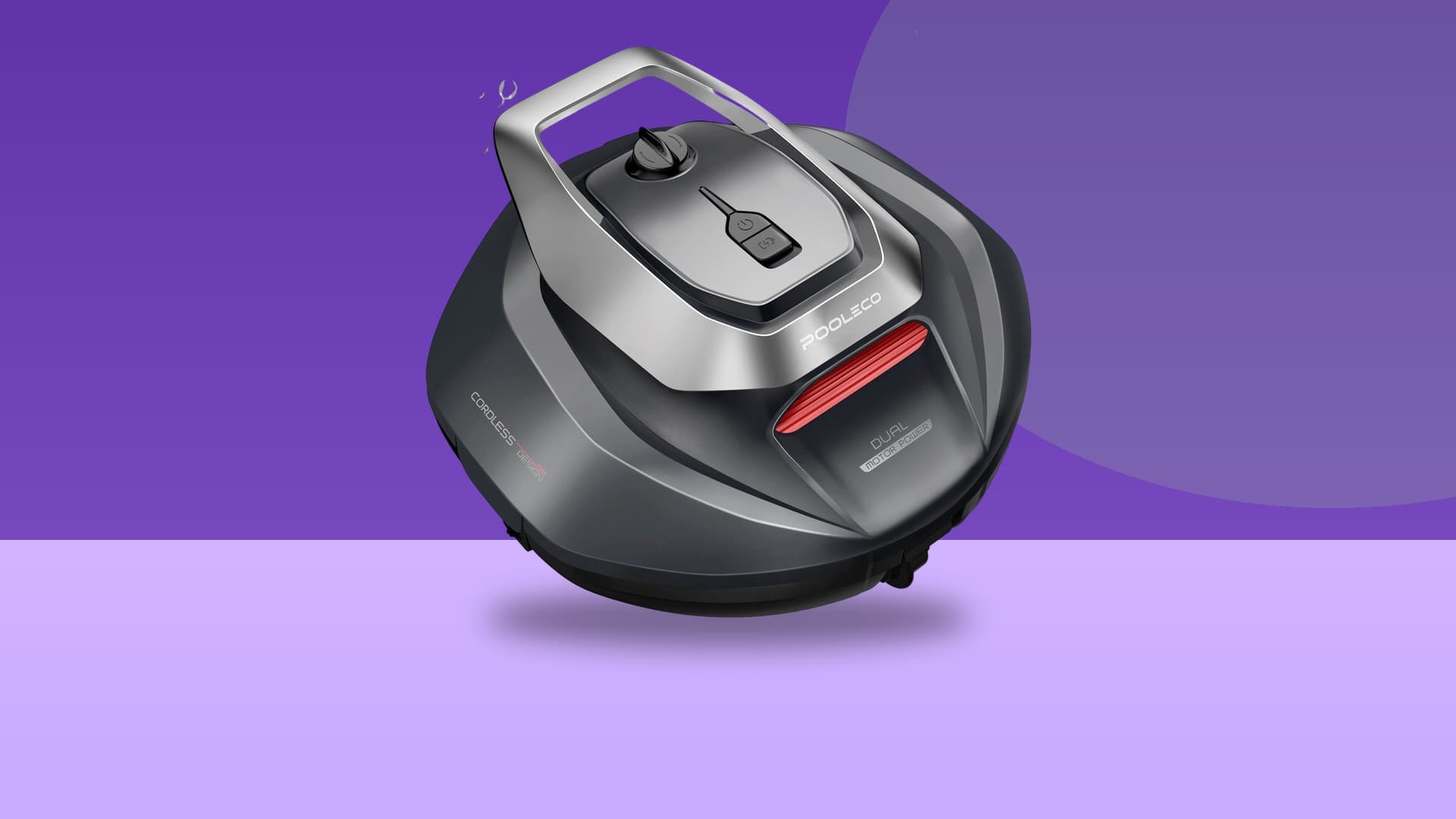
Our Verdict
Value
Features
Performance
The Good
- Very light and easy to lift out at about 7 pounds
- Top-mounted charge port; no flipping the unit to plug in
- Large 2.5L basket with fine 180-micron filtration for sand
- Float-assisted self-parking makes retrieval simple
- Fast 2.5-hour recharge relative to its 90-minute runtime
- Cordless freedom with no cable to tangle or trip on
The Bad
- Independent testing measured only ~35% debris pickup
- Slow wall-reversal wastes runtime idling at obstacles
- Bump-and-turn navigation only; no mapping or scheduling
- Larger or irregular pools need multiple cycles for full coverage
Zuqqis rates this 2.4 out of 5. The score is derived from our own assessment of value, features, performance, weighted by what matters most to buyers. We research published specifications, independent testing and verified owner feedback — we do not accept payment for ratings. How we rate
The short version
The Ultenic cordless robotic pool cleaner, sold under the Pooleco 10 name, is one of the cheapest ways to put a battery-powered scrubber in your water. It is genuinely light, easy to lift out, and simple enough that anyone can run it without reading a manual. The catch is coverage: independent testing found it leaves a lot of debris behind, largely because it reacts slowly when it hits a wall and wastes runtime idling. If your pool is small, round, and you mostly want the floor tidied between skims, it can earn its keep. If you expect a set-and-forget bot that gets the whole basin, it will disappoint.
This is a research-based review. Our confidence comes from cross-checking Ultenic's own published specifications against reputable third-party measurements and the wider engineering trade-offs of cordless pool robots. Where the numbers and the field reports disagree, we say so and explain which way the evidence points.
Ultenic Pooleco 10 specs at a glance
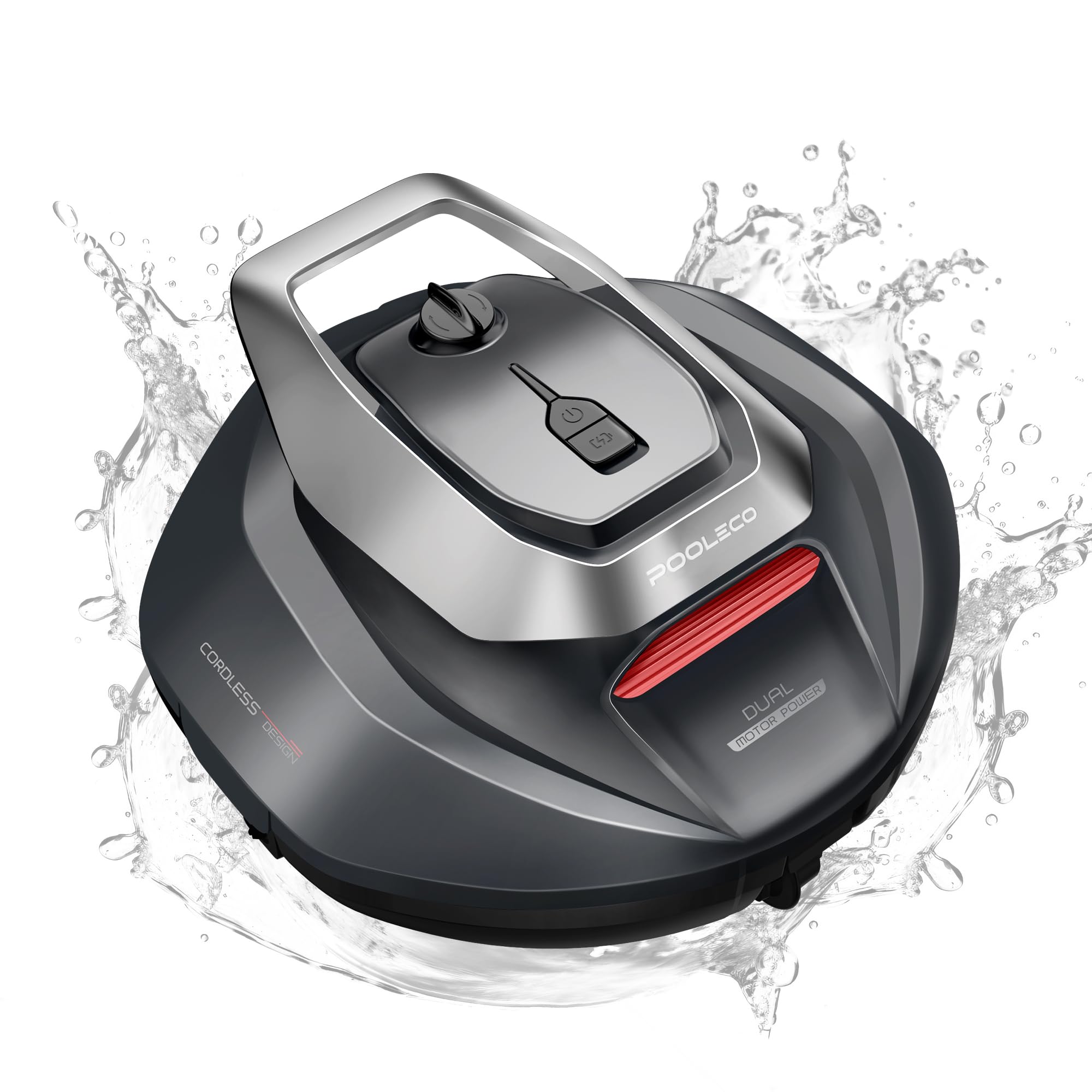
Ultenic positions this as an entry-level cordless cleaner for above-ground and smaller in-ground pools. According to the manufacturer's Pooleco 10 product page, the core hardware is a 5,200 mAh battery driving a dual-motor suction system, feeding a 2.5-liter basket behind a 180-micron filter. It weighs about 7.17 pounds, charges in around 2.5 hours, and runs for up to 90 minutes per charge. Retail listings put its suction at roughly 30 gallons per minute, a figure the spec sheet itself does not quantify.
Where to Buy
The Pooleco 10 is a compact, top-handle cordless unit built for smaller pools.
What the dual-motor suction and 2.5L basket actually mean
The "dual-motor" framing sounds premium, but in practice it describes a fairly ordinary suction-and-filter loop: one path pulls water and debris in, the other pushes filtered water back out to keep the robot circulating. The 30 GPM figure is respectable for the price, and the 180-micron filter is fine enough to trap sand and pollen rather than just leaves. The 2.5-liter basket is a real advantage for a bot this small; you are unlikely to fill it in a single 90-minute cycle on a normal residential pool, so you are not emptying it mid-clean.
The specification list is honest about what it is: a lightweight floor-and-slope cleaner, not a waterline-scrubbing, wall-climbing flagship. Nothing in Ultenic's materials claims mapping, app-based scheduling on this base model, or true multi-surface intelligence.
How well does the Ultenic clean?
This is where the marketing and the measurements part ways. In hands-on testing published by PCWorld, the Pooleco 10 collected only about 35% of the test debris, compared with roughly 55% for the similarly priced Aiper Seagull SE. That is a meaningful gap for two bots that cost about the same.
The root cause was not weak suction. It was navigation. Reviewers noted that the robot "moves in one direction until it is blocked, then it pauses and goes the other way," and that it can sit idle for up to 20 seconds after bumping an obstacle before reversing. On a 90-minute battery, seconds of hesitation at every wall add up to whole zones of floor that never get a pass.
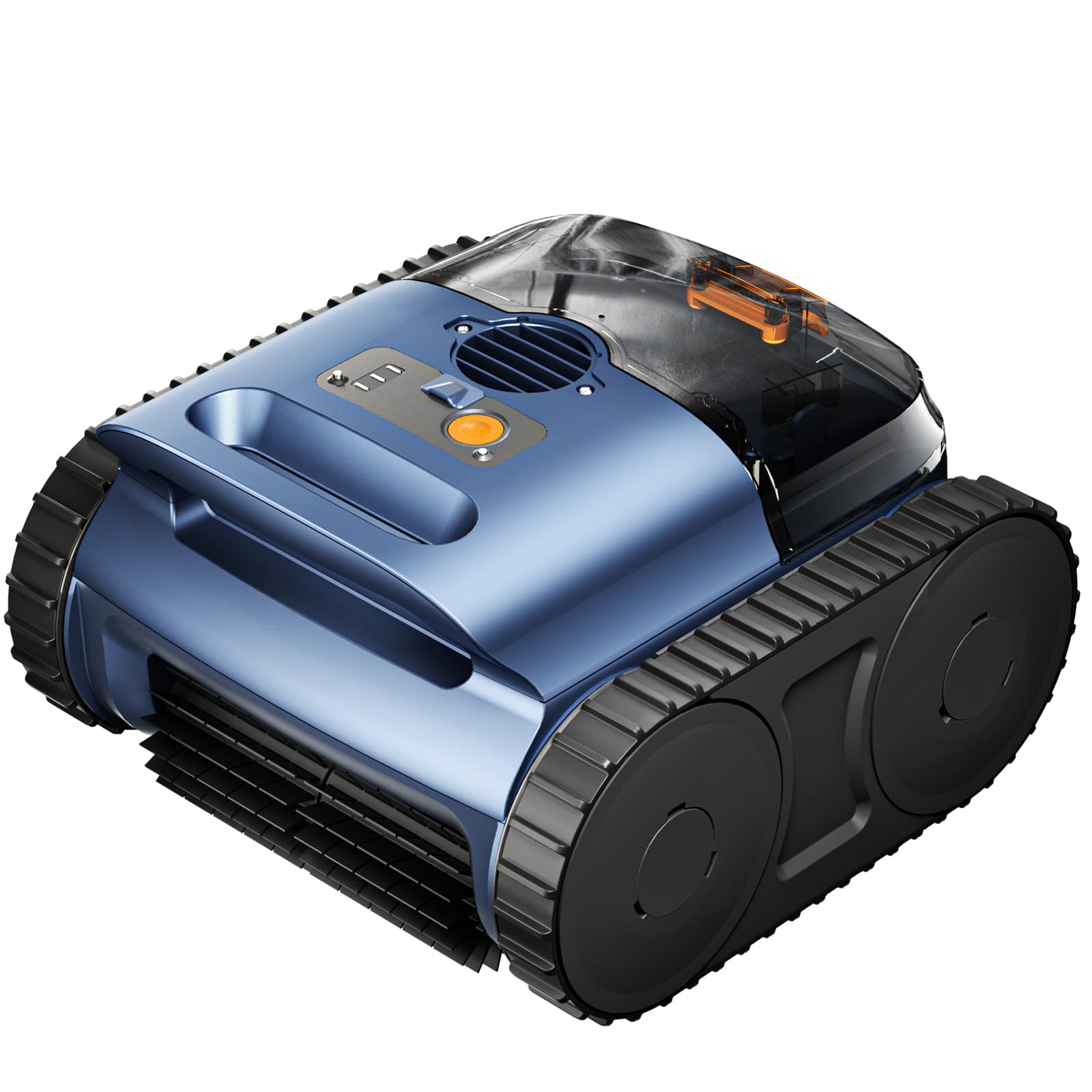
Rival cordless pool robots with quicker wall reversal set the coverage bar the Ultenic struggles to hit.
Navigation: the weak link
Bump-and-turn navigation is normal at this price. Almost no sub-$200 cordless bot has real mapping. But two bots can both be "dumb" and still perform very differently based on how fast and how decisively they change direction. The Ultenic's slow reversal is the single biggest reason its real-world coverage trails cheaper-feeling competitors. If you run it, expect to occasionally nudge it out of a corner or reposition it for a second pass on the far end of the pool.
Runtime, charging, and the 850 sq ft claim
Ultenic rates the Pooleco 10 for pools up to about 850 square feet, and specifies roughly a 2.5-hour charge for up to 90 minutes of cleaning. Those numbers are internally consistent and match what you would expect from a 5,200 mAh cell.
Read the coverage claim carefully, though. "Up to 850 square feet" is the size of pool the bot is rated to service, not the area it reliably cleans in one 90-minute cycle. Given the navigation issues above, a pool near the top of that range will almost certainly need two cycles, or manual repositioning, to get full-floor coverage. On a small round above-ground pool, a single charge is plenty. The 2.5-hour recharge is reasonable, so a one-cycle-per-day rhythm is realistic.
One design detail genuinely helps day to day: the charge port is top-mounted, so you plug in without flipping the unit over, and a float aids retrieval so the robot parks at the wall rather than sinking to the deep end. At about 7 pounds, lifting it out one-handed is easy.
Who should buy it, and who should skip it
The Ultenic makes sense for a specific owner: someone with a small, simple pool who treats a robot as a helper between manual skims, not a replacement for them. If your basin is round, under a few hundred square feet, and you value a bot that is cheap, light, and idiot-proof, the trade-offs are livable.
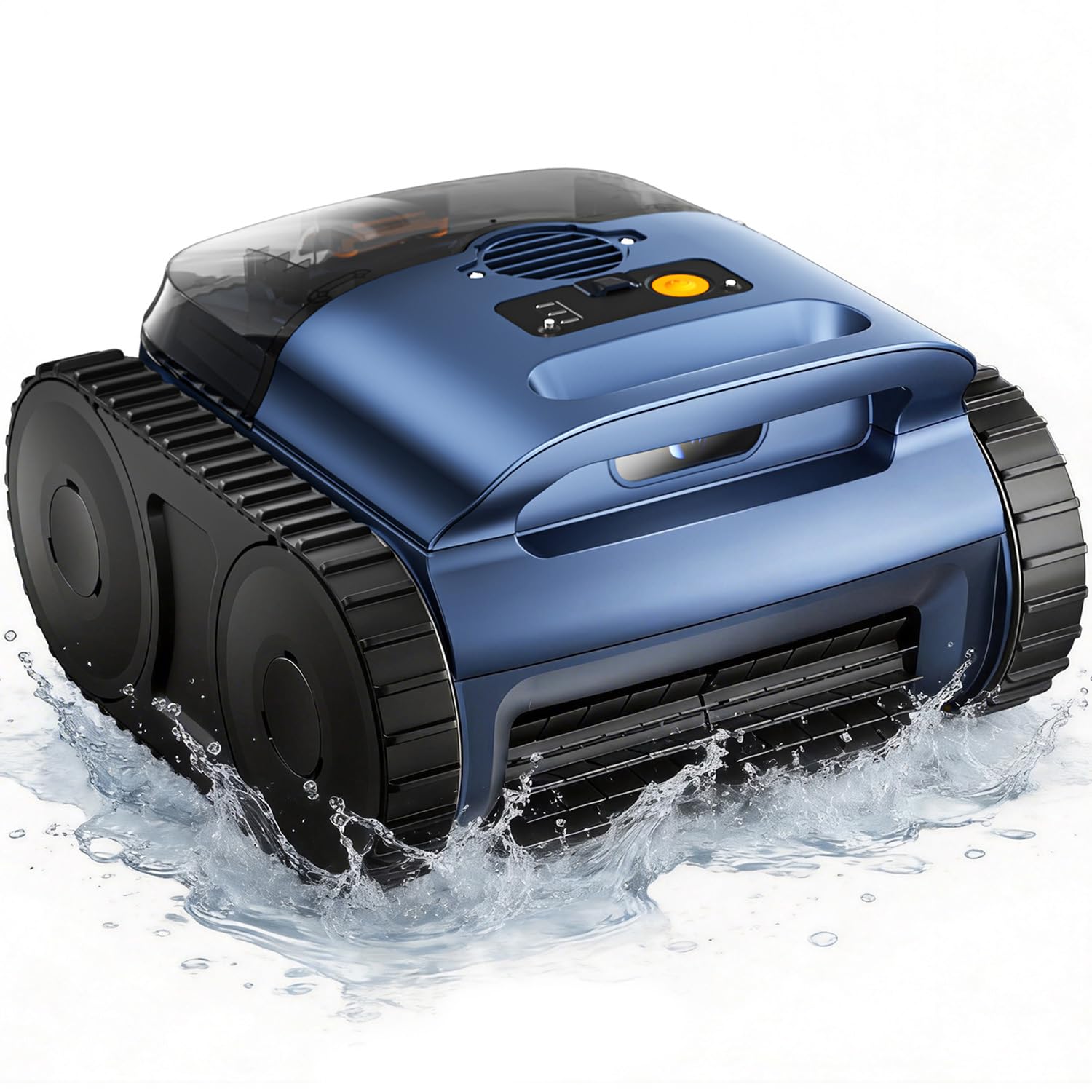
For larger or irregular pools, a bot with faster course-correction will finish the job with less babysitting.
Skip it if you have a large, kidney-shaped, or heavily used pool, or if you want to press start and walk away. In those cases the coverage shortfall becomes a chore, and you will spend the time you hoped to save repositioning the robot. Before you decide, it is worth reading our breakdown of whether robotic pool cleaners are worth it at all for your situation, because the honest answer depends heavily on pool size and how much manual cleaning you are trying to eliminate.
How it compares to other budget cordless bots
In the sub-$200 cordless tier, the Ultenic's closest rival is the Aiper Seagull SE, which outscored it on debris pickup in the same test. Another value option, the BOTLUXE PC10, competes on the same "cheap, light, cordless" pitch, so it is worth cross-shopping. For the full field, our roundup of the best robotic pool cleaners of 2026 ranks these budget bots against pricier, better-navigating models.
It is also worth weighing cordless against corded. As pool-robot testers at Poolbots note, corded models generally deliver stronger, more consistent suction and true set-and-forget operation, and they sidestep the lithium-ion battery concerns that come with any cordless unit. Look for UL or ETL certification on whatever you buy. Cordless is most compelling when you have no power access near the water or a small pool where the convenience outweighs the coverage penalty.
How we research
Our verdicts rest on three independent layers of evidence, each cross-checked against the others before we commit to a conclusion. First, we anchor every hardware claim on the manufacturer's official specification sheet, so runtime, battery capacity, suction rate, and filtration numbers come straight from the source. Second, we weigh reputable third-party measurements, in this case controlled debris-pickup testing, because a spec sheet tells you what a motor can do, not what the bot actually collects. Third, we frame both against the known engineering trade-offs of the category, so a single flattering or unflattering data point never drives the conclusion on its own. When the manufacturer's positioning and the independent measurements disagree, as they do here on coverage, the field evidence wins and we tell you why.
The verdict
The Ultenic cordless robotic pool cleaner is a competent budget helper trapped by sluggish navigation. The battery, filter, and build are fine for the money, and it is a pleasure to lift and store. But independent testing puts its real cleaning yield well behind an equally cheap rival, and no amount of suction fixes a robot that hesitates at every wall. Buy it if your pool is small and you want an inexpensive assistant. If you want a bot that finishes the job unsupervised, spend a little time with our ranked guide before committing.
Where to Buy
Specifications
- Runtime
- Up to 90 minutes per charge
- Charge time
- About 2.5 hours
- Battery
- 5,200 mAh
- Suction
- Dual-motor, ~30 GPM
- Filter basket
- 2.5 liters, 180-micron filtration
- Weight
- ~7.17 lb
- Max pool size (rated)
- Up to ~850 sq ft
- Warranty
- 1 year (US)
Related Posts