Beatbot AquaSense 2 Ultra Review: The AI Pool Robot, Examined
 Abdulwahab Suleiman·July 11, 2026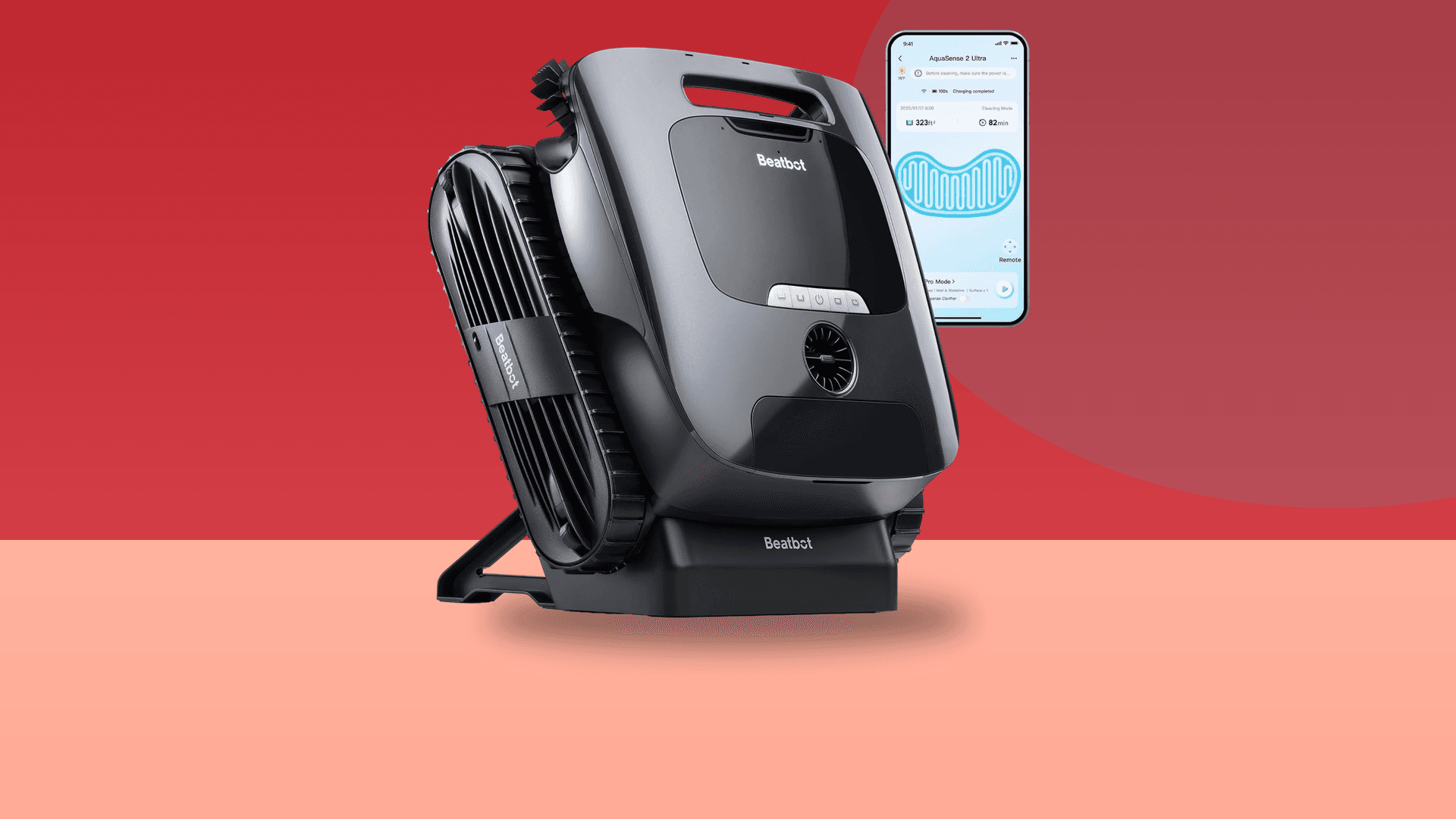
Our Verdict
Quality
Value
Features
Design
Performance
The Good
- True 5-in-1 coverage including surface skimming and water clarification
- Long, mode-flexible runtime on a large battery
- Surface parking removes the chore of hauling it off the pool floor
- Strong stair and edge cleaning in independent testing
- Industry-leading 3-year warranty
The Bad
- Flagship pricing, well above capable mid-tier robots
- Heavy at 29.1 lbs with no caddy included
- Advanced AI mapping is most useful only during initial setup
- Independent verdicts on suction and filtration are not unanimous
Zuqqis rates this 3.3 out of 5. The score is derived from our own assessment of quality, value, features, design, performance, weighted by what matters most to buyers. We research published specifications, independent testing and verified owner feedback — we do not accept payment for ratings. How we rate
Beatbot built the AquaSense 2 Ultra to be the pool robot that ends the conversation: floor, walls, waterline, water surface, and a clarifier that treats the water itself, all in one machine that parks at the surface so you never fish it off the bottom. It is also one of the most expensive cordless cleaners a homeowner can put in a backyard pool, which makes the real question less about what it can do and more about whether the flagship earns its premium over the cheaper models in Beatbot's own lineup.
This Beatbot AquaSense 2 Ultra pool robot review pulls the published specifications apart line by line, cross-checks them against independent hands-on coverage, and lands on who should actually buy it.
Beatbot AquaSense 2 Ultra at a glance
The AquaSense 2 Ultra is Beatbot's top-tier cordless robot, aimed at larger or oddly shaped inground pools where a basic floor-only cleaner leaves too much untouched. It runs an 11-motor drivetrain rated at 5,500 GPH of suction, carries 27 sensors for navigation, and covers up to 3,444 square feet (320 m²) on a single charge, according to Beatbot's official product page.
Independent reviewers have been mostly, though not unanimously, positive. Digital Trends called it "the all-in-one pool cleaner champion" and praised its stair handling and 10-hour surface-mode battery, while flagging the weight and the price (Digital Trends). Pro Tool Reviews was more effusive, describing it as "one of the most advanced, capable, and sophisticated robotic pool vacuums you can buy" (Pro Tool Reviews). Not every account is glowing, which is worth keeping in mind before spending flagship money.
At the time of writing (July 2026) the Ultra sells for roughly $2,200, marked down about 30% from a list price above $3,000. Prices on cordless robots move constantly, so treat any figure here as a snapshot rather than a promise.
Where to Buy
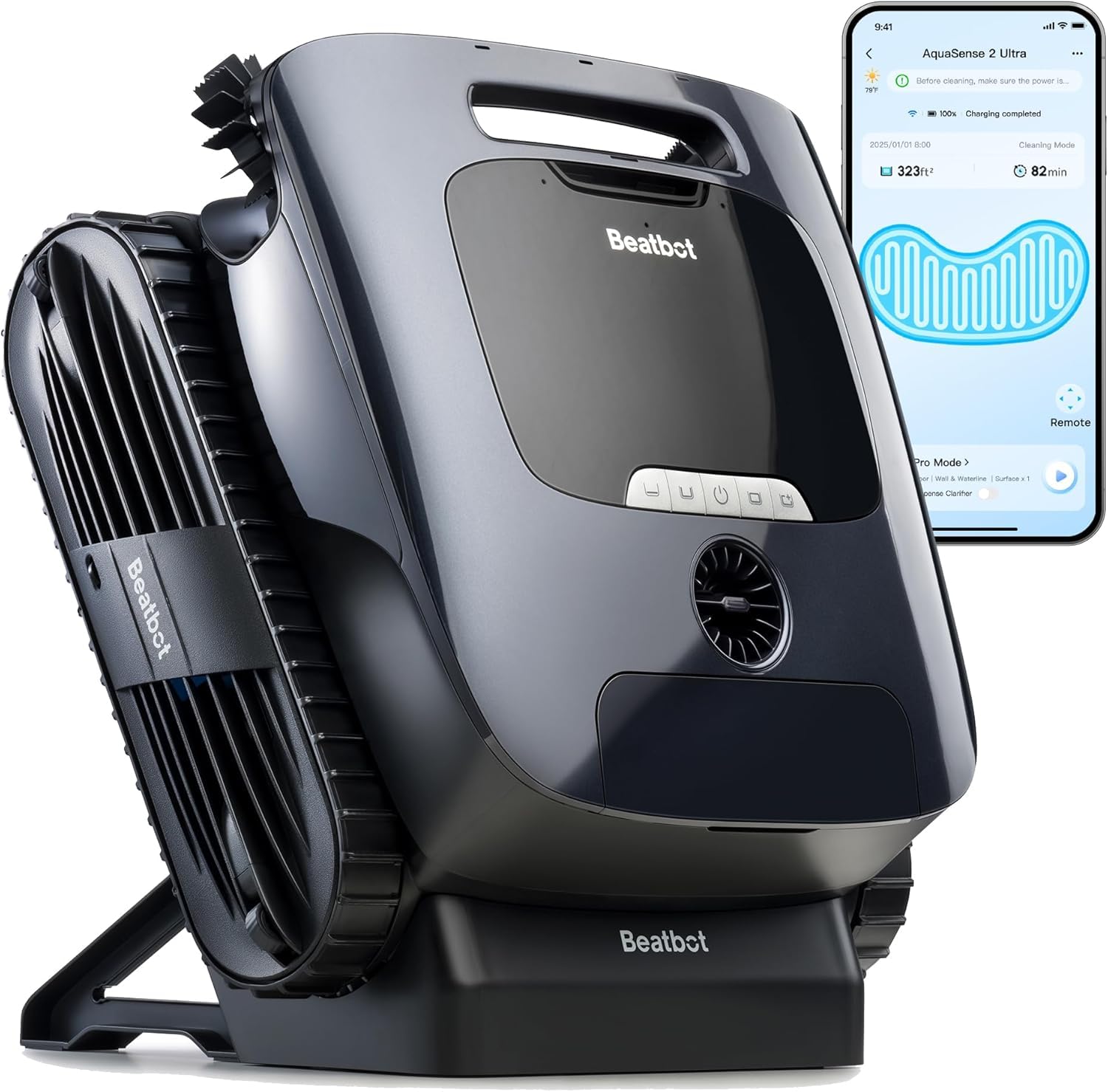
The AquaSense 2 Ultra is Beatbot's flagship cordless robot, built for complex inground pools.
Specs and features that define the AquaSense 2 Ultra
Most of what you pay for lives in three systems: the 5-in-1 cleaning coverage, the sensor-heavy navigation, and the ClearWater clarifier. Here is what each one actually is.
5-in-1 cleaning: surface, floor, walls, and waterline
The headline feature is coverage. In a single run the Ultra can vacuum the floor, climb and scrub the walls, work the waterline where oils and sunscreen collect, skim floating debris off the surface, and dose the water with a clarifying agent. Suction is handled by an 11-motor system rated at 5,500 GPH, and debris lands in a top-loading dual-basket filter, a 4.0L coarse basket (150μm + 250μm mesh) paired with a 3.7L fine basket (250μm), per Beatbot's specifications. Top loading matters more than it sounds: you lift the baskets straight up out of the top rather than flipping a wet, dripping robot over.
HybridSense AI mapping and 27 sensors
Navigation is where the Ultra separates itself from budget robots that bounce around at random. Beatbot's HybridSense system combines an AI camera with dual time-of-flight sensors, two infrared sensors, and four ultrasonic sensors, 27 sensors in total, to map the pool and plan a path rather than wander. Pro Tool Reviews confirmed the setup enables "precise pool mapping, intelligent path planning, and obstacle avoidance" across different pool shapes (Pro Tool Reviews). Digital Trends added a useful caveat: the advanced mapping is most valuable during initial setup, and day-to-day cleaning does not always feel dramatically smarter than simpler systems.
ClearWater clarification and surface parking
Two features are genuinely uncommon. The first is ClearWater, a clarifier the robot releases into the water using natural, skin-safe agents derived from recycled crab shells (chitosan) that bind fine particles so the filter and your pool's own system can catch them; Beatbot claims it works up to four times faster than traditional clarifiers (Pool Magazine). The second is automatic surface parking: when a cycle ends or the battery runs low, the robot floats itself to the surface and waits at the edge, so retrieval is a matter of reaching down rather than hauling 29 pounds off the pool floor.
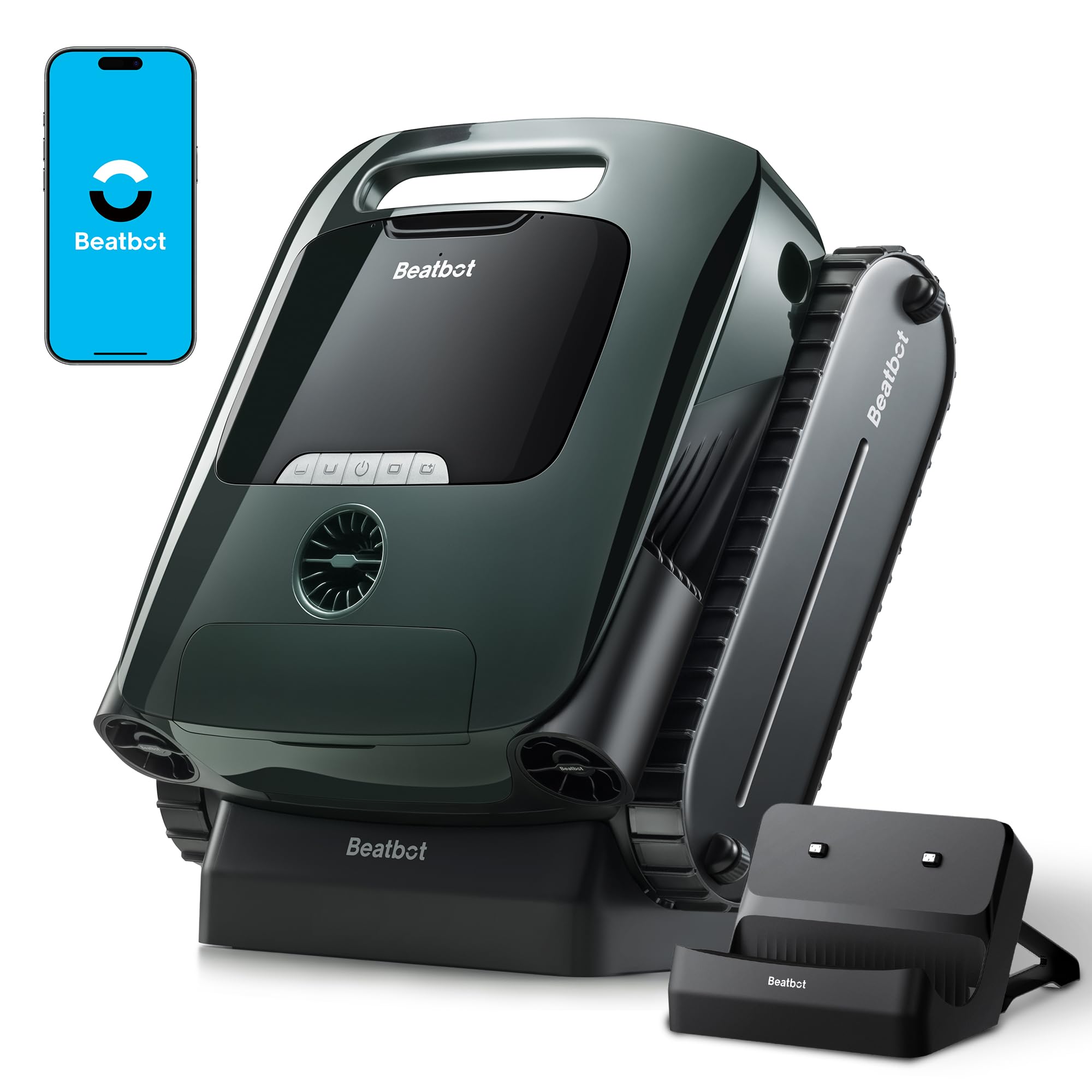
The step-down AquaSense 2 Pro shares much of the Ultra's DNA at a lower price.
Cleaning performance: what the AquaSense 2 Ultra does well
On the water, the reviews that matter agree on the fundamentals. Pro Tool Reviews reported it "did a fantastic job cleaning my entire pool," navigating dual floor drains, climbing walls, and handling surface debris without getting hung up (Pro Tool Reviews). Digital Trends singled out stair cleaning, an area where many robots simply give up, as a real strength, and noted the side brushes do respectable edge work (Digital Trends).
The 5,500 GPH suction and dual-basket capacity make it well suited to pools that collect heavier debris, leaves, acorns, fine silt, rather than just the occasional bug. Where the picture gets murkier is consistency: independent coverage of Beatbot's flagship has ranged from near-perfect scores to sharply critical takes on suction and filtration, so the safest read is that it performs strongly in most pools while not being immune to the edge cases every robot struggles with. If you are still deciding whether any robot suits your pool, our buyer's checklist for choosing a robotic pool cleaner walks through the fit questions first.
Battery life and runtime
Runtime is a genuine strong point, and it is mode-dependent. On the 13,400 mAh lithium-ion battery, Beatbot rates the Ultra for up to 10 hours of continuous surface skimming, up to 5 hours of floor cleaning, and up to 4.5 hours of combined wall and waterline work, with a 4.5-hour full charge (Beatbot). The 10-hour surface figure is what lets Digital Trends describe it as capable of "multiple cleaning cycles" between charges.
Two practical notes. First, a full floor-plus-wall clean draws far more than a surface skim, so plan around the 4.5 to 5 hour figures, not the 10-hour headline. Second, the robot's automatic surface parking means a depleted battery does not strand it on the pool floor, a small convenience that adds up over a season.
Beatbot AquaSense 2 Ultra vs AquaSense 2 Pro
The Ultra is not Beatbot's only flagship-tier robot, and the AquaSense 2 Pro is the model most cross-shoppers weigh against it. Both share the 5-in-1 cleaning concept, surface parking, and the ClearWater clarifier. The Ultra pushes further on the sensor suite and mapping intelligence and rates for a slightly larger single-cycle area, while the Pro trims the sensor count and price. If your pool is rectangular and uncomplicated, the extra mapping horsepower in the Ultra is harder to justify; if it is kidney-shaped with steps, benches, and drains, the Ultra's navigation is where the money goes. For the full field of alternatives across brands, see our ranked guide to the best robotic pool cleaners for 2026.
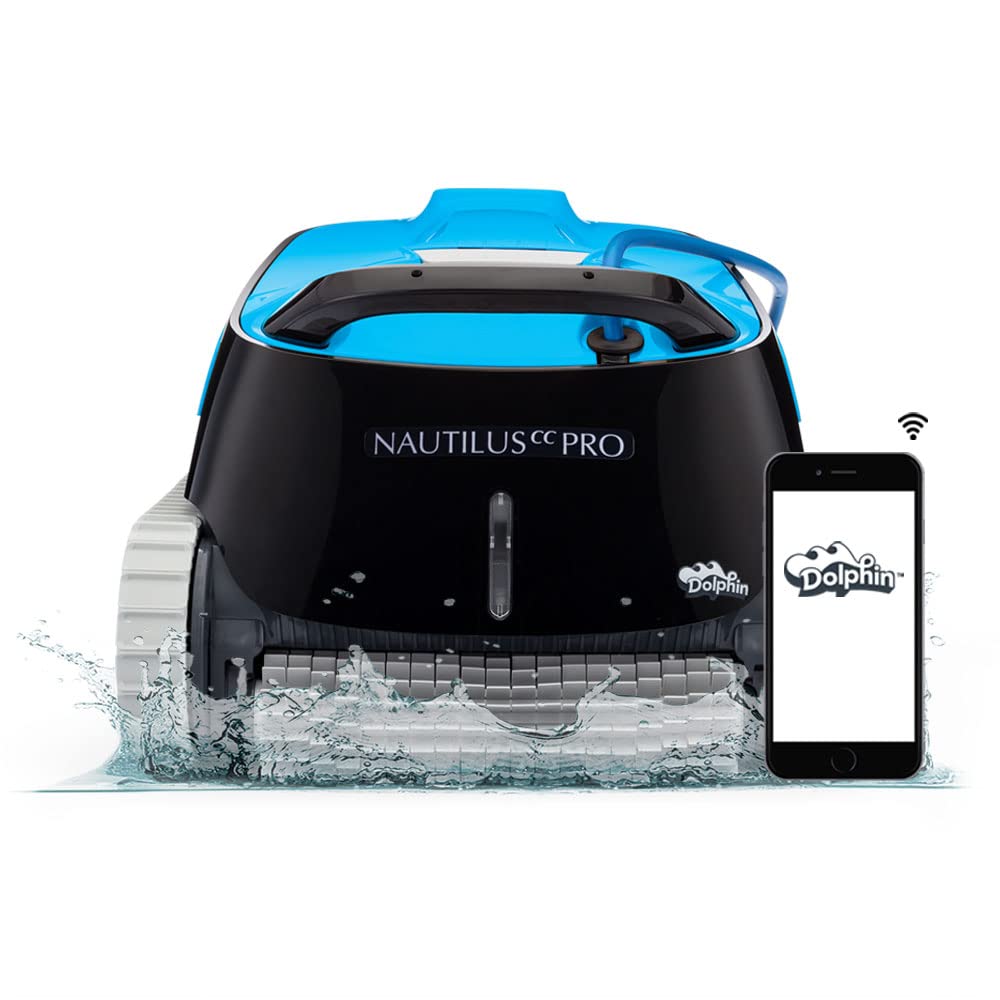
Corded robots like the Dolphin Nautilus CC Pro cost far less, at the expense of cordless convenience and surface skimming.
Pros and cons
The case for the Ultra is coverage and convenience; the case against it is money and mass.
What works in its favor:
- True 5-in-1 coverage, few robots skim the surface and clarify the water
- Long, mode-flexible runtime on a large 13,400 mAh battery
- Surface parking removes the worst chore, hauling a wet robot off the floor
- Strong stair and edge handling in independent testing
- Industry-leading 3-year warranty
What gives buyers pause:
- Flagship pricing, comfortably more than capable mid-tier robots
- Heavy at 29.1 pounds, with no caddy in the box, awkward for smaller users
- Advanced AI mapping is most useful during setup, less so day to day
- Independent verdicts on suction and filtration are not unanimous
Is the Beatbot AquaSense 2 Ultra worth it?
It comes down to your pool and your tolerance for spending. For a large, complex inground pool where surface debris and waterline scum are constant battles, the Ultra genuinely consolidates several jobs into one machine, and the 3-year warranty softens the sting of a premium purchase. For a simple rectangular pool, or for anyone who does not need surface skimming and water clarification, the money is better spent on a mid-tier robot or the step-down Pro. If you are still weighing whether any robot pencils out against a hose-and-skimmer routine, our breakdown of whether robotic pool cleaners are worth it runs the real cost math. Full specifications are on Beatbot's product page.
How we research
Every conclusion here is built from three independent evidence layers, cross-checked against one another. The first is the manufacturer's published specification sheet, which anchors every hard number, battery capacity, suction rating, sensor count, coverage area, and warranty. The second is reputable third-party editorial coverage from outlets with hands-on access, in this case Digital Trends, Pro Tool Reviews, and Pool Magazine, which we weigh against each other rather than repeating a single voice. The third is our own analysis of how those claims and findings hold up for the buyer, where the headline figures diverge from real-world use, and where independent testers disagree. When a claim can only be traced to a single unverifiable source, we drop it. That rigor is what lets us confidently recommend, or caution against, a flagship machine that costs more than $2,000.
Where to Buy
Specifications
- Battery
- 13,400 mAh lithium-ion, ~4.5-hour full charge
- Runtime
- Up to 10 hrs surface / 5 hrs floor / 4.5 hrs walls + waterline
- Max pool coverage
- 3,444 sq ft (320 m²) per single cycle
- Suction / motors
- 5,500 GPH across an 11-motor system
- Navigation
- HybridSense AI Pool Mapping, 27 sensors (AI camera, dual TOF, 2 IR, 4 ultrasonic)
- Filtration
- Dual top-loading baskets, 4.0L (150μm+250μm) + 3.7L (250μm)
- Weight
- 29.1 lbs (13.2 kg)
- Warranty
- 3 years
Related Posts