Are Robotic Pool Cleaners Worth It? An Honest Cost Breakdown
 Abdulwahab Suleiman·June 16, 2026
Are Robotic Pool Cleaners Worth It? The Honest Answer
If you own a pool, you have probably stared at a $700 to $1,500 price tag on a robotic cleaner and asked the obvious question: is this thing actually worth it, or am I paying a premium for a glorified bath toy? It is a fair question, and the honest answer is more nuanced than most product pages admit. For some pool owners a robotic cleaner pays for itself and quietly disappears into the background of their lives. For others it is an expensive solution to a problem a $50 brush already handles.
This guide synthesizes three independent layers of evidence, cross-checked against one another: manufacturer specifications, findings from professional pool-industry testing outlets and energy-consumption analyses, and recurring themes in verified owner feedback and longevity data. That breadth is the point. It reflects how these machines perform across many pools and many seasons rather than the luck of a single unit, which gives you a grounded answer rather than marketing copy. Where a number matters, we cite where it came from so you can check it yourself.
The short version: a robotic pool cleaner is worth it for most in-ground pool owners who value their time and run the cleaner regularly, mostly because of the energy it saves versus older suction and pressure systems. It is a weaker value for very small pools, seasonal-only use, heavily wooded yards that drop large debris, and tight budgets where a $300 suction cleaner does the job. Below we walk through the real costs, the genuine disadvantages, how long these machines last, and who should skip them entirely.
If you want the full ranked lineup after reading this, see our guide to the best robotic pool cleaners of 2026, which compares the specific models referenced throughout this article.
What a Robotic Pool Cleaner Actually Does Differently
Before judging the value, it helps to understand why a robotic cleaner is a fundamentally different machine than the suction or pressure cleaner it usually replaces. This distinction is the entire basis of the "worth it" math.
A suction-side cleaner has no motor of its own. It plugs into your skimmer or a dedicated suction line and relies on your pool's main pump to drag it around the floor. A pressure-side cleaner is similar but works off the return line, often needing a separate booster pump. In both cases the cleaning power, and the electricity bill, comes from running your pool pump for hours.
A robotic cleaner is self-contained. It has its own low-voltage motors, its own pump, and its own filter basket, and it runs completely independently of your pool's circulation system. You drop it in, it scrubs the floor, climbs the walls, often cleans the waterline, captures debris in its own basket, and shuts off. Your main pump can stay off the whole time.
That independence is the source of nearly every advantage a robot has, and it is why the price comparison is not apples-to-apples. You are not just buying a cleaner. You are buying a machine that takes a heavy load off your pool's most expensive piece of equipment.
Corded versus cordless: the split that matters most
Within the robotic category there are two camps, and the difference shapes both performance and value. Corded robots stay tethered to a power supply on the deck and can run as long as you want, which is why premium corded units like the Dolphin Premier can be put on a weekly timer and left to clean daily with zero handling. According to pool-testing outlet The Pool Nerd, premium corded models push up to 4,500 gallons per hour of suction, while typical cordless models sit closer to 1,300 GPH, and the extra power is what lets corded units support ultra-fine filtration that cordless units physically cannot (The Pool Nerd).
Cordless robots trade some of that raw power and automation for convenience. There is no cord to tangle, no power supply to position, and they are genuinely easier to live with for smaller pools. The tradeoff is runtime and handling: you charge the battery, drop the robot in, and pull it out when it finishes, often daily. A cordless unit like the BOTLUXE PC10 robotic pool vacuum advertises a 5,200mAh battery delivering up to 120 minutes of cleaning and 5,000 GPH of suction, which is strong for the cordless class, per the manufacturer's product page (BOTLUXE). If you are weighing the two formats against your specific pool, our companion guide on how to choose a robotic pool cleaner breaks the decision down step by step.
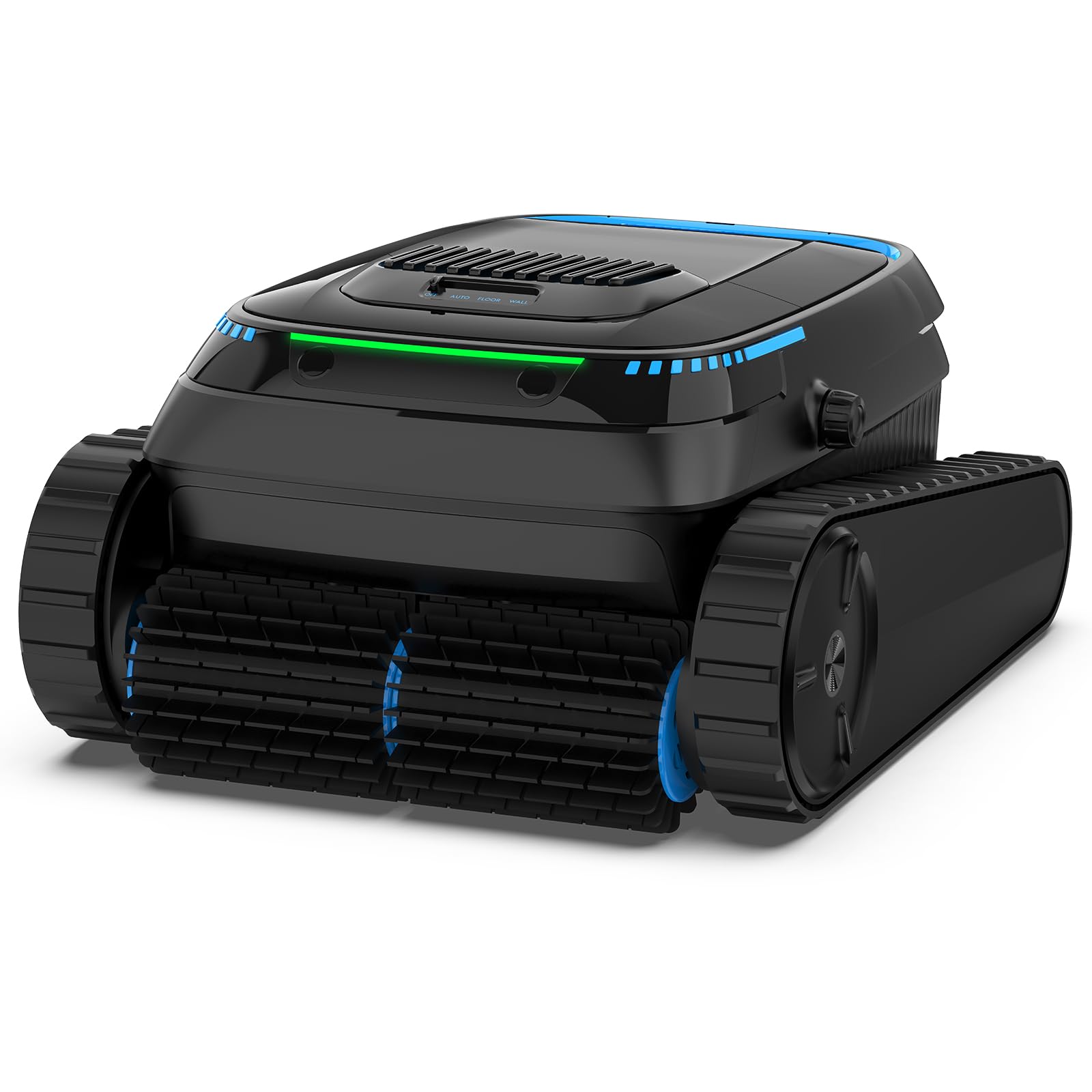
The cordless BOTLUXE PC10 trades a tethered power supply for battery freedom, a tradeoff that defines the robotic category.
The Real Cost: Purchase Price Versus Lifetime Operating Cost
The sticker price is where most buyers flinch, and it is worth being blunt about it. Robotic cleaners are the most expensive category up front. Entry-level robots start around a few hundred dollars, while advanced units with smart navigation, app control, and waterline cleaning routinely run well past a thousand dollars (Shasta Pools). A basic suction cleaner, by contrast, can be had for a fraction of that.
So if you only look at the purchase price, the robot looks like a bad deal. The reason the math flips is the operating cost, and the gap there is enormous.
Where the savings actually come from
Because a robot runs on its own low-voltage motor instead of leaning on your pool pump, it sips electricity. Industry energy analyses peg a robotic cleaner at roughly 180 watts of draw and around 0.15 to 0.30 kWh per cleaning cycle. A suction cleaner uses no extra electricity directly, but it forces your main pump to run far longer and harder, and that pump can pull well over 1,000 watts (Shasta Pool Supply).
Annualized, the difference is dramatic. One operating-cost breakdown estimates a robotic cleaner consumes about 197 kWh per year, costing roughly $59, while a suction cleaner driving the main pump can burn about 1,675 kWh, costing around $501 per year. That is a potential annual saving of more than $440 (Shasta Pool Supply). Even more conservative regional estimates, such as roughly $270 per year for California homeowners switching from suction to robotic, still land in real-money territory.
Put those numbers against the purchase price and the picture changes. If a robot saves you somewhere between $270 and $440 a year in pump electricity, a $900 unit can recover its premium over a basic cleaner in roughly two to three years, after which it is saving you money every season. That is the single strongest argument for "worth it," and it has nothing to do with convenience.
A caveat on those savings
The energy math only works if you were genuinely running your pump long hours for cleaning in the first place. If you already run a variable-speed pump on a low, efficient setting and rarely run a suction cleaner, your baseline electricity cost is already low, and the savings shrink accordingly. The robot still wins on convenience and cleaning quality, but the payback period stretches out. Be honest with yourself about your current habits before you bank on the full $440.
A simple way to estimate your own payback
You do not need a spreadsheet to sanity-check the numbers for your own pool. Start with the price difference between the robot you want and the cheapest cleaner that would otherwise do the job, then divide that gap by your expected annual electricity savings. If a robot costs $900 and a basic suction cleaner costs $250, your premium is $650. At the higher end of the savings range, around $440 a year, you break even before the third season and pocket the difference after that. At the conservative end, around $270 a year, you cross into savings during year three.
The variable that swings this most is your local electricity rate. Owners in high-rate regions like California or the Northeast see the fastest payback because every kWh the robot spares your pump is worth more, which is exactly why the steepest reported savings cluster in those states (Shasta Pool Supply). Owners in low-rate regions should expect a longer runway and should weight the convenience and cleaning-quality benefits more heavily in the decision, since the pure dollar argument is softer.
The Genuine Disadvantages Nobody Puts on the Box
A fair value assessment has to take the drawbacks seriously, because they are real and they sink the deal for specific buyers. These are the disadvantages that show up consistently across independent pool-industry coverage.
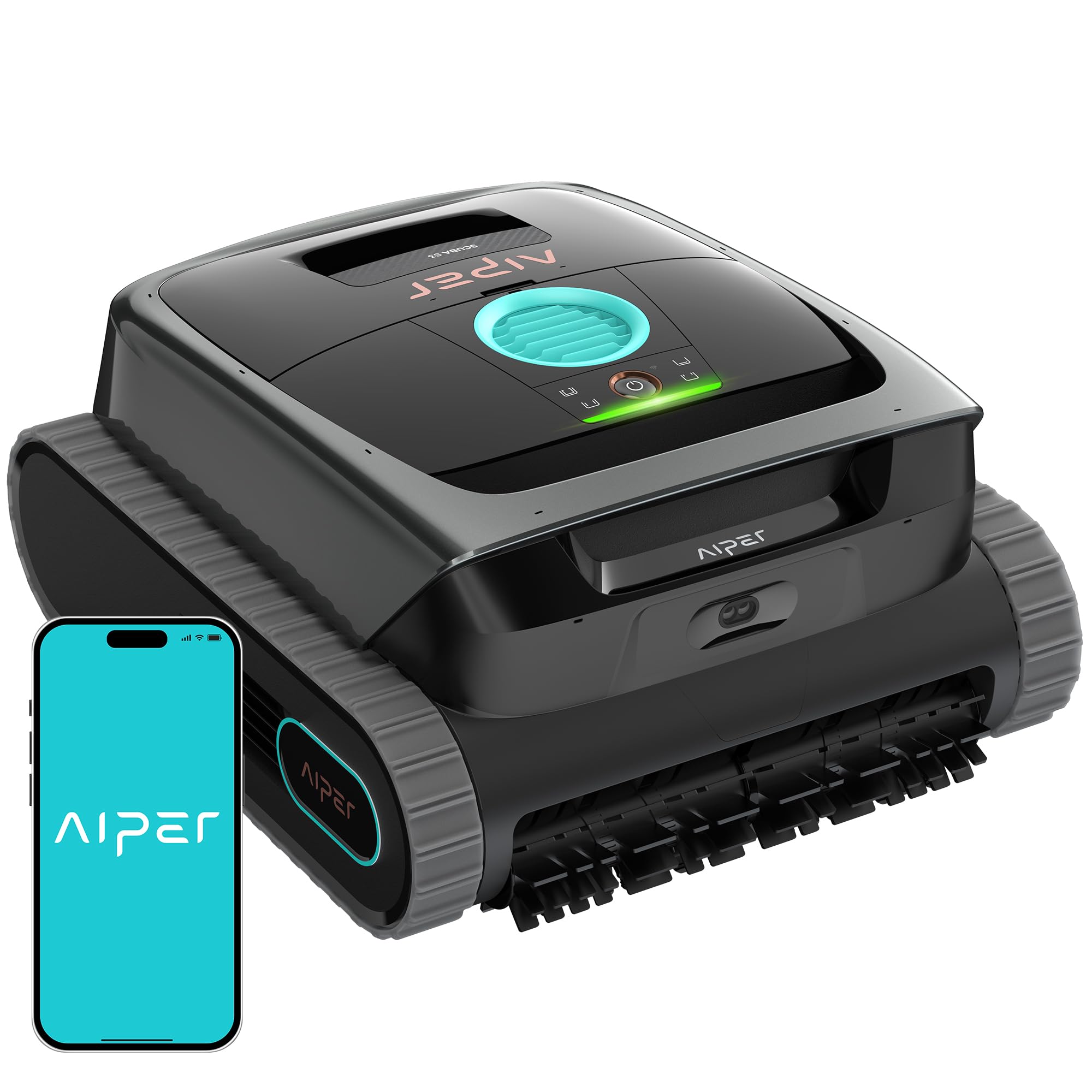
Even capable robots have blind spots: tight steps, sharp corners, and oversized debris remain genuine weaknesses.
High up-front cost
We covered this above, but it bears repeating as a standalone disadvantage. The purchase price is a real barrier, and if a buyer cannot stomach the premium or the payback period does not pencil out for their usage, the robot is not the right tool. A budget suction cleaner that gets the floor acceptably clean is a legitimate, cheaper answer for a lot of pools.
Filter maintenance is on you, every time
A robot collects debris in its own basket or filter, which means after every cleaning cycle, or at least frequently, you pull the unit out and rinse the filter. It is not hard, but it is a recurring chore, and a clogged filter sharply reduces suction. Reviewers consistently flag this as the main day-to-day annoyance (Mammotion). If you wanted a truly zero-touch machine, adjust your expectations.
Trouble with steps, tight corners, and irregular shapes
Most tracked robots move by gravity and friction, which makes built-in stairs, steep curved walls, and complex freeform shapes a real challenge. Steps in particular are a known weak point; many standard robots cannot reliably climb or scrub them, leaving debris to settle in exactly the spots you cannot easily reach with a brush (Bob Vila). If your pool is an elaborate freeform with a tanning ledge and a swim-up bench, scrutinize a specific model's stair and wall capability before buying. A simple rectangular pool sidesteps most of this.
Large leaves and heavy debris can overwhelm it
Most robots are tuned for fine debris: dust, sand, silt, and small particles. Drop a load of wet oak leaves, acorns, sticks, or palm fronds into the equation and many units struggle. Narrow intake openings jam, the basket fills fast, suction collapses, and the robot ends up circulating water without actually picking anything up (Mammotion). If your pool sits under heavy trees, you either need a model specifically built for large debris with a wide intake, or you accept that you will still be netting the big stuff by hand.
A real, if rare, safety note on cordless batteries
This one deserves honesty rather than hand-waving. Cordless robots use lithium-ion battery packs, and there have been reports of battery-operated pool cleaners overheating, with some incidents involving smoke or fire tied to certain cordless units (Mammotion). This is not a reason to avoid the entire category, and corded models sidestep it entirely, but it is a reason to buy from a reputable brand, follow the charging instructions, charge in a safe location away from flammables, and not leave a charging pack unattended overnight. Treat it the way you would any large lithium battery.
How Long Does a Robotic Pool Cleaner Actually Last?
Lifespan is central to the value question, because a machine that dies in two years is a very different investment than one that runs for seven. The data here is reasonably consistent across sources.
Most modern robotic cleaners last about 5 to 7 years with normal use. Premium units cared for properly can reach 5 to 8 years, while budget models may only manage 1 to 3 (Shasta Pools). The single biggest variable is how hard you run it. Running a robot every single day, year-round, can cut the average lifespan down to roughly 3 to 4 years, simply because the motors and treads accumulate far more wear. Cordless units add a second clock: lithium-ion battery packs typically hold strong runtime for about 2 to 3 years before you notice the cleaning time per charge starting to drop.
Repair-versus-replace economics
When something does fail, the repair math is straightforward. Minor parts are cheap and DIY-friendly: worn brushes or tracks usually run under $100 and install at home. Major failures are where it gets expensive. A drive motor, pump motor, or main circuit board can each cost roughly $200 to $500 in parts before labor (AquaDoc).
The rule of thumb the industry uses is simple and worth remembering: if a repair would cost more than about half the price of a comparable new unit, replace instead of repair, especially if the machine is already past five years old. That is why buying a quality unit with available replacement parts matters more than chasing the lowest sticker price. A $400 robot that becomes unrepairable at year two is more expensive, in practice, than a $900 robot that runs seven years and takes a $90 brush kit along the way.
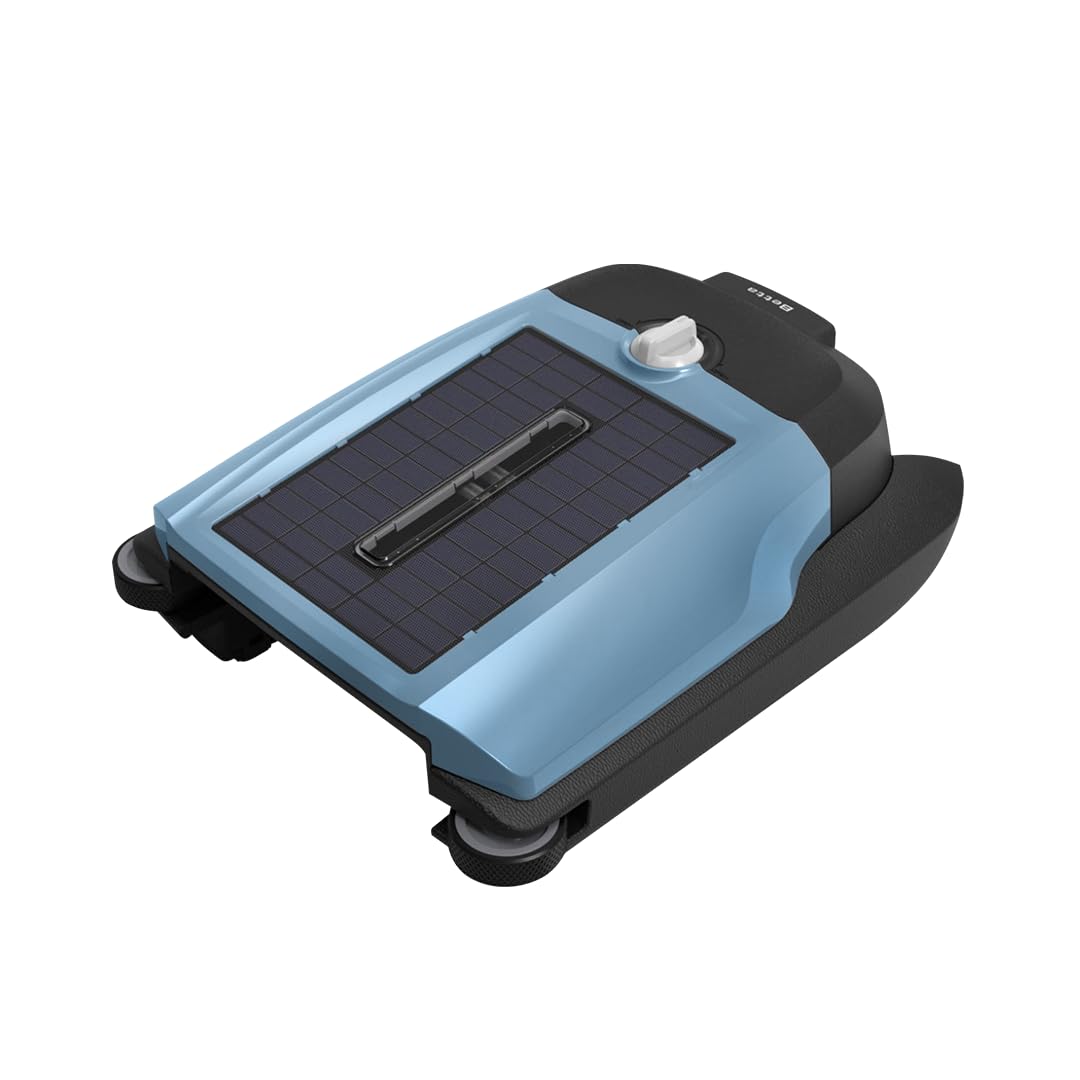
Different robot, different job: a solar skimmer like the Betta Flex tackles the surface rather than the floor, which changes the value calculation.
Not every robot is a floor vacuum
It is worth noting that "robotic pool cleaner" has quietly split into more than one product type, and that affects both lifespan and value. A floor-and-wall vacuum like the BOTLUXE PC10 is the machine most people picture. But there are also robotic surface skimmers, like the solar-powered Betta Flex pool skimmer, which float on top and pull leaves and pollen off the surface before they sink. These are a complement to a floor cleaner, not a replacement, and a solar unit shifts the operating-cost math even further toward "nearly free to run." If your main complaint is surface debris from nearby trees, a skimmer may be the better-value robot for your specific problem.
Robotic Versus Suction: The Head-to-Head That Decides It
For most shoppers the real choice is not robot versus nothing. It is robot versus the suction cleaner they already have or could buy cheaply. Here is the honest scorecard.
On purchase price, suction wins decisively. It is the cheapest way to automate floor cleaning, full stop.
On operating cost, the robot wins by a wide margin, for the reasons covered earlier: it spares your main pump hundreds of kWh per year (Shasta Pool Supply).
On cleaning quality, the robot generally wins. It scrubs rather than merely vacuums, climbs walls, often cleans the waterline, and filters debris into its own basket instead of sending it through your pump and filter system. Suction cleaners cover the floor but typically leave walls and waterline to you.
On wear-and-tear cost, it is closer than it looks. Suction cleaners are cheap but they load up your pump and filter, contributing indirectly to wear on equipment that costs far more to replace than the cleaner itself.
On simplicity and durability, suction has an edge. Fewer electronics means fewer expensive failure modes. There is no circuit board to fry and no lithium battery to age out.
The verdict most independent coverage lands on, and the one the energy data supports, is that for a medium-to-large in-ground pool used regularly, the robot is worth the premium primarily because of operating-cost savings and superior cleaning. For a small pool, a seasonal pool, or a tight budget, a suction cleaner remains a perfectly rational choice.
So, Who Should Actually Buy One?
Cutting through all of it, here is the straight answer by buyer type.
Buy a robotic cleaner if you own a medium-to-large in-ground pool, you run a cleaner regularly through the season, and you currently lean on your pool pump for cleaning. The energy savings are real, the cleaning quality is better, and the payback period is short enough to justify the premium. Busy households that value the set-and-forget timer convenience of a corded unit get the most out of the category. If that is you, our 2026 best robotic pool cleaners guide ranks the models worth your money.
Lean toward a corded model if you want true automation. The weekly timer, the higher suction, and the ability to support ultra-fine filtration make corded units like the Dolphin Premier the better long-term value for owners who do not want to handle the machine daily, according to pool-testing coverage (The Pool Nerd).
Consider a cordless model if your pool is on the smaller side, you hate dealing with cords, and you do not mind charging and retrieving the unit. The convenience is genuine and modern cordless suction has closed much of the gap.
Think twice if you have a very small pool where a brush takes ten minutes, a strictly seasonal pool that is only open a couple of months a year, a heavily wooded yard that drops large debris a robot will choke on, or a tight budget where the payback period does not pencil out. In those cases a $300 suction cleaner or even manual cleaning may be the smarter spend.
The Bottom Line
Are robotic pool cleaners worth it? For most regular in-ground pool owners, yes, and the reason is less about luxury convenience and more about hard operating-cost savings of roughly $270 to $440 per year versus running a suction setup off your main pump (Shasta Pool Supply). Pair that with a realistic 5-to-7-year lifespan on a quality unit and the premium recovers itself within a few seasons.
But "worth it" is not universal. The up-front cost is real, the filter is a recurring chore, steps and large leaves remain genuine weak spots, and cordless batteries demand sensible charging habits. Match the machine to your pool and your habits rather than to the marketing, and the answer becomes clear. A regularly used, medium-to-large pool justifies the robot easily. A tiny seasonal pool under a canopy of oaks probably does not.
If you have decided a robot is right for you, the next step is matching format and features to your specific pool. Start with our step-by-step guide to choosing a robotic pool cleaner, then compare the contenders in the best robotic pool cleaners of 2026 lineup.
Related Posts