Coleman Classic Rolling Cooler Review: 100-Quart Wheeled Cooler
 Abdulwahab Suleiman·June 16, 2026
Coleman Classic Rolling Cooler Review: A 100-Quart Wheeled Hauler
If you have ever dragged a fully loaded chest cooler across a parking lot to a tailgate, you already understand why wheels matter. The Coleman Classic Series Insulated Portable Rolling Cooler is built around that exact pain point: a 100-quart box on heavy-duty wheels with a long tow handle, priced to undercut premium rotomolded brands by a wide margin. This Coleman Classic rolling cooler review pulls together the manufacturer's published specifications and independent lab testing to answer the question most shoppers actually have, which is whether a budget wheeled cooler keeps drinks cold long enough to matter.
A note on how we work: we did not put this cooler through hands-on field testing ourselves. Everything below is synthesized from Coleman's official spec sheet and from reputable third-party testing labs that have measured this and comparable models under controlled conditions. Where a number comes from a test, we link the source so you can check it yourself.
Where to Buy
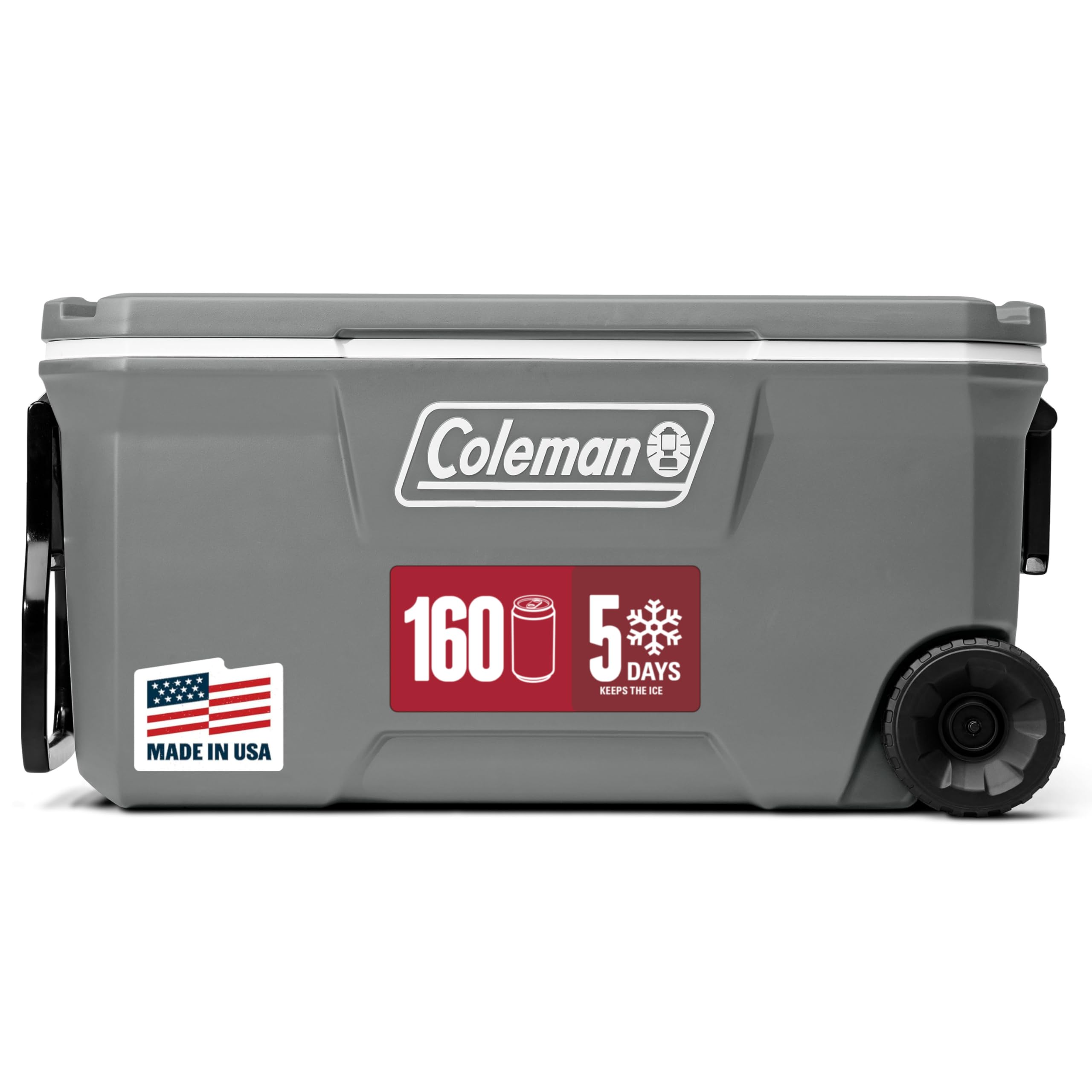
The Coleman Classic 100-quart wheeled cooler, built around 6-inch wheels and a long swing-up tow handle.
Who this cooler is for
This is a high-capacity, low-cost cooler aimed at people who move a lot of cold drinks and food short distances: tailgates, backyard parties, beach days, weekend camping at a drive-up site, and youth sports sidelines. The 100-quart body swallows up to 80 cans plus 50 pounds of ice, according to Coleman's product listing, so it is firmly in the group-cooler category rather than the personal-cooler one.
It is not the cooler for a multi-day backcountry trip where ice retention is life-or-death, and it is not built to be towed across rough, sandy terrain for long distances. Understanding that boundary up front saves a lot of disappointment later, and we will get to exactly why below.
Is the Coleman Classic a good cooler?
For its price and purpose, yes, with clear caveats. The Coleman Classic earns its keep on capacity, price, and convenience features rather than on best-in-class insulation. Coleman rates the 100-quart Classic to keep ice for up to five days in ambient temperatures as high as 90°F, a claim it attributes to the fully insulated lid and body and its TempLock FX insulation, per Coleman's spec page.
Independent testing tells a more grounded story. The closest controlled benchmark for this family of coolers comes from OutdoorGearLab, which ran Coleman's wheeled 100-quart Xtreme box through ice-retention testing and measured it holding temperatures below 40°F for a full 3.5 days, with a mid-pack insulation score. The Xtreme and the current Classic are both foam-insulated, injection-molded Coleman wheeled coolers in the same construction class, so that 3.5-day figure is the most reliable real-world proxy available rather than a measurement of this exact model. The takeaway holds either way: the gap between the marketing "up to five days" and a measured 3.5 days is normal for the category, and it is the kind of thing manufacturer claims rarely spell out, because published retention figures assume best-case packing, pre-chilling, and a sealed lid that is never opened.
How its insulation really compares
The honest framing is that this is a foam-insulated injection-molded cooler, not a thick-walled rotomolded one. That construction is why it is light and cheap, and also why it cannot match a premium box on raw cold-holding. In CNN Underscored's round of testing across two dozen coolers, a Coleman model came close to the top on value but fell short of the best rotomolded performers on outright ice life, which is exactly the trade-off you are buying into here. You can read the broader testing context in CNN Underscored's cooler guide.
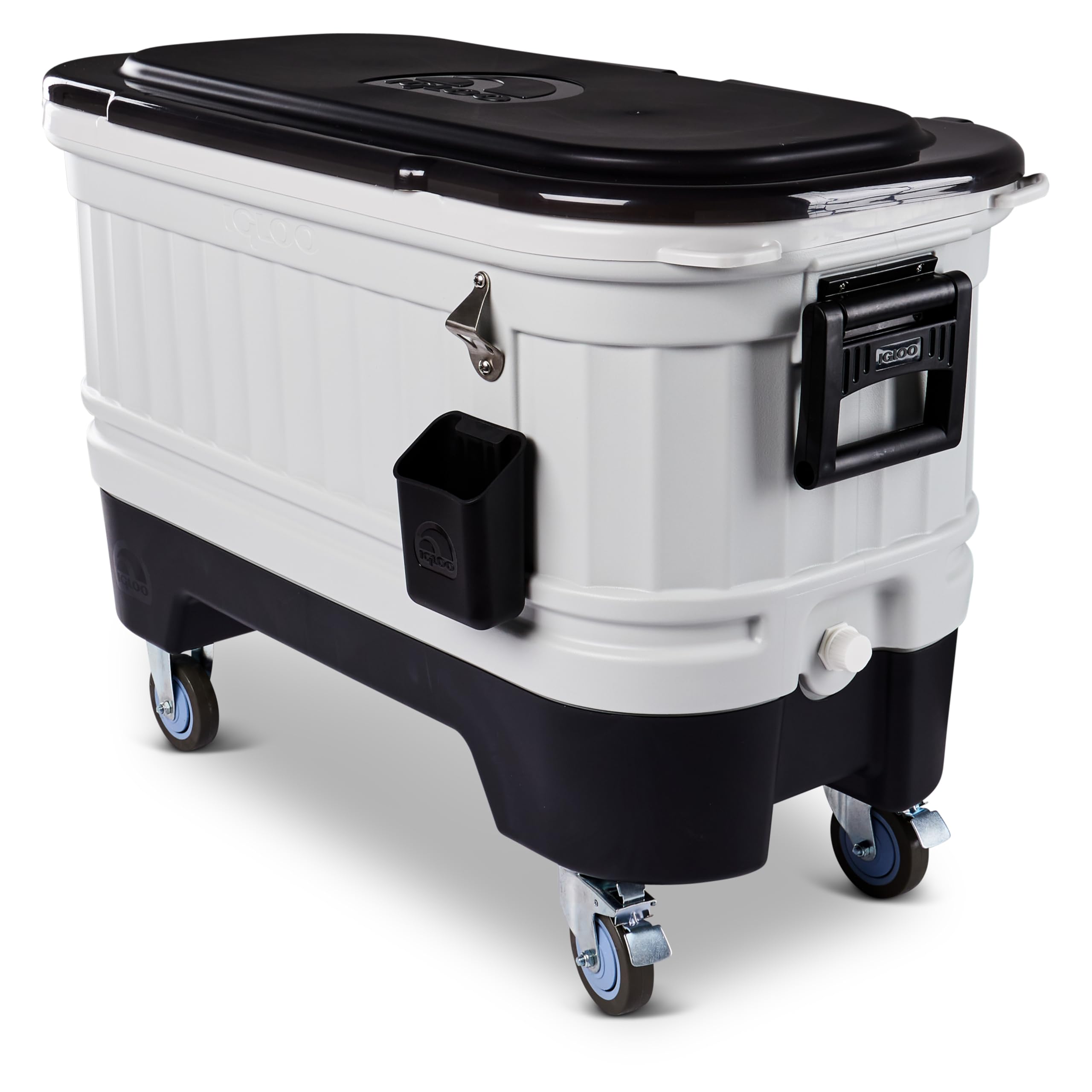
A comparable Igloo hard cooler. Testing labs often pit Coleman's value boxes against Igloo's wheeled models on rolling ease and cold-holding.
If you want the full landscape of how foam-insulated and rotomolded coolers stack up across sizes and price tiers, our best hard coolers guide for 2026 lays out the categories side by side and is the best starting point before you commit to any single model.
Are Coleman coolers as good as Yeti?
Not on insulation, and that is fine. This is the comparison shoppers search for most, so it deserves a straight answer. Premium rotomolded coolers like Yeti use thick, uniformly poured walls and freezer-grade gaskets that hold cold dramatically longer. Testing has shown ice melting roughly 1.6 times faster in a Coleman Xtreme than in top-rated coolers, while similarly sized premium models held temperatures under 40°F for nearly seven days in the same body of testing summarized by reviewers.
So Yeti wins ice retention decisively. What Coleman wins is the math. A premium 50- to 65-quart rotomolded cooler routinely runs several hundred dollars, while the Coleman Classic 100-quart sits at a small fraction of that. For a tailgate where the cooler gets opened every ten minutes anyway, the extra two or three days of theoretical ice life from a premium box is largely wasted. The relevant question is not "is it as good as Yeti" but "do I need Yeti-grade retention for how I actually use a cooler," and for a lot of buyers the answer is no.
What you give up, plainly stated
- Cold-holding under hard conditions. Expect roughly 3 to 4 real-world days in moderate heat with a good ice-to-content ratio, not the headline five.
- Long-term durability. Independent testers flagged relatively flimsy plastic hinges and handles on Coleman's wheeled boxes of this construction, where rotomolded coolers are nearly indestructible.
- Latching. This is a press-fit lid, not a heavy gasketed latch system, which is part of why retention trails premium boxes.
If you are still weighing whether a hard cooler is the right call at all versus a soft or collapsible option, browse our full hard cooler buying guides to walk through the decision before you spend a dollar.
Coleman cooler with wheels and handle: how the rolling actually works
The whole reason to buy this version over a standard chest is mobility, so it is worth being precise. The Classic rides on 6-inch heavy-duty wheels with a swing-up tow handle, and on flat, hard ground it does what you want: you tilt, you pull, and 80 cans of drinks follow you instead of wrecking your back.
The weakness shows up off pavement. Independent testers found the wheeled design rated only middling for portability because the relatively short, hinged plastic handle transfers a lot of the load to your hand and wrist rather than letting the wheels carry it, and ground clearance is tight over rough terrain or loose sand. One lab noted it rolled noticeably worse than a comparable Igloo Glide wheeled model and suggested upgrading if smooth long-distance rolling is the priority, a point detailed in OutdoorGearLab's wheeled-cooler testing.
Translation: this is a roll-it-from-the-truck-to-the-table cooler, not a haul-it-a-quarter-mile-across-the-beach cooler. Set your expectations there and it performs.
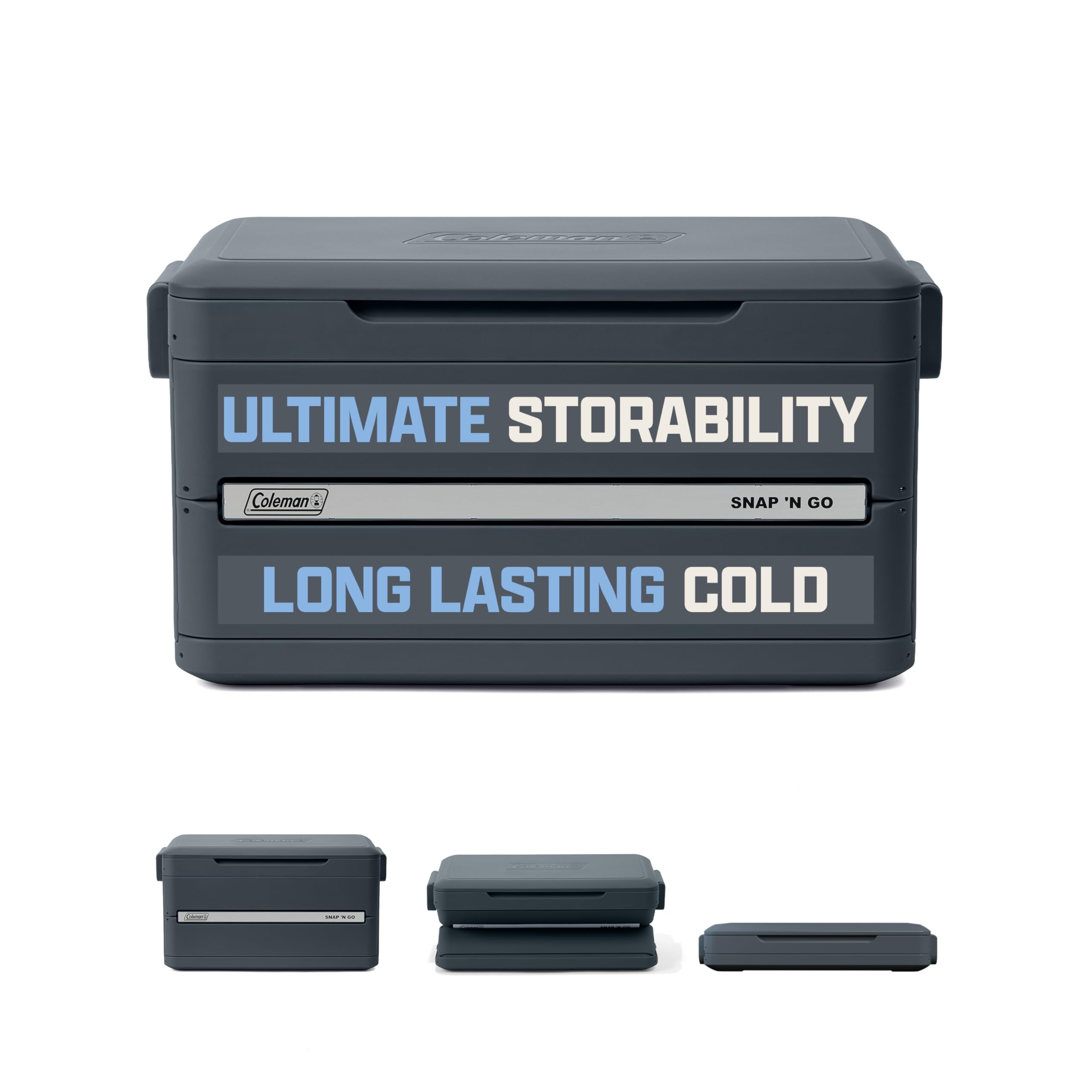
For shorter hauls or tighter storage, Coleman's collapsible Snap 'N Go is a different take on portability in the same family.
The features that genuinely add value
A few touches punch above the price. The Have-A-Seat lid is rated to support up to 250 pounds, turning the cooler into extra seating at a crowded tailgate. Four molded cup holders in the lid fit tumblers up to 30 ounces, and a tethered, leak-resistant drain plug lets you empty meltwater without tipping the whole box. Coleman also notes the lid and body use TempLock FX insulation and that the build uses less plastic than comparable models, per its official listing.
Coleman 100 qt wheeled cooler dimensions and key specs
For planning trunk space and storage, the published exterior footprint is roughly 36.9 inches long by 17.3 inches wide by 18 inches tall, with an empty weight in the high-teens of pounds depending on the exact colorway and series, according to retailer spec listings such as this 100-quart wheeled cooler dimension sheet. Full specifications are published on Coleman's product page. The specification table at the end of this review consolidates the numbers most shoppers ask about.
A quick word on the related sizes people cross-shop: Coleman sells the Classic wheeled line in other capacities, and the 62-quart and 65-quart wheeled versions show up constantly in searches. Those trade away can capacity for a smaller footprint and lighter empty weight, but they share the same insulation tech and the same general rolling behavior, so the conclusions here scale down cleanly.
Coolers just as good as Yeti but cheaper: where this fits
If your real goal is "premium-feeling cold without a premium price," the Coleman Classic is one valid answer, but it is the value-and-capacity answer, not the performance answer. The closest competitors in the budget wheeled space are Igloo's wheeled hard coolers, which testing labs have repeatedly found roll more smoothly for only a small premium. Ozark Trail's rotomolded boxes get nearer to Yeti on retention for a lot less money, though they are heavier and usually wheel-less.
The right pick comes down to which compromise you can live with. Choose the Coleman Classic if maximum capacity, the lowest price, built-in seating, and casual rolling top your list. Choose an Igloo wheeled model if rolling smoothness is the deciding factor, or step up to a rotomolded box if days-long ice retention is genuinely non-negotiable. For the side-by-side breakdown across all of these, start with our best hard coolers guide.
Warranty and ownership notes
Coleman backs its coolers with a limited warranty of up to five years through authorized U.S. sellers, as outlined on Coleman's warranty information page. That is reassuring against early molding or hinge defects, the very components independent reviewers flagged as the weak link, so registering the purchase is worth the two minutes.
Verdict
The Coleman Classic 100-quart wheeled cooler is a sensible, high-value group cooler that knows what it is. It will not out-chill a rotomolded premium box, and it will not roll gracefully across a sandy beach, but it holds a huge load, doubles as a seat, costs a fraction of the premium options, and keeps drinks cold for a realistic three to four days at a casual gathering. If your use case is tailgates, parties, and drive-up camping, it is an easy recommendation. If you need multi-day wilderness ice life or rugged long-distance rolling, spend more.
Where to Buy
Specifications
- Capacity
- 100 quarts (up to 80 cans + 50 lbs ice)
- Exterior dimensions
- approx. 36.9 in L x 17.3 in W x 18 in H
- Wheels
- 6-inch heavy-duty wheels with tow handle
- Manufacturer ice-retention claim
- Up to 5 days at up to 90°F
- Independently tested retention (same-class proxy)
- approx. 3.5 days below 40°F (OutdoorGearLab, Coleman Xtreme wheeled 100-qt)
- Lid seat rating
- Have-A-Seat lid supports up to 250 lbs
- Insulation
- TempLock FX insulated lid and body
- Warranty
- Limited warranty up to 5 years (authorized U.S. sellers)
Related Posts