Horizon 7.0 AT Treadmill Review: Big Specs, Small Footprint
 Abdulwahab Suleiman·June 16, 2026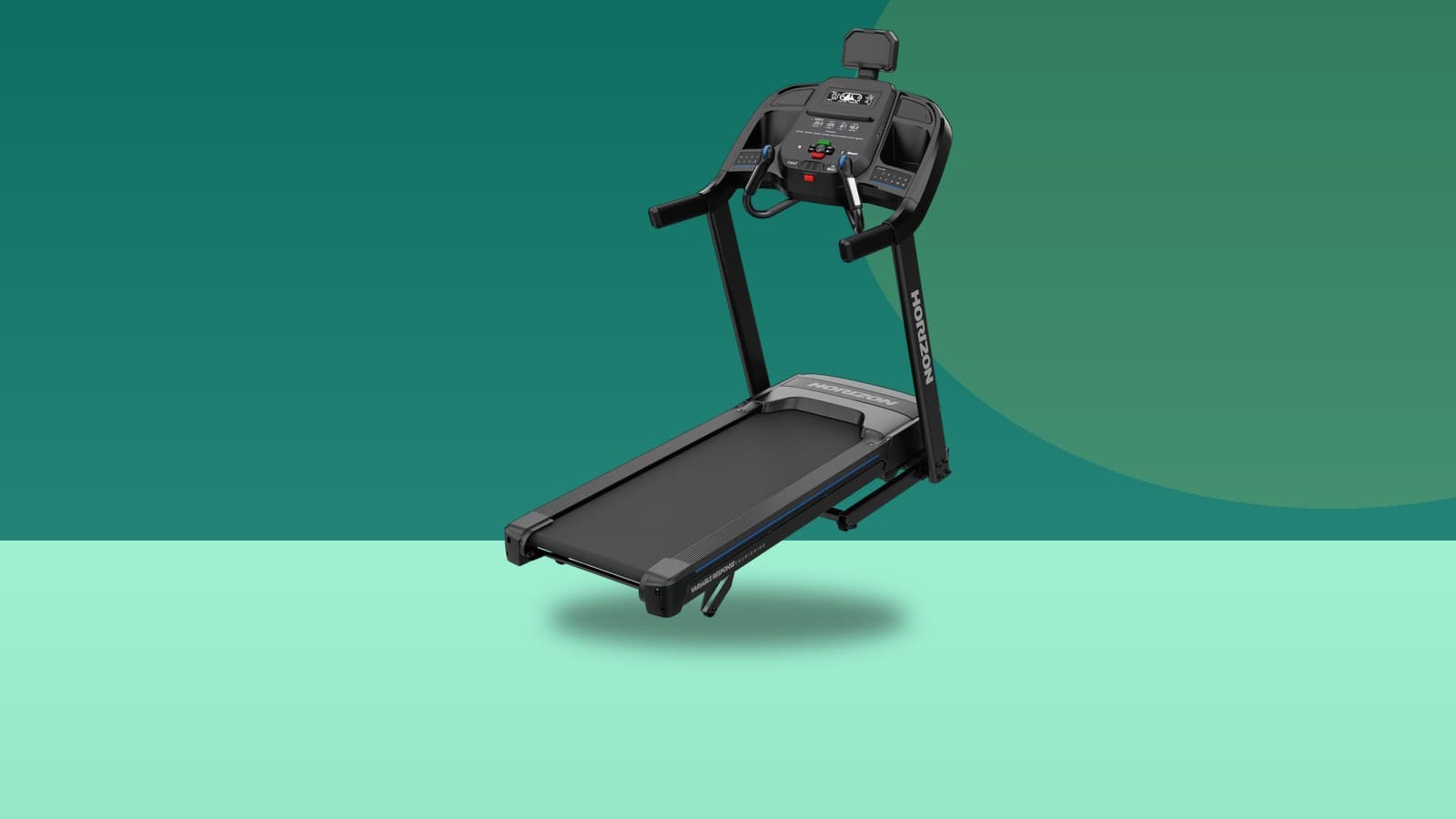
The Horizon 7.0 AT in one sentence
If you want a treadmill that runs like a club machine but folds into a corner of a spare bedroom, the Horizon 7.0 AT is the model that keeps coming up in serious comparisons — and this Horizon Fitness treadmill review explains why it earns that spot without the four-figure premium most full-size runners carry.
It pairs a 3.0 CHP motor with a 20-by-60-inch belt, a 15 percent incline, a 12 mph top speed, and a lifetime frame-and-motor warranty, then lists for around $999 to $1,099. On paper that is a runner's spec sheet at a walker's price. The catch, as always, is in the details: a non-touch LCD console, no decline, and a 277-pound chassis that folds but does not float. Below we break down where the 7.0 AT genuinely delivers and where you are trading down.
Where to Buy
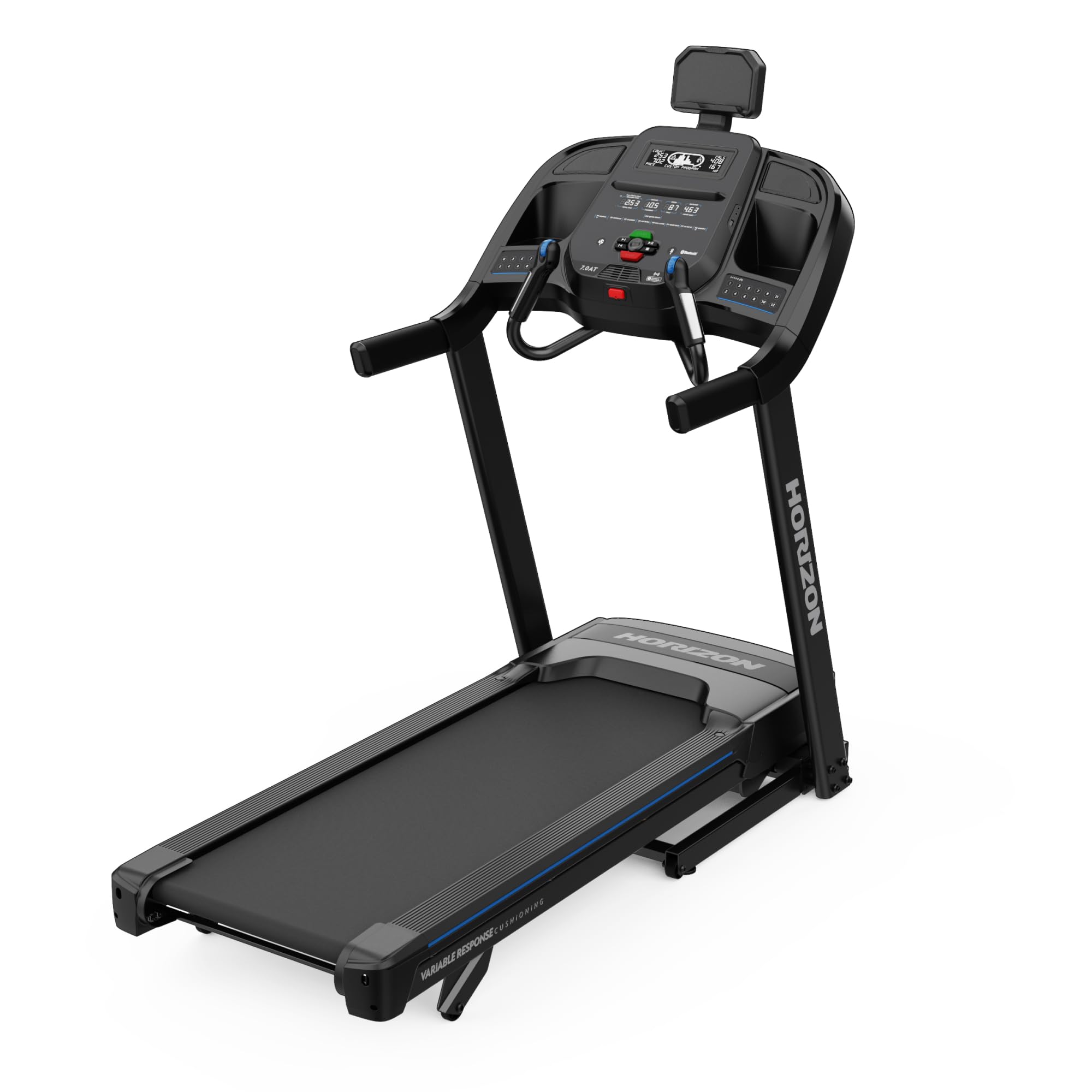
The Horizon 7.0 AT pairs a 3.0 CHP motor and a 60-inch belt with a folding deck.
How we evaluated this treadmill
A note on method, because it changes how you should read our verdict. We did not put miles on this treadmill ourselves. Instead, this assessment synthesizes the manufacturer's published specifications with independent expert testing and structured spec comparisons from sources that do run these machines on instrumented gym floors. Where a number appears below, it is anchored to Horizon's own spec sheet or to a named third-party reviewer, and we link the source so you can verify it. That is the honest basis for everything that follows — no invented dimensions, no imagined treadmill feel.
The core specs are drawn from the official Horizon 7.0 AT product page, and the durability, ergonomics, and value scoring come from BarBend's hands-on Horizon 7.0 AT review, whose testers rated it 4 out of 5 for durability and 4.5 out of 5 for the workout experience.
Specs that matter: motor, speed, and incline
The headline number is the motor. Horizon rates the 7.0 AT at a 3.0 CHP (continuous horsepower) Rapid Sync drive, which is the threshold most coaches cite as the minimum for genuine, repeated running rather than walk-only use. Below roughly 2.5 CHP a belt tends to lag when a heavier runner pushes pace; at 3.0 CHP the 7.0 AT has headroom for daily running per BarBend's testing.
Two more figures separate this machine from entry-level walkers:
- Top speed of 12 mph (0.5–12 mph range). That is a 5-minute-mile pace at the top end — far more than most home runners will use, but it means the belt is never your limiter during intervals.
- Incline to 15 percent. This is unusually steep for the price. Many sub-$1,000 treadmills cap at 10 percent; the 7.0 AT's 15 percent ceiling, confirmed on Horizon's spec page, opens up hill repeats and incline-walking workouts that burn comparable calories to running at lower joint stress.
The 7.0 AT's 15% incline is unusually steep for a sub-$1,100 treadmill.
What it does not have is a decline setting, which BarBend flags as the main customization gap versus pricier rivals. For most home users that is a non-issue; for downhill-specific training it is a real limitation.
The deck and cushioning
The running surface is 20 inches wide by 60 inches long. That 60-inch length is the spec tall runners should care about: many competing decks stop at 55 inches, and the extra 5 inches accommodates a longer stride without the heel-clipping anxiety that shorter belts create. Horizon's product page lists this surface alongside its 3-Zone Variable Response Cushioning, a tuned deck that is firmer under the foot-strike zone and softer at the push-off, intended to cut impact through the knees and ankles. BarBend's tester noted the cushioning reduces joint impact, though one tester described the belt itself as "a little thin."
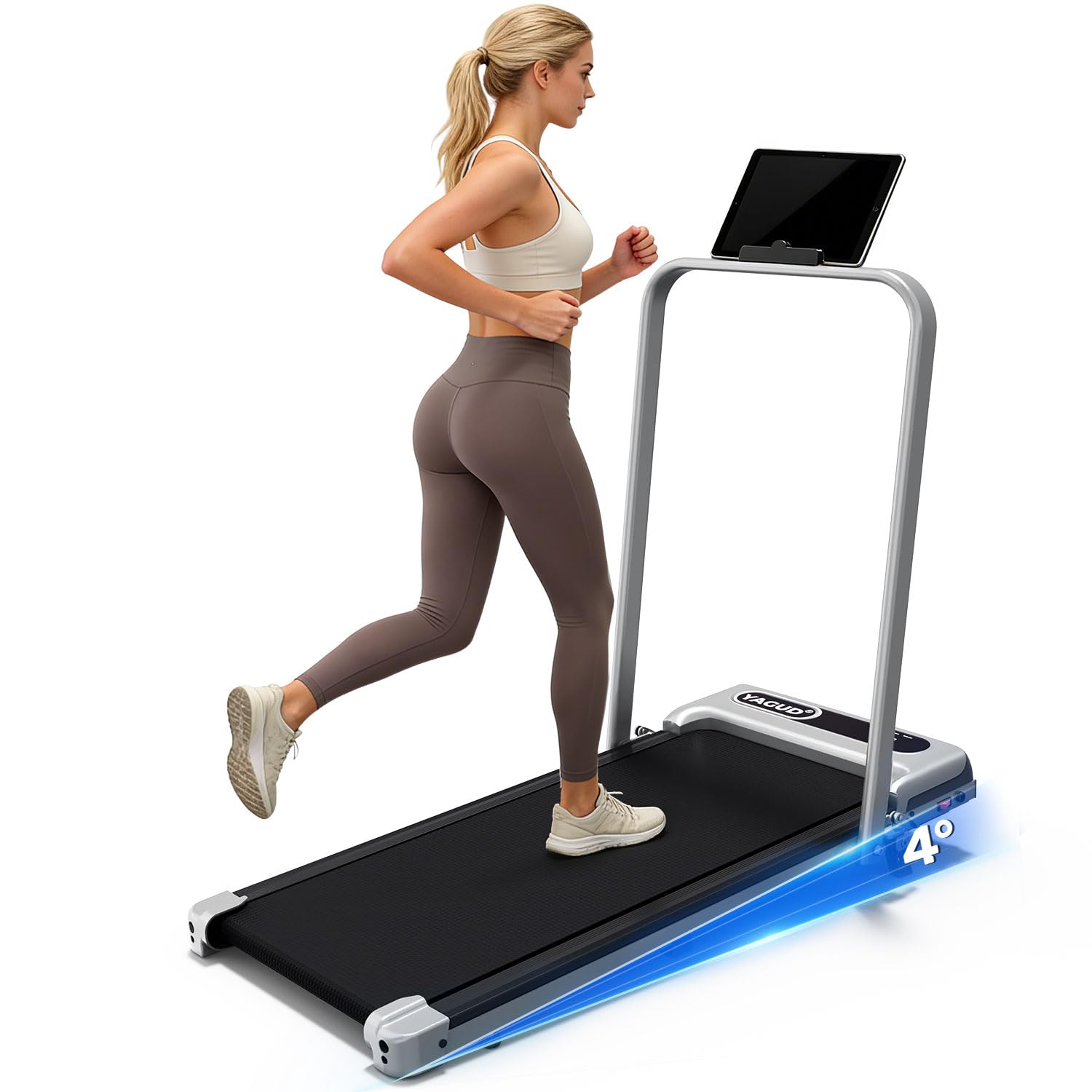
For desk-walking rather than running, a slim walking pad covers a different need than the full-size 7.0 AT.
Footprint and folding: does it actually fit a small home?
This is where the 7.0 AT lives up to its "compact" billing only in part, so be clear-eyed. Assembled, it measures roughly 76 by 35 by 67 inches and weighs 277 pounds, per Horizon's specifications. Folded with the hydraulic FeatherLight lift, the deck swings up and the footprint shrinks by an estimated 8 square feet, which is meaningful in an apartment or shared room.
The honesty caveat: 277 pounds is heavy. The transport wheels help you roll it across a flat floor, but this is not a machine you carry upstairs casually or reposition daily on carpet. If your constraint is a truly tiny space or you want to stow it under a desk or bed every day, a slim under-desk unit is the better-suited tool — we compare the trade-offs in our Yagud walking pad review, which covers the walk-only end of the spectrum. The 7.0 AT is for a room that can host a folded treadmill, not a closet.
Where it sits in the cardio lineup
A treadmill is the most universal pick in a home-cardio setup because it covers walking, jogging, running, and incline work on one deck. If you are still weighing a treadmill against a rower, stepper, or walking pad for a small home, start with our pillar guide to the best compact home cardio machines, which frames how the 7.0 AT stacks up against lower-impact alternatives before you commit the floor space.
Console, apps, and connectivity
Set expectations correctly here. The 7.0 AT uses a 7.25-inch high-contrast LCD — not a touchscreen — plus four LED data windows and a media shelf for your own tablet or phone. This is the deliberate design choice that keeps the price down: Horizon assumes you will bring your own screen rather than pay for a built-in display you would otherwise duplicate.
On connectivity, BarBend reports Bluetooth support for heart-rate monitors, two built-in Bluetooth speakers, a USB charging port (1A/5V per Horizon), and selective app compatibility. Horizon's spec page lists pairing with Peloton, Zwift, Kinomap, Strava, Apple Watch, and Samsung Galaxy Watch. The key limitation: unlike iFIT-bound NordicTrack machines, the 7.0 AT does not offer automatic trainer-controlled incline and speed, so app workouts guide you but do not drive the deck.
Horizon 7.0 AT vs NordicTrack: which to buy
This is the comparison most shoppers actually run, so here is the honest split. Both the 7.0 AT and a comparable NordicTrack T-Series share a 3.0 HP-class motor and a 12 mph top speed, but they sell two different philosophies, as laid out in TreadmillReviews' head-to-head:
- Incline: the Horizon reaches 15 percent versus NordicTrack's 12 percent — an edge for hill training.
- Screen: NordicTrack bundles a 10-inch HD touchscreen tied to iFIT; the Horizon expects your own tablet. If guided, streamed, auto-adjusting classes are the point of buying a treadmill, NordicTrack wins that axis.
- Warranty: the 7.0 AT carries a lifetime frame and motor warranty with 3 years parts and 1 year labor, per Horizon; the comparable NordicTrack listed only 2 years on the motor and 10 years on the frame in that comparison — a clear long-term durability advantage for Horizon.
The short version: buy the Horizon for hardware and warranty value; buy the NordicTrack if you want a subscription-class touchscreen experience baked in.
What about the cheaper Horizon T101?
Shoppers cross-shopping within Horizon's own range often land on the T101, the brand's popular walking-focused model. The distinction is straightforward: the T101 runs a smaller 2.5 HP motor, a shorter 55-inch deck, a 10 mph top speed, and a 10 percent incline ceiling, per BarBend's T101 review. That is a fine walking and light-jogging machine at a lower price. The 7.0 AT exists for people who want to actually run — longer deck, stronger motor, steeper incline, higher capacity. If you only walk, the T101 saves money; if you run or have a taller household, the 7.0 AT is the right step up.
Who the Horizon 7.0 AT is best for
It fits a specific buyer well and frustrates another. It is an excellent match for runners and joggers who want full-size capability without a premium screen tax, for taller users who need the 60-inch belt, for heavier users up to the 325-pound capacity, and for anyone who values a lifetime motor warranty over built-in classes. It is a poor match if you want a touchscreen-driven, auto-adjusting class experience out of the box, if you need decline training, or if your space genuinely cannot host a folded 277-pound machine — in which case a lighter walk-only unit is the smarter call.
Verdict
The Horizon 7.0 AT is the rare sub-$1,100 treadmill that doesn't make you choose between a real motor and a real warranty. The 3.0 CHP drive, 60-inch deck, 15 percent incline, and lifetime frame-and-motor coverage are genuinely strong for the price, and independent testers back up the durability and ride. You pay for that value by giving up a built-in touchscreen and decline, and by accepting a heavy chassis. If those trade-offs sit fine with you, it is one of the most defensible value buys in home running equipment today.
Where to Buy
Specifications
- Motor
- 3.0 CHP Rapid Sync
- Speed range
- 0.5 – 12 mph
- Incline
- 0 – 15%
- Running surface
- 20 in W x 60 in L
- Cushioning
- 3-Zone Variable Response Cushioning
- Max user weight
- 325 lbs
- Console
- 7.25-inch high-contrast LCD (non-touch) + 4 LED windows
- App compatibility
- Peloton, Zwift, Kinomap, Strava, Apple/Samsung watches (no auto trainer control)
- Folding
- FeatherLight hydraulic fold
- Assembled size / weight
- 76 x 35 x 67 in / 277 lbs
- Warranty
- Lifetime frame & motor, 3 yrs parts, 1 yr labor
Related Posts