AEOCKY 74 Pint Dehumidifier Review (2026): Specs, Value, Verdict
 Abdulwahab Suleiman·June 16, 2026
AEOCKY 74 Pint Dehumidifier Review: Is It Right for a Big, Damp Room?
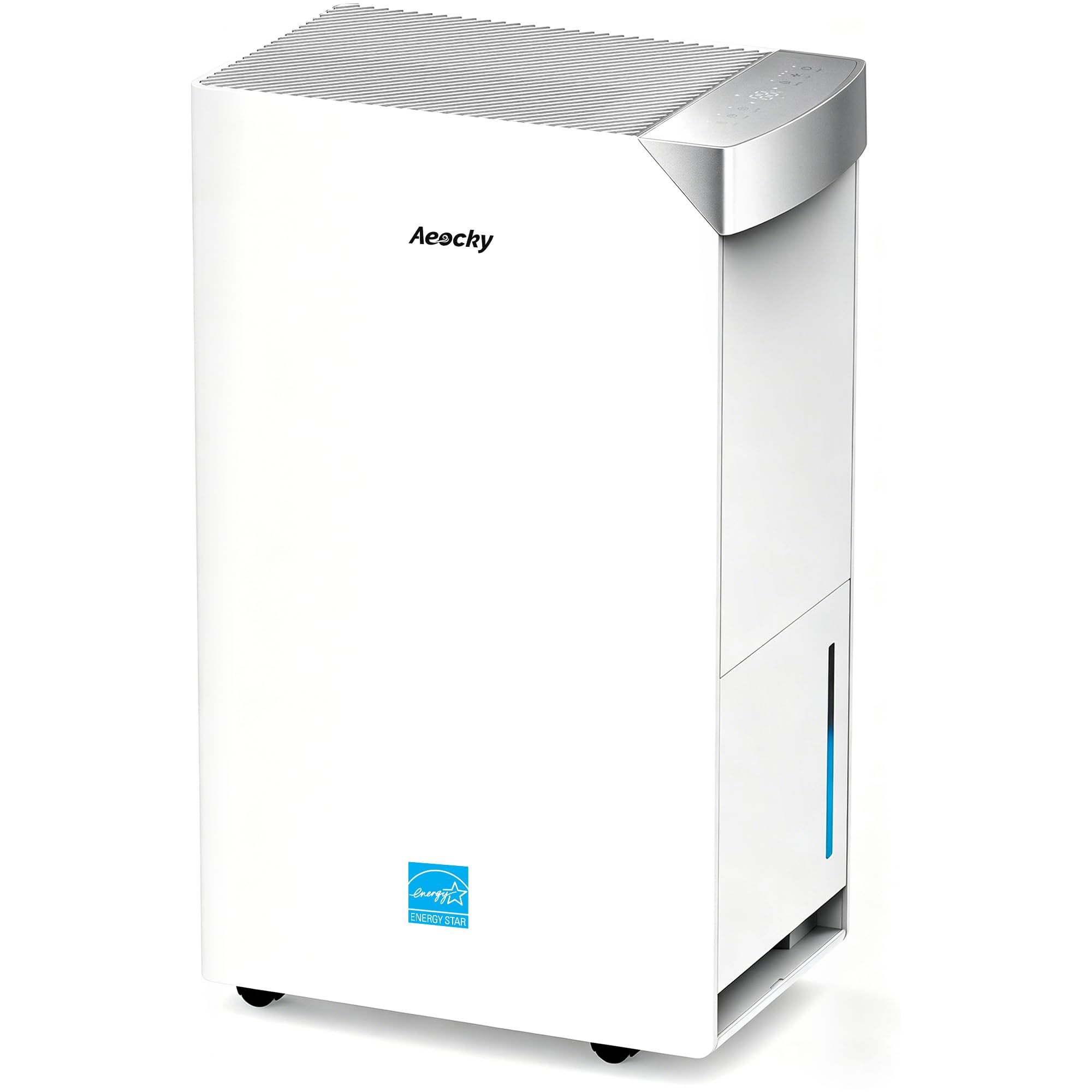
A damp basement is rarely just a comfort problem. Persistent moisture warps trim, feeds mold, and makes a finished lower level smell like a cave. The AEOCKY 74 Pint dehumidifier (sold as the Leo-Lite) is pitched squarely at that problem: a high-capacity, ENERGY STAR Version 6.0 compressor unit rated to cover up to 4,500 square feet, at a price that undercuts most name-brand competitors.
This review is research-based. We did not run the AEOCKY on a bench in our own lab. Instead, we cross-checked the manufacturer's published specifications against the federal testing rules that govern how those pint numbers are generated, plus independent sizing guidance from Consumer Reports and ENERGY STAR. Where a claim can only be traced to anecdote, we left it out. The goal is a clear-eyed picture of what this machine actually does, and who it fits.
Where to Buy
The AEOCKY Leo-Lite is rated for up to 4,500 sq ft and ships with a drain hose for continuous drainage.
What the 74-pint rating actually means
Before judging any modern dehumidifier, it helps to understand the number on the box. The Department of Energy changed its test procedure in 2019, and the change matters here. Older units were rated at warm, humid conditions; today's DOE method tests at cooler, more basement-like conditions, which means there is less water in the air to remove. As a result, standard capacity classes were reset to roughly 20, 30, and 50 pints per day, and many units that once advertised 70 pints are now rated closer to 50.
AEOCKY navigates this with a dual rating. The company lists the unit at 74 pints per day under hot, saturated conditions (around 95°F and 95% relative humidity) and 52 pints per day under the cooler, damp-basement conditions that align with the current DOE standard, per its product page. Read that way, this is a high-50s-pint-class machine by today's federal yardstick, dressed in a 74-pint marketing headline. That is not unique to AEOCKY; nearly every brand does it. But it changes how you should size the unit, which we cover below.
The efficiency story is more straightforward. The 2019 rules also introduced the Integrated Energy Factor (IEF), measured in liters of water removed per kilowatt-hour, which counts the energy the fan draws even when the compressor cycles off. An ENERGY STAR Version 6.0 listing tells you the unit clears the current efficiency bar rather than an outdated one, and AEOCKY markets the Leo-Lite as meeting that latest tier.
The specs that matter for a whole room
For a large, open basement or a sprawling main floor, three numbers carry most of the weight: capacity, coverage, and drainage. AEOCKY's published figures put the Leo-Lite in genuine whole-room territory.
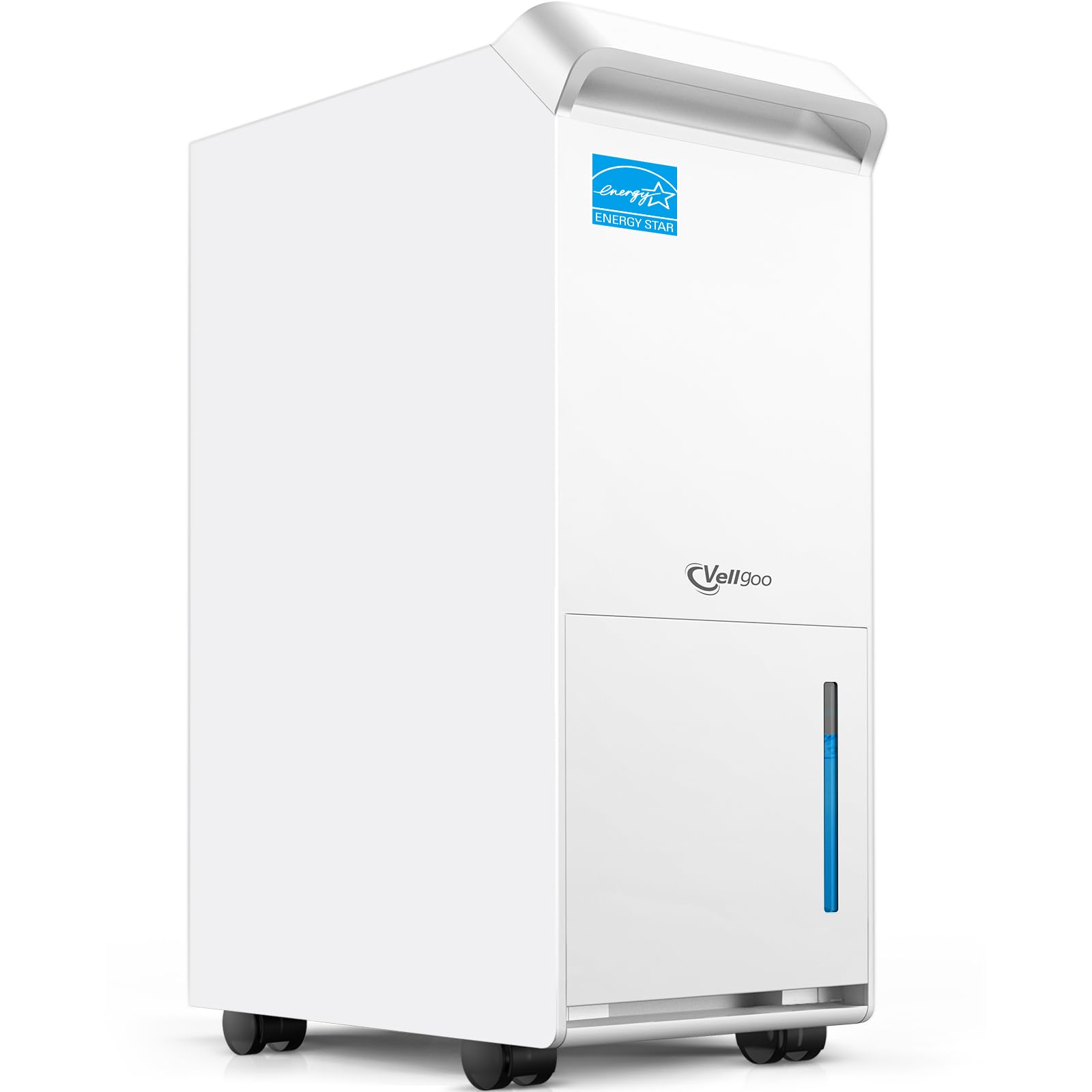
A comparable large-capacity unit, the Vellgoo Max, illustrates the 4,000–4,500 sq ft class the AEOCKY competes in.
The unit is rated for up to 4,500 square feet of coverage with a 1.45-gallon internal tank, and it ships with a drain hose for continuous gravity drainage, according to the manufacturer. For any space this size, the hose is the feature that matters most. A 1.45-gallon tank on a unit pulling 50-plus pints a day will fill in a matter of hours, so emptying it by hand is impractical for continuous use. Routing the hose to a floor drain or sump turns the AEOCKY into a set-and-forget appliance, which is exactly how a whole-room dehumidifier should run.
Rounding out the published spec sheet: an intelligent humidistat that lets you dial in a target humidity and walk away, an auto-defrost cycle that keeps the coils from icing in cooler rooms, and a 24-hour timer. Auto-defrost is non-negotiable in a basement that drops below the mid-60s; without it, a compressor unit can ice over and stop pulling water. AEOCKY also lists a 44–50 dB noise range and roughly 280 watts of power draw. At that wattage, an efficient compressor unit is far cheaper to run than the older 70-pint machines it visually resembles.
Spec (AEOCKY published) | Value
Peak capacity (95°F / 95% RH) | 74 pints/day
DOE-condition capacity (86°F / 80% RH) | 52 pints/day
Coverage | Up to 4,500 sq ft
Tank | 1.45 gallon + drain-hose port
Noise | 44–50 dB
Power | ~280 W
ENERGY STAR | Version 6.0
For the exact figures, the AEOCKY product page is the primary source. Treat third-party retailer listings with caution; we found several reselling sites quoting slightly different dimensions and weights, which is common when a unit ships in more than one trim.
How to size it for your space (and when 74 pints is overkill)
The biggest mistake buyers make is matching the headline pint number to the room without accounting for how damp the room actually is. Consumer Reports frames capacity as a function of both square footage and starting humidity, and ENERGY STAR notes that every certified unit includes a humidistat so you can target the recommended 30–50% indoor range.
In practice, a moderately damp 500-square-foot basement only needs about a 50-pint-class machine. The AEOCKY's value is not that 4,500 square feet is a literal promise for every home; it is that the surplus capacity lets the unit reach your target humidity faster, then idle, rather than running flat-out around the clock. Oversizing slightly is generally the safer error. But if your space is a small, mildly humid room, this is more machine than you need, and a 30-pint unit would cost less to buy and run. We walk through the full math in our companion guide on what size dehumidifier you need for a whole room.
Where the Leo-Lite earns its keep is the large, genuinely wet space: a full basement, a 3,000-square-foot main floor in a humid climate, or a garage workshop. That is the use case the 74-pint headline and the 4,500-square-foot rating are built around.
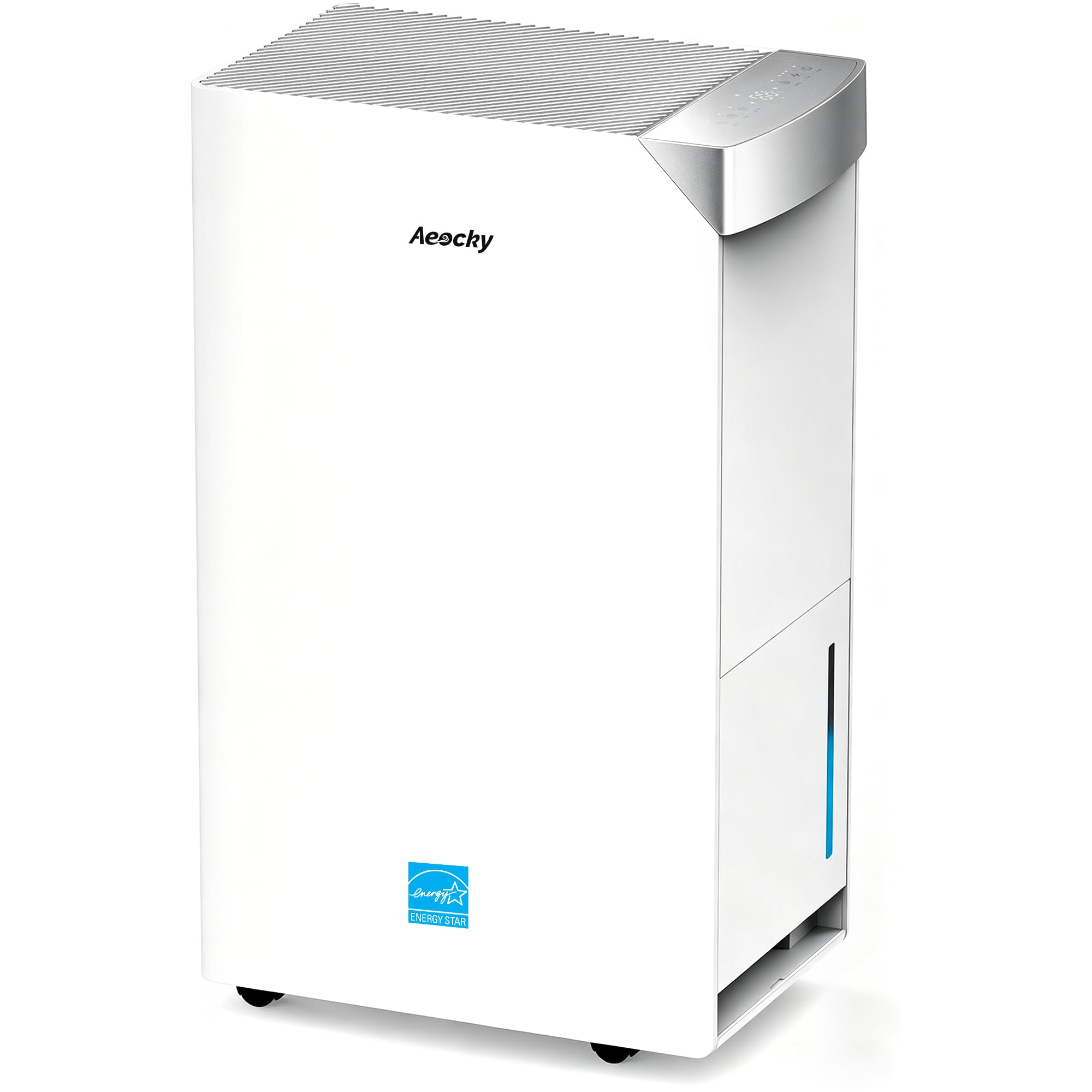
The intelligent humidistat lets you set a target humidity; auto-defrost keeps the coils clear in cooler basements.
Where AEOCKY falls short
The honest gaps are mostly about pedigree and support, not the spec sheet. AEOCKY is a value-focused brand, and it is not tracked by the major independent appliance-testing labs. There is no Consumer Reports reliability score for it the way there is for legacy brands, so long-term compressor durability is harder to verify from a primary source. Buyers who weigh a multi-decade brand track record heavily should factor that in.
The dual capacity rating, while standard across the industry, can also mislead. If you size off the 74-pint headline expecting that throughput in a cool basement, you will be disappointed; plan around the ~52-pint DOE figure instead. And as with most compressor units in this class, the small tank means the drain hose is effectively mandatory for continuous operation. None of these are dealbreakers, but they shape who should buy.
Verdict: a strong-value large-capacity pick
The AEOCKY 74 Pint Leo-Lite is a credible, well-specified large-capacity dehumidifier at a price that meaningfully undercuts legacy brands. The combination of ENERGY STAR Version 6.0 efficiency, a real continuous-drainage hose, an intelligent humidistat, and auto-defrost covers everything a damp basement actually requires. The caveats are the lack of independent lab pedigree and the usual dual-rating sleight of hand on the pint number.
If you want a no-frills, set-and-forget unit for a large, genuinely humid space and you are comfortable buying from a value brand, it is an easy recommendation. If you need a long, lab-verified reliability record or only have a small room to dry, look elsewhere. For the full field, see our roundup of the best whole-room dehumidifiers for 2026, where the AEOCKY sits alongside its closest rivals.
Where to Buy
Related Posts