
A robotic pool cleaner is one of those purchases where the spec sheet and the lived experience don't always line up. Two robots can both claim "cleans floor, walls, and waterline," cost within a hundred dollars of each other, and still leave you with wildly different results depending on the shape of your pool, how much debris falls into it, and whether you want a set-and-forget machine or a gadget you babysit. The goal of this guide is to turn that fog into a short, ordered checklist you can actually shop with.
We did not bring these robots to a backyard and run timed cleaning passes. Instead, this is a research-based buyer's guide: it synthesizes manufacturers' published specifications with independent editorial testing and operating-cost analysis from reputable pool-equipment publications, then organizes those facts into the order a real buyer needs them. Where we name a number, it comes from a cited source, and where a "best for" claim appears, it's reasoned from the specs rather than from a hands-on bench test we didn't run. That honesty is the point. A cleaner that's perfect for a small above-ground pool can be the wrong tool for a 40,000-gallon inground pool with a tile waterline, and no amount of marketing copy will tell you which camp you're in.
Start with your pool, not the robot
The single most common mistake is shopping for features before measuring the thing you're cleaning. Pool size and type quietly decide most of the rest of the checklist, so pin them down first.
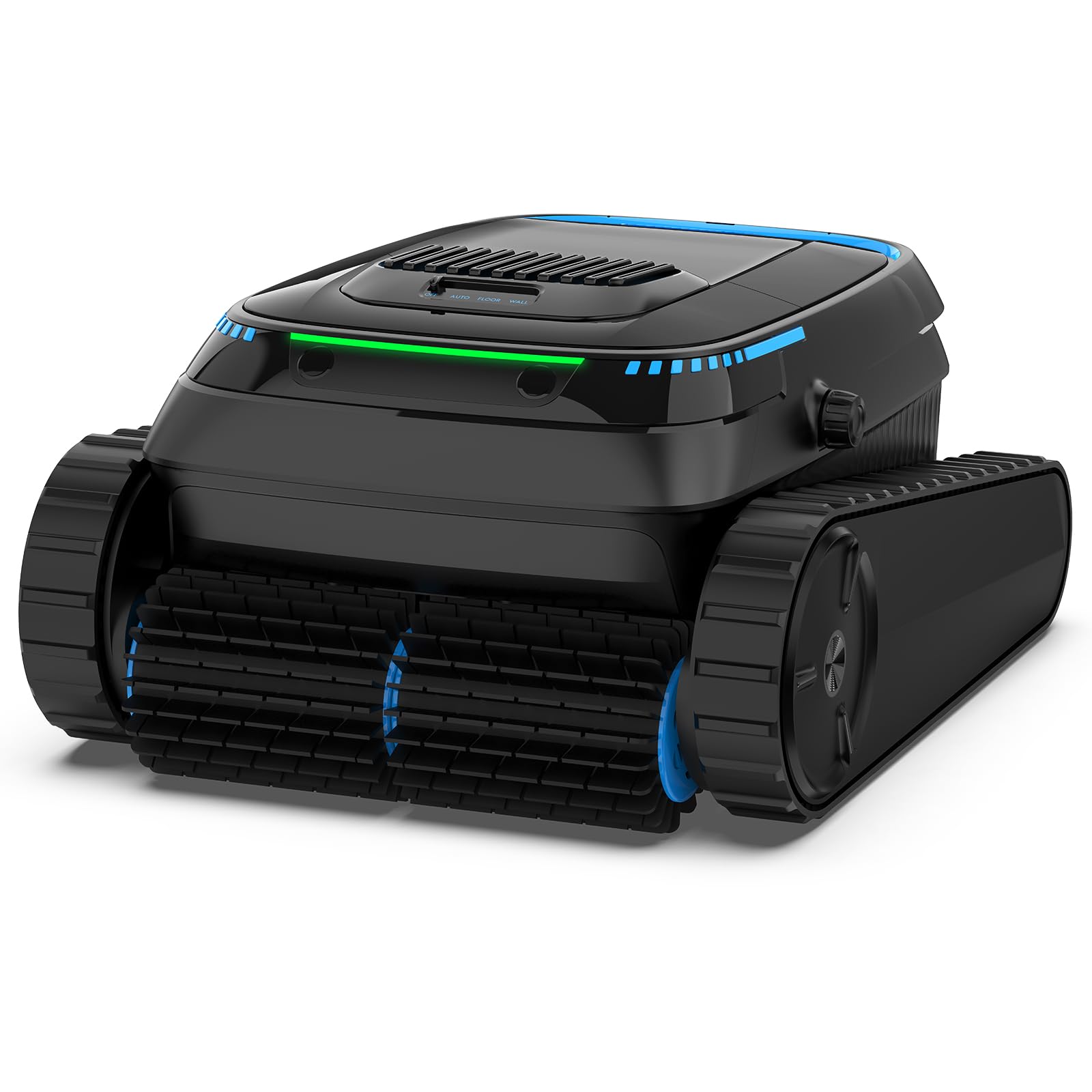
A cordless robot like the BOTLUXE PC10 is rated for pools up to roughly 800 square feet; larger pools usually call for a corded unit or a longer runtime.
How pool size maps to runtime
Coverage is a function of runtime, and runtime needs to match your pool's surface area. Editorial testers at Poolbots break the rule of thumb down cleanly: pools under 1,000 square feet generally need 90 to 120 minutes of cleaning per cycle, medium pools of 1,000 to 1,600 square feet want 120 to 180 minutes, and anything over 1,600 square feet benefits from 180-plus minutes of runtime to get full coverage (Poolbots buying guide). If a cordless robot's battery taps out before it finishes a lap, you're left with a half-cleaned pool and a recharge wait.
That's exactly why manufacturers tie their cordless models to a square-footage ceiling. The cordless BOTLUXE PC10, for instance, pairs a 5,200mAh battery with up to 120 minutes of runtime and is rated for pools up to about 800 square feet (BOTLUXE PC10 listing). Read those two numbers together. A runtime ceiling and a square-footage rating are the same promise stated twice. If your pool is bigger than the rating, you'll be retrieving and recharging the robot mid-clean, which erodes the whole point of automation.
Inground vs. above-ground changes the requirements
Pool type is the second filter. Above-ground pools tend to be smaller and simpler in shape, so most entry-level and mid-range cleaners handle them well. Inground pools are a different animal: they're often deeper, with steps, drains, and more complex contours, which means they demand stronger suction, genuine wall-climbing ability, and smarter navigation to reach every corner (Poolbots buying guide). For an inground pool, it's generally worth paying for full-surface coverage rather than a floor-only robot.
If you have an unusual pool, this is where you check compatibility before anything else. Infinity-edge and vinyl-liner pools, in particular, benefit from cleaners explicitly rated for them. Some surface skimmers, like the Betta Flex solar skimmer, are marketed specifically for infinity-edge, in-ground, and above-ground compatibility with a soft-touch body that won't scuff a liner (Betta Flex product page). A robot that's wrong for your pool geometry is a fast way to waste several hundred dollars.
Decide what "clean" means to you: floor, walls, or waterline
Not every robot cleans every surface, and the difference matters more than the marketing suggests. The waterline is the dirtiest band in any pool, where the bulk of bacteria, algae, body oils, and sunscreen residue accumulate (Poolbots buying guide). A floor-only robot leaves that band to you and your hand brush.
Floor-only, full-coverage, and surface-skimmer robots
There are effectively three jobs a "pool robot" can do, and they're not interchangeable:
- Floor-only cleaners vacuum the bottom. They're the cheapest and fine for a simple pool that mostly collects sediment, but they leave walls and the waterline untouched.
- Full-coverage cleaners climb walls and scrub the waterline in addition to the floor. The BOTLUXE PC10, for example, advertises floor, wall, and waterline cleaning with three selectable modes (Full Pool, Floor Only, and Wall Only) (BOTLUXE PC10 listing).
- Surface skimmers are a separate category entirely. Instead of vacuuming submerged debris, they patrol the water's surface and collect leaves, pollen, and bugs before they ever sink. The Betta Flex is solar-powered and runs this surface patrol continuously, which is a fundamentally different job from a submerged vacuum (Betta Flex product page).
The practical takeaway: surface skimmers and submerged vacuums solve different problems, and the best-equipped pools often run one of each. If your headache is falling leaves under a tree, a skimmer attacks the problem upstream. If your headache is fine silt on the floor and grime at the tile line, you want a submerged full-coverage vacuum. Don't buy a floor vacuum and expect it to fix a leaf problem, or a surface skimmer and expect a spotless floor.
Wall climbing and waterline scrubbing in practice
If you want waterline cleaning, look past the bullet point to how the robot does it. The best machines use dual stabilizers and water-jet drives to travel horizontally along the waterline, scrubbing the tile band while half the robot rides above the surface (Poolbots buying guide). Tank-style treads help here too. The BOTLUXE PC10 uses caterpillar treads rated to climb slopes up to 30 degrees and clear small steps and obstacles, which is the kind of mobility that separates a robot that actually reaches the waterline from one that slides back down the wall (BOTLUXE PC10 listing). Wall climbing is a real engineering hurdle, not a checkbox, so it's worth confirming the drive system before you trust the claim.
Corded vs. cordless: the trade-off that defines the category
This is the decision that most shapes how you'll live with the robot day to day, and there's no universally correct answer. It's a genuine trade-off between raw power and convenience.
Suction power and GPH
Suction is measured in gallons per hour (GPH), and the gap between corded and cordless is larger than most shoppers expect. Cordless robots typically deliver around 1,300 GPH, because they throttle the motor to protect battery life. Corded models, drawing continuous wall power, can push up to roughly 4,500 GPH, more than three times the flow, and some guides argue a robot should hit at least 4,000 GPH for a thorough clean (Mammotion corded vs. cordless guide). That said, headline GPH numbers vary a lot by how each brand measures them, so treat them as a rough tier indicator rather than a precise rating. The cordless BOTLUXE PC10, for instance, advertises up to 5,000 GPH, which shows the spread is real but the labels aren't standardized (BOTLUXE PC10 listing).
Why does flow rate matter? More suction lifts heavier debris (acorns, gravel, waterlogged leaves) and pulls fine sediment off the floor instead of pushing it around. For a pool under a messy tree or one that collects a lot of grit, leaning toward higher suction pays off. For a tidy, screened-in pool that mostly collects dust, a mid-tier cordless unit is usually plenty.
Convenience, automation, and the recharge tax
Here's where cordless claws back ground. No cord means no tangling, no untwisting a 60-foot cable, and far easier storage. But there's a recharge tax: cordless robots generally need to be retrieved, recharged, and redeployed for each use, while a corded robot can be left in the pool and scheduled to run automatically every day without you touching it (Dreame corded vs. cordless guide). If you value true set-and-forget automation, that daily handling matters more than it looks on paper.
There are two honest asterisks on cordless:
- Filtration trade-off. To conserve battery, some cordless robots use simpler mesh screens that can let fine dirt and algae spores slip through, whereas corded models can afford more aggressive filtration (Mammotion corded vs. cordless guide). Not every cordless unit cuts this corner, but it's worth checking the filter's micron rating (more on that below).
- Battery safety. Cordless robots run on lithium-ion packs, and several models across the market have been recalled for overheating and fire risk (Mammotion corded vs. cordless guide). This isn't a reason to avoid cordless outright, but it's a reason to buy from a brand with a clear warranty and to store and charge the unit per the manufacturer's instructions rather than leaving it baking in the sun on a charger.
A reasonable rule of thumb: choose corded for large inground pools, heavy debris loads, and people who want daily automated cleaning; choose cordless for small-to-medium pools, irregular schedules, and anyone who hates wrestling a cable. If you want to see how one cordless unit balances these trade-offs in detail, our BOTLUXE PC10 review walks through the specifics.
Navigation: the difference between coverage and chaos
Two robots with identical suction can deliver very different results based purely on how they move. Navigation determines whether the machine methodically covers your pool or bumps around randomly and misses patches.
Random vs. structured vs. smart navigation
There are three broad tiers, and they line up roughly with price:
- Random-path cleaners move unpredictably, bouncing off walls. They eventually cover most of the pool but waste time and miss spots (Poolbots buying guide).
- Structured navigation follows deliberate patterns, often described as S-path or N-path cleaning, which gives more consistent, less overlapping coverage (Poolbots buying guide).
- Smart or AI navigation maps the pool and optimizes routes to minimize overlap and finish faster.
The BOTLUXE PC10 sits in the structured tier: it advertises intelligent path planning that combines N-shaped and S-shaped routes to cover the whole pool (BOTLUXE PC10 listing). For a simple rectangular pool, structured navigation is usually enough. For a freeform pool with curves, islands, and varying depths, paying up for smarter mapping reduces the odds of a missed zone. Don't overpay for AI navigation in a basic backyard rectangle, and don't expect a random-path bargain robot to handle a complex kidney-shaped pool gracefully.
Filtration: the spec everyone skips and later regrets
Suction gets the headlines, but filtration determines what the robot actually keeps versus what it stirs up and spits back out. The key number is the filter's micron rating, where a micron is one-millionth of a meter.
The rating tells you the smallest particle the filter can trap, and the scale is more granular than most buyers realize. A 200-micron filter catches pine needles, acorns, and twigs; a 100-micron filter starts grabbing finer dust; a 30-micron filter captures most pollen; and you need a 10-micron filter to trap algae spores and sunscreen residue (PoolRobotFinder micron guide). If your recurring problem is cloudy water rather than visible debris, ultra-fine filtration in the 10-to-30-micron range is what actually fixes it; a coarse filter will let the haze pass straight through.
Match the filter to your problem. The BOTLUXE PC10 ships with a 150-micron mesh in a 4-liter basket, which is well suited to leaves, bugs, and general debris but is coarser than the ultra-fine media you'd want for fighting algae bloom or fine silt (BOTLUXE cordless listing). Two practical notes follow from this:
- Basket capacity matters for big debris loads. A larger basket (the PC10's 4 liters, for example) means fewer mid-cycle stops to empty it.
- All filters need upkeep. Pleated and fine filters should be rinsed with a garden hose after each cleaning cycle (skip the pressure washer, which damages fine media), and washed thoroughly every four to six weeks for sustained performance (PoolRobotFinder micron guide). A clogged filter quietly kills suction, so budget the few minutes of maintenance into your decision.
Robotic vs. pressure and suction cleaners: is a robot even the right tool?
Before spending $700-plus on a robot, it's worth a sanity check against the alternatives, because the upfront price gap is real and the long-run math is not as lopsided as it first appears.
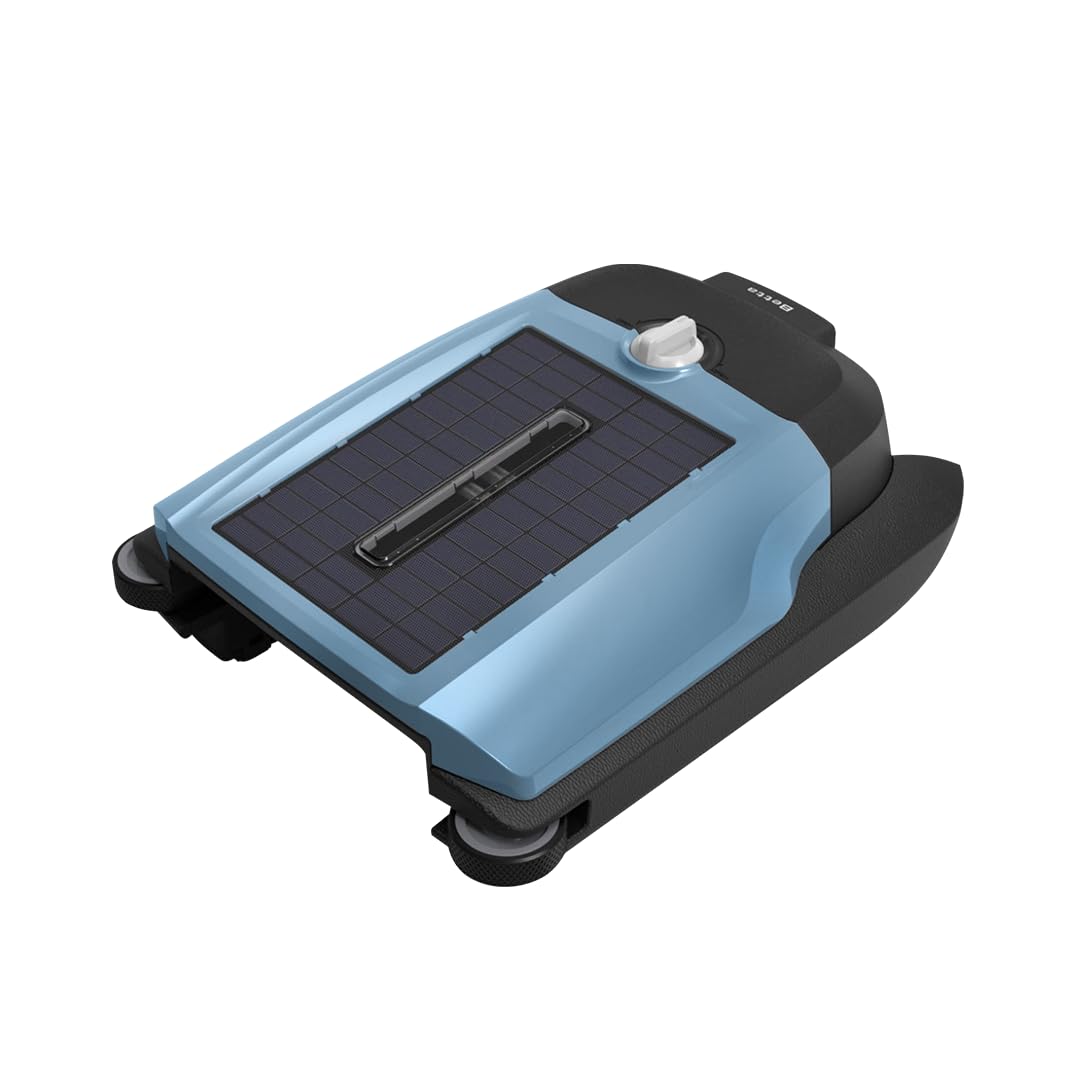
Solar surface skimmers like the Betta Flex run on free sunlight and attack debris before it sinks, a different cost profile than a submerged electric vacuum.
The operating-cost case for robotic
Robotic cleaners win decisively on energy. They run on low-voltage DC motors that draw roughly 100 to 200 watts, while pressure- and suction-side cleaners depend on AC motors and often a separate booster pump that can burn 700 to 1,000 watts. One analysis pegs robotic cleaners as about 87% more efficient, costing roughly 5 cents an hour to run (Dreame operating-cost comparison). Robots are also faster: a robotic unit typically finishes a full pool in 1.5 to 2 hours thanks to optimized navigation, versus 4 to 6 hours for a suction cleaner (Dreame operating-cost comparison).
There's also an equipment-independence angle. Robotic cleaners plug into a wall outlet and don't lean on your pool's pump or filtration system, which reduces wear on that gear and keeps the robot working even if your main system is off (Dreame operating-cost comparison).
When a robot is worth the premium
The honest counterpoint: suction-side cleaners can cost under $200, while robotic units run $700 to $2,500 (Dreame operating-cost comparison). For a tiny, low-debris pool, a cheap suction cleaner may genuinely be the rational choice. The robotic premium earns out when the pool is large, the debris is heavy, or you'd otherwise be wiring up and running a power-hungry booster pump, since the energy savings can pay back the difference over a couple of seasons. For a deeper dive into whether the math works for your situation, see our companion piece on whether robotic pool cleaners are worth it.
The short version: a robot is the right tool when convenience, energy efficiency, and full-surface cleaning outweigh the higher sticker price. It's overkill for a small kiddie-sized above-ground pool that a $40 hand vacuum would handle.
Power source and smart features: solar, battery, and apps
Beyond corded versus cordless lies a third option and a layer of convenience features that can tip a close decision.
The solar option
Solar-powered surface skimmers occupy a unique niche. The Betta Flex runs entirely on sunlight with no cord and no manual charging, offering dual cleaning modes (an Eco mode for periodic sweeps and a Normal mode for continuous patrol) (Betta Flex product page). For a leaf-prone pool, a solar skimmer that works all day for zero electricity cost is compelling, but remember its scope: it's a surface cleaner, not a floor-and-wall vacuum. It complements a submerged robot rather than replacing it.
App control and scheduling
Smart features are where a lot of mid-range robots now compete. App control lets you start a cycle from your phone, pick a cleaning mode, and (on corded models especially) set a recurring schedule so the pool cleans itself. Self-parking, where the robot returns to an easy-to-reach spot when it finishes, is a small touch that saves you fishing the unit out of the deep end. These features don't clean any better, but they meaningfully change how often you'll actually use the thing, and a robot you use is worth more than a more powerful one gathering dust in the shed.
One caution on smart features: weigh them by whether they remove friction you'll actually feel. A schedule you'll set once and forget is genuinely useful; a companion app you have to open every single time before the robot will run can add friction rather than remove it. Read the product description carefully to see whether app control is optional or mandatory, and whether scheduling lives on the robot itself or only inside the app. The convenience features that matter most are the ones that make the robot easier to ignore, not ones that demand your attention.
Warranty, parts, and the cost of ownership over time
A robotic pool cleaner is a machine that lives in chlorinated or salt water and gets dragged across abrasive surfaces, so it's worth thinking past the purchase in two ways. First, consumable parts: brushes, treads or tires, and filter cartridges all wear out, and a robot is only a bargain if replacements are available and reasonably priced. Before buying, confirm that the specific filter your model uses can be re-ordered, because a discontinued filter can effectively retire an otherwise working robot. Second, the warranty is your insurance against the lithium-battery and motor failures that are the most common ways these units die. A clear, multi-year warranty from a brand that's still around to honor it is worth more than a marginally higher spec from a no-name seller. This matters more for cordless units specifically, since the battery is both the most expensive component and the one most prone to age-related failure.
A practical buying checklist
Putting it all together, here's the order to work through before you buy:
- Measure your pool. Square footage and shape come first; they set the runtime and navigation you need.
- Identify your pool type. Inground demands more (suction, wall climbing, navigation) than a simple above-ground pool. Confirm compatibility for liner, vinyl, or infinity-edge pools.
- Decide which surfaces you need cleaned. Floor-only, full coverage (floor + walls + waterline), or a surface skimmer for falling debris. The waterline is the dirtiest band, so don't skip it lightly.
- Pick corded or cordless. Corded for large pools, heavy debris, and daily automation; cordless for small-to-medium pools and cable-free convenience. Check the battery runtime against your pool size.
- Check the suction (GPH) and navigation tier. Higher GPH for heavy debris; structured or smart navigation for complex shapes. Treat headline GPH as a tier, not a precise rating.
- Read the filter's micron rating. Coarse (150-200 microns) for leaves and bugs; ultra-fine (10-30 microns) if you fight cloudy water or algae.
- Sanity-check against alternatives and budget. A robot earns its premium on energy savings and convenience for larger or higher-maintenance pools; a cheap suction cleaner may suffice for a small, tidy one.
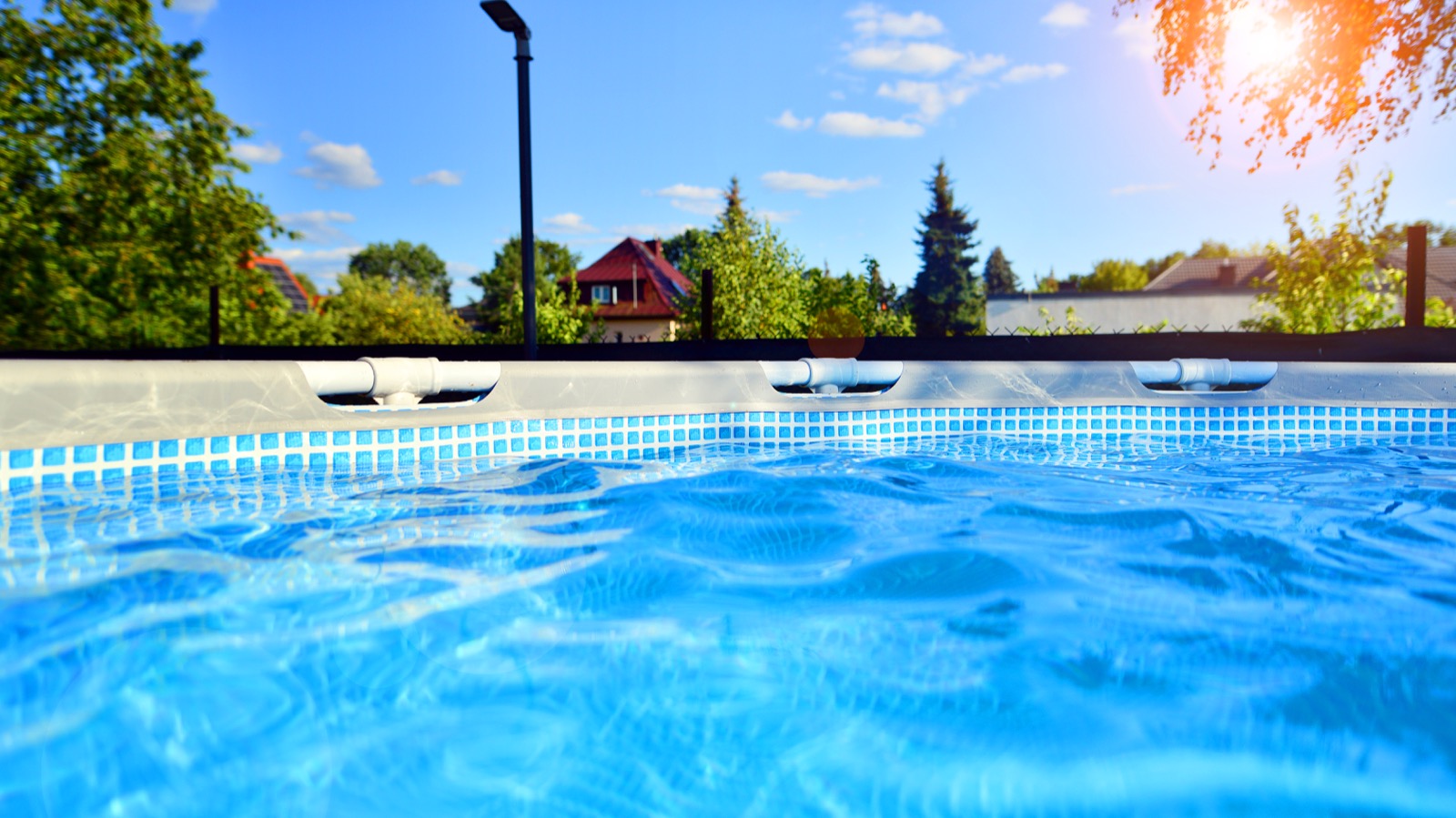
Matching the robot to your pool's size, surfaces, and debris load is what keeps the water this clear with minimal hands-on work.
Where to go from here
There's no single "best" robotic pool cleaner, only the best one for your pool's size, shape, and the kind of mess it collects. Work the checklist above in order and most of the field eliminates itself before you ever compare two specific models. Once you've narrowed to a category (corded full-coverage vacuum, cordless mid-tier vacuum, or solar surface skimmer), comparing individual robots gets a lot easier.
If you're ready to compare specific models side by side, our roundup of the best robotic pool cleaners of 2026 ranks current options against the criteria in this guide, with the trade-offs spelled out for different pool types and budgets.
Related Posts