
DREO DC Tower Fan Review: Quiet Cooling Without the Hum
If you have shopped for a bedroom fan lately, you have probably noticed that the price gap between a basic oscillating tower and a "DC motor" model is real and growing. The DREO DC tower fan (model DR-HTF007, sold on Amazon as the 2026 Upgraded tower fan) sits squarely in that newer, brushless-motor tier. It promises high-velocity airflow, a near-silent sleep mode, and the energy frugality that DC motors are known for, all for a street price that has recently hovered under $70.
This is a research-based review. We did not run the DREO through a hands-on lab test ourselves. Instead, we anchored every spec on DREO's own published listing for this exact model, cross-checked the DC-versus-AC efficiency claims against independent engineering and energy comparisons, and benchmarked it against a competing bladeless tower we cover separately. Where a number comes from the manufacturer, we say so; where it comes from a third party, we cite it. That transparency is the point: it lets you judge the fan on verifiable specs rather than marketing adjectives.
Below, we break down who this fan is for, how its DC motor actually changes the experience, what the noise and airflow numbers mean in a real room, and how it stacks up against the pricier bladeless alternative in this category.
Where to Buy
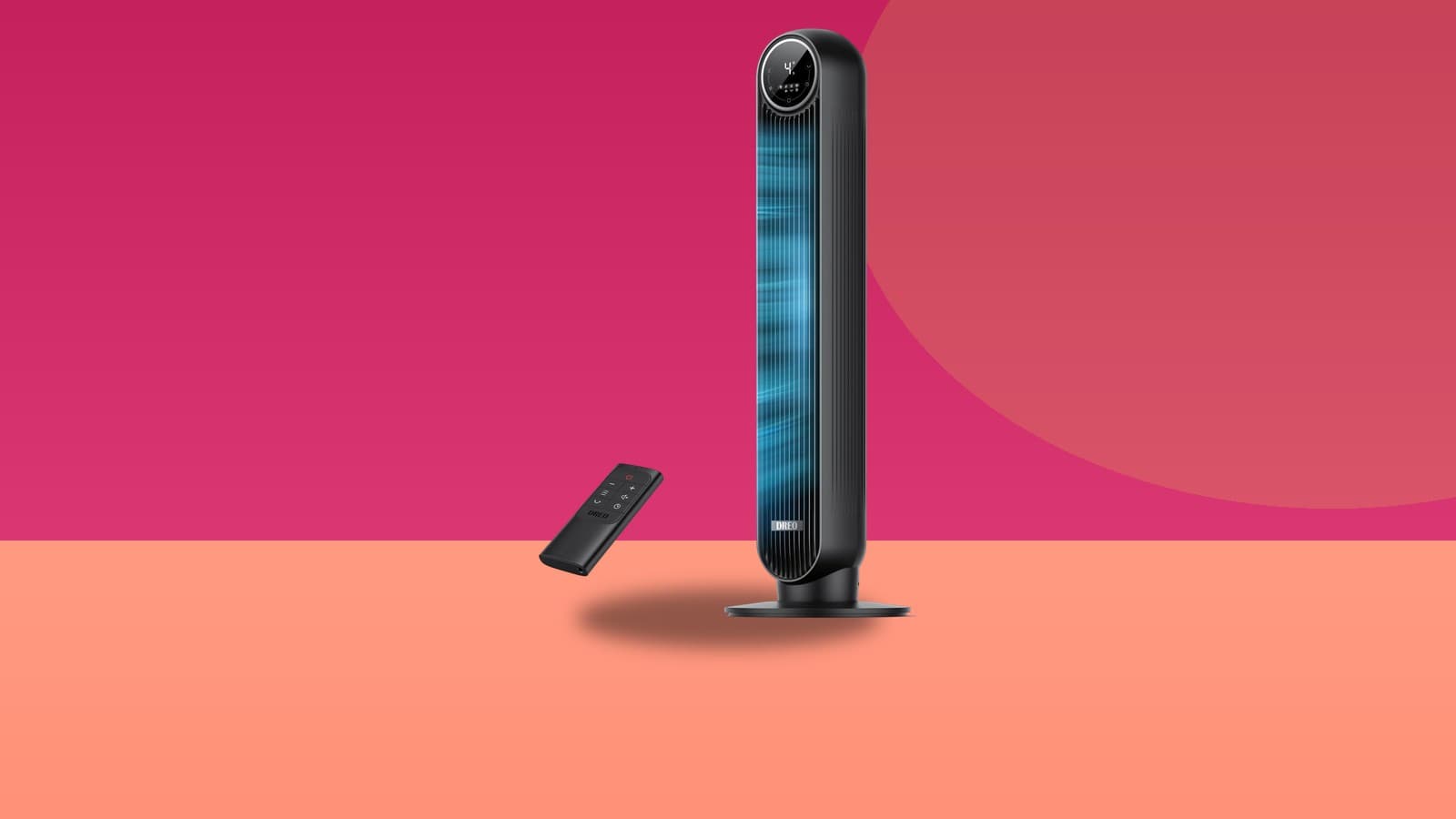
The DREO DR-HTF007 pairs a slim tower profile with a brushless DC motor rated to 28 ft/s.
Quick verdict: a value DC tower fan that nails the quiet brief
The DREO DR-HTF007 is the kind of product that makes the DC-motor upgrade easy to justify on a budget. The headline draws are a brushless motor that DREO rates at up to 28 ft/s of wind velocity, a quoted sleep-mode noise floor of roughly 20 dB, eight speed steps, and four operating modes, all wrapped in a bladeless tower body that is simple to wipe down (DREO product listing, Amazon).
It is best for light sleepers, small-to-medium bedrooms, and anyone who runs a fan most of the night and wants the lower running cost a DC motor delivers. It is not the fan to buy if you need wall-to-wall room coverage or extreme reach: its oscillation tops out at 90 degrees, which is narrower than the wide-sweep and pivoting designs at the premium end of the category. For the price, though, the trade is reasonable.
Why the DC motor matters more than the marketing suggests
The single most consequential thing about this fan is the motor, and it is also the spec most buyers gloss over. A brushless DC motor is not just a quieter version of the traditional AC motor in cheap tower fans; it changes the math on both noise and electricity.
On efficiency, the gap is large. Motor engineers put a DC fan at up to 70 percent less energy draw than an AC fan for the same output, with a frequently cited example showing a 25-watt DC fan matching the airflow of a 100-watt AC unit (Pelonis Technologies, AC fans vs DC fans). DREO's own engineering notes claim up to 40 percent energy savings versus similar AC models on specific units (DREO, DC motor advantages). The savings are most pronounced at low speed, exactly where a bedroom fan spends most of its life: the electronically commutated motors DC fans use scale their power draw down nearly in step with speed, while an AC motor wastes energy even at its lowest setting because it cannot throttle the same way (Pelonis Technologies).
That low-speed advantage is why DREO can advertise an eight-step speed range on this model rather than the three or four steps common on AC towers. Brushless DC control is granular, so you get finer command over the breeze instead of a jump from "barely on" to "too much."
What the noise rating really means
DREO quotes a sleep-mode figure of about 20 dB for this fan (Amazon listing). For context, that is below the level of a whispered conversation, and it is consistent with the broader behavior of brushless motors. The electronically commutated motors in DC fans are, in the words of one motor maker, "incredibly quiet" because they avoid the friction-based hum of older AC designs (Pelonis Technologies), which is why DC fans commonly run quiet enough for bedrooms and home offices.
A realistic expectation: the sub-20-dB claim applies to the lowest sleep setting. Push the fan toward its higher speeds for that 28 ft/s velocity and it will be audible, as any fan moving that much air must be. The value here is the floor, not the ceiling. If you want background air movement to fall asleep to, this fan disappears acoustically; if you want a strong cooling blast, expect to hear it.
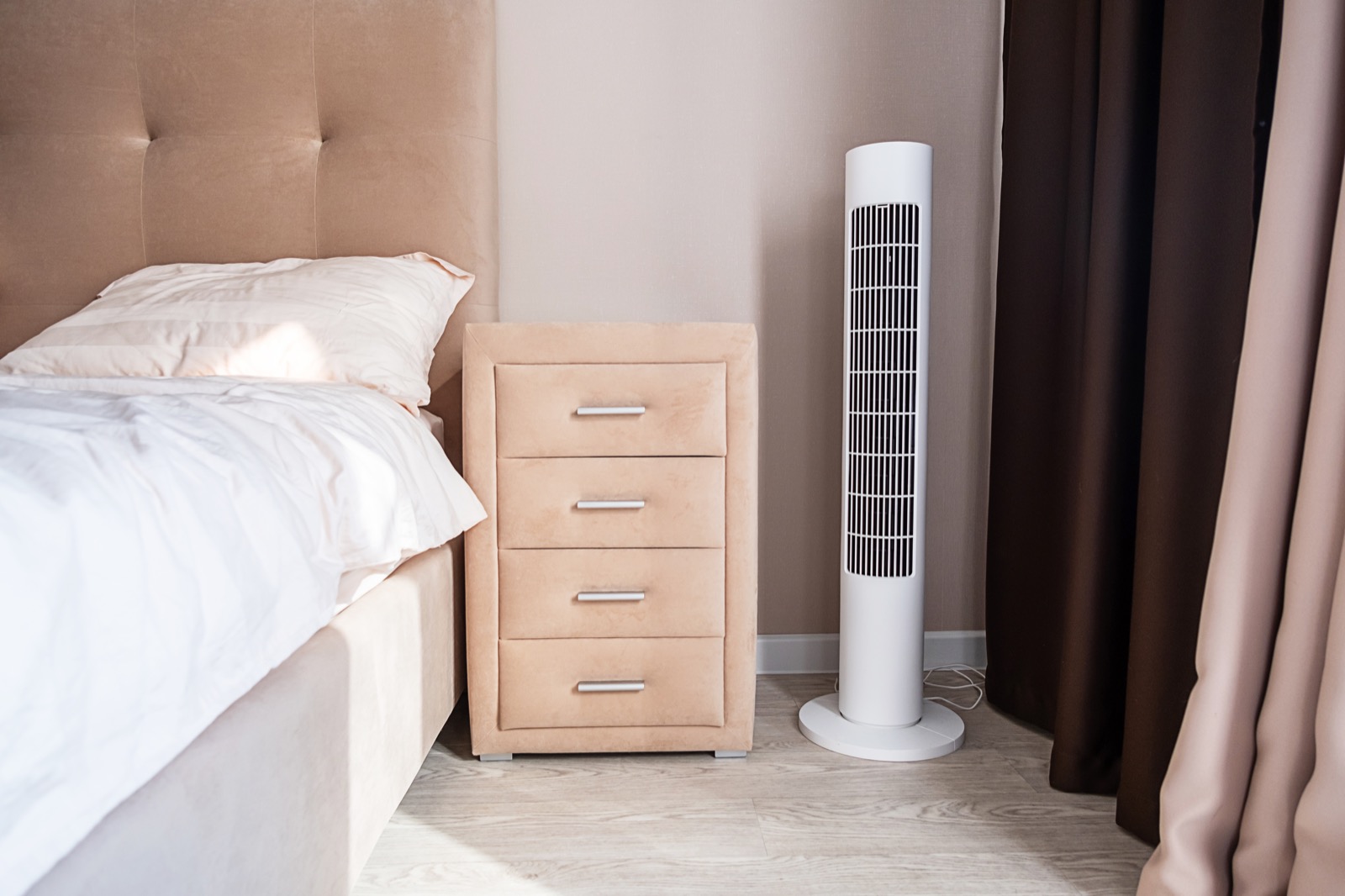
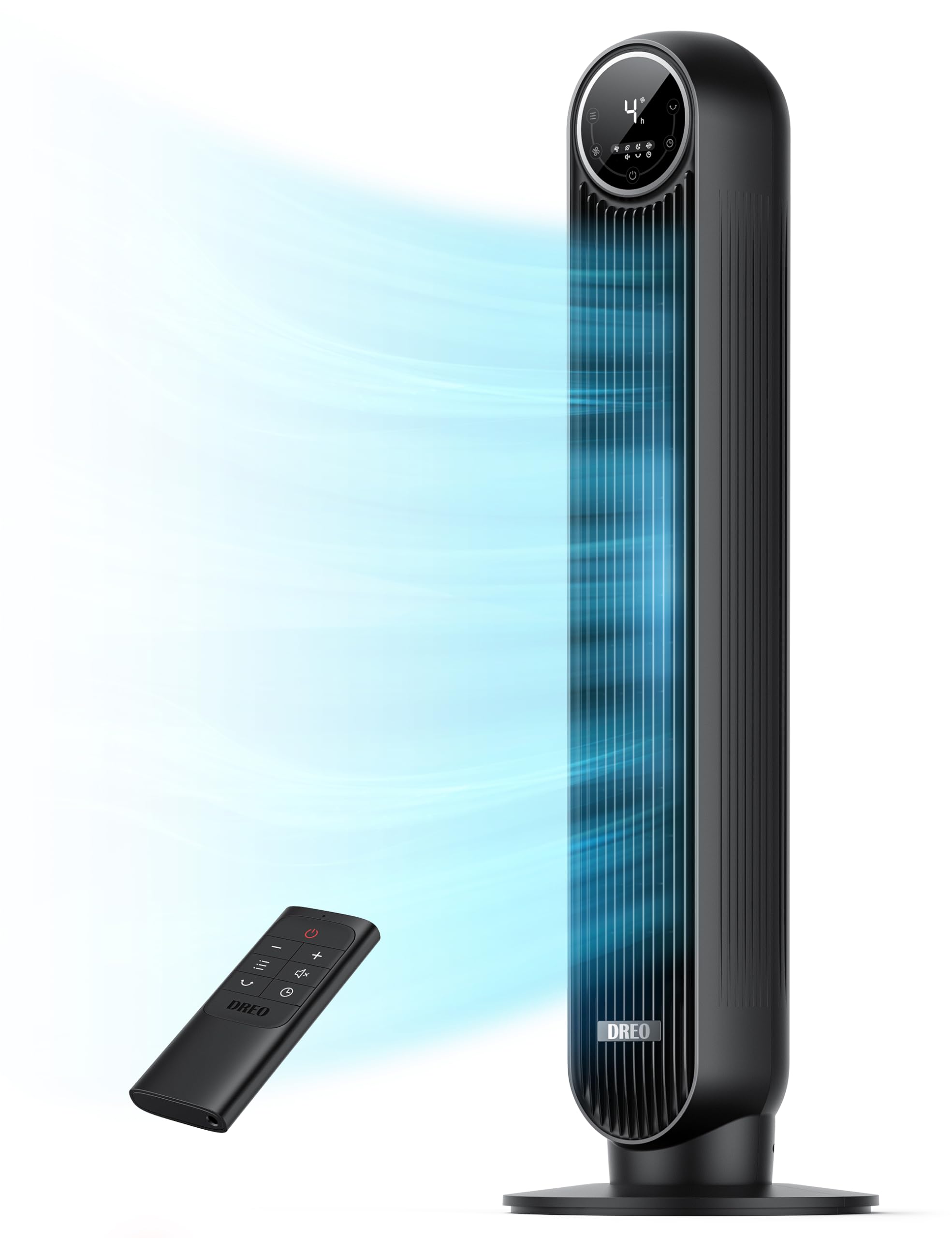
At its lowest sleep speed, a DC tower fan like the DREO is meant to fade into the background.
Airflow, oscillation, and the specs that define daily use
DREO rates the DR-HTF007 at up to 28 ft/s of wind velocity, which is genuinely high for a slim tower and puts it among the stronger units in DREO's lineup; the brand's other current towers land between roughly 25 and 28 ft/s (DREO tower fan guide). The bladeless tower form factor draws air through the column and projects it forward, and DREO pairs that with a 90-degree oscillation sweep to spread the breeze across a seating or sleeping area.
The control set is where this model earns its "smart-enough" keep without going full Wi-Fi. You get eight speeds, four modes (Normal, Natural, Sleep, and Auto), a multi-hour timer, an LED display, and a bundled remote (Amazon listing). Natural mode varies the airflow to mimic an outdoor breeze rather than a constant draft, and Sleep mode steps the speed and display brightness down over time. DREO's own manual material confirms timers across this fan family are adjustable in the 1-to-12-hour range (DREO tower fan review and manual).
One practical note for buyers comparing DREO listings: this model number has shipped under more than one spec sheet. The current Amazon listing for ASIN B09MKPDJRT advertises the "2026 upgraded" figures used throughout this review (up to 28 ft/s, ~20 dB, eight speeds), while DREO's own Nomad One page for the same DR-HTF007 quotes a more conservative 25 ft/s (and lists a 42-watt rated draw, ~20 dB, and 90-degree oscillation) (DREO Nomad One product page). The brand also sells several visually similar towers (36-inch models and various smart variants) whose specs differ again. If a specific airflow or noise number matters to you, confirm it against the exact listing you are buying rather than assuming every DR-HTF007 box is identical. DREO publishes the manufacturer specs on its Nomad One product page.
Setup, cleaning, and the bladeless payoff
The bladeless column design is not just an aesthetic choice. Without an exposed spinning blade behind a tight grille, there is far less surface for dust to cake onto, and DREO's towers in this class use a detachable grille for cleaning (DREO, DC motor advantages). For households with kids or pets, the lack of accessible blades is a safety bonus as well. Assembly is the usual tower-fan affair: attach the base, stand it up, plug in.
How it compares to the premium bladeless alternative
DREO's DC tower competes from below against flashier bladeless designs, and the clearest contrast in this category is the Shark TurboBlade, the cluster's flagship bladeless tower. The two fans tell very different value stories.
The Shark TurboBlade is the maximalist option: a 180-degree oscillation range, a telescoping neck that adjusts roughly from 31 to 38 inches, blades that pivot and twist to aim air in nearly any direction, and ten speeds backed by a 90-watt motor (Family Handyman, Shark TurboBlade review). Independent testing, however, found its real-world reach and noise to be less remarkable than the marketing implies, with airflow barely perceptible at 30 feet despite a headline "feel it from 80 feet" claim, and noise that climbs noticeably on higher settings (TechRadar, Shark TurboBlade review). It also costs multiples of the DREO's price.
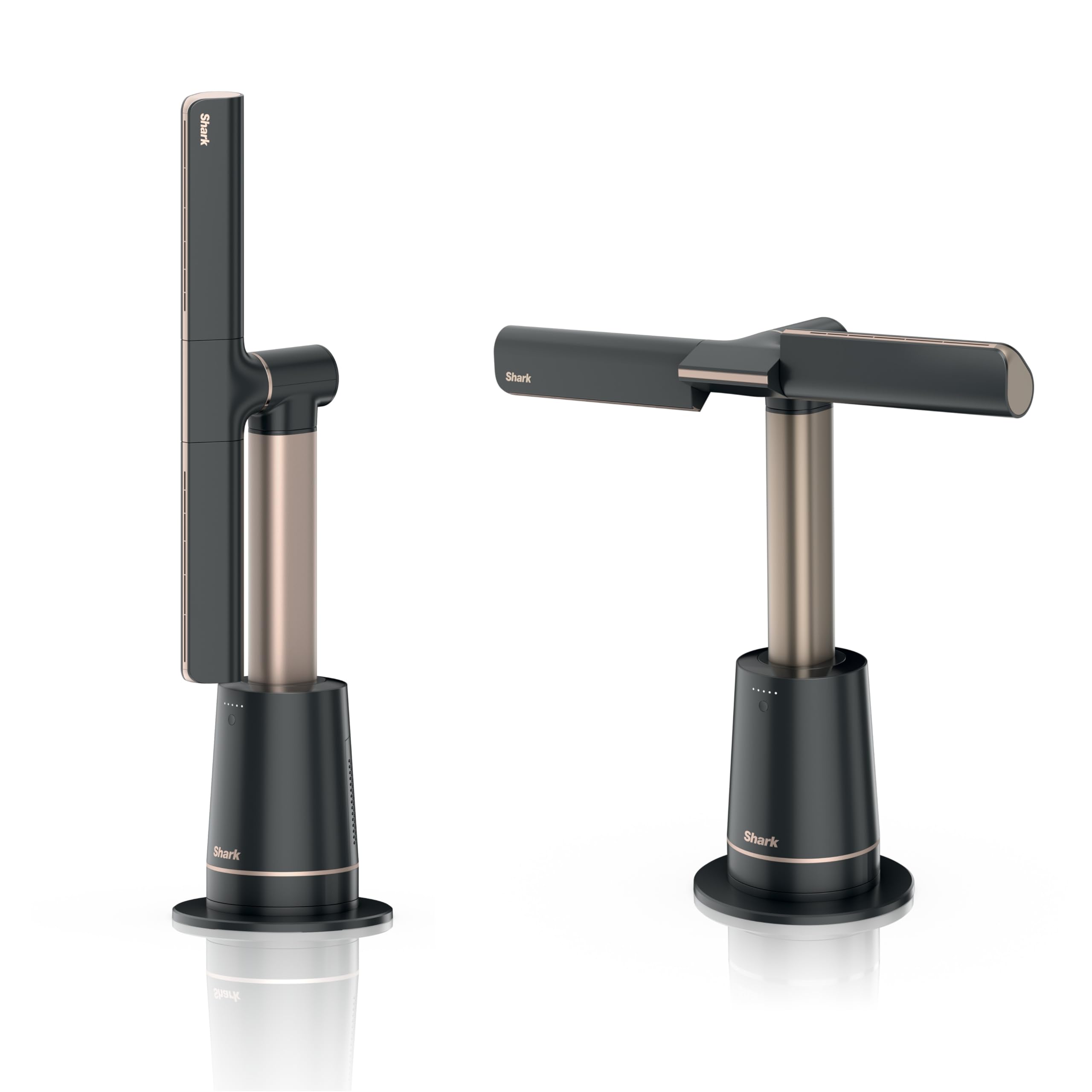
The pricier Shark TurboBlade adds 180-degree oscillation and a pivoting head, at several times the DREO's cost.
The DREO counters with focus. It does not pivot or telescope, and its sweep is the narrower 90 degrees, but it delivers a comparable top velocity, a quieter quoted sleep floor, and the efficient DC motor at a fraction of the outlay. If your need is a quiet, efficient bedroom fan, the DREO is the rational pick; if you want a directional, sculptural centerpiece that can throw air across an open-plan room and you are willing to pay for it, the TurboBlade makes its case. For a fuller side-by-side of bladeless and DC towers, see our best bladeless and DC tower fans guide, and if you are still deciding which features matter, our walkthrough on how to choose a tower fan covers the trade-offs in plain terms.
Price, value, and who should buy it
As observed in June 2026, the DREO DR-HTF007 listed at about $69.96, down from a $79.99 reference price (Amazon listing; prices change frequently). At that level, the DC motor effectively pays a recurring dividend. The manufacturer-side math is stark: one fan engineer estimates roughly $3 of electricity to run a DC fan where an AC fan needs about $10 for the same airflow (Pelonis Technologies). Translated to a typical twelve-hour-a-day bedroom routine at average U.S. power rates, that is on the order of $50 a year saved, enough to cover a DC fan's modest price premium within a season or two of regular use.
Buy it if you want a quiet, low-running-cost tower for a bedroom or office, value fine speed control, and do not need wide-area or directional coverage. Skip it if your priority is sweeping a large open room, in which case a wider-oscillation or pivoting design is the better spend. For most people shopping a sub-$80 tower fan, the DREO's combination of a real brushless DC motor, a genuinely quiet sleep mode, and a sensible control set is a strong, honest value.
Where to Buy
Specifications
- Model
- DR-HTF007 (ASIN B09MKPDJRT)
- Motor type
- Brushless DC motor
- Max wind velocity
- Up to 28 ft/s (manufacturer-rated)
- Noise level (sleep mode)
- Around 20 dB
- Speeds / Modes
- 8 speeds, 4 modes (Normal, Natural, Sleep, Auto)
- Oscillation
- 90 degrees
- Timer
- Adjustable (1 to 12 hours across the family)
- Controls
- Remote control and LED display included
- Design
- Bladeless tower, detachable grille for cleaning
- Observed price (June 2026)
- Approx. $69.96 (from $79.99 reference)
Related Posts