
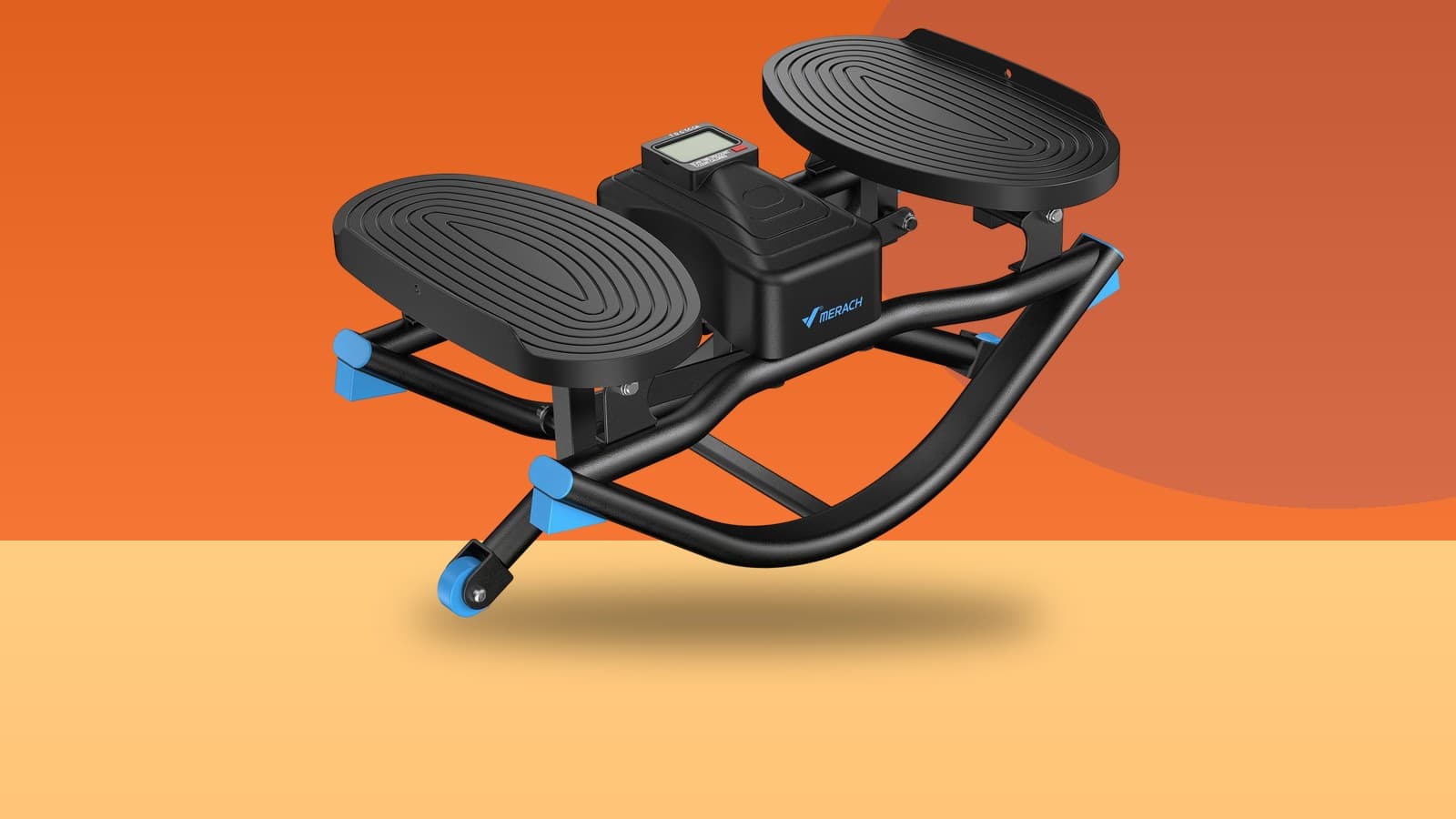
What the Merach 3D Motion Stair Stepper Actually Is
The Merach 3D Motion Stair Stepper (model MR-2511B1-US) is a compact, motor-free cardio machine built around an unusual idea: instead of pushing two pedals straight up and down like a traditional mini stepper, it rocks side to side in a curved, three-dimensional arc. Merach calls this its "3D motion," and the practical effect is that the platform behaves a little like a low, wide balance board that you step on. According to Merach's official product page, the machine requires no electricity at all, relies on your own body weight for resistance, and ships with a pair of resistance bands so you can pull the upper body into the workout.
This is a research-based review. We did not put the unit on our own floor and step on it for a week, so you will not find made-up "after 30 days of testing" claims here. Instead, we cross-checked Merach's published specifications against retailer listings and independent reporting on stair-stepping as an exercise category, and we are clear throughout about which is which. That methodology matters for a sub-$100 machine where marketing photos do a lot of heavy lifting.
If you are still deciding between a stepper, a rower, a treadmill, and a walking pad, it is worth reading this alongside our guide to the best compact home cardio machines, which frames where a rocking stepper fits in the broader category.
Where to Buy
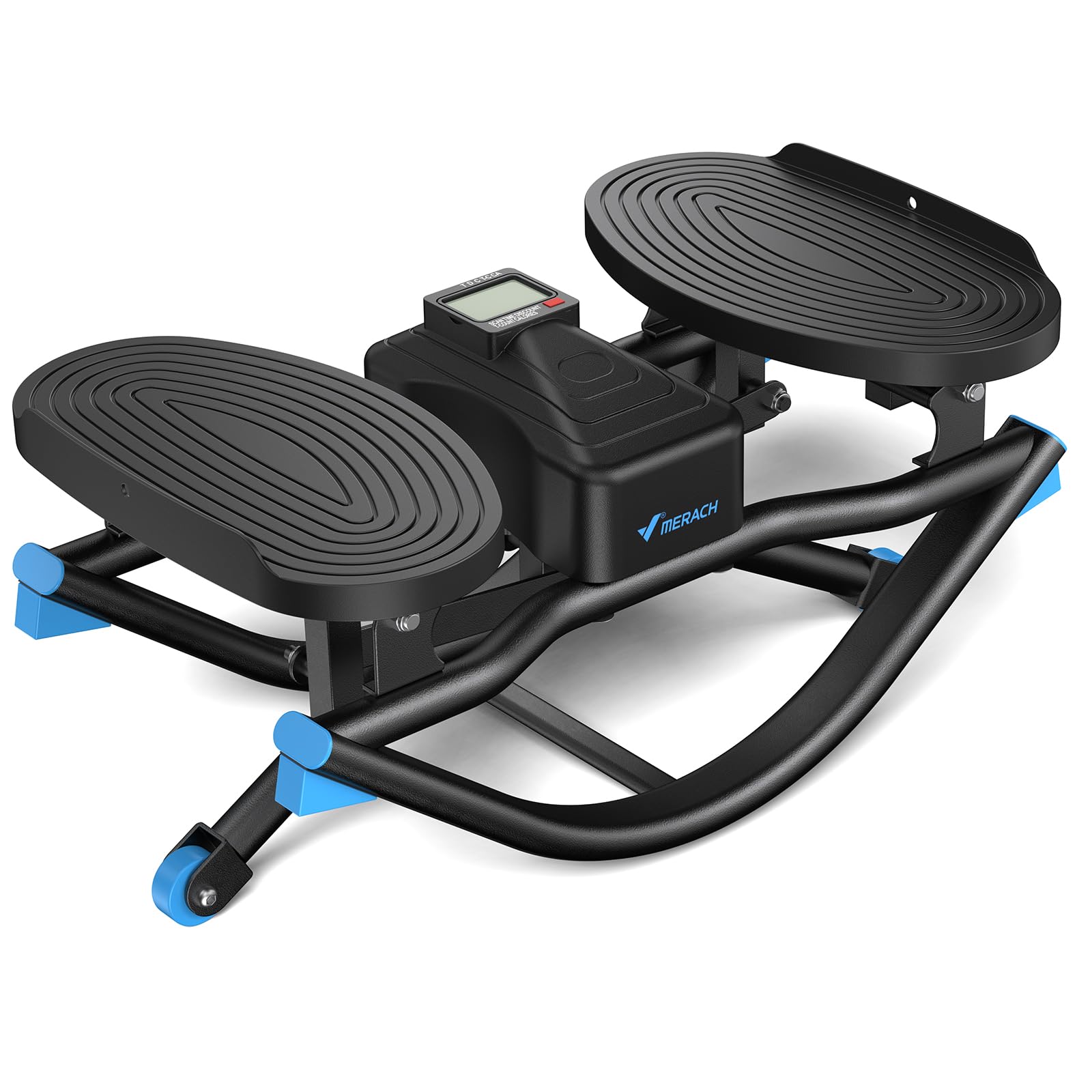
The Merach 3D Motion Stair Stepper uses a side-to-side rocking motion rather than the straight up-and-down action of a conventional mini stepper.
Merach Stair Stepper Review: Specs and First Impressions
The headline numbers are genuinely friendly for a small home. Per the Best Buy product listing, the machine is built from commercial-grade steel, supports users up to 330 pounds, and comes in black or white. Retailer spec sheets list a roughly 31" long by 13" wide by 7" tall footprint and a product weight near 10.4 pounds, which is light enough to carry one-handed and slide under a bed or behind a couch between sessions.
That combination is the real selling point. A 330-pound load rating is high for a machine this light, and it signals that the steel frame is doing serious work even though the unit itself barely registers on a bathroom scale. For renters and anyone in a studio apartment, a device that disappears into a closet matters as much as anything it does to your heart rate.
The 3D Side-to-Side Motion, Explained Without the Hype
Conventional mini steppers move your feet up and down in a near-vertical line, which mainly loads the quads and calves. Merach's design swings the pedals through a curved, side-to-side path. The manufacturer says this engages the hips, thighs, glutes, and core because you are constantly making small balance corrections, similar to the demands of a wobble board. There is reasonable logic to that claim: lateral movement and balance work do recruit stabilizer muscles that a straight-line stepper tends to skip.
Where we would push back on the marketing is the implication that this turns a stepper into a true "full body" machine. The legs and core still do the overwhelming majority of the work. The resistance bands add an upper-body component, but they are elastic bands, not a cable stack, so treat the upper-body claim as "light toning and activation," not strength training.
Dual Modes: Gliding vs. Stepping
Merach describes two ways to use the platform. In gliding mode the motion is smoother and longer, closer to the rhythm of cross-country skiing, which favors a steadier cardio pace. In stepping mode the movement is shorter and more deliberate, putting more emphasis on lower-body muscle engagement. In practice these are not separate settings you toggle; they are two styles of using the same rocking platform, and which one you get depends on how you stand and how much you lean into each rep.
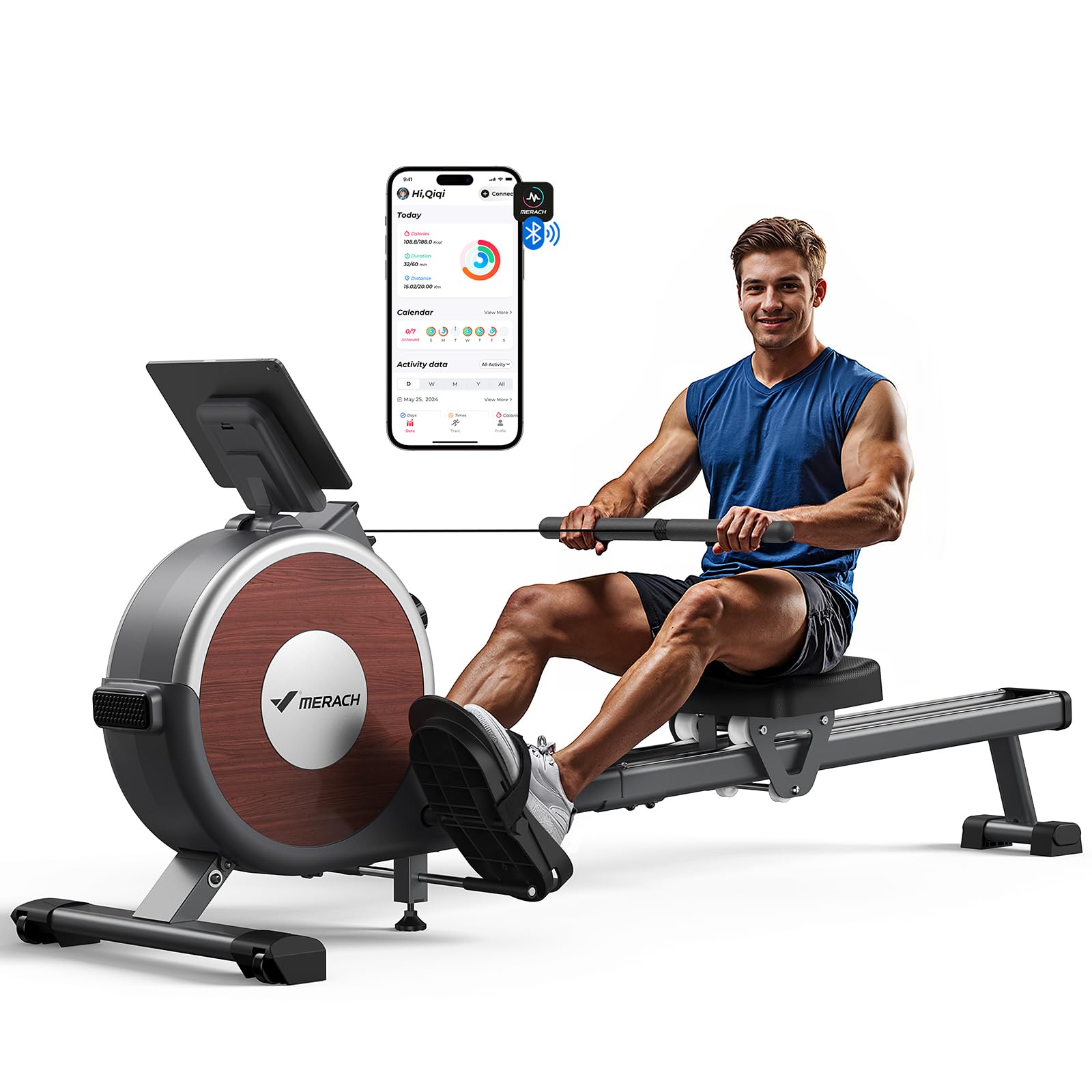
If you want continuous, full-body low-impact cardio rather than a stepping motion, a compact rower is the natural alternative — see our companion review below.
Merach Stair Stepper Benefits for Joints and Cardio
The strongest case for any stepper is low-impact cardio. Because your feet never leave the pedals and there is no landing shock, a stepper puts far less stress on the ankles, knees, and hips than running or jumping does, while still elevating your heart rate. That makes it a sensible pick for people managing joint sensitivity, returning from injury, or simply not interested in pounding a treadmill.
On the cardio-fitness side, the numbers are encouraging but should be kept in perspective. The U.S. Centers for Disease Control and Prevention recommends that adults get at least 150 minutes of moderate-intensity aerobic activity per week, plus muscle-strengthening work on two or more days. A machine that sits in your living room and asks nothing more than that you step onto it removes a lot of the friction that keeps people from hitting that target. The convenience is the benefit; consistency beats intensity for most people most of the time.
As for calorie burn, manage your expectations and anchor to real data. The widely cited Harvard Health Publishing calorie chart puts a 30-minute session on a general step machine at roughly 180 calories for a 125-pound person, 216 for a 155-pound person, and 252 for a 185-pound person. A mini rocking stepper like this one is lighter-duty than a full gym StairMaster, so realistic burn on the low end of that range is a fair planning assumption. It is a steady-contribution machine, not a crash-program machine.
Who It Is Best For
This stepper makes the most sense for a fairly specific person: someone in a small space who wants frequent, low-pressure, joint-friendly cardio and is happy to trade intensity for convenience. Desk workers who want to move during calls, older adults easing into activity, and anyone rebuilding a habit after time off are the sweet spot. Athletes chasing a hard conditioning ceiling will outgrow it quickly.
Merach Stair Stepper vs. a Vertical Climber
Searches for a "Merach vertical climber review" often land on this product because Merach sells several climbing and stepping machines and the catalog blurs together. They are not the same thing. A vertical climber has tall handlebars and moves your arms and legs in a coordinated up-and-down climb, which raises the heart rate faster and brings the upper body in more directly. This 3D rocking stepper sits low to the floor, has no fixed handlebars, and emphasizes lateral balance and a gentler, steadier rhythm.
If your priority is the hardest cardio hit in the smallest time, a vertical climber is the more aggressive tool. If your priority is something quiet, low-impact, and easy to stand on while you scroll your phone or take a call, the rocking stepper is the friendlier choice. Neither is "better" in the abstract; they answer different questions.
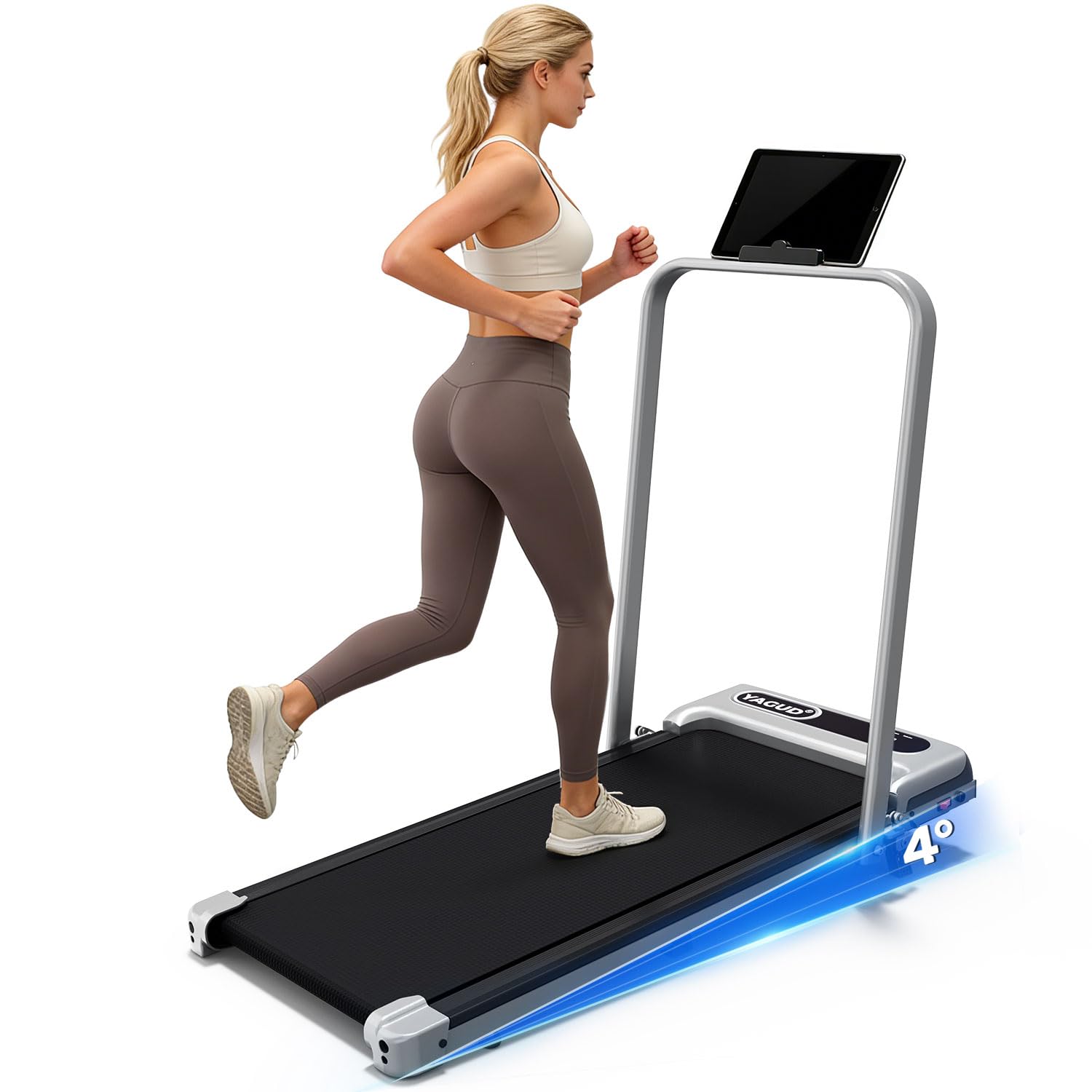
A walking pad is the other popular small-footprint pick for apartments — useful if you'd rather walk than step.
Build Quality, Noise, and Practical Ownership
The frame is commercial-grade steel with non-slip pedals, which is the right specification for a 330-pound rating and explains why a 10-pound machine can feel planted under load. Merach also markets the broader stepper line as quiet, citing operation under 25 dB on its ski-style trainers; because this unit is motor-free and pedal-driven, the main noise you will produce is your own footfalls and the soft mechanical resistance, not a humming motor. That is a meaningful advantage in an apartment with thin walls or a downstairs neighbor.
Tracking is handled by a small LCD monitor that displays time, step count, and estimated calories. Treat these readouts the way you would any consumer fitness display: useful for spotting trends and staying motivated, not lab-accurate. The calorie figure in particular is an estimate, so lean on the Harvard ranges above for real planning.
On the ownership side, the machine works essentially out of the box with minimal assembly, and Merach lists a two-year warranty on its official product page (some retailer listings reference a shorter term, so confirm coverage with the seller you actually buy from). Pricing on this category swings hard with promotions, and the listing we tracked was discounted steeply at the time of writing; verify the current price and any markdown before you buy, because the "57% off" style framing is only meaningful against a verified baseline.
The Honest Limitations
A few caveats keep this in perspective. The resistance comes from your body weight plus elastic bands, so there is no dialed-in resistance level the way a magnetic rower or a proper climber offers; once you are fit, the ceiling arrives. The lateral motion has a short learning curve and may feel awkward for the first few sessions while your balance adapts. And because it is low to the ground with no handlebars, anyone who needs something to hold for stability should consider that carefully before choosing it over a handled climber.
The Verdict
As a compact, quiet, joint-friendly way to add movement to a small home, the Merach 3D Motion Stair Stepper is a sensible, low-risk buy — especially when it is on one of its frequent deep discounts. Its strengths are exactly the things that get people to actually exercise: it is light, it stores anywhere, it makes almost no noise, and it asks very little of you to get started. Its weaknesses are the ceiling on intensity and the slightly oversold "full body" framing.
Buy it if you want frequent, gentle, low-impact cardio and value convenience over maximum burn. Skip it if you are chasing serious conditioning, want adjustable resistance, or need stabilizing handlebars. If you land in that second camp, a compact rower covers continuous full-body low-impact work better — our Merach magnetic rowing machine review walks through that trade-off in detail.
Where to Buy
Specifications
- Model
- MR-2511B1-US
- Weight capacity
- 330 lbs
- Product weight
- ~10.4 lbs
- Footprint (approx.)
- 31" L x 13" W x 7" H
- Resistance
- Body weight + included resistance bands
- Monitor
- LCD: time, steps, calories
- Frame / pedals
- Commercial-grade steel, non-slip pedals
- Power
- None required (motor-free)
- Colors
- Black, White
- Warranty
- 2-year (per manufacturer; confirm with retailer)
Related Posts