MERACH Magnetic Rowing Machine Review (Q1S): Is It Worth It?
 Abdulwahab Suleiman·June 16, 2026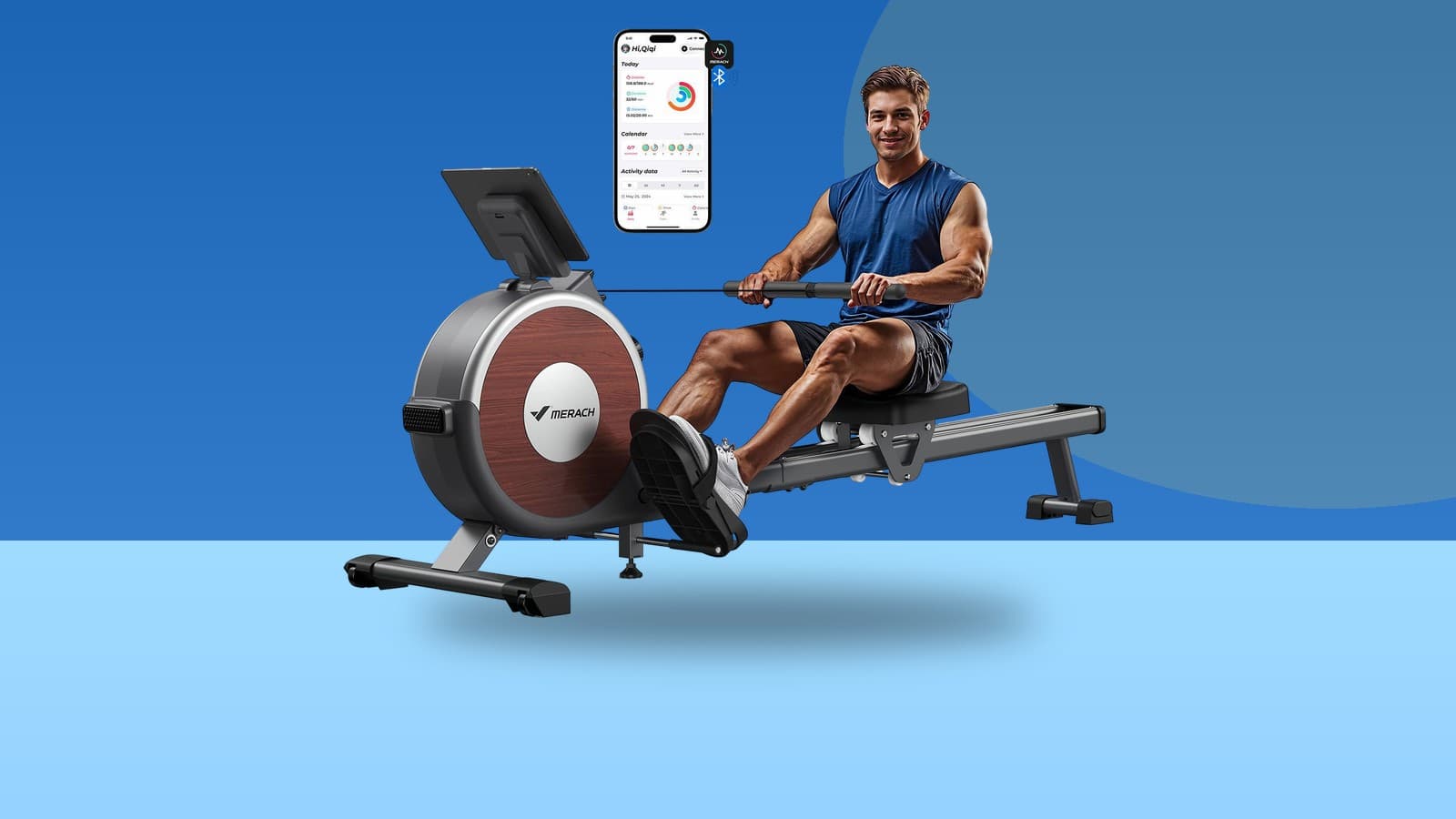
MERACH Magnetic Rowing Machine Review: The Q1S, In Plain English
Rowers have quietly become the default cardio machine for people who do not have a spare room to turn into a gym. They fold up, they are gentle on the knees, and a single stroke works most of your body at once. The MERACH magnetic rowing machine sitting at the center of this review, the model that ships under ASIN B0B2P23DBS, is the brand's Q1S dual-rail rower: 16 levels of magnetic resistance, a 350-pound weight capacity, and an app connection, currently listed around $189.98 (down from $259.99, roughly 27% off as of late May 2026; check the live price before buying).
This is a research-based review. We did not put the Q1S through a hands-on testing protocol in our own space. Instead, we synthesized MERACH's published specifications with independent reporting from home-gym specialists like Garage Gym Reviews and health guidance from Healthline. Where a number appears below, it is anchored to one of those sources, and where a trade-off exists, we say so plainly.
Where to Buy
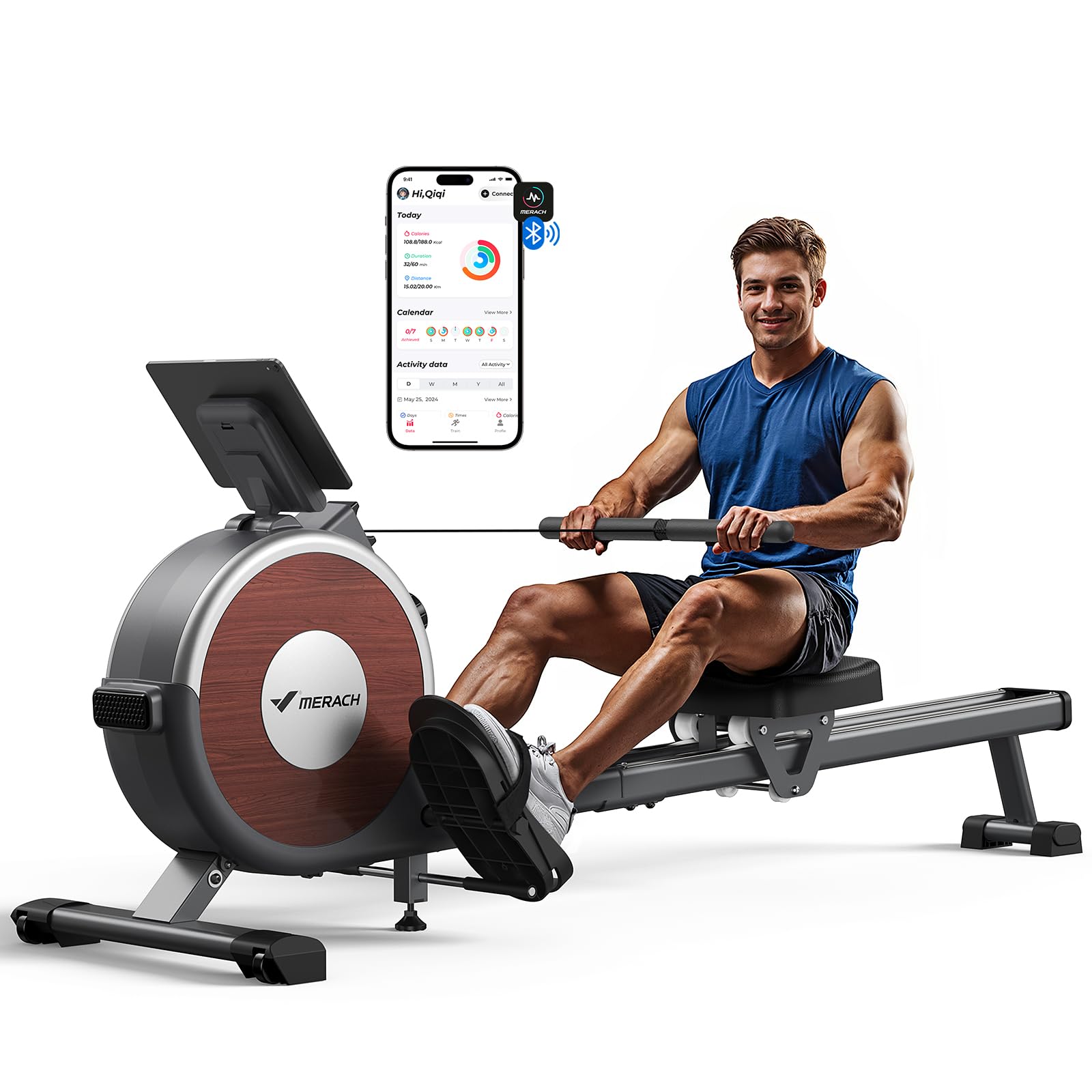
The MERACH Q1S keeps a small footprint and stands upright for storage between sessions.
Who this rower is actually for
The Q1S is built for the home exerciser who wants quiet, low-impact cardio without committing to a $900-plus commercial-grade machine. If you live in an apartment, share walls with neighbors, or simply do not want a roaring fan flywheel every morning, a magnetic rower is the category to shop in, and the Q1S is one of the more affordable entries in it.
It is less suited to competitive rowers chasing a specific erg split or CrossFit-style intervals that demand instant, unlimited resistance. As we will cover below, magnetic resistance behaves differently from the air resistance found on a Concept2, and that difference matters for some training styles.
MERACH Q1S magnetic rower: the specs that matter
Before the opinions, here are the grounded numbers. Every figure here comes from MERACH's official Q1S product page unless noted otherwise.
Resistance and the flywheel
The Q1S uses electromagnetic resistance with 16 levels, topping out at a peak resistance MERACH rates at around 35 kg. Magnets sit near a metal flywheel and never physically touch it, which is precisely why magnetic rowers are the quietest type on the market. As Garage Gym Reviews puts it, "many magnetic rowers today, especially the high-end, high-tech models, have near-silent flywheels" (Garage Gym Reviews).
The practical upshot: you set a level, and that level stays put regardless of how hard you pull, which makes progressive overload easy to track. The catch on this particular Q1S variant is that resistance is adjusted by a manual dial rather than on the fly through the app, so you generally pause briefly to change levels. That distinction becomes important when we compare it to the Q1S Pro further down.
Footprint, rails, and storage
This is where the Q1S earns its place in a compact-cardio lineup. In use, the machine measures roughly 1642 x 476 x 643 mm and stands upright for storage at a footprint of about 1.6 x 2.1 feet. It weighs around 20.9 kg (net), light enough that transport wheels make moving it between a closet and a workout spot realistic for most adults.
The dual slide rail is a genuine design choice rather than marketing. Two rails distribute the seat's load more evenly than a single center beam, which improves lateral stability mid-stroke. The track length runs about 1140 mm with an inner gap that accommodates exercisers up to 6 feet 7 inches tall, so taller users are not boxed out the way they are on some budget rowers.
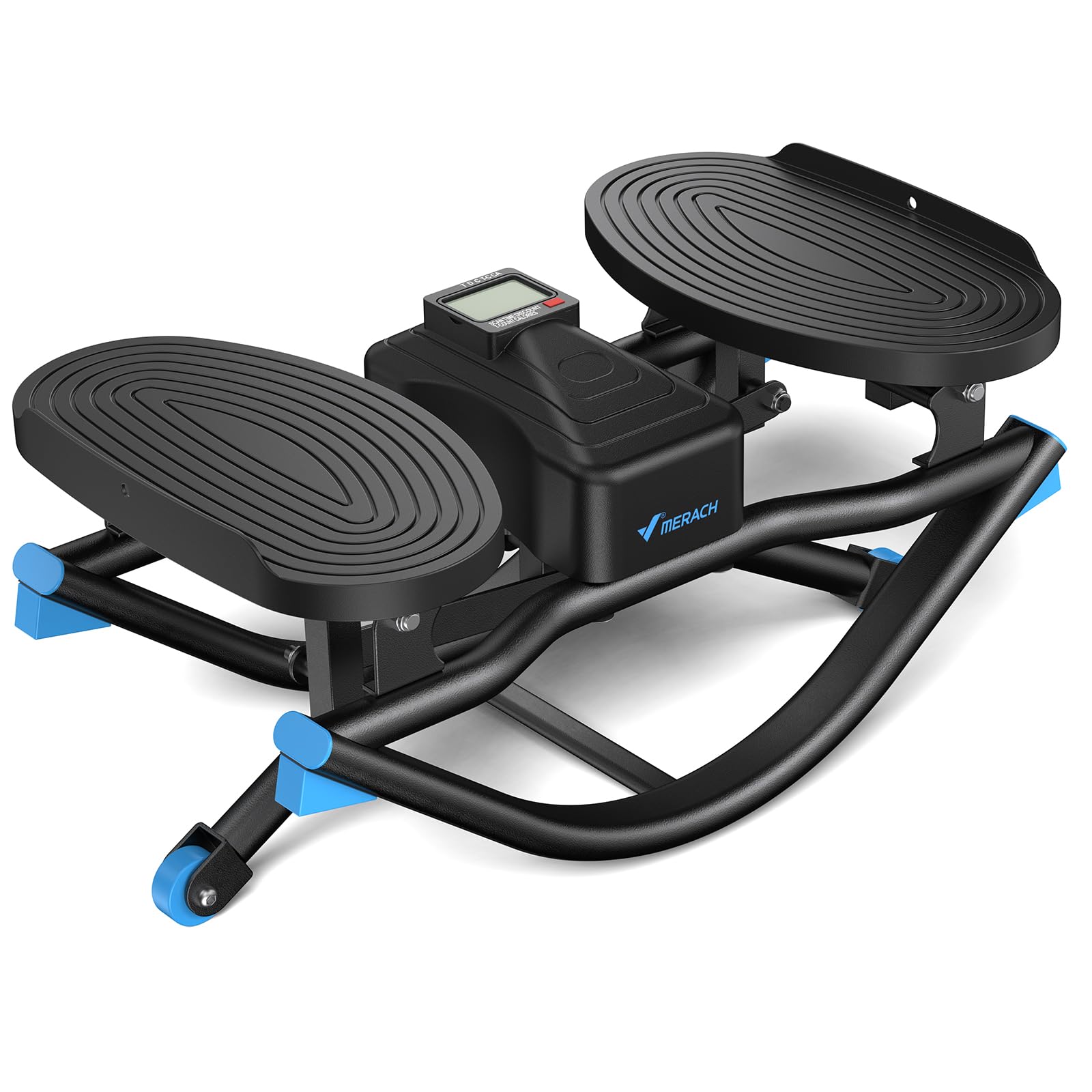
If a rower's slide-and-pull motion is not for you, a compact stepper is the other low-impact option in this category.
Capacity, monitor, and the app
The Q1S supports a 350-pound (158 kg) max user weight, which is generous for the price tier and comfortably above the 300-pound ceiling common on entry rowers. A multi-function monitor tracks time, stroke count, distance, calories, strokes per minute, and watts, and the machine pairs over Bluetooth with the free MERACH app and with Kinomap for guided, scenic rowing sessions.
Assembly is rated at under 30 minutes, and most of the heavy parts arrive pre-attached. None of this is exotic, but it is the right feature set for the money.
Here is the short version, with sourcing, for anyone scanning:
- 16-level electromagnetic resistance, ~35 kg peak (MERACH)
- 350 lb / 158 kg weight capacity (MERACH)
- ~20.9 kg machine weight with transport wheels (MERACH)
- Dual steel/aluminum slide rails, ~1140 mm track (MERACH)
- Bluetooth monitor + MERACH app + Kinomap (MERACH)
- Fits users up to 6 feet 7 inches (MERACH)
Merach rowing machine vs Concept 2: an honest comparison
This is the question most shoppers actually have, so let us be direct. The Concept2 RowErg is the machine product testers most often crown as the best rower overall, and it uses air resistance rather than magnetic (Garage Gym Reviews). The two are not the same tool wearing different prices.
Where the Q1S wins
Quietness is the clearest win. Air rowers generate noise from a spinning fan that forces air with every pull. The Q1S, with magnets that never touch the flywheel, runs far closer to silent, which is exactly what you want at 6 a.m. in an apartment. Price is the other obvious gap: a Concept2 typically lands several hundred dollars higher than the Q1S's sub-$200 deal pricing, and numerous brands "have entered the market with almost identical performance to Concept2 at a significantly lower price" (Garage Gym Reviews).
Where the Concept2 wins
Resistance feel is the honest trade. Air resistance is speed-dependent and effectively unlimited; you can never out-pull it, and it mimics the feel of rowing on water. Magnetic resistance is capped at its top level, so a very strong rower can reach the ceiling of the Q1S's 16 levels in a way they never will on a Concept2. Air rowers are also mechanically simpler, while magnetic machines have "more opportunity for mishaps" because of additional components (Garage Gym Reviews).
The verdict is not "one is better." It is that the Q1S is the smarter buy for a quiet, budget-conscious home setup, and a Concept2 is the better buy for a serious or competitive rower who wants water-like feel and bulletproof simplicity. If you are weighing the broader category before committing, our roundup of the best compact home cardio machines places the rower against treadmills, walking pads, and steppers.
Merach Q1S Pro and R15: which MERACH should you buy?
MERACH sells several rowers, and the naming is genuinely confusing, so here is the map.
Q1S vs Q1S Pro
The standard Q1S requires you to stop rowing to change resistance, while the Q1S Pro lets you adjust seamlessly on the fly through the app, which makes interval and guided HIIT sessions much smoother (MERACH). Both share the 16-level resistance and dual-rail platform. There is also a power-source split across the family: the manual-resistance Q1S runs on batteries, the auto-electromagnetic version must be plugged in, and the Q1S Pro 2.0 uses an ECO self-powered system that needs no outlet (MERACH).
If you do mostly steady-state rowing, the standard Q1S reviewed here is plenty. If your training lives in interval changes where pausing to turn a dial breaks your rhythm, the Pro is worth the step up.
Where the R15 fits
The R15 is positioned as the more compact, space-saving member of the lineup, prioritizing convenience and a smaller stored footprint, whereas the Q1S series leans on its dual-rail structure for balance and stability in shared households (MERACH). All three use magnetic resistance and run nearly silent, so the choice comes down to footprint versus rowing stability rather than fundamentally different workouts.
Is a rowing machine even the right cardio for you?
A rower only earns its floor space if you will use it, so it helps to know what it actually does. Rowing is a genuine full-body movement: the stroke is roughly 65 to 75% leg work and 25 to 35% upper body, engaging quads, calves, glutes, core, back, and arms in a single motion (Healthline).
It is also efficient cardio. Citing Harvard Health data, Healthline notes a 155-pound person can burn about 369 calories in 30 minutes of vigorous rowing, with a 185-pound person burning closer to 440 (Healthline). Critically for anyone with cranky joints, rowing is low-impact; a 2014 study cited by Healthline found joint rotations in the elbow, shoulder, lumbar, and knee improved by 30% over eight weeks, which is part of why it suits people with early-stage joint concerns (Healthline).
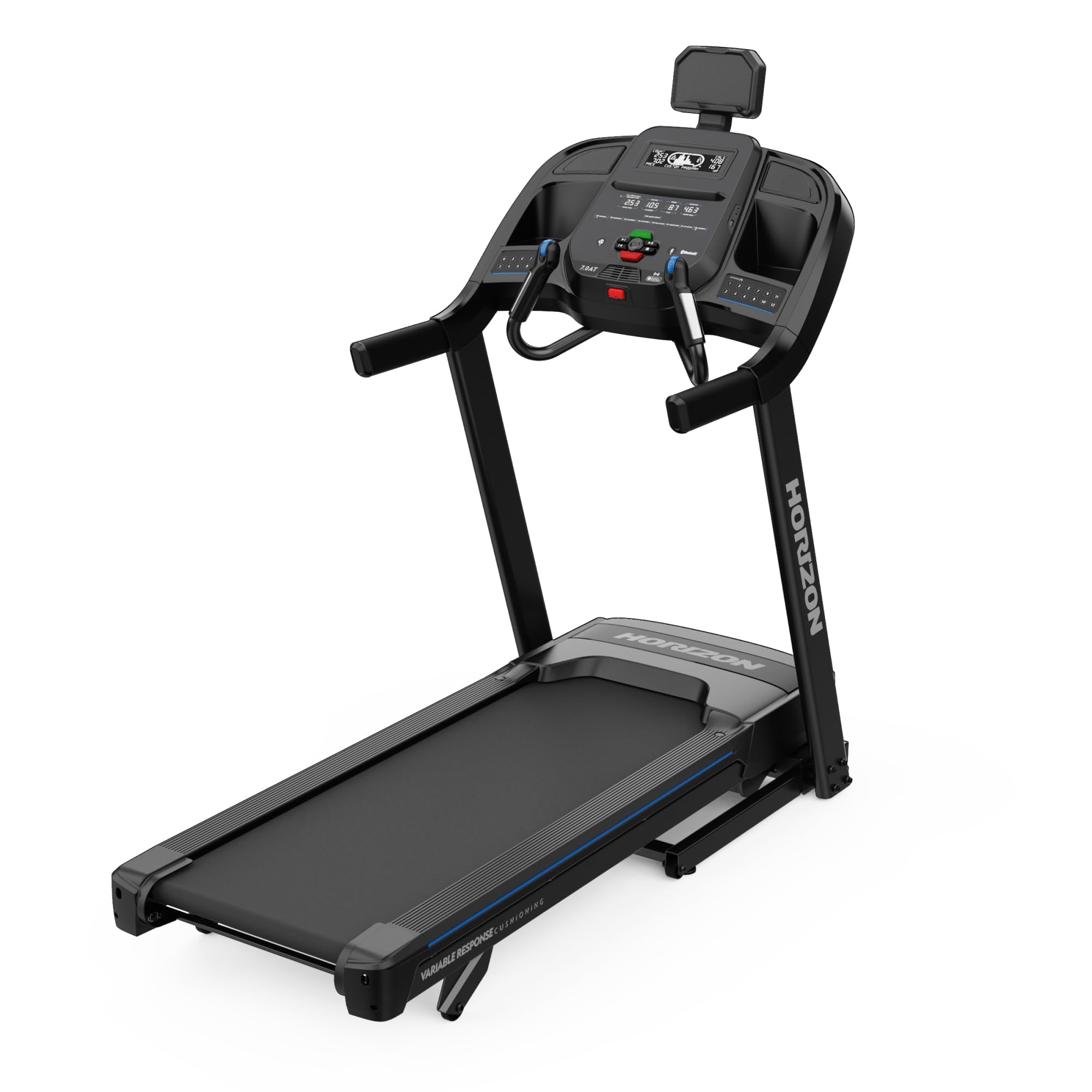
Prefer walking or running to rowing? A compact treadmill covers that base in the same small-space category.
If a sliding, pulling motion does not appeal to you, the low-impact alternative in this category is a stepper. Our Merach 3D motion stair stepper review covers a machine with the same gentle-on-joints philosophy but a stair-climb pattern instead.
The verdict on the MERACH Q1S magnetic rowing machine
For around $190 on its current deal pricing, the MERACH Q1S is a well-judged budget rower. You get quiet magnetic resistance with 16 trackable levels, a stable dual-rail platform, a class-above 350-pound capacity, and app connectivity through MERACH and Kinomap, all in a frame that stores upright in roughly 1.6 by 2.1 feet. The honest caveats are real but narrow: resistance tops out where an air rower would not, you pause to change levels on this variant, and the extra magnetic components add complexity an air rower avoids.
If you are a competitive rower or want a water-like, unlimited-resistance feel, save for a Concept2. For nearly everyone else furnishing a small home gym, especially in an apartment where noise matters, the Q1S delivers most of what a premium rower does at a fraction of the cost.
Where to Buy
Specifications
- Resistance type
- Electromagnetic (magnetic), 16 levels, ~35 kg peak
- Weight capacity
- 350 lb / 158 kg
- Machine weight
- ~20.9 kg net (with transport wheels)
- Rail system
- Dual slide rails, ~1140 mm track length
- Max user height
- Up to 6 ft 7 in
- Connectivity
- Bluetooth; MERACH app + Kinomap
- Storage footprint
- ~1.6 x 2.1 ft (stored upright)
- Assembly time
- Under 30 minutes (rated)
Related Posts