miyozi AirTag RFID Wallet Review: Tracking Meets Slim Carry
 Abdulwahab Suleiman·June 16, 2026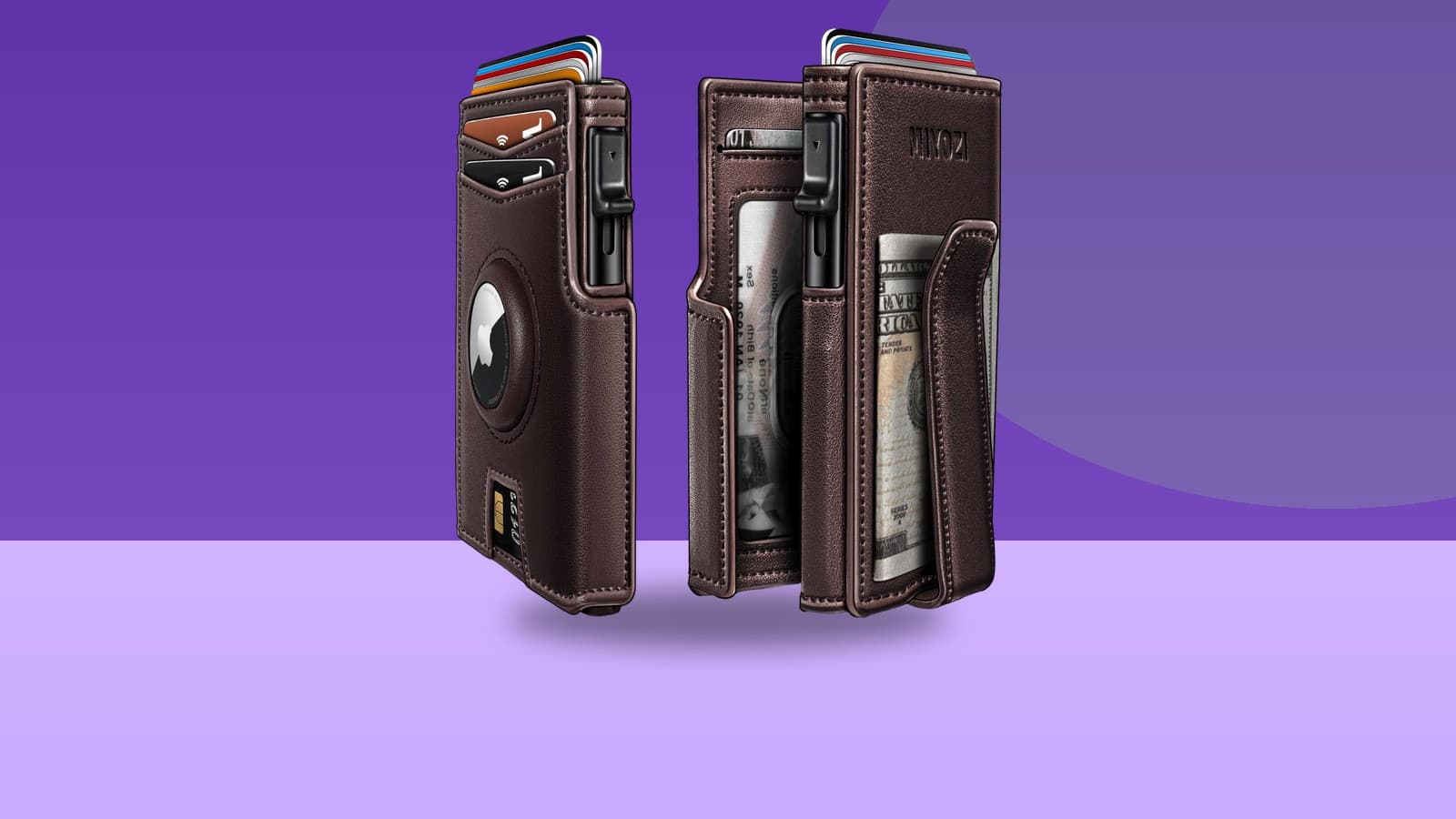
The miyozi AirTag wallet, in one sentence
The miyozi AirTag wallet is a metal-cased, pop-up card holder that bundles three things minimalist-wallet shoppers usually have to chase separately: a slot sized for an Apple AirTag, RFID-blocking card protection, and an integrated money clip. On paper that combination is the whole pitch, and it is also the reason this wallet shows up so often in "best AirTag wallet" searches. The harder question is whether stacking all three features into one slim case actually works in a front pocket, or whether you end up with a brick that defeats the point of going minimalist.
A note on how we evaluate this: this is a research-based review, and its strength is breadth. We cross-referenced the manufacturer's own published specifications against independent reporting on slim wallets, AirTag hardware, and how RFID and Bluetooth actually behave, then weighed those three evidence layers against each other to surface the design trade-offs the facts imply. That method reflects how the wallet performs across many owners rather than a single sample. Where a number comes from miyozi's listing, we say so; where it comes from a third party, we link it. That transparency is the point. It lets you judge the claims for yourself against the same sources we used.
Where to Buy
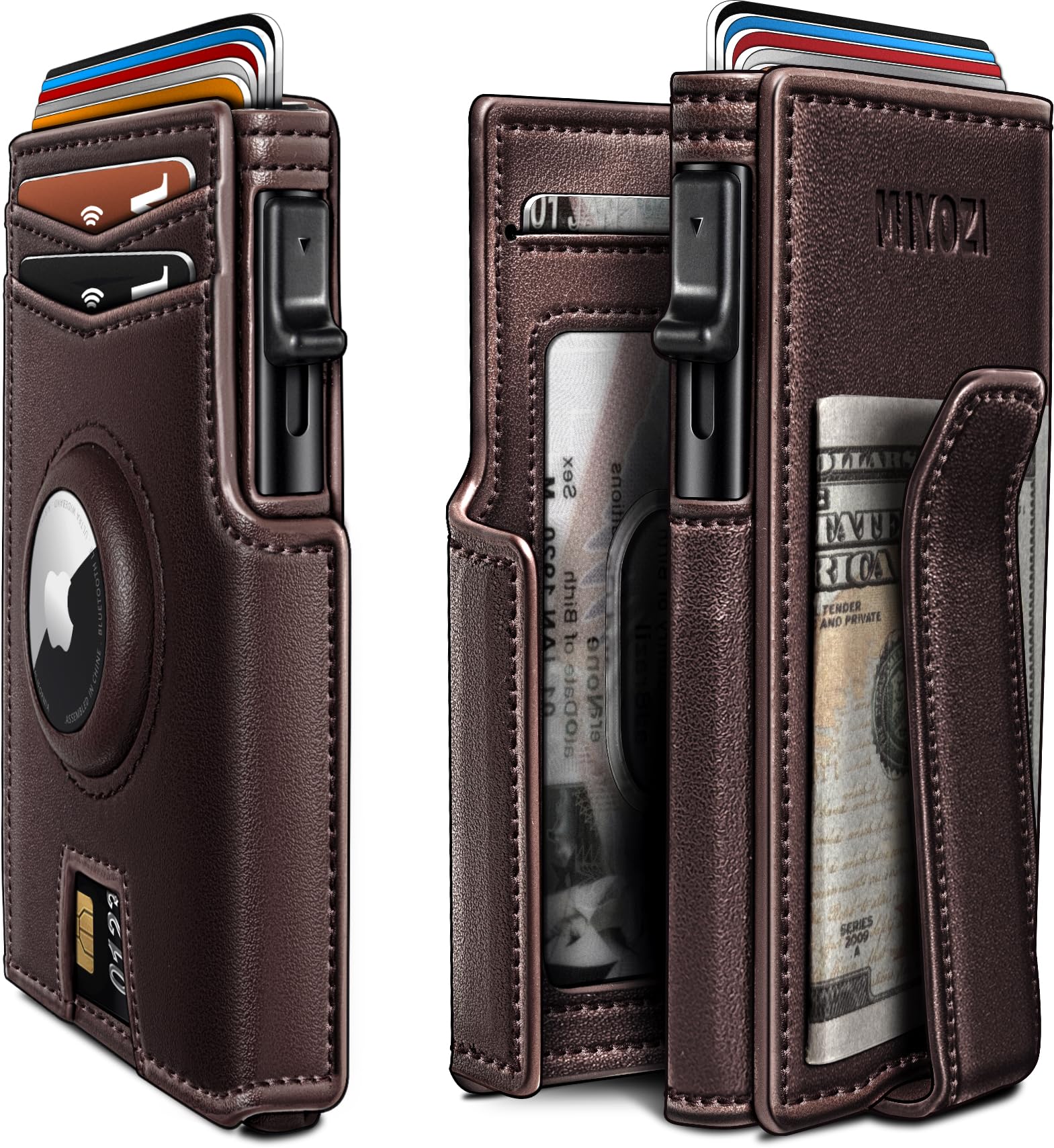
The miyozi AirTag wallet pairs a metal pop-up card case with an integrated money clip and a dedicated AirTag pocket.
What you're actually buying
According to the product listing on kinzd's site (kinzd sells the miyozi line direct), the wallet holds up to 10 cards across a 5-card metal case, two quick-access external slots, and three interior slots, inside a roughly 3.9" x 2.9" footprint. A side switch fans the cards out of the metal case in a staggered row, the magnetic flap keeps everything closed, and a leather-wrapped money clip on the outside handles cash. A dedicated compartment is shaped to seat an Apple AirTag. The AirTag itself is not included, which is the single most common surprise buyers report and the first thing worth saying plainly.
For a focused look at the underlying technologies before we get into whether the execution holds up, two companion pieces are worth bookmarking: our explainer on how RFID and AirTag tracking differ covers the selection criteria, and the broader guide to the best men's minimalist RFID wallets places this pick against the field.
Does the miyozi wallet actually hold an AirTag, and does tracking work?
Yes, the wallet has a purpose-built pocket for an Apple AirTag, and yes, tracking works normally from inside it. That second part trips people up because the wallet also markets RFID blocking, and the intuitive worry is that an RFID shield would smother the tracker. It does not, and the reason is physics rather than marketing.
An Apple AirTag locates itself using Bluetooth Low Energy plus Apple's U1 Ultra Wideband chip for Precision Finding, with NFC reserved for Lost Mode taps. Bluetooth Low Energy operates around 2.4 GHz. The RFID-blocking layer in a card wallet is tuned to attenuate the 13.56 MHz band that contactless payment and access cards use. Those frequencies are orders of magnitude apart, so a shield designed to muffle 13.56 MHz card signals does essentially nothing to the 2.4 GHz Bluetooth chatter an AirTag relies on. Independent explainers reach the same conclusion: most RFID-blocking wallets do not stop AirTags from working because the two technologies run on entirely different frequencies.
There is one honest caveat. A solid metal case can attenuate Bluetooth more than fabric or leather, which is why the AirTag in this design sits in its own pocket rather than buried inside the metal card stack. In practice the tracker still phones home, but if you ever find Find My is sluggish, the metal body is the variable to consider, not the RFID lining.
How the pop-up card mechanism works
The metal core is the part that earns the "smart" label. Pushing the side switch ejects the inner cards in a fanned, staggered row so you can thumb the one you want instead of digging. It is the same mechanical idea that made aluminum pop-up cases popular, and it is genuinely faster than peeling cards out of leather slots. The trade-off is that the metal case has a fixed capacity. The listing's headline number is 10 cards, but only five of those live in the quick-eject metal case; the rest sit in the external and interior slots, which are ordinary slots, not part of the pop-up action. If you carry a thick stack, expect the pop-up convenience to apply to your five most-used cards and the others to behave like a normal wallet.
miyozi wallet instructions: the parts worth knowing up front
There is no real learning curve, but three setup points save frustration. First, supply your own AirTag; it seats in the dedicated pocket, not the card case. Second, load your five tap-to-pay and access cards into the metal pop-up section and reserve the leather slots for backups and ID. Third, the money clip lives on the outside under the flap, so fold bills rather than expecting a billfold-style interior. None of this is complicated, but it explains why some early buyers feel the wallet is "bigger than expected." It is doing three jobs, and the AirTag pocket plus money clip add thickness that a pure card holder does not carry.
Is the RFID blocking worth caring about?
The wallet's RFID shield targets the 13.56 MHz contactless band, which is the correct frequency for the threat it advertises. Whether that threat matters to you is a fair question, and the honest answer is "modestly." Consumer-protection bodies including the FTC acknowledge wireless card skimming as a documented but relatively uncommon form of fraud. Modern contactless cards also defend themselves: the practical read range for a passive 13.56 MHz card is only a few centimeters, and each tap generates a one-time cryptogram that cannot be replayed, which is why mass real-world skimming has stayed rare.
So treat RFID blocking here as a sensible bonus rather than the headline reason to buy. If you want the deeper version of this argument, our companion review of the ZALVEX minimalist RFID wallet digs into how RFID-blocking claims hold up across slim metal wallets and where they genuinely add value. The short version: it is a feature you should expect at this price, not pay a premium for.
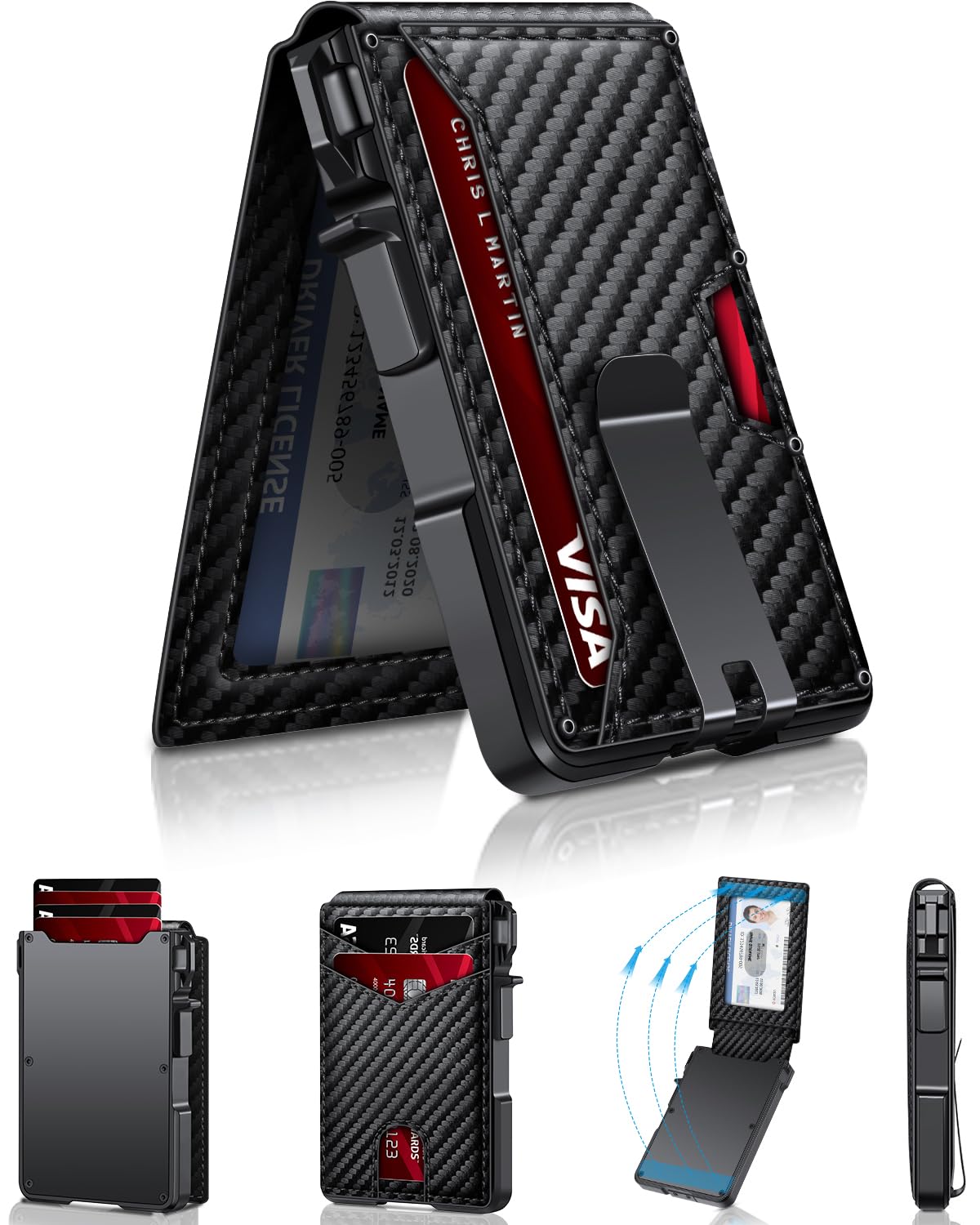
A comparable metal pop-up RFID wallet, the ZALVEX, shows how common this feature set has become at this price.
miyozi vs Ridge and other minimalist wallets
Shoppers cross-shop the miyozi against the Ridge and against pop-up aluminum cases generally, so it helps to be clear about what each design optimizes. The Ridge, as covered in Consumer Reports' slim-wallet roundup, is a bolted-plate cash-strap or money-clip wallet built around a deliberately tiny footprint and aerospace-grade aluminum. It is exceptional at staying thin and is explicitly not built around a tracker pocket. The miyozi trades some of that thinness for two extra jobs: the AirTag bay and the pop-up metal ejector.
That framing makes the choice straightforward. If your priority is the absolute slimmest profile and you do not need built-in tracking, a Ridge-style plate wallet wins on minimalism. If you specifically want AirTag-ready tracking, a faster pop-up card draw, and a money clip in one case, and you can accept a slightly thicker body, the miyozi is the more complete package. Consumer Reports' broader take on the category is a useful reality check here: AirTag wallets are getting popular but the AirTag's round profile makes some bulge unavoidable, which is exactly the trade-off the miyozi's dedicated pocket is trying to manage.
Who it's best for
The miyozi makes the most sense for someone who has lost a wallet before, already lives in Apple's ecosystem, and wants tracking without strapping a tracker to the outside of a slim case. It also suits gift-buyers, since it ships in a presentation box. It is a weaker fit for true ultralight carriers who count millimeters, and for anyone who carries a fat stack of more than ten cards.
The verdict
The miyozi AirTag wallet does the thing it advertises: it puts an AirTag pocket, a 13.56 MHz RFID-blocking metal card case with a fast pop-up draw, and a money clip into one front-pocket-sized package, and the tracking genuinely works because Bluetooth and RFID never compete. The honest cost of that integration is thickness. This is not the slimmest wallet on the shelf, and it should not pretend to be. If tracking and quick card access top your list, it is an easy recommendation at the deal price. If raw minimalism is the goal, look at a thinner plate-style wallet instead. Specs here are anchored to miyozi's own published listing; always confirm current capacity and dimensions there before buying, since the line ships in several card-count variants.
Where to Buy
Specifications
- Card capacity
- Up to 10 cards (5 in metal pop-up case, 2 external slots, 3 interior slots)
- Footprint
- Approx. 3.9 in x 2.9 in
- Card case material
- Metal construction with leather accents
- RFID blocking
- Yes, targets 13.56 MHz contactless band
- Tracker support
- Dedicated Apple AirTag pocket (AirTag not included)
- Money clip
- Integrated leather-wrapped money clip
- Closure
- Magnetic flap
- Card access
- Side-switch pop-up ejector (staggered fan)
Related Posts