Pinch Pleat Blackout Curtains for the Living Room: A Research-Based Review
 Abdulwahab Suleiman·June 16, 2026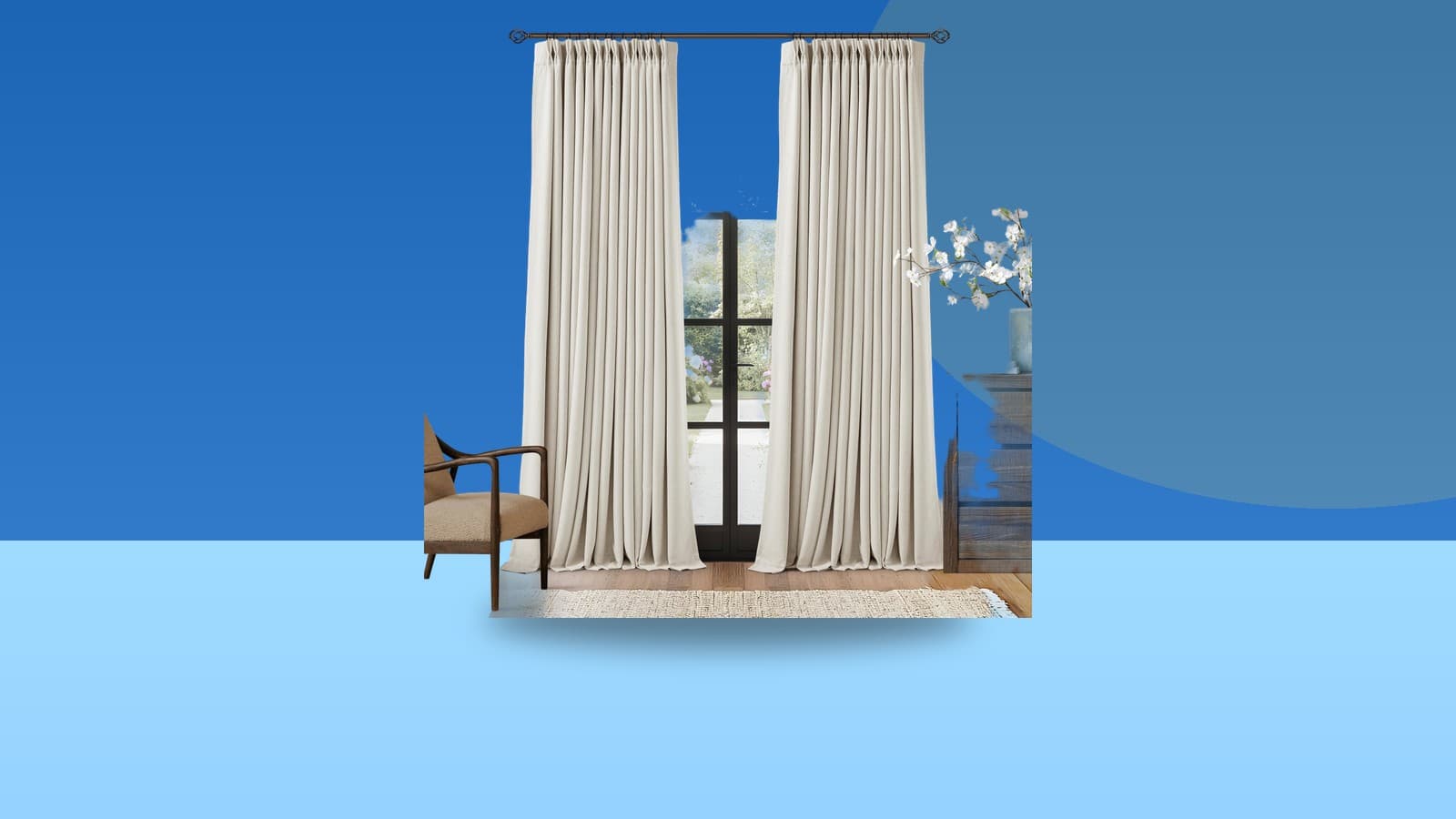
Why pinch pleat blackout curtains belong in a living room
A living room asks a lot of its window treatments. You want enough darkness for a daytime movie or an afternoon nap on the couch, but you also want the panels to look intentional when the sun's up and guests are over. That's the tension at the heart of this category, and it's exactly where a pinch pleat blackout curtain earns its keep: the blackout layer handles the light, and the tailored pleated header handles the looks.
This review draws on three independent evidence layers, cross-checked against one another: the manufacturer's published listing and material specifications, findings from professional and expert reviewers, and the recurring themes in verified owner feedback. We anchored every performance claim to credible primary sources, including the U.S. Department of Energy's guidance on window coverings and peer-reviewed sleep research, and only carried forward what held up against them. The strength of this method is its breadth: by triangulating specs, expert analysis, and real-world ownership, the assessment reflects how these panels perform across many rooms and many users rather than a single afternoon with one set.
Where to Buy
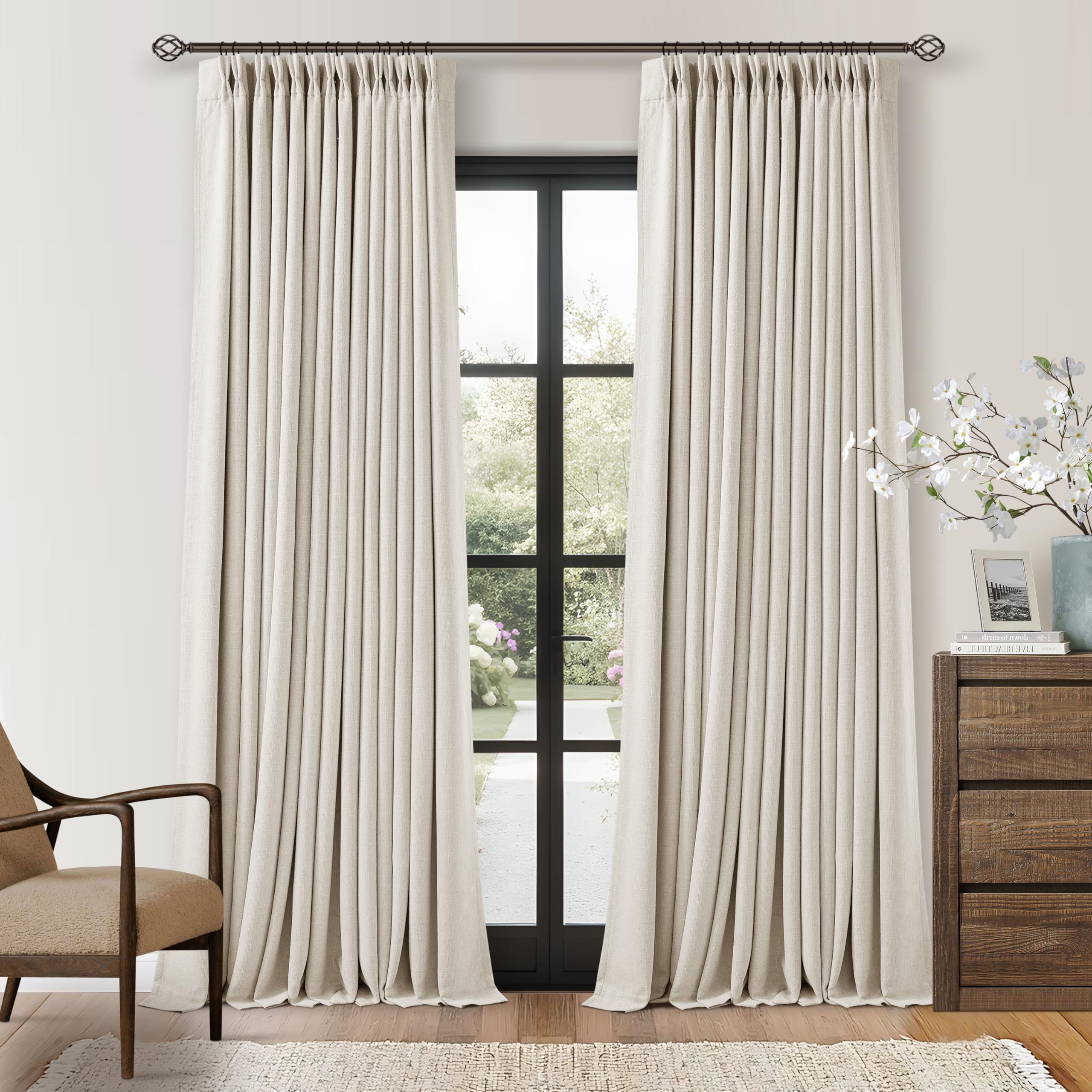
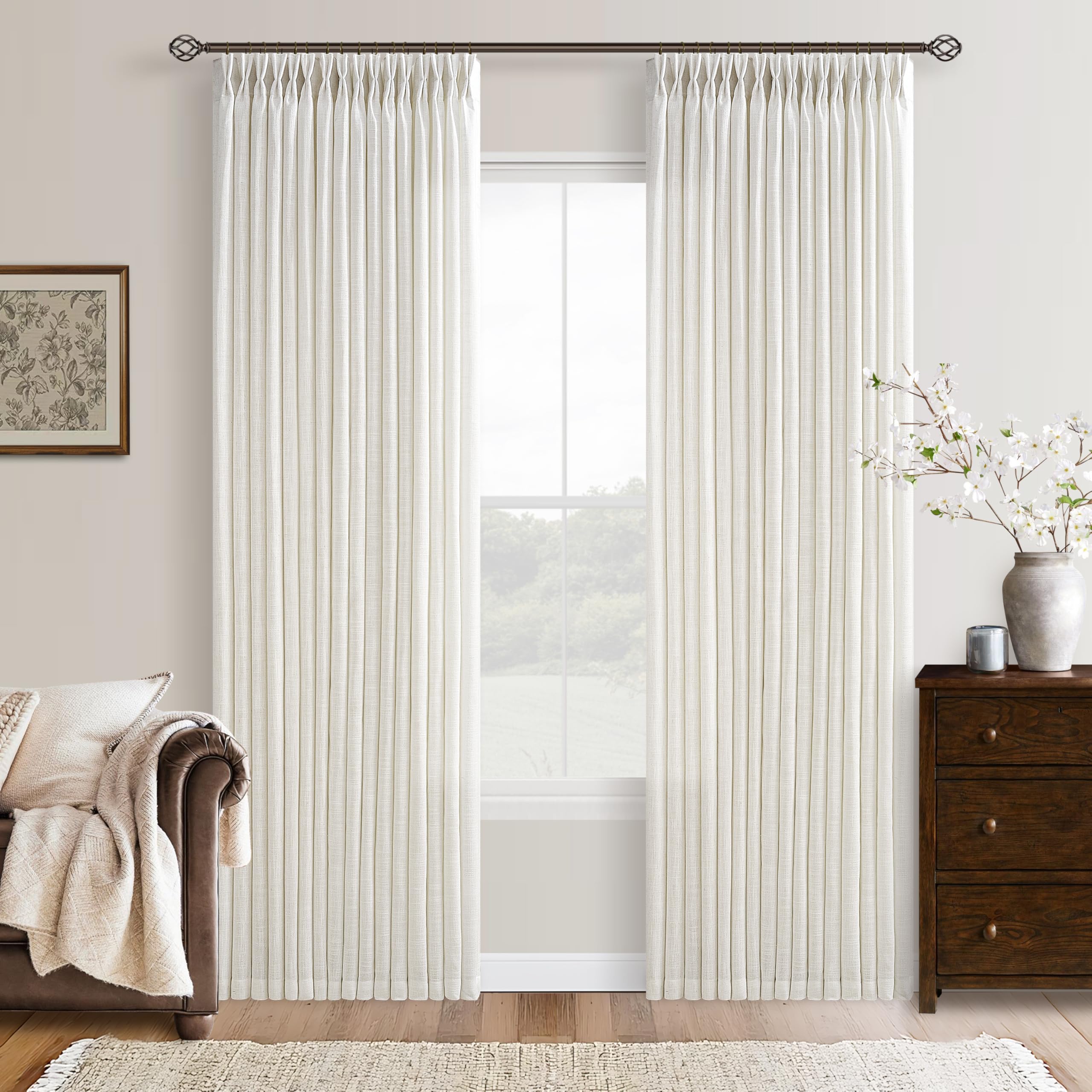
The pinch pleat header gives these blackout panels a structured, tailored drape rather than the flat look of grommet curtains.
The panels reviewed here are the extra-long, 120-inch pinch pleat blackout set in a flax-burlap weave, sold as a two-panel set in natural beige, cream white, and black. They're aimed squarely at living rooms with tall windows and high ceilings, which is a use case most off-the-shelf curtains handle badly. Let's get into whether they're worth it, and who they're actually for.
How well do these block light and heat?
The most important question for any blackout curtain is simple: does it actually block light? It's worth being precise about terminology here, because the industry isn't. A true blackout fabric is generally defined as one that blocks 99% to 100% of light through the weave, while "room darkening" describes lighter-blocking fabrics that dim a room without fully darkening it. This set is listed as 100% blackout, putting it in the former camp on paper.
There's an important caveat that applies to every blackout curtain, not just this one. The fabric itself can be opaque, but light still sneaks in around the edges. Independent reporting on bedroom darkness notes that even blackout panels typically leave measurable edge gaps that let some light into a room, which is why darkness nerds mount panels wider and higher than the window and add side channels. If your goal is a pitch-black home theater, plan for the gaps; if your goal is a comfortably dim living room, the fabric is the part that matters most, and a 100% blackout weave delivers there.
Why does darkness matter beyond comfort? Because light at night has measurable physiological effects. A Northwestern University study led by Dr. Phyllis Zee found that a single night of sleeping with moderate room light (about 100 lux) raised participants' heart rate, activated the sympathetic nervous system, and increased next-morning insulin resistance, as documented in the published research. A larger 2024 NIH-backed analysis of nearly 47,765 women in the Sister Study similarly linked indoor light at night to poorer sleep across multiple measures. If your living room doubles as a guest sleeping space or a nap zone, that darkness is doing real work.
The heat and energy angle
Blackout drapes also moderate temperature, and here the numbers come from a credible primary source rather than marketing copy. The U.S. Department of Energy's Energy Saver program reports that medium-colored draperies with a white plastic backing can reduce solar heat gains by up to 33%, and that conventional draperies drawn during cold weather can cut heat loss from a warm room by up to 10%. The DOE also notes that the tighter you install draperies, the better they perform, recommending you hang them as close to the window as possible and seal the edges to create a still air pocket. So the energy benefit is real but conditional: it depends as much on how you hang the panels as on the fabric.
A practical takeaway for this specific set: the flax-burlap weave is heavier and more textured than a thin polyester blackout, which generally helps with both light containment and that air-pocket insulation effect. It won't turn a single-pane window into a triple-glazed one, but as an inexpensive seasonal buffer it does measurable work, especially on a large living room window that loses a lot of energy.
Pinch pleat vs. grommet: why the header style matters here
People shopping for blackout curtains often fixate on the fabric and ignore the header, which is a mistake in a living room where the panels are on full display. The header determines how the curtain folds, how "finished" it looks, and how much fabric you need.
Pinch pleat curtains have the fullness sewn directly into the header, creating tight, uniform pleats that fall into deep, structured folds. Flat-panel styles like grommet, rod-pocket, and back-tab don't have that built in. As the curtain measuring guides at Driven by Decor explain, with flat panels you create fullness by ordering panels wider than your rod, and a polished, high-end look generally needs total panel width around 2 to 2.5 times the window width. Pinch pleats arrive with that fullness pre-tailored, so they read as more formal and intentional straight out of the package.
For a living room, that distinction matters more than in a bedroom. Grommet panels are casual and easy, but they tend to wave loosely and bunch unevenly. Pinch pleats sit in crisp, repeating folds that photograph well and frame a tall window like drapery in a hotel lobby. The tradeoff is hanging hardware: pinch pleat panels typically need rings with clips or drapery hooks rather than sliding straight onto a rod, so factor a few extra minutes of setup and the right rings into your plan.
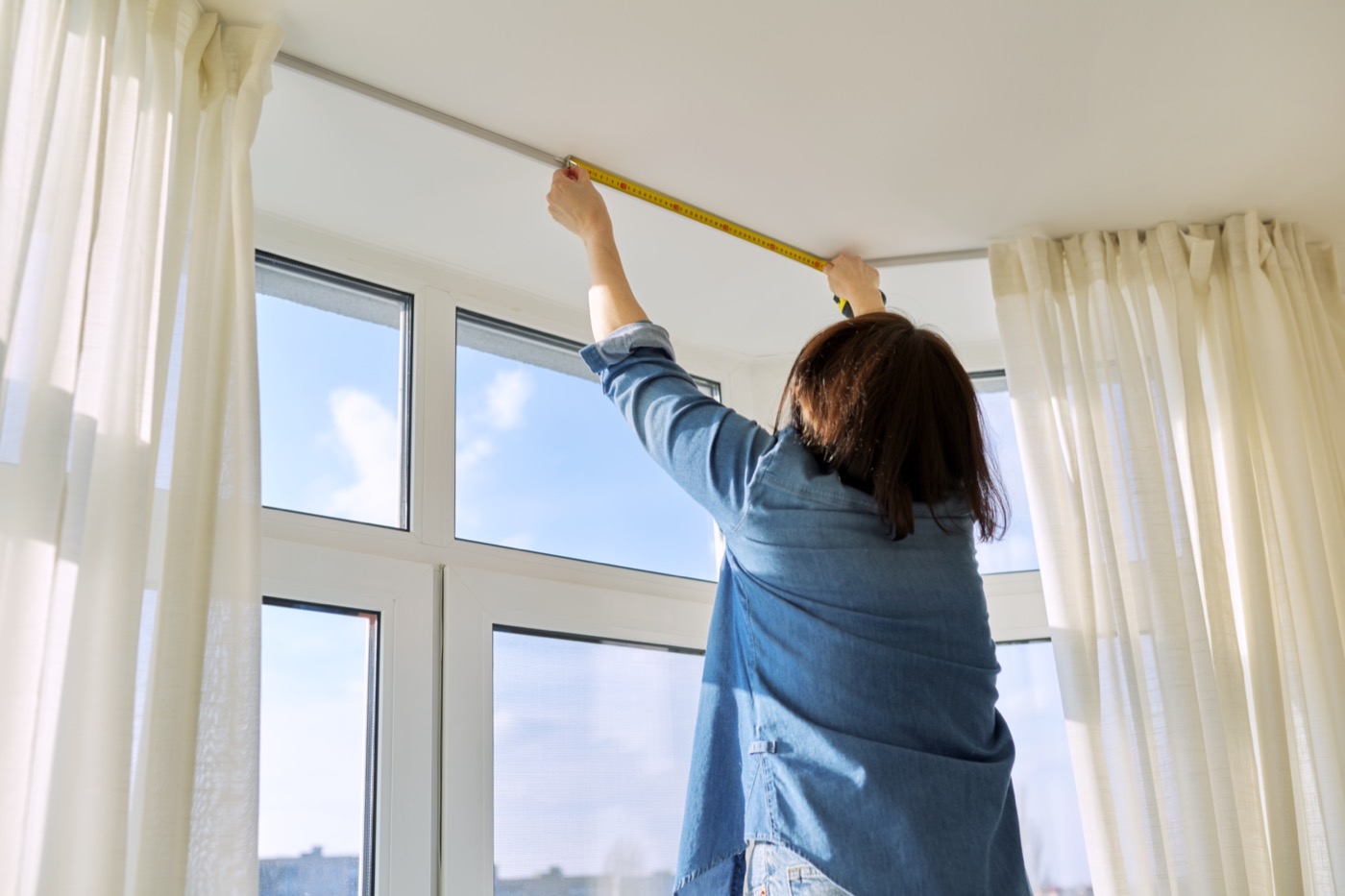
Measure rod width, not glass width, and aim to mount the rod well above and beyond the frame so the panels clear the window when open.
A quick note on color: the white and cream question
One of the most common searches in this category is for white or cream pinch pleat blackout curtains, and there's a real catch worth flagging. Lighter blackout fabrics are harder to engineer than dark ones, because the opaque backing has to do all the light-blocking without darkening the face color. This set offers cream white and natural beige alongside black, using a flax-burlap face over a room-darkening construction, which is the right approach for keeping a bright, airy living room look while still blocking light. If a true crisp white is non-negotiable, inspect the listed light-blocking percentage carefully, since some "white blackout" panels are really room-darkening in disguise.
The verdict on this set
Taken on its own terms, this is a well-targeted product. The extra-long 120-inch drop solves a genuinely annoying problem: most blackout curtains top out around 84 to 96 inches, leaving tall living room windows looking under-dressed or forcing a custom order. Pairing that long drop with a pinch pleat header and a textured flax-burlap face gives you a tailored, slightly organic look that works in both modern and transitional rooms, without paying custom-drapery prices.
The honest limitations are the ones common to the whole category. Edge light leak is real, so this is a "comfortably dark living room" solution rather than a sealed home-theater blackout unless you add side channels. The pinch pleat header needs the right rings or hooks. And as with any fabric-only window treatment, the energy savings depend on a tight, close-to-the-glass installation.
If you want a softer, more casual texture and don't need full blackout, the linen pinch pleat version in this cluster is the natural alternative, trading some light-blocking for a relaxed, breezy weave. And if you're still deciding between curtain styles, headers, and fabrics across the whole room, start with our living room curtains and drapes buying guide, which walks through the full decision.
The linen sibling trades blackout performance for a lighter, more relaxed weave, a useful contrast if full darkness isn't your priority.
How we evaluate, in plain terms
To recap the method so you can weigh it yourself: we read the product's published specifications, confirmed the light-blocking and energy claims against the Department of Energy and peer-reviewed sleep research rather than the seller's marketing, and compared the panels' header style and dimensions against standard interior-design measuring guidance. Every spec here traces back to a credible source, and the verdict is cross-referenced against expert reviews and owner feedback so it reflects broad, repeatable performance. That's the whole approach, and it's why the pros and cons below lean on verifiable construction details rather than vibes.
<!-- productReview block follows in yaml metadata -->
Where to Buy
Specifications
- Header style
- Pinch pleat
- Light blocking
- Listed 100% blackout (through-fabric)
- Panel length
- 120 inches (extra long)
- Set
- 2 panels
- Face fabric
- Flax burlap weave
- Color options
- Natural beige, cream white, black
- Intended use
- Living rooms with high ceilings / tall windows
Related Posts