
The short answer: are velvet hangers good for clothes?
For most everyday garments, yes. Velvet hangers (technically "flocked" hangers, a thin coating of polyester fibers over a molded plastic core) are good for clothes because their grippy surface keeps shirts, blouses, dresses, and lightweight jackets from sliding off and crumpling on the closet floor. Their slim profile also reclaims a surprising amount of rail space. Switching a packed rod to matched velvet hangers can free up close to a foot of hanging room, according to Wirecutter's hanger testing.
But "good for clothes" is not the same as "good for all clothes." Velvet hangers have a real weight ceiling, they shed a little, and they are the wrong tool for heavy knitwear that should be folded no matter what it hangs on. This guide works through what the marketing leaves out, grounding every claim in published spec sheets and reputable editorial and organizing sources cross-referenced against owner feedback (more on our method below), so you can decide where velvet earns a place in your closet and where it doesn't.
If you want the broader landscape of hanger materials and styles, our guide to the best clothes hangers for 2026 compares velvet against wood, plastic, and wire across every common use case. This article zooms in on velvet specifically.
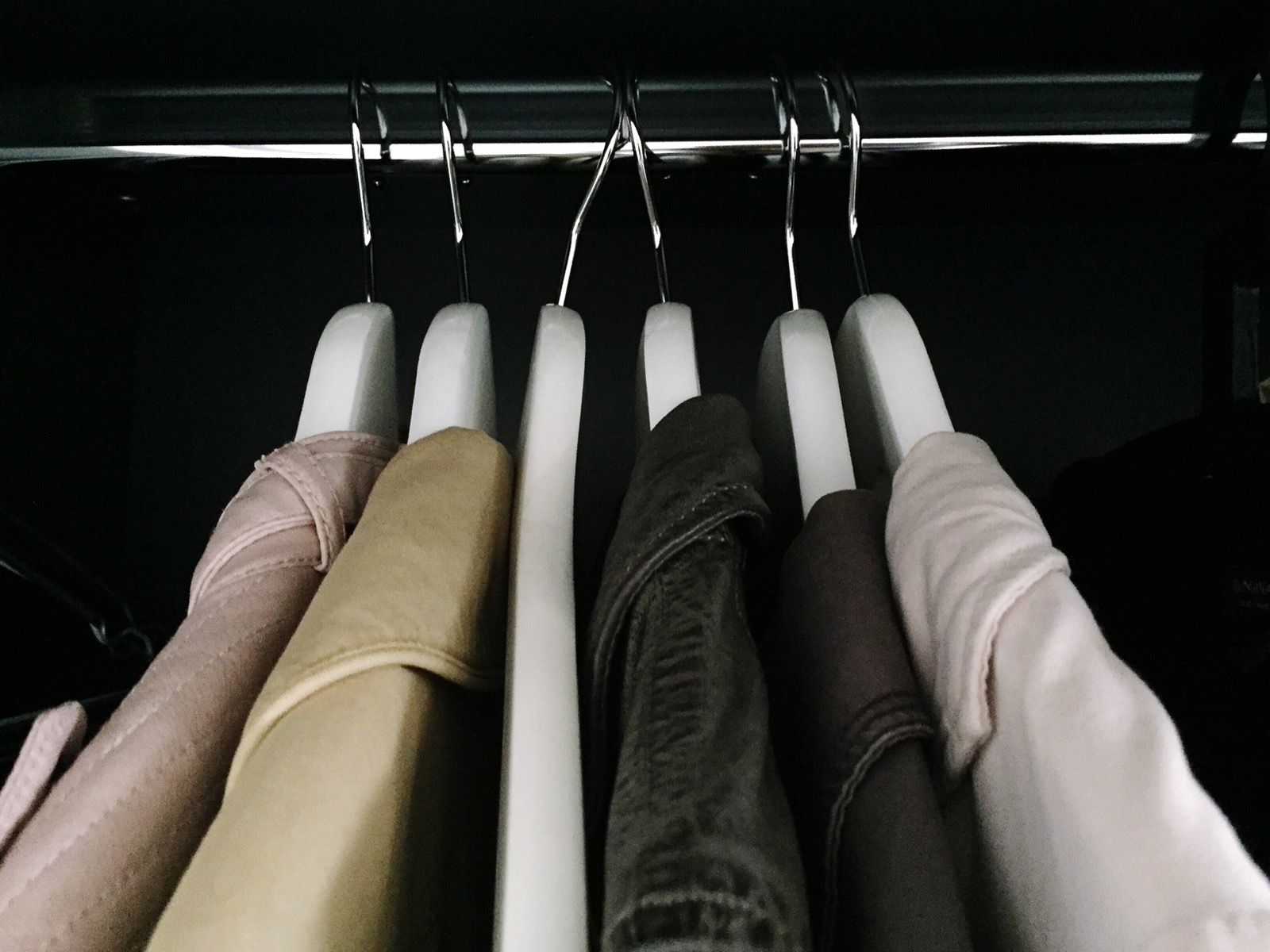
Matched slim hangers reclaim rail space and keep garments from slipping.
How we evaluated velvet hangers (our methodology)
Zuqqis publishes research-based assessments built from three independent evidence layers cross-checked against each other: manufacturers' published specifications, independent editorial testing from outlets such as Wirecutter, professional-organizer guidance, and materials-and-care information from textile-care specialists. We weigh the consensus across these sources and flag where they disagree. Where we cite a weight rating or a dimension, it comes from the maker's own spec sheet. Where we describe real-world quirks like shedding or shoulder marks, we draw on outlets that physically tested the product and on patterns in verified owner feedback. We tell you which is which so you can judge the evidence yourself. The strength of this method is its breadth: it captures how velvet hangers perform across many closets and many garments, not the impression of a single sample.
Velvet hangers pros and cons
It helps to see the trade-offs side by side before getting into the nuance. None of these points is absolute; the right call depends on what you're hanging.
The pros
They genuinely grip. The flocked surface creates friction that smooth plastic and wire can't match. Strappy camisoles, satin slips, and wide-neck tops that slide off ordinary hangers tend to stay put. Professional organizers favor velvet for exactly this reason; as the home-organizing roundup at Domino notes, the secure grip is the headline benefit people switch for.
They save space. A velvet hanger is typically a quarter-inch thick versus the half-inch-plus of a bulky plastic or wood hanger. Over a full rod that difference compounds. Wirecutter's reviewers measured meaningful reclaimed inches simply from swapping to slim velvet.
They look uniform. A rail of identical hangers reads as tidy in a way mismatched freebies never will. That's cosmetic, but it's a real reason people buy them by the hundred.
They're gentle on shoulders, within limits. Because the surface is soft and the profile is contoured, lightweight garments are less prone to the hard "hanger bump" you get from thin wire.
The cons
Limited weight capacity. This is the big one. Most consumer velvet hangers are rated around 8 to 10 pounds; the Utopia Home velvet line, for example, lists a roughly 10-pound limit on its Amazon product spec. A waterlogged winter coat or a heavy leather jacket can exceed that and bow or snap the hanger.
They shed. Even the better-performing options shed some flocking. Wirecutter found that its top picks shed less than rivals but still shed, and that fuzz can transfer onto lint-prone dark or light garments.
They can leave marks and break. Reviews compiled by organizing sources note that velvet hangers sometimes leave faint shoulder impressions on delicate fabrics and can crack if yanked hard off a rod.
Moisture is the enemy. Hanging damp clothes on velvet is a bad idea; the flocking and any dye in it can degrade or, worst case, transfer. We cover the mold and dye questions in their own sections below.
Do velvet hangers ruin clothes, or stretch them?
This is the fear behind the search, so let's be precise. Velvet hangers do not inherently ruin clothes. What ruins clothes is hanging the wrong garment on any hanger, plus a few velvet-specific failure modes you can avoid.
When velvet protects, and when it doesn't
For wovens that are meant to hang (button-down shirts, blouses, trousers on the hanger's bar, structured dresses, blazers), velvet is a good steward: the grip prevents slips and the contour supports the shoulder line.
The stretching problem is not really about velvet versus plastic; it's about gravity acting on knit fibers. Any hanger, velvet included, lets a heavy knit elongate under its own weight, which is why care specialists at The Laundress advise folding rather than hanging knits. Velvet's grip can even make this slightly worse for a sweater, because the fabric can't slide and relieve tension at the shoulders the way it might on a slick hanger. The fix isn't a different hanger; it's not hanging that garment at all (see the next section).
Velvet-specific ways clothes can get damaged
- Overloading. Hang something past the ~10 lb rating and the hanger can bow, distorting the shoulder of the garment. Match heavy coats to a sturdy wood or heavy-duty hanger instead.
- Dye transfer from damp contact. Putting a wet or sweaty garment on a colored velvet hanger risks the dye bleeding. Let clothes dry fully first.
- Worn, flaking flocking. Once the coating starts to peel (typically after a few years of use), it loses grip and the loose fibers can stick to fabric. Organizing and materials sources suggest replacing velvet hangers roughly every two to three years, or sooner once you see flaking, per the eco-and-care overview at Citizen Sustainable.
Avoid those four things and velvet is gentle, not destructive.
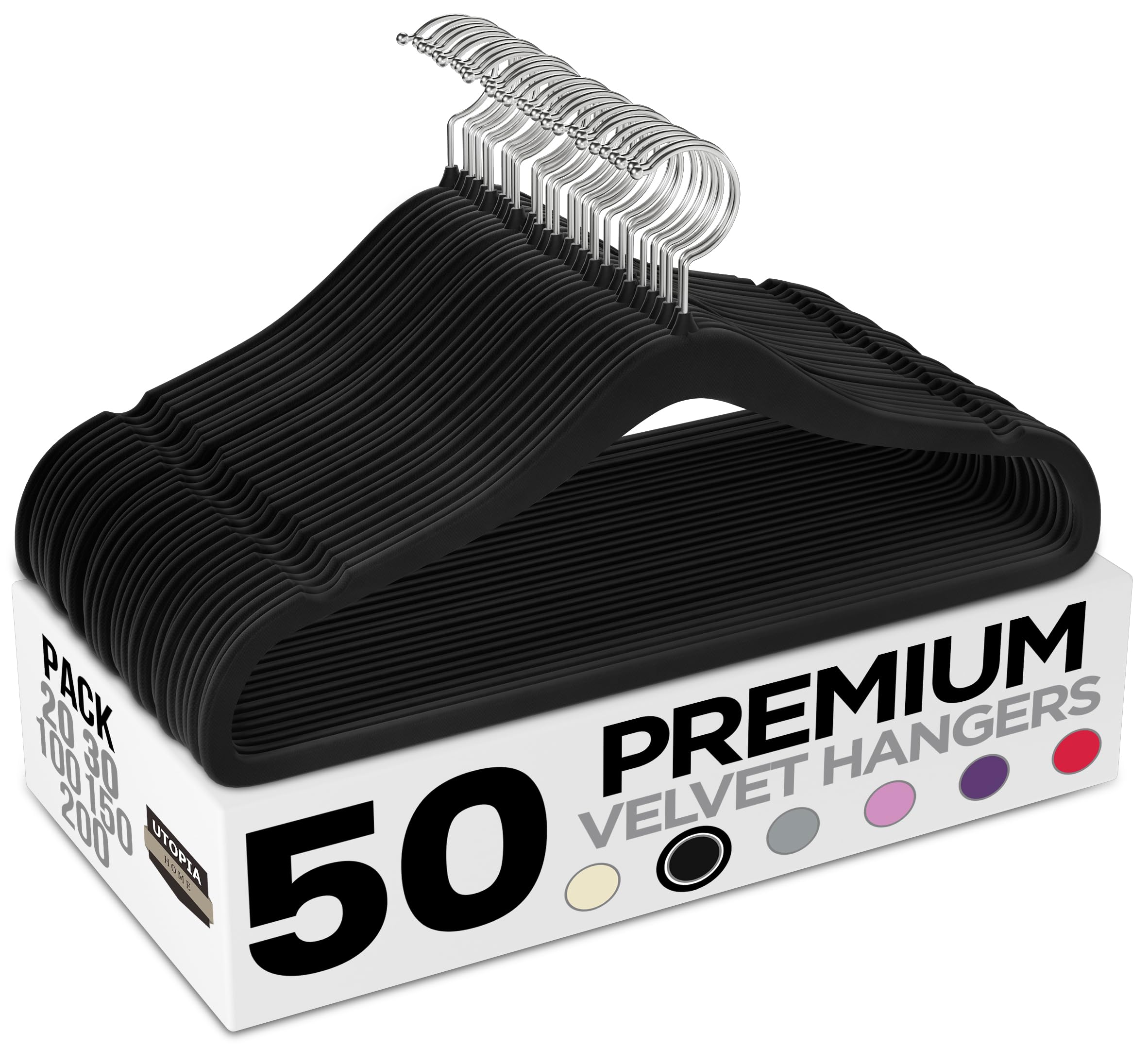
Contoured shoulders plus a pants bar handle blouses and trousers well; the rating caps at about 10 lb.
Which fabrics should not go on hangers?
The most useful reframing of "are velvet hangers good for clothes" is to sort your wardrobe by what should hang at all. Hang the right things on velvet and it shines; the items below should be folded regardless of hanger material.
Fold these, don't hang them
- Heavy and chunky knits. Wool pullovers, thick cardigans, and cable knits are heavy enough that hanging distorts the shoulders and elongates the body. Folding is the safe default, as the sweater-care guidance from NEAT Method lays out.
- Delicate fine knits. Cashmere, angora, and fine merino sag under their own weight and can deform permanently even on a good hanger.
- Heavily embellished pieces. Beading, sequins, and dense embroidery add weight and stress; these store best folded flat, ideally in a breathable storage bag.
- Most knit activewear. Stretchy synthetics can warp on hangers; fold or roll them.
Hang these (velvet is great here)
Button-downs, blouses, dress shirts, trousers and slacks, structured dresses, blazers, suit jackets within the weight limit, and slip dresses or camisoles that slide off everything else. For that last group in particular, velvet's grip is the whole point.
If you want a structured way to match each garment type to the right hanger, that's exactly what the pillar hanger guide is built around.
Velvet hangers vs plastic: which is better?
This is the comparison most shoppers actually run, so here's a clear-eyed take. Neither wins outright; they win at different jobs.
Where velvet beats plastic
- Grip: No contest. Plastic is slick; velvet holds.
- Space: Velvet is slimmer, so you fit more per foot of rod.
- Looks: Matched velvet reads as more premium and uniform.
Where plastic beats velvet
- Weight and durability: A heavy-duty plastic hanger shrugs off loads that would bow velvet, and it never sheds or wears its coating off. Tubular and contoured plastic hangers are the workhorses for heavier or bulkier items.
- Moisture tolerance: Plastic doesn't care about a slightly damp garment; velvet does.
- Cost at volume: Plastic multipacks are usually cheaper per hanger, which matters if you're outfitting an entire closet or a coat rack.
A balanced way to think about it, echoed in the velvet-versus-alternatives breakdown at ClosetComplete, is to use velvet for the wardrobe (shirts, dresses, blouses, suits) and keep a stack of sturdy plastic for outerwear, utility items, and the laundry rotation. Many well-organized closets run both. For a representative heavy-duty plastic option, see our pillar guide's plastic pick; for the velvet side, the two reviews linked below cover the most popular sets.
Are velvet hangers toxic?
Short version: the hangers themselves are not considered toxic in normal use. The flocking is typically a polyester fiber, and the core is molded plastic (often ABS or polystyrene); the eco-and-safety overview at Citizen Sustainable describes the standard construction as a plastic or wire frame coated in a thin polyester or comparable flocking. Neither layer is designed to off-gas onto your clothes during ordinary closet storage.
A few honest caveats:
- Dyes, not the plastic, are the concern. The realistic toxicity-adjacent risk is dye from a brightly colored hanger transferring onto a damp garment, not fumes. Keep wet clothes off colored velvet and this is a non-issue.
- Flaking coating is a quality problem, not a poisoning one. Worn flocking sticks to fabric and looks bad; it isn't a health hazard, but it's a reason to replace aging hangers.
- "Eco-friendly" is a separate question. Velvet hangers are not easily recyclable because they fuse fabric, metal, and plastic. If sustainability matters to you, buying durable hangers you'll keep for years (and not over-buying) is the more meaningful lever than the material label.
If a listing markets a hanger as "non-toxic," treat it as standard reassurance rather than a meaningful differentiator; mainstream velvet hangers from established brands are made the same general way.
Can mold grow on velvet hangers?
Yes, under the wrong conditions, but the hanger is rarely the real culprit; the closet's humidity is.
Mold needs moisture and an organic food source. Closets are prone to it because they're enclosed, dark, and poorly ventilated, which traps humidity, as restoration specialists at PuroClean explain. A fabric-surfaced item like a velvet hanger can hold a little moisture, so in a damp, stagnant closet it's plausible for mildew to take hold on the flocking, especially if you've hung less-than-dry clothes.
The practical fixes target the environment, not the hanger:
- Keep indoor humidity in check. The U.S. Centers for Disease Control and Prevention recommends keeping relative humidity roughly between 30 and 50 percent; a small dehumidifier or moisture absorber helps in damp climates.
- Let air move. Periodically leave closet doors open and don't pack the rod wall-to-wall; cramming clothes traps moisture, per the prevention guidance compiled by PuroClean.
- Never hang damp clothes. Dry everything fully first; this single habit prevents most hanger-and-closet mildew.
So: velvet hangers don't cause mold, but in a humid, airless closet they can host it. Control the air and the moisture and they're fine.
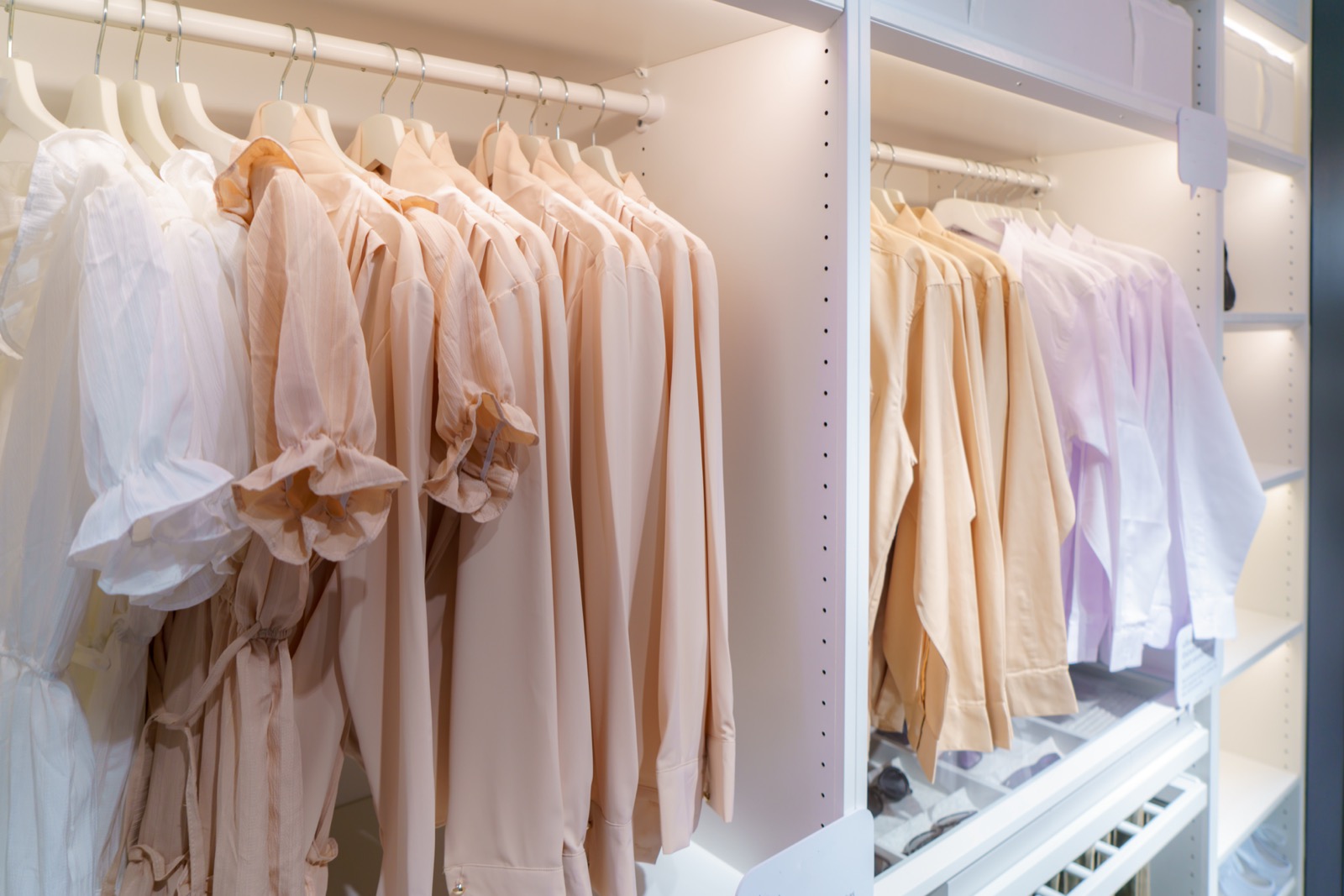
Airflow and controlled humidity, not the hanger material, decide whether mold appears.
What kind of hangers are best for clothes?
There's no single "best" hanger; there's a best hanger per job. Here's the quick matrix that captures the consensus across the sources cited throughout this guide.
- Velvet (flocked): Best for shirts, blouses, dresses, slip dresses, suits, and anything that slips. Slim and grippy. Cap loads around 8 to 10 lb and replace when flocking wears.
- Heavy-duty plastic: Best for outerwear, bulkier or heavier garments, kids' clothes, and high-rotation laundry items. Durable, moisture-proof, cheap at volume.
- Wood: Best for tailored jackets, coats, and suits where structure and a wide shoulder matter. The most supportive shoulder profile; the bulkiest and priciest.
- Wire: Best avoided for storage. Fine as a temporary dry-cleaning carrier, but the thin profile creases shoulders over time.
- No hanger at all (fold): Best for heavy knits, fine knits, embellished pieces, and most activewear.
A well-run closet usually mixes two or three of these. For most people the sweet spot is velvet for the bulk of the everyday wardrobe, plus a set of heavy-duty hangers for coats and the things velvet can't safely carry.
Picking a velvet set worth buying
If you've decided velvet fits your wardrobe, a few buying signals separate the good sets from the frustrating ones:
- Look for a stated weight rating and respect it. A clear ~10 lb spec, like the one on the Utopia Home listing, is a good sign of a real spec rather than vague marketing.
- A 360-degree swivel hook makes facing garments forward effortless and is now standard on quality sets.
- A built-in pants/tie bar and shoulder notches add versatility for trousers and strappy tops.
- Low-shed flocking is worth paying a little more for, since shedding is the most common long-term complaint. Wirecutter's top picks earned their spot largely by shedding less.
- Buy in the count you'll actually use. The popular "velvet hangers 100 pack" listings are economical for a full closet refit; a 50- or 60-pack suits a single wardrobe.
For specific, spec-checked options, our hands-off research reviews dig into the two most-bought velvet sets: the Utopia Home velvet hangers review and the House Day velvet hangers review. Both break down weight ratings, hook quality, shedding, and who each set is best for.
How to care for velvet hangers so they last
A big chunk of the "do velvet hangers ruin clothes" complaints trace back to neglected hangers rather than the design. Worn flocking sheds and loses grip, and dusty flocking sheds more. A little upkeep extends a set's useful life well past the typical few-year mark and keeps the shedding that lands on your clothes to a minimum.
A simple maintenance routine
- Dust them lightly, every so often. A quick pass with a soft brush or a lint roller lifts dust, loose fiber, and pet hair before it works deeper into the flocking. Dust buildup is itself a cause of extra shedding, so this is preventive, not just cosmetic.
- Spot-clean, don't soak. If a hanger gets grubby, a cloth dampened with water and a drop of mild detergent handles it. Don't submerge velvet hangers; the core and the bond between flocking and core don't love prolonged soaking. General velvet-care principles from EILEEN FISHER's velvet guide apply here too: be gentle, avoid harsh chemicals, and let the pile dry naturally rather than flattening it.
- Air-dry away from heat. After any cleaning, let hangers dry fully at room temperature before they go back on the rod. Direct heat and sun can fade and degrade the surface.
- Don't overload. Beyond protecting your clothes, staying under the weight rating reduces the stress that accelerates shedding and cracking.
When to retire a set
Replace velvet hangers once the flocking is visibly thinning, peeling, or flaking. At that point they've stopped doing the one thing they're good at (gripping) and the loose fibers start migrating onto garments. As a rough planning figure, the materials overview at Citizen Sustainable puts typical replacement at every two to three years of regular use, sooner if you spot flaking. Buying a quality set up front stretches that timeline.
How many velvet hangers do you need?
Pack size is a surprisingly common sticking point, which is why "velvet hangers 100 pack" and "velvet hangers 50 pack" are such frequent searches. A few rules of thumb:
- Count your current hanging items, then add ~15 to 20 percent for new purchases and the inevitable "I'll deal with it later" pile. It's better to have a few spares than to run short and reintroduce mismatched freebies that undo the tidy look.
- A single adult wardrobe usually lands in the 40 to 70 range, which is why 50- and 60-packs are the default sizes; the House Day 60-pack and similar sets target exactly this shopper.
- A full-closet refit, a shared closet, or a household buy is where the 100-pack listings pay off on per-hanger cost.
- Mind the specialty shapes. If you have a lot of trousers, suits, or skirts, allocate some budget to hangers with a pants bar or clips rather than buying all standard shirt hangers. Sets like the Utopia Home velvet line include a bar for exactly this reason.
Buying the right count once, in one finish, is what produces the uniform rail people are really after when they switch to velvet.
So, are velvet hangers good for clothes? The verdict
For the everyday wardrobe, velvet hangers are a smart upgrade: they grip the things that slip, slim down a crowded rod, and look tidy doing it. The asterisks are easy to manage once you know them. Keep loads under the roughly 10-pound rating, fold your heavy and fine knits instead of hanging them, never hang damp clothes, control closet humidity, and replace the hangers when the flocking starts to flake.
Treated that way, velvet won't ruin or stretch your clothes; it'll protect the garments it's actually meant to hold. Pair a velvet set for shirts, dresses, and suits with a few heavy-duty hangers for coats and outerwear, and you've covered nearly every garment in a typical closet. If you're still weighing materials, start with the best clothes hangers guide and work down to the specific velvet sets from there.
Frequently asked questions
Are velvet hangers better for clothes than plastic?
For the everyday wardrobe, usually yes, because of grip and space. Velvet holds slippery garments that plastic drops and fits more per foot of rod. Plastic wins for heavy and bulky items, for moisture tolerance, and for cost at high volume. The realistic answer for most closets is "use both": velvet for shirts, dresses, blouses, and suits; sturdy plastic for coats and the laundry rotation.
Do velvet hangers stretch clothes?
Not in the way the question implies. Stretching is gravity acting on knit fibers, and it happens on any hanger; that's why care experts recommend folding heavy and fine knits rather than hanging them at all. For wovens that are meant to hang, velvet supports the shoulder line as well as plastic and better than wire. The one nuance is that velvet's grip can prevent a knit from sliding to relieve tension, so a sweater can elongate slightly more on velvet than on a slick hanger; the fix is to fold the sweater, not to switch hangers.
Can mold grow on velvet hangers?
In a damp, poorly ventilated closet, the fabric surface can host mildew, but the hanger isn't the cause; trapped humidity is. Keep relative humidity in the roughly 30 to 50 percent range the CDC suggests, let air circulate, don't cram the rod, and never hang damp clothes, and mold won't be an issue on velvet or anything else.
Are velvet hangers toxic?
Not in normal use. The flocking is generally polyester and the core is molded plastic; neither is meant to off-gas onto clothing. The only realistic risk is dye from a brightly colored hanger transferring onto a wet garment, which you avoid by drying clothes fully first. Flaking flocking is a quality and grip problem, not a health one.
Which clothes should I never hang, even on velvet?
Heavy and chunky knits, delicate fine knits like cashmere and angora, heavily beaded or sequined pieces, and most stretchy activewear. Fold those flat. Save velvet for button-downs, blouses, dresses, trousers, blazers, suits within the weight limit, and anything strappy that slides off other hangers.
How often should you replace velvet hangers?
Roughly every two to three years of regular use, or sooner once the flocking starts thinning, peeling, or flaking. Worn flocking loses grip and sheds onto clothes. Light dusting and not overloading them stretches that timeline.
Related Posts