
The Short Answer: Size by Two Things, Not One
If you remember only one idea from this guide, make it this: dehumidifier capacity is never a function of square footage alone. It is a function of how big the space is and how damp it already feels. A 1,000-square-foot room that is merely a little stuffy in July needs a very different machine than a 1,000-square-foot basement with water beading on the walls.
That two-variable approach is exactly how the major standards bodies frame it. ENERGY STAR's official sizing guidance lays out a grid that crosses room size against four dampness levels, and Consumer Reports' sizing explainer does the same thing in plain language. Neither one will give you a single "X pints per X square feet" formula, because that shortcut produces undersized machines that run nonstop and still never pull the room down to a healthy humidity.
So the honest answer to "what size dehumidifier do I need for a whole room" is a small decision tree, not a magic number. This guide walks you through it: how capacity is actually measured, why the rating on the box changed in 2019 (and why that matters more than almost anything else), a room-by-room breakdown for the sizes people search for most, and the rule of thumb the experts actually agree on.
A quick note on how we built this guide. We did not bring a dozen dehumidifiers into a lab and weigh the water they pulled. Instead, this is a research synthesis: we cross-checked the official testing standard, ENERGY STAR's and Consumer Reports' published sizing frameworks, the EPA's humidity targets, and real manufacturer spec sheets, then translated all of it into the room sizes you're searching for. Where we name a specific product, every spec is pulled from the maker's own published specifications and clearly cited.
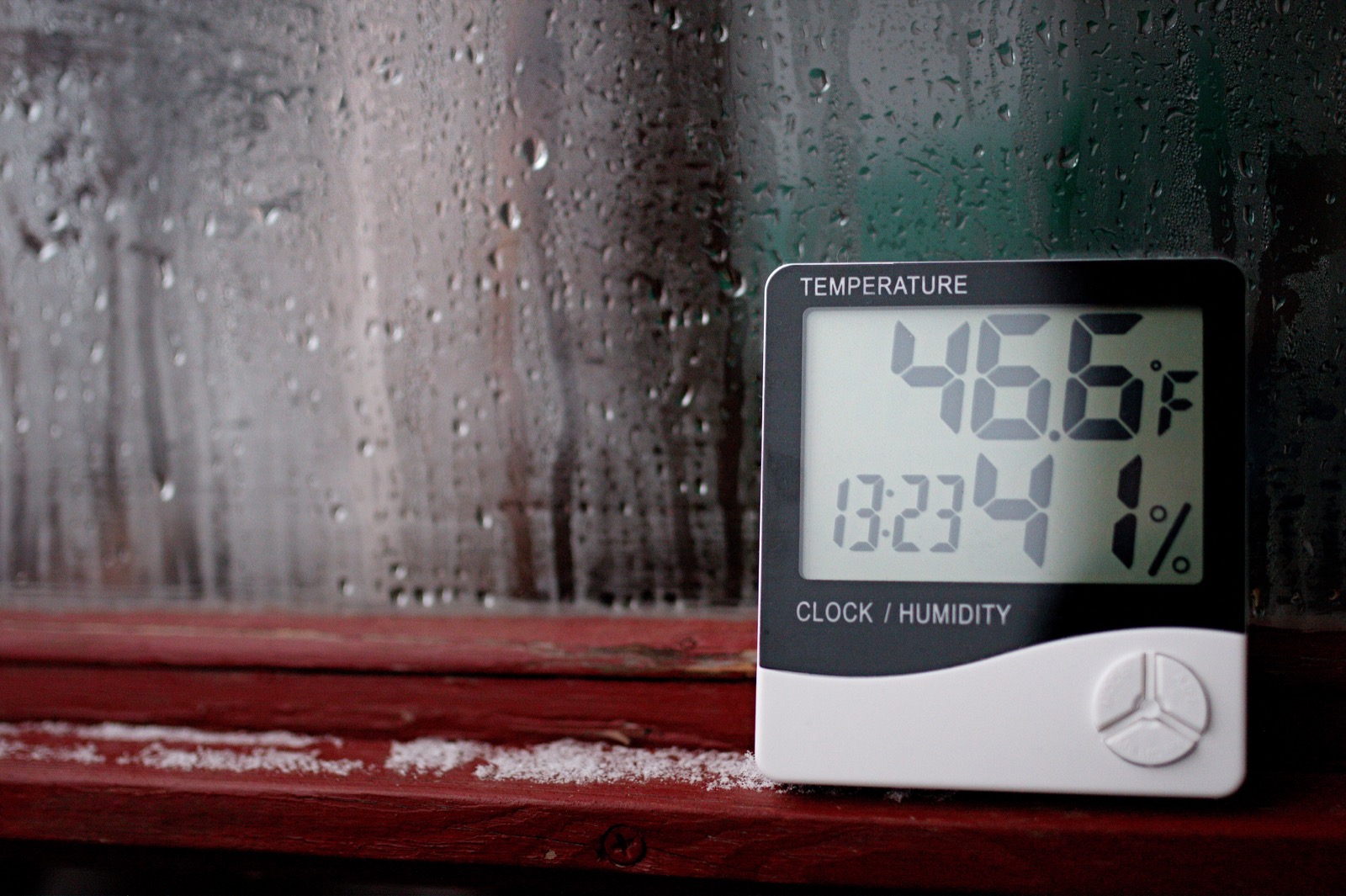
Measure your room's relative humidity before you size a dehumidifier, not after.
How Dehumidifier Capacity Is Actually Measured
Pints per day is the unit that matters
Dehumidifier capacity is expressed in pints of water removed per day (PPD). A "50-pint" unit is rated to extract 50 pints of moisture from the air in 24 hours under a defined set of lab conditions. That last clause is the trap, because "a defined set of lab conditions" has changed, and the change is the single biggest source of confusion when people shop today.
The governing test method is set by the U.S. Department of Energy and standardized by the Association of Home Appliance Manufacturers (AHAM Standard DH-1). Square-footage coverage claims on a box ("dehumidifies up to 4,500 sq. ft.") are derived from the pint rating plus assumptions about dampness. The pint number is the real spec. Coverage is marketing math on top of it.
The 2019 DOE rule change that reset every label
Here's the part almost no buying guide explains clearly. In 2019 the Department of Energy revised the conditions under which dehumidifiers are tested. The old standard tested units at 80°F and 60% relative humidity; the updated standard tests at a cooler, more conservative 65°F. Cooler air holds less moisture, so the same physical machine pulls fewer pints under the new test, and its label number dropped accordingly. As ENERGY STAR's explainer on dehumidifier testing and capacity notes, this 15°F reduction in testing temperature means a unit tested to the new procedure reports a smaller capacity than the same unit tested under the old one. In practice the relabeling worked out roughly like this:
- An old 70-pint unit is now labeled around 50 pints.
- An old 50-pint unit is now labeled around 35 pints.
- An old 30-pint unit is now labeled around 20–22 pints.
The machine did not get weaker. The yardstick got stricter.
This matters enormously when you read older charts, older Amazon reviews, or a forum post from 2017. A "70-pint" recommendation written before 2020 is describing a machine that today wears a "50-pint" label. If you size to a pre-2019 chart using a post-2019 product, you will systematically undersize. When you compare two units, confirm both quote the DOE 2019 / AHAM DH-1 rating so you're comparing like with like.
Why "max" pint numbers look so much bigger
You'll also see manufacturers advertise two numbers, such as "Max 80 Pint / Standard 52 Pint." The max figure is measured under hot, saturated conditions (closer to the old 80°F/60% world) and the standard figure is the DOE 2019 number. Both can be legitimate, but for sizing your home, the lower DOE/standard figure is the realistic one. Always size to the standard rating and treat the max as a best-case ceiling.
Step One: Find Out How Damp Your Room Really Is
Before you can pick a number, you need to honestly classify your space. The standards bodies use four tiers. The fastest way to place your room is to buy an inexpensive hygrometer (a humidity meter runs about $10–$50 at any hardware store, per the EPA's mold and moisture guide) and take a reading. If you don't have one yet, use the sensory cues.
- Slightly to moderately damp (about 50–75% RH): The room smells a little musty, feels heavy in humid weather, but there's no visible water. Think a closed-up living room or a bedroom in a humid climate.
- Very damp (about 75–90% RH): The space always smells damp, you see occasional condensation on windows or walls, and surfaces feel clammy.
- Wet (about 90–100% RH): You can see beads of moisture on the walls or floor, there may be seepage, and the air feels saturated. This is the classic problem basement.
- Extremely wet: Standing water or active seepage, often after weather events.
These tiers come straight from ENERGY STAR's sizing grid, and the dampness-versus-size approach is echoed in Consumer Reports' guidance, which notes that even a relatively small room can need a midsize unit if it's genuinely wet rather than just stuffy.
The target you're aiming for
Your goal is not "as dry as possible." The EPA recommends keeping indoor relative humidity below 60%, ideally between 30% and 50%, to discourage mold, dust mites, and that musty smell. As the EPA's mold guidance puts it, relative humidity above 60% is likely to cause condensation and mold growth. The right dehumidifier is simply the one that can hold your particular room in that 30–50% band without running flat-out around the clock.
Step Two: Match Square Footage to Capacity
Now combine the two variables. The table below merges the ENERGY STAR dampness grid with the Consumer Reports capacity tiers into a single quick-reference. Pint figures are DOE 2019 ratings.
Room size | Slightly/moderately damp | Very damp | Wet
Up to 500 sq ft | 20–25 pints | 25–30 pints | 30–35 pints
500–1,000 sq ft | 25–30 pints | 30–40 pints | 40–45 pints
1,000–1,500 sq ft | 30–40 pints | 40–50 pints | 45–50 pints
1,500–2,000 sq ft | 40–50 pints | 50 pints | 50+ pints
2,000–3,000 sq ft | 50 pints | 50+ pints | 50+ pints (consider two units)
3,000+ sq ft | 50+ pints (whole-home unit) | whole-home unit | whole-home or multiple units
A few things to read into this table. First, the columns matter as much as the rows: moving one space from "moderately damp" to "wet" can jump you a full capacity tier without the room getting any larger. Second, once you pass roughly 2,000 square feet of genuinely wet space, you're often better served by either a single large-capacity unit rated for that footprint or by splitting the load across two machines so each can keep up.
Below, we work through the specific room sizes people search for, because the table glosses over the real-world wrinkles.
Room-by-Room: The Sizes People Actually Search For
What size dehumidifier do I need for 500 square feet?
For a small, contained space around 500 square feet, a 20–30 pint unit covers most situations. Consumer Reports notes that areas under 600 square feet usually call for a small-capacity dehumidifier removing less than 30 pints per day, and that these work best in spaces that are damp rather than truly wet. If your 500-square-foot room is a wet basement with visible moisture, step up toward the 30–35 pint end so the machine isn't fighting a losing battle. For a merely stuffy spare room, the 20-pint tier is plenty and will sip less electricity.
What size dehumidifier do I need for a living room?
Living rooms are usually in the "slightly to moderately damp" category. They're conditioned, lived-in, and rarely have standing-water problems. For a typical living room in the 300–700 square-foot range, a 25–35 pint unit hits the sweet spot. The bigger consideration here isn't raw capacity but noise: a living room runs at 44–50 dB on a quiet unit, which is roughly the level of a soft conversation, so prioritize a model with a low decibel rating and a humidistat that lets it idle instead of droning.
What size dehumidifier do I need for 1,000 sq ft?
This is the most-searched size for a reason: it's the size of a finished basement or an open-plan main floor. A moderately damp 1,000-square-foot space lands around 30 pints; a very damp one pushes to 40 pints; and a genuinely wet 1,000-square-foot basement can call for 45 pints. Consumer Reports' sizing chart makes the same point: a 1,000-square-foot space at 50–60% humidity is fine on roughly a 35-pint unit, but the same room at 80–90% humidity jumps to a 50-pint requirement. Same footage, very different machine.
What size dehumidifier do I need for a 1,500 sq ft basement?
Basements deserve their own answer because they skew damp by default: they're below grade, poorly ventilated, and cooler, which all push humidity up. For 1,500 square feet of basement, plan on a 45–50 pint unit even if it only feels "moderately" damp today, and a 50-pint unit if it's clearly wet. Basements also benefit hugely from a model with a built-in pump or a gravity drain hose, because a 50-pint machine pulling water out of a damp basement will fill a 1.5-gallon tank fast, and nobody wants to empty a bucket three times a day. Continuous drainage turns the machine into something you can genuinely set and forget.
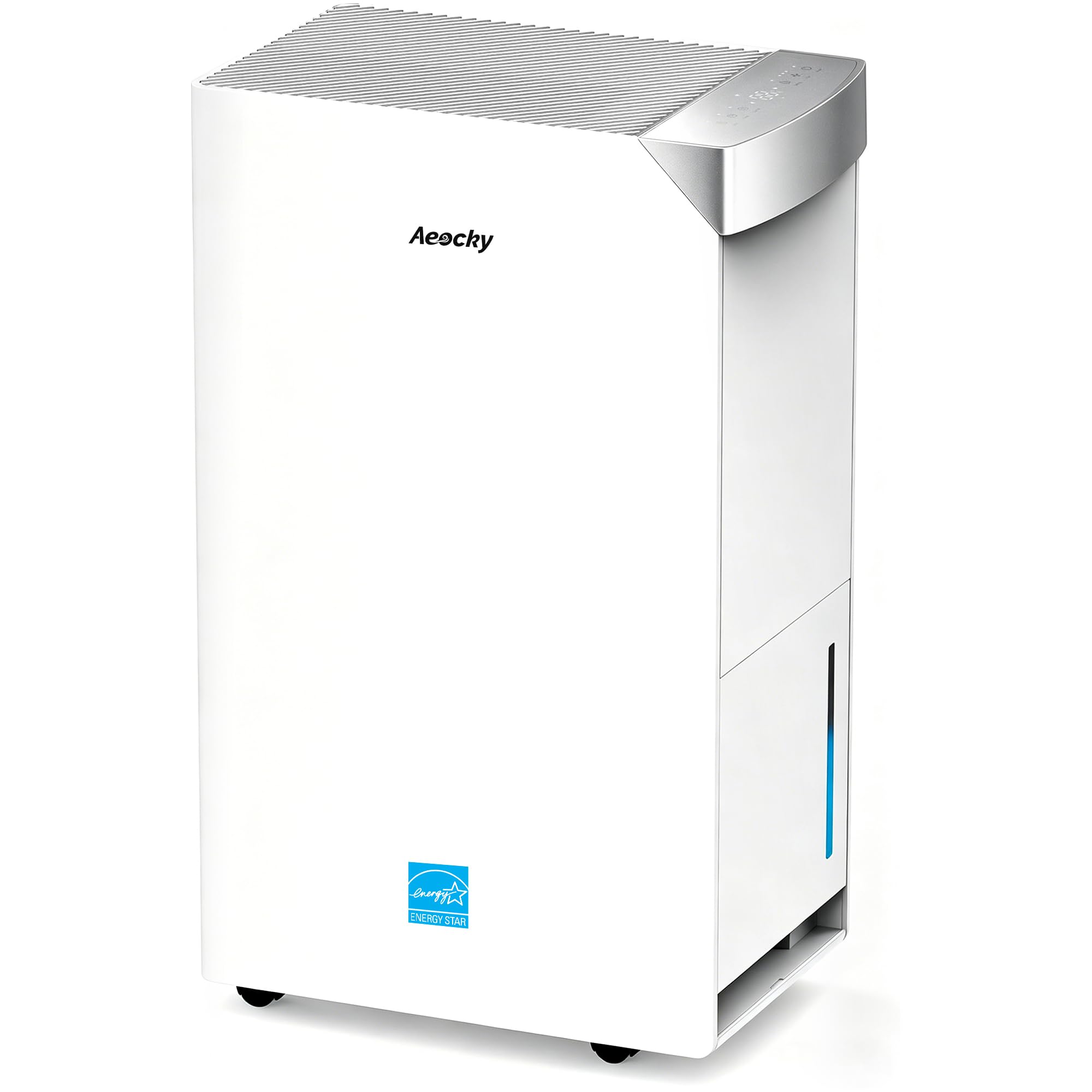
Large-capacity units like this 74-pint model are built for whole-floor basements and open-plan spaces where smaller dehumidifiers can't keep up.
What size dehumidifier do I need for 2,000 sq ft?
At 2,000 square feet you're firmly in large-capacity territory. Consumer Reports advises that for areas of 1,200 square feet or more you need a powerful unit regardless of whether the space feels slightly damp or shows noticeable condensation. Plan on 50 pints minimum, and if the space is very damp or wet, look at units rated well above that. This is also the point where a single high-capacity, whole-area machine starts to make more sense than two mid-size units, both for energy efficiency and for the simplicity of one drain line.
What size dehumidifier do I need for a 3-bedroom house?
A three-bedroom house is the trickiest entry on this list, because "house" implies multiple rooms with doors, and a dehumidifier only conditions the air it can reach. If your goal is whole-house coverage and the floor plan is open or you keep doors open, a single large-capacity 50-pint or larger unit placed centrally can manage roughly 1,500–2,500 square feet of connected space. But if you're trying to dry a humid master bedroom on one end and a damp finished basement on the other, no single portable can do both well. The realistic plan is either one whole-home dehumidifier ducted into the HVAC system, or one capable portable per problem zone.
What size dehumidifier do I need for 3,000 sq ft (whole house)?
Past 2,500–3,000 square feet, you've outgrown what a standard portable is designed to do. A unit advertised for "up to 4,500 sq. ft." can plausibly handle this footprint if the air circulates freely, but the cooler reality is that big homes usually have walls, doors, and dead-air zones. For a true 3,000-square-foot whole-house solution, the durable answer is a whole-home dehumidifier integrated with your forced-air system, or a single large portable stationed in the dampest zone (almost always the basement) where it does the most good. Buying one undersized 50-pint unit and expecting it to dry an entire two-story house is the most common sizing mistake there is.
The Rule Everyone Agrees On: When in Doubt, Size Up
Across every authoritative source we reviewed, one piece of advice was unanimous: it is better to oversize than to undersize. ENERGY STAR states it outright in its sizing guidance, recommending you err toward more capacity. The reasoning is mechanical, not marketing.
An undersized dehumidifier never reaches its target humidity, so it runs continuously, which:
- Costs more electricity, not less, because the compressor cycles around the clock instead of resting once the room is dry.
- Wears out faster, since the compressor is the most stressed component and you're running it nonstop.
- Never actually solves the problem, because the room hovers above your 30–50% target no matter how long the machine runs.
An appropriately sized (or slightly oversized) unit, by contrast, pulls the room down to target quickly, then idles under humidistat control, sipping power and running quietly. Efficiency is where the right size pays you back. ENERGY STAR-certified models use roughly 20% less energy than non-certified equivalents to remove the same moisture, and efficiency is reported as the Integrated Energy Factor (IEF) in liters of water removed per kilowatt-hour, where higher is better. A correctly sized, efficient machine is cheaper to run and more effective. There's no trade-off.
The one caveat: don't go absurdly oversized in a small, tightly sealed room, because a too-large unit will dry the air below 30% and then short-cycle on and off, which is hard on the compressor. "Size up" means one tier, not three.
A Real-World Sizing Example
To ground all of this, consider a large, very-damp basement of roughly 1,800–2,000 square feet, the kind of space that defeats most mid-size machines. A unit built for that job, the AEOCKY 74-pint compressor dehumidifier, illustrates how the spec sheet maps onto the sizing logic above.
According to the manufacturer's published specifications, it carries a 74-pint max / 52-pint standard (DOE) rating, a coverage claim of up to 4,500 sq. ft., ENERGY STAR Version 6.0 certification, a 1.45-gallon tank with a drain hose for continuous drainage, an intelligent humidistat, auto-defrost, and a noise range of 44–50 dB. Notice how the two pint numbers play out exactly as the earlier section warned: the 74-pint "max" grabs attention, but the 52-pint DOE standard figure is the one you'd actually size against, which slots it into the large-capacity tier our table recommends for big, damp basements.
That continuous-drainage detail is the unsung hero for large spaces. A 50-plus-pint machine in a wet basement fills a 1.45-gallon tank quickly; without a hose, you'd be emptying it constantly, which defeats the "set and forget" goal entirely. We haven't bench-tested this unit ourselves; the figures above are drawn straight from the maker's specification page and are presented to show how capacity, drainage, and coverage claims line up with the standards-based sizing in this guide. For a fuller breakdown of how large-capacity units like this perform on paper, see our AEOCKY 74-pint dehumidifier review.
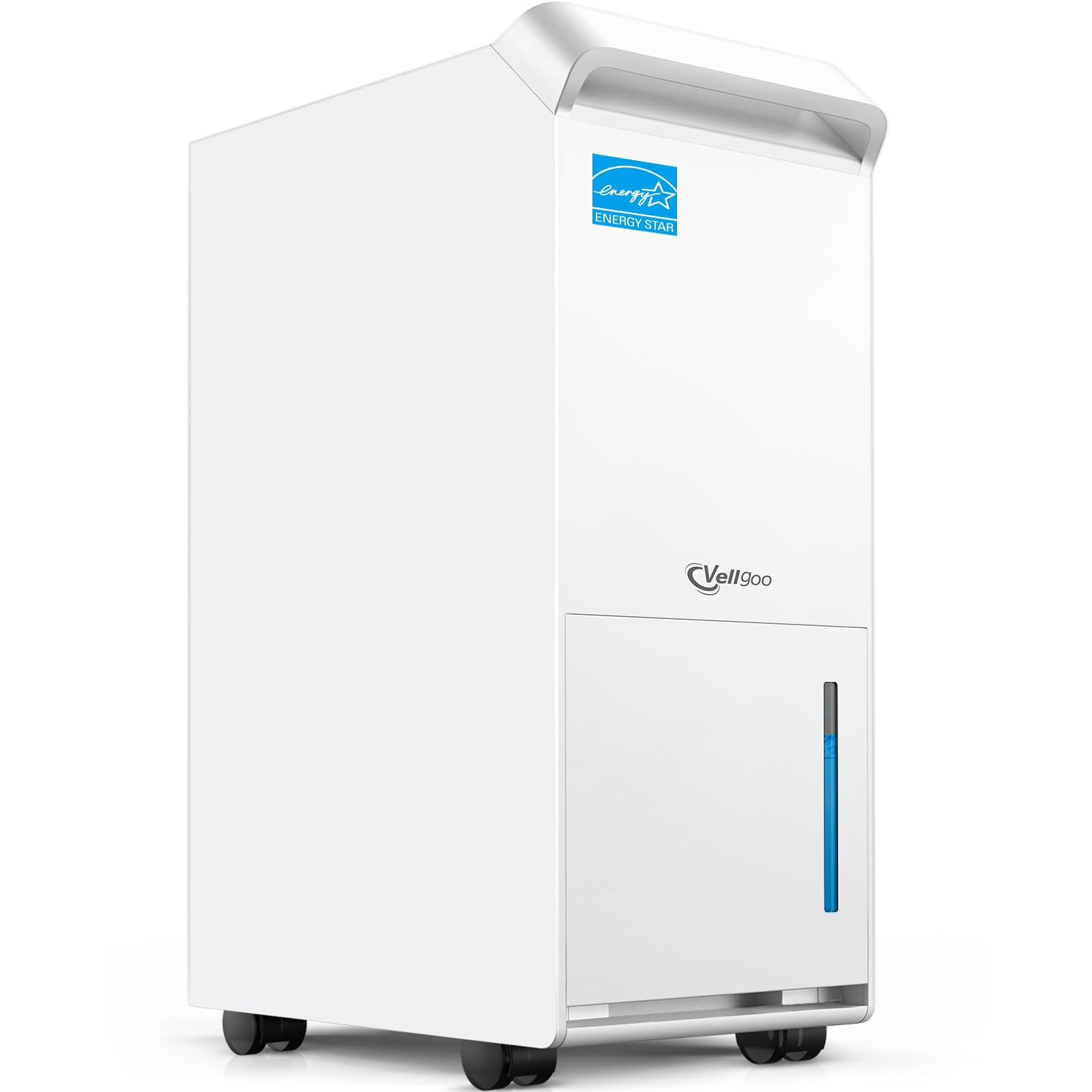
Mid-to-large units in the 50–64 pint class cover most finished basements and open main floors when the space is moderately to very damp.
Common Sizing Mistakes (and How to Avoid Them)
Mistake 1: Sizing by square footage alone
We've hammered this point, but it's the number one error, so it bears repeating. A square-footage-only chart will undersize you the moment your space is damper than "average." Always cross square footage with dampness.
Mistake 2: Trusting a pre-2019 chart
If a chart, blog post, or product comparison doesn't acknowledge the DOE 2019 standard, treat its pint recommendations with suspicion. As the ENERGY STAR's testing-and-capacity guidance shows, the same machine's label can drop by 20-plus pints under the new procedure. Old advice silently undersizes new products.
Mistake 3: Confusing "max" pints with real capacity
Size to the DOE/standard rating, not the headline "max" number. The max figure is a hot-and-humid best case you'll rarely see in a temperate basement.
Mistake 4: Ignoring drainage on large units
The bigger the capacity, the faster the tank fills. For anything 40 pints and up, especially in a basement, a gravity drain hose or built-in pump isn't a luxury, it's what makes the machine usable day to day.
Mistake 5: Forgetting that doors and walls block coverage
A "4,500 sq. ft." coverage claim assumes open, circulating air. Closed interior doors, finished partitions, and separate floors will all shrink real-world reach. For multi-room coverage, plan for airflow or plan for more than one unit.
How to Use a Dehumidifier Size Calculator Wisely
Plenty of "dehumidifier size calculator" tools exist online, and they're a fine starting point. The good ones ask you for both square footage and a dampness level, then output a pint range, which is exactly the two-variable logic in this guide. The weak ones ask only for square footage and spit out a single number; those will steer you wrong for anything but a perfectly average room.
Whichever you use, verify three things before you buy: that the output is expressed in DOE 2019 pints, that it factored in your dampness tier, and that the result lands you a machine whose standard (not max) rating meets or slightly exceeds the recommendation. If a calculator and this guide's table disagree wildly, it's usually because the calculator ignored dampness. Trust the two-variable answer.
Putting It All Together
So, what size dehumidifier do you need for a whole room? Work the short decision tree:
- Measure or estimate the square footage of the connected space the unit must actually reach.
- Classify the dampness using a hygrometer or the sensory tiers: moderately damp, very damp, or wet.
- Cross those two values on the table above to land a pint range.
- Confirm the rating is DOE 2019 standard, and size to the standard pint figure, not the max.
- Round up one tier when you're unsure, because oversizing is the cheaper, more effective mistake.
- For 40-pint-plus units and basements, demand continuous drainage so the machine runs unattended.
Do that, and you'll hold your room comfortably in the EPA's recommended 30–50% humidity band, with a machine that runs efficiently and quietly instead of grinding away and never catching up.
If you're ready to translate a pint number into an actual purchase, our roundup of the best whole-room dehumidifiers for 2026 compares the leading large-capacity models side by side, with the standards-based sizing from this guide built into every pick.
Related Posts