
The short answer: yes, they block the signal, but that's not the real question
Hold a credit card up to a tap-to-pay terminal and a tiny antenna inside the card wakes up, powered by the reader's radio field, and answers back. An RFID-blocking wallet wraps that antenna in a thin layer of conductive material (usually aluminum or a copper-nylon weave) that behaves like a miniature Faraday cage. Put a card inside, wave it at a terminal, and nothing happens. By that narrow test, the wallets work exactly as advertised. Independent reporting backs this up: the shielding genuinely disrupts the radio signal a reader needs to talk to your card, as Norton's security team explains.
So if the marketing claim is "this pouch stops a reader from energizing your card," it's true. The harder, more useful question, the one this page is actually about, is whether anyone is realistically going to point a reader at your back pocket in the first place, and whether the cards in there are even vulnerable if someone tried. That's where the honest answer gets more interesting than the box copy.
A quick note on how we put this together, because we think you deserve it: this assessment cross-checks three independent layers of evidence against each other. We weigh the published positions of consumer-protection groups, payment-network statements, and security reporting against how contactless cards are actually built, then check all of it against the recurring experience of people who carry these cards every day. The strength of that approach is breadth: it reflects how RFID risk plays out across many real wallets and travelers, not a single bench experiment. Where the experts disagree, we’ll say so.
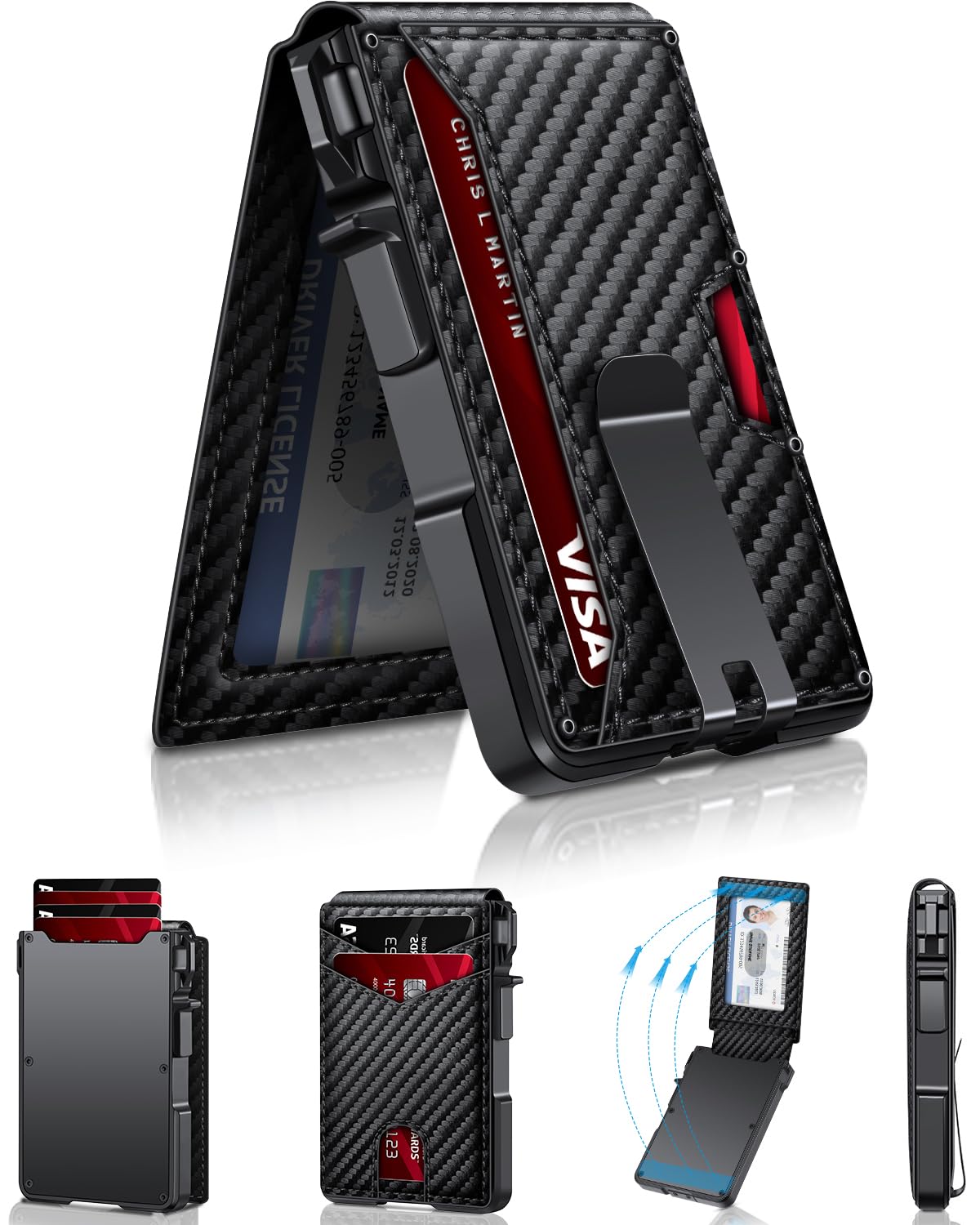
Most slim "RFID wallets" pair shielding with a metal or reinforced card stack — the shielding is only part of the value.
Are RFID-blocking wallets really needed? What the threat actually looks like
Here's the uncomfortable thing for an entire product category: the crime these wallets defend against is, in the real world, almost nonexistent. RFID skimming is genuinely possible; researchers have demonstrated it on a bench. But documented cases of a criminal walking up to a stranger, wirelessly lifting card data, and turning it into fraud are vanishingly rare to the point of being mythical.
The AARP looked into this and reported that RFID scams are "largely unheard of," with no documented real-world incidents, and quoted the Identity Theft Resource Center bluntly: "There's a lot in life to worry about, but someone stealing your credit/debit card information from the RFID chip shouldn't be one of them." You can read their full breakdown of RFID wallets and purses. Visa, whose network would foot the bill for this kind of fraud, has stated that "fraud from skimming is very unlikely and limited in scope."
Why would criminals skip such a futuristic-sounding attack? Because it's terrible business. Wirelessly pickpocketing one card at a time, in a crowd, hoping to get close enough for a few seconds, is slow, risky, and low-yield. Compare that to a data breach that leaks millions of card numbers at once, or a skimmer glued over a real payment terminal that harvests cards all day. As a Chase executive put it to AARP, the real risk is "people being careless with their card numbers, writing them down, or having their card sitting out." Crooks go where the money is, and it isn't your hip pocket.
So who, if anyone, actually benefits?
"Almost nobody needs one" isn't quite the same as "nobody." A few situations move the needle:
- Heavy international travel through dense transit hubs. Some reporting allows that crowded airports and train platforms are the one place a determined skimmer could theoretically get close enough, which is why BGR's analysis concedes a sliver of marginal value there even while concluding most people don't need a blocking wallet.
- Work badges, transit cards, and key fobs. These often use older, less-protected RFID standards than payment cards. If you're worried about cloning, those are the credentials more worth shielding than a modern Visa.
- Peace of mind. This one's real even if it's not technical. If a shielded wallet means you stop thinking about it, and the wallet you like happens to include shielding at no extra cost, there's no downside to having it.
The honest framing: RFID blocking has quietly become a legacy feature. It's not snake oil (it does what it says), but in 2026 it solves a problem that modern payment cards already largely solved on their own. Which brings us to the cards themselves.
Is RFID blocking necessary in 2026? Your cards already fight back
The single biggest reason the threat faded isn't better wallets. It's that contactless cards got dramatically smarter, and most people don't realize how much.
When you tap, the card does not broadcast a static card number that a thief can replay. Modern EMV contactless transactions use a dynamic cryptogram, a one-time code, unique to that single tap, generated on the spot. Intercept it, and it's already useless; it won't authorize a second purchase. Security write-ups describe this plainly: the data captured from a tap can't be reused to make a valid purchase, because the cryptogram changes every time. That's a structural defense, not an add-on.
It gets better. The sensitive pieces a fraudster would actually need for online ("card-not-present") fraud, namely your name, billing address, and the three-digit CVV on the back, are simply not transmitted over the contactless interface at all. The standard never sends them wirelessly. So even a flawless skim captures a token and a one-time code, never the toolkit needed to shop online with your details. There's a clear walkthrough of how EMV chips and contactless security actually work if you want the mechanics.
Layer on the practical limits and the picture closes further:
- Per-tap caps. Most contactless transactions are capped (commonly around $100–$250 depending on country and issuer); larger amounts kick you over to chip-and-PIN, which a wireless skim can't satisfy.
- Tokenization for phone wallets. Pay with your phone and the merchant never even sees your real card number, just a device-specific token plus that one-time cryptogram.
Put together, dynamic cryptograms, withheld CVV, transaction caps, and tokenization give contactless cards a multi-layered defense that's hard to defeat even with the card in hand, let alone from a few inches away through fabric. The wallet's shielding is, at most, one more redundant layer on a stack the bank already built.
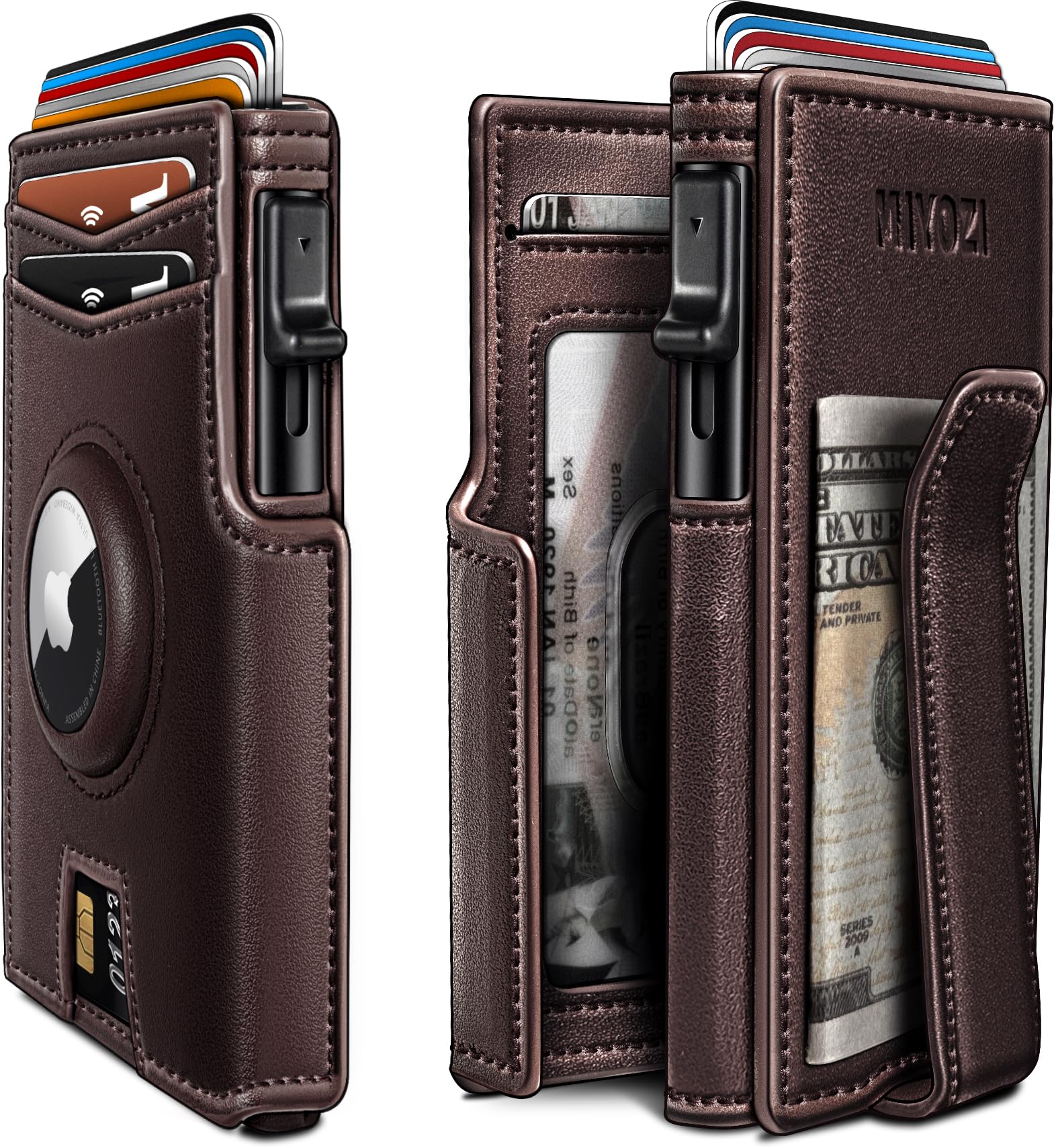
The cards inside a modern wallet already use dynamic cryptograms and withheld CVV data, blunting the skimming threat before any shielding is involved.
How close does someone have to be to scan your credit card?
This is the detail that quietly demolishes the "someone walks past you in a crowd" fear, so it's worth being precise.
The contactless standard your payment card uses operates at very short range by design. We're talking a few centimeters. That's not an accident; the short range is a security feature. As AARP puts it, "a scammer can't read your card by simply standing nearby or walking past you." To wake your card's antenna and get a usable response, a reader essentially has to be almost touching it.
You'll sometimes see scary-sounding "10 meter" figures online. It's worth understanding what those mean. Research has shown that a powerful reader's outgoing signal can be detected at distances up to around 10 meters, and a card's much weaker response at roughly 1 meter under ideal lab conditions, but that's a tuned setup detecting a faint signal, not the same as cleanly reading and decoding your card's data from across a room. In the field, the realistic, reliable read distance for a standard payment card stays in the few-centimeters range. A thief would need to get a hidden reader closer to your wallet than most pickpockets ever manage, at which point grabbing the wallet would be easier anyway.
The mobile-wallet escape hatch
If proximity still nags at you, there's a free fix that beats any pouch: pay with your phone or watch. Phone wallets keep your real card number out of the transaction entirely and require you to unlock and authorize each tap, so there's no idle, always-listening card sitting in your pocket. Some security writers now recommend consolidating cards into a phone wallet as a more practical "security upgrade" than buying a shielded billfold. It costs nothing, and it removes the attack surface instead of merely wrapping it.
Do RFID-blocking wallets mess up my cards? Putting the demagnetizing myth to bed
A recurring worry runs in the opposite direction: if the wallet blocks signals, will it damage my cards by wiping the chip, scrambling the magnetic stripe, or demagnetizing something?
No. RFID shielding is passive. It doesn't emit anything; it just sits between your card and a would-be reader, blocking radio waves the way a metal roof blocks Wi-Fi. There's no magnetic field, no current, no energy pushed into the card. Multiple consumer explainers make the point that RFID blockers don't magnetize stripes, alter chips, or wipe data on contact, as laid out in a piece on whether RFID-blocking cards can damage credit cards.
It helps to separate two technologies people blur together:
- The magnetic stripe stores data magnetically and can be degraded, but only by strong permanent magnets (think a magnetic purse clasp or a fridge magnet pressed against it for ages), heat, scratches, and bending. RFID shielding involves none of those.
- The RFID/EMV chip answers a radio query and is essentially immune to permanent magnets in the first place; you can't "erase" it with a magnet the way you might scramble a stripe.
When a card stops working, the culprit is almost always physical: a cracked chip, a worn stripe, a card that's been sat on for two years. An RFID sleeve or shielded wallet isn't in that list. If your minimalist wallet has a magnetic money-clip closure, keep the magnet away from the stripe as a sensible habit, but that's about the magnet, not the RFID shielding.
Where the scare came from — and why the cards outran it
It helps to know why RFID-blocking wallets exist at all, because the fear is downstream of a real moment in payment history. When contactless cards first rolled out roughly two decades ago, security researchers demonstrated that early "first-generation" cards could leak data, in some cases even transmitting the cardholder name and full card number in the clear over the radio interface. Those demonstrations were legitimate, they made headlines, and an entire accessory category was born to answer them. The warning, in other words, started out true.
But the cards didn't stand still. The industry's response was to encrypt and tokenize, and as the reference entry on RFID skimming notes, modern EMV-based payment cards feature encryption that makes skimming efforts much more difficult. The plaintext card-dump scenario that justified the first blocking sleeves doesn't describe a card issued in the last several years. The accessory survived; the vulnerability it was built for mostly didn't. That mismatch, a product solving yesterday's problem, is the core of why so many experts now wave people off it.
This is also why you should be skeptical of any product page that quotes those early demonstrations as if they describe your current card. They describe a card design that's been retired. The honest version of the story is: the threat was real, the industry fixed the cards, and the wallets are now insurance against a risk the bank already underwrote.
What the fraud numbers actually show
If remote RFID skimming were a meaningful problem, it would leave a fingerprint in fraud statistics. It doesn't. The clearest public read comes from the UK, where contactless adoption is near-universal. According to UK Finance's fraud reporting, contactless fraud ran at roughly 1 penny per £100 spent on contactless, a fraction of the rate for cards overall, and even that sliver is dominated by lost and stolen physical cards being tapped by whoever found them, not by anyone wirelessly harvesting data from a passing pocket. Meanwhile, old-fashioned counterfeit-card skimming (the magnetic-stripe kind, copied at a tampered terminal or ATM) has fallen by over 80% across a decade as chip-and-contactless took over.
Read that carefully, because it's the whole argument in one statistic: the tiny amount of contactless fraud that does happen is mostly someone physically holding your card. An RFID-blocking wallet does nothing about a lost or stolen card; once it's out of the wallet, the shielding is irrelevant. So the defense and the actual threat barely overlap.
What shielding actually does (and the DIY question)
Suppose you've read all this and still want the belt-and-suspenders comfort of shielding. Fair enough. It's worth knowing how well it really works and whether you need to pay for it.
Independent informal testing, summarized in that same RFID-skimming reference, is instructive. A layer of aluminum foil cut the maximum read range of an unshielded card from around 1.5 feet (50 cm) down to roughly 1–2 inches (3–5 cm). That's a dramatic reduction, but note two things. First, it implies an unshielded card's practical "vulnerable" range in that test was about a foot and a half, not the room-spanning distances some marketing implies. Second, the shielding was not measured as 100% effective, and thin foil "tends to wear out quickly." A purpose-built shielded wallet does this more durably than a foil wrap, but the physics is the same: it's a Faraday-cage effect that attenuates the signal, not a magic forcefield.
A few practical implications fall out of that:
- A dedicated "RFID blocking card" (a card-shaped insert you drop into a normal wallet) works on the same shielding principle, but its coverage depends on placement; it has to sit between a reader and the cards you care about. A wallet that shields the whole stack is more foolproof than a single insert.
- You almost never need to pay a premium for it. Because shielding is cheap to add, it's bundled into a huge share of slim wallets already. If two otherwise-identical wallets cost the same and one includes shielding, take the shielded one, but don't pay extra for a "security" label.
- Metal-bodied minimalist wallets often provide a degree of shielding just from their aluminum or steel construction, which is part of why so many slim metal wallets list "RFID blocking" as a feature almost incidentally.
The takeaway isn't "shielding is fake." It's that shielding is a real, modest, inexpensive effect that's most sensibly treated as a built-in bonus, the same conclusion the experts reach from the threat side. Whether you DIY it with foil, drop in a blocking card, or buy a shielded wallet, you're buying down a risk that's already small. Spend accordingly.
So should you buy an "RFID wallet" at all? A practical verdict
Strip away the fear marketing and here's where the evidence lands:
- The shielding works. It physically blocks the read. That part is real and not in dispute.
- The threat it blocks is, for almost everyone, theoretical. Real-world RFID skimming fraud is essentially undocumented, and the major payment networks say as much.
- Your cards already defend themselves with dynamic cryptograms, withheld CVV data, transaction caps, and (on phones) tokenization.
- The range is tiny, so the "walk-by scan" scenario doesn't hold up.
- The wallets are harmless to your cards.
Add it up and RFID blocking shouldn't be the reason you pick a wallet, though it's also no reason to avoid one. The smarter move is to choose a wallet for the things that genuinely affect your daily carry (slimness, card capacity, build quality, how cleanly it fans your cards, whether it has a money clip or tracker pocket) and treat shielding as a harmless bonus that often comes built in anyway. Many of the best slim wallets include RFID shielding by default, so you frequently get it for free without paying a "security" premium.
If you want to shop that way, our guide to the best men's minimalist RFID wallets ranks the ones worth carrying on the criteria that actually matter day to day, and our walkthrough on how to choose a minimalist RFID wallet breaks down capacity, materials, and tracking features so you're buying for fit and function, not fear. For a concrete example of how shielding shows up as one feature among many rather than the headline, our ZALVEX minimalist RFID wallet review looks at a slim metal model that markets RFID blocking and weighs it against the things you'll actually notice in your pocket.
A few questions that keep coming up
Are RFID wallets necessary if I only carry one or two cards? Necessary, no. The fewer contactless cards you carry, the smaller an already-tiny attack surface gets. If you've consolidated to a single card plus a phone wallet, you've done more for your security than any sleeve will. Shielding becomes a "sure, why not" rather than a "must."
What about my passport? This is the one case where shielding earns slightly more of its keep. Modern e-passports carry an RFID chip with personal data, and while they include their own protections, a shielded passport sleeve is a low-cost, low-regret choice if you travel internationally and want it. That's a different item from your everyday card wallet, though, and the reasoning is about identity documents, not Visa fraud.
Work badges and building fobs? These frequently use older, lower-security RFID standards than payment cards and can in some cases be cloned at close range. If you're going to shield anything, these credentials are a more logical target than a modern bank card, which is a good reminder that "RFID" isn't one thing. Payment cards are the well-defended end of the spectrum.
Is tapping my phone really safer than a shielded wallet? For the skimming question specifically, yes. A phone wallet keeps your real card number out of the transaction entirely, requires you to unlock and authorize each tap, and isn't a passive antenna sitting in your pocket waiting to be queried. It removes the attack surface rather than wrapping it, and it's free.
The bottom line
Do RFID-blocking wallets actually work? Technically, yes: they stop a reader from talking to your card. But the protection mostly guards against a crime that barely happens to a card that's already well-defended at very short range. In 2026, shielding is a legacy feature: nice to have, harmless to your cards, and no reason on its own to spend extra. Buy the wallet you'll genuinely enjoy carrying, let the shielding ride along for free, and put the saved worry toward the fraud risks that are actually real — like keeping an eye on your statements and not leaving your card numbers lying around.
Related Posts