How to Choose a Floor Vacuum Cleaner: A Practical Buyer's Guide
 Abdulwahab Suleiman·June 16, 2026
How to Choose a Floor Vacuum Cleaner Without Overthinking It
Picking a floor vacuum looks simple until you start reading spec sheets. Suddenly you're staring at air watts, CFM, sealed HEPA systems, brush-roll switches, and a dozen "pet" badges that may or may not mean anything. The good news: choosing well comes down to four questions, and once you answer them, most of the noise falls away. What floors do you have? Do you live with pets or allergies? How much cleaning do you actually do, and where? And how much do you want to spend before the extra money stops buying real performance?
This guide walks through all four. It is research-based: we did not bench-test these machines in a lab. Instead we synthesized the buying methodology that independent testers like Consumer Reports publish, manufacturer specifications, and reputable filtration and engineering sources, so the numbers and recommendations here are grounded rather than guessed. Where a figure matters, it is linked to its source. Our aim is to answer the exact questions people ask before they spend money, then point you toward the right type of vacuum for your home.
If you already know your floors and just want models, our best floor vacuum cleaners guide ranks specific machines across carpet, hardwood, and pet households. This article is the "how to decide" companion to that list.
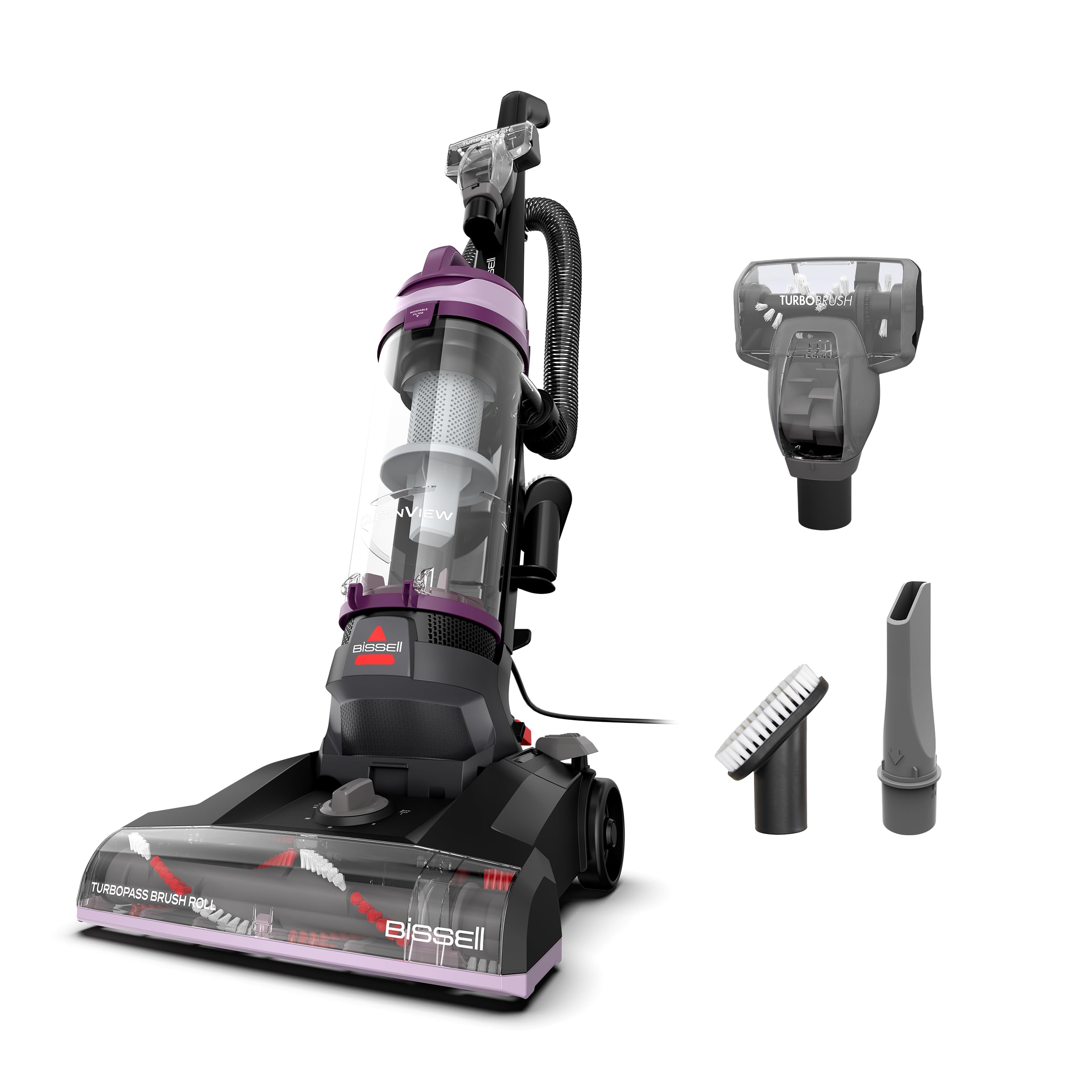
An upright like this Bissell CleanView puts the motor's weight over the brush roll, which is what helps it dig into carpet.
The 3 Types of Vacuum Cleaner Most People Actually Choose Between
Walk into any store and you'll see a wall of options, but for everyday floor cleaning the decision usually narrows to three types of vacuum cleaner: the upright, the canister, and the stick (most stick vacuums today are cordless). Robot and handheld vacuums exist and they're useful, but they're typically a second vacuum rather than your main one. Let's name the field properly first, then zoom in on the three that matter most.
Types of vacuum cleaner, with names
There are really six recognizable families, even if most buyers only seriously weigh three of them:
- Upright — the classic all-in-one tower; motor, brush roll, and dustbin stacked in one unit you push.
- Canister — a wheeled body you tow behind you, connected by a hose to a separate cleaning head.
- Stick — a slim, lightweight wand-style vacuum, usually cordless and battery-powered.
- Handheld — a tiny portable unit for spot cleaning, stairs, car interiors, and upholstery.
- Robot — an autonomous disc that maps your home and cleans on a schedule.
- Wet/dry (shop) vacuum — a rugged unit for workshops, spills, and debris a regular vacuum can't take.
Consumer Reports frames the same lineup by job: uprights for "deep cleaning" and carpet, canisters for hardwood floors and stairs, sticks for "quick cleaning," handhelds for "surface and spot cleaning," and robots for "touch-ups and ongoing light cleaning" (Consumer Reports). That single sentence is more useful than most spec comparisons, because it tells you each type is built around a use case, not just a price.
Upright vacuums: the carpet workhorse
An upright is the traditional, all-in-one machine most people picture. The motor, suction head, and dustbin live in one vertical unit, which gives it a wide cleaning path and strong, motor-driven brush-roll agitation. The reason it's the carpet champion is mechanical: the vacuum's whole weight sits over the powerhead, so the brush roll can dig into carpet fibers and lift embedded grit. Consumer Reports is direct about it — if you have wall-to-wall carpet or thick area rugs, "an upright vacuum is the best choice" (Consumer Reports).
The trade-off is bulk. Uprights are heavier and less nimble around furniture, and pushing one up a staircase is nobody's idea of fun. But for a carpeted home or a busy main floor, nothing else matches the speed and deep-clean performance per dollar.
Canister vacuums: the hard-floor and stairs specialist
A canister splits the machine into two: a wheeled body that holds the motor and dustbin, and a lightweight cleaning head on the end of a flexible hose. That separation is the whole point. Because you're only steering the head, canisters glide under furniture, switch easily between a bare-floor tool and a carpet head, and handle stairs gracefully — Consumer Reports notes the two-part design "lets you distribute the weight more evenly" on steps (Consumer Reports).
Canisters are the quiet favorite of people with lots of hardwood, tile, or laminate, and of anyone who hates dragging a heavy tower around. The compromise is storage (two pieces and a hose) and the fact that you're towing a body behind you.
Stick and cordless vacuums: convenience first
Stick vacuums are slim, light (often 3 to 9 pounds), and increasingly cordless. Their superpower is friction-free convenience: grab it off the wall mount, clean a spill or a high-traffic strip, and put it back. Modern cordless models from major brands can deliver genuinely useful suction for roughly 40 minutes on a charge, which covers most daily touch-ups for an average home.
What you give up is endurance and, often, deep-carpet power. Batteries run down, dustbins are small, and the lightest models lean toward hard floors rather than thick pile. That's why so many households end up pairing a stick with a heavier main vacuum — the stick handles the quick stuff, the upright or canister handles the weekly clean.
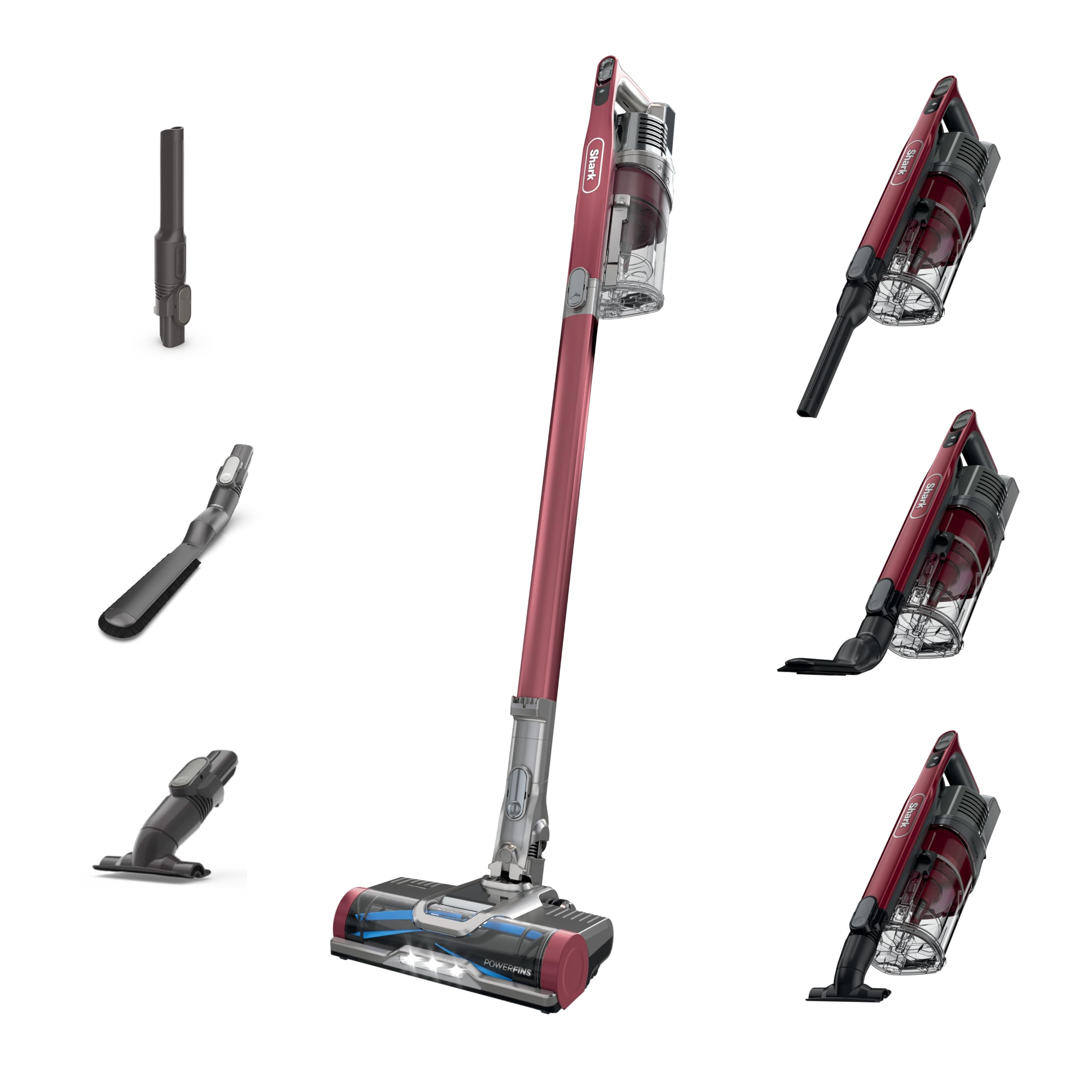
Cordless sticks trade runtime and deep-carpet power for grab-and-go convenience; many double as a handheld.
Robot and handheld vacuums: the supporting cast
A robot vacuum is not a replacement for a deep-clean machine, but as a maintenance tool it's hard to beat. Set it to run every morning and it keeps dust and pet hair from piling up between your real cleanings. A handheld, meanwhile, is the right answer for stairs, car seats, and quick crumb patrol. Treat both as a complement to your main vacuum, not the main event — Consumer Reports specifically calls a stick, handheld, or robovac "useful for quick cleanups or to avoid having to lug your main vacuum up and down stairs" (Consumer Reports).
How to Choose a Floor Vacuum Cleaner for Your Floor Type
Floor type is the single most important factor, and getting it right is what separates a vacuum that feels great from one that disappoints. The rule is short: match the agitation and suction to what's on your floors.
Mostly carpet
Carpet hides dirt deep in its pile, and only a driven brush roll can shake it loose. That's upright territory. You want strong, motorized agitation and enough suction to lift what the brush dislodges. If your home is mostly carpeted, start your search with uprights and treat everything else as secondary. A capable, mainstream pick here is a bagless upright with a dedicated pet brush roll and a large bin — exactly the category our Bissell CleanView 4438 upright review covers in detail, since it's the all-floors, carpet-friendly mainstream choice in this cluster.
Mostly hardwood, tile, or other bare floors
Bare floors are the opposite problem. There's no pile to dig into, so raw brush-roll aggression isn't the goal — in fact, a spinning brush roll on a hard floor can scatter debris and flick crumbs around. Here a canister shines, and Consumer Reports notes canisters "perform best" on mostly bare floors, with stick vacuums working well for smaller spaces (Consumer Reports). Two features matter most on hard floors: the ability to turn the brush roll off, and good filtration so fine dust doesn't get blown back into the room.
A mix of carpet and hardwood (most homes)
Most of us have both, and that's where a brush-roll on/off switch earns its keep. The guidance is simple and worth memorizing: "Turn the brush roll off on a bare floor and turn it on when cleaning carpets" (Consumer Reports). A versatile upright or canister with that switch handles a mixed home well. If you're chasing the best affordable vacuum for hardwood floors and carpet, prioritize that single feature over almost any other — it's the difference between one vacuum that does both and two vacuums that each do one.
How to Choose Vacuum Cleaner Power (Air Watts vs. CFM vs. Watts)
This is where buyers get tangled, because manufacturers love big numbers that don't always mean what you'd think. Let's translate the three you'll see.
Plain watts are the least useful number
The wattage printed on the box is the motor's electrical draw, not its cleaning power. A higher wattage only helps if the machine channels that energy efficiently — a poorly designed 1,400-watt vacuum can clean worse than a well-engineered 900-watt one. Use watts as a rough sanity check, not a ranking.
CFM (airflow) is what moves the dirt
CFM, cubic feet per minute, measures airflow — the moving column of air that actually carries dirt off your floor and into the bin. Many specialists argue airflow "is by far the most important specification in terms of determining the cleaning ability of a vacuum cleaner," because it accounts for both the motor and the resistance of the bag and filter (BestVacuum.com). Airflow above roughly 120 CFM is considered strong for a household machine (BestVacuum.com).
Air watts combine suction and airflow
Air watts try to express real cleaning power by combining airflow with suction force (water lift) at the working end of the tool. It's the most honest single number, which is why premium brands quote it. As a rough map: most households are well served around 150 to 200 air watts for a general-purpose vacuum, uprights commonly fall in the 180 to 300 air-watt range, and canisters of 250 air watts or more are considered strong (BestVacuum.com).
What power you actually need by floor
You don't need the most powerful vacuum on the shelf; you need enough for your floors. A reasonable mental model from the spec literature:
- Bare floors: modest suction is plenty; airflow and the ability to switch off the brush roll matter more than raw power.
- Low-pile carpet: mid-range power handles it comfortably.
- Thick, high-pile carpet or deep pet-hair cleaning: this is where you want the top of the range — strong air watts paired with a driven brush roll.
The practical takeaway: don't pay for 300 air watts to clean an apartment of hardwood, and don't expect a featherweight stick to deep-clean a shag rug. Buy to your floors.
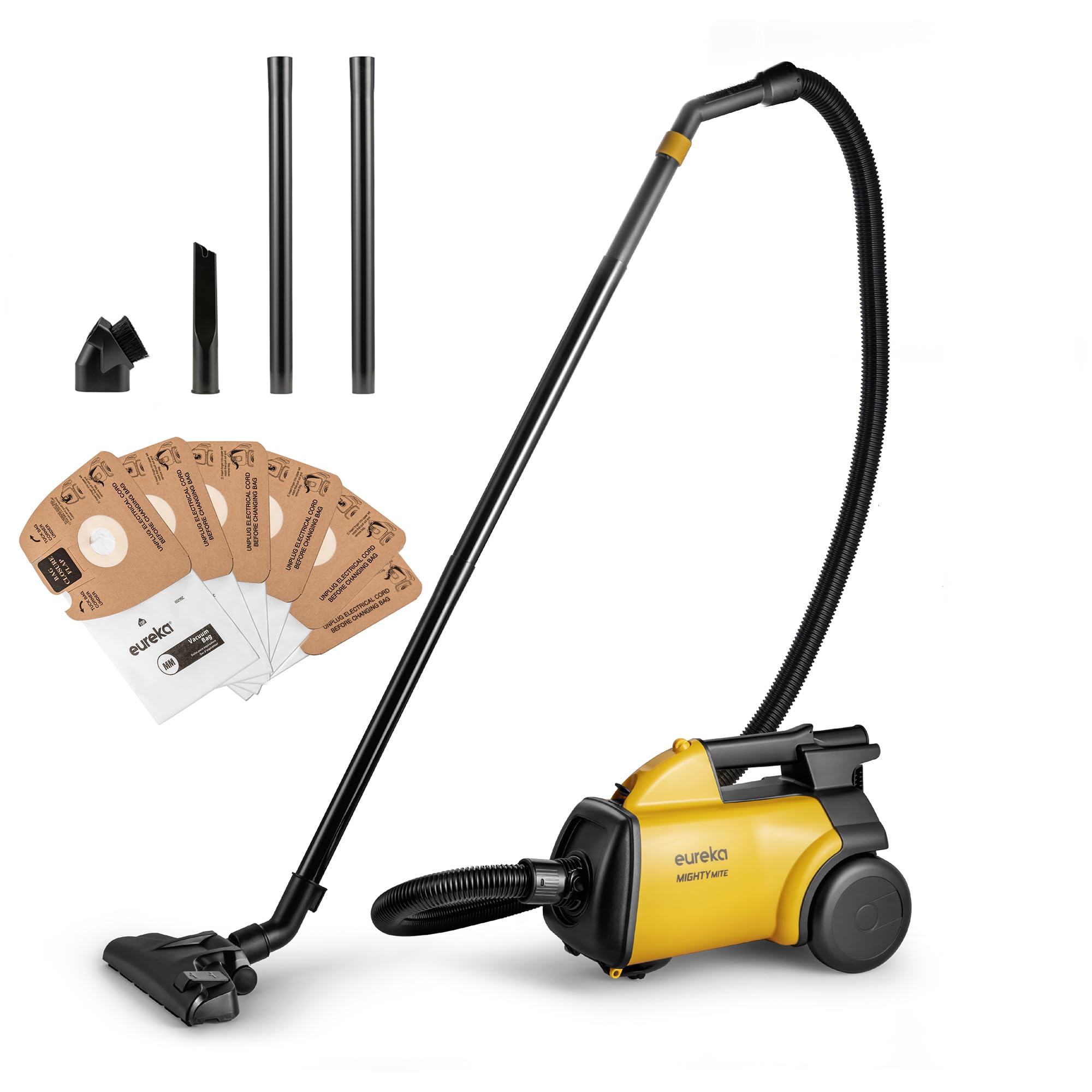
Canisters like this Eureka 3670M steer just the lightweight head, which is why they excel on bare floors and stairs.
How to Choose a Floor Vacuum Cleaner for Pets
Pet households have a tougher spec list, and the marketing here is especially loud. Strip away the badges and three things actually matter: agitation that grabs embedded hair, filtration that captures the dander you can't see, and a brush roll that doesn't turn into a hairball.
Suction and agitation for embedded hair
Pet hair works its way deep into carpet and upholstery, so you want a driven brush roll and solid suction to lift it. Consumer Reports puts every vacuum it tests through "a special pet-hair pickup test," which tells you how central this performance is to a fair evaluation (Consumer Reports). For carpeted, pet-heavy homes, a strong upright with a pet brush roll is usually the most cost-effective answer.
Filtration is non-negotiable for dander and allergies
If anyone in the home has allergies or asthma, filtration moves to the top of the list — and this is where a single feature, the brush roll, gets overshadowed by the filter and the system around it. A true HEPA filter traps 99.97% of particles down to 0.3 microns, the size range that includes pollen, dust-mite debris, and pet dander (Allergy & Asthma Network).
But here's the catch most shoppers miss: a HEPA filter only helps if the vacuum is sealed. In a properly sealed system, all the air the vacuum pulls in is forced through the filtration before any of it exits; in a leaky one, fine dust escapes through the seams before the HEPA filter ever sees it. As filtration sources put it, a sealed system "forces 100% of exhaust air through the filter," which is what actually keeps allergens out of the air you breathe (Allergy & Asthma Network). When a listing says "HEPA," check whether it also says "sealed system." Without the seal, the HEPA badge is doing less than you think.
Tangle-resistant brush rolls and pet tools
Long pet hair wraps around brush rolls and chokes them, so look for tangle-resistant or self-cleaning brush rolls, plus a motorized pet-upholstery tool and a crevice tool for the edges where fur collects. These attachments are the difference between a five-minute job and a frustrating one.
How to Choose a Floor Vacuum Cleaner the Way Consumer Reports Does
A useful shortcut is to borrow the criteria independent labs use, because they're chosen to predict real-world satisfaction rather than to sell a feature. Consumer Reports evaluates vacuums on how well they clean carpet and bare floors, pet-hair pickup, filtration and emissions, noise, and ease of use (Consumer Reports). Notice what's not on that list: a single headline wattage number. Lab methodology weighs balanced performance, and so should you.
Bagged vs. bagless
This one is genuinely a lifestyle choice, not a performance verdict. Bagged vacuums "tend to hold more" and trap allergens inside the bag, so emptying them releases fewer particles — a real plus for allergy households. Bagless models save you the ongoing cost of bags but tend to release more dust when you empty the bin (Consumer Reports). If allergies are a factor, lean bagged; if you'd rather not buy consumables, bagless is fine as long as you empty it carefully.
Attachments that actually earn their keep
The tools that come in the box quietly determine how often you'll reach for the vacuum. A crevice tool for baseboards and corners, an upholstery brush for sofas, a dusting brush for shelves, and an extension wand for ceilings and stairs cover almost every real task. Don't over-index on a long accessory list — index on whether the tools you'll use are included.
Noise and ease of use
Two underrated factors. A vacuum that's painfully loud or awkward to push is a vacuum that stays in the closet. If you can, handle the machine before buying: check the weight, how it turns, how easy the bin or bag is to empty, and how the cord or battery fits your routine. The "best" vacuum on paper is the one you'll never regret using weekly.
When to buy
Vacuums go on sale constantly. Consumer Reports notes they're "featured in almost every holiday sale," so unless yours just died, timing a purchase around a major sale event is an easy way to get more vacuum for the money (Consumer Reports).
Matching the Vacuum Type to Your Home: A Quick Decision Table
Here's the whole decision condensed. Find the row that sounds like your home and start there.
Your situation | Best primary type | Features to prioritize
Mostly carpet | Upright | Driven brush roll, strong air watts, large bin
Mostly hardwood/tile | Canister or stick | Brush-roll off switch, good filtration, light head
Mix of carpet and hardwood | Upright or canister | Brush-roll on/off switch above all
Pets + carpet | Upright (pet model) | Pet brush roll, tangle resistance, sealed HEPA
Allergies/asthma | Any, but sealed HEPA | Sealed system + true HEPA, bagged if possible
Small apartment, hard floors | Cordless stick | Light weight, ~40-min runtime, easy storage
Maintenance between cleans | Robot (as a second) | Scheduling, dock, decent dustbin
Notice that most rows point to two clear front-runners, the upright and the canister, with a stick or robot filling a supporting role. That's the real shape of the market once you cut through the marketing: pick the main vacuum for your dominant floor type, then add a convenience vacuum if your routine needs one.
Common Mistakes When Choosing a Floor Vacuum
A few errors show up again and again, and each one is easy to avoid once you know to look for it.
Buying on watts alone
The wattage number is seductive because it's big and simple, but it measures power draw, not cleaning ability. Two machines at the same wattage can clean very differently depending on airflow and sealing efficiency. Look at air watts or CFM if the brand publishes them, and weigh independent test results over any single spec (BestVacuum.com).
Ignoring filtration when it matters
If allergies aren't a concern, filtration is a nice-to-have. If they are, it's the headline feature — and a HEPA filter without a sealed body underdelivers, because unfiltered air leaks out the seams (Allergy & Asthma Network). Read for the words "sealed system," not just "HEPA."
Forcing one vacuum to do everything
A featherweight cordless stick is a poor deep-carpet machine, and a heavy upright is miserable on stairs. There's no shame in a two-vacuum setup. It's often cheaper and more pleasant than one expensive compromise. The household strategy independent testers describe — a main vacuum plus a light second one for quick jobs — exists for a reason (Consumer Reports).
Overlooking the boring stuff
Weight, noise, bin size, cord length, and how easy it is to empty all affect whether you actually use the thing. The most powerful vacuum in the world cleans nothing while it sits in the closet because it's a pain to drag out.
Putting It All Together
Choosing a floor vacuum is really a sequence of four answers. Floors first: carpet leans upright, bare floors lean canister or stick, and a mix means you want a brush-roll on/off switch above all. Pets and allergies next: add a pet brush roll and, critically, a sealed HEPA system if anyone in the house sneezes. Power third: ignore raw watts, look at air watts or CFM, and buy enough for your floors rather than the biggest number on the shelf. Practicality last: weight, noise, bin, and attachments decide whether the vacuum becomes a habit or a closet ornament.
Do that, and the wall of options collapses into one or two sensible choices. When you're ready to compare specific machines against these criteria, our best floor vacuum cleaners guide ranks models for carpet, hardwood, and pet homes, and the Bissell CleanView 4438 upright review is a good place to see how a mainstream all-floors upright stacks up against everything we've covered here.
Related Posts