
Start With Your Water, Not the Filter
Here's the mistake almost everyone makes: they pick a water filter first, then hope it solves whatever's wrong with their water. That's backwards. A filter is a tool built to remove specific things, and a pitcher that's brilliant at killing chlorine taste will do nothing for the lead leaching out of an old service line. So before you spend a dollar, the question to answer is not "which filter is best?" It's "what's actually in my water, and what do I want gone?"
The good news is you don't have to guess. If you're on a municipal (city) supply, your utility is legally required to send you an annual Consumer Confidence Report that lists what's been detected in your water. Read it. If anything is at or near a federal limit, that's your filtration target. If you're on a private well, nobody tests it for you, which we'll get into below, because well water changes the whole calculation.
This guide walks through how to choose a home water filter the way a careful buyer should: figure out the contaminants, match a filter type to them, then verify the certification actually covers the claim. Our recommendations are research-based and cross-checked across three independent layers: manufacturer specifications, the independent NSF/ANSI certification standards, and guidance from authorities like the EPA, the CDC, and Consumer Reports. Triangulating those sources reflects how filters perform for many households, not a single sample, so you can make the call with the same information a seasoned reviewer would use.
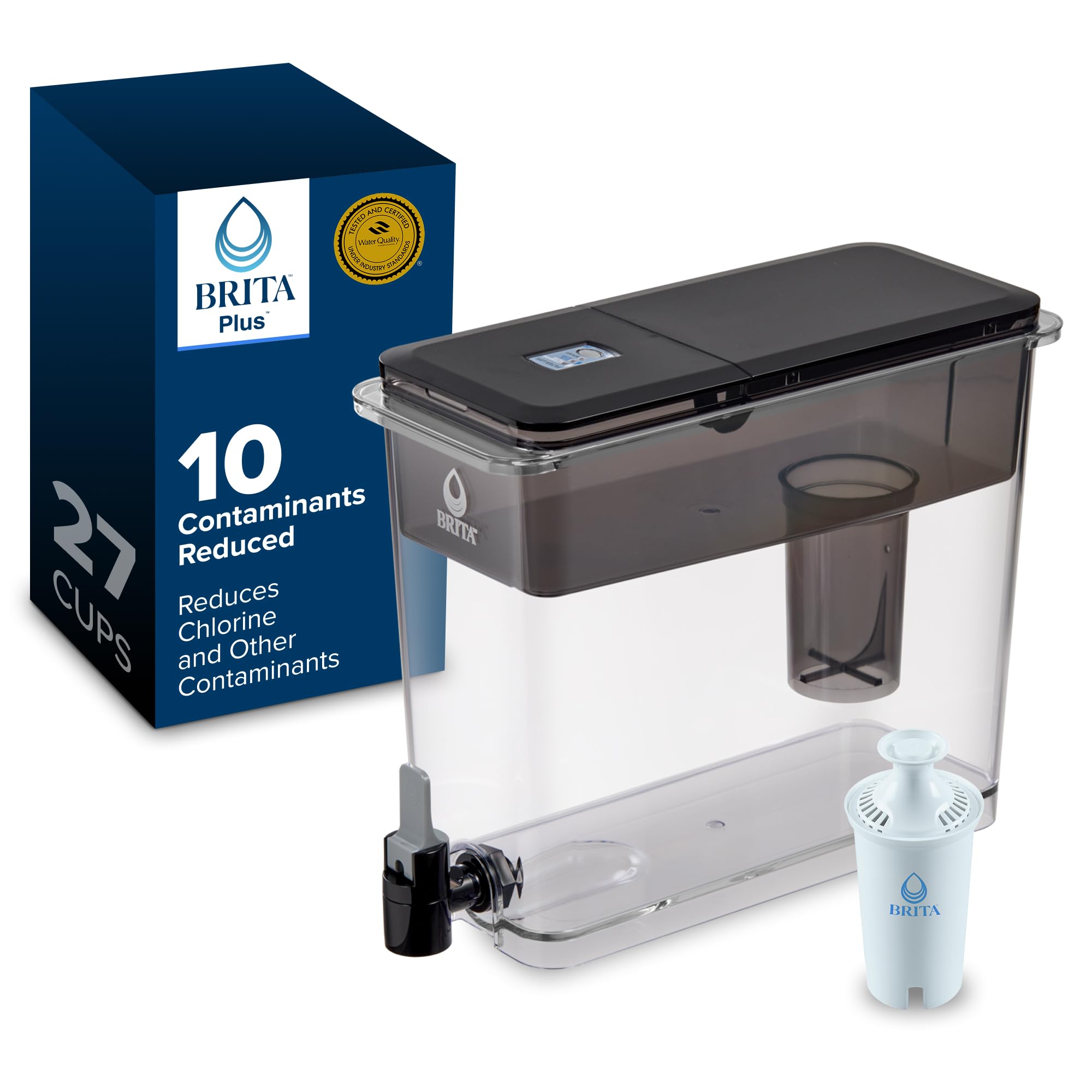
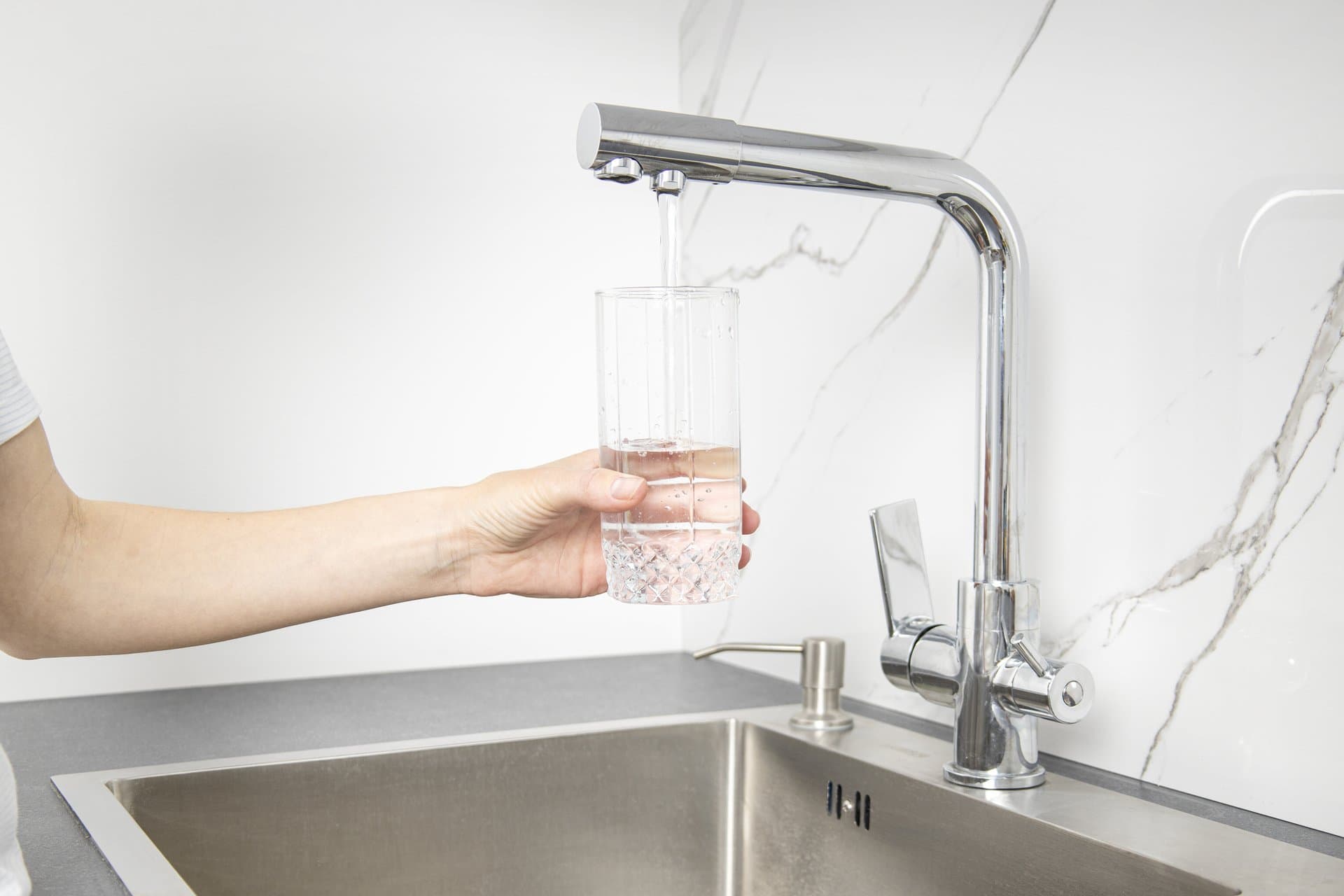
A countertop dispenser like this Brita UltraMax is one of the simplest filter types, but simple also means limited in what it removes.
If you want the short version before the detail: test or read your water report, decide which contaminants matter, pick the least complicated filter type that genuinely removes them (verified by an NSF/ANSI certification number, not a marketing phrase), and then budget for replacement cartridges, not just the upfront price. Everything below expands on those steps.
For a curated shortlist of specific units once you know what you need, see our companion buyer's guide to the best home drinking water filtration. This article is the decision framework that comes first.
What Does a Water Filter Actually Remove?
No single filter removes everything, and any product that claims it does is overselling. Different technologies tackle different categories of contaminant. Understanding that mapping is the single most useful thing you can learn here, because it instantly narrows a field of hundreds of products down to a handful.
Broadly, home water contaminants fall into a few buckets:
- Aesthetic problems: chlorine taste, sulfur/rotten-egg odor, cloudiness, sediment, and mineral hardness. Annoying, mostly not dangerous.
- Heavy metals: lead, mercury, copper, cadmium, chromium. These are health concerns, and lead in particular has no safe level for children.
- Dissolved chemicals: volatile organic compounds (VOCs), pesticide residues, nitrate, and increasingly PFAS (the "forever chemicals").
- Microbiological: bacteria, viruses, and protozoan cysts like Giardia and Cryptosporidium. Mostly a well-water or emergency concern, rarely an issue on a treated city supply.
Carbon filters: the taste-and-odor workhorse
Activated carbon — often made from coconut shell — is the technology inside most pitchers, faucet-mounts, fridge cartridges, and the carbon stage of larger systems. Carbon excels at adsorbing chlorine, chloramine, many VOCs, and the compounds that cause bad taste and smell. A high-quality solid carbon block (denser than loose granular carbon) can go further and reduce lead, some PFAS, and certain pesticides, which is why the certification label matters so much; two carbon filters that look identical can have very different claims. Consumer Reports notes that the best pitcher and carbon models remove chlorine "without sacrificing cartridge life or flow rate," while cheaper ones clog and slow to a trickle (Consumer Reports water filter buying guide).
What carbon generally does not handle: dissolved salts, nitrate, fluoride, and most microbiological threats. For those you need a different approach.
Reverse osmosis: the broadest reach
Reverse osmosis (RO) forces water through a semi-permeable membrane that physically blocks the vast majority of dissolved contaminants. It's the most thorough drinking-water option, capable of reducing dissolved solids, nitrate, fluoride, arsenic, lead, and PFAS that carbon alone can miss (Culligan RO comparison). The trade-offs are real, though: RO systems are more expensive, usually install under the sink, take up cabinet space with a storage tank, and waste some water to drain. Older units wasted around four gallons for every gallon produced; newer high-efficiency designs cut that closer to one-to-one, but there's always some waste.
What this means for your shortlist
If your only complaint is chlorine taste, you do not need reverse osmosis; a certified carbon filter is cheaper, wastes no water, and solves the problem. If you have confirmed lead, nitrate, arsenic, or PFAS, carbon may not be enough and RO (or a carbon block specifically certified for that contaminant) belongs on your list. Match the tool to the job. We expand the contaminant-to-product mapping in the best home drinking water filtration guide.
Pitcher vs. Under-Sink vs. Whole-House: Which Type Fits Your Home?
Once you know what you need removed, the next decision is the form factor, because that's what determines convenience, cost, and how much water you can treat. Two households with identical water quality can land on completely different products simply because one rents a small apartment and the other owns a four-bedroom house with well water.
Pitcher and dispenser filters
This is the entry point: pour water in the top, gravity pulls it through a carbon cartridge, filtered water collects below. Pitchers and larger countertop dispensers are cheap (roughly $15 to $150), need no installation, and work anywhere there's a sink to refill from. The catch is capacity and scope. Most pitcher filters target a short list of contaminants, primarily chlorine, taste, odor, and a couple of metals, and they need frequent refilling, which gets old for a big family (Consumer Reports water filter buying guide). They're a great fit for renters and anyone whose water is basically safe but tastes of chlorine.
Faucet-mount and refrigerator filters
A step up in convenience without much plumbing. Faucet-mount filters screw onto an existing tap; refrigerator cartridges sit inside the fridge and filter the water and ice dispenser. These are typically carbon-based and aimed at taste, odor, and sediment, though better cartridges add heavy-metal and even PFAS reduction. The big buying gotcha here is compatibility — fridge filters are model-specific, and a cartridge that fits an LG ThinQ refrigerator won't fit a Samsung. We dig into exactly that fit-and-certification problem in our review of the Waterdrop LT1000PC replacement refrigerator filter, which is a useful case study in checking the model list and the NSF claim before you buy.
Under-sink filters (including RO)
Under-sink systems plumb into your cold-water line and either feed a dedicated faucet or your existing one. They handle a higher volume at a better flow rate than a pitcher ever will, and they're where most reverse-osmosis systems live. Consumer Reports puts the tested range at roughly $86 to nearly $700 before installation, a wide spread that mostly tracks how many stages and what kind of membrane you're getting (Consumer Reports best under-sink filters). Best for homeowners who want set-and-forget filtered water at the tap and don't mind a one-time install.
Whole-house (point-of-entry) systems
These install where the main line enters the house, treating every tap, shower, and appliance. Whole-house filtration shines for sediment, chlorine, and protecting plumbing and appliances from scale, and it's the right layer if your whole supply has an issue (common with wells). It usually does not, on its own, produce RO-quality drinking water; many homes pair a whole-house sediment/carbon stage with a small under-sink RO unit for the kitchen (WaterSmart filtration options compared). It's the most expensive route and the most involved to install.
A quick way to decide
Ask three questions. Do you rent or own? How much filtered water do you actually use, and where? And is the problem in one place (the drinking tap) or the whole house (sediment, hardness, well issues)? A renter with a chlorine complaint wants a pitcher. An owner who wants pure drinking water at the kitchen sink wants under-sink RO. Someone fighting sediment and scale across the whole house wants a point-of-entry system, probably plus an under-sink unit for drinking. Most of the disappointment people feel with filters comes from buying the wrong form factor, not the wrong brand.
How to Choose a Home Water Filter for Well Water
Well water deserves its own section because it breaks the assumption everything above rests on. City water arrives already treated and monitored; your utility chlorinates it and reports what's in it. A private well has no such safety net. You are the water utility, which means you're responsible for testing, and the contaminants you're likely to face are different and sometimes more dangerous.
Test before you filter — this is non-negotiable
You cannot choose a well-water filter intelligently without a lab test, because the threats are often invisible, tasteless, and odorless. The CDC recommends testing a private well at least once a year for total coliform bacteria, nitrate, total dissolved solids, and pH, and doing more comprehensive testing for metals and other contaminants every few years (CDC guidelines for testing well water). The EPA echoes this and stresses contacting your local health department to learn which area-specific contaminants — pesticides, arsenic, radon, depending on your geology — are worth adding (EPA: protect your home's water).
Two practical rules from those agencies: use a state-certified laboratory, not a hardware-store test strip, because home kits aren't standardized and can mislead; and test more often after specific triggers — flooding, well repairs, a pregnancy or new baby in the home, or any change in taste, color, or smell. Bacteria and nitrate are the headline well risks because they're common and genuinely hazardous, nitrate especially to infants.
Match the well-water filter to the test results
Your lab report becomes the spec sheet for your filter. A few common patterns:
- Bacteria present: carbon filtration won't fix this. You need disinfection (UV treatment is the common point-of-entry solution) and you must resolve the contamination source, not just filter around it.
- High nitrate or arsenic: reverse osmosis is the typical answer, since carbon doesn't remove dissolved nitrate or arsenic well.
- Iron, manganese, sulfur smell, sediment: these aesthetic and nuisance issues usually call for a whole-house oxidizing or sediment/carbon stage at the point of entry.
- Hardness (scale): a softener, which is separate from filtration, though some whole-house systems bundle it.
Because well issues are frequently whole-supply problems, well owners more often end up with a layered setup: a point-of-entry stage for the house plus a point-of-use RO unit for drinking. The cost is higher, but so is the risk you're managing. Whatever you choose, re-test after installation to confirm the system is doing what you bought it for.
NSF Certification: How to Verify a Filter Actually Works
This is the step most buyers skip, and it's the one that separates a real purchase from a hopeful one. A box that says "reduces lead" is a claim. A box that says "Certified to NSF/ANSI 53 for lead reduction" is a claim that an independent third party tested and verified. Marketing language is unregulated; certification numbers are not. When you're deciding how to choose a home water filter, treating the NSF/ANSI standard as the source of truth is the single best habit you can build.
NSF International (and bodies like IAPMO and WQA that test to the same NSF/ANSI standards) publish standards keyed to what a product reduces. Here's what the main ones mean (NSF: 42, 53 and 401 filtration standards):
- NSF/ANSI 42: aesthetic effects, meaning chlorine taste and odor plus particulates. This is the "makes water taste better" standard. It does not imply any health-contaminant removal.
- NSF/ANSI 53: health effects such as lead, mercury, VOCs, asbestos, and cyst reduction, among 50-plus possible claims. This is the one to look for if you care about heavy metals.
- NSF/ANSI 58: reverse osmosis systems specifically, covering reduction of dissolved solids plus contaminants like nitrate, fluoride, and arsenic.
- NSF/ANSI 401: emerging contaminants, a set of pharmaceuticals and chemicals not yet federally regulated.
- PFAS: formerly its own protocol (P473), now folded into NSF/ANSI 53 and 58. Consumer Reports advises that for PFAS removal you specifically want NSF/ANSI 53 (or 58 for RO) plus the manufacturer's explicit PFAS claim (Consumer Reports on removing PFAS).
Read the certification like a pro
Two filters can both be "NSF certified" and protect against completely different things, so the bare phrase means little. The detail that matters is which standard, for which contaminant. A pitcher certified only to NSF/ANSI 42 makes your water taste better and does nothing verified for lead. So:
- Find the standard number, not just the word "certified."
- Match the standard to your contaminant. Lead → look for 53. RO claims → 58. Just taste → 42 is fine.
- Check the specific contaminant claim, because NSF 53 covers dozens of contaminants and a given product is only certified for the ones it was tested against.
- Verify it independently if it's a big purchase — NSF, WQA, and IAPMO all publish searchable databases of certified products and the exact claims tied to each certificate number.
A concrete example of this in practice: the Waterdrop LT1000PC fridge cartridge carries NSF/ANSI 42 and 372 certifications (taste/odor and lead-free materials), while the "Plus" variant of the same line adds NSF/ANSI 401 and PFAS-reduction claims (Waterdrop LG LT1000P product page). Same fridge, same form factor, different verified capabilities — which is exactly why we walk through reading those labels in the Waterdrop LT1000PC review. The lesson generalizes: never assume two filters do the same thing just because they fit the same slot.
Total Cost: Don't Just Look at the Sticker Price
The price on the box is the down payment, not the cost. Filters are consumables, and the cartridges you'll buy for years often add up to more than the unit itself. Comparing only upfront prices is how people end up with a "cheap" filter that quietly costs the most.
Calculate cost per gallon, not cost per unit
The honest way to compare is replacement cost over time. Take the cartridge price, divide by its rated capacity, and you get a cost-per-gallon figure that lets you compare a $30 pitcher against a $300 under-sink system fairly. A fridge cartridge rated for roughly 200 gallons or six months, like the Waterdrop LT1000PC, has a very different per-gallon math than a high-capacity under-sink block rated for thousands of gallons. Two variables drive it:
- Capacity: how many gallons (or months) before replacement. Higher capacity usually means lower cost per gallon.
- Replacement frequency, and whether you'll actually remember to do it. A lapsed filter isn't filtering; an exhausted carbon cartridge can even release captured contaminants back into the water, so the maintenance schedule is part of the product's real-world effectiveness.
Flow rate and the convenience tax
Cost isn't only money. Flow rate — how fast filtered water comes out — is a real factor in whether you keep using the thing. Pitchers are slow by nature; under-sink systems deliver at near-tap speed. RO systems produce water more slowly and store it in a tank, which is fine for drinking and cooking but not for filling a stockpot in a hurry. A filter you find annoying is a filter you'll stop maintaining, and an unmaintained filter is worse than none.
Build a simple comparison before you buy
Put your two or three finalists in a small table: upfront price, cartridge price, rated capacity, cost per gallon, the NSF standards each is certified to, and the specific contaminants those certifications cover. The winner is rarely the cheapest or the most expensive; it's the one whose verified capabilities match your water at a per-gallon cost you'll actually sustain. That table is the buying decision, and it's the same structure we use in the best home drinking water filtration guide to rank specific models.
Putting It All Together
Choosing a water filter feels overwhelming only because the market sells it as a product category when it's really a matching problem. Strip it back to the sequence and it gets simple.
First, learn what's in your water — read the municipal Consumer Confidence Report, or for a well, get a state-certified lab test for at least coliform bacteria, nitrate, TDS, and pH per CDC guidance. Second, decide which detected contaminants you care about; that list is your filtration target. Third, pick the simplest filter type that genuinely addresses those contaminants — carbon for taste and chlorine, reverse osmosis for the broad dissolved-contaminant problems, whole-house when the issue affects the entire supply. Fourth, verify the claim against the right NSF/ANSI standard and the specific contaminant, not a marketing phrase. Fifth, budget for replacement cartridges and a flow rate you can live with.
One more honest note on regulation, because it's why this matters more than it used to: the EPA finalized the first federal drinking-water limits for PFAS in 2024, setting enforceable limits of 4.0 parts per trillion for PFOA and PFOS individually (EPA: PFAS in drinking water). Awareness of contaminants like these is exactly why so many households are filtering in the first place, and it's also why the certification step is non-negotiable: only a verified NSF/ANSI 53 or 58 claim tells you a filter actually addresses them.
Do those five steps in order and you'll skip the most expensive mistake in home water filtration: buying a filter that was never built to fix your problem. When you're ready to compare specific units against the framework above, head to our best home drinking water filtration guide, and for a close look at how to read a single product's compatibility and certifications, the Waterdrop LT1000PC review is a good worked example.
Related Posts