

How to Choose a Summer Dress for Your Body Type
A summer dress should do two jobs at once: keep you cool when the temperature climbs and make you feel good about how you look. Most shopping advice only covers the second part, and even then it tends to skip the practical step that makes everything else click into place: learning to read your own proportions. Once you can name your shape and understand why certain silhouettes flatter it, the wall of options on a retail page stops feeling overwhelming. You start filtering on purpose instead of guessing.
This guide walks through how to choose a summer dress for your body type from the ground up. We will cover how to identify your shape with a tape measure, what silhouettes and necklines tend to flatter each of the five common figures, how summer fabric choices change the equation when it is genuinely hot, and how to adapt the standard advice for age and personal comfort. The goal is not to hand you rigid rules. It is to give you a framework you can bend to fit a real wardrobe and a real life.
A quick note on method, because it matters for trust: this is a research-based guide. We did not run a fitting studio or photograph volunteers in dozens of dresses. Instead, we synthesized guidance from professional stylists, image consultants, and fabric specialists, and we anchored the fabric and measurement sections in established sources rather than opinion. Where a claim comes from a specific source, we link to it so you can read further.

The right summer dress balances staying cool with flattering your natural proportions.
Why "Body Type" Is a Tool, Not a Verdict
Before the measuring tape comes out, it helps to frame what body shape categories actually are. They are a shorthand for proportion, nothing more. Knowing you are a pear or an hourglass does not tell you what to wear so much as it tells you where your visual weight sits, so you can decide whether to balance it, accentuate it, or ignore the question entirely on a day when you simply want to be comfortable.
Stylists lean on these categories because they make the abstract idea of "balance" concrete. When the team at the concept wardrobe describes dressing a pear shape, the entire strategy reduces to one principle: draw the eye toward the narrowest, most defined part of the body and let everything else skim. That principle is the same across every shape. Only the target moves.
So treat your body type as a starting filter, not a life sentence. If you love a dress that the "rules" say works better on a different figure, the rules lose. Confidence reads louder than any silhouette guideline, a point that style advisors writing for women over 40 return to again and again, because feeling good in a piece changes how you carry it. The categories below are there to shorten your search, not to police it.
How to Figure Out Your Body Type
The most reliable way to identify your shape is with three measurements and a little arithmetic. Stylists call this the bust-waist-hip relationship, and you can take all three yourself in a few minutes.
Stand straight with your arms at your sides and use a soft tape measure. According to the methodology behind Calculator.net's body type calculator, you want the tape snug but not compressing the skin. Take these three numbers:
- Bust: the circumference around the fullest part of the chest, measured over a properly fitted bra, breathing normally so you do not pull the tape too tight.
- Waist: the smallest circumference around your natural waistline, just above the belly button. Exhale naturally and do not suck in.
- Hips: the widest circumference below the waist, with your feet together.
Once you have the three numbers, the relationships between them tell you your shape. The same source notes that the rectangle is actually the most common female shape, accounting for roughly 46 percent of women, where the waist is less than about nine inches smaller than the bust or hips. Bottom-heavy "spoon" or pear figures, whose hips are noticeably larger than the bust, make up around 20 percent, while inverted triangles run near 14 percent and true hourglasses closer to 8 percent. If you have ever felt like the "perfect hourglass" advice did not describe you, that is why. It rarely describes most people.
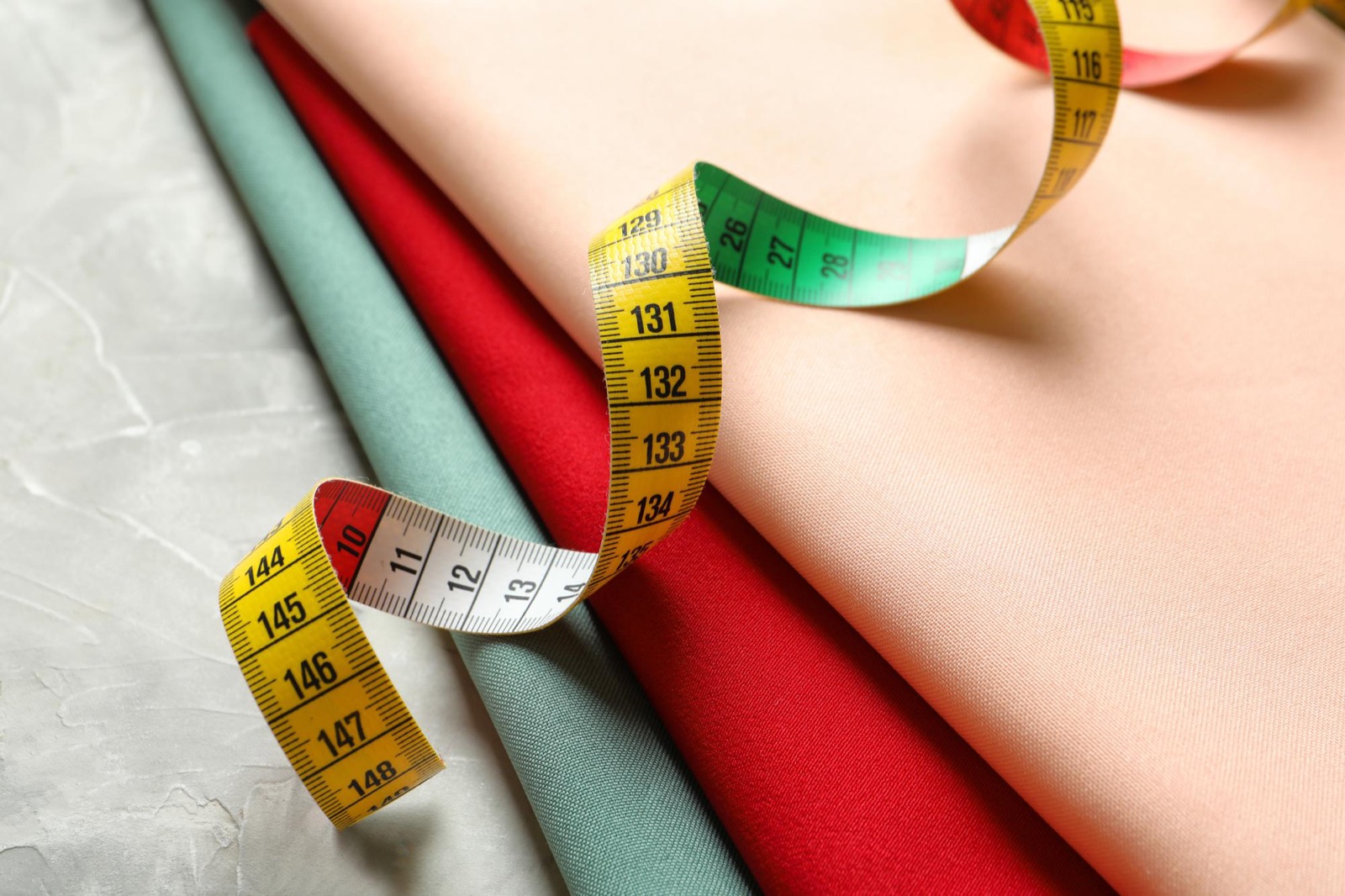
Three measurements - bust, waist, and hips - are all you need to identify your shape.
The "What Dress Fits My Body Type" Shortcut
If you do not want to do math, there is a faster gut-check that answers the common question of what dress fits my body type. Stand in front of a full-length mirror in fitted clothing and look at where your silhouette is widest and narrowest:
- Wider at the hips than the shoulders, with a defined waist: pear (triangle).
- Wider at the shoulders or bust than the hips: inverted triangle.
- Roughly equal shoulders and hips with a clearly nipped waist: hourglass.
- Roughly equal shoulders, waist, and hips with little waist definition: rectangle.
- Fullness carried through the midsection with a less-defined waist: apple (round).
This mirror method is the same one stylists recommend to women who want a quick read without a tape measure, and it is accurate enough to point you toward the right section below. The "how to dress for your body type quiz" results floating around online are essentially automated versions of this same logic, so a quiz is fine as a tiebreaker, but the mirror gets you there faster.
Choosing a Summer Dress for a Pear Shape
The pear, or triangle, carries more visual weight through the hips and thighs while keeping a defined waist and narrower upper body. The classic strategy is to balance the silhouette by adding interest up top and letting the dress skim cleanly over the hips rather than gripping them.
The single most useful style here is the A-line dress. It nips in at the waist, then flares gently outward, which skims the hips instead of clinging to them. As the concept wardrobe's pear shape guide points out, this is slightly counterintuitive: a dress that gets wider toward the hem actually balances wide hips more effectively than a tight one, because a fitted cut accentuates the area while a flared cut glides over it. A fit-and-flare summer dress does exactly this.
For necklines and the upper body, the same guidance favors wider, more open styles, square, bateau, or off-shoulder necklines, plus details like ruffles, prints, or interesting sleeves that draw the eye upward and add a little visual volume to balance the lower half. A floral print across the bodice does real work here. What to avoid: straight-cut column dresses that hide the waist and make the silhouette read heavier, and clingy fabrics across the hip.
A floral maxi with a fitted, detailed top and a skirt that falls long and loose is close to ideal for a pear in summer. If you want a concrete example of this category, our BTFBM floral maxi dress review breaks down a spaghetti-strap printed maxi whose flared, floor-length skirt does precisely the hip-skimming job described above.
Choosing a Summer Dress for an Apple Shape
The apple, or round, shape tends to carry fullness through the midsection with a less-defined waist and often a fuller bust. The goal shifts from balancing top and bottom to creating the impression of a waistline and keeping fabric from clinging to the middle.
Three silhouettes do most of the work. The empire-waist dress, which seams just under the bust and then flows loosely over the stomach, creates a high visual waistline and skims the midsection entirely. The A-line works here too, for the same skimming reason. And the wrap dress earns its near-universal reputation: by crossing fabric over the body and tying at the side, it carves out a defined waist and lifts the bustline at the same time. General styling guidance for fuller figures consistently recommends the wrap and the empire line precisely because they define a waist without compressing the stomach.
For necklines, a deeper V-neck is the apple shape's friend. It elongates the upper body and draws the eye into a vertical line down the center, which counters any sense of width through the middle. The thing to sidestep is anything with a tight, dropped waistband that sits right at the fullest part of the midsection, along with stiff, boxy fabrics that stand away from the body. You want drape, not structure that adds bulk.
Choosing a Summer Dress for an Hourglass Shape
The hourglass has a naturally balanced silhouette: bust and hips are roughly equal with a clearly defined, narrower waist. Here the strategy flips. Instead of creating or balancing a waistline, you want to follow and celebrate the one you already have.
That means fitted and belted styles that trace the body's natural curve rather than hiding it. Wrap dresses are excellent again, this time not to fake a waist but to highlight a real one. A nipped-waist sundress, or any style with a defined or belted middle, lets the figure speak for itself. Stylists writing about dressing the hourglass over 40 stress keeping at least the upper portion of a dress fitted, adding a belt if the cut runs loose, so the waist never disappears into a column of fabric.
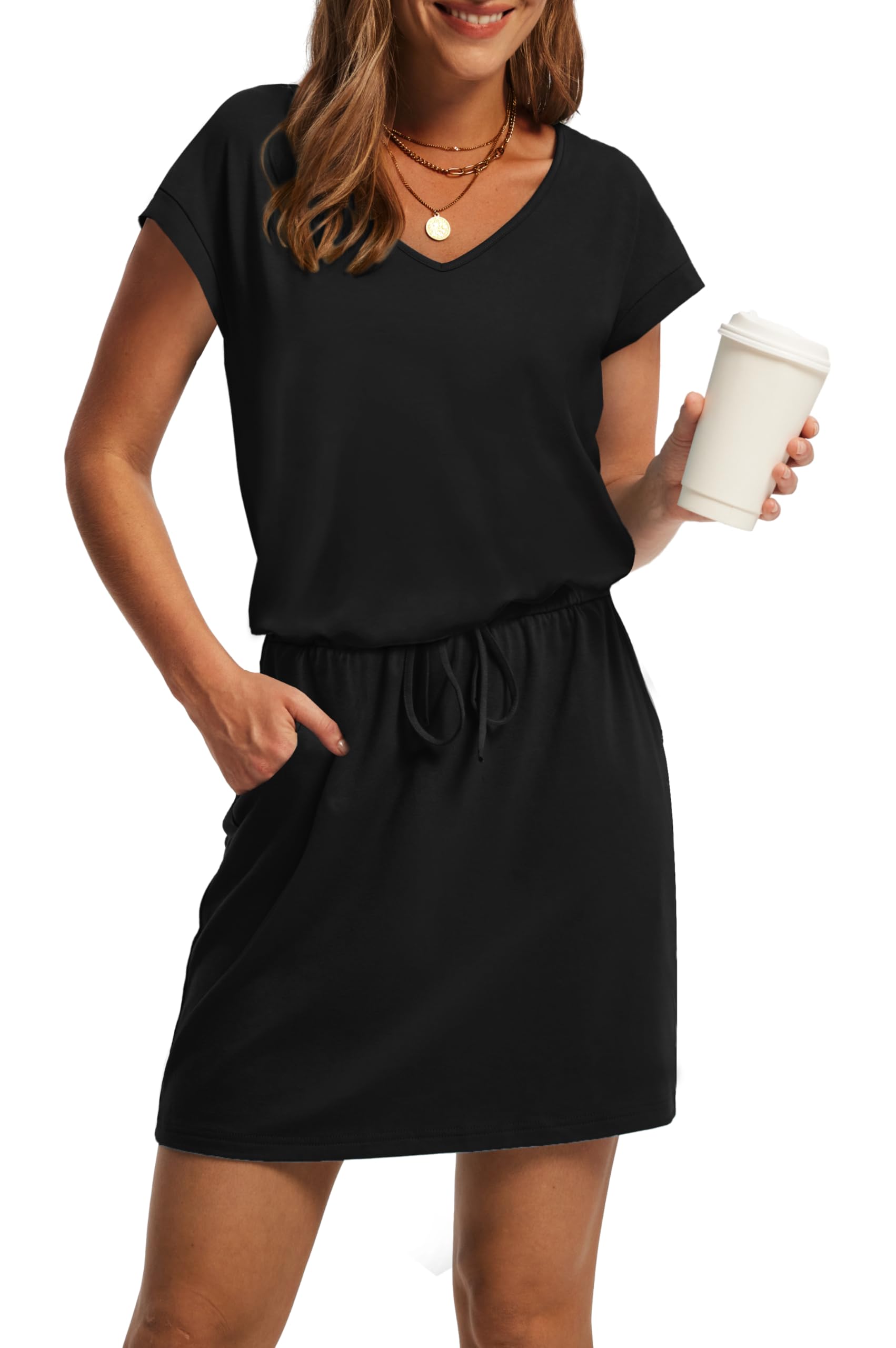
A tie-waist sundress traces an hourglass figure's natural waistline rather than hiding it.
The trap for an hourglass is the boxy, straight-cut shift, which flattens the silhouette and reads as shapeless on a figure that thrives on definition. Voluminous skirts paired with a fitted bodice, think full or tulip skirts, can actually enhance the effect by making the waist look even smaller by contrast. For a real-world tie-waist style in this lane, the OFEEFAN mini sundress review covers a V-neck dress with a tie waist that defines the middle while staying light enough for hot afternoons.
Choosing a Summer Dress for a Rectangle Shape
The rectangle, the most common shape of all, has bust, waist, and hips in roughly the same line with little natural waist definition. The aim is the opposite of the apple's: you are not skimming a fuller middle, you are creating curve and the suggestion of a waist where the silhouette runs straight.
This is the shape that benefits most from belts, peplums, and ruching. A belted summer dress instantly carves a waist into a straight frame. Fit-and-flare and wrap dresses both add curve, the flare building out the hip line and the wrap defining the middle. Even a simple sundress with a smocked or elasticated waist will break up the straight line and read as more shaped. Details that add dimension, ruffles at the bust, a gathered skirt, contrasting panels, all help suggest the curves the silhouette does not have naturally.
What you can lean into is structure: a rectangle carries a crisp, architectural dress beautifully, where an apple might find the same fabric adds bulk. The main thing to skip is a long, completely straight, unbelted column with no waist interest, which simply echoes the shape's natural straightness and can read as boxy.
Choosing a Summer Dress for an Inverted Triangle
The inverted triangle is broader at the shoulders or bust and narrower through the hips, the athletic or swimmer's-build silhouette. The strategy mirrors the pear in reverse: minimize visual weight up top and build volume below to balance toward the hips.
The standout here is anything that adds fullness to the lower half. A full or A-line skirt, a fit-and-flare with a generous hem, or a maxi with a flowing skirt all add visual weight where the inverted triangle is narrowest, balancing broader shoulders. Simpler, less detailed necklines work best up top, the reverse of the pear's advice, since the goal is to draw the eye away from a fuller upper body rather than toward it. Skip heavy shoulder details, puff sleeves, and busy bust prints, which only emphasize width where you already have it.
A flowing maxi with a plain bodice and a full skirt is genuinely flattering on this shape, which is part of why maxi dresses earn their reputation as nearly universal: the long, full skirt does balancing work for several figures at once. You can see that maxi silhouette in detail in our BTFBM floral maxi dress review, where the long flared skirt provides exactly the lower-body volume an inverted triangle wants.
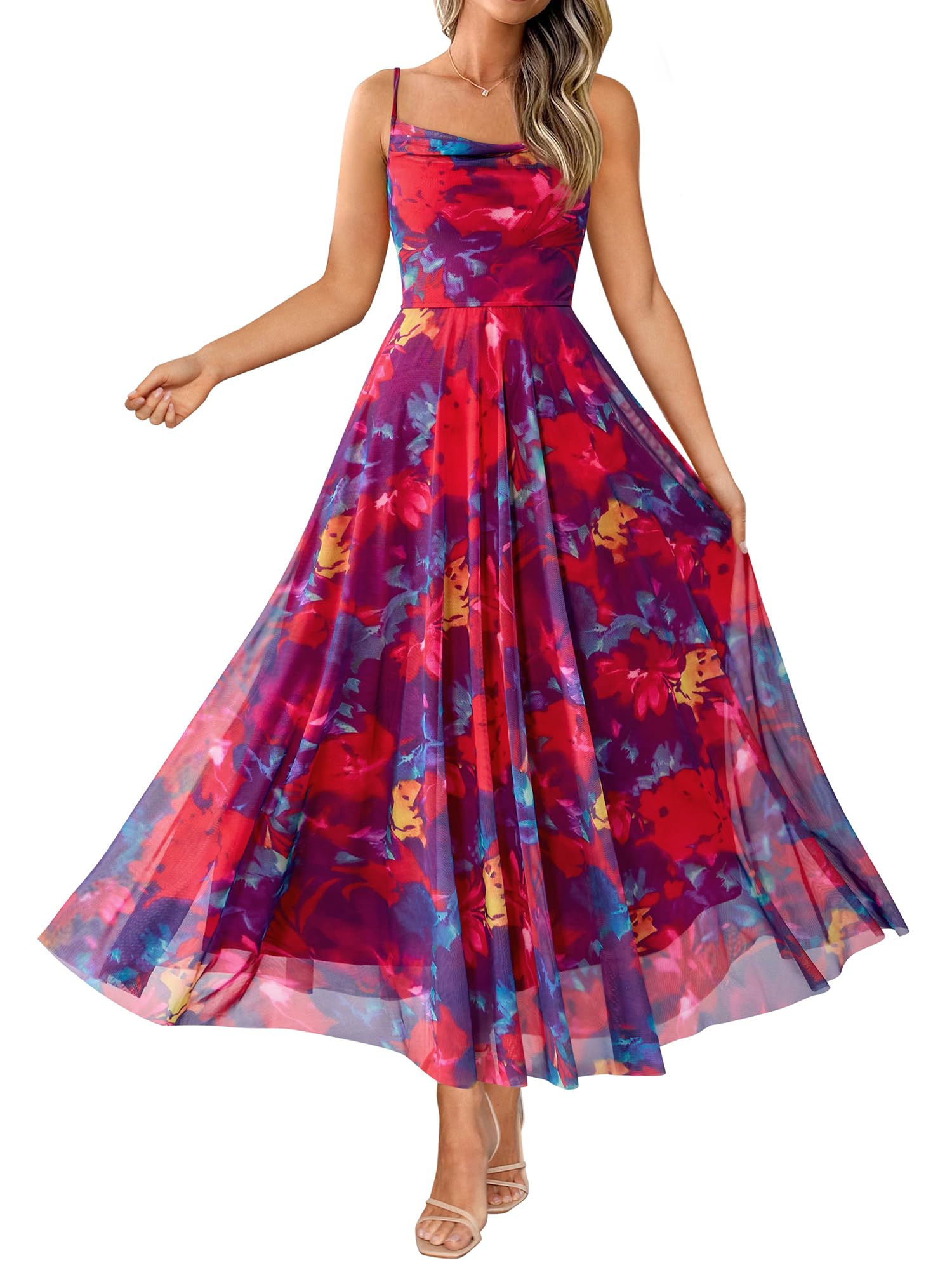
A flowing maxi skirt adds lower-body volume that balances broader shoulders or wider hips.
Summer Changes the Equation: Fabric and Heat
Here is where summer dressing parts ways with the year-round body-type advice. In hot weather, the most flattering silhouette in the world is undermined if the fabric traps heat and sticks to your skin. Breathability is not a footnote in summer; it is half the decision.
The fiber rankings are clear and well documented. According to fabric specialists and a Georgia Tech analysis of hot-weather materials, linen is the standout for genuine heat. Its moisture-transport rate runs higher than cotton or polyester, and its natural stiffness keeps it from clinging to the body, which lets air circulate against the skin. That same non-clinging quality is a styling bonus: linen skims rather than grips, which flatters a fuller midsection.
Cotton comes a close second and is the everyday workhorse. It is soft, breathable, and forgiving. The tradeoff, as breathability comparisons note, is that cotton holds onto moisture longer than linen and can feel clammy once you are genuinely sweating. For a casual sundress on a warm-but-not-scorching day, cotton is hard to beat. For a heat wave, linen pulls ahead.
Polyester is the one to approach with caution in summer. Pure polyester is poor at absorbing moisture and tends to trap heat and sweat against the skin, which is why it can feel sticky in warm weather. That does not make it a hard no, many flowing, affordable summer dresses are polyester or rayon blends, but in extreme heat a breathable natural fiber will be more comfortable. If you do choose a synthetic, favor a loose, flowing cut over anything fitted so air can still move.
There is also a color and fit dimension. Looser cuts move air better than body-skimming ones, which is convenient because loose, skimming silhouettes also flatter several body types. Lighter colors reflect rather than absorb sunlight. So in the hottest weather, a loose linen or cotton A-line in a pale shade is a near-universal win: it flatters most shapes and keeps you genuinely cooler.
How to Dress for Your Body Type and Age
The question of how to dress for your body type and age comes up constantly, and the honest answer is that the core silhouette logic does not change with age, but your priorities and comfort might. Your shape is your shape at 25 and at 55; what shifts is often where you carry weight, how much skin you want to show, and how much you value comfort over a trend.
Stylists who specialize in dressing women over 40 land on a short list of dresses that flatter across shapes and ages: the wrap dress, which adjusts to the body and defines the waist; the sheath, for clean vertical lines; and the fit-and-flare, for balancing proportions. These are forgiving precisely because they are adaptable, which is also why they appear in every body-type section above. They are the safe defaults when you are not sure.
Fabric advice gets more pointed with age, too. Pieces that drape well, cotton, jersey, soft linen, a little silk, tend to be more comfortable and more flattering than stiff or clingy materials, which is convenient because that drape-friendly list overlaps almost entirely with the best summer fabrics. The recurring theme in this guidance is to avoid clingy fabrics over areas you would rather downplay and to choose movement and flow instead.
The advice that every stylist returns to, regardless of age, is the one that is hardest to put on a measuring tape: wear it with confidence. A dress you feel good in will always look better than the technically "correct" silhouette you are self-conscious about. The body-type framework exists to help you find pieces you feel good in faster, not to override how you actually feel in the mirror.
Putting It All Together: A Simple Shopping Filter
When you are scrolling a retail page in June, run a quick mental checklist instead of relying on the photo alone:
- Silhouette first. Does the cut do what your shape wants? Pears and inverted triangles want balance, apples and rectangles want a created waist, hourglasses want a defined one followed. A-line, wrap, and fit-and-flare are the safest cross-shape bets.
- Fabric second. For real heat, prioritize linen, then cotton. Treat pure polyester as a flowing-cut-only option. Check the materials list, not just the look.
- Fit and color third. Looser cuts and lighter colors keep you cooler and flatter more shapes, so when two dresses are close, the breezier, paler one usually wins in summer.
- Confidence override. If a dress breaks a "rule" but makes you feel great, buy that one.
If you want to see these principles applied to a curated set of real summer dresses rather than in the abstract, our pillar roundup of the best women's summer dresses ranks specific styles by who they flatter and how they perform in heat, which is the natural next step once you know your shape.
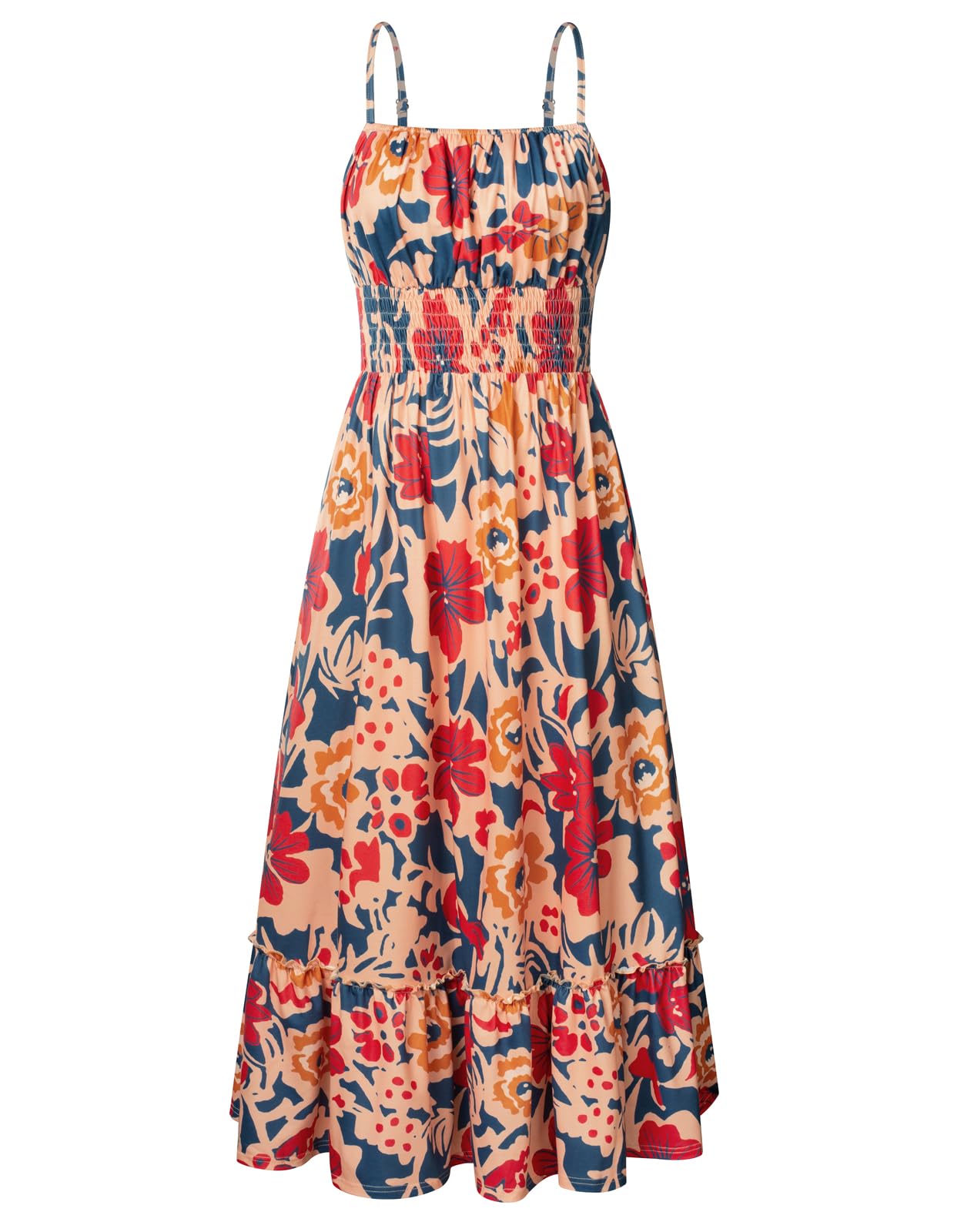
A smocked-waist maxi creates definition for straighter figures while staying breathable for summer.
Frequently Asked Questions
What is the most flattering summer dress style for most body types?
The wrap dress and the fit-and-flare are the closest things to universal. The wrap defines the waist on any shape, and the fit-and-flare balances proportions for pears, rectangles, and inverted triangles alike, which is why stylists recommend both as safe defaults across body types and ages.
Is linen really worth it for summer dresses?
For genuinely hot weather, yes. Linen moves moisture and resists clinging better than cotton or polyester, according to hot-weather fabric analysis. It wrinkles more, but the cooling payoff in a heat wave is real. For mild warmth, cotton is a comfortable, lower-maintenance alternative.
How do I find my body type without measuring?
Stand in a mirror in fitted clothing and note where you are widest and narrowest. Wider hips with a defined waist means pear; balanced shoulders and hips with a nipped waist means hourglass; a straight line top to bottom means rectangle. It is the same logic an online body-type quiz uses, just faster.
Do these rules apply as I get older?
Your shape and the silhouette logic stay the same; your comfort priorities may shift. Wrap, sheath, and fit-and-flare dresses in drapey fabrics like soft cotton, jersey, and linen are flattering and comfortable across ages, which is why they appear in every section here.
Related Posts