Bose SoundLink Micro Review: Is the 2nd Gen Worth It?
 Abdulwahab Suleiman·June 16, 2026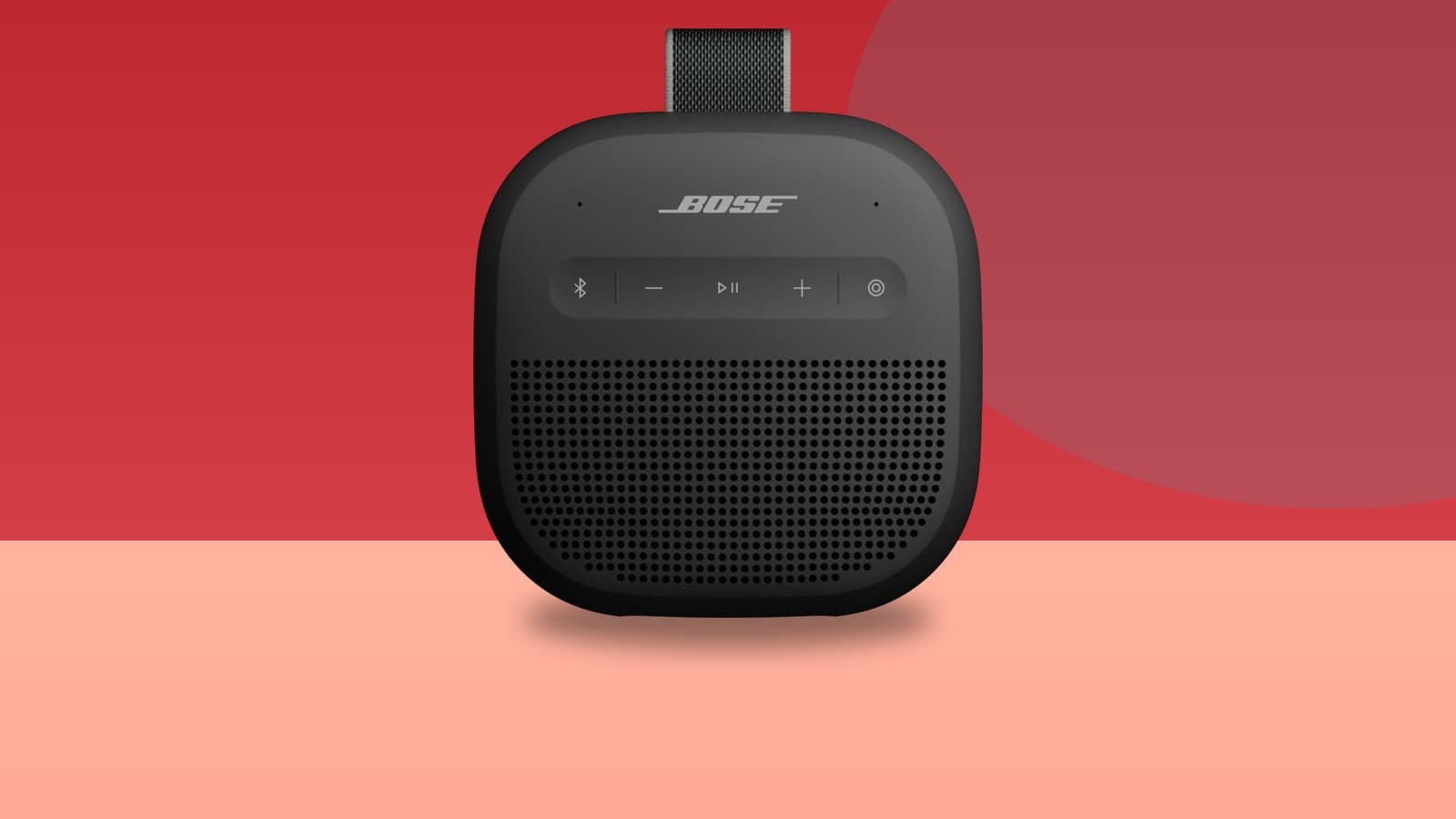
Bose SoundLink Micro Review: A Tiny Speaker With a Big Reputation
The Bose SoundLink Micro is the speaker people reach for when they want something that disappears into a bag, clips onto a backpack, and still sounds like it cost more than it did. The second-generation model, released in 2025, keeps that pocketable shape but quietly modernizes nearly everything around it: USB-C charging, Bluetooth 5.4, a full IP67 rating, and a battery Bose now rates at up to 12 hours. According to Bose's official product page, it lists at $129.
So is the SoundLink Micro worth it in 2026, or has the ultra-portable category moved on without it? This review answers the questions buyers actually ask before they tap "add to cart" — battery, sound, waterproofing, and how it stacks up against JBL and the bigger Bose SoundLink Flex.
How we evaluated this speaker
A quick note on method, because it shapes everything below. We did not physically test this speaker in our own lab. This is a research-based review: we anchor every spec to Bose's official 2nd-Gen product page and owner's documentation, then cross-check real-world performance against independent measurements from reputable audio publications. Where the manufacturer's claim and measured reality diverge — and on battery life, they do — we tell you both numbers and let you decide. We never invent specs, and we never fake hands-on impressions. That honesty is the point.
You can verify the full specifications yourself on Bose's SoundLink Micro 2nd Gen product page, our primary source for this review.
Where to Buy
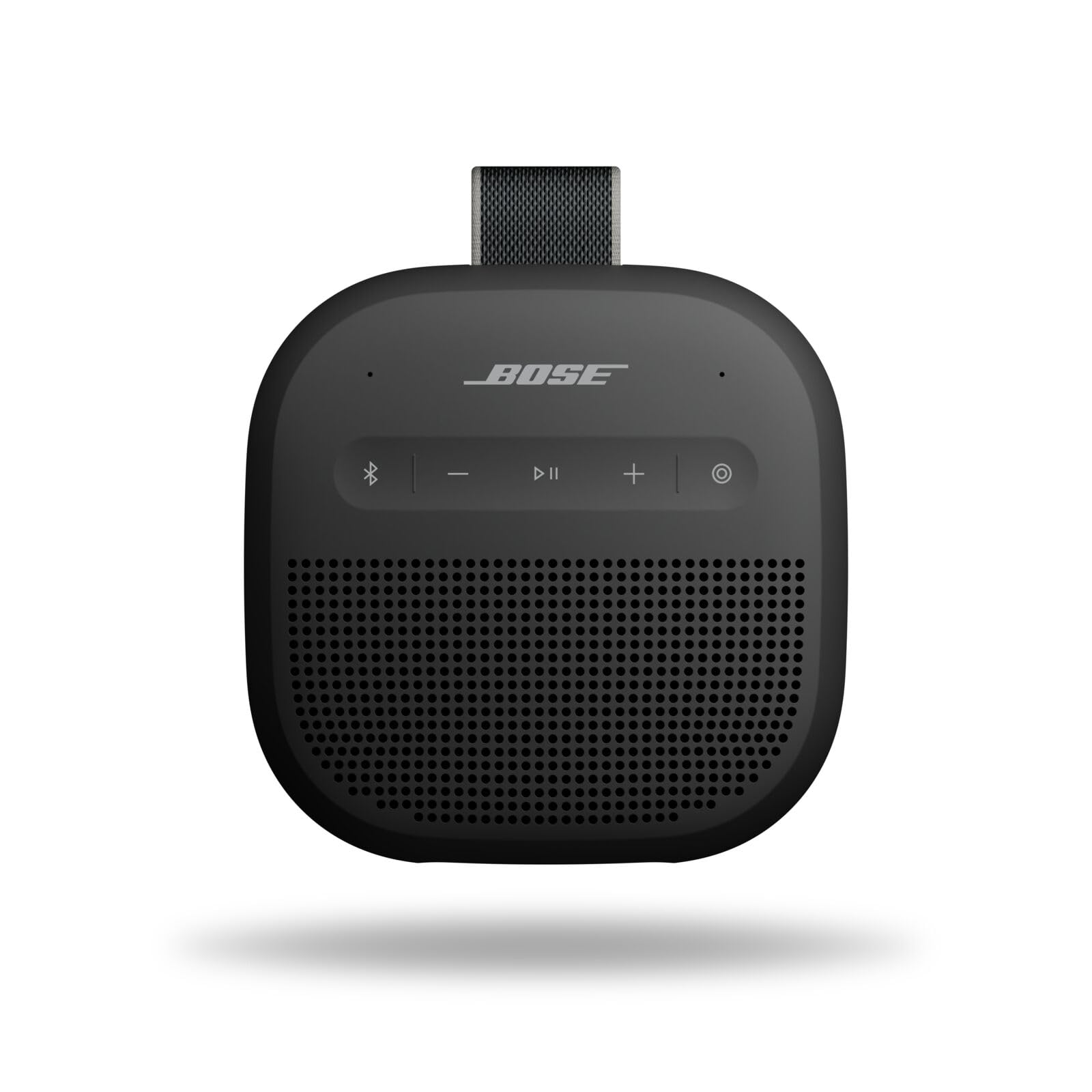
The SoundLink Micro is barely larger than a stack of coasters, which is the whole appeal.
Is the Bose SoundLink Micro worth it?
Short answer: yes, if ultra-portability and durability sit at the top of your list, and you're comfortable paying a Bose premium for sound that punches above its size. No, if you want all-day battery at high volume or the absolute most output per dollar.
Here's the honest framing. At $129 list, the Micro is not the cheapest small speaker — it costs more than JBL's grab-and-go options. What you're buying is a genuinely tiny, genuinely rugged speaker that sounds clean and surprisingly full for something this size. SoundGuys called the 2nd Gen's output "excellent sound for a palm-sized portable speaker" with "full and clear sound that outperforms most ultra-portables" in their hands-on review of the 2nd Gen.
The tradeoff is battery. Bose rates it at up to 12 hours, but that figure assumes modest volume. We'll get into the real-world numbers in the battery section — they're the single most important caveat in this review.
If you're still weighing whether a portable Bluetooth speaker earns a place in your kit at all, our companion piece on whether Bluetooth speakers are worth it walks through the value question without the sales gloss.
What makes the SoundLink Micro different
Three things genuinely set it apart from the crowded ultra-portable field:
- The strap. A replaceable woven fabric loop runs across the back, strong enough to clip the speaker to a handlebar, a tent pole, a shower caddy, or a backpack strap. It's the feature people who own this speaker mention first.
- The size-to-sound ratio. At 4.1 inches square and under three-quarters of a pound, it's smaller than most rivals yet tuned to sound bigger than it looks.
- The build. Full IP67 dust and water protection plus a shock- and rust-resistant chassis, per Bose's specifications. This is a speaker designed to be thrown in a bag and forgotten about.
Bose SoundLink Micro sound quality
For its footprint, the SoundLink Micro sounds remarkably composed. Bose describes the profile as "crisp sound with impressive bass," and independent reviewers broadly agree that vocals come through clean and bass is present without being boomy.
The realistic expectation: this is a personal and small-room speaker. It fills a bathroom, a dorm, a kitchen, or a patio table for two or three people very well. Push it into a large, open backyard and physics catches up — a speaker this small can only move so much air. Reviewers consistently note that sound quality holds up at moderate levels and starts to compress or thin out as you approach maximum volume, a normal limitation for the class rather than a flaw unique to Bose.
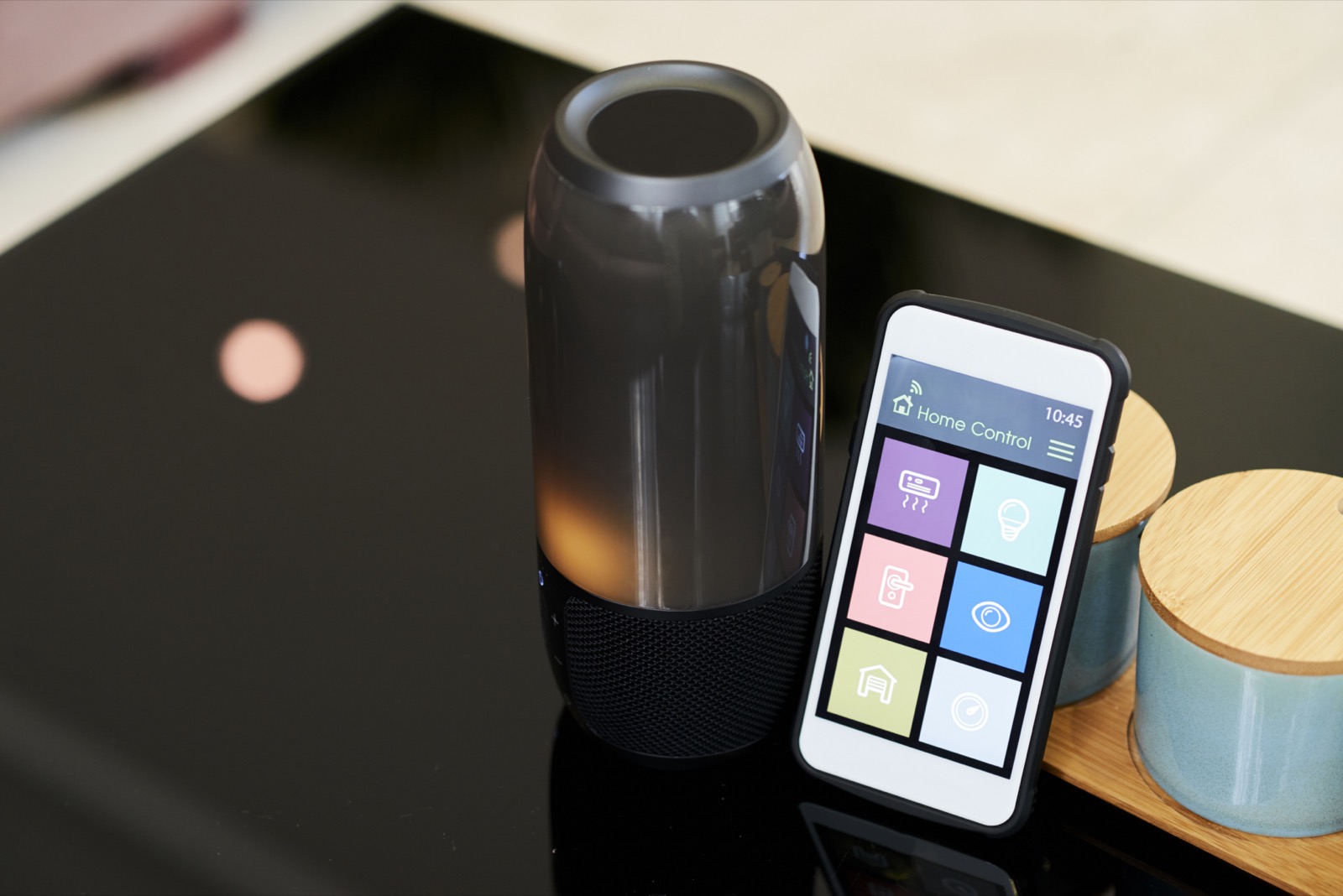
A 3-band EQ in the Bose app lets you nudge bass, mids, and treble to taste.
Can you adjust the EQ? (Bose app)
Yes — and this is a meaningful 2nd-Gen upgrade. The speaker supports a 3-band adjustable EQ (bass, treble, mids) through the Bose companion app, so you can shape the sound rather than living with a single fixed tuning. It's not a full parametric EQ, and SoundGuys flags the "basic 3-band only" controls as a limitation for tinkerers, but for most listeners it's enough to dial in more low end for outdoor use or tame brightness indoors.
Is the SoundLink Micro good for audiophiles?
Let's be straight: no ultra-portable Bluetooth speaker is an audiophile product, and the Micro is no exception. There's no AAC-beating lossless codec story here, no large drivers, no real stereo soundstage from a single mono unit. What the Micro offers an audio-conscious listener is a clean, well-balanced tuning that avoids the harsh, bass-bloated sound of cheap rivals. If you care about fidelity and you're staying in one room, a larger speaker like the Sonos Five is in a completely different league — but it's also not going on a hike. The Micro's job is to sound good for its size, and it does.
If you want two Micros for a wider sound, Stereo Mode pairs a left and right unit; Party Mode plays two Bose speakers in sync for more volume. Both are configured in the Bose app.
Bose SoundLink Micro battery life: the real numbers
This is where research-based honesty matters most. Bose rates the 2nd Gen at up to 12 hours, with a roughly 3-hour recharge over USB-C from a 5V/1.5A supply, per the official spec page.
The 12-hour figure assumes quiet listening. In independent testing at 80 dB — a realistic "party" volume — SoundGuys measured just 4 hours and 33 minutes, dropping to around 3 hours at maximum volume, as documented in their 2nd-Gen review. That's the headline caveat of this speaker. If you play it loud, plan to recharge daily; the 12-hour rating is achievable only at gentle, background-music levels.
The flip side is that recharging is fast and now uses universal USB-C, so topping up between uses is painless. For a speaker you'll mostly use in shortish bursts — a shower, a bike ride, a picnic — the battery is fine. For a full day at the beach blasting music, it isn't, and you should know that before buying.
Bose SoundLink Micro waterproof rating (IP67)
The 2nd Gen carries a full IP67 rating, an upgrade from the original's IPX7. The difference matters: IP67 adds certified dust protection (the "6") on top of water immersion protection (the "7"), meaning the speaker is dust-tight and can survive submersion in up to a meter of water for 30 minutes. Bose also lists it as shock- and rust-resistant. In plain terms, this is a speaker you can take to the pool, drop in the sand, and rinse under a tap without worry.
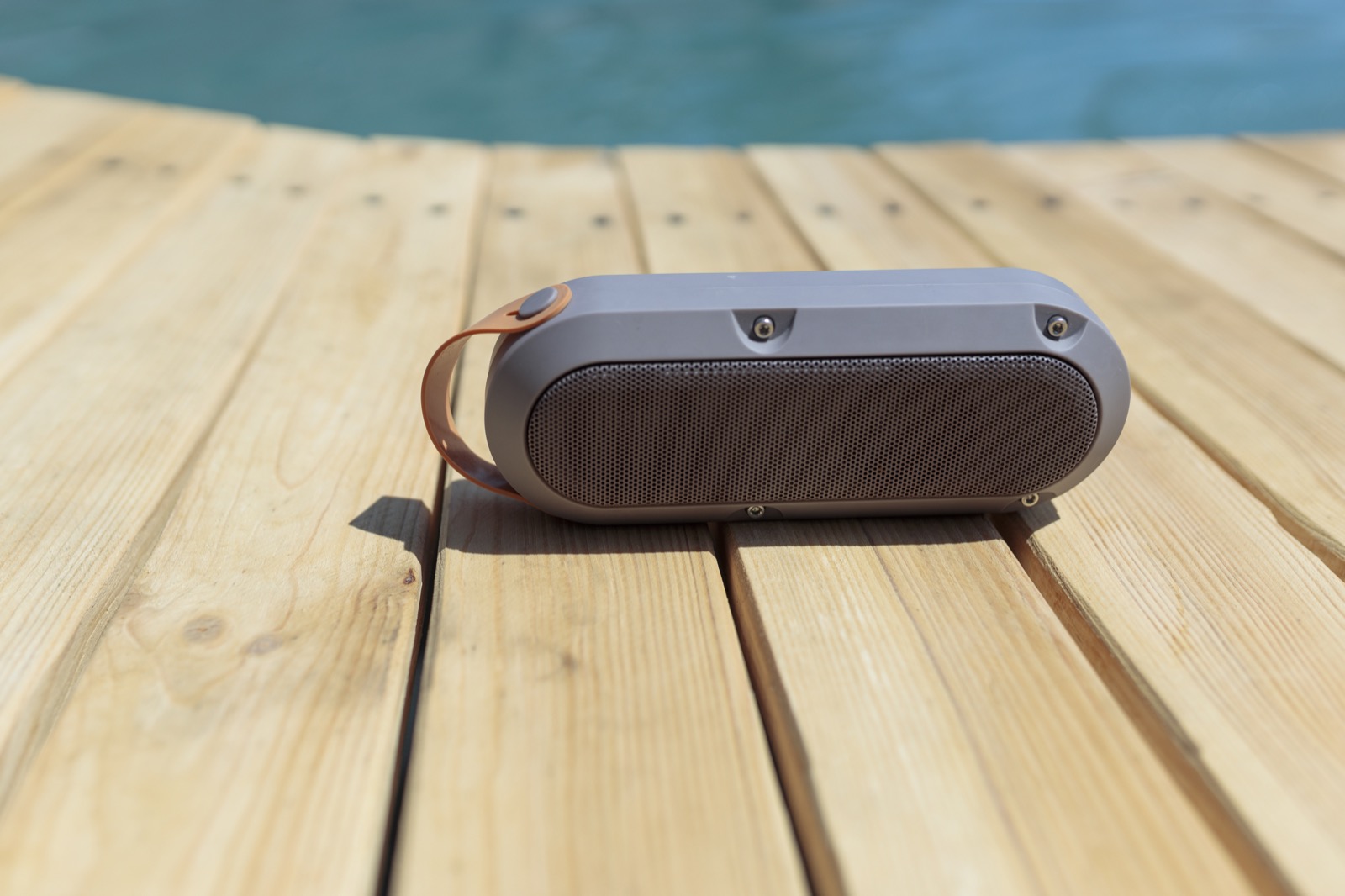
An IP67 rating means dust-tight and submersible — pool, shower, and trail all qualify.
Bose SoundLink Flex vs Micro: which should you buy?
This is the most common cross-shop within Bose's own lineup, and it's a genuine fork in the road.
- Buy the Micro if ultra-portability is the priority. It's about half the size and weight of the Flex, clips to anything, and slips into a jacket pocket.
- Buy the [SoundLink Flex](https://www.bose.com/p/speakers/bose-soundlink-flex-2nd-gen/SLF2-SPEAKERWIRELESS.html) if you want more volume and deeper, fuller sound. The Flex is the louder, more balanced speaker, per RTINGS' head-to-head comparison, and it's the better all-rounder for most people who don't need the absolute smallest option.
Think of it as personal-listening-and-travel (Micro) versus small-gathering-and-louder-music (Flex). Neither is "better" outright; they're tuned for different jobs.
JBL Go vs Bose SoundLink Micro — and is Bose better than JBL?
The other inevitable comparison is JBL. The JBL Go 4 and JBL Clip 5 are the natural rivals, and both undercut the Bose on price. SoundGuys, comparing the two brands directly, notes that JBL's Clip 5 offers "similar durability and grab-and-go design" but "may not sound as refined as the SoundLink Micro (2nd Gen)" in their review.
So is Bose better than JBL? It depends on what you're optimizing for:
- Choose Bose for the cleaner, more balanced tuning and the rugged, premium build — you're paying for sound refinement and finish.
- Choose JBL for value. The Go 4 and Clip 5 deliver IP67 durability and app EQ at a noticeably lower price, and JBL's house sound leans into a fun, bass-forward signature many people enjoy.
If you want the broader landscape — including louder party speakers and home-focused options — our best wireless Bluetooth speakers guide ranks the Micro alongside its main competitors so you can see where it fits.
Pros and cons
What we like:
- Genuinely pocket-sized and light, with a strap that clips to almost anything
- Clean, balanced sound that outperforms most ultra-portables for its size
- Full IP67 dust-and-water protection, shock- and rust-resistant
- Modern USB-C charging with a fast ~3-hour recharge
- 3-band EQ, Party and Stereo modes via the Bose app
What to weigh:
- Real-world battery falls far short of the 12-hour rating at higher volumes (~4.5 hrs at 80 dB)
- No microphone, so it can't be used as a speakerphone
- Premium price versus comparable JBL models
- EQ is basic 3-band only; not for serious tweakers
- Output and bass are size-limited — it won't fill a large outdoor space
The verdict
The Bose SoundLink Micro (2nd Gen) is one of the most appealing ultra-portable Bluetooth speakers you can buy, and it earns that reputation honestly: it's tiny, tough, and sounds better than it has any right to. The 2nd-Gen upgrades — USB-C, Bluetooth 5.4, IP67, app EQ — modernize a beloved design without breaking it.
Two caveats keep it from being a no-brainer. The battery is short at real listening volumes, and the price sits above JBL's value picks. If you want the smallest, best-sounding speaker that clips to your gear and survives anything, and you can live with charging it often, the Micro is an easy recommendation. If battery endurance or maximum value matters more, look at the Flex or a JBL alternative first.
For the full technical specifications, consult Bose's official SoundLink Micro 2nd Gen page.
Where to Buy
Specifications
- Battery life (rated)
- Up to 12 hours (Bose); ~4.5 hrs measured at 80 dB
- Charging
- USB-C, ~3 hr recharge (5V/1.5A)
- Bluetooth
- Version 5.4, up to 30 ft (9 m) range
- Durability rating
- IP67 (dust-tight, submersible to 1 m / 30 min)
- Dimensions
- 1.69 in H x 4.09 in W x 4.09 in D
- Weight
- 0.725 lb (~329 g)
- Microphone
- None (no speakerphone)
- List price
- $129 (Bose, 2026)
Related Posts