Sonos Five Review (2026): Is the Five Still Worth Buying?
 Abdulwahab Suleiman·June 7, 2026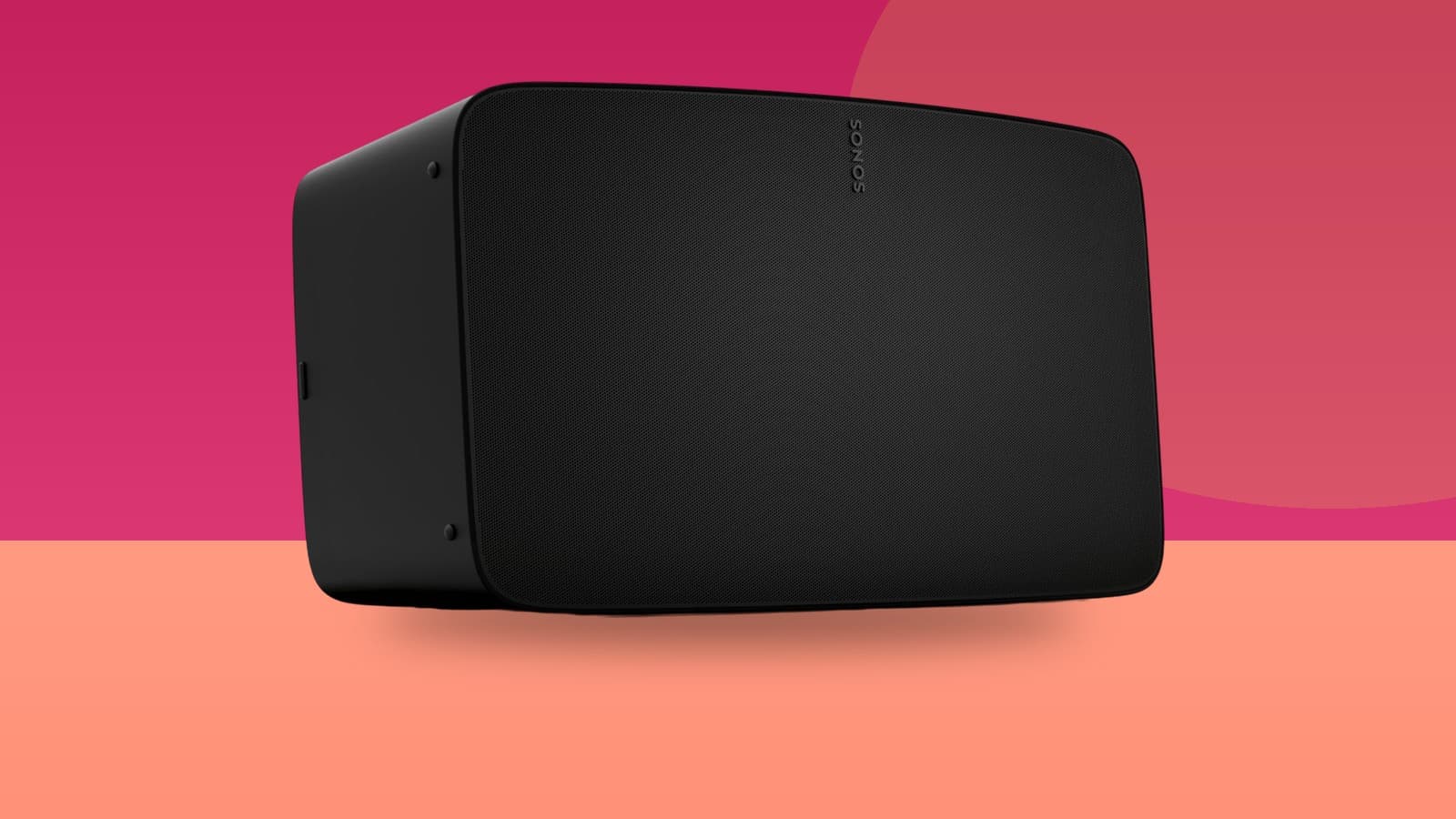
The short version: who the Sonos Five is really for
Let's clear up the biggest confusion first, because it changes everything about whether this speaker belongs on your shortlist. The Sonos Five is not a Bluetooth speaker. It has no Bluetooth radio, no battery, and no microphone for voice control. It plays music over your home Wi-Fi (and over Apple AirPlay 2), with a 3.5 mm line-in for plugging in a turntable or CD player, and it has to stay plugged into the wall. Sonos lists its connectivity as Wi-Fi, a 10/100 Ethernet port, AirPlay 2, and a 3.5 mm input, with no Bluetooth in the spec table at all (Sonos).
So why is it in a roundup about wireless Bluetooth speakers? Because it's the answer to a specific question buyers in this category eventually ask: "What if I want genuinely room-filling, hi-fi-grade sound at home and I don't care about carrying the speaker to the beach?" The Five is the premium, stay-at-home pick. If you need something pocketable and pair-from-your-phone-anywhere, this is the wrong speaker, and our Bose SoundLink Micro review covers the ultra-portable end of the spectrum instead.
This is a research-based review. We did not hands-on test the Sonos Five ourselves. Instead, we synthesized the manufacturer's published specifications with measurements and assessments from reputable independent reviewers, and we lay out exactly how we did that at the end so you can weigh the conclusions accordingly.
Where to Buy
The Five is built to anchor a room, not to travel — it needs mains power and home Wi-Fi.
Sonos Five specs: what's actually inside the cabinet
For a speaker that looks like a plain black (or white) slab, there's a surprising amount of engineering packed in. The acoustic core is six Class-D digital amplifiers driving six drivers: three mid-woofers and three tweeters. Sonos describes the tweeter arrangement as one center tweeter tuned for vocal clarity plus two angled side tweeters that widen the soundstage, while the three mid-woofers handle midrange and push the low end (Sonos).
Sonos Five watts and why the number is only half the story
A common search is some version of "Sonos Five watts specs," and it's worth answering carefully. Sonos does not headline a single wattage figure on its main spec sheet; the company tunes each of the six Class-D amplifiers to the cabinet rather than marketing a raw power number. That's deliberate, and honestly it's the right instinct, because amplifier wattage is a poor predictor of how loud or how good a speaker sounds. Driver size, cabinet design, sensitivity, and tuning matter as much or more. The practical takeaway from independent testing is that the Five plays very loud and stays clean while doing it. SoundGuys notes plainly that "being large means the Sonos Five produces ample bass" and that the speaker keeps multiple instruments distinct rather than smearing everything under the low end (SoundGuys).
Size, weight, and the sealed-cabinet design
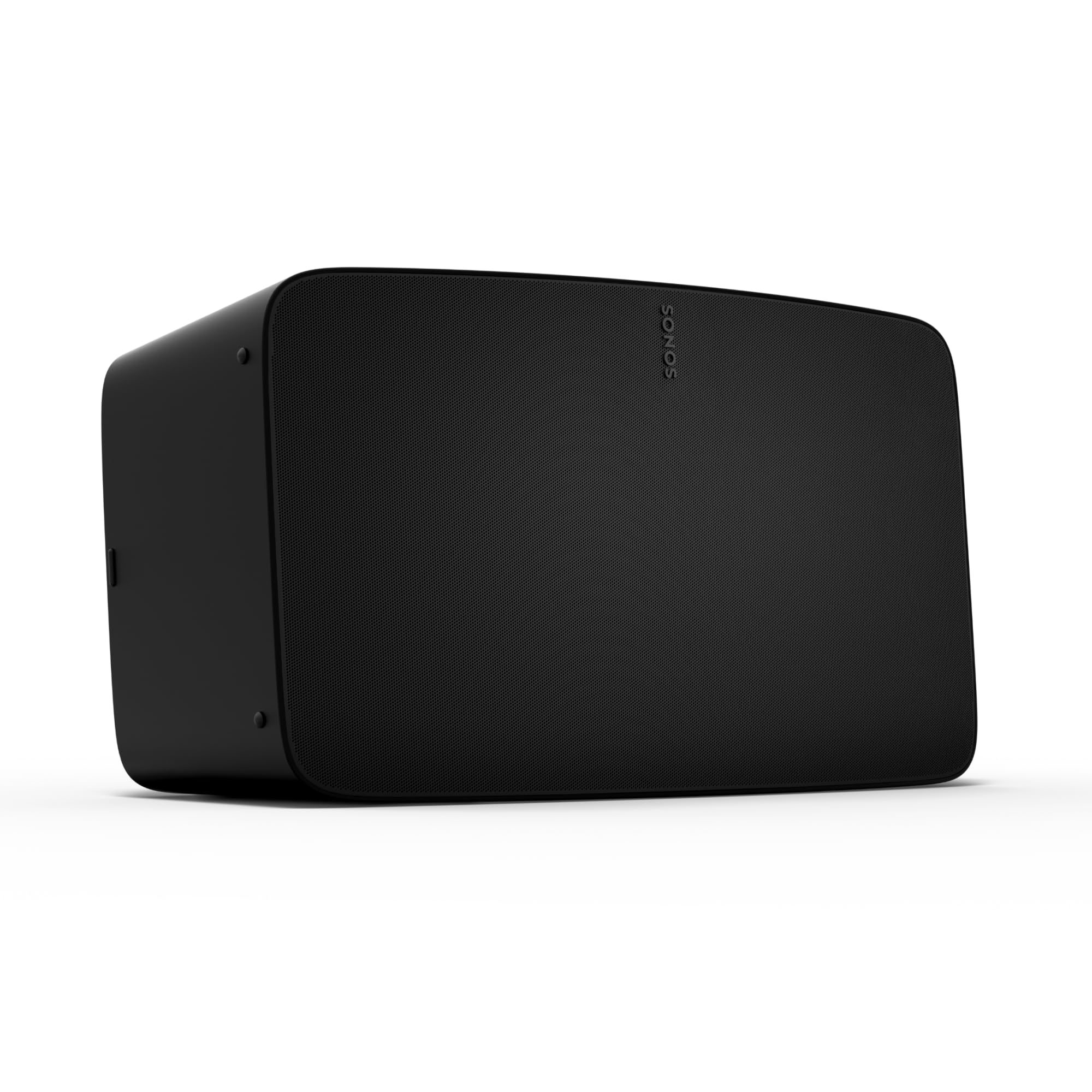
The Five is a substantial object. It measures 203 mm tall, 364 mm wide, and 154 mm deep, and it weighs 6.3 kg (about 14 pounds) (Sonos). The cabinet is sealed, which Sonos credits for reducing distortion at high volume. That heft and that sealed box are a big part of why it can do something pocket speakers physically cannot: move enough air for clean, deep bass that fills a real room. It's also why nobody is clipping this to a backpack. If you want to understand the size-versus-bass tradeoff in general terms before you buy, our explainer on whether Bluetooth speakers are worth it walks through what you actually gain by spending up.
Connectivity: Wi-Fi, AirPlay 2, Ethernet, and that line-in
Here's the full connection picture so there are no surprises. You stream to the Five over your home network through the Sonos app, you can use Apple AirPlay 2 from an iPhone or iPad, you can hardwire it with the 10/100 Ethernet port, and you can plug an analog source into the 3.5 mm line-in (Sonos). One caveat reviewers flag about that line-in: because Sonos converts the analog input to digital and back, there's noticeable latency, which makes the Five a poor choice as a TV speaker but perfectly fine for a record player, where lip-sync doesn't matter (SoundGuys).
How the Sonos Five sounds (the audiophile question)
People searching "Sonos Five review audiophile" usually want to know one thing: is this a serious music speaker or a lifestyle gadget? The honest answer is that it leans serious, with a caveat about tuning.
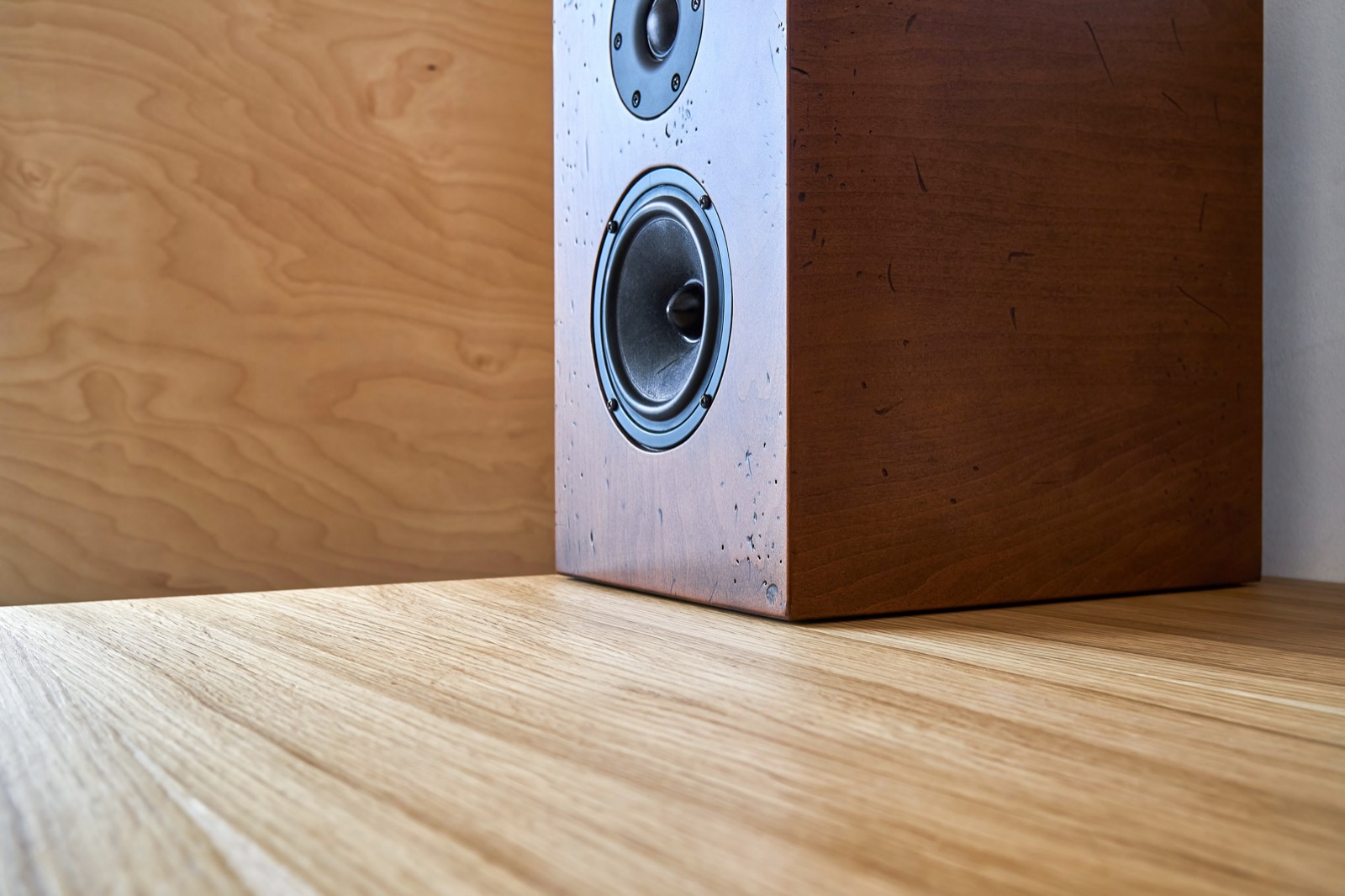
Six drivers and six Class-D amps in a sealed cabinet give the Five its room-filling output.
Out of the box vs. after Trueplay
Out of the box, the Five tends to sound bass-forward, with the low frequencies dominating before you tune it. RTINGS observes that before Trueplay the sound is "bass-forward and lacking in definition," but that after running Trueplay the speaker "sounds altogether better balanced" and controls the attack and decay of bass notes far more effectively (RTINGS). Trueplay is Sonos's room-correction routine: it uses an iOS device's microphone to measure how the room reflects sound, then adjusts the speaker's output to suit (Sonos). The important asterisk for non-Apple households is that the full Trueplay tuning has historically required an iOS device to perform the measurement, so Android-only users get a more limited experience.
Stereo pairing and the "real hi-fi" path
A single Five is mono. Sonos supports pairing two of them into a true stereo pair, with one handling the left channel and one the right, which is where the Five starts to genuinely compete with traditional bookshelf-and-amp setups (Sonos). It's expensive to go this route, but for someone building a wireless system that can grow, it's a real advantage over a one-and-done portable. Reviewers consistently rate the Five as punchier and fuller than smaller Sonos models in standard stereo listening.
Where it falls short sonically
No speaker is perfect, and the Five's omissions are real. It has no spatial audio or Dolby Atmos support, so if immersive, height-channel sound is your goal, it's not built for that. It also has no built-in voice assistant and no waterproofing, just humidity resistance, and it must stay on AC power at all times (SoundGuys). These aren't dealbreakers for a living-room music speaker, but they're the reasons a different model might suit you better.
Sonos Five vs Era 300: the comparison most buyers should make
If you're cross-shopping premium Sonos speakers, the Era 300 is the one to weigh against the Five, and the choice comes down to a clean tradeoff. The Era 300 is built around Dolby Atmos and spatial audio, with drivers that fire to the sides and upward, and crucially it adds Bluetooth and a built-in mic for voice control. The Five does none of that, but it counters with deeper, punchier, fuller traditional stereo sound. As What Hi-Fi frames it, the Era 300 specializes in immersive spatial formats while the Five remains the stronger pick for conventional two-channel music listening (What Hi-Fi).
So the decision is almost philosophical. Want the newest features, Atmos, Bluetooth, and voice, in a more versatile box? The Era 300. Want the most muscular straight-up stereo music speaker Sonos makes, and you don't care about spatial audio or carrying it around? The Five.
A quick word on "Sonos Five Gen 2" and the Move 2
Two more search terms deserve a straight answer. There is no separate "Sonos Five Gen 2" product line beyond the current Five, which itself was a hardware refresh of the older Play:5; when people say "Gen 2," they're typically just referring to the current model. And the Sonos Move 2 is a different animal entirely: it's the portable, battery-powered, Bluetooth-equipped Sonos. If portability and Bluetooth are non-negotiable, the Move 2 (or the Era 300) is your lane, not the Five.
Sonos Five alternatives worth knowing
The Five isn't the only way to get great wireless sound, and the right alternative depends on what you're willing to give up.
- If you want spatial audio and Bluetooth in a premium Sonos: the Era 300, as covered above.
- If you want portability and battery life: look at portable Bluetooth models rather than the mains-only Five. Our ranked best wireless Bluetooth speakers for 2026 guide compares editor picks by use case, from ultra-portable to party-sized.
- If you want the smallest grab-and-go option: something like the Bose SoundLink Micro is the opposite end of the spectrum, and we break it down in our Bose SoundLink Micro review.
The pattern is consistent: the Five trades versatility and portability for output and fidelity at home. Decide which side of that trade you're on, and the choice gets easy.
Pricing and whether this deal is good
The Sonos Five typically lists around $549 (SoundGuys). At the time of writing, the Amazon listing we track showed it at $479, roughly 20% off the $599 reference price, which our deal data flagged as an all-time-low on that listing. Prices on this speaker move with seasonal sales, so treat any figure here as a snapshot and check the live price before you buy. As a rule, the Five is worth its premium only if room-filling home sound is the actual goal; if you mostly want a speaker to carry around, your money buys more value elsewhere.
Verdict: a powerhouse home speaker, not a travel speaker
The Sonos Five is one of the most capable single-box wireless speakers you can put in a living room. Big, clean, room-filling sound, a sealed cabinet that holds together at volume, a line-in for analog gear, and the option to grow into a true stereo pair make it a legitimate hi-fi choice. The catches are equally clear: no Bluetooth, no battery, no voice assistant, no spatial audio, and a line-in with too much latency for TV use. Buy it if you want premium home audio and you're fine keeping it plugged in. Skip it if you wanted something to take with you, and look at a portable Bluetooth model instead.
How we researched this review
We did not physically test the Sonos Five. This assessment is a research-based synthesis. We anchored every specification on the manufacturer's official product page (full specs on Sonos's Five product page), then cross-checked real-world sound quality, tuning behavior, and limitations against independent reviews and measurements from RTINGS, SoundGuys, and What Hi-Fi. Pricing reflects manufacturer list price plus the live deal we track, and prices change frequently. Where a claim could only be traced to anonymous forum or social-media chatter, we left it out.
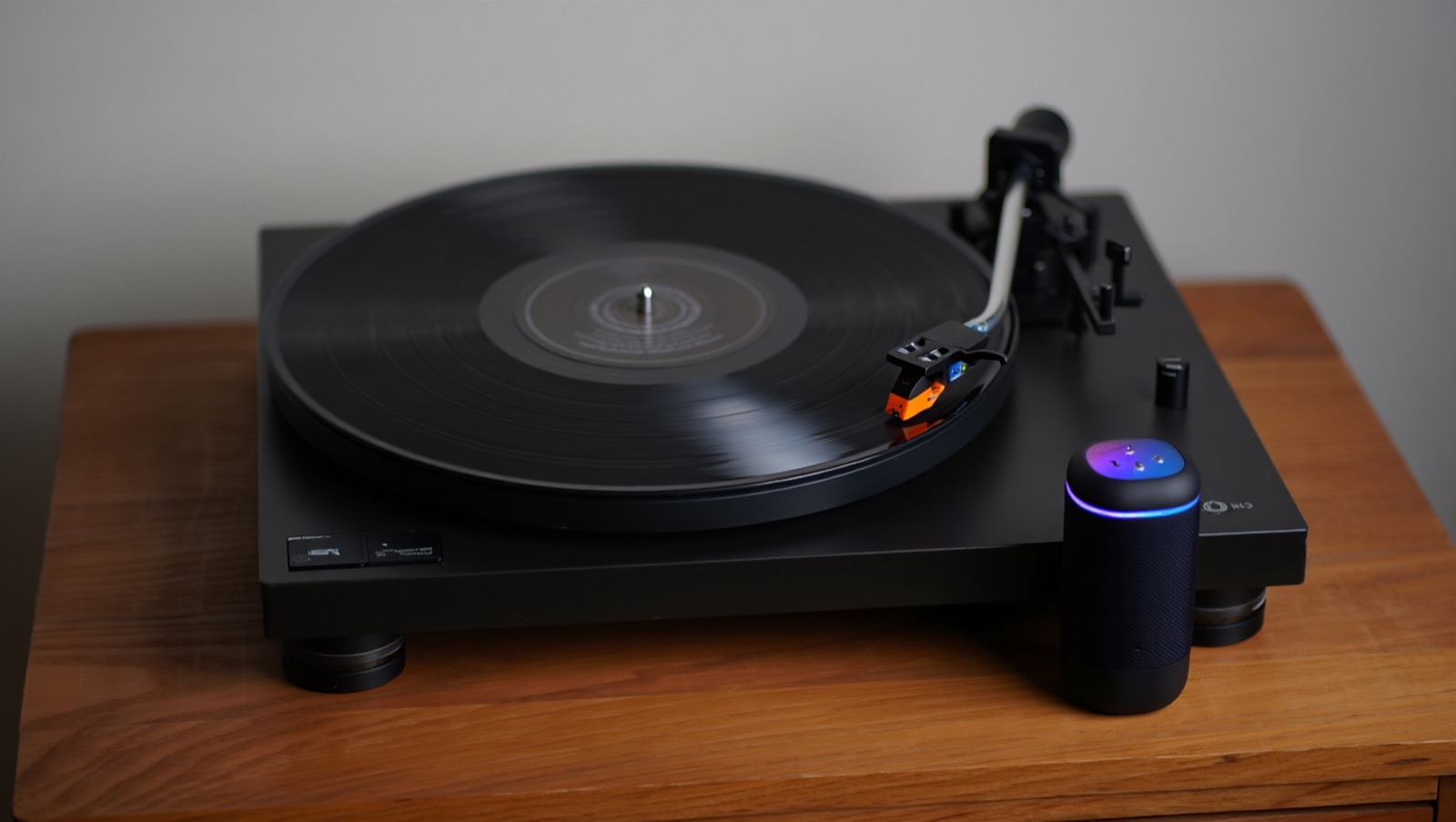
The 3.5 mm line-in makes the Five a natural partner for a record player, though latency rules it out as a TV speaker.
Where to Buy
Specifications
- Amplifiers
- 6 Class-D digital amplifiers
- Drivers
- 3 mid-woofers + 3 tweeters (1 center, 2 angled)
- Connectivity
- Wi-Fi (802.11a/b/g/n), AirPlay 2, 10/100 Ethernet, 3.5 mm line-in
- Bluetooth
- None
- Battery
- None (AC power required)
- Dimensions
- 203 x 364 x 154 mm (H x W x D)
- Weight
- 6.3 kg (about 14 lb)
- Colors
- Black, White
Related Posts