

So, Are Bluetooth Speakers Worth It?
Short answer: for most people, yes, with one big caveat. A Bluetooth speaker is worth it when you want music that follows you around the house, into the shower, out to the patio, or down to the beach, and you care more about "good enough, anywhere" than "audiophile-perfect in one chair." It stops being worth it the moment you're trying to build a serious home-theater rig, fill a large room with hi-fi sound, or shave every millisecond of lag off your TV audio. In those cases the wireless convenience that makes Bluetooth great is exactly the thing working against you.
That's the honest version, and it's worth unpacking, because "are Bluetooth speakers worth it" is really a stack of smaller questions hiding behind one. Do they actually sound good? Will the battery last a day at the pool? Can two of them play in stereo? Is the expensive one worth triple the cheap one? And the question almost nobody asks until it's too late: is Bluetooth even the right wireless technology for what you're trying to do?
A quick word on how we got to these conclusions. We don't do hands-on lab testing at Zuqqis. Instead, we synthesize the manufacturers' own published specifications with measurements and listening notes from independent reviewers and audio labs, then cross-check claims against multiple sources before we repeat them. Where a number comes from a spec sheet, we say so; where it comes from a third-party reviewer, we link it. You can verify every figure below yourself. That transparency is the whole point: we'd rather tell you exactly where a claim comes from than pretend we put a speaker in an anechoic chamber.
Portability is the core value proposition: a Bluetooth speaker earns its keep when it moves with you.
The 30-second verdict
- Worth it for: portability, casual everyday listening, outdoor and bathroom use, parties, travel, and anyone who values "set it down anywhere and press play."
- Not worth it for: dedicated home-theater surround, large-room hi-fi, critical listening, or any setup where wired or Wi-Fi audio is an option you'd actually use.
- The plot twist: the best-sounding "speakers" people compare Bluetooth models against often aren't Bluetooth at all. The premium pick in our own roundup, the Sonos Five, streams over Wi-Fi and has no Bluetooth radio whatsoever, per Sonos's official spec page. If sound quality is your only goal, you may not want a Bluetooth speaker in the first place.
If you already know you want one and just need help choosing, jump to our guide to the best wireless Bluetooth speakers for 2026 or our walkthrough on how to choose a wireless Bluetooth speaker. If you're still on the fence, keep reading.
Do Bluetooth Speakers Actually Sound Good?
This is the question underneath the question, and the answer is more interesting than a flat yes or no. Modern Bluetooth speakers sound good in a way that would have astonished someone shopping a decade ago. They sound good enough for the vast majority of listening situations. But there's a ceiling, and that ceiling is built into how Bluetooth moves audio through the air.
Why Bluetooth has a built-in sound-quality ceiling
Every Bluetooth audio connection compresses your music before sending it. A standard Bluetooth link tops out at roughly 2 to 3 Mbps of theoretical throughput, and after protocol overhead and error correction the practical bandwidth left for audio is typically under 1 Mbps, as SoundGuys explains in its primer on Bluetooth codecs. Uncompressed CD-quality audio runs at 1,411 kbps. The math is unforgiving: the music has to be squeezed to fit.
That squeezing is "lossy" compression. Codecs use psychoacoustic models to throw away the parts of the signal they predict you're least likely to notice. The default codec, SBC, is the bluntest instrument; AAC (common on Apple devices) is more sophisticated and handles up to 320 kbps; aptX gets closer to CD quality on supported Android hardware. What Hi-Fi's codec explainer walks through the trade-offs in detail. The takeaway for a buyer is simple: a Bluetooth speaker can sound excellent, but it can never sound better than the compressed stream it's fed.
For most people, in most rooms, with most music, that ceiling is irrelevant. You will not hear the difference between SBC and a lossless feed while you're scrubbing dishes or grilling burgers. The codec debate matters far less than the speaker's actual drivers, tuning, and how loud you push it.
What "good sound" looks like in a small speaker
Driver size and cabinet volume set the real limits. A speaker physically cannot produce deep, room-filling bass from a cabinet the size of a soda can, no matter how clever the DSP. The trick the best ultra-portables pull off is sounding bigger than they are through careful tuning.
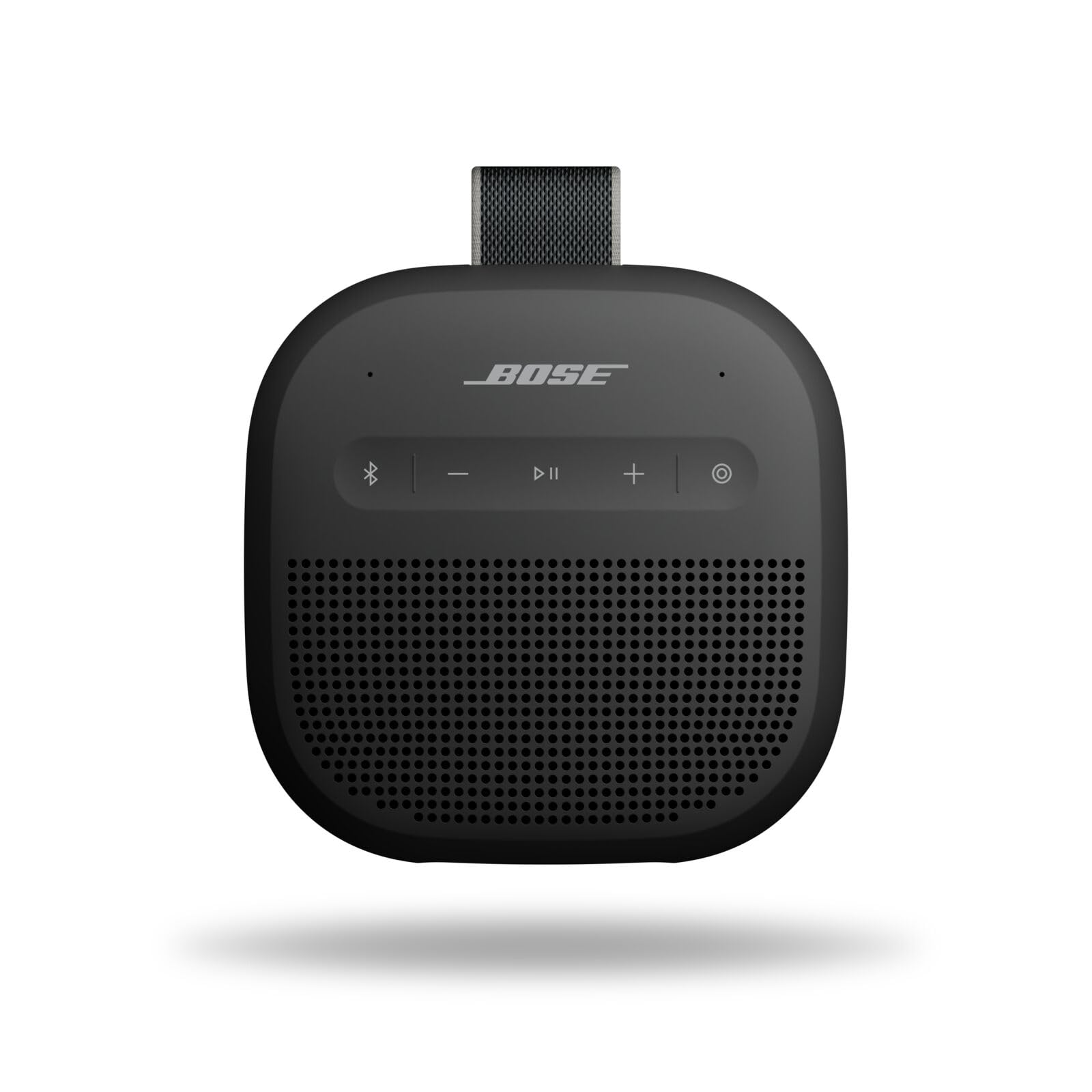
Take the Bose SoundLink Micro (2nd Gen), the ultra-portable pick in our roundup. Independent reviewers describe its bass as "punchy and natural, but not overpowering," noting it "sounds bigger than it looks" with a balanced tuning that keeps vocals clear, according to SoundGuys' review. The same reviewers are candid about the limits, too: push it to maximum volume and you get "very noticeable compression and slightly shrill treble." That's not a knock on Bose. It's physics. A speaker that weighs 0.725 lb, per Bose's spec sheet, is never going to move air like a 14-pound cabinet.
And that 14-pound cabinet is the other end of the spectrum. The Sonos Five packs three tweeters and three midwoofers driven by six Class-D amplifiers, as listed on Sonos's official page. It will out-sound any pocket Bluetooth speaker on the planet. But, again, it's Wi-Fi, not Bluetooth. The lesson keeps repeating itself: if raw sound quality is the goal, the wireless protocol you want may not be Bluetooth at all.
How to read "best Bluetooth speaker sound quality" claims
When you see a roundup crown something the "best Bluetooth speaker for sound quality," translate it as "best within the constraints of Bluetooth and this size class." A great-sounding $130 portable and a great-sounding $400 home speaker are both legitimately "great" for completely different jobs. The useful question isn't "which one sounds best in the abstract," it's "which one sounds best for the room and the use I actually have." That framing carries through everything below.
Are Bluetooth Speakers Worth It for Home Theater?
This is where we have to be blunt, because it's the single most common way people end up disappointed. A standalone Bluetooth speaker is a poor fit for a real home-theater setup, and the reasons are baked into the technology.
The latency problem
Bluetooth introduces a delay between the source and the speaker. For music, you'd never notice it. For video, you absolutely will: dialogue drifts out of sync with lips, gunshots land after the muzzle flash. Some speakers and TVs minimize this with low-latency codecs, but plain Bluetooth was never designed for tight audio-video sync. If you've ever tried to watch a movie through a Bluetooth speaker and felt that something was subtly off, that lag is usually the culprit.
The surround-sound problem
Home theater is fundamentally about placing sound around you, left, right, center, and behind. A single Bluetooth box, however good, is one point of sound in front of you. You can pair two compatible units for stereo separation (more on that below), but that still isn't surround, and Bluetooth's bandwidth and pairing model aren't built to run a synchronized multi-speaker surround array the way a dedicated AV receiver or a Wi-Fi multiroom ecosystem can.
What to use instead
For TV and movies, a soundbar (often with a wired or proprietary-wireless subwoofer) or a Wi-Fi-based multiroom system will serve you far better. This is, once more, the Wi-Fi-versus-Bluetooth divide showing up. Sonos built its reputation on synchronized, low-latency, whole-home audio precisely because Wi-Fi can do what Bluetooth structurally can't: keep many speakers locked in sync across a house, which is reflected in the Five's Wi-Fi-only, AirPlay 2 connectivity.
So: are Bluetooth speakers worth it for home theater? Honestly, no, not as your main solution. They're worth it alongside a home theater, as the portable speaker you grab for the kitchen or the deck. Don't ask one device to be both.
Battery, Durability, and the Outdoor Question
If portability is the headline reason to buy a Bluetooth speaker, then battery life and durability are the fine print that decides whether you'll actually be happy.
How much battery life is enough
Marketing battery figures are best-case numbers, measured at moderate volume with the most efficient codec. Real-world endurance is usually lower, especially if you crank the volume or use power-hungry features. The Bose SoundLink Micro 2nd Gen is rated for up to 12 hours, per Bose, and reviewers note that loud listening eats into that meaningfully. For a day at the pool, aim for a rated figure of 10 hours or more so you have headroom. For a backpacking trip where you can't recharge, look higher still, or carry a power bank, since most modern speakers charge over USB-C.
Waterproofing actually matters
This is one spec that's worth paying for, because water and dust are exactly what kill outdoor speakers. Look for an official IP rating. The Bose SoundLink Micro 2nd Gen carries an IP67 rating, meaning it can survive submersion under a meter of water for 30 minutes, as Bose documents. The first digit (6) is dust resistance; the second (7) is water. A speaker with no IP rating isn't necessarily fragile, but you have no manufacturer guarantee it'll survive a splash. If your speaker is going anywhere near a pool, a kitchen sink, or a campsite, an IP rating moves from "nice to have" to "non-negotiable."
A real-world battery and durability checklist
- Treat the rated battery figure as the ceiling, not the average; subtract a few hours for loud, real-world use.
- Prefer USB-C charging so you can top up from a phone power bank.
- Demand a published IP rating for any outdoor or bathroom use; IP67 is the gold standard for ultra-portables.
- Check whether the speaker floats or has a strap/clip if you're taking it on the water or a bike.
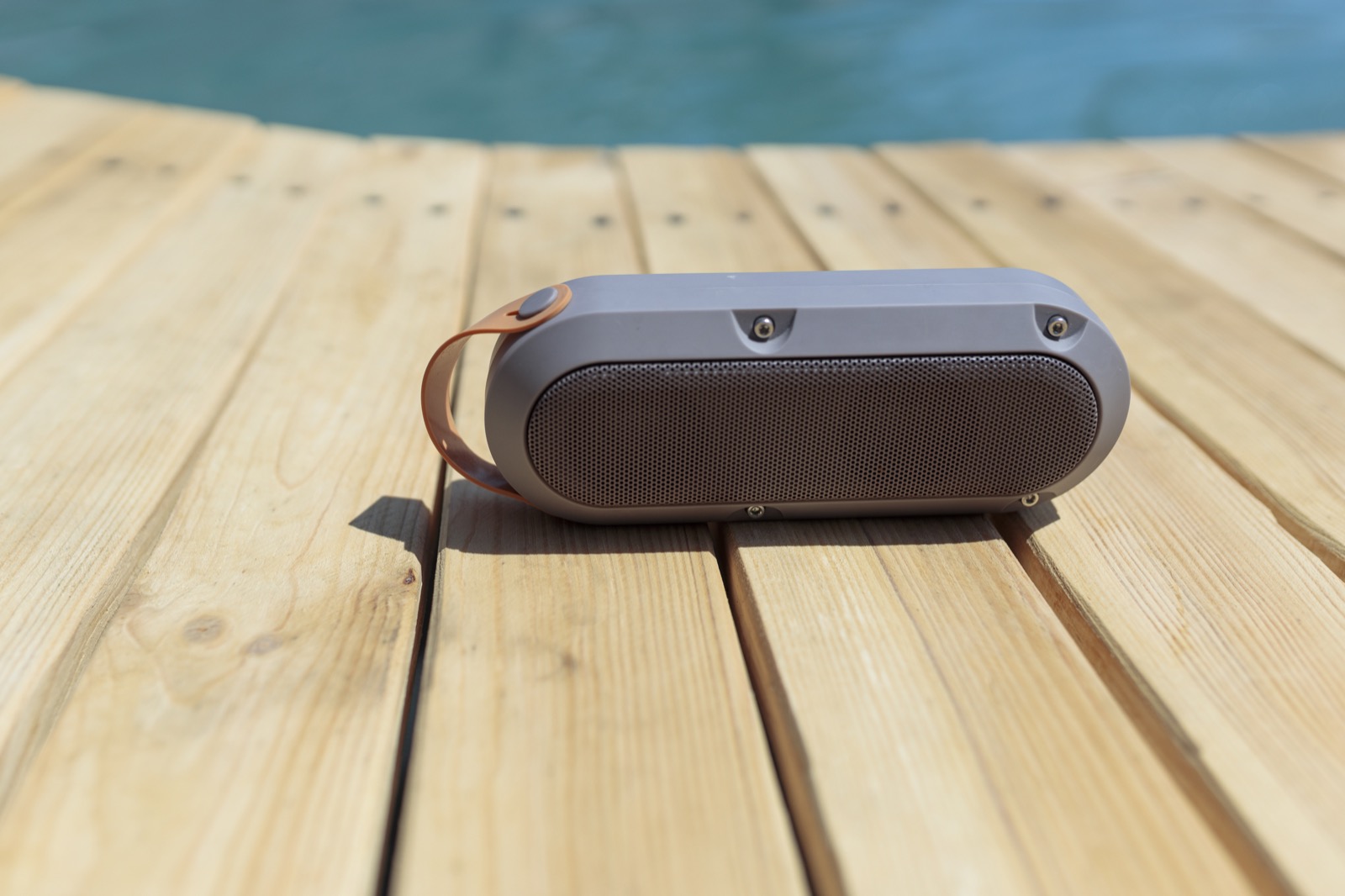
An IP67 rating, like the Bose SoundLink Micro 2nd Gen's, is what makes poolside and outdoor use safe.
Stereo Pairing, Party Mode, and Filling a Room
One of the most underrated reasons a Bluetooth speaker is worth it: a single small speaker can grow into a bigger system later.
Many speakers support pairing two identical units. The Bose SoundLink Micro 2nd Gen, for instance, offers a Party Mode that plays the same audio from two speakers in sync, and a Stereo Mode that splits left and right channels across two units for genuine stereo separation, according to Bose's product page. That's a meaningful upgrade path: buy one now, add a second when budget allows, and suddenly your "is one little speaker worth it" question answers itself.
A few caveats keep this honest. Stereo pairing almost always requires two of the same model, so you can't mix a Bose with a JBL. Two ultra-portables paired together still won't out-bass a single large speaker, because you haven't added cabinet volume, just channel separation and a wider soundstage. And true multiroom audio, the same song perfectly synced in five rooms at once, is again a Wi-Fi strength rather than a Bluetooth one. For a single room or a party in the backyard, though, a stereo pair of capable portables is a genuinely great, flexible answer, and it's exactly the kind of "best party Bluetooth speaker" setup people are looking for.
Premium vs. Affordable: Where Your Money Actually Goes
"Best premium Bluetooth speaker" and "best affordable Bluetooth speakers" are two of the most-searched variations of this topic, and the gap between them confuses a lot of buyers. Here's where the extra money goes, and where it doesn't.
What the affordable tier buys you
A well-chosen affordable speaker gets you the core experience: reliable Bluetooth, decent battery, often a real IP rating, and tuning that punches above its size. For casual listening, the law of diminishing returns kicks in fast. A good budget speaker delivers a large majority of the everyday enjoyment of a premium one. If you mostly listen while cooking, showering, or hanging out on the patio, you may never feel like you're missing anything.
What the premium tier buys you
Spend more and you're paying for some combination of: bigger or better drivers (more output, deeper bass, less distortion at high volume), more durable build quality, longer-supported app ecosystems, multiroom and voice features, and brand-level tuning expertise. The Bose SoundLink Micro 2nd Gen sits at the premium end of the ultra-portable class, and reviewers note it commands "a hefty price-tag" for its size, as TechRadar puts it. You're paying for refinement and durability in a tiny package, not raw volume.
Then there's the genuinely premium home tier, where something like the Sonos Five lives. With six amplifiers and a six-driver array, per Sonos, it plays in a completely different league of output and fidelity. But you pay for it, it's not portable at nearly 14 pounds, and it isn't even a Bluetooth speaker. That's the clearest illustration of the whole premium-versus-affordable question: past a certain point, "more money" stops meaning "better Bluetooth speaker" and starts meaning "different category of product entirely."
How to decide which tier is worth it for you
- Buy affordable if the speaker is for casual, everyday, move-it-around listening and you don't chase the last 10% of fidelity. This is the right call for most people.
- Buy premium portable (like the Bose) if you want refined sound and rugged durability in the smallest possible package and you'll use it constantly.
- Buy premium home (like the Sonos) if sound quality in a fixed room is the priority, you have power and Wi-Fi where it'll live, and portability genuinely doesn't matter. Just know you're leaving Bluetooth behind.
For the head-to-head specifics, our deep dives on the Sonos Five and the Bose SoundLink Micro (2nd Gen) lay out the trade-offs in full, and the full 2026 roundup ranks them alongside a larger party-class option.
Best for Bass, Best for Home, Best for Parties: Matching the Speaker to the Job
The reason there's no single "best Bluetooth speaker" is that the best one depends entirely on the job. Here's how the common use-cases map to what you should actually prioritize.
Best for bass and sound quality
Bass comes from moving air, which comes from driver size and cabinet volume. If thumping low end is your priority, accept that you'll be carrying a larger speaker. Look at the bigger party-class portables rather than pocket models, and read independent measurements rather than trusting "deep bass" marketing copy. Remember the ceiling: even the bassiest Bluetooth speaker is limited by its compressed input and its cabinet, so set expectations against its size class, not against a subwoofer.
Best home Bluetooth speaker
For a speaker that mostly lives in one room, prioritize fidelity, app support, and the option to add a stereo partner later. But ask yourself the honest question first: if it never leaves the house and there's Wi-Fi where it sits, would a Wi-Fi speaker serve you better? For many home-only buyers, the answer is yes. Bluetooth's advantage is mobility; if you're not using the mobility, you're paying a sound-quality tax for nothing.
Best party Bluetooth speaker
Parties want loudness, battery endurance, and durability. Prioritize a large driver array, a rated battery that comfortably outlasts your event, an IP rating in case of spills, and stereo or party pairing so you can run two units for coverage. This is the one use-case where bigger genuinely is better, a pocket speaker will simply get drowned out by a crowd.
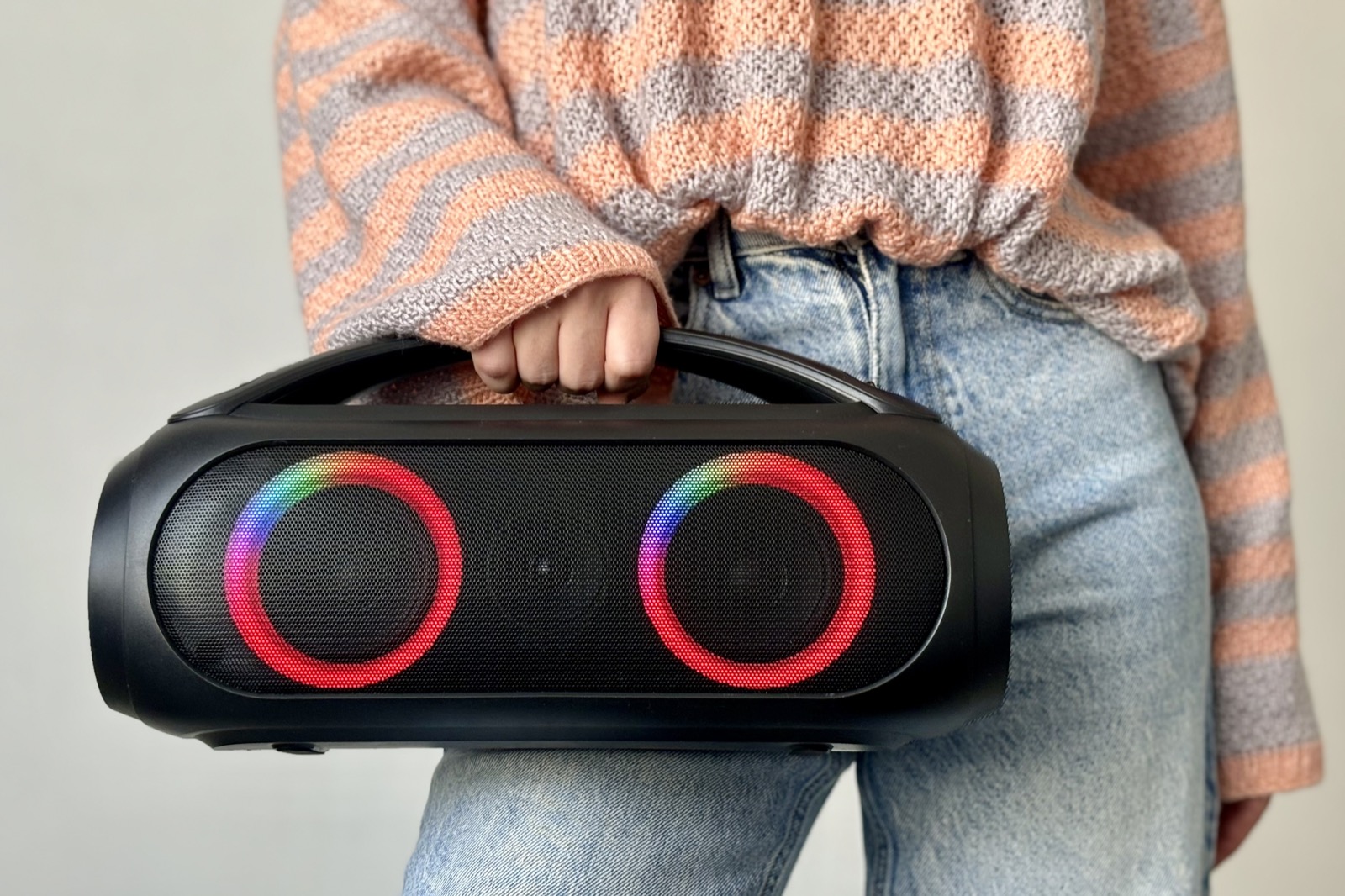
Party use rewards loudness, battery endurance, and durability over compact size.
When a Bluetooth Speaker Is Not Worth It
To keep this honest, here's the flip side, the situations where you should save your money or buy something else entirely.
- You're building a home theater. Covered above: latency and the lack of true surround make Bluetooth the wrong tool. Buy a soundbar or AV setup.
- You want the best possible sound in one fixed room. A Wi-Fi or wired speaker sidesteps Bluetooth's compression ceiling. The Sonos Five's Wi-Fi-only design, documented by Sonos, exists precisely because serious in-room fidelity wanted more than Bluetooth could give.
- You already have great wired speakers and never leave the listening spot. The convenience you'd be paying for is convenience you won't use.
- You're chasing studio-grade critical listening. Lossy Bluetooth compression, explained by SoundGuys, is a non-starter for that audience; look at wired or high-resolution wireless options instead.
Notice the pattern: a Bluetooth speaker stops being worth it exactly when its defining trait, going anywhere, wirelessly, easily, isn't the thing you actually need. When portability is on the list, it's almost always worth it. When portability is irrelevant, the calculus flips.
The Honest Bottom Line
Are Bluetooth speakers worth it? For the everyday job they were designed to do, music that moves with you, sounds good in any room, survives a splash, and lasts all day, they're one of the easiest "yes" purchases in consumer tech. The technology has matured to the point where even affordable models deliver most of the enjoyment most people will ever want, and stepping up to a premium portable like the Bose SoundLink Micro 2nd Gen buys real refinement and durability in a tiny, rugged package.
What's not worth it is asking a Bluetooth speaker to be something it isn't. It's not a home-theater system. It's not a substitute for serious in-room hi-fi, where Wi-Fi speakers like the Sonos Five quietly win by not being Bluetooth at all. And no amount of money turns a pocket speaker into a subwoofer. Match the speaker to the job, read the real specs and independent measurements before you buy, and a Bluetooth speaker will be one of the most-used gadgets you own.
If you're ready to pick one, start with our best wireless Bluetooth speakers guide for 2026, then read the full Bose SoundLink Micro (2nd Gen) review if portability is your priority, or the Sonos Five review if sound-first home listening is. And if you want a step-by-step framework for the decision, our guide on how to choose a wireless Bluetooth speaker walks you through every spec that matters.
Related Posts