
The Short Answer: It Depends on What You're Buying For
If you want the honest verdict up front: a bladeless tower fan is worth it when you're paying for safety around kids and pets, a quiet bedroom, and a fan that disappears into a room rather than dominating it. It is not worth it if your only goal is to move the most air per dollar. On raw airflow-per-watt, a plain bladed fan still wins, and the physics behind that is not marketing spin. It's measurable.
That tension is the whole story of this category. So instead of a yes/no, this piece walks through what you actually get for the premium, where the "bladeless" label oversells, and which kind of shopper genuinely comes out ahead. We'll lean on manufacturer spec sheets and reputable third-party explainers throughout, because the gap between the brochure and the bench test is exactly where buyers get burned.
A note on how we evaluate, since it matters for trust: Zuqqis does not run airflow tunnels or hold a decibel meter to every fan. This is a research-based analysis. We synthesize the manufacturers' own published specifications, established engineering explainers, and independent editorial testing, then flag where those sources agree and where they quietly disagree. Where a claim can only be traced to forum chatter or a social post, we leave it out. That's the rule.
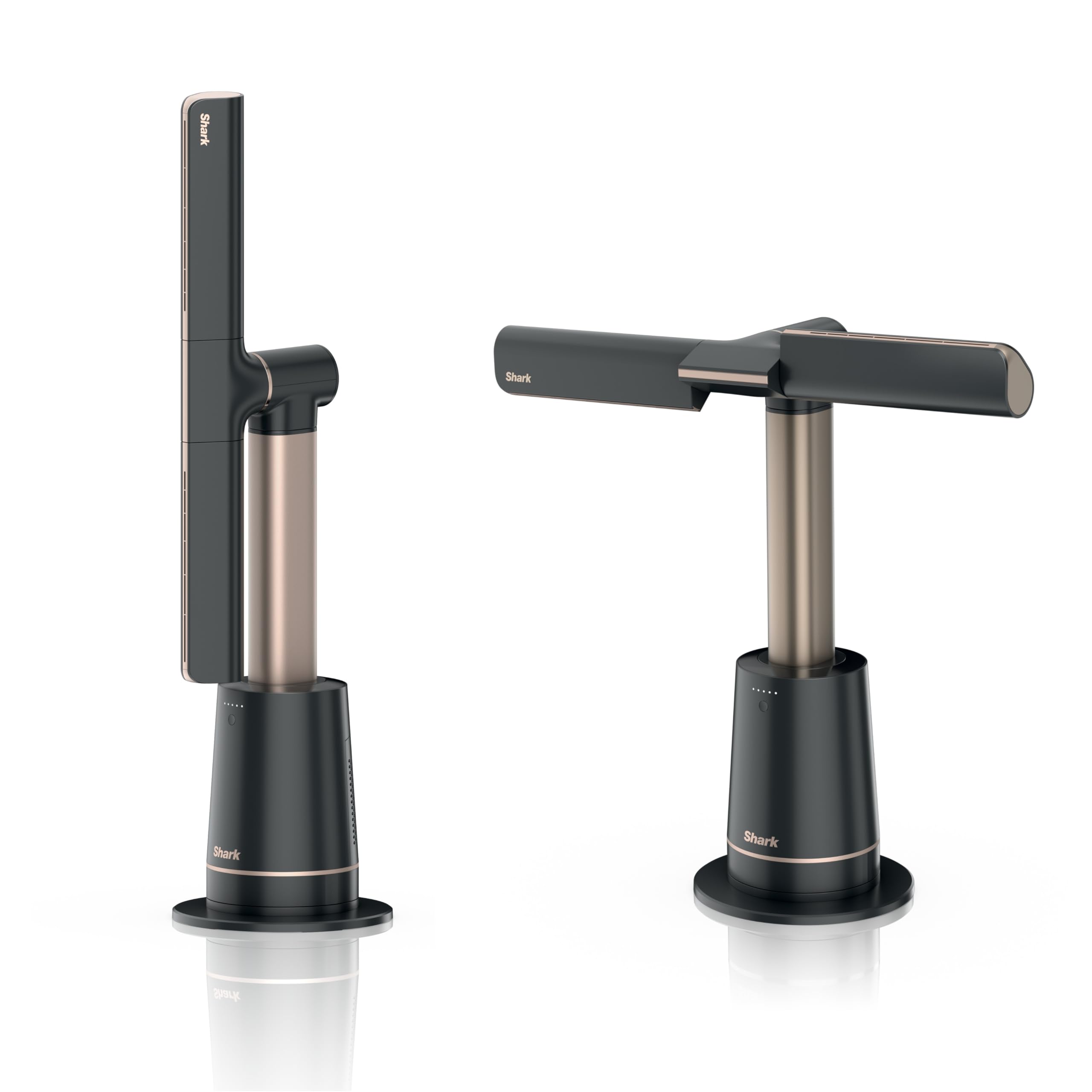
A bladeless tower fan like the Shark TurboBlade trades a spinning grille for a smooth, open profile.
How Do Bladeless Fans Actually Work?
The first thing to get straight: bladeless fans are not bladeless. There is a blade. It's just hidden.
Every fan sold as "bladeless" hides an impeller — a small bladed blower — down in the base or pedestal. A brushless motor spins that impeller, which pulls room air in through vents at the bottom. The science explainer at ScienceABC puts it plainly: "bladeless fans are not actually bladeless, as air is forced into the system by the impeller blades." The marketing name describes the output, where air leaves through a smooth, open loop with no spinning grille you can poke a finger into. It does not describe the mechanism.
So what does the hollow ring or tower do? It amplifies. Dyson coined the term "Air Multiplier" for this, and the principle is genuinely clever. As HowStuffWorks and Dyson's own engineering describe it, the impeller forces a relatively small jet of air up into the loop, where it's squeezed through a thin slit (roughly a millimeter wide) running around the inner rim. That jet shoots out fast and clings to the curved, airfoil-shaped surface of the loop — the Coanda effect — which steers it forward in a smooth sheet.
Inducement and Entrainment, in Plain English
Here's where the "multiplier" part earns its name. Two things happen as that thin, fast jet exits:
- Inducement. The fast air drags the slower air immediately behind the loop along with it, the way a passing truck tugs leaves into its wake.
- Entrainment. The turbulent boundary between fast jet and still room air pulls even more ambient air into the stream.
The result is that the volume of air you feel is much larger than the trickle the impeller actually pushed. Dyson markets a multiplication factor as high as 15 to 18 times the original intake, and ScienceABC repeats the up-to-15x figure. It's worth being a little skeptical of the headline number, though. As the same body of research notes, computational fluid-dynamics models of the effect have landed closer to 6 to 7 times in practice, not 15. The principle is real; the brochure number is the best case.
This is also why the airflow feels different. Because the exiting air is "entrained" into smooth, parallel layers (laminar-ish flow), a bladeless fan delivers a steady stream rather than the choppy pulse you get from a spinning blade passing a grille. For a lot of people that smoother breeze is the single most likable thing about the category. It's the part you actually feel.
Are Bladeless Tower Fans Better Than Regular Fans?
"Better" splits cleanly into two questions: better at cooling, and better at living with. The answers point in opposite directions, which is exactly why this category confuses people.
On Raw Airflow, Traditional Fans Win
Let's be blunt about the cooling math. A bladeless fan spends energy twice: once to spin the impeller, and again across the multi-stage path that squeezes, accelerates, and entrains the air. Each stage loses a little. A plain bladed fan just throws air at you directly.
The research is consistent on the consequence. The ScienceABC analysis concludes bladeless designs "are not more energy-efficient — the multi-stage flow path actually consumes more electricity to deliver a similar volume of moving air than a comparable bladed fan." Independent long-term testing reaches the same place on value: Your Best Digs, after a 50-plus-hour test of the Dyson AM07, found the premium bladeless unit "didn't perform any better than competitors in energy usage," with the running-cost gap amounting to roughly a dollar a month even under heavy use.
So if you put a $400 bladeless tower and a $60 bladed tower side by side and measured air moved per watt, the cheap one would likely win. That's the uncomfortable truth the category's design language works hard to distract from.
On Living With It, Bladeless Wins
But airflow-per-watt is not why most people buy these. Read what the bladeless fan is actually better at:
- Safety. No exposed spinning blade at the output. For households with toddlers or curious pets, this is the headline benefit, and it's real. There's simply nothing to catch a finger or a paw.
- Smoother breeze. The laminar stream feels gentler and less "buffeting" than blade chop, which a lot of people find easier to sleep next to for hours.
- Cleaning the visible parts. No blade cage to unscrew and de-gunk. You wipe the loop or column. (There's a catch here — more below.)
- Looks and footprint. A slim column blends into modern décor and takes up little floor space. Manufacturers lean on this hard, and for good reason: it's genuinely a nicer object to have in a room.
So "better?" Better at being a quiet, safe, good-looking room appliance, yes. Better at moving the most air for the least money, no. Pick the question that matches your priority and the answer falls out.
Are Bladeless Fans Quiet? (Mostly Yes, With an Asterisk)
Quietness is one of the strongest selling points, and here the spec sheets back it up, to a point.
The smooth output and brushless DC motors that newer models use are inherently quieter than an old AC motor whirring a blade past a grille. Look at the cluster's two reference machines. The DREO bedroom tower advertises 20 dB operation on its quietest setting alongside a brushless DC motor pushing air at 28 ft/s, per its manufacturer listing. Twenty decibels is genuinely whisper territory — quieter than a library. DREO's own product line, like the Tower Fan 519, repeats the 20 dB "HyperSilent" claim across models.
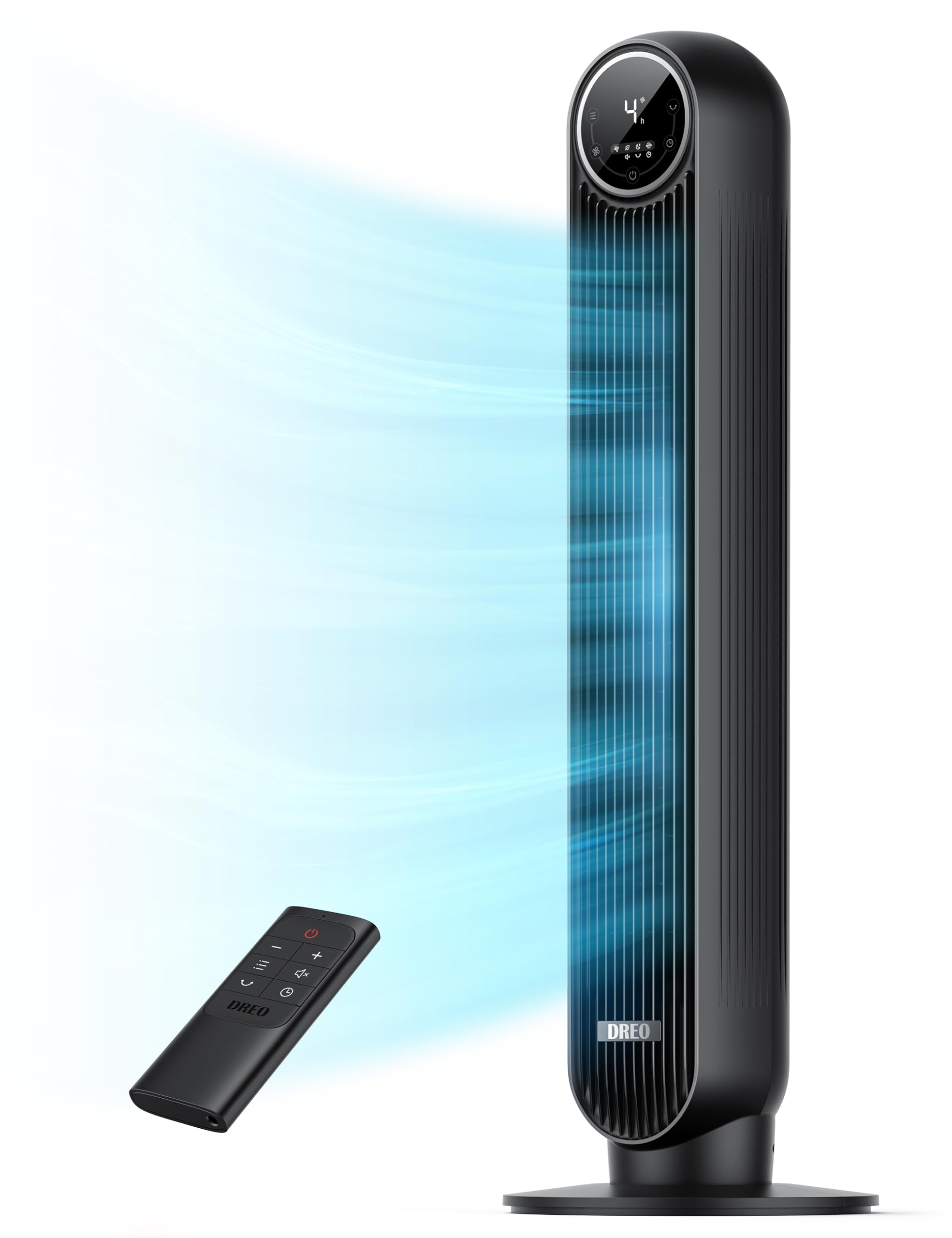
DC-motor bladeless towers like this DREO advertise 20 dB on the lowest setting — true whisper territory.
The asterisk: those whisper numbers are the lowest speed. Push any fan to its top setting and it gets loud, bladeless included. The Orison disadvantages roundup is candid that bladeless fans "can still produce some noise, particularly at higher speeds." And independent testing complicates the marketing further: Your Best Digs noted Dyson "banks on a seven-decibel sound difference from competitors," but their reviewers "didn't find this a compelling difference" in practice. So treat the 20 dB headline as real but conditional. It's the floor, not the everyday number when you actually want airflow.
The other quiet-related win is the kind of sound. A DC bladeless fan tends toward a soft, broadband whoosh rather than a rhythmic blade thump, and many people find steady whoosh far easier to tune out overnight. That's a quality-of-sound advantage the decibel figure alone doesn't capture.
What Are the Disadvantages of Bladeless Fans?
A fair verdict has to give the cons real airtime, because every one of them is a legitimate reason some shoppers should buy a traditional fan instead. Drawing on the Orison disadvantages roundup and the testing already cited, here's the honest list.
1. Price
This is the big one. Bladeless fans cost more — sometimes dramatically more — "due to their advanced technology and design." Dyson's tower fans have historically sat around the $300–$400 mark, and Your Best Digs concluded the AM07 "is not worth the $400 price tag when comparable cooling power can be found" for a fraction of that. The good news for 2026 buyers is that the premium has compressed hard: brands like Shark and DREO now sell capable bladeless towers well under $200, which changes the value math considerably versus the Dyson-only era.
2. Airflow Reach in Big or Humid Rooms
Bladeless and tower designs generally deliver lower CFM than a big bladed pedestal or box fan. Orison flags "limited airflow compared to traditional fans with blades," which makes them "less effective for larger spaces or humid areas." If you're trying to cool a large, muggy room or push air across a workshop, a high-CFM bladed fan is the better tool. Bladeless shines in bedrooms, offices, and living rooms: personal and mid-room cooling, not industrial air movement.
3. Cleaning Is Easier on the Outside, Harder on the Inside
This one's a genuine trap. Yes, there's no blade cage to dismantle. But dust still accumulates in the air channels and around the hidden impeller, and there's a real catch: with no blades to wipe, "cleaning them is sometimes not as easy as you think," and you generally can't safely open the base to reach the internal impeller. Dust that collects in the crevices gets blown back into the room and quietly saps airflow over time. Newer models try to address this — Shark builds in Dust Defense to capture particles and a wipe-clean surface, per its official TF202S spec page — but the structural reality is that the part that gets dirtiest is the part you can reach the least.
4. Repairs Are Pricier and Fiddlier
The intricate internal design "can make repairs more difficult and costly if they malfunction." A $30 box fan is disposable. A $200–$400 bladeless unit you'll want to actually fix, and that means dealing with a more complex machine. Factor warranty terms into the purchase more than you would for a cheap fan.
5. Remote Dependency and Fewer Onboard Controls
Many bladeless towers lean on a remote for full control. Lose it or kill its battery and you may be stuck with limited buttons on the unit. Minor, but worth knowing.
6. It's Not the Energy-Saver the Ads Imply
Worth restating because the marketing strongly implies otherwise: the multi-stage airflow path means some bladeless fans actually draw more power to move a given volume of air than a comparable bladed fan. The silver lining is that all fans are cheap to run in absolute terms (more on that next), so this is a footnote, not a dealbreaker, but it should puncture any "bladeless = greener" assumption.
Are Bladeless Fans Worth the Money? Run the Numbers
"Worth it" is ultimately about price versus value, so let's ground both ends.
Running Cost Is Trivial Either Way
Whatever you buy, a fan is astonishingly cheap to run, which reframes the energy-efficiency debate as nearly moot. A typical tower fan draws 30 to 100 watts. Running a 50-watt fan around the clock for a month works out to roughly $5, and more realistic part-day use lands a few dollars. Compare that to air conditioning: per PowerWizard's cost breakdown, central AC pulls 2,000–5,000 watts and can cost $30–$270 a month. Fans are routinely 10 to 50 times cheaper per hour than AC.
The practical takeaway: the few-watt efficiency penalty of a bladeless design costs you cents, not dollars. So energy use should not be the deciding factor for or against bladeless. The deciding factors are the upfront price and the experience.
Where the Premium Actually Goes
When you pay extra for bladeless, you're buying — in rough order of how much value most people get:
- Safety (no exposed blade) — high value for families and pet owners.
- A smoother, quieter breeze — high value for light sleepers and bedrooms.
- Design and footprint — moderate value; real but subjective.
- Brand ecosystem and app control (mostly the Dyson tier) — low-to-moderate value; nice-to-have, rarely essential.
What you are not reliably buying: better cooling power or lower energy bills than a good bladed fan. Once you internalize that, the decision gets easy. If items 1 through 3 matter to you, a modern sub-$200 bladeless tower is genuinely worth it. If they don't, save your money and buy a bladed fan.
Who Should Buy One — and Who Shouldn't
Buy a bladeless tower fan if you:
- Have young kids or pets and want zero exposed moving parts.
- Are a light sleeper who wants a quiet, steady, non-buffeting breeze in the bedroom.
- Care about a clean, modern look and a small floor footprint.
- Are cooling a bedroom, home office, or living room — personal-to-mid-room spaces.
- Can find a capable model under $200 (the value sweet spot in 2026).
Stick with a traditional fan if you:
- Just want maximum airflow for the lowest price.
- Need to move air across a large or humid room, a garage, or a workshop.
- Are buying a secondary or seasonal fan you won't fuss over.
- Don't want to think about cleaning a sealed air channel down the line.
The 2026 Landscape: The Dyson Tax Is Fading
For years, "bladeless" effectively meant "Dyson," and "Dyson" meant a $300–$400 outlay that independent testers struggled to justify on performance alone. That's changed. Brands like Shark and DREO now offer bladeless towers with brushless DC motors, wide oscillation, and whisper-quiet floors at a fraction of the legacy price.
The Shark TurboBlade (TF202S) is a good illustration of how far the category has come on features for the money. Per Shark's official specifications, it runs a 92-watt motor, oscillates a full 180°, projects air up to 80 feet, offers 10 speeds plus 10 noise levels, and pivots from vertical to horizontal — flexibility a fixed Dyson column can't match — while keeping the Dust Defense, wipe-clean design. If you want the deep dive on whether that flexibility holds up, see our Shark TurboBlade fan review, which digs into the pivot mechanism and where it lands against the bladeless field.
The DREO bedroom towers come at the value from the quiet angle — 20 dB on the low setting and a DC motor tuned for overnight use — making them a strong pick for the "I just want silence while I sleep" buyer.
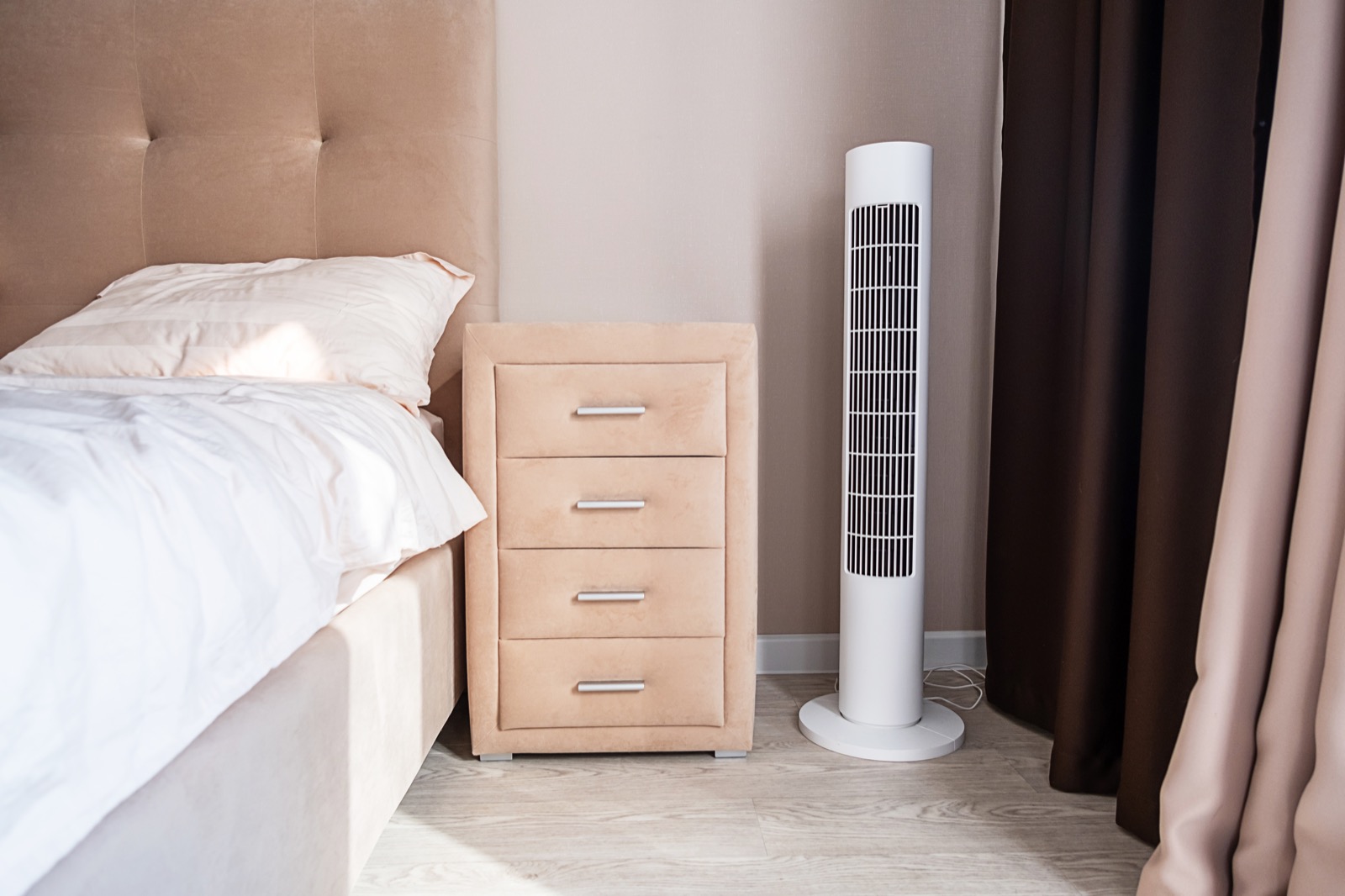
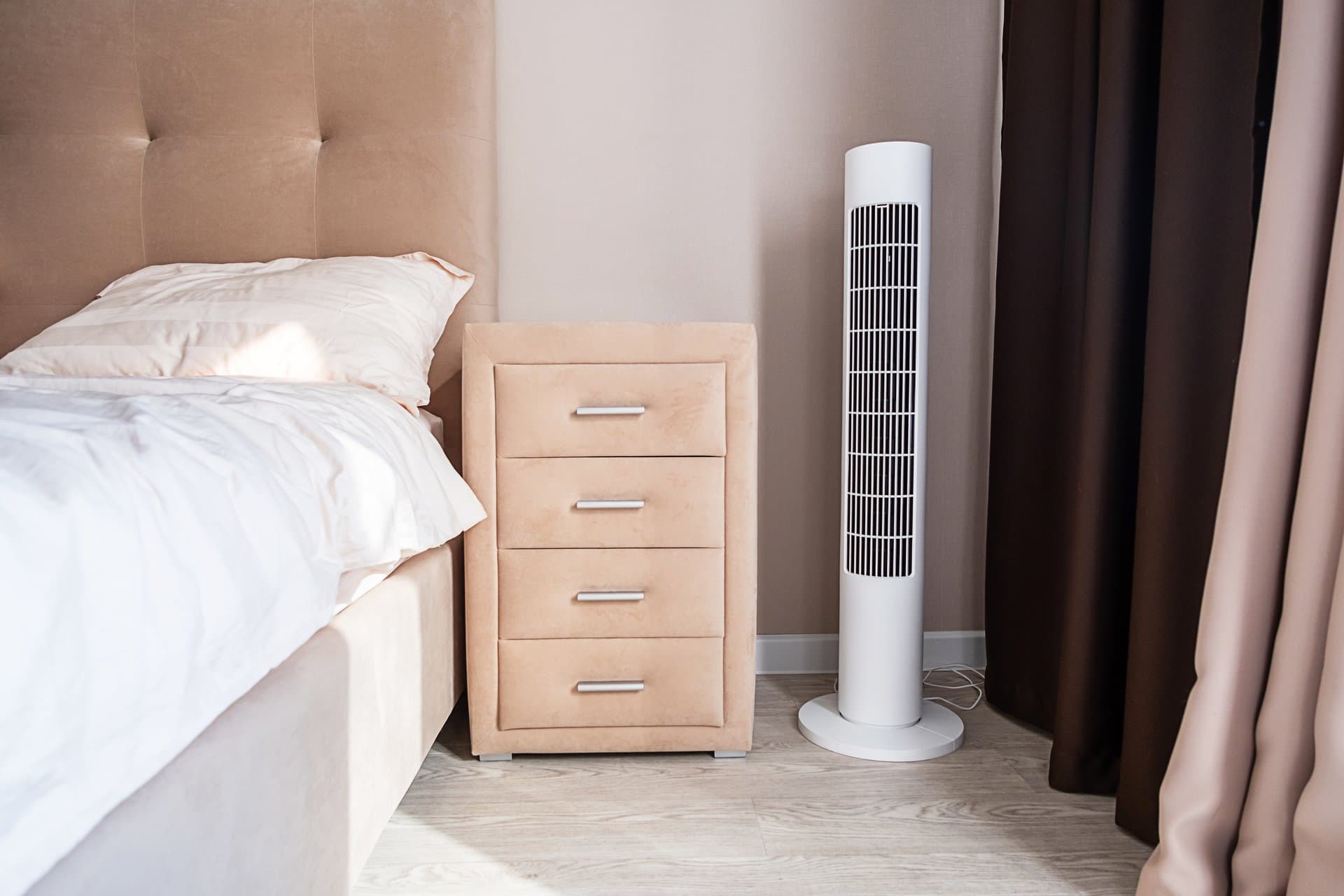
In a bedroom, the quiet, steady breeze of a bladeless tower is the feature you actually pay for — not raw airflow.
The point isn't that one brand wins. It's that the price premium that used to make bladeless a hard sell has shrunk, which tilts the "worth it?" answer more positive than it would have been a few years ago. When the safety and quiet you're paying for cost $150 instead of $400, the trade-off looks a lot more reasonable for a lot more people.
How to Choose, If You've Decided It's Worth It
A quick checklist to separate good bladeless buys from the duds:
- Look for a brushless DC motor. It's the difference-maker for both quiet operation and efficiency. The cheapest "bladeless" units skip it and are louder for it.
- Check the oscillation angle. 90° is fine for a desk; 180° (like the Shark) covers a whole room far better.
- Read the dB claim as a floor, not an average. A 20 dB rating is the quietest setting. Confirm there's a usable low/sleep mode, since that's where you'll actually run it overnight.
- Mind the cleaning story. Favor designs that explicitly address dust capture and offer a wipe-clean exterior, because the internals will stay sealed.
- Set a realistic budget. Under $200 buys excellent bladeless performance now. You do not need to spend $400 to get the core benefits.
For a side-by-side look at the strongest current options, including how bladeless towers stack up against high-velocity DC tower fans, our guide to the best bladeless and DC tower fans of 2026 ranks the field so you can match a specific model to your room and budget.
The Verdict
So, are bladeless tower fans worth it? For the right buyer, yes, and that buyer is more common than the airflow-per-watt skeptics admit.
If your priorities are safety around children and pets, a quiet and smooth breeze for sleeping, and a fan that looks and feels like a designed object rather than a plastic cage, a modern bladeless tower delivers exactly that, and in 2026 it does so without the punishing Dyson-era price tag. The smoother stream is real, the whisper-quiet low setting is real, and the safety is unambiguous.
If your only metric is moving the most air for the fewest dollars, you should buy a traditional bladed fan and not feel an ounce of regret. The physics is on your side: a direct-drive blade simply moves more air per watt, and the "bladeless = efficient" claim doesn't survive contact with the test bench.
Both answers are correct. The mistake is buying a bladeless fan expecting it to cool harder than a cheap bladed one. That's the one promise the category can't keep. Buy it for the experience, not the airflow spec, and it's money well spent.
Related Posts