

The Short Answer: For Most Suburban Lawns, Yes
If your lawn is a quarter acre or smaller and you would rather not deal with gas cans, oil changes, and pull-starts, a cordless battery lawn mower is almost certainly worth it in 2026. That is not a marketing line. It is the conclusion Consumer Reports reached after expert testing, where more than a dozen of the best battery walk-behind mowers in their ratings now outscore the top-rated gas model.
The longer answer depends on three things: how big your lawn is, how you feel about replacing a battery somewhere down the road, and whether the higher upfront price fits your budget. This article walks through each of those honestly, including the cases where a battery mower is the wrong call.
A quick note on how we approach these guides. We do not perform our own hands-on lab testing of lawn mowers. Instead, we synthesize the manufacturer's published specifications with independent testing and reporting from sources like Consumer Reports and professional tool reviewers, then translate that into plain buying advice. Every spec and figure below links to its source so you can verify it yourself.
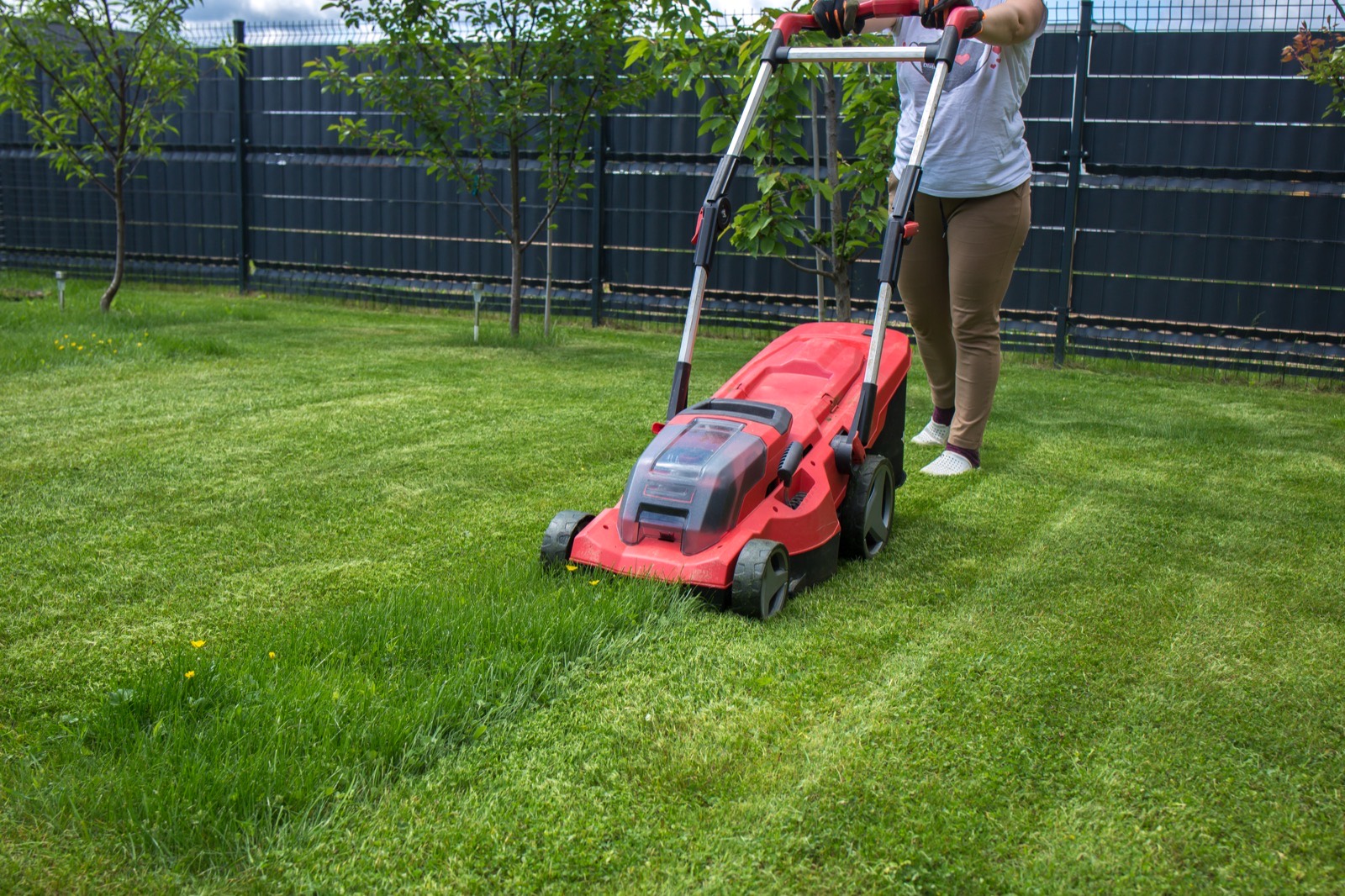
A quarter-acre lawn is the sweet spot where cordless mowers shine.
Are Battery Lawn Mowers Better Than Gas?
"Better" depends on what you are optimizing for. Here is where each technology genuinely wins, based on testing data rather than brand claims.
Where Cordless Mowers Win
Start-up and convenience. There is no priming, no choke, no pull cord, and no stale-fuel headache in spring. You press a button and the blade spins. For homeowners who only mow a few dozen times a year, this alone is a meaningful quality-of-life upgrade.
Maintenance. Battery mowers have no spark plugs, oil, air filters, or carburetors to service. Consumer Reports notes that gas owners spend roughly $21 a year on spark plug, oil, and air filter replacement alone, before factoring in fuel or eventual carburetor problems. A battery mower's maintenance is essentially keeping the deck clean and the blade sharp.
Noise. Battery mowers are dramatically quieter. Greenworks rates its 60V models as roughly 3X quieter than comparable gas mowers, which is the difference between needing ear protection and being able to hear a podcast while you work. It also means you can mow early on a Saturday without declaring war on your neighbors.
Emissions. This is not a small footnote. The U.S. Environmental Protection Agency has estimated that gas-powered lawn equipment accounts for a meaningful share of national air pollution, and a single gas mower can emit as much pollution in an hour as driving a car many miles. A battery mower produces zero tailpipe emissions at the point of use.
Where Gas Still Wins
Raw runtime. Gas is unbeatable on a single tank. If you have a half-acre-plus of tall, thick grass and you want to mow it in one uninterrupted pass without swapping or charging anything, gas still has the edge. Consumer Reports found the average battery walk-behind runs 45 to 50 minutes per charge, which comfortably handles a quarter acre but can run short on larger or hillier lots.
Even cutting, very slightly. In the same testing, gas mowers edged out battery models on cut evenness, averaging 4.7 against 4.5 for electric. That is a real but narrow gap, and the best battery mowers have closed it.
So "better" is really a question of fit. For most residential lots, the convenience, maintenance, noise, and emissions advantages of cordless outweigh the runtime advantage of gas. For large or punishing lots, gas keeps its lead.
Are Cordless Mowers Worth It on Cost?
This is where the "worth it" question gets concrete, because battery mowers usually cost more upfront and the savings show up over years, not weeks.
The Running Costs Are Genuinely Lower
Charging a battery mower is cheap. Consumer Reports modeled electricity at 14 cents per kilowatt-hour with a roughly 2.3-hour full charge, which works out to pennies per mow. A gas mower, by contrast, burns about half a gallon of gasoline per hour of use, and that cost rises every time pump prices do. Add the gas mower's annual tune-up parts, and the operating gap widens each season.
The Battery Is the Real Cost Variable
The honest catch with cordless is the battery. Replacement packs run roughly $100 to $300, sometimes more, and they do not last forever. A quality lithium-ion mower battery typically lasts 3 to 5 years, or roughly 300 to 500 full charge cycles, with careful storage extending that. Consumer Reports deliberately models cost over a five-year horizon for exactly this reason.
Two things soften that cost. First, batteries store best between about 20 and 80 percent charge and at moderate temperatures, and proper care can extend battery life by 30 to 50 percent. Second, most cordless platforms share one battery across an entire tool family, so the same 60V pack that powers your mower can run a trimmer, blower, or chainsaw. That spreads the battery investment across your whole yard kit rather than charging it all to the mower.
A Realistic Five-Year Cost Sketch
It helps to walk through the numbers the way the cost models do. Consumer Reports frames the comparison over a five-year horizon because that is roughly when battery technology improves enough, and battery wear advances enough, to make replacement a reasonable assumption.
On the gas side, picture a homeowner who mows about an hour a week through a mowing season. At roughly half a gallon of fuel per hour, fuel adds up across a season and rises whenever pump prices climb. On top of fuel sits the annual tune-up: spark plug, oil, and air filter parts that Consumer Reports pegs near $21 a year, before any unplanned carburetor cleaning or repair. Over five years those recurring costs stack into real money, and they are largely unavoidable if you want the engine to keep starting reliably.
On the battery side, the recurring spend is tiny. At 14 cents per kilowatt-hour and a charge that takes a couple of hours, each full charge costs pennies, and a season of mowing barely registers on an electric bill. The big line item is a single battery replacement somewhere around year five, in the $100 to $300 range depending on the pack's capacity. There is no fuel, no oil, no filter, and no carburetor in the equation at all.
The upshot is that the gas mower usually wins on day one because of its lower sticker price, but its lead erodes every season as fuel and maintenance costs accumulate. The battery mower starts behind and catches up, typically pulling even within a few years even after you budget for that one replacement pack. Your exact crossover point depends on local electricity rates, local gas prices, and how often you actually mow, which is why Consumer Reports offers an interactive calculator rather than a single universal answer.
The Hidden Value of a Shared Battery Platform
There is one more piece of the cost picture that headline comparisons miss: the battery ecosystem. Most major cordless platforms use a single battery design across an entire family of tools. The same 60V pack that drives a Greenworks mower also runs the brand's string trimmers, leaf blowers, hedge trimmers, and chainsaws.
That changes the math in two ways. First, if you already own tools on a given platform, the mower is effectively cheaper because you can run it on batteries you already paid for. Second, when you do buy a replacement pack down the road, that battery is not a sunk cost tied to one machine; it floats across your whole yard kit. A gas mower offers nothing comparable. Its engine and fuel serve that one machine and nothing else.
For a homeowner building out a cordless yard arsenal over a few seasons, this ecosystem effect can be the deciding factor. It is also why it pays to pick a platform with a broad tool lineup rather than buying the single cheapest mower from a brand you will never buy from again.
Bottom Line on Money
For a small-to-midsize lawn, a battery mower's lower fuel and maintenance costs tend to offset its higher sticker price within a few years, even after budgeting for one eventual battery replacement. The larger your lawn and the more you mow, the faster the math tips in cordless's favor on running costs, though very large lawns may need a second battery to be practical at all. Factor in the shared-battery ecosystem and the value proposition gets stronger still for anyone who owns or plans to own other cordless outdoor tools.
Why Some People Say Electric Lawn Mowers Are Bad
"Why electric lawn mowers are bad" is a real search, and it deserves a straight answer rather than a dismissal. The complaints usually come down to a few legitimate trade-offs.
Runtime anxiety on big lots. If you buy a single-battery push mower for a half-acre lawn, you will run out of charge mid-mow and resent it. This is a sizing mistake, not a flaw in the technology. Match the mower to your lawn and it disappears.
Battery degradation over time. Batteries lose capacity with age and cycles. A pack that ran your whole lawn in year one may need a recharge break by year four. Planning for a replacement around the five-year mark, as the cost models do, keeps this from being a nasty surprise.
Cut quality on tall, wet, or thick grass. Battery mowers can bog down in punishing conditions more than a high-torque gas engine. Independent testing of one popular 60V model found cut quality "adequate" with the standard blade and noticeably better after switching to the included high-lift blade. Brushless motors that adjust blade speed under load help, but gas still has a torque edge in the worst conditions.
Upfront price. A capable cordless mower with enough battery to be useful costs more on day one than a basic gas push mower. The savings are real but they are deferred.
None of these make electric mowers "bad." They make them a poor fit for a specific buyer: someone with a large, rough lawn on a tight upfront budget who does not value quiet operation or low maintenance. For that person, gas is still the rational choice.
The Noise Difference Is Bigger Than You Think
Noise rarely makes the spec-sheet comparison, but it is one of the most-cited reasons owners say a battery mower was worth it. Greenworks rates its 60V mowers as roughly three times quieter than gas models, and independent testers confirm the practical effect, describing the 60V Greenworks as a lot quieter than gas mowers even without precise decibel readings.
The everyday consequences are real. You can mow early in the morning or in the evening without antagonizing neighbors. You can hold a conversation, take a phone call, or listen to music while you work. And you reduce a genuine occupational hazard, because prolonged exposure to gas-mower noise is loud enough to warrant hearing protection. For households with young children, shift workers sleeping during the day, or simply anyone who values a quiet weekend, the noise reduction alone can justify the switch.
Maintenance: What You Actually Do (and Don't Do)
Maintenance is where cordless quietly saves you the most time over the life of the mower. The contrast is stark.
A gas mower asks for seasonal oil changes, periodic spark plug replacement, air filter cleaning or swaps, carburetor attention, fuel stabilizer before winter storage, and the annual ritual of coaxing a stubborn engine back to life in spring. Skip these and reliability suffers. Consumer Reports' $21-a-year parts figure covers only the routine consumables, not the time you spend or the repairs you eventually face.
A battery mower's maintenance list is short by comparison: keep the deck clean of clipping buildup, sharpen or replace the blade once or twice a season, and store the battery properly. That last point is the one new owners overlook. Lithium-ion packs are happiest stored partly charged, between roughly 20 and 80 percent, in a cool, dry place rather than a sweltering or freezing shed. Following those storage habits can extend battery life by 30 to 50 percent, which directly delays that eventual replacement cost. There is no fuel to stabilize, no oil to drain, and no carburetor to clean. For many owners, that simplification is the single best part of going cordless.
The Environmental Case, Without the Hype
Emissions are worth treating seriously rather than as a bumper sticker. Gas lawn equipment is a meaningfully dirty category relative to its size. Reporting on EPA findings notes that gas-powered lawn equipment contributes a notable share of U.S. air pollution, and that a single gas mower can emit as much pollution in one hour of operation as a car driven for many miles. Small engines lack the emissions controls that modern cars carry, so they punch well above their weight in volatile organic compounds and nitrogen oxides, the ingredients of ground-level ozone.
A battery mower produces zero emissions at the point of use. The full lifecycle picture is more nuanced, since the electricity has to come from somewhere and batteries have their own manufacturing footprint, but on the metric most people care about, the air in your own yard and neighborhood, cordless is unambiguously cleaner. If reducing local air and noise pollution matters to you, that is a legitimate column in the "worth it" ledger, not just a feel-good extra.
Which Lawn Size Makes a Cordless Mower Worth It?
Lawn size is the single biggest factor, so here is a practical breakdown grounded in tested runtimes.
Up to 1/4 Acre: Easy Yes
Consumer Reports found that two-thirds of the battery walk-behind mowers in their ratings can mow a quarter acre on one charge. A single-battery push mower is plenty here, and you get all the convenience and quiet upside with none of the runtime worry.
1/4 to 1/2 Acre: Yes, With the Right Battery
This range is comfortable for cordless if you choose a model with adequate battery capacity. A dual-battery 60V mower with auto-switchover keeps cutting without a pause. Professional testers running a 60V Greenworks with two 4.0Ah packs logged just over an hour of real-world mowing, slightly beating the rated 60 minutes, and judged it well suited to quarter-to-half-acre lawns. Self-propel is worth it once you are pushing a heavier dual-battery deck around.
1/2 to 3/4 Acre: Possible, Plan for It
The top dual-battery 60V mowers are rated for up to 3/4 acre on a charge, but that is a best-case figure on manageable grass. At this size, budget for a spare battery so you are never stranded, and lean toward self-propelled to save your arms.
Over 3/4 Acre or Rough Terrain: Reconsider
Past three-quarters of an acre, or on steep and heavily wooded lots, a walk-behind battery mower starts fighting its own runtime. A battery-powered riding mower or, for some buyers, gas remains the more practical answer.
Push vs Self-Propelled: A Quick Detour
Once you have decided cordless is worth it, the next fork is push versus self-propelled. Both exist on the same 60V platform, so the choice is about your body and your yard, not the technology. A push model is lighter, cheaper, and ideal for flat quarter-acre lots. A self-propelled model carries its own weight uphill and over distance, which matters on bigger or sloped lawns. If you want a detailed feature-by-feature breakdown of the entry-level option, our Greenworks 60V 21-inch push mower review digs into exactly how the cheaper model handles the value question.
So, Should You Buy One?
Here is the decision in one paragraph. If your lawn is a half acre or less, you value quiet mornings and near-zero maintenance, and you can absorb a somewhat higher upfront price for lower running costs over time, a cordless battery lawn mower is worth it. If your lawn is large and rough, you mow constantly, and the upfront cost is a hard ceiling, gas still earns its keep. Most American residential lots fall squarely in the first camp, which is why battery mowers have moved from novelty to default for so many homeowners.
When you are ready to compare specific models, the best place to start is our roundup of the best cordless battery lawn mowers for 2026, which ranks the top picks by lawn size and budget so you can match a mower to your yard rather than guessing.
Frequently Asked Questions
How long does a cordless battery lawn mower run on one charge?
The average battery walk-behind mower runs 45 to 50 minutes per charge according to Consumer Reports testing, enough for a quarter acre. Dual-battery 60V models with auto-switchover can stretch past an hour and cover up to three-quarters of an acre in good conditions.
How long do lawn mower batteries last before they need replacing?
A quality lithium-ion mower battery typically lasts 3 to 5 years or about 300 to 500 charge cycles. Storing the pack between 20 and 80 percent charge in a cool, dry place can extend its useful life significantly.
Are cordless mowers cheaper to run than gas?
Yes. Charging costs pennies at typical electricity rates, while a gas mower burns about half a gallon of fuel per hour plus roughly $21 a year in tune-up parts. The main offsetting cost is an eventual battery replacement, usually $100 to $300.
Are battery mowers powerful enough for thick grass?
Modern brushless 60V mowers handle most residential grass well, though independent testers note cut quality on tall or thick grass improves noticeably with a high-lift blade. For consistently overgrown or wet lots, gas still holds a small torque advantage.
Related Posts