
Start With the Job, Not the Sale
Most people shop for outdoor patio seat cushions the way they shop for a throw pillow: by color, by price, and by whichever set looks plump in the photo. Then a single rainy week, or one long summer of afternoon sun, exposes the gap between a cushion that was made for a patio and one that simply got placed on a patio. The first stays bright, dries out, and keeps its shape for years. The second fades to a chalky version of its old self, stays soggy after every storm, and goes flat in the middle by August.
Choosing well is not complicated, but it does mean ignoring the marketing and looking at four things in order: the fabric that faces the weather, the fill that gives the cushion its body, the size that has to match your furniture, and the fastening that keeps it from blowing into the pool. Get those four right and the color, almost by definition, takes care of itself.
This guide is the "how to decide" half of a pair. If you would rather skip straight to ranked picks, our companion roundup of the best outdoor patio seat cushions for 2026 names specific sets across price points. Here, the goal is to give you a framework you can apply to any cushion, so you are never again at the mercy of a flattering product photo.
A note on how we evaluate. We do not stage hands-on weather tests of every cushion. Instead, our recommendations are research-based: we synthesize manufacturers' published specifications, third-party fabric and foam standards (such as CertiPUR-US foam certification and published fade-test data), and reputable editorial buying guides, then translate that into plain decision rules. Where a number comes from a maker's own claim rather than independent testing, we say so. That transparency is the point: it is how a research-based guide earns trust without pretending to have sat on every chair.
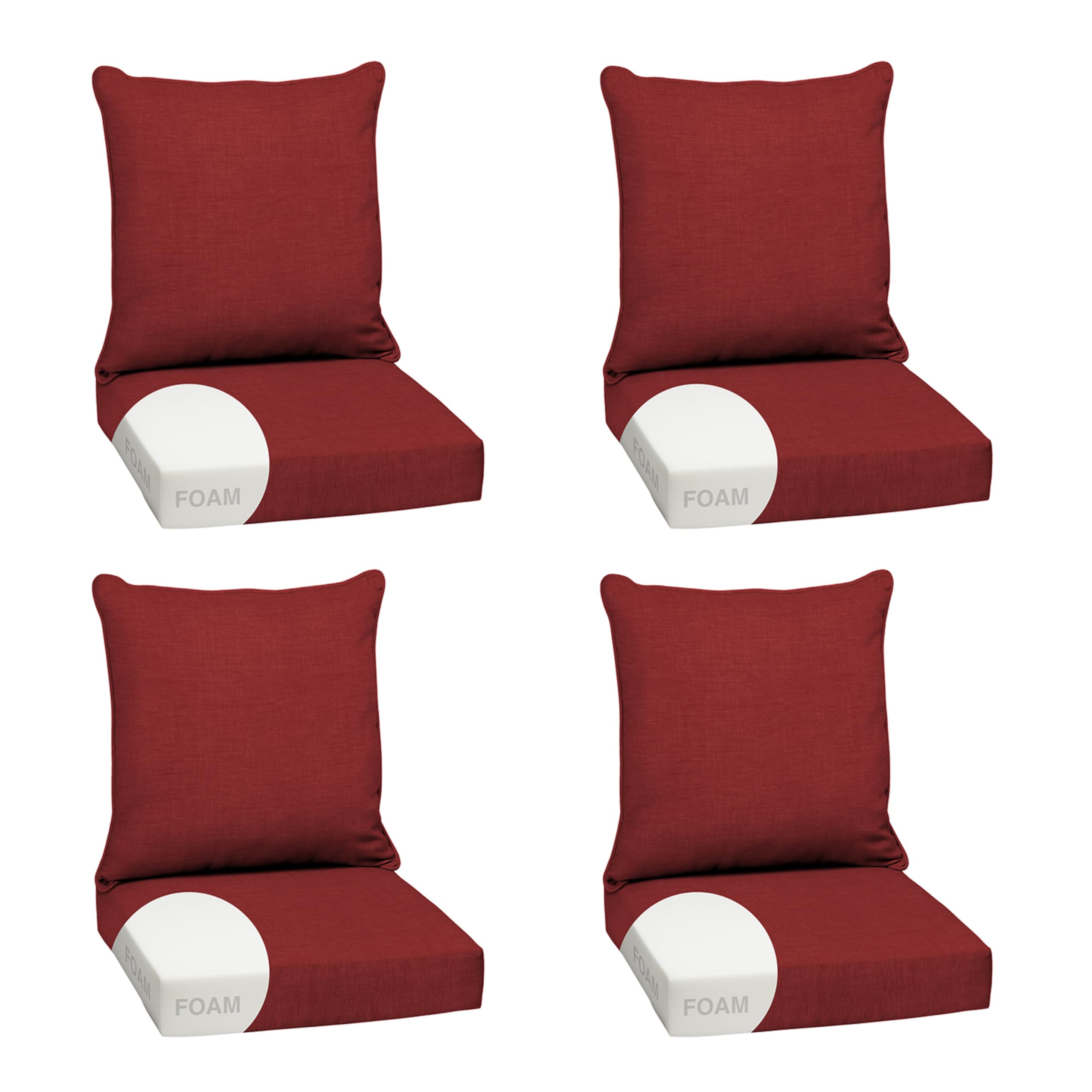
A 24x24 deep-seat set like this Arden cushion is built around four decisions: fabric, fill, fit, and fastening.
Decision One: The Fabric Is 80% of the Outcome
If you only have the patience to get one thing right, make it the fabric. The cover is what the sun and rain actually attack, and it is the single biggest predictor of how a cushion looks in year three. There are three families worth knowing, and the price difference between them is almost entirely a fade-resistance and lifespan difference.
Solution-Dyed Acrylic (Sunbrella and Equivalents)
Solution-dyed acrylic is the premium answer, and "solution-dyed" is the phrase that matters. In a solution-dyed fabric the color is added to the acrylic while it is still liquid, before it is spun into yarn, so the pigment runs all the way through each fiber rather than sitting on the surface. The most recognized brand here is Sunbrella, whose manufacturer materials describe the fabric as 100% solution-dyed acrylic with "Color to the Core" pigment, marketed as "inherently fade resistant, UV protective and durable to the core" (Sunbrella). Independent and editorial summaries note that most Sunbrella colors are tested up to roughly 1,500 hours in a fadeometer with minimal color change, and the line carries a 5-year limited warranty on upholstery fabrics (Outdoor Fabric Central).
The practical upshot: solution-dyed acrylic is the choice when your cushions live in full sun, when you keep furniture for many seasons, or when you simply do not want to think about fade again for a decade. The cost is real, though. Expect to pay a clear premium over polyester, and decide honestly whether your climate and your patience justify it.
Solution-Dyed Polyester (The Value Sweet Spot)
Solution-dyed polyester uses the same through-the-fiber coloring idea on a cheaper base fiber. Editorial fabric guides consistently place it just behind acrylic: excellent UV resistance and color retention, commonly cited at around 5 to 7 years of dependable performance versus 10-plus for acrylic, but slightly less water-repellent and mildew-resistant than a true solution-dyed acrylic (Triad Cushion Factory). For most homeowners with covered, shaded, or seasonal patios, that is a perfectly good trade: you save real money and accept that the set is a "replace in a handful of years" purchase rather than an heirloom.
This is the fabric you will find on the overwhelming majority of affordable, ready-made sets, including most "outdoor chair cushions set of 4" listings. It is not a downgrade so much as a different time horizon.
Olefin (The Rainy-Climate Specialist)
Olefin (polypropylene) is the quiet third option, and it shines in one specific situation: wet climates. Buying guides describe olefin as naturally stain- and mildew-resistant, fast-drying, and good at wicking moisture, which makes it a strong pick for homeowners in rainy regions who care more about drying speed and mildew than about a 10-year color guarantee (aoodor). It strikes a balance between affordability and weather performance, and for moderate or seasonal use it can outperform a basic polyester on the metrics that matter most outdoors.
How to Read a Fabric Label Without the Hype
Cushion listings rarely say "solution-dyed acrylic" in the headline. Translate as you shop:
- "Fade resistant" with no fiber named usually means solution-dyed polyester or olefin. Acceptable for shade and seasonal use; verify before buying for a full-sun deck.
- "100% polyester, UV resistant, DWR (durable water repellent) treatment" describes a treated polyester. The water repellency is a surface finish that wears over time, distinct from a fiber that repels by nature.
- "Sunbrella" or "100% solution-dyed acrylic" is the premium tier, and you should expect the price to reflect it.
A worked example helps. The Arden Selections deep-seat line we reference throughout the cluster uses a "Printed 100% polyester" cover in their Leala texture, described by the manufacturer as UV resistant with water repellency built in (Arden Selections). That is a textbook treated-polyester cover: a sensible value choice for shaded or covered seating, and exactly the kind of fabric you should expect to last a handful of seasons rather than a decade. If weatherproofing is your top concern, our explainer on whether outdoor patio cushions are truly waterproof digs into the difference between water-repellent covers and genuinely water-resistant construction.
Decision Two: The Fill Decides Comfort and Sag
Fabric determines how a cushion looks over time. Fill determines how it feels and whether it holds its shape. There are two parts to it: the foam and the wrap.
Foam Density Is the Number That Matters
Cheap cushions sag because their foam is too low-density to recover after being sat on. Buying guides point to foam density, measured in pounds per cubic foot, as the key durability spec: high-density foam in the range of 4-plus pounds per cubic foot is what quality outdoor seating uses, and at that density a cushion can look and feel almost identical after five years as it did on day one (Patio Productions). Below that, expect a permanent dent where you sit.
You will rarely see the exact density printed on a budget listing, which is itself a signal. When a maker is proud of the foam, they say so. Arden, for instance, names its foam "ProFoam" and notes it is CertiPUR-US certified, an independent program that tests foam for emissions, content, performance, and durability, with the foam designed to "fully recover in fewer than 24 hours" after being compressed for shipping (Arden Selections). A named foam with a third-party certification is a better bet than an unnamed "high-density foam" claim, even when both use the same marketing words.
Open-Cell vs. Closed-Cell: The Drainage Question
The second foam property is drainage, and it separates cushions that dry out from cushions that stew. Open-cell (often "reticulated" or "quick-dry") foam lets water pass straight through and drain out the bottom, drying within hours in sunlight. Closed-cell foam, by contrast, absorbs water like a sponge and stays heavy and slow to dry (Triad Cushion Factory). For any cushion that will be rained on directly, open-cell or quick-dry foam is the feature to look for. For cushions that live under a covered porch and only catch the occasional splash, a standard fill is usually fine.
Wrap and Loft
Many outdoor cushions wrap the foam core in a layer of polyester fiber to soften the edges and add loft. That wrap is why a fresh cushion looks rounded and inviting. It is also the part that compresses first, so do not let a plump showroom photo distract you from the density of the foam underneath. The wrap is comfort; the foam is durability. You want both, but only one of them is keeping your cushion off the patio floor in three years.
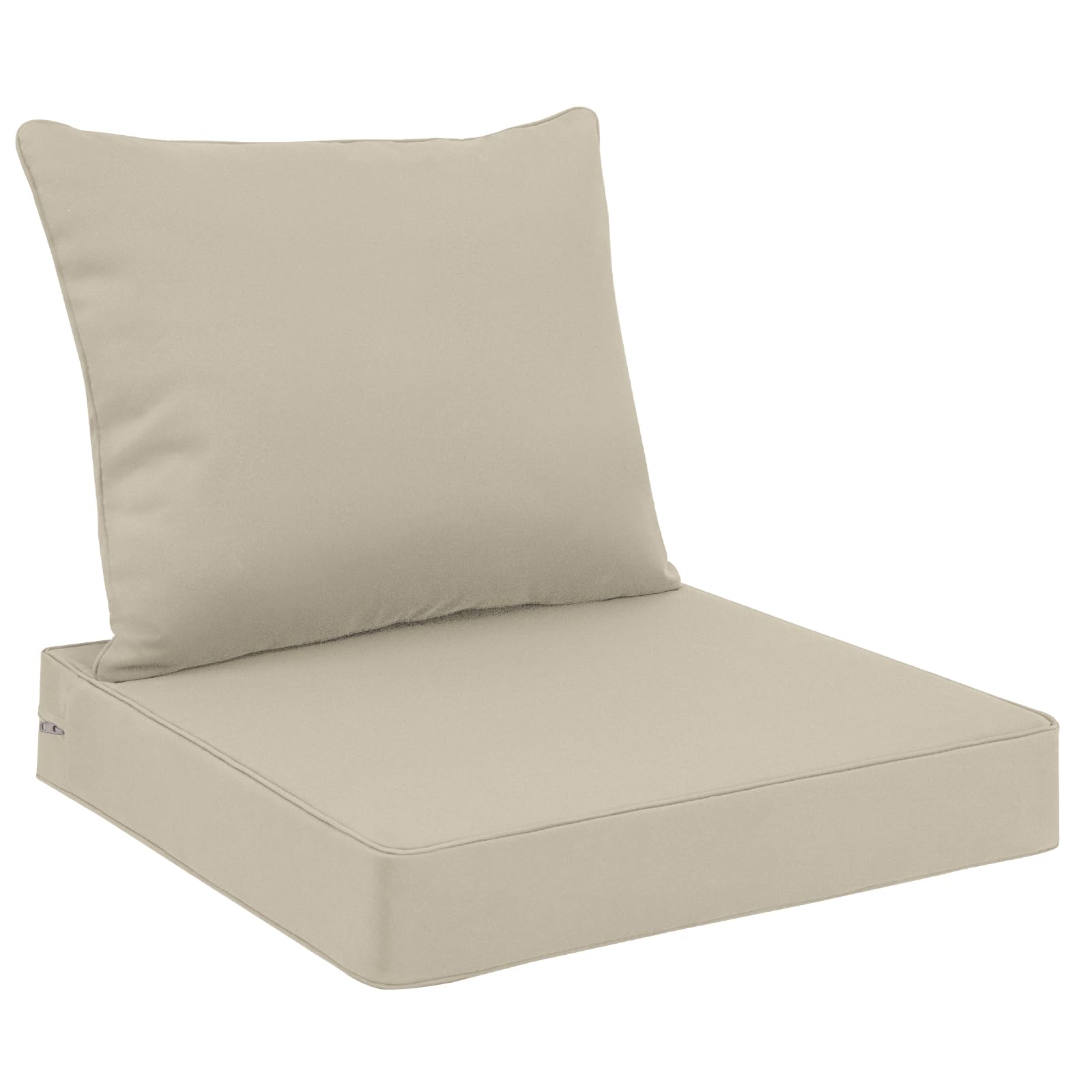
Removable, washable covers and quick-dry fill let a cushion shed a downpour instead of soaking it up.
Decision Three: Size Is Where Most Returns Happen
Fabric and fill decide quality. Size decides whether the cushion fits at all, and it is the most common reason patio cushions get returned. There is no universal standard, so you measure.
How to Measure Patio Cushions the Right Way
Editorial measuring guides converge on the same handful of rules:
- Measure the furniture, not the old cushion. Old cushions become misshapen, so a worn pad is a poor guide to the size you actually need (At Home).
- Use a rigid tape measure, not a soft tailor's tape, which sags and reads long.
- Stand facing the chair. Measure width front-left corner to front-right corner; measure depth front to back; measure thickness bottom to top.
- Add about an inch to width and depth so the cushion overhangs the frame slightly for comfort rather than disappearing inside it (At Home).
- For separate back cushions, subtract the seat thickness from the frame height, since the back sits on top of the seat.
There Is No "Standard," Only Common Sizes
People search for an "outdoor cushion sizes chart" hoping for one authoritative grid. The honest answer is that every chair, sofa, and chaise differs, so charts list common sizes rather than guaranteed fits. A few recurring formats:
- Deep-seat lounge cushions commonly run 24x24 or 22x24 for the seat, paired with a separate back cushion. This is the format behind every "24x24 outdoor cushions" and "deep seat cushions 24x24" search.
- Dining-chair pads are thinner and longer, often a one-piece seat-and-back pad. A common spec is 20 inches wide by 44 inches long, where the 44 inches folds across the seat and up the chair back.
- Bench and loveseat cushions are wider one-piece pads sized to the bench.
A concrete pairing makes this tangible. In our Arden dining-chair cushion review, the pad is exactly that 20x44 one-piece format: 20 inches across the seat, with the remaining length wrapping up the backrest of a standard outdoor dining chair. Compare that with the deep-seat 24x24 set in our Arden deep-seat cushion review, built as a separate 24x24 seat plus a back cushion for a lounge or club chair, and you can see how the same brand sizes two completely different furniture jobs. Match the format to the furniture first, then the dimensions.
A Practical Sizing Walkthrough
Say you have four outdoor dining chairs. Stand in front of one, lay your rigid tape across the seat, and you read 19 inches wide and 18 inches deep, with a backrest that rises about 22 inches. A one-piece 20x44 pad covers this neatly: the 20-inch width gives the comfortable inch of overhang, and the 44-inch length splits into roughly 18 to 20 inches of seat and 22 to 24 inches of back. Buy a set of four and you have matched the whole table. That is the entire logic behind "outdoor chair cushions set of 4" listings: they assume a standard dining chair and a one-piece pad, which is why measuring your chairs before ordering still matters.
Now say you have a deep, low lounge chair instead. The seat is deep enough that a thin pad would look lost, so you want a 24x24 deep-seat cushion with a separate, thick back. Same patio, completely different cushion. The furniture dictates the format every time.
Decision Four: Fastening, Covers, and the Boring Details That Decide Longevity
The last decisions are unglamorous and easy to skip, which is exactly why they cause regret.
Ties and Straps Keep Cushions Where You Put Them
A cushion with no fastening slides off the chair every time someone stands up and becomes airborne in a stiff breeze. Look for tie straps or hook-and-loop fasteners that anchor the cushion to the frame. Many value sets, including the Favoyard 22x22 set we reference in the cluster, build in tie straps precisely so the pad stays put on a chair, sofa, or couch. It is a small feature that separates a cushion you fight with from one you forget about.
Removable, Washable Covers
A zippered, removable cover is the difference between a cushion you can clean and one you replace. Removable covers let you wash off spills, pollen, and the inevitable bird visit, and they let the fill dry separately after a soaking. If a listing does not mention a removable cover, assume it does not have one and factor that into the price.
Drainage and Storage Habits
Even the best outdoor cushion lasts longer with two simple habits: store cushions or stand them on edge during long wet spells so water drains rather than pools, and bring them in or cover them over winter. No fabric is immortal. Solution-dyed acrylic resists fade far better than treated polyester, but UV exposure, standing water, and grime still age every cushion. A little storage discipline routinely doubles the useful life of a mid-range set.
Cleaning matters just as much as storage. For most solution-dyed fabrics, the routine is gentle and undramatic: brush off loose dirt before it sets, then sponge the cover with mild soap and lukewarm water and rinse thoroughly so no detergent residue is left to attract grime. Let everything air-dry fully before the cushion goes back into a closed storage bag, because trapped moisture is what breeds the mildew that even mildew-resistant fabrics can eventually host on surface dirt. Treated-polyester covers reward this routine especially well, since their water repellency is a surface finish that benefits from staying clean. The takeaway is simple: a cushion's published lifespan assumes reasonable care, and the cheapest way to protect any cushion is to keep it clean, keep it dry between uses, and keep it out of standing water and harsh winter sun when the season ends.
Matching the Cushion to Your Situation
With the four decisions in hand, the choice usually resolves into one of a few common profiles:
- Full-sun deck, furniture you plan to keep for years: prioritize fabric. Solution-dyed acrylic (Sunbrella or equivalent) plus 4-plus-pound high-density foam. Pay the premium once.
- Covered porch or shaded patio, sensible budget: solution-dyed or treated polyester with a named, certified foam. This is where most "patio furniture cushions" and "outdoor patio replacement cushions" buyers land, and it is a smart, honest trade-off.
- Rainy climate, drying speed is everything: olefin fabric plus open-cell or quick-dry foam, with a removable cover. Color longevity matters less than how fast the set sheds water.
- Replacing pads on existing furniture: measure first, match the format (deep-seat vs. one-piece dining pad) second, dimensions third. A 24x24 deep-seat set and a 20x44 dining pad are not interchangeable no matter how good the fabric is.
If your budget forces a compromise, spend on fabric and fill before you spend on color or brand. A great-looking cushion with cheap fabric is a one-summer cushion. A plain cushion in solution-dyed acrylic over dense foam is one you will still like in five years.
Where to Go From Here
You now have the whole framework: fabric first because it drives fade and lifespan, fill second because density and drainage drive comfort and shape, size third because format and measurement drive fit, and fastening last because ties and washable covers drive how little you have to think about the cushion at all.
When you are ready to translate that into specific products, our 2026 best outdoor patio seat cushions roundup ranks research-vetted options across price tiers, and the two Arden reviews above walk through a real deep-seat set and a real dining pad in detail so you can see the framework applied to actual specs.
Frequently Asked Questions
What is the best fabric for outdoor patio cushions?
For maximum fade resistance and lifespan, solution-dyed acrylic such as Sunbrella is the top choice, because the color runs through the entire fiber and the fabric is marketed as fade resistant and UV protective to the core (Sunbrella). Solution-dyed polyester is the value pick for shaded or seasonal use, and olefin is the specialist for rainy climates thanks to fast drying and mildew resistance.
What size outdoor cushion do I need?
Measure the furniture rather than any old cushion, using a rigid tape: width corner to corner, depth front to back, thickness bottom to top, and add about an inch for a comfortable overhang (At Home). There is no universal standard size, only common formats: roughly 24x24 for deep-seat lounge cushions and around 20x44 for one-piece dining-chair pads.
Are 24x24 outdoor cushions a standard size?
24x24 is one of the most common deep-seat formats, usually sold as a seat cushion paired with a separate back cushion, but it is not a guaranteed universal fit. Deep, low lounge and club chairs are the furniture it suits. Always measure your chair before buying, since "common" is not the same as "standard."
How long do outdoor patio cushions last?
It depends almost entirely on fabric and care. Solution-dyed acrylic commonly carries a 5-year fabric warranty and resists fade for a decade or more, while solution-dyed polyester is more often cited at around 5 to 7 years (Outdoor Fabric Central). High-density foam at 4-plus pounds per cubic foot keeps its shape far longer than cheap fill, and storing cushions out of standing water and winter weather extends any set's useful life.
Should outdoor cushions have removable covers and ties?
Yes, if you can get them. A removable, washable cover lets you clean spills and dry the fill separately after rain, and tie straps or hook-and-loop fasteners keep the cushion anchored to the chair instead of sliding off or blowing away. Both are small features that meaningfully improve how a cushion holds up and how little maintenance it demands.
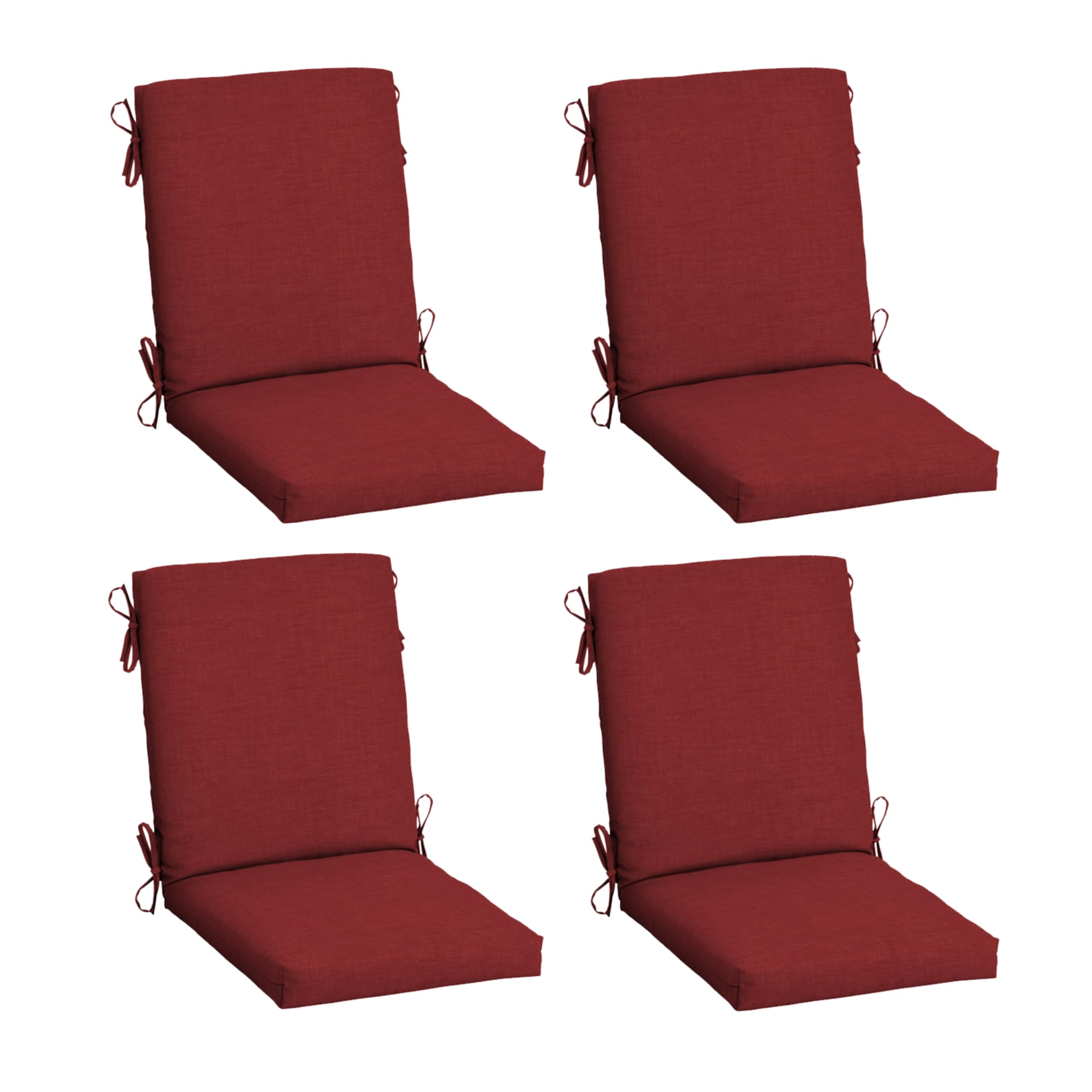
A one-piece 20x44 dining pad: 20 inches across the seat, with the length wrapping up the chair back.
Related Posts