
What "Bladeless" Actually Means (and Why It Changes How You Shop)
If you have only ever bought a fan by glancing at the box and grabbing the cheapest tower at the hardware store, a bladeless model breaks your usual shortcuts. There is no visible blade to judge, no obvious "bigger blade equals more air" rule of thumb, and the price can be three to ten times higher than a basic plastic tower. So before you spend the money, it helps to understand what you are actually paying for.
A bladeless tower fan does have a fan inside it. The marketing name is a bit of a sleight of hand. The impeller is hidden down in the base or the column, and it pushes air up through a hollow loop or a tall slit, where it accelerates and pulls the surrounding room air along with it. The HVAC technician quoted by Homes & Gardens describes it plainly: air is "pushed up through a ring-shaped amplifier and out through a slit," instead of being chopped by large external blades. That hidden-impeller design is the whole reason these fans exist, and it drives every trade-off you will weigh when choosing one.
Here is how we put this guide together, because you deserve to know. We did not run these fans on a lab bench or hold an anemometer in front of them. Instead, this is a research-based buying guide: we cross-checked each spec against the manufacturer's own published figures, then sanity-checked the broader claims against editorial sources like Consumer Reports and Homes & Gardens. Where a number comes from a brand's spec sheet, we say so and link it, so you can verify it yourself. When a claim could only be traced back to a forum or a video, we left it out. That honesty is the point, and it is also what keeps a guide like this useful a year from now.
The good news is that the absence of visible blades is a genuine, practical win. There is no cage to unscrew and no dusty blade to wipe down, which is a real chore on traditional fans where, as Homes & Gardens notes, "dust collects on blades and grills, and disassembly can be time-consuming." Bladeless towers also tend to be safer around pets and small kids, since there is no spinning edge to catch a curious finger. But "no blades" is the start of the conversation, not the end. The specs that follow are what separate a fan you will love from one you will quietly resent by July.
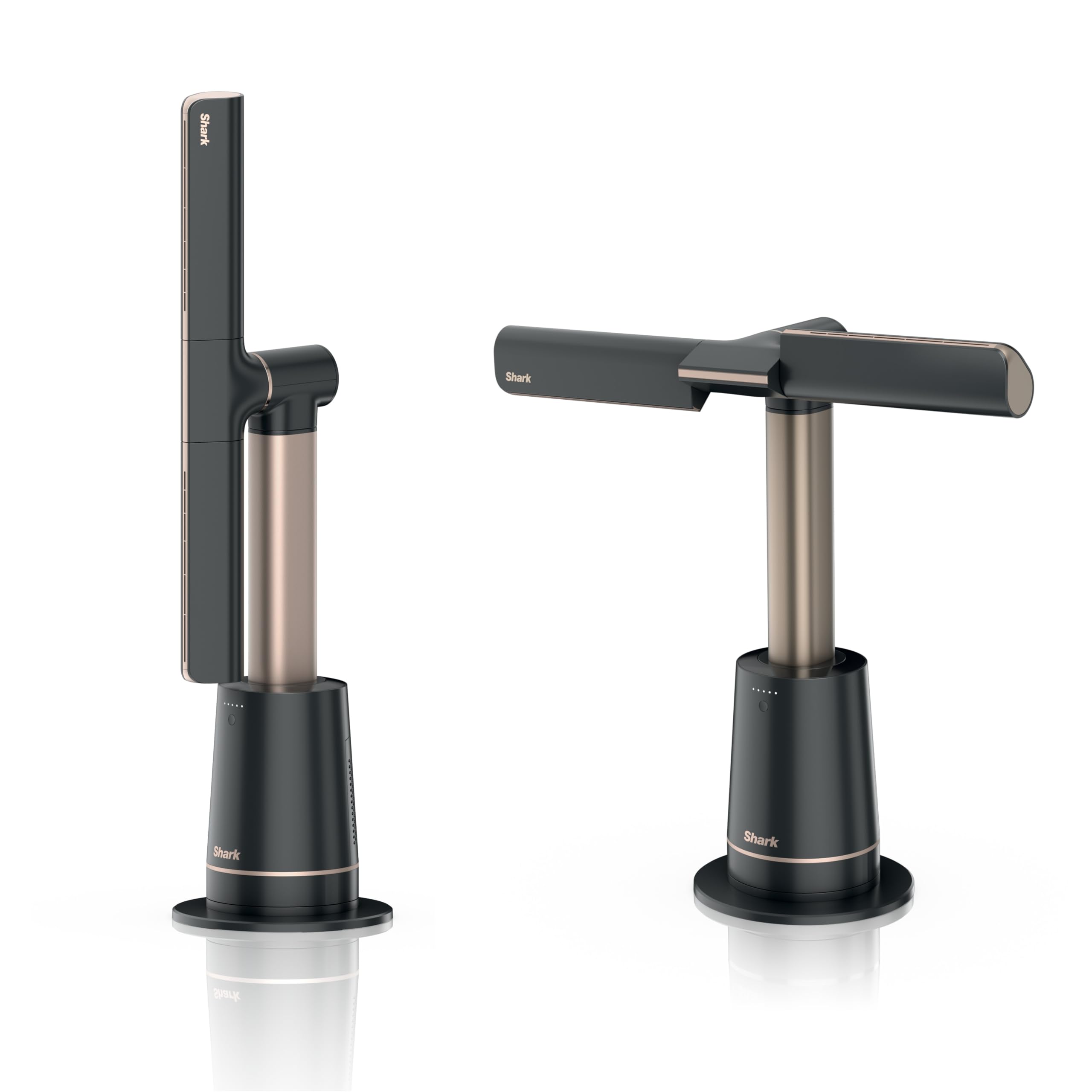
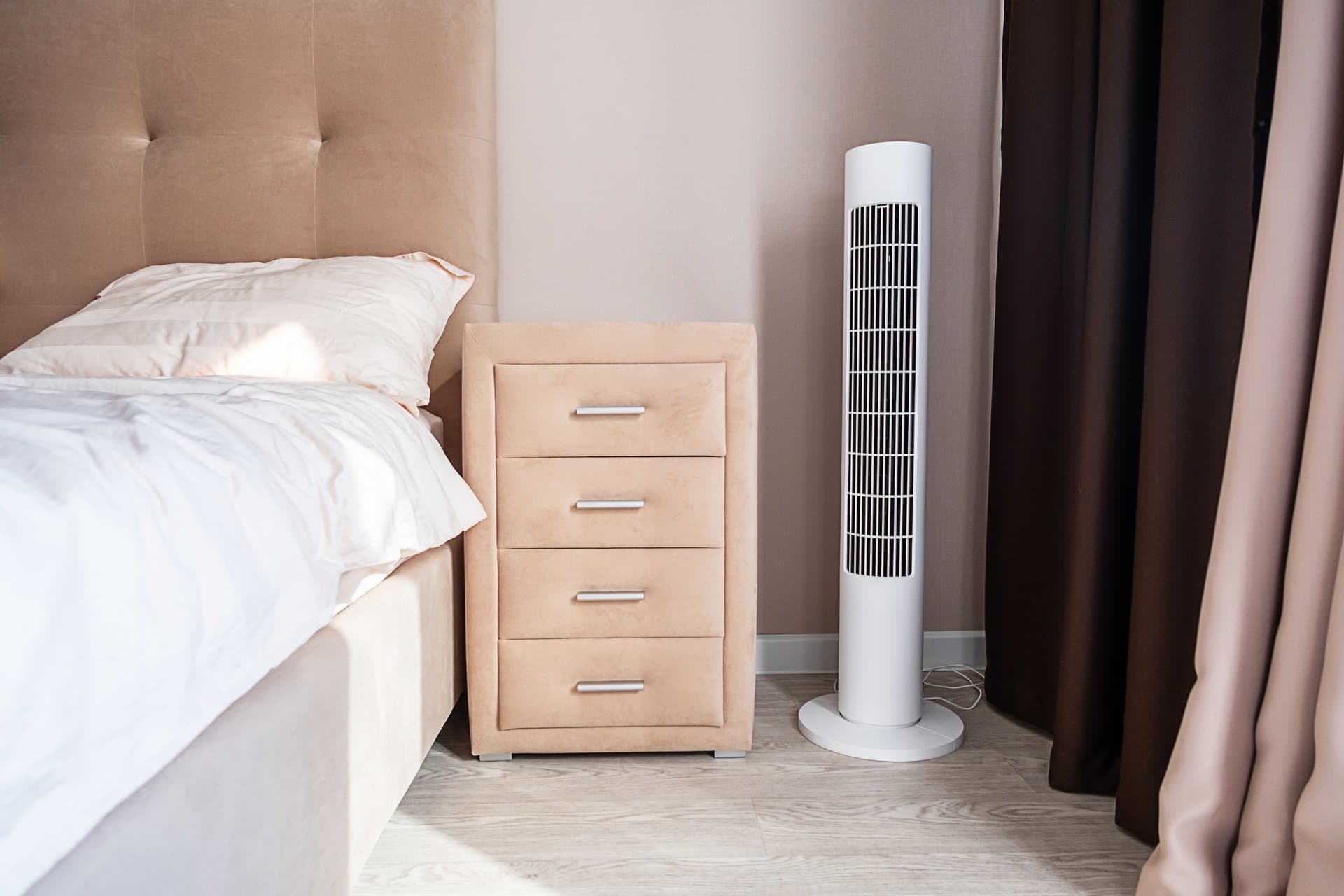
A premium bladeless tower with pivoting vents shows how far the category has moved beyond a simple plastic column.
This piece sits inside our wider coverage of the category. If you would rather skip straight to specific recommendations, our roundup of the best bladeless and DC tower fans for 2026 ranks the standouts, and our spec-by-spec breakdown of the Shark TurboBlade bladeless tower fan digs into one of the most feature-loaded models in the field. This guide is the part that comes first: the decision framework that tells you which of those fans is right for your room.
DC Motor vs AC Motor: The Spec That Quietly Decides Everything
If you only learn one thing from this guide, learn the difference between a DC motor and an AC motor, because it cascades into noise, energy bills, speed range, and price all at once.
Cheap tower fans, bladeless or not, usually run an AC induction motor. It is reliable and inexpensive, but it is a blunt instrument. AC fans typically give you three speeds, run louder at any given output, and draw more power. A brushless DC motor is the upgrade. It is digitally controlled, which means finer speed steps, lower vibration, and meaningfully better efficiency. Consumer Reports, in its room-fan guidance, points buyers toward "Brushless DC" motors when silence is the priority, noting that some DC models use up to 70 percent less power at low speeds than their AC counterparts.
Why DC efficiency is a bigger deal than it sounds
A fan is one of the few appliances you might run for eight straight hours, every night, for an entire season. Small differences in wattage compound. Homes & Gardens reports that bladeless fans tend to draw "between 30 and 35 watts as opposed to between 60 and 75 watts" for traditional fans. DREO, which builds its towers around a "next-generation brushless DC motor" it describes as digitally controlled for "less friction and vibration, wider speed range, higher energy efficiency, and extended lifespan," rates several of its tower fans in the 35-to-45-watt range. Over a long, hot summer of nightly use, the gap between a 35-watt DC fan and a 70-watt AC fan is the kind of thing you notice on a utility bill, not just on a spec sheet.
What to look for on the box
The phrase you want is "brushless DC motor." If a listing only says "tower fan" with three speeds and no motor type, assume AC. That is not automatically a dealbreaker for a guest room or a garage. But for a bedroom, a home office, or anywhere you will run the fan for hours at a stretch, the DC motor is the feature that pays you back in quiet and in kilowatt-hours. The trade-off is honest: DC models cost more up front. You are buying down your noise floor and your running cost.
The DREO model we reference here, the bedroom-focused tower built around its 2026 DC motor, is a clean example of the DC tier done right, and we break its numbers down in the 2026 tower fan roundup.
How Quiet Is a Bladeless Tower Fan, Really?
"Ultra quiet" is printed on nearly every box, so the word itself tells you nothing. You need the number, and you need to know how to read it.
Fan noise is measured in decibels (dB), and the decibel scale is logarithmic, which trips up a lot of buyers. A 10 dB increase is roughly a doubling of perceived loudness, not a 10 percent bump. So the difference between a fan rated at 20 dB and one rated at 30 dB is far larger than the small numbers suggest. For context, a quiet bedroom at night sits around 30 dB, and Consumer Reports' fan guidance suggests a tower fan should generally stay under 40 dB and ideally be no louder than a soft whisper.
Read the fine print on the decibel rating
Here is the catch almost nobody tells you: that headline dB figure is almost always measured at the fan's lowest speed, often in an anechoic chamber with no walls to bounce sound around. A model marketed as "20 dB ultra quiet," like the DREO bedroom tower, is quoting that figure at its gentlest setting. Crank it to high to actually cool a warm room and it will be louder, sometimes dramatically so. None of that makes the 20 dB number a lie. It just means the spec describes the best case, and you are buying a range, not a single volume.
So the smarter question is not "how quiet is it on low?" but "how quiet is it at the speed I will actually use?" A fan that whispers at setting one but whines at setting six is not a quiet fan if your room needs setting six. This is exactly where the DC motor and a wide speed range earn their keep. A fan with eight or ten finely spaced speeds lets you find the lowest setting that still moves enough air, instead of being stuck choosing between "barely moving" and "wind tunnel." The Shark TurboBlade, for instance, advertises ten separate noise levels alongside its ten speeds on the SharkNinja product page, which is the kind of granularity that makes a tower genuinely livable overnight.
Bladeless has a built-in noise advantage
There is a structural reason bladeless towers tend to run quieter than old-school fans, and it is not just marketing. A traditional fan's blades chop the air, and that chopping creates turbulence and a rhythmic whoosh. Homes & Gardens' HVAC expert puts it directly: "the chopping action of blades can create a noticeable sound, which some people find distracting," while bladeless designs "run much quieter." By pushing air through a smooth loop or slit instead of past spinning blades, bladeless towers shave off a chunk of that wind noise. If silence is genuinely your top priority, the bladeless architecture is the safer bet before you even compare individual models.
Oscillation and Airflow: Will You Actually Feel It Across the Room?
Two fans can share the same height and price and feel completely different in a room, because how a tower moves air matters as much as how much air it moves. There are two numbers in play here, and they answer different questions.
Coverage: oscillation degrees
Oscillation is the side-to-side sweep, measured in degrees, and it determines how wide an area the fan cools. Consumer Reports notes that most tower fans oscillate 70 to 90 degrees, with some reaching about 120. That is plenty for keeping one person cool at a desk or one side of a bed. The DREO bedroom tower, for example, sweeps 90 degrees, which suits a focused single-zone setup.
But the category has been pushing wider. The Shark TurboBlade advertises "up to 180°" oscillation on its official spec page, which is a full half-circle. It also does something most towers cannot: its vents pivot and twist, and the whole unit can lay over into a horizontal "Air Blanket" mode to push a sheet of air across a wider span. If you are trying to cool a shared living room or a bed with two people who disagree about airflow, that wider, more directable sweep is the feature to prioritize. For a small bedroom where the fan points at one spot all night, you may not need it.
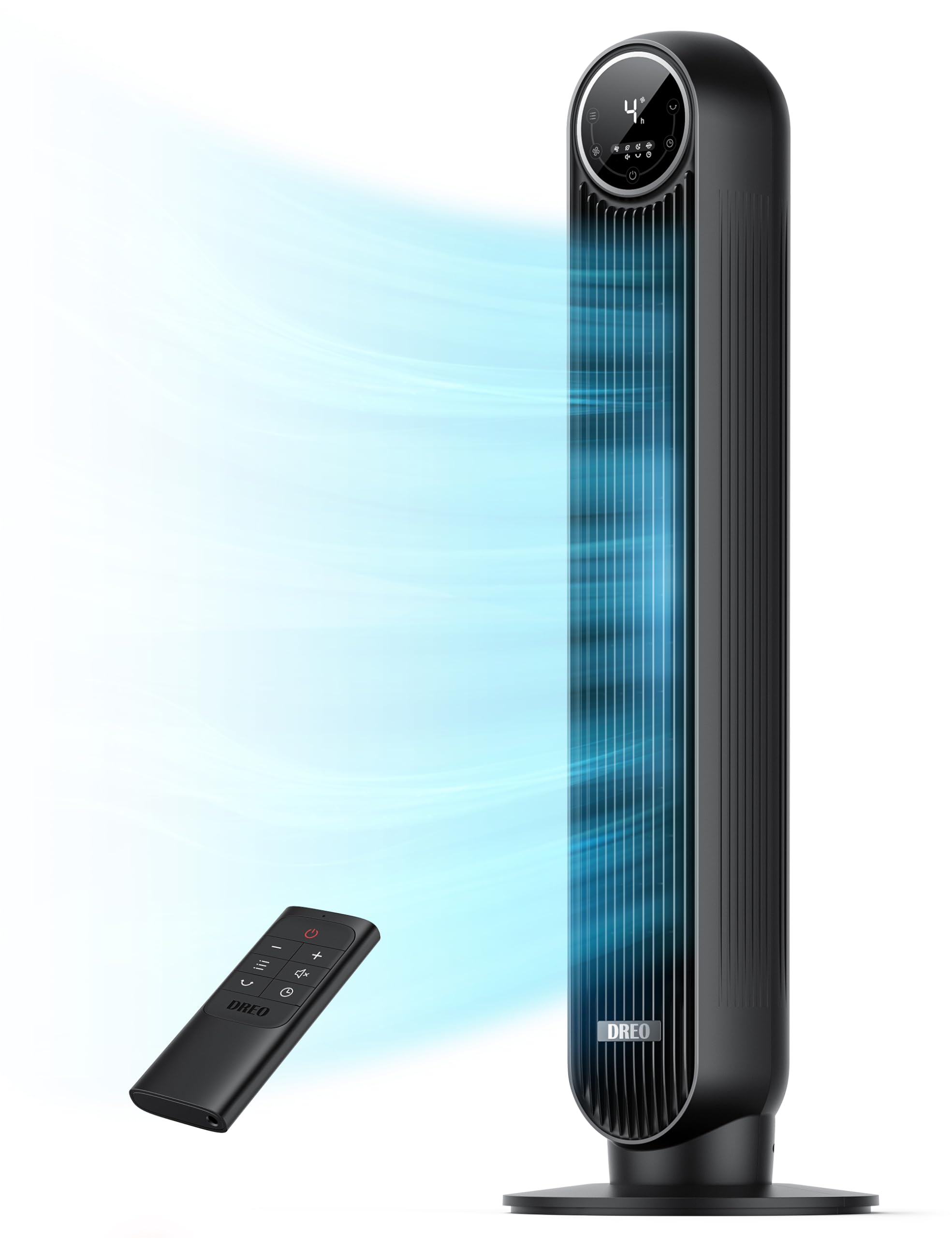
A 90-degree DC tower like this DREO model is built for focused, single-zone cooling rather than whole-room sweep.
Reach: velocity and the CFM problem
The second number is about how far the air travels and how strongly you feel it. You will see two related specs. CFM (cubic feet per minute) measures the raw volume of air moved. Air velocity, often given in feet per second or as a maximum airflow distance in feet, measures how forcefully and how far that air is thrown.
Be a little skeptical of CFM in particular. As Consumer Reports points out, there is no uniform industry test for it, so figures are approximate and "vary wildly between brands." That makes cross-brand CFM comparison nearly meaningless on its own. Velocity and reach claims are often more useful for picturing real-world performance. The DREO tower quotes 28 ft/s of air velocity, while the Shark TurboBlade claims airflow reaching "up to 80 feet." Treat both as the manufacturer's best-case marketing figure rather than a guarantee, but they do tell you the design intent: a high-velocity throw aimed at filling a larger space versus a gentler, closer breeze.
The practical takeaway: match reach to room. A high-velocity, long-throw fan is overkill for a 10-by-10 bedroom and can feel like a draft. For a large or open-plan living area, that reach is exactly what stops the far corner from feeling stuffy. Bigger numbers are not better in the abstract. They are better only if your room needs them.
Height and Footprint: Matching the Fan to the Room
Tower fans are sold partly on how slim and unobtrusive they are, but height is a real performance variable, not just a styling choice, and it is easy to overlook until the box arrives.
A taller fan distributes air over a larger vertical slice of the room, which matters if you want the breeze to reach you whether you are sitting on the couch or standing in the kitchen. Tower fans commonly land between about 36 and 44 inches tall. The DREO collection includes 36-inch and 42-inch models, while the Shark TurboBlade stands a notably tall 44.84 inches in its vertical configuration per the SharkNinja specs. Shoppers who specifically search for the "tallest tower fan" are usually after exactly this: a unit that throws air higher and farther for a big room.
Footprint and weight are part of the decision too
A tower's base footprint is small by design, which is the whole appeal in a tight space next to a nightstand or desk. But weight varies more than you would expect. The Shark TurboBlade weighs about 14.3 pounds, which is on the heavier end for a tower and reflects its substantial motor and pivoting mechanism. That weight is a stability asset and a portability cost. If you plan to carry the fan from bedroom to living room daily, factor it in. If it lives in one spot all season, ignore it.
One more practical note on placement: bladeless towers, like all fans, move air rather than lower the actual temperature. They cool you by accelerating evaporation off your skin, which is why a well-aimed fan in a 78-degree room can feel genuinely comfortable. Height and placement determine whether that moving air reaches you at all, so think about where the fan will sit and where you will sit before you fixate on the spec sheet.
Energy Use and Running Cost Over a Season
We touched on wattage under motors, but running cost deserves its own honest look, because it is where the higher purchase price of a good bladeless tower starts to pay you back.
Bladeless and DC towers are efficient by nature. Homes & Gardens pegs bladeless fans at roughly 30 to 35 watts versus 60 to 75 for traditional fans, and DREO rates its DC tower lineup around 35 to 45 watts. To make that concrete: a 35-watt fan running ten hours a night for the three hottest months draws a little over 30 kilowatt-hours across the season. A 70-watt fan doing the same job draws roughly double. At typical residential electricity rates, the dollar difference per season is modest but real, and it stacks on top of the comfort and quiet advantages rather than competing with them.
Where the up-front premium is and isn't worth it
Be clear-eyed about the cost side. Homes & Gardens notes bladeless fans can run "three to 10 times more expensive than standard models," and that the airflow "may not feel as powerful as a high-speed traditional fan." So the premium is real, and the raw cooling punch can be lower than a cheap, loud box fan on full blast.
The honest verdict: a bladeless DC tower earns its price when you value quiet, efficiency, easy cleaning, and safety around pets or kids, and when you will run it for hours at a time. It is harder to justify for a rarely used spare room or a garage where a basic fan and a bit of noise are perfectly fine. Buy the efficiency where you will actually use it.
The Features That Actually Matter (and the Ones That Don't)
Past the core specs, tower fans pile on features. Some genuinely improve daily life. Others are there to fill a bullet list. Here is how to tell them apart.
Worth paying for
A timer. An auto-off timer is one of the most-used features on any bedroom fan, letting it shut off after you have fallen asleep so it is not running till morning. DREO's smart towers include a "Sleep Guardian Timer" adjustable from 1 to 12 hours, per the DREO tower fan page. Look for a range, not just a single 8-hour option.
A real remote. It sounds trivial until the fan is across a dark room at 2 a.m. and you want to drop the speed without getting up. The Shark TurboBlade's magnetic remote docks onto the unit so it does not vanish into the couch, which is a small but genuinely thoughtful touch.
Dedicated modes. Sleep, natural or breeze, and auto modes vary the airflow instead of holding one steady speed, which many people find more comfortable for sleeping and slightly quieter on average. The DREO bedroom tower bundles four modes; the breeze and sleep modes are the ones you will actually use.
Easy cleaning. This is the quiet superpower of bladeless designs. With no cage and no blades, maintenance is largely a wipe-down. Shark leans into this with a "Dust Defense" element designed to capture particles. Over a fan's multi-year life, not dreading the annual blade-cleaning is worth more than it looks on paper.
Nice to have, not essential
Smart and Wi-Fi control. App and voice control via Alexa or Google Assistant are convenient if you already live in that ecosystem. Shoppers hunting for the "best smart tower fan" will want this, and DREO offers Wi-Fi models for exactly that buyer. But it adds cost, and a good physical remote covers most real needs. Treat smart control as a bonus, not a deciding spec.
LED displays and lots of speed steps. A clear display is pleasant, and finely spaced speeds genuinely help you dial in the quietest workable setting. Just do not let a "10 speeds!" headline override the fundamentals of motor type, noise rating, and oscillation. A fan with ten speeds and a loud AC motor is still a loud fan.
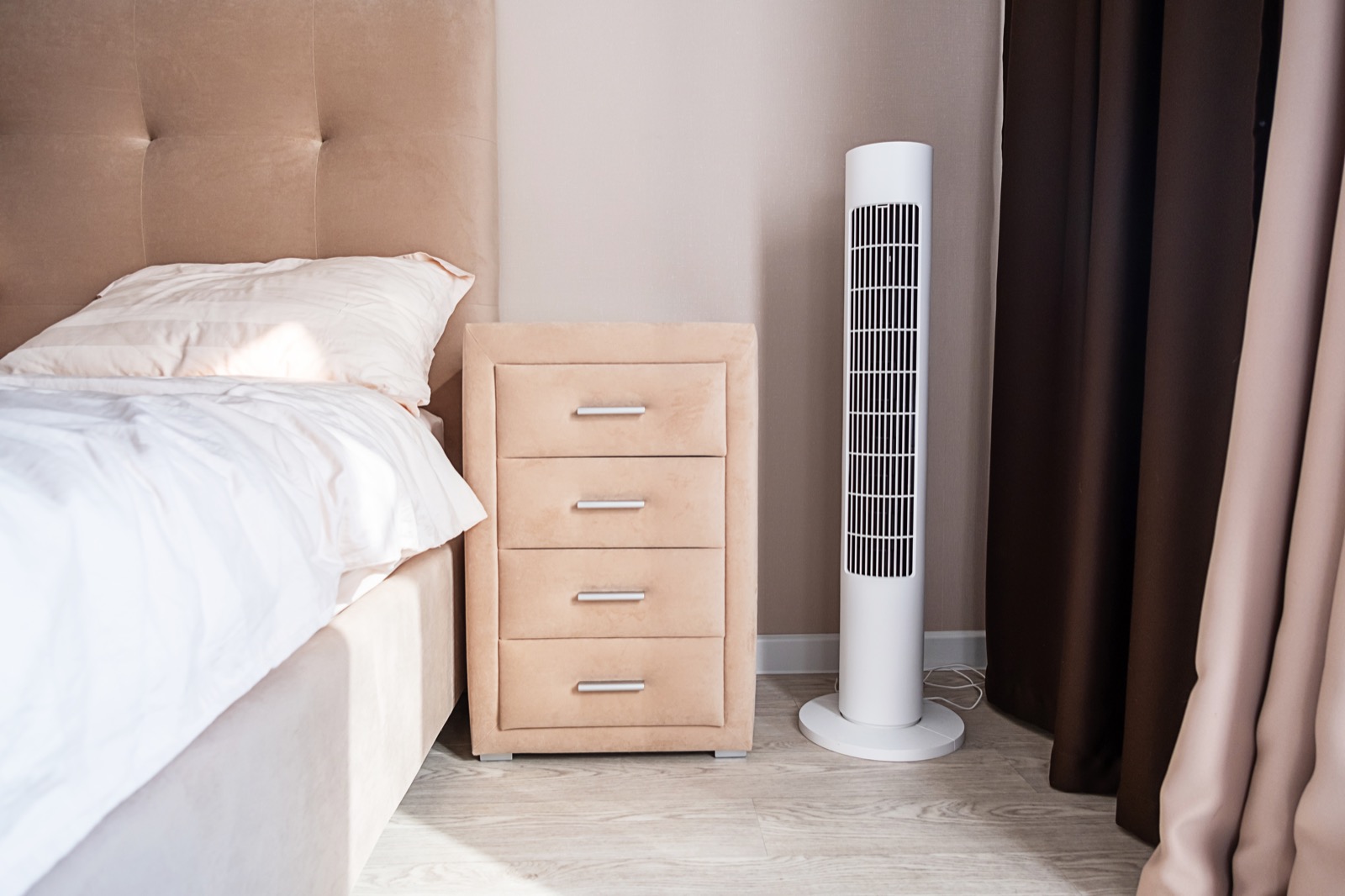
Features like a docking remote, a multi-hour timer, and dedicated sleep modes do more for daily comfort than headline speed counts.
A Simple Way to Decide
Pull it together and the decision gets easy. Work down this short list in order, because the early items matter most.
First, pick your motor. If the fan lives in a bedroom or office and runs for hours, insist on a brushless DC motor for the quiet and the efficiency. If it is for occasional use, a basic AC tower is fine, and you can stop here.
Second, check the real noise behavior. Do not stop at the headline dB. Confirm the fan offers enough finely spaced speeds that the setting you will actually use stays comfortably quiet. More speed steps beat a single impressive low-speed number.
Third, match airflow to your room. A small bedroom wants modest oscillation and a gentle throw. A large or shared space wants wide oscillation, ideally 120 degrees or more, plus the reach to fill the room. Ignore CFM bragging rights and think about coverage and velocity together.
Fourth, size the height and footprint to where the fan will sit and where you will sit, and account for weight if you plan to move it around.
Fifth, add the features that fit your life: a generous timer, a docking remote, useful modes, and easy cleaning first; smart control only if you will genuinely use it.
Do that, and you will not be swayed by whichever box shouts "ultra quiet" the loudest. When you are ready to see how specific models stack up against this framework, our 2026 roundup of the best bladeless and DC tower fans applies these exact criteria to the leading options, and our deeper look at the Shark TurboBlade shows what the premium, ultra-customizable end of the category actually delivers. The framework is yours now. The right fan is the one that fits your room, not the one with the biggest number on the box.
Related Posts