
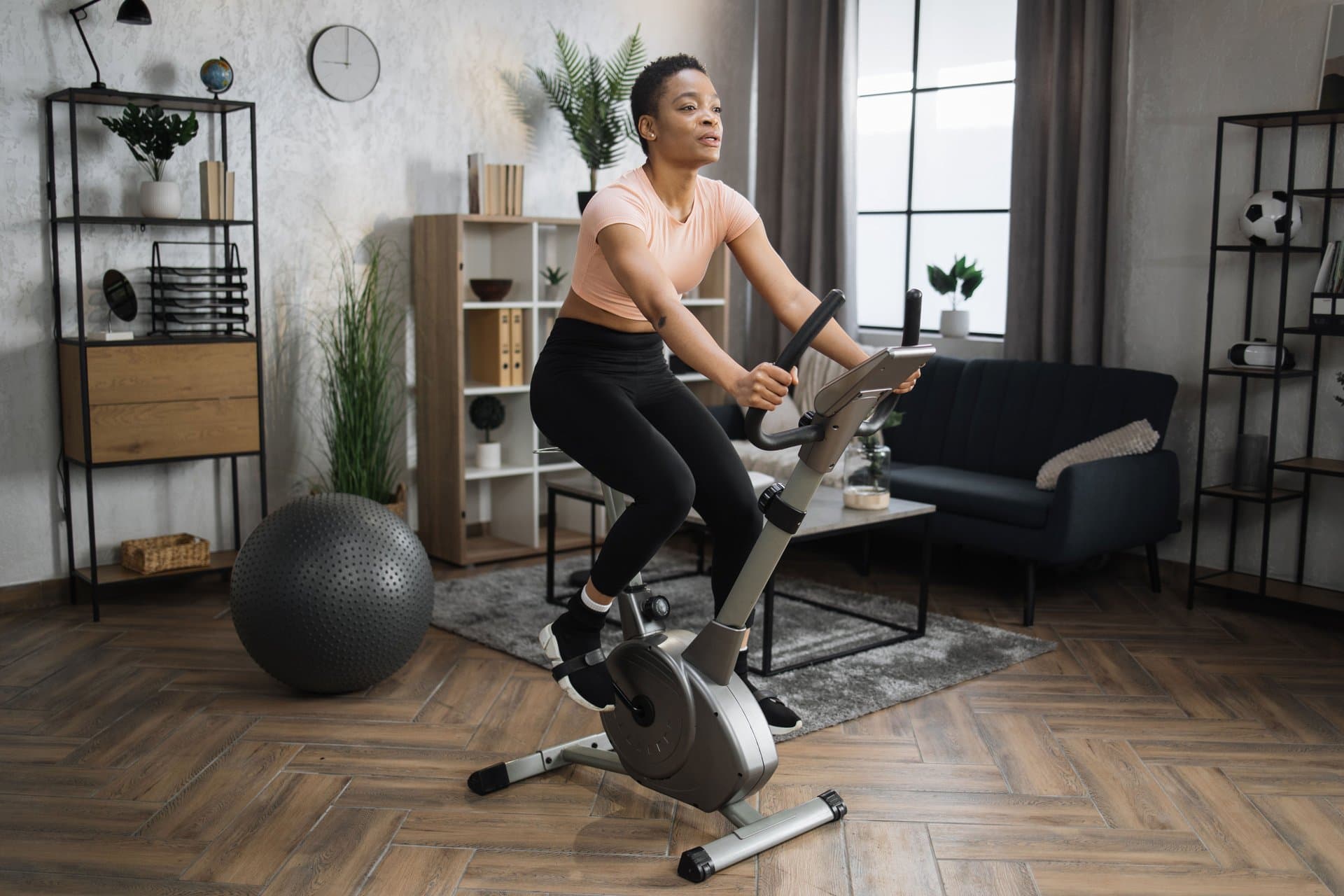
Start with the room, not the machine
Most people shop for home cardio the wrong way round. They fall for a feature list, buy the machine, and only then discover it eats half the living room and can't be folded out of sight. If you're working with an apartment, a spare bedroom corner, or a slice of the home office, the order matters: measure the room first, then choose the machine that fits the life you actually live in it.
This guide walks through how to choose a compact home cardio machine the practical way. We'll cover footprint and folding, joint impact, noise, weight capacity, and how to match a machine type to your goals. Along the way we'll point to four real compact machines that cover the main categories, so the abstract advice has something concrete to anchor to.
A quick note on method, because it shapes everything below. We did not personally haul each of these machines into a one-bedroom and run them for a month. This is a research-based piece: every spec, footprint, and impact claim is drawn from the manufacturer's published specifications and from reputable health and fitness sources, all linked inline so you can verify them yourself. Where a number comes from a spec sheet, we say so. Where a recommendation comes from clinical guidance, we link the clinic. That transparency is the point.
If you want the full shortlist of picks rather than the decision framework, our companion roundup of the best compact home cardio machines ranks them head to head. This article is the "how to decide" half; that one is the "which to buy" half.
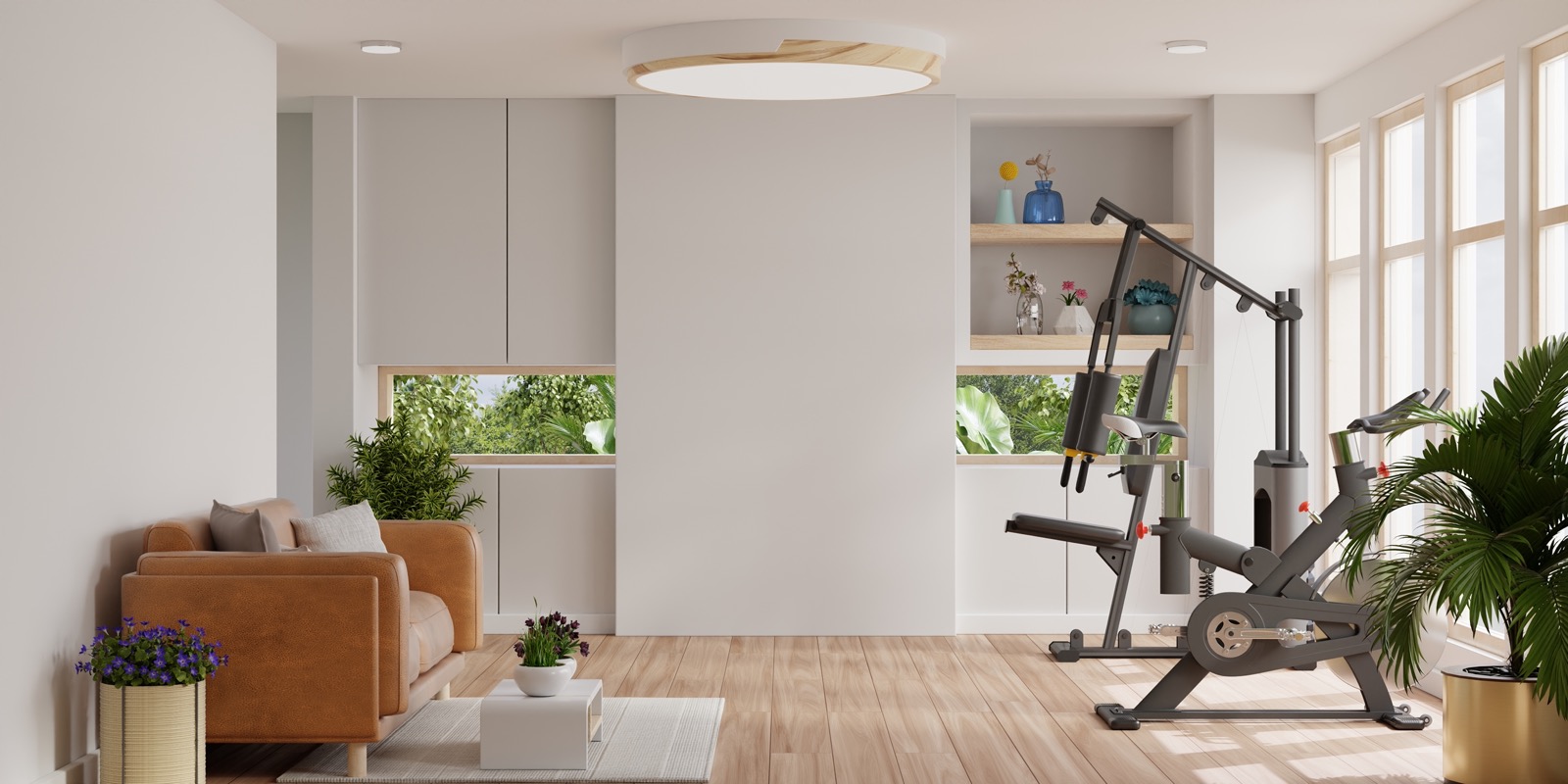
A corner of a room is often all the footprint a compact cardio machine needs.
What is the best cardio machine for small spaces?
There isn't a single winner, and any article that hands you one without asking about your space, your joints, and your goals is selling, not advising. But there is a useful way to think about it. The best cardio machine for small spaces is the one with the smallest stored footprint that still lets you do the workout you'll actually repeat three or four times a week.
Notice the emphasis on stored. An operating treadmill and a folded treadmill are two completely different objects in a small home. The Horizon 7.0 AT, for example, occupies a footprint somewhere between a two- and three-seat sofa while you're running on it, but its real selling point for tight spaces is that it folds and rolls away on transport wheels when you're done, per Horizon's product specifications. A walking pad, by contrast, barely changes size folded or not, because it was designed to slide under furniture in the first place.
So "best for small spaces" usually resolves to one of three answers depending on your priorities:
- Smallest absolute footprint: a walking pad or a mini stepper, which both store in roughly a couple of square feet.
- Smallest footprint with full-body output: a foldable rower, which is long in use but stands vertically against a wall for storage.
- Smallest footprint that still lets you run, not just walk: a folding treadmill, which is the largest of the four but the only one built for genuine running.
Footprint math: measure before you buy
Before you click "add to cart," tape out the operating dimensions on your floor and live with the outline for a day. It's free, and it prevents the single most common compact-cardio regret.
Here's how the four reference machines compare on the numbers their makers publish:
- Walking pad (Yagud): roughly 47 x 20 x 5.5 inches unfolded, with transport wheels for sliding it under a bed or sofa, according to the Yagud walking pad listing. This is the flattest, most hideable option.
- Mini rocking stepper (MERACH): described by the maker as ultra-compact and under two feet tall, self-powered, and light enough to pick up with one hand, per MERACH's 3D Mini Rock Stepper page. It stores in a closet.
- Foldable rower (MERACH): about 73.7 x 18.4 x 29.7 inches in use, but it folds and stands vertically and MERACH says the structure saves roughly 20% of the space of a comparable rower, per its R25 foldable rower page. Long on the floor, narrow against a wall.
- Folding treadmill (Horizon 7.0 AT): 76 x 35 x 67 inches unfolded and 44 x 35 x 68 inches folded, with a 20 x 60-inch deck, per Horizon's specs. The biggest, but the only true running machine here.
The pattern is clear. If raw square footage is your hard constraint, the stepper and the walking pad win outright. If you want more workout per square foot, the rower is the efficiency champion. The treadmill costs you the most floor but buys you the most capability.
What cardio machine takes up the least space?
If we're being literal about which cardio machine takes up the least space, the mini stepper wins. A rocking stepper like MERACH's 3D model is self-powered, weighs only a few pounds, and tucks into a closet or under a desk when you're done, as described on MERACH's stepper page. There's no motor, no power cord, and no deck to fold. It is the closest thing to "cardio you can hide in a drawer."
The walking pad is a very close second and, for many people, the more useful winner. It's slightly longer than a stepper, but it gives you a true walking surface and slides flat under a bed or sofa thanks to its transport wheels and roughly 5.5-inch profile. The trade-off is honest: a stepper is smaller, but a walking pad lets you log real walking distance and pair it with a standing desk.
A word of caution about chasing "least space" too hard. The smallest machine is worthless if its workout bores you into never using it. A stepper that lives in the closet because you find it monotonous takes up less space than a treadmill, sure, but it also delivers zero fitness. The least-space question is only the right question once you've confirmed you'll genuinely use the machine. Footprint is a constraint, not a goal.
The "least space" shortlist, ranked by stored size
- Mini rocking stepper — closet-sized, self-powered, lightest of all.
- Walking pad — flat, slides under furniture, true walking surface.
- Foldable rower — stands vertically; small wall footprint, long floor footprint when deployed.
- Folding treadmill — largest, but folds and rolls; only option built for running.
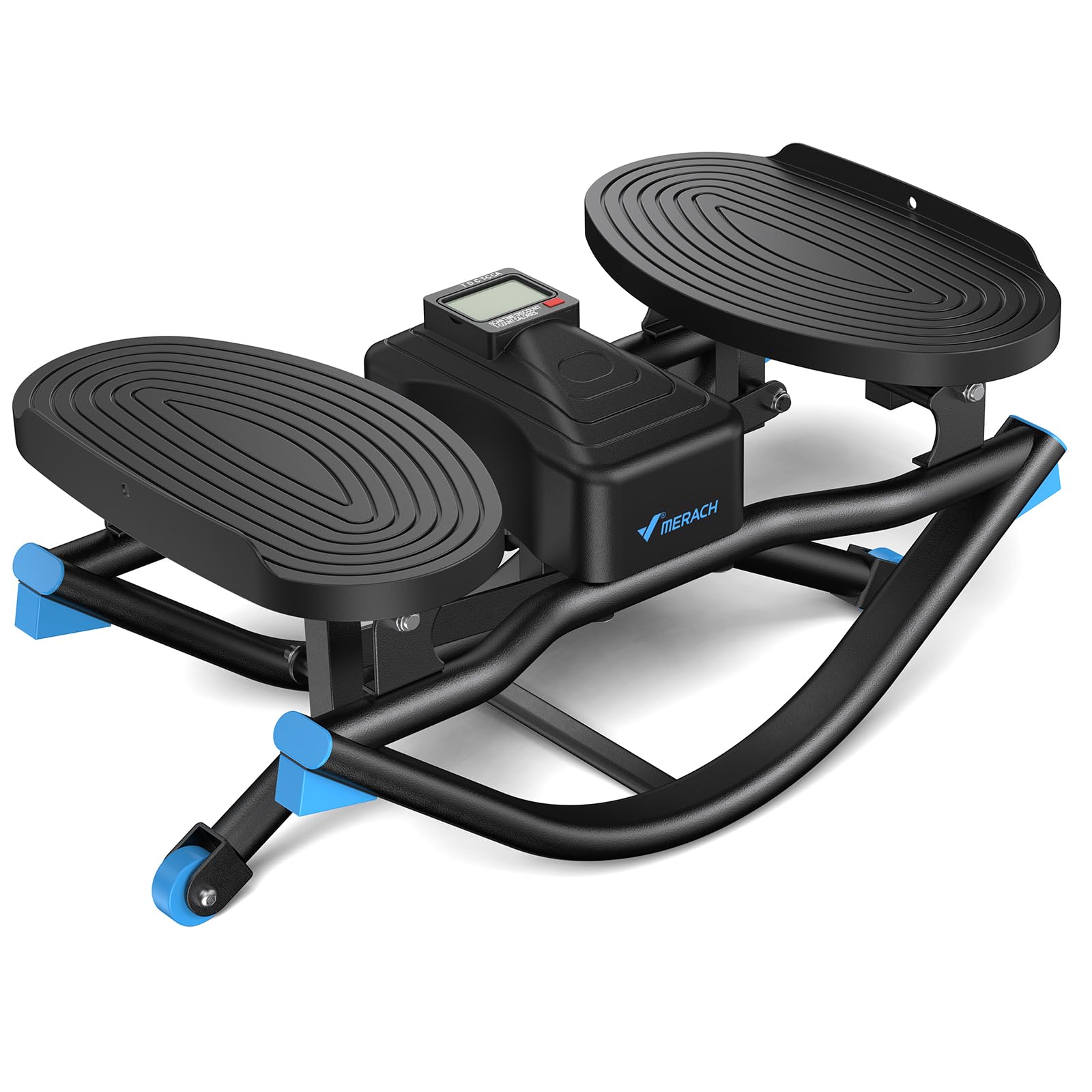
A self-powered mini stepper is the smallest true cardio option, storing in a closet.
How impact and your joints should steer the choice
Footprint tells you what fits the room. Impact tells you what fits your body, and for a lot of home exercisers, especially anyone over 40 or anyone managing knee or hip issues, impact is the more important filter of the two.
"Impact" here means the concussive force that travels up through your joints each time your foot strikes a surface. Running is high-impact. Walking is moderate. Rowing, stepping, and elliptical-style motion are low-impact because your feet either stay planted or land softly. Harvard Health's guidance on exercising with hip or knee pain favors low-impact movement specifically because it strengthens the muscles around a joint without the pounding that aggravates it, as covered in their overview of the best types of exercise for hip or knee pain.
Rowing is worth a closer look here because it punches above its weight. Cleveland Clinic notes that rowing is low-impact and engages roughly 86% of your muscles in a single stroke, which is why it delivers a genuine full-body, cardio-plus-strength session without hammering the knees, per their explainer on rowing machine benefits. For a small home where one machine has to do a lot of jobs, a rower's combination of low impact and full-body output is hard to beat.
Matching impact level to who you are
- Sensitive knees, hips, or back, or returning from injury: lean low-impact — rower, stepper, or walking pad. The MERACH stepper's platform stays parallel to the ground to minimize shear force on the joints, and the Yagud walking pad uses a multi-layer cushioned belt to absorb foot strike.
- Healthy joints, want running fitness: a folding treadmill earns its larger footprint. Horizon's 7.0 AT uses 3-Zone Variable Response cushioning to soften the deck without turning it into a trampoline, per Horizon's specs.
- Want the most muscle worked per minute, low-impact: a rower, for the reasons Cleveland Clinic lays out above.
If your knees are the deciding factor, our Yagud walking pad review digs into how its cushioned belt and low speed range make it one of the gentler options for daily movement.
Will it actually be quiet enough? Noise in shared and stacked living
In an apartment, noise can be the dealbreaker that footprint never was. A machine that rattles the floor at 6 a.m. is a machine you'll stop using once a neighbor complains or a partner stirs.
Two things drive cardio-machine noise: the resistance mechanism and the impact of your body on the surface. This is where the resistance type matters as much as the marketing decibel claim.
- Magnetic resistance (rowers, magnetic bikes) is near-silent because nothing touches the flywheel except a magnetic field. MERACH's foldable rower uses a magnetic flywheel system with 16 resistance levels, which is why magnetic rowers are routinely described as quiet enough for shared walls; see its R25 rower page.
- Self-powered steppers make almost no mechanical noise at all — there's no motor — so the only sound is your own movement.
- Motorized walking pads are the quietest motorized option. Yagud rates its walking pad's operating noise below roughly 45 dB, comparable to a quiet library, per the Yagud walking pad listing.
- Treadmills are the loudest of the four, because you're adding running impact on top of a larger motor. A quality motor and good deck cushioning help, but a treadmill on a second floor over a sleeping baby is a hard sell. A rubber mat underneath reduces both noise and vibration transfer, and is cheap insurance regardless of which machine you pick.
A simple noise rule for apartments
If you share walls or floors and exercise at odd hours, rank quietness in this order: magnetic rower or self-powered stepper first, walking pad second, treadmill last. The quietest machine you'll use without guilt beats the most capable machine you're afraid to turn on.
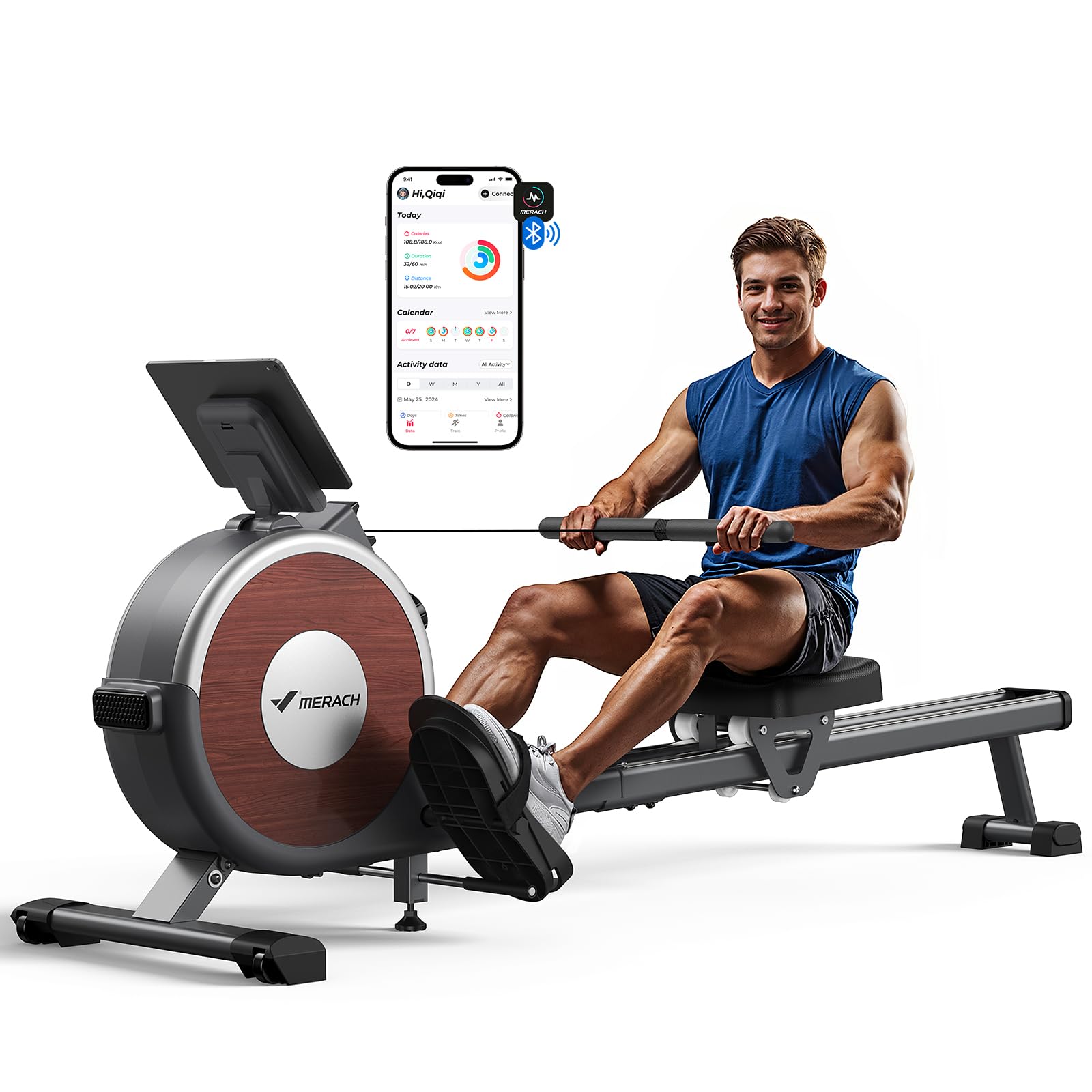
A magnetic rower is near-silent and folds upright, making it apartment-friendly despite its length in use.
Weight capacity, build quality, and the specs people skip
Two numbers get ignored in compact-cardio shopping and shouldn't: weight capacity and the gap between operating and folded dimensions. Both quietly decide whether a machine is right for you.
Weight capacity isn't only about whether the frame will hold you. A user-weight rating well above your own is a proxy for frame rigidity and stability. A machine rated close to your body weight will flex and feel cheap; one rated comfortably above it feels planted. Among the reference machines, the spread is wide and worth checking against your needs:
- MERACH's foldable rower supports up to 350 lbs and its 51.2-inch extended rail accommodates users up to about 6'6", per the R25 rower page.
- The MERACH 3D stepper is rated to 330 lbs despite weighing only a few pounds itself, per its product page.
- The Horizon 7.0 AT treadmill supports up to 325 lbs, per Horizon's specs.
- The Yagud walking pad supports up to 265 lbs, per the Yagud listing.
If you're a taller or heavier user, that walking pad's lower ceiling and the rower's tall ceiling matter a great deal — and they're exactly the numbers a glossy listing photo never shows you.
The fold gap is the second skipped spec. The honest question isn't "how big is it?" but "how big is it the 23 hours a day I'm not using it?" The Horizon treadmill shrinks from 76 inches long to 44 inches folded, a meaningful change. The rower goes from a 73.7-inch floor object to a narrow vertical one. The stepper and walking pad barely change, because they were small to begin with. Always compare the folded number to your storage spot, not the operating number.
Assembly and motor type, briefly
- Assembly: the MERACH rower arrives roughly 90% pre-assembled and goes together in about 20 minutes, per its product page. Steppers and walking pads typically ship ready to use. Treadmills are the heaviest lift to set up.
- Motor vs. self-powered: steppers and rowers need no electricity, so they go anywhere. Walking pads and treadmills need an outlet and a nearby power plan. In a studio with limited outlets, that's a real constraint.
Match the machine to the goal, not the trend
All the specs in the world won't help if the machine doesn't fit what you're training for. Here's the goal-first cut:
If your goal is daily movement and step count
A walking pad is purpose-built for this. Pair it with a standing desk and you can rack up thousands of steps during meetings you'd otherwise spend sitting. The Yagud's speed range of roughly 0.6 to 3.8 mph is tuned for walking and light jogging rather than running, which is exactly right for an all-day movement tool, per the Yagud listing. This is the most apartment-friendly footprint of the four, which is why our Yagud walking pad review calls it the default pick for small-space daily activity.
If your goal is running fitness or race training
You need a treadmill — there's no substitute for a powered belt when you want to run intervals or train for a 5K indoors. The Horizon 7.0 AT's 0 to 15% incline range and 0.5 to 12 mph speed make it a genuine training tool, not just a walking surface, per Horizon's specs. Yes, it's the biggest of the four. If running is the goal, that footprint is the price of admission, and our Horizon 7.0 AT treadmill review covers whether the trade is worth it.
If your goal is full-body, low-impact conditioning
A rower. One machine, most of your muscles, minimal joint stress, near-silent operation, and it stores against a wall. For a small home that can only justify a single machine, the rower is the most versatile answer, which is why it sits high in our best compact home cardio machines guide.
If your goal is the absolute minimum footprint
A mini rocking stepper. It won't replace a treadmill, but for low-impact lower-body conditioning that lives in a closet and costs the least, nothing beats it on pure space efficiency.
What is the 3-3-3 rule in the gym, and does your machine need to support it?
Because people researching home cardio keep bumping into it, the "3-3-3 rule" deserves a plain answer. It's a popular training-structure shorthand rather than an official protocol, and it shows up in a couple of forms. One common version, described by Snap Fitness, is three workouts a week, three key movements per session, three sets each — a deliberately simple structure that prioritizes consistency over complexity. Another version splits a week into three days of strength, three days of cardio, and three days of rest or active recovery.
Why does this matter for choosing a machine? Because the 3-3-3 framework leans on consistency, and consistency in a small home is mostly a function of friction. The lower the friction to start a session — unfold, step on, go — the more likely you are to hit your three cardio days. A machine you have to drag out of a closet and assemble is a machine you'll skip. This is the quiet argument for compact, fast-to-deploy cardio: it isn't only about saving space, it's about removing the excuses between you and the workout.
If you're a true beginner building the habit, the lowest-friction options (a walking pad you leave out, or a stepper you can grab in seconds) often beat a more capable machine that's a hassle to set up. Capability you skip is worse than modesty you use.
What is the best compact home gym equipment overall?
If you're outfitting a small home from scratch and want the single most useful piece, the honest answer is "it depends on your goal," but the decision collapses to a few clean rules:
- One machine, do-it-all, low-impact, apartment-friendly: a foldable magnetic rower. Full-body, quiet, stores against a wall.
- One machine, you want to run: a folding treadmill. Accept the footprint.
- One machine, smallest possible, lowest budget: a mini stepper.
- One machine, all-day movement at a desk: a walking pad.
Beyond the cardio machine itself, the best compact home gym equipment tends to share three traits: it folds or stacks, it's quiet enough for the hours you keep, and it's versatile enough that you don't need three more pieces beside it. A rower plus a set of resistance bands, or a walking pad plus an adjustable dumbbell pair, covers most general-fitness goals in a fraction of the space a full rack demands.
A final piece of buying discipline: build a real list before you spend. Cross-reference each candidate's folded dimensions against your storage spot, its weight capacity against your body, its resistance type against your noise tolerance, and its workout type against your actual goal. A machine that wins on three of those four and loses on the one that matters most to you is still the wrong machine.
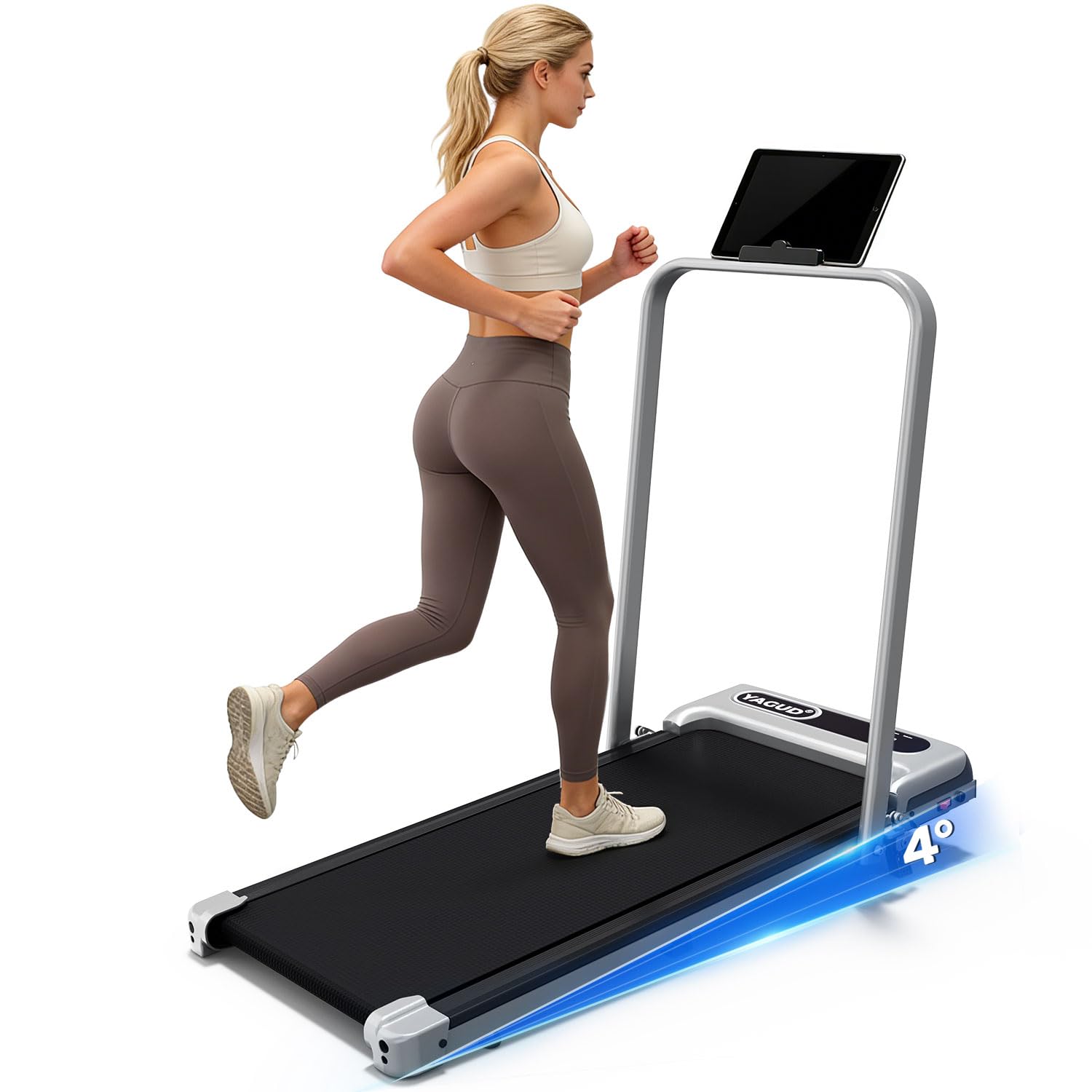
A walking pad's flat profile and transport wheels make it the easiest compact machine to store and the friendliest for daily movement.
The short version
Choosing a compact home cardio machine comes down to four filters, applied in order: footprint (measure the room and the folded size first), impact (match it to your joints), noise (rank it for the hours and walls you live with), and goal (running, full-body, daily steps, or minimum space). Get those four right and the specific model almost picks itself.
Of the four categories, the foldable rower is the most versatile single pick for a small home, the walking pad is the friendliest for daily movement and the smallest practical full-surface option, the treadmill is the only true running machine, and the mini stepper is the absolute space winner. None is "best" in a vacuum — each is best for a specific person and room.
When you're ready to compare the actual models side by side, head to our best compact home cardio machines guide, or go straight to the deep dives on the Horizon 7.0 AT treadmill and the Yagud walking pad to see how the two most popular formats hold up under scrutiny.
Related Posts