
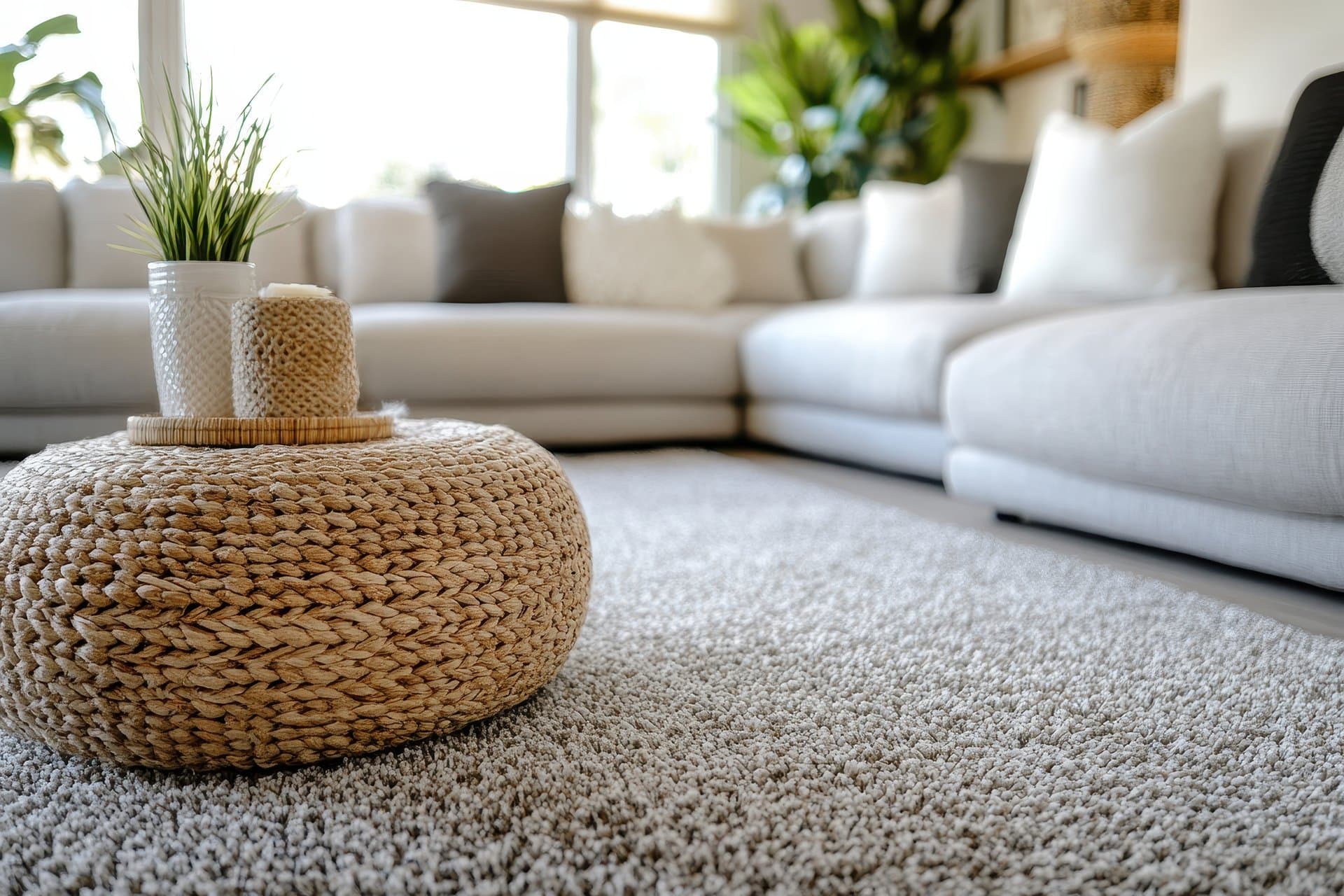
What a "washable" rug actually promises (and what it doesn't)
The phrase "machine washable area rug" gets stamped on a huge range of products, and it does not mean the same thing on every label. At one end you have a thin, low-pile floorcloth you can ball up and toss in a home washer on Sunday morning. At the other end you have a plush, room-sized rug that technically washes, but only at a laundromat with a 60-pound commercial machine. Both are sold under the same two words, and the gap between them is where most buyers get burned.
So before we talk pile height, fiber, or size, set the right expectation. A washable rug is a rug engineered so that water, agitation, and a tumble dry will not destroy it the way they would destroy a hand-knotted wool piece or a jute weave. That engineering usually shows up in three places: a synthetic or synthetic-blend face fiber that does not felt or shrink, a low or controlled pile that drains and dries, and a backing that survives wet agitation. Get those three right for your space and you have a rug that genuinely shrugs off spills. Get them wrong and you have a rug that "washes" once, comes out misshapen, and never lies flat again.
A quick, honest note on how we put this guide together. We did not bring ten rugs into a lab and run them through a hundred wash cycles. This is a research-based buyer's framework: we synthesized manufacturer care specifications, appliance-maker washing guidance from brands like Whirlpool and the rug-fit guidance published by Ruggable, and editorial hands-on reporting such as Domino's long-term test of ten washable rugs. Where a claim could only be traced to anonymous forum chatter, we left it out. The goal is a checklist you can carry into a store or a checkout page and actually use.
If you want the bigger-picture decision first — whether a washable rug is even the right category for you versus a traditional rug plus professional cleaning — our companion explainer on whether washable rugs are worth it tackles that head-on. This guide assumes you've decided you want one and now need to pick the right one.
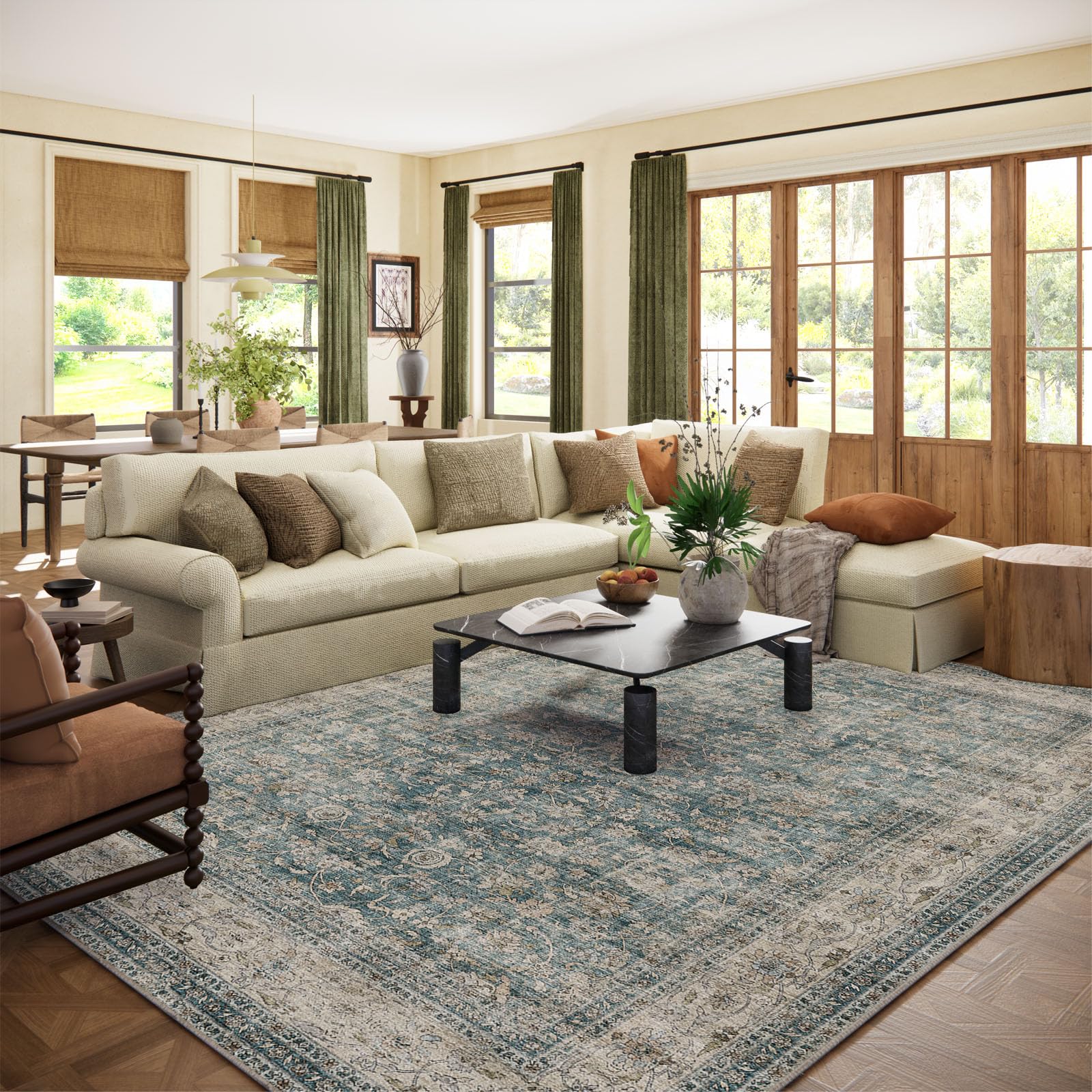
A washable rug only earns its keep if its size, fiber, and pile match the room it lives in.
Start with the question that decides everything: where is it going?
Buyers love to start with color and pattern. The professionals start with the room. The single biggest predictor of whether you'll be happy with a washable rug a year from now is whether you matched the rug to the traffic and the spills it will actually face.
Match the rug to the room's job
Walk through how each space gets used, because "washable" matters far more in some rooms than others.
- Entryways, mudrooms, and hallways take grit, water, and constant foot traffic. Here, washability is the whole point, and you want a low-pile, tightly constructed rug that hides dirt and dries fast. Woven cotton or low-pile polyester runners are a classic fit; Domino's testers specifically called out woven cotton runners as working well for high-traffic spots like kitchens and entryways.
- Kitchens combine grease, dropped food, and standing time at the sink. Low pile again wins, because plush fibers trap food particles and stay damp.
- Living rooms are about comfort and looks as much as cleanup. This is the room where a plush washable rug starts to make sense, because you sit on the floor, kids play on it, and the rug is the visual anchor of the space.
- Bedrooms see the least abuse, so you have the most freedom to prioritize softness over scrubbability.
- Dining rooms are deceptively demanding: every meal is a spill risk under the table, so a flat, easy-to-clean surface beats a deep pile that catches crumbs.
If kids and pets are in the picture, weight the decision hard toward easy cleanup. Editorial testers consistently flag families with young children and pets as the core audience for washable rugs, precisely because a diaper blowout or a muddy paw becomes a wash cycle instead of a crisis.
Measure before you fall in love with anything
Two measurements decide your shortlist before aesthetics ever enter the picture: the rug size your room needs, and the rug size your washing machine can handle. They often conflict, and resolving that conflict early saves a lot of heartbreak.
We'll take each in turn, because both have real rules behind them.
Getting the size right for the room
A rug that's too small is the most common decorating mistake, and it's worse with washable rugs because the budget-friendly ones tempt you to undersize. Use room dimensions and furniture placement, not guesswork.
The size-to-room cheat sheet
Editorial sizing guides converge on a clear set of ranges. According to Tumble's living-room size guide:
- A 5x7 rug suits living rooms smaller than about 11x13 feet, used in a "half on, half off" layout.
- An 8x10 rug is ideal for rooms 11x13 feet or larger — the most versatile size for a standard living room.
- A 9x12 rug is the call for rooms 12x18 feet or larger, open layouts, or a sectional.
A separate placement principle holds across nearly every reputable guide: leave roughly 18 to 24 inches of exposed floor around the rug's perimeter so it frames the room rather than wall-to-wall carpeting it.
Front legs, all legs, or floating
There are three accepted ways to place a living-room rug, and your size choice flows from which one you pick.
- All legs on. Every furniture leg sits on the rug, with several inches of rug extending past the furniture. This is the most cohesive look and needs the largest rug, typically 8x10 or 9x12.
- Front legs on. Only the front legs of the sofa and chairs rest on the rug. This anchors the seating area without demanding a huge rug, and it's the right move for an 8x10 in a medium room or a 5x7 in a small one.
- Floating (rare and usually a mistake). A small rug stranded in the middle with nothing touching it makes a room feel disjointed. Avoid it unless the rug is purely a centerpiece under a coffee table.
For a worked example of an 8-by-10 and 9-by-12 in a real living room, our hands-off review of a popular washable 9x12 area rug for the living room shows how a large washable rug behaves in a high-traffic family space, including the size-versus-washability trade-off we're about to get into.
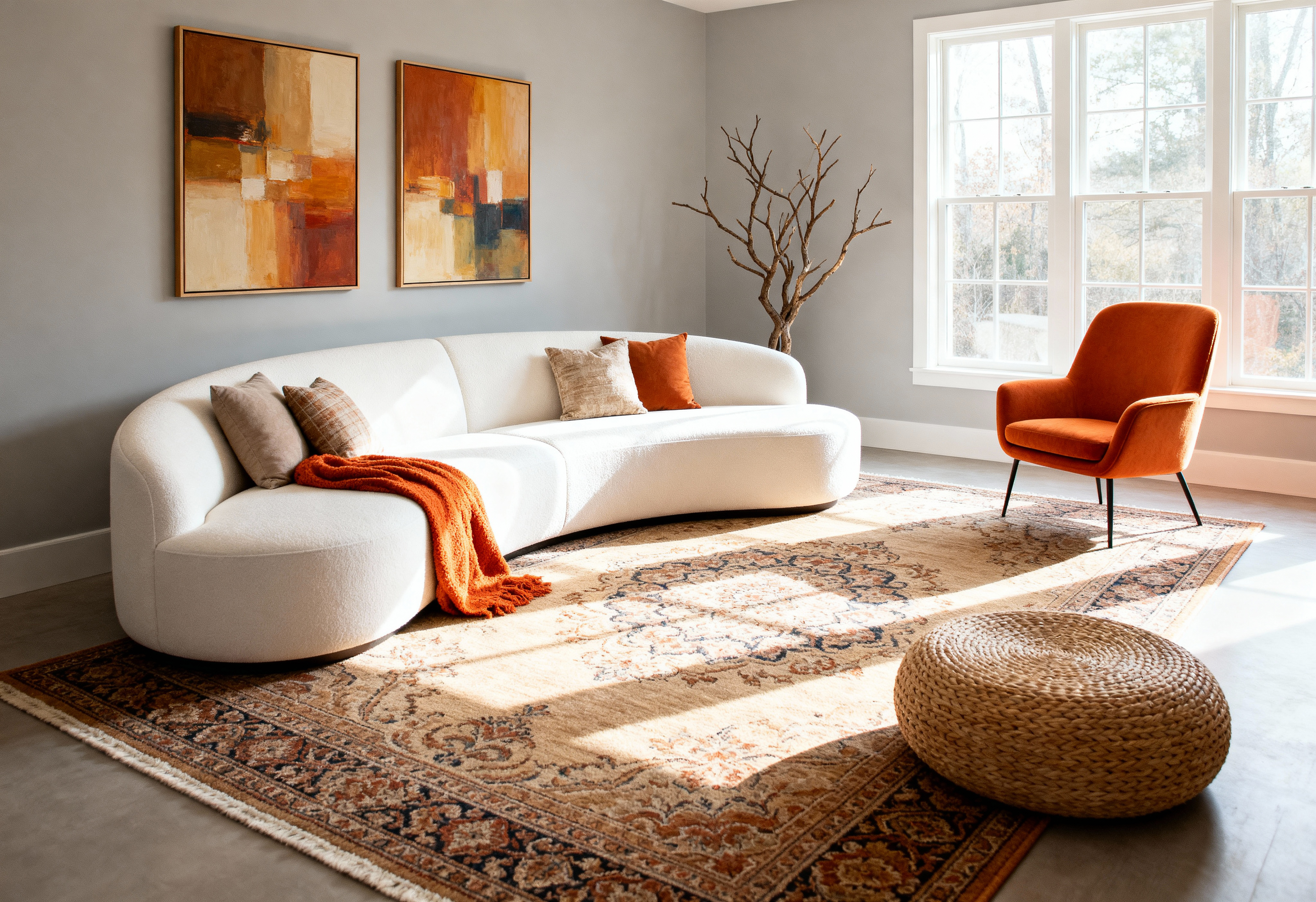
Measure the room and your furniture layout first — the right rug size is a calculation, not a guess.
The size trap: room size vs. machine size
Here's the conflict nobody warns you about. The size your living room wants (often 8x10 or 9x12) frequently exceeds the size your home washer can clean. That collision is the most important practical decision in this entire guide, so we're giving it its own section below. For now, just know: measure the room, then check the machine, and let both numbers shape your shortlist.
What "washable" really requires: matching the rug to your machine
A rug that won't fit your washer isn't washable in any way that helps you. This is where the marketing and the laundry-room reality diverge most sharply.
Capacity is the gatekeeper
Washing-machine capacity is measured in cubic feet, and rug brands publish fit charts against it. Ruggable's washing-machine guide gives concrete thresholds:
- 2.4 cu. ft. handles runners and rugs up to about 4x6.
- 3.1 cu. ft. adds 5x7 and 6-foot rounds.
- 4.5 cu. ft. supports larger sizes including 6x9 and 8x10.
Crucially, the same guidance states that rugs larger than 8x10 — meaning 9x12 and 10x14 — will not fit a standard home washing machine and need a commercial laundromat machine. Domino's testers hit the same wall from the other direction, noting that some brands' 5x8-to-8x10 rugs require a 60-pound commercial machine, and that rugs 9x12 and above are effectively spot-clean or dry-clean only.
There's a small but useful nuance: those capacity figures assume front- and top-load machines, and a machine without a center agitator can handle a slightly larger rug — Ruggable notes agitator-free machines need about 0.4 cu. ft. less capacity for the same rug. If you have a modern high-efficiency washer with no agitator post, you have a bit more room to work with.
The two-thirds rule and weight
Capacity charts assume the rug is the whole load. Don't pad it out. General appliance guidance is to fill a drum to roughly two-thirds of its maximum for proper cleaning, so an oversized rug crammed edge to edge won't actually get clean — the water and detergent can't circulate. Weight matters too: a wet rug is dramatically heavier than a dry one, and a soaked rug that exceeds your machine's load rating can strain the motor and bearings. If a rug feels heavy and dense dry, it'll be a brick wet.
The practical takeaway
If your living room wants a 9x12 and you only have a standard home washer, you have three honest options: accept that washing means a trip to the laundromat, choose a brand that sells a 9x12 as tiled or sectional panels you wash one piece at a time, or drop down to an 8x10 and use the front-legs-on placement to make it work. Each is a legitimate choice. What isn't legitimate is buying a one-piece 9x12, calling it washable, and discovering on day one that it never fits your machine.
Fiber and pile: the heart of the buying decision
Once size and machine are squared away, the rug's construction determines how it feels, how long it lasts, and how well it actually washes. Three things matter most: the face fiber, the pile height, and the backing.
Face fiber: why synthetics dominate (and where naturals fit)
The overwhelming majority of machine-washable rugs use synthetic face fibers — polyester, polypropylene, or a polyester-blend chenille — and there's a good engineering reason. Synthetics don't absorb much water, don't felt or shrink the way wool does under agitation, and resist mildew and staining. Domino's roundup describes the market as dominated by machine-made synthetic-fiber rugs with printed designs, and manufacturer descriptions of polyester chenille emphasize resilience and resistance to mildew, aging, and staining.
A few fiber notes worth carrying to checkout:
- Polyester and polyester-chenille give you the softest hand among the synthetics and take print colors well. Chenille adds a plush, fuzzy surface. The trade-off is that cheaper polyester can crush flat in high-traffic lanes over time.
- Polypropylene (olefin) is the workhorse for entryways and outdoor-adjacent spaces — extremely stain- and moisture-resistant, less soft underfoot.
- Cotton and cotton blends are common in flatweave runners and washable mats; they're breathable and machine-friendly but absorb more water, so they take longer to dry and can shrink if you ignore the cold-water rule.
- Wool and organic-cotton washables do exist (Domino highlights wool-and-cotton and 100% wool washable options), and they feel wonderful, but they're pricier and demand stricter care. Wool especially must be washed cold and air-dried, never tumbled hot, or it will felt.
A real caution from the testing literature: cheap, uncertified generics can pill quickly and may carry questionable chemical treatments. Domino's reporting flags that bargain-bin generics often pill fast and that uncertified brands raise toxin concerns. If a rug will host crawling babies, that's an argument for a reputable brand with safety certifications (look for OEKO-TEX or similar) over the cheapest listing you can find.
Low pile vs. plush: the comfort-versus-cleanability axis
Pile height is the lever that trades softness against ease of cleaning, and it's where the "machine washable" and "plush washable" search terms collide.
- Low pile / flatweave (think 0.1–0.3 inches) is the easy-care champion. It hides dirt, lets you spot debris instantly, vacuums cleanly, drains water fast, and dries quickly after a wash. It's the right answer for kitchens, entries, hallways, and dining rooms. The downside is it's firmer underfoot.
- Plush / high pile / shag feels luxurious and is genuinely nice in a living room or bedroom where you sit on the floor. The cost is real: deep pile traps food and grit, holds water (so it's slower to dry and more prone to mildew if rushed), and can mat down. Domino's testers found some plush washables handled washing well with no pilling or fraying, so plush and washable aren't mutually exclusive — but plush asks more of you at cleanup time and asks more of your dryer.
The honest framing: choose low pile when cleanup frequency is the priority and plush when comfort is the priority, and be realistic about which actually describes the room. A lot of buyers want plush in the kitchen and regret it by month two.
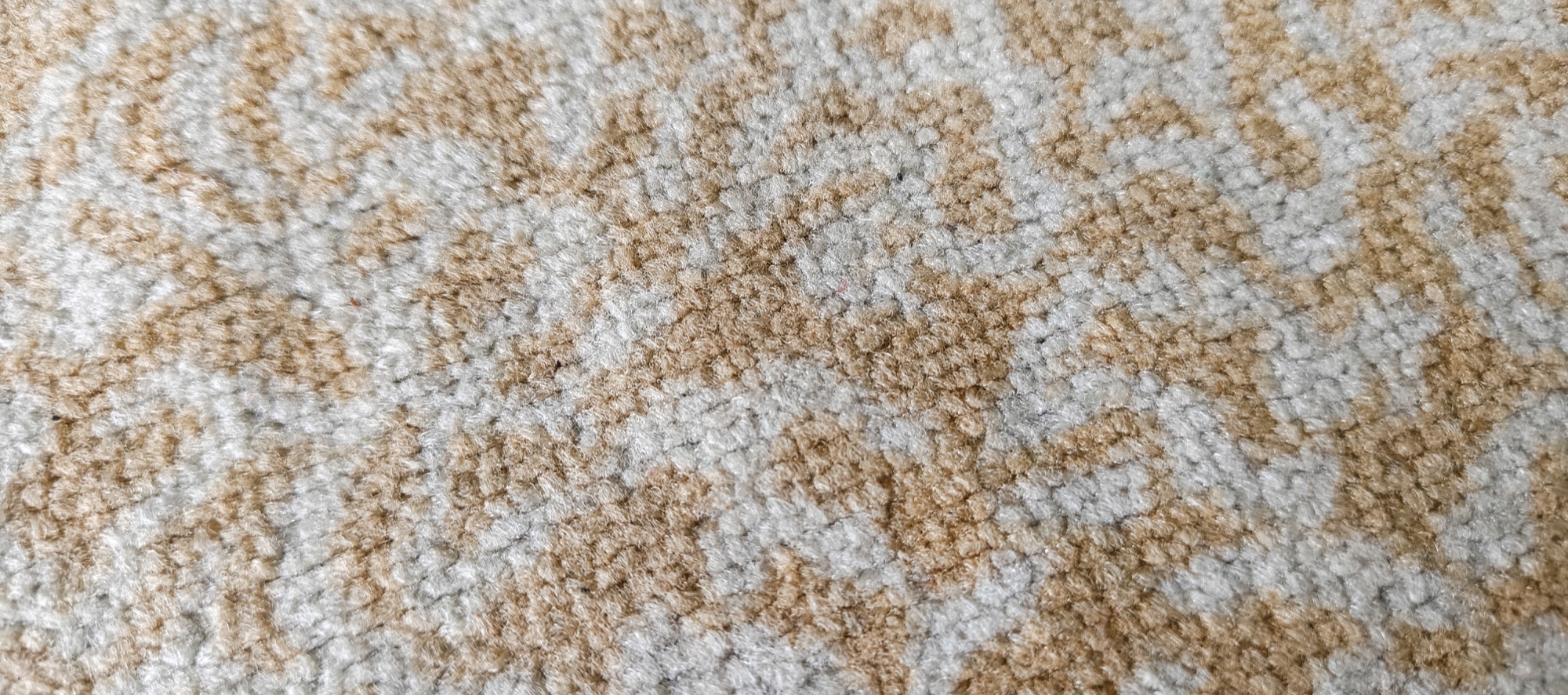
Synthetic chenille resists shrinking and mildew, which is exactly why it dominates the washable-rug aisle.
Thickness, feel, and the "thin rug" complaint
Many one-piece washable rugs are deliberately thin so they fit a home washer and dry quickly. That thinness is the most common complaint in reviews — the rug can feel flimsy or slide around. The fix isn't a thicker rug (which defeats washability); it's the right pad underneath, which brings us to backing.
Backing and the rug pad: the make-or-break detail
The backing is the part of a washable rug most people ignore and most regret ignoring. It decides whether the rug stays put, how it feels, and whether it survives repeated washing.
Two backing philosophies
- Integrated rubber/latex backing. Many synthetic washables include a light rubber backing molded to the rug, so they grip the floor reasonably well on their own. Domino notes most synthetic rugs feature a light rubber backing that removes the strict need for a separate pad — though you can still add one for cushion. The caution: not all integrated backings are rated to be machine-washed indefinitely, and PVC/latex backings can dry out and crack over years of wash cycles. Check the care label for how many washes the backing is rated for.
- Two-piece systems with a separate pad. Tiled and cover-style washable rugs (the thin top "cover" plus a grippy pad) separate the washable face from a non-washable, non-slip base. The face washes; the pad stays down. These systems use either a Velcro-like non-slip pad or, in some brands, a quarter-inch foam puzzle-piece pad for real cushion — Domino describes Tumble's ¼-inch foam pad system specifically.
When you need a rug pad regardless
Even a rug with integrated backing benefits from a dedicated non-slip rug pad in two situations: on hard floors where slip is a safety issue (especially with kids, elderly household members, or stairs nearby), and any time you want to fix the "thin and flimsy" feel. A felted non-slip pad adds grip, adds cushion, and reduces wear on the rug face by absorbing foot pressure. For a thin washable rug, the right pad is the single best upgrade you can make, and it costs a fraction of the rug.
One compatibility check: make sure the pad is safe for your floor type. Some rubber and PVC pads can discolor or react with finished hardwood and certain vinyl floors. Look for a pad explicitly labeled safe for your floor, and you'll avoid a sticky-residue surprise.
Care that keeps a washable rug washable
The fastest way to ruin a washable rug is to wash it like a bath towel. The fibers and backings that make these rugs work are also the fibers and backings that hot water, bleach, and high heat destroy. Appliance makers and rug brands are remarkably consistent on the rules.
The wash settings that protect the rug
Pulling together guidance from Whirlpool's rug-washing instructions and rug-brand care pages like Ruggable's, the consensus protocol is:
- Read the care label first, every time. It overrides any general advice, and it's where the manufacturer states wash count limits, temperature caps, and whether the dryer is allowed.
- Cold water. Cold protects against shrinkage and color bleed. Many rug labels specify a maximum of around 30°C (86°F).
- Gentle or delicate cycle. Avoid heavy-duty/agitator-aggressive cycles that stress seams and backing.
- Mild detergent only. No bleach, no fabric softener. Softener coats fibers and kills the rug's stain resistance; bleach attacks both dye and fiber.
- Pre-treat first. Vacuum the rug and spot-treat stains before it goes in, so the wash is finishing the job rather than starting it.
- Wash it alone. A rug plus a full load of clothes overloads the drum and prevents proper cleaning.
Drying without warping
Drying is where plush rugs and integrated-backing rugs are most vulnerable. The safe defaults:
- Air-dry or tumble on low heat only, and only if the label permits the dryer.
- Lay flat or hang to air-dry out of direct sunlight, which can fade colors.
- Dry completely before putting it back down. A rug returned damp grows mildew from the backing up, which is the fastest way to a smell you can't get rid of.
High heat is the enemy across the board: it shrinks cotton, melts or cracks some backings, and can permanently warp a rug's shape. When in doubt, air-dry. It's slower, but it's the setting that never ruins a rug.
A realistic maintenance rhythm
Washing is the deep clean, not the daily routine. Vacuum low-pile washables like any rug, shake out runners, and spot-clean spills immediately so they never set. Most households only need to full-wash a high-traffic rug every few months — the point of buying washable is that the option exists when the diaper, the wine, or the muddy dog inevitably arrives, not that you'll run it weekly.
Putting it together: a buyer's checklist
Here's the whole framework compressed into the order you should actually apply it.
- Pick the room and its job. Entry/kitchen/dining lean low-pile and washability-first; living room/bedroom can go plush.
- Measure the room and choose a size by the room-dimension chart (5x7 under ~11x13, 8x10 for 11x13+, 9x12 for 12x18+), leaving 18–24 inches of floor around it.
- Measure or look up your washer's capacity and confirm the rug actually fits (≈2.4 cu. ft. up to 4x6, 3.1 for 5x7, 4.5 for up to 8x10; 9x12+ needs a laundromat or a tiled system).
- Choose the fiber — synthetic for easy care and durability, natural blends for feel if you'll baby them; favor certified brands for kids and pets.
- Choose the pile honestly: low for cleanability, plush for comfort, and don't put plush where food and grit live.
- Plan the backing and pad — add a floor-safe non-slip pad for grip, cushion, and to fix any thinness.
- Commit to the care rules — cold, gentle, mild detergent, no bleach or softener, low or no heat, dry fully.
Run a candidate rug through those seven steps and you'll know within a couple of minutes whether it's right for your space or a return waiting to happen.
If you'd rather start from a vetted shortlist than evaluate from scratch, our roundup of the best washable indoor area rugs ranks specific models against exactly these criteria — size availability, fiber, pile, backing, and real-world washability — so you can see the framework applied to products you can actually buy. And if you're still on the fence about the whole category, the companion piece on whether washable rugs are worth it weighs the long-term cost and convenience against a traditional rug.
Frequently asked questions
What is the best material for a washable area rug?
For most homes, a low-pile polyester, polyester-chenille, or polypropylene rug is the best balance of softness, stain resistance, and machine durability, because synthetics resist shrinking, felting, and mildew under agitation. Cotton blends are fine for flatweave runners but absorb more water and dry slower. Wool and organic-cotton washables feel the best but cost more and demand strict cold-wash, air-dry care.
What size washable rug fits in a home washing machine?
As a rule of thumb based on brand fit charts, a 2.4 cu. ft. machine handles up to about 4x6, 3.1 cu. ft. adds 5x7, and 4.5 cu. ft. reaches 8x10. Rugs 9x12 and larger generally do not fit a standard home washer and need a commercial machine or a tiled rug you wash in sections.
Are plush washable rugs as easy to clean as low-pile ones?
No. Plush and shag washables can wash without pilling, but the deep pile traps food and grit, holds more water, and dries slower, so it's more work at cleanup and more prone to mildew if not fully dried. Choose plush for comfort in low-mess rooms; choose low pile where spills and traffic are constant.
Do washable rugs need a rug pad?
Many include a light integrated rubber backing and stay put without one, but a separate floor-safe non-slip pad is strongly recommended on hard floors for safety, and it's the best fix for the "thin and slippery" feel common to washable rugs. It also extends the rug's life by cushioning foot traffic.
How should I wash a washable area rug?
Read the care label first, then wash alone, in cold water, on a gentle cycle, with mild detergent and no bleach or fabric softener. Pre-vacuum and spot-treat stains, then air-dry or tumble on low heat only if the label allows, and make sure it's fully dry before putting it back down.
Related Posts