
The Short Answer: No, but They're Closely Related
If you've stood in the charging-accessory aisle wondering whether the "Qi2" label on a box means the same thing as the "MagSafe" sticker on the one next to it, you're asking exactly the right question. So let's answer it plainly before getting into the weeds: MagSafe and Qi2 are not the same thing, but they are siblings. Qi2 was built using Apple's MagSafe technology as its foundation.
MagSafe is Apple's proprietary magnetic wireless charging system, introduced with the iPhone 12 in 2020. Qi2 is the open, cross-industry wireless charging standard that the Wireless Power Consortium (WPC) released a few years later. And here's the part most product pages bury: Apple worked directly with the WPC to fold its MagSafe design into that standard. As Android Authority puts it, "Qi2 is based on the same technology as Apple's MagSafe, but it's a universal standard designed for all smartphones," and "the company worked closely with the WPC to integrate the iPhone's MagSafe technology into the new standard" (Android Authority).
So when you snap a Qi2 charger onto a modern iPhone and it clicks into place magnetically and charges at 15W, you're essentially using a standardized, open-licensed version of the same idea Apple shipped first. The magnets land in the same place. The charging coil sits in the same spot. The behavior is nearly identical. But "nearly identical twins" is not the same as "the same thing," and the differences matter when you're spending money on a charger or deciding whether your specific phone will get the full benefit.
A note on how we put this together: we don't run lab benchmarks or tear chargers apart on a bench. What you're reading is a research-based synthesis of the Wireless Power Consortium's official specification history, Apple's published MagSafe documentation, and reporting from established hardware editorial outlets. Every spec and claim below links to its source so you can verify it yourself. Where a claim could only be traced to forum chatter or social posts, we left it out.
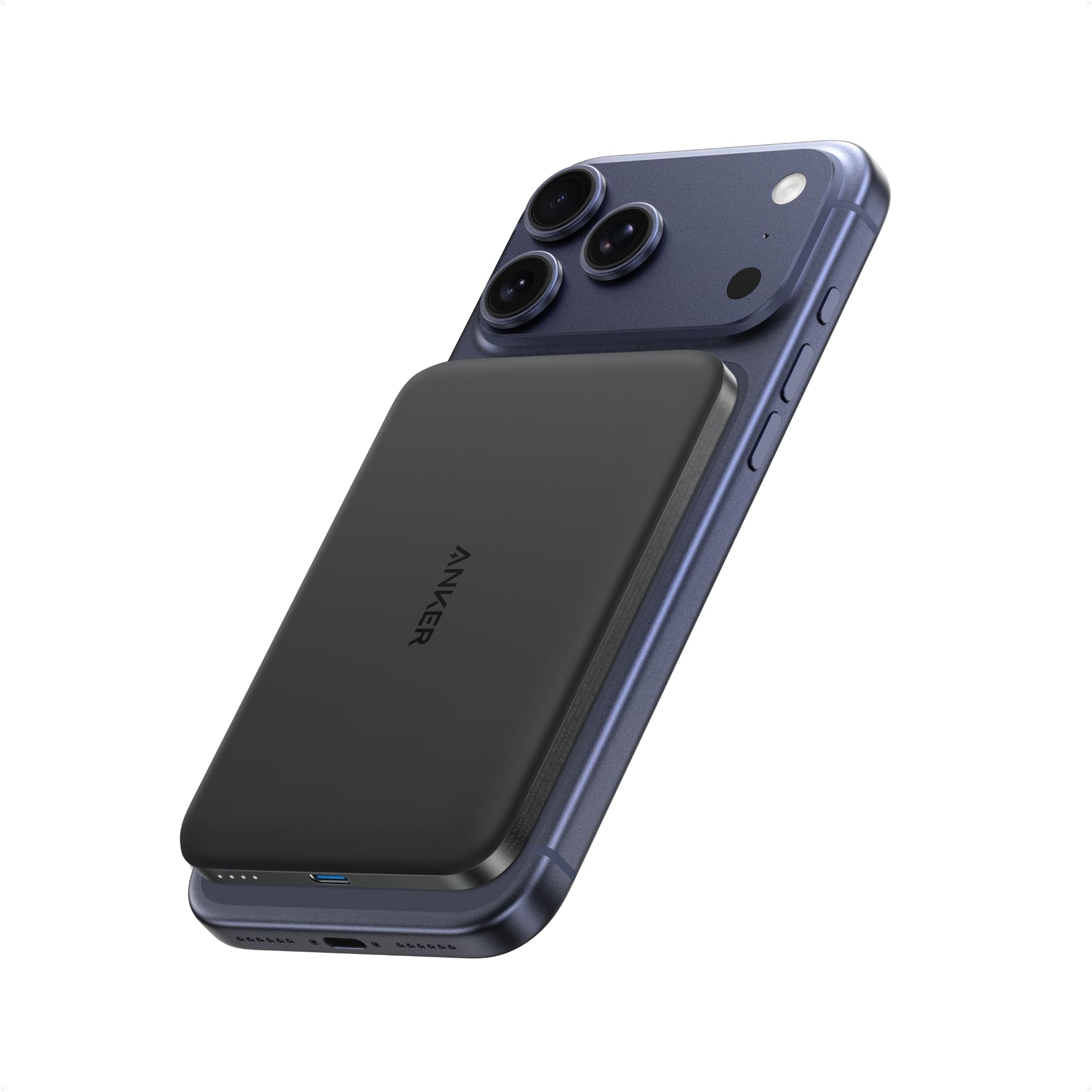
A Qi2-certified portable charger like the Anker Nano uses the same magnetic ring as MagSafe, which is why it snaps onto an iPhone the same way.
What MagSafe Actually Is
MagSafe is the name Apple uses for the magnetic wireless charging system on iPhones from the iPhone 12 generation onward. Underneath the branding, it's an array of magnets arranged in a ring around a wireless charging coil. The magnets do two jobs: they hold an accessory in place, and (more importantly for charging) they snap the charger's coil into precise alignment with the phone's coil every single time.
That alignment is the whole point. Wireless charging is fundamentally an inductive handshake between two coils, and inductive transfer is extremely sensitive to how well the coils line up. Get them perfectly centered and a lot of energy crosses the gap. Let them drift even slightly off-center, which is exactly what happens on a flat, magnet-free pad when you set your phone down a little crooked, and efficiency drops while waste heat climbs.
How fast does MagSafe charge?
Here's where people often get tripped up, because MagSafe's speed depends heavily on which iPhone you own and what power adapter you plug the charger into. According to Apple's official support documentation, the picture in 2026 looks like this (Apple Support):
- iPhone 17, iPhone 17 Pro, iPhone 17 Pro Max, iPhone 16 Plus, and iPhone 16 Pro Max can reach up to 25W peak power, but only with a 30W-or-greater adapter rated at 15V/2.0A or higher.
- iPhone 16 and iPhone 16 Pro top out around 22.5W.
- iPhone Air reaches about 20W.
- iPhone 15 and earlier (and the iPhone 17e) charge at up to 15W.
- The smallest models, iPhone 13 mini and iPhone 12 mini, are capped at up to 12W.
Two takeaways from that list. First, "MagSafe speed" isn't one number; it's a sliding scale tied to your model and your wall adapter. Second, the headline 25W figure is recent; for most of MagSafe's life, and for most iPhones still in pockets today, 15W was the ceiling. Hold onto that 15W number, because it's the bridge to Qi2.
What Qi2 Actually Is
Qi (pronounced "chee") is the wireless charging standard that has existed for over a decade. It's why your old phone could charge on a random pad at a coffee shop. The catch with original Qi was that it had no alignment mechanism. You eyeballed it, set the phone down, and hoped the coils lined up. Often they didn't, which is why so many people woke up to a phone that had barely charged overnight.
Qi2 is the WPC's answer to that problem, and its defining feature is the Magnetic Power Profile (MPP). According to the Wireless Power Consortium's own specification history, version 2.0 of the Qi standard arrived in April 2023 and introduced the Magnetic Power Profile, which enables "magnetic attachment and alignment of a power transmitter and power receiver" (Wireless Power Consortium). In plainer language: Qi2 adds a ring of magnets around the charging coil so the phone and charger snap into perfect alignment, exactly like MagSafe does.
If that description sounds familiar, it should. That's the whole reason this article exists. The MPP is, by design, MagSafe's magnetic-alignment concept turned into an open standard that any manufacturer can build to.
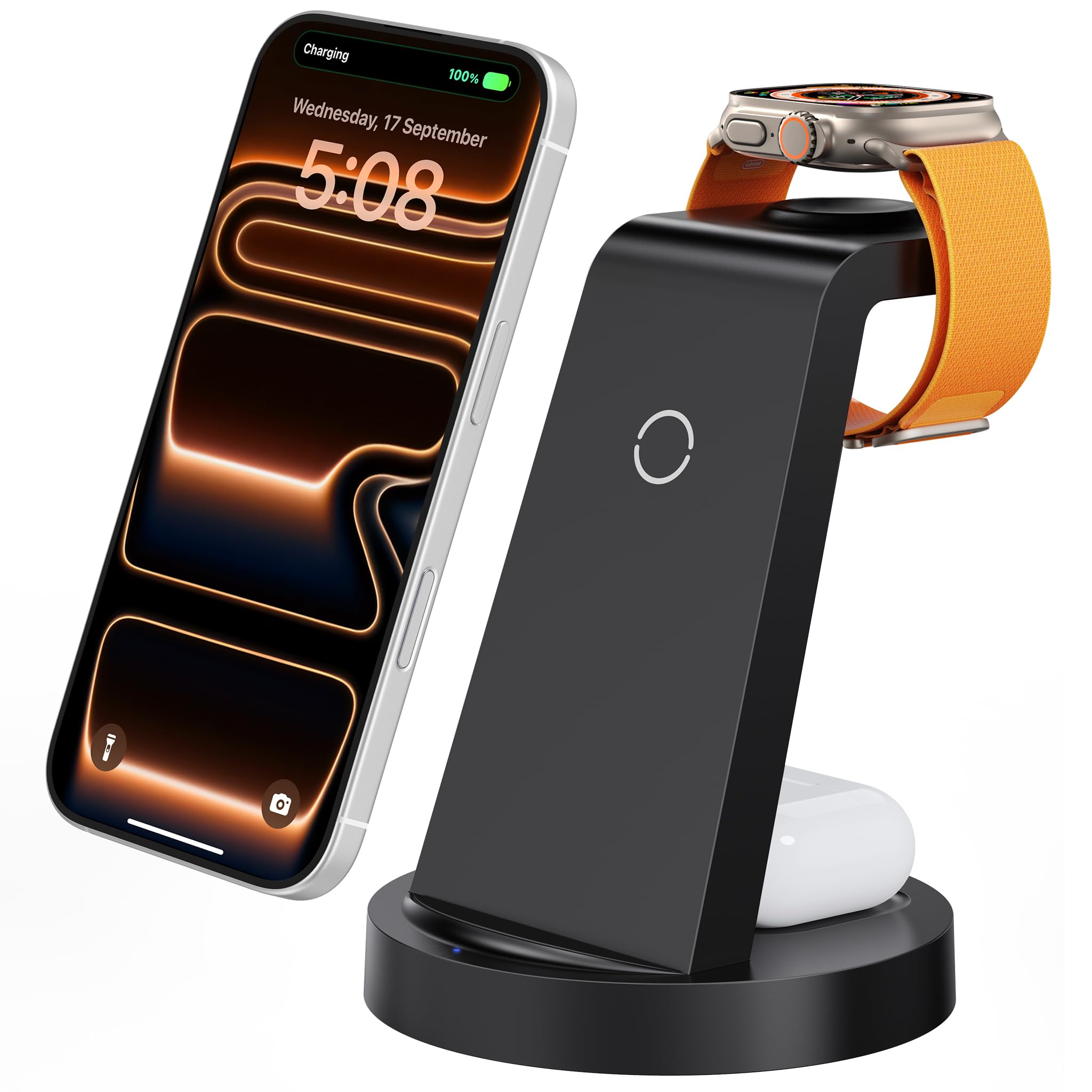
Open Qi2 lets third-party brands build magnetic chargers and multi-device stations without Apple's proprietary licensing, like this 3-in-1 station.
How fast does Qi2 charge?
The original Qi2 release (the MPP version of Qi v2.0) delivers 15W to certified phones (Wireless Power Consortium). That number is not a coincidence. It matches the 15W ceiling that MagSafe used for years, because Qi2's magnetic profile was modeled on MagSafe.
The standard didn't stop there. The WPC's specification history records that Qi 2.2, released in April 2025, raised the ceiling to up to 25 watts of power transfer (Wireless Power Consortium). So the gap between "MagSafe's fast 25W" and "Qi2's 15W" has effectively closed, but only on Qi2.2-certified hardware paired with a phone that can negotiate that higher rate. On the older, far more common Qi2 (15W) gear, you're at the 15W tier.
This is the single most useful framing for a shopper: Qi2 (15W) ≈ classic MagSafe (15W); Qi2.2 (25W) ≈ the newest MagSafe (25W). Same magnetic alignment, comparable speeds, different ownership model.
So How Are MagSafe and Qi2 Different?
If the magnets are in the same place and the speeds line up, what actually separates them? Four things.
1. Ownership: proprietary vs. open
MagSafe is Apple's. Qi2 belongs to the Wireless Power Consortium, a body with hundreds of member companies, and Apple is one of those members, alongside accessory makers like Anker, Belkin, and Mophie. That's the difference between a feature one company controls and a standard an entire industry agrees to build to. The practical effect: a "Qi2 certified" sticker can appear on a charger from any participating manufacturer, while "MagSafe" historically signaled Apple's own ecosystem and its certification program.
2. Which phones get the magnets
This is where the answer to "is MagSafe the same as Qi2 on iPhone 13?" gets interesting. Every iPhone from the iPhone 12 generation forward has the MagSafe magnet ring built into the body — so an iPhone 13 already has the physical hardware that Qi2 standardizes. That's why an iPhone 13 snaps cleanly onto a Qi2 charger and charges at 15W: the magnet placement is the same. As Android Authority noted from a hands-on demo, an "existing MagSafe iPhone" charged successfully on early Qi2 hardware (Android Authority). For an iPhone 13 specifically, MagSafe and 15W Qi2 are functionally interchangeable in everyday use.
The Android side of this story is messier, which we'll get to.
3. Certification and "full speed"
With MagSafe, full magnetic-charging speed has traditionally depended on Apple's certification of the accessory. A non-certified pad would often fall back to slower, basic Qi behavior. Qi2 flips that: certification is handled by the WPC, and any Qi2-certified charger should deliver the standard's full magnetic charging to any Qi2-compatible phone, regardless of brand. The certification gate still exists; it just isn't Apple's gate anymore.
4. Cross-platform reach
MagSafe is an iPhone story. Qi2 is meant to be everyone's story, iPhone and Android alike. That's the entire reason the WPC built it. Whether Android has actually delivered on that promise is its own messy chapter, covered below.
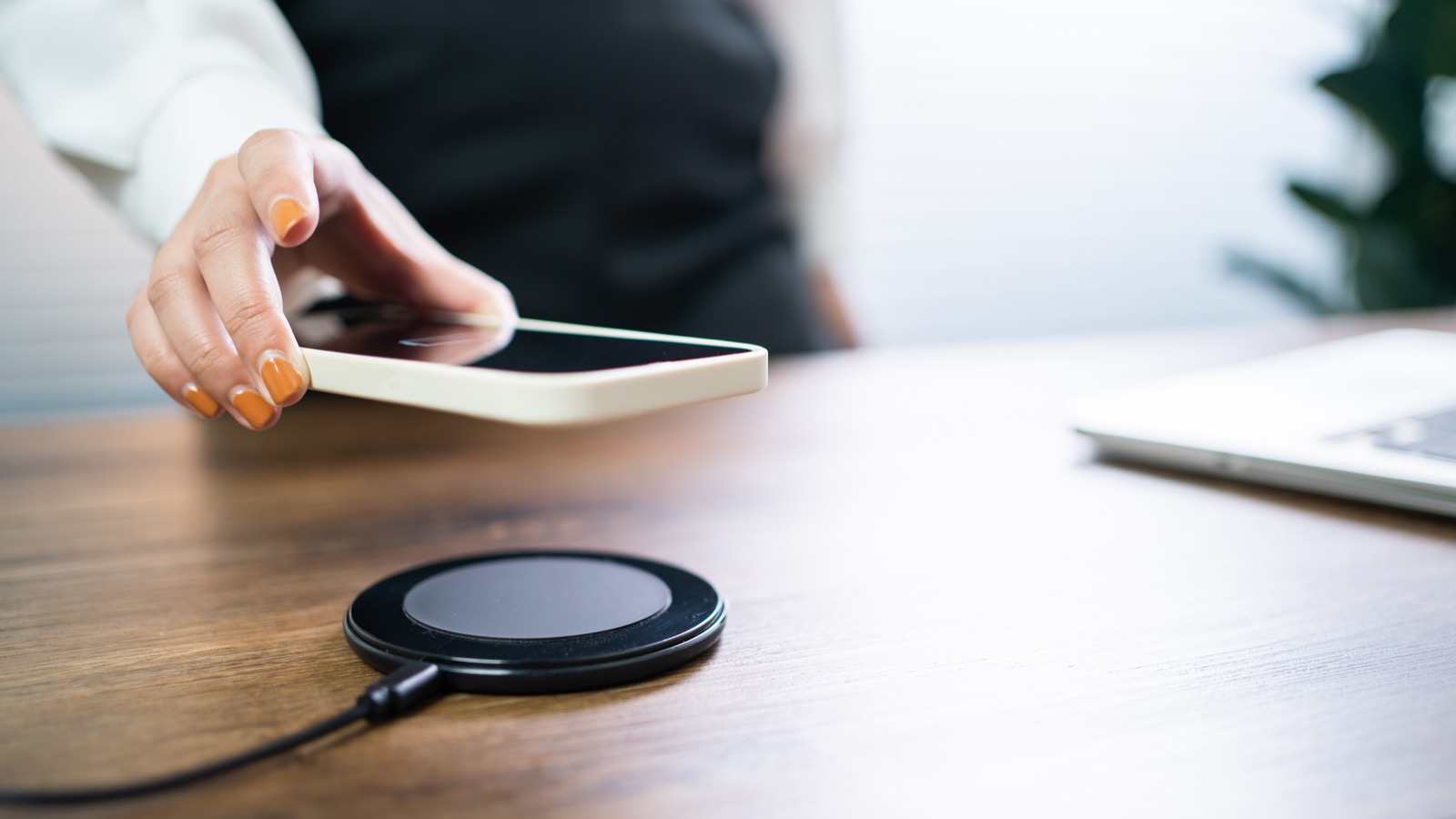
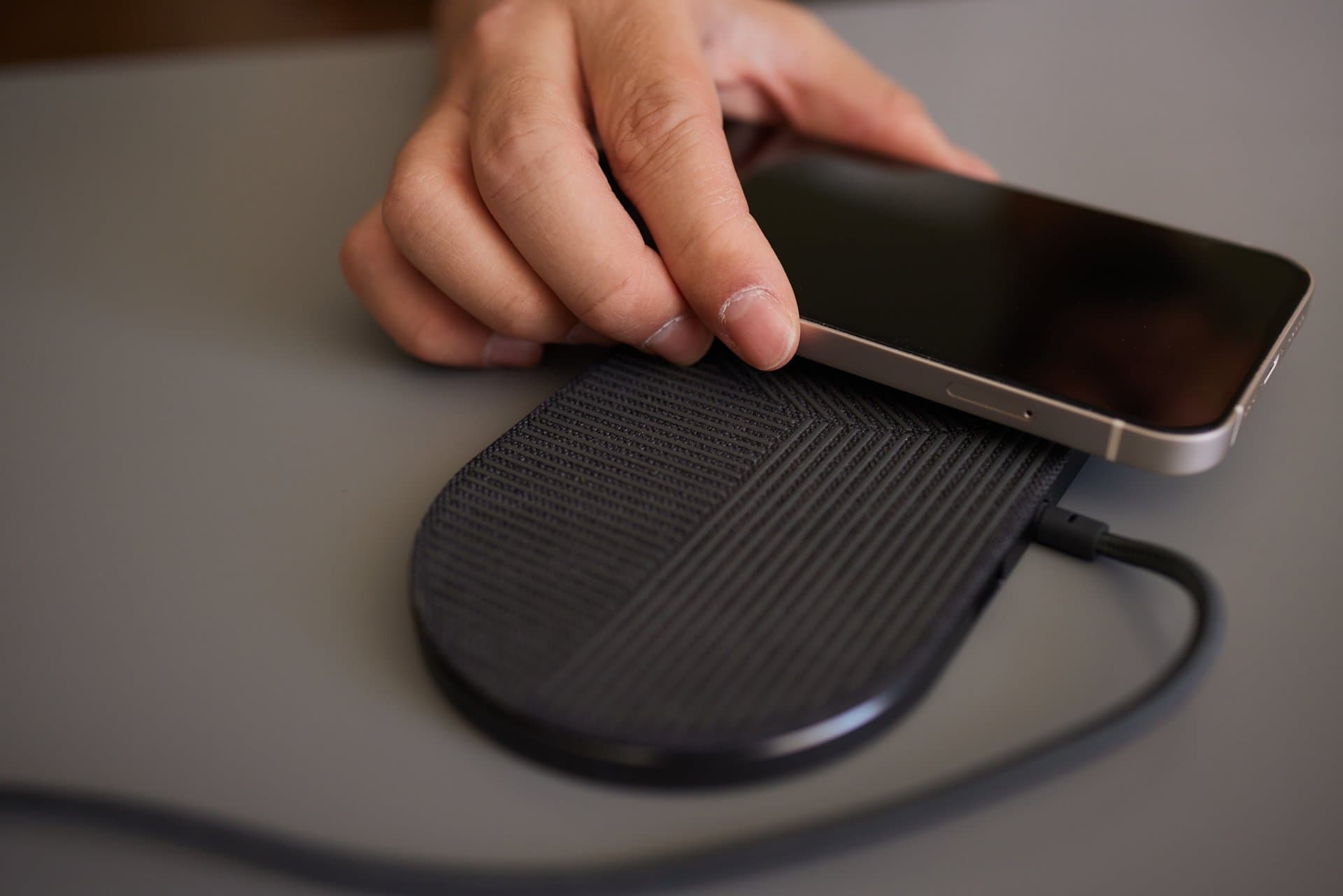
Magnetic alignment is the shared DNA of both systems: snapping the coils into place is what makes charging efficient and repeatable.
Is Qi2 Compatible With MagSafe?
For practical purposes, yes — and this is the question that matters most to anyone buying a charger. Because Qi2's Magnetic Power Profile uses the same magnet ring geometry that MagSafe established, the two are physically interoperable in the directions that count:
- A MagSafe iPhone (iPhone 12 and later) on a Qi2 charger: it snaps on and charges at the magnetic rate, up to 15W on Qi2 gear (and up to 25W on Qi2.2 gear with a compatible phone). Apple's own documentation treats MagSafe and standard Qi charging as a continuum, with non-MagSafe Qi devices simply charging at lower rates (Apple Support).
- A Qi2 accessory on an iPhone: the magnets align, the accessory holds, and charging proceeds at the negotiated speed.
The thing to internalize is that "MagSafe charger" and "Qi2 charger" are, for a modern iPhone, two labels describing very similar behavior. A Qi2-certified portable battery and a MagSafe-branded one will both magnetically latch to your iPhone and both will charge at 15W (assuming a 15W-class charger). The Anker Nano portable charger is a clean example: it's marketed as MagSafe-compatible and is Qi2-certified at 15W (Anker), one product carrying both ideas at once, precisely because they're built on the same foundation. We break down that battery in our Anker Nano MagSafe portable charger review if you want the full breakdown of how a Qi2-certified MagSafe pick performs in real use.
Where compatibility gets fuzzy is at the edges: very high speeds (25W) require the phone, the charger, and the adapter to all support Qi2.2; and some accessories are "magnetically compatible" without being formally certified, which can mean slower fallback charging. The certification label is your shortcut around that uncertainty.
Qi2 vs. MagSafe and Heat: Does Alignment Really Help?
One of the most common follow-up questions is whether Qi2 runs cooler than older wireless charging, and the answer ties directly back to that magnet ring. The reason both MagSafe and Qi2 generate less waste heat than a basic flat pad isn't magic; it's alignment.
When charging coils are even slightly misaligned, energy that should be crossing into your battery instead gets lost, and a chunk of that loss shows up as heat. Magnetic alignment removes the guesswork. As Tom's Guide explains, the magnets mean "wireless charging coils will be perfectly aligned every single time, which is a major boost for efficiency — and means the amount of excess heat produced is significantly reduced" because "more power goes into your battery and less power is wasted as a result" (Tom's Guide).
So on the "Qi2 vs. MagSafe heat" question: neither has a meaningful thermal advantage over the other, because they use the same alignment trick. Both run cooler and more efficiently than a magnet-free Qi pad, for the same physical reason. If your old wireless charger left your phone uncomfortably warm, that was very likely a misalignment-and-efficiency problem that magnetic charging, by either name, largely solves. (Some heat is unavoidable: wireless transfer is inherently less efficient than a cable, and faster speeds produce more heat. Magnetic alignment minimizes the avoidable portion.)
Qi2 vs. MagSafe on Samsung and Android
Here's the chapter where the clean "they're basically the same" story gets complicated, and it's almost entirely an Android problem, not a MagSafe-vs-Qi2 problem.
The promise of Qi2 was that Android phones would finally get MagSafe-style magnetic charging built in. The reality has lagged. As of early 2026, full, built-in Qi2 magnetic support on Android remains thin. Tom's Guide has reported that Samsung's Galaxy S25 line is "Qi2 Ready" rather than fully Qi2 — meaning "the S25 doesn't have the trademark magnetic ring in the back of the phone; instead those magnets live inside one of the official phone cases," and wireless charging on those models is capped at 15W (Tom's Guide).
That distinction is the crux of "Qi2 vs MagSafe on Samsung." On an iPhone, the magnets are in the phone. On a Galaxy S25, you only get the magnetic snap if you add a special case that carries the magnets for you. Take the case off and you're back to a regular, alignment-free wireless charging experience. Beyond Samsung's case-based approach, genuine built-in Qi2 Android phones have been rare. For a long stretch the standout fully-Qi2 Android device was a single mid-range model, with broader adoption only slowly arriving (Tom's Guide).
So if you own an iPhone, "is MagSafe the same as Qi2" has a tidy answer: yes, near enough, and your phone has the magnets built in. If you own a Samsung or another Android phone, the honest answer is "Qi2 exists for your phone in theory, but whether you actually get the magnetic experience depends on a case, so check before you buy a magnetic accessory."
Will a Qi2 power bank work on my phone?
A "Qi2 MagSafe power bank," a portable battery with the magnet ring, will magnetically stick to any iPhone from the 12 generation onward and charge at 15W. On a Samsung Galaxy S25, the same battery will only stick if you're using a magnet-equipped case; otherwise it'll sit there refusing to grip, or charge slowly as a plain pad. The battery itself isn't the problem. The phone's lack of built-in magnets is.
How to Use This When You're Shopping
Strip away the jargon and a few simple rules fall out.
If you have a modern iPhone (12 or newer, including the iPhone 13): MagSafe and Qi2 are effectively interchangeable for your purposes. A Qi2-certified charger will snap on and charge just like a MagSafe one. Don't pay an Apple-branding premium for behavior an open Qi2 charger delivers identically. Look for the Qi2 certified label and the wattage you actually need.
If you want the fastest possible wireless charging: you need the full chain: a phone that supports 25W, a Qi2.2-certified charger, and (for MagSafe specifically) a 30W-or-greater adapter (Apple Support). Older 15W Qi2 or MagSafe gear caps you at 15W no matter what.
If you have a Samsung or Android phone: confirm whether your model has built-in Qi2 magnets or is merely "Qi2 Ready" (case-dependent) before buying any magnetic accessory (Tom's Guide). This one check saves the most disappointment.
If you just want it to charge reliably and run cool: any magnetic charger, MagSafe or Qi2, will align better and waste less energy than a flat pad. That's the practical win, and it's shared across both systems.
When you've decided which camp you're in, our roundup of the best MagSafe wireless phone chargers walks through specific Qi2-certified and MagSafe-compatible picks across pads, stands, and portable batteries, so you can match a real product to the rules above.
MagSafe vs. Qi2 at a Glance
If you want the whole comparison in one place, here's how the two systems line up on the points that actually affect a purchase:
| MagSafe | Qi2 (15W) | Qi2.2 (25W)
Who owns it | Apple (proprietary) | Wireless Power Consortium (open) | Wireless Power Consortium (open)
Magnetic alignment | Yes (magnet ring) | Yes (Magnetic Power Profile) | Yes (Magnetic Power Profile)
Typical wireless speed | 15W (up to 25W on newest iPhones) | 15W | Up to 25W
Built-in magnets on iPhone 12+ | Yes | Yes (same ring) | Yes (same ring)
Built-in magnets on most Android | N/A | Often case-dependent | Often case-dependent
Certification body | Apple | WPC | WPC
Released | 2020 | April 2023 | April 2025
Sources for these rows are Apple's MagSafe documentation (Apple Support) and the Wireless Power Consortium's specification history (Wireless Power Consortium). The single most important row is "built-in magnets on most Android," because it's the only one where the answer is genuinely it depends rather than a clean yes.
A Few Lingering Questions
Do I need to replace my MagSafe charger with a Qi2 one?
No. If your existing MagSafe charger already works and charges at the speed you want, there's no reason to swap it for a Qi2-labeled one. They use the same magnetic alignment and, at the 15W tier, deliver the same result. The only reason to upgrade is if you specifically want 25W charging on a phone that supports it, in which case you're shopping for Qi2.2 hardware plus a sufficiently powerful adapter, not just any "Qi2" box. Buying a new charger purely because it says "Qi2" instead of "MagSafe" is spending money to change a label, not the experience.
Is a Qi2 charger slower than a MagSafe charger?
At the same wattage class, no. A 15W Qi2 charger and a 15W MagSafe charger will charge a compatible iPhone at effectively the same rate, because the underlying magnetic profile is shared. Apparent speed differences usually come down to the power adapter you've plugged the charger into, not the charger standard itself. Apple is explicit that hitting the top speeds requires a sufficiently powerful adapter: for 25W on iPhone, a 30W-or-greater unit (Apple Support). Underfeed any wireless charger and it slows down regardless of whether it wears the MagSafe or Qi2 name.
Will a Qi2 charger void or harm my iPhone?
There's nothing about an open Qi2-certified charger that's riskier than a MagSafe one for a modern iPhone. The certification process exists precisely to ensure interoperability and safe power negotiation. The thing to avoid is uncertified, no-name "magnetic compatible" gear that hasn't passed any certification, not because it's branded Qi2 but because it hasn't been validated at all. The certification label, by either name, is your assurance.
What about the iPhone 13 specifically?
Since this comes up so often: the iPhone 13 has MagSafe magnets built into its body, and those magnets sit in the same ring layout the Qi2 standard defines. So an iPhone 13 treats a 15W Qi2 charger and a 15W MagSafe charger identically: it snaps onto both and charges at up to 15W on either. For an iPhone 13 owner, "is MagSafe the same as Qi2" is about as close to "yes" as the question ever gets in real use. You won't out-charge that 15W ceiling on an iPhone 13 no matter which label you buy, so optimize for build quality, portability, and price instead.
The Bottom Line
Is MagSafe the same as Qi2? No, and yes, depending on how literal you want to be. They are not the same brand, the same owner, or the same certification program. MagSafe is Apple's proprietary system; Qi2 is the open WPC standard. But Qi2 was deliberately built on MagSafe's magnetic-alignment design, with Apple's direct involvement (Android Authority), so in everyday use on an iPhone they behave almost identically: same magnet ring, same 15W tier (or 25W on the newest Qi2.2 and MagSafe gear), same efficiency-and-heat benefit from perfect coil alignment.
Think of it this way: MagSafe is the original. Qi2 is the standardized, industry-wide version of the same good idea, now available to everyone, even if Android is still catching up to using it fully. For an iPhone owner, that means you can shop for "Qi2" or "MagSafe" chargers with confidence that they'll work together, and let price, design, and wattage (not the label) decide.
Related Posts