Vellgoo Max 64 Pint Dehumidifier Review (2026): Worth It?
 Abdulwahab Suleiman·June 16, 2026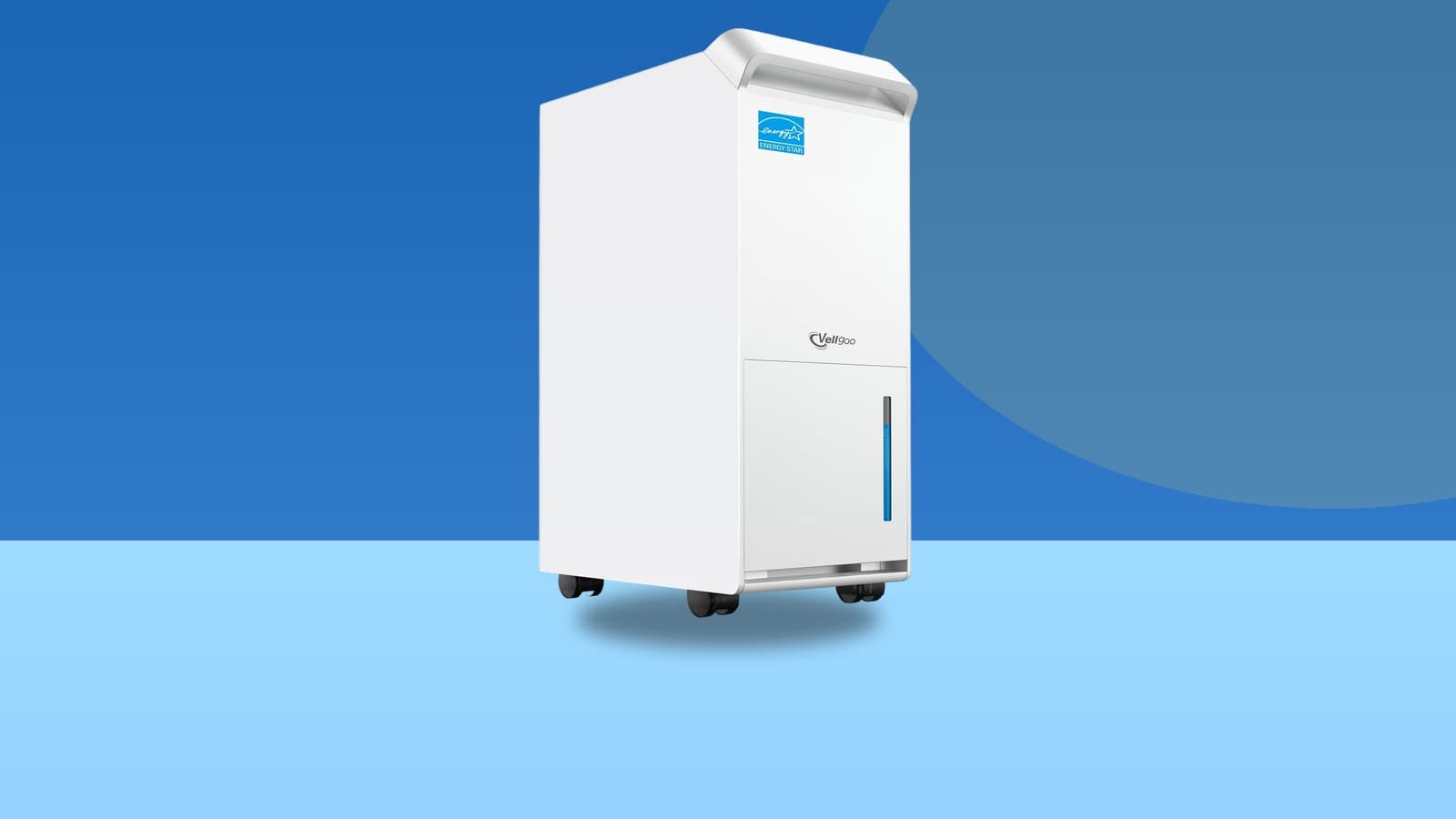
Vellgoo Max 64 Pint Dehumidifier Review: The Short Version
If your basement, garage, or open main floor feels clammy from spring through early fall, a large-capacity unit like the Vellgoo Max 64 Pint dehumidifier is the kind of machine that gets recommended for the job. It markets a 4,000 sq. ft. coverage figure, an ENERGY STAR Most Efficient 2024 badge, smart humidity control, and a drain-hose port for hands-off operation. On paper, that is a compelling package for a big damp space.
The honest answer to "should you buy it" is more layered than the listing suggests, and most of the nuance lives in two places: how that headline 64-pint number is measured, and the fact that Vellgoo is an Amazon-direct brand that sits outside the reliability databases buyers usually lean on. This review unpacks both, alongside the specs that actually matter day to day.
Where to Buy
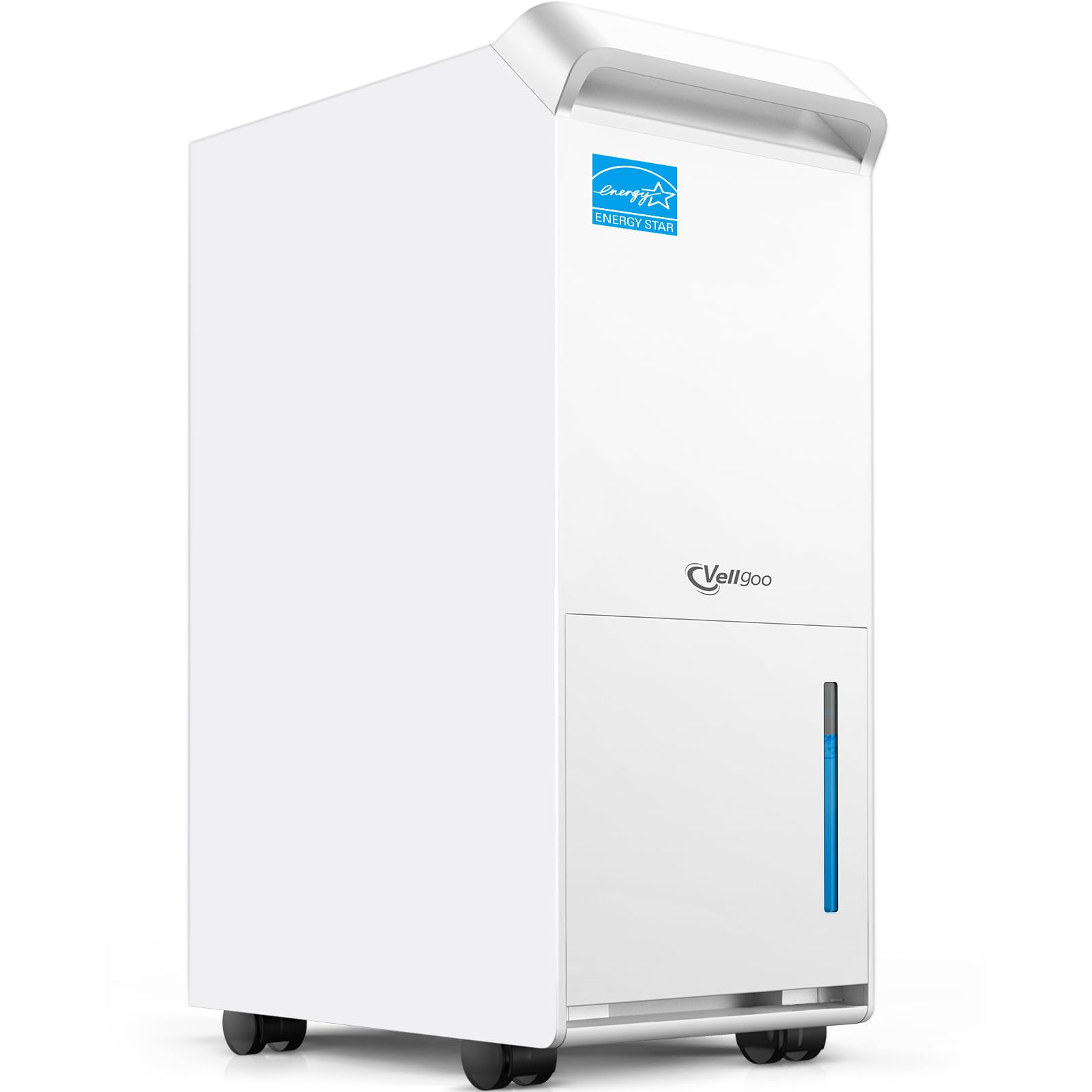
The Vellgoo Max 64 Pint is built around a rotary compressor and a continuous drain-hose port for large, persistently damp spaces.
How we evaluated this dehumidifier
A note on method, because it affects how much weight you should give what follows. This is a research-based review, not a hands-on lab test. We did not run this specific unit in a controlled chamber. Instead, we synthesized the manufacturer's published specifications with independent reference sources on dehumidifier testing, energy efficiency, and brand reliability, then flagged where the marketing and the measured-performance picture diverge. Where a claim could only be traced to anonymous social posts, we left it out. The goal is to give you the same picture a careful buyer would assemble after a few hours of reading, with the sources shown so you can check our work.
Are Vellgoo Dehumidifiers Good? Where the Brand Stands
This is the first question most shoppers ask, and it deserves a straight answer. Vellgoo is a value-focused, Amazon-native brand that sells a full ladder of dehumidifiers, from a 34-pint model up through 80-, 100-, and 140-pint units rated for 4,500 to 6,000 sq. ft. on the company's own dehumidifier collection page. The 64-pint / 4,000 sq. ft. model in this review is one of its mid-to-large offerings, sold primarily through its Amazon listing.
Here is the important context. When Consumer Reports surveyed 11,944 members about 13,632 dehumidifiers and built predicted-reliability ratings for 23 dehumidifier brands, the list was made up of established names: Midea, Honeywell, hOmeLabs, Danby, Frigidaire, GE, LG, and TCL. Vellgoo and similar Amazon house brands do not appear in that data set. That is not a verdict against the product; it simply means you cannot lean on a large, independent reliability sample the way you can with a Honeywell or Midea. For a category where roughly 19% of dehumidifiers develop a problem within four years, that absence of long-run reliability data is a real consideration, not a footnote.
So "good" depends on your tolerance for that unknown. The hardware spec sheet is competitive for the price. The track record is thin.
What Vellgoo gets right
Credit where it is due. The 64-pint model leans on the right engineering choices for moisture removal: a rotary compressor, an upgraded evaporator-condenser arrangement, copper tubing, and hydrophilic aluminum fins, per Vellgoo's product listing. It carries an ENERGY STAR Most Efficient 2024 designation, which is a meaningful efficiency tier rather than baseline ENERGY STAR certification. And the practical conveniences are all present: a continuous drain-hose port, auto-restart after power loss, auto-defrost, 360-degree casters, and a hidden handle.
Where the claims need a closer look
The friction shows up in two areas that we cover in their own sections below: the headline capacity number, and a pattern of owner complaints about under-collection that tracks back to how these units are sized and operated.
Decoding the "64 Pint" Capacity (And the 52-Pint Version You'll See)
This is the single most misunderstood thing about modern dehumidifiers, and it explains a lot of disappointed reviews. You will see this Vellgoo described both as a "Max 64 Pint" unit and, in sibling models and search results, as a "52 pint/day" unit. Both can be true at once, because they reference different test conditions.
The 64-pint figure is a peak-condition rating, captured at roughly 90°F and 90% relative humidity, the hot, soaking-wet conditions where any dehumidifier pulls the most water. That is genuinely the most it can remove in a day under brutal summer extremes.
The lower number is closer to the official rating standard. As ENERGY STAR explains in its dehumidifier testing guidance, the U.S. Department of Energy now tests portable dehumidifiers at 65°F rather than the older 80°F, "to more accurately reflect expected performance in a basement setting." Because cooler air holds less moisture, "there's less water to remove in cooler air, which is why the capacities have decreased." In their conversion table, an old 60-pint model rates roughly 35 pints under the new method. The practical upshot: the number that predicts real basement performance is the DOE-rated capacity, not the 90/90 peak.
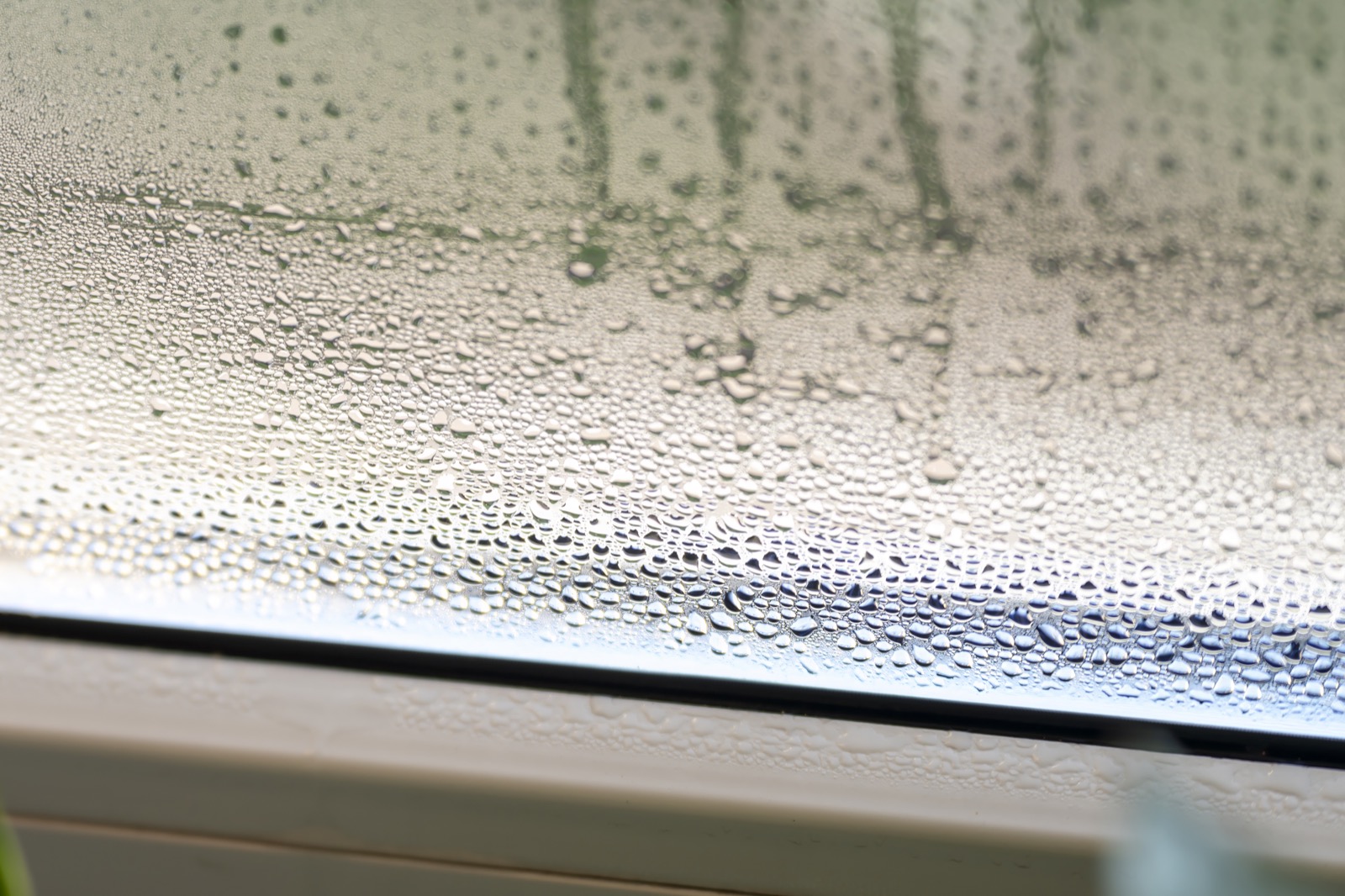
A unit's real-world output depends on room temperature and humidity, which is why peak 'max pint' ratings overstate cool-basement performance.
This is not a Vellgoo-specific gimmick; the entire industry markets the peak number because it is bigger. But it is exactly why a buyer who expects to empty a full tank twice a day in a cool 55% basement comes away thinking the unit is broken. It is doing what physics allows for that air. The takeaway: treat 64 pints as the ceiling, not the everyday rate, and size generously rather than to the headline. If you are unsure how much capacity your space actually demands, our companion guide on what size dehumidifier you need for a whole room walks through the math by square footage and dampness level.
Vellgoo Dehumidifier Not Collecting Water: What's Actually Happening
"Not collecting water" is the most common complaint you will read about Vellgoo units, and it is worth separating real defects from expectation mismatches.
Some of it is the capacity issue above: a unit sized to a 90/90 peak number will look anemic in a cool basement. Some of it is operational. The official Vellgoo troubleshooting guidance, as documented in the DryTank user manual, notes the machine simply will not pull water if the room temperature falls outside the operating range (about 41°F to 95°F), if ambient humidity is already at or below the target, if the tank is full, or if the air intake and exhaust are blocked. A dehumidifier set to 45% in a room that is already at 48% has almost nothing to do.
That said, the complaint pattern is real enough to take seriously. Independent reference reviews of Vellgoo's smaller DryTank line, such as the testing write-up at Essential Home and Garden, have raised questions about whether real-world removal matches the marketed pint class. Combine that with the absence of independent long-run reliability data, and the prudent move is to buy from a seller with a frictionless return window and test the unit hard in its first week, in the actual room, at the actual humidity you want to hold.
Common Dehumidifier Problems (And Which Apply Here)
The PAA question "what are the common problems with dehumidifiers" is worth answering directly, because most of them are universal and a few are specific to large units like this one.
Frost buildup in cool rooms
Run any compressor dehumidifier in a chilly garage and the coils can frost over, which kills efficiency. The Vellgoo counters this with auto-defrost, which periodically clears the coil per its product listing. It helps, but no refrigerant unit works well below roughly 40°F; for an unheated space that cold, a desiccant unit is the better tool.
Tank-emptying fatigue
A 64-pint-class machine fills a tank fast in humid conditions. The fix is the continuous drain-hose port: route a hose to a floor drain or sump and you never empty a tank again. This model is one of the units explicitly built around that workflow, which is its strongest practical selling point for a basement.
Efficiency and running cost
Dehumidifiers run for months, so efficiency compounds. ENERGY STAR notes that a certified unit uses about 20% less energy than a comparable conventional model, with efficiency measured by the Integrated Energy Factor in liters removed per kilowatt-hour, detailed in its key efficiency criteria. The Most Efficient 2024 badge on this Vellgoo puts it in the upper efficiency tier, which is a genuine point in its favor for a unit you will leave running all summer.
Reliability over the long haul
This is the category-wide risk, with nearly one in five units developing a fault by year four per Consumer Reports' reliability data. For an unrated brand, this is where your purchase protection and warranty terms matter most.
Vellgoo Max 64 Pint vs. a Larger Alternative
Capacity headroom is the safest hedge against the peak-vs-DOE gap described above. If your space is at the top of this unit's range, or genuinely larger, stepping up to a higher-capacity unit removes the guesswork. The AEOCKY 74 Pint, rated for 4,500 sq. ft., is the larger sibling we reviewed in this same comparison set, and it is the more comfortable pick for a sprawling or very damp basement where you do not want to run the machine flat-out.
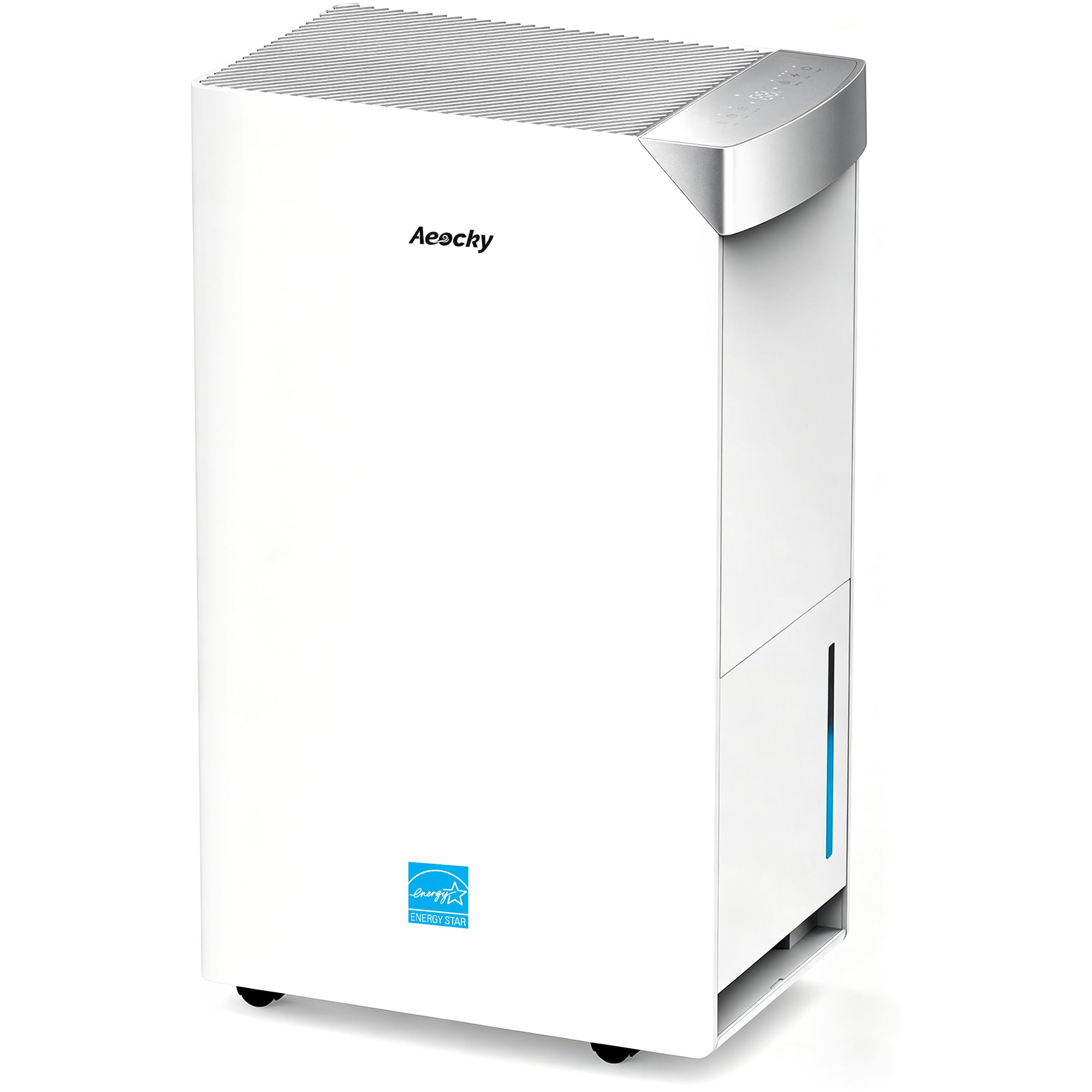
For spaces at the top of the Vellgoo's range, a higher-capacity unit like the AEOCKY 74 Pint gives you headroom against cool-room output losses.
The trade is the usual one: more capacity means a larger footprint, more noise at full tilt, and a higher upfront price. If your room sits comfortably inside 4,000 sq. ft. and stays in normal basement temperature ranges, the Vellgoo's efficiency and drain-hose convenience make it the more sensible buy of the two.
Who Should Buy the Vellgoo Max 64 Pint
This unit makes the most sense for a budget-conscious buyer with a moderately large, persistently damp basement or garage that stays above roughly 50°F, who plans to run it on a continuous drain hose and who buys through a seller with a clean return policy. The efficiency tier is real, the convenience features are complete, and at its price point it undercuts the established brands.
It is the wrong pick if you need documented long-term reliability, if your space runs cold, or if you were counting on the 64-pint headline as your everyday output. In those cases, either size up or choose a brand that appears in independent reliability data. For the bigger-picture buying decision across this category, our roundup of the best whole-room dehumidifiers for 2026 compares this Vellgoo against the other large-capacity units worth considering.
You can find the full published specifications on Vellgoo's official Amazon product listing.
Where to Buy
Related Posts