
Waterdrop LT1000PC review: a budget LG-compatible filter that punches above its price
If your LG refrigerator flashes "replace filter" and you wince at the $55 price tag on the genuine cartridge, you have almost certainly stumbled onto the Waterdrop LT1000PC. It promises the same fit, similar certifications, and a fraction of the cost. The catch with third-party fridge filters is that "compatible" can mean anything from "lab-certified equivalent" to "vaguely similar shape." So this Waterdrop LT1000PC review digs into what the manufacturer actually documents, what its certifications cover, and where a value cartridge sensibly fits in a household.
A quick note on how we work: we did not hands-on bench-test this filter in a lab. Zuqqis reviews are research-based. We anchor every claim on the manufacturer's published specifications and cross-check them against primary sources like NSF/ANSI standards, the EPA, and the genuine LG cartridge's official spec sheet. Where the evidence is thin, we say so rather than guess.
Where to Buy
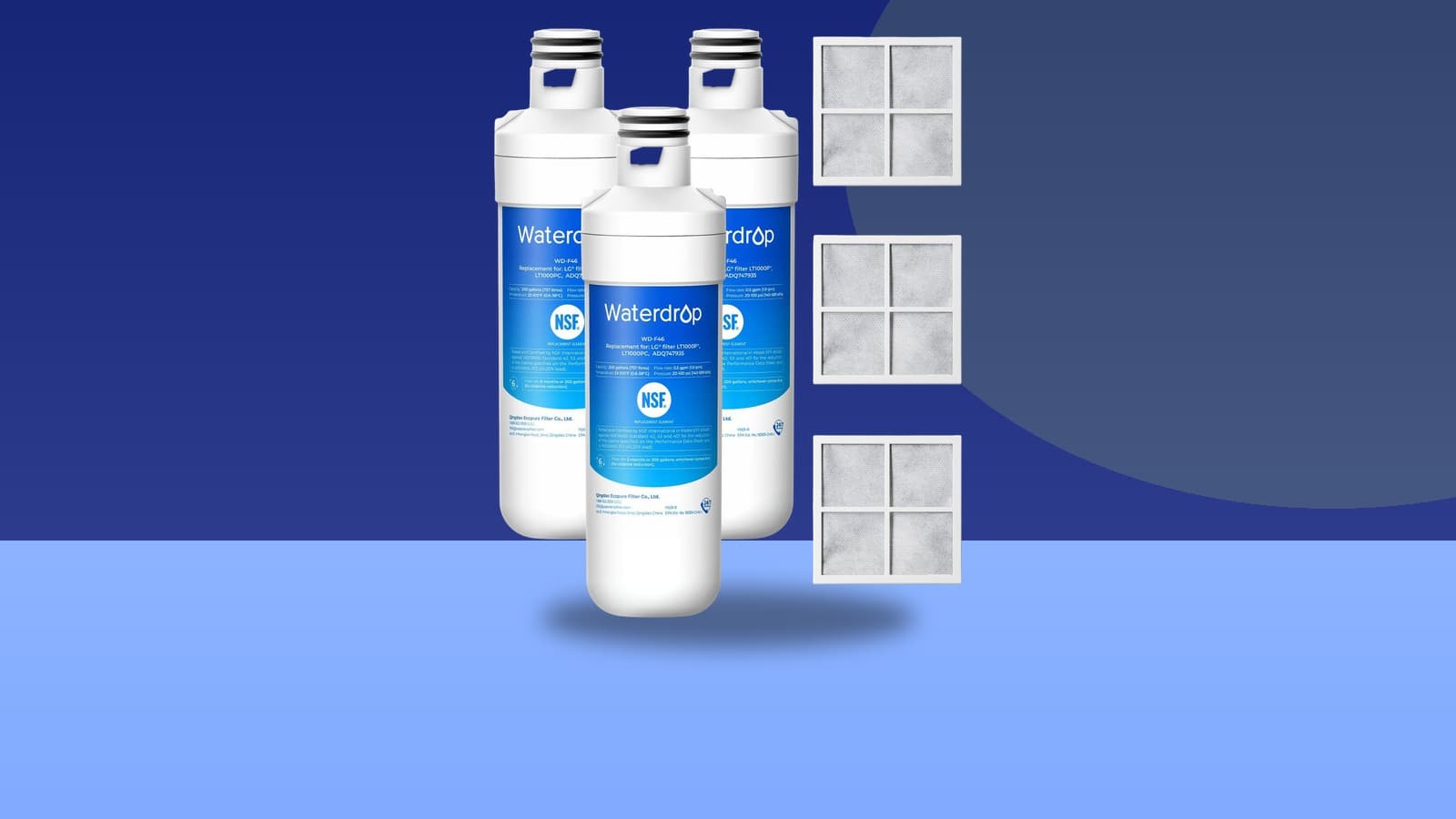
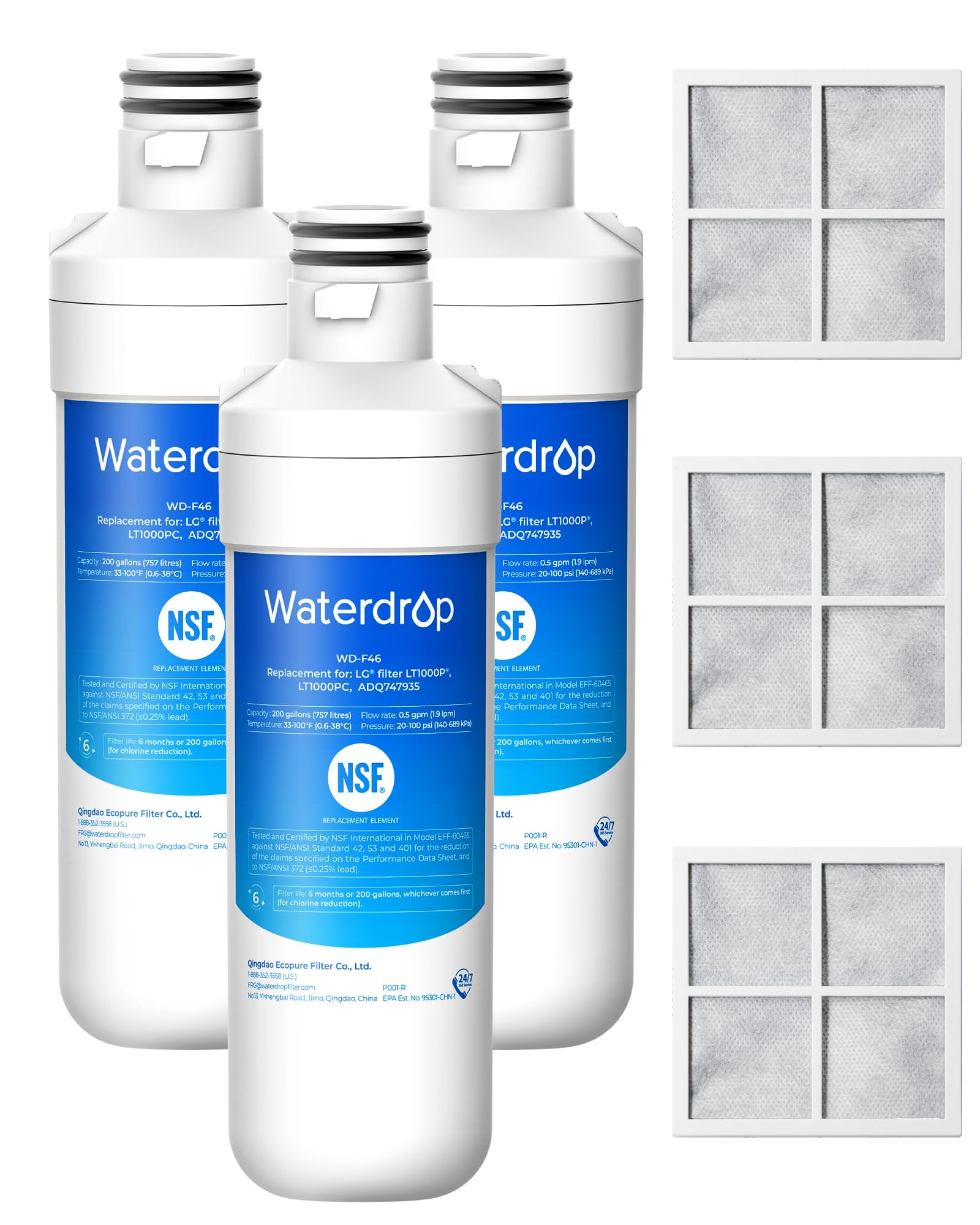
The Waterdrop "Plus" combo pairs three LT1000PC water cartridges with an LT120F-style fridge air filter.
What you're actually buying
The product reviewed here is the Waterdrop Plus LT1000PC combo: three water cartridges plus a fresh-air filter, sold as a single bundle. It is built as a drop-in replacement for the LG LT1000P family of twist-in refrigerator filters. Per Waterdrop's own LG LT1000P product page, the cartridge uses a coconut-shell carbon block with a 0.5-micron pore size and is rated to "service for up to six month or 200 gallons." That rating mirrors the genuine LG cartridge exactly, which LG lists as a 6-month / 200-gallon filter.
The air filter in the bundle is a twist-in fresh-air cartridge in the style of LG's LT120F, which LG also rates for roughly six months of use. It targets food odors inside the fridge cabinet rather than your drinking water, so think of it as a small bonus rather than the headline.
Is the LT1000PC the same as the LT1000P?
This is the most common point of confusion, and the answer is reassuring: when LG itself talks about its cartridge, the "P" and "PC" suffixes refer to the same filter in different packaging. As the appliance-parts retailer AllFilters explains on its LT1000P / LT1000PC listing, the genuine LT1000P ships in a paper box while the LT1000PC ships in a clamshell, and the LT1000PCS is the same part again under a slightly different SKU. The cartridge inside is identical.
Waterdrop borrows that naming on purpose. Its "LT1000PC" is a third-party cartridge engineered to fit the same refrigerators that accept the genuine LT1000P / PC / PCS. So if your fridge's manual or the old filter says any of those three codes, this Waterdrop is designed to drop straight in.
Does it fit your refrigerator?
Compatibility is where a value filter lives or dies, so check your model before you buy. Waterdrop lists the cartridge as compatible with LG LT1000P, LT1000PC, LT1000PCS, ADQ74793501, MDJ64844601, and the Kenmore equivalents 46-9980 and 9980. That covers a wide swath of LG French-door and side-by-side refrigerators sold over the last several years, including popular models like the LFXS26973S, LMXS28626S, and LFXS28596S referenced on the retail listings.
The practical test is simple: pull your current filter and read the code printed on it, or look up your fridge's model number in its manual. If you see LT1000P, LT1000PC, LT1000PCS, or ADQ74793501, you're in range. If your filter shows a different LG code (LT800P, LT700P, and so on), this is the wrong cartridge. Picking the right cartridge for your exact fridge is the core decision our guide to choosing a home water filter walks through step by step.
What the certifications cover (and what they don't)
Here is where you have to read carefully, because not all "NSF certified" filters are certified for the same things. Certification is contaminant-specific. A filter certified to reduce chlorine is not automatically certified to reduce lead, as NSF and the standards bodies repeatedly stress in their guidance on water-filter standards.
The standard Waterdrop LT1000PC carries NSF/ANSI 42 (chlorine, taste, and odor) and NSF/ANSI 372 (lead-free materials in the housing). That's a legitimate, verifiable certification, but it is an aesthetic-and-materials certification, not a heavy-metals health certification. NSF/ANSI 42 covers taste and odor; NSF/ANSI 53 is the standard that covers health-related contaminants like lead, mercury, and asbestos.
By contrast, the genuine LG LT1000P is certified to NSF 42, NSF 53, and NSF 401, which is why LG can claim reduction of "almost all mercury, lead and benzene" plus "some herbicides and pharmaceuticals" on its official spec page. Waterdrop does sell a higher-tier line that adds NSF 53 and NSF 401 claims (including PFAS reduction) on certain SKUs, so if lead or pharmaceutical reduction is your priority, confirm the exact box you're buying carries NSF 53 and 401 on the label, not just NSF 42.
Why does this matter so much? Because if your concern is lead, the EPA is blunt about it: to actually reduce lead you want a filter that lists NSF/ANSI 53 for lead reduction specifically, as spelled out in the agency's guide to identifying lead-reducing filters. For chlorine taste and odor on already-safe municipal water, an NSF 42 cartridge like the standard LT1000PC does the job. For a lead-bearing supply, you need the NSF 53 tier.
Brita vs Waterdrop: which should you pick?
People shopping LG fridge filters often also ask whether a Brita-style pitcher or dispenser would be simpler. They solve different problems. The Waterdrop LT1000PC is an in-line cartridge that filters every drop your refrigerator dispenses and freezes, automatically, with no jug to refill. A Brita system is a separate countertop or pitcher unit you fill by hand.
Both can carry NSF certifications, and Brita's premium "Elite" cartridges are certified for lead reduction; the right choice comes down to whether you want filtered water from the fridge or filtered water in a jug. If you have an LG fridge with a dispenser, replacing the cartridge is the path of least resistance.
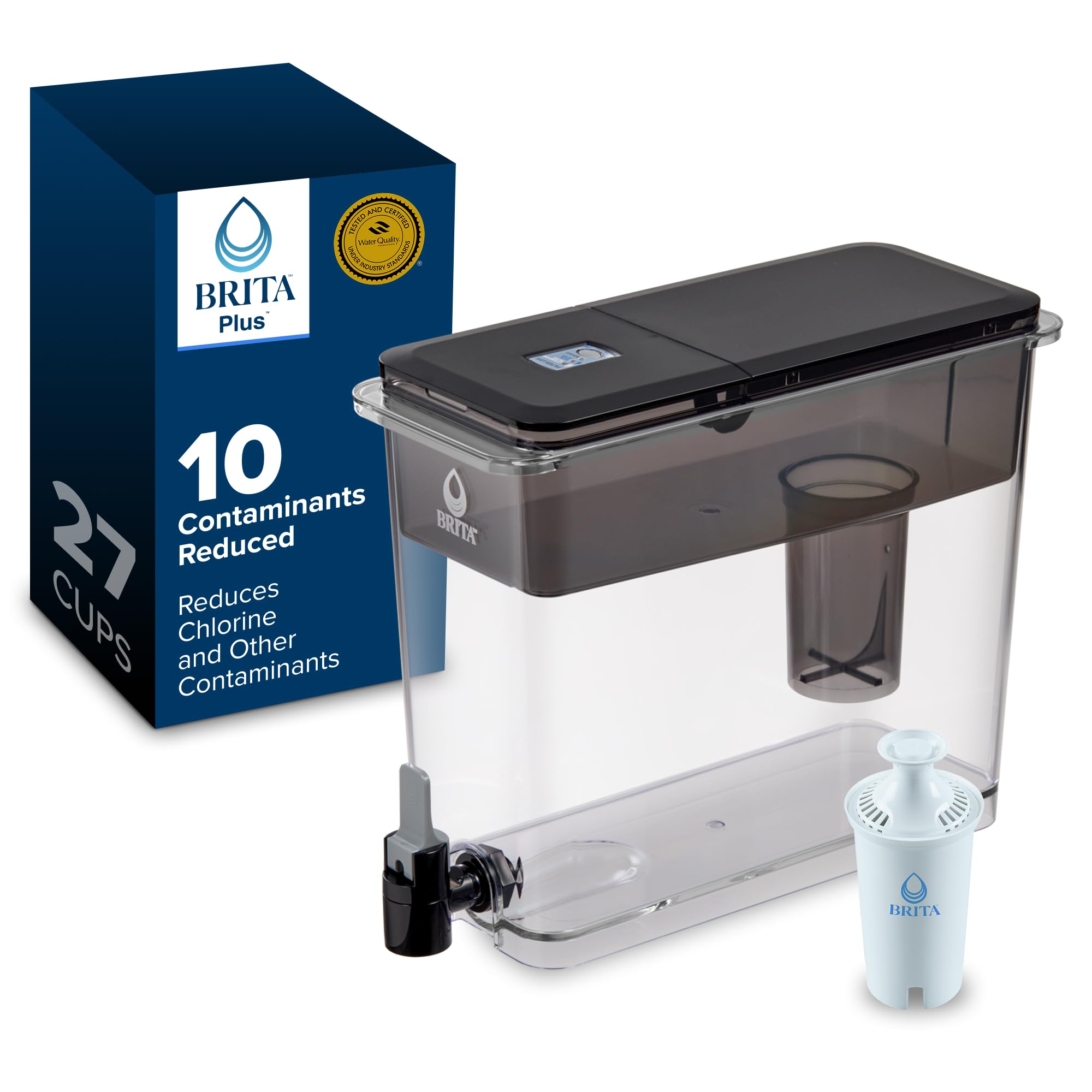
A countertop dispenser like the Brita UltraMax is a hand-filled alternative when you don't have a fridge dispenser, not a replacement for an in-line cartridge.
If you don't, or you want a backup, a dispenser like the one in our Brita UltraMax review is a sensible companion. Neither makes the other redundant; many households run both.
Is Waterdrop a trustworthy brand? Is it a Chinese company?
Two things to untangle here. First, do not confuse the water-filter brand with the unrelated insurance and healthcare-platform company also called "Waterdrop Inc." that trades publicly and is headquartered in Beijing. They share a name and nothing else.
The water-filter brand is a U.S.-headquartered company (Ontario, California) whose official brand page describes a U.S. design-and-distribution operation; like most filter makers in this price tier, the cartridges themselves are manufactured in China. Country of manufacture is far less important than independent certification: the meaningful trust signal is whether the specific cartridge you buy is NSF-certified for the contaminants you care about, and that certification is verifiable in NSF's public listings regardless of where the part is made. On that score, the LT1000PC's NSF 42 / 372 certification is real; just match the certification tier to your water.
Performance you can reasonably expect
Because we don't bench-test, we won't pretend to report flow-rate numbers we didn't measure. What the documentation supports: a coconut-shell carbon block with a 0.5-micron rating effectively reduces chlorine, taste, odor, sediment, rust, and turbidity, which is exactly what Waterdrop claims and what an NSF 42 certification backs. Carbon blocks are a mature, well-understood technology for taste-and-odor work.
The honest caveats are the ones that apply to every fridge filter. Replace it on schedule. The 200-gallon / six-month rating from both Waterdrop and LG is a balance of media capacity and hygiene, and authoritative guidance on filter replacement frequency notes that heavy-use or large households may need to swap every three to four months. A cartridge left in past its life stops adding capacity and can become a place for microbes to grow, so the schedule isn't a suggestion. The upside of a value filter like this one is precisely that the low per-cartridge cost makes staying on schedule painless.
Who it's for
The standard Waterdrop LT1000PC is a strong pick if you have a compatible LG (or Kenmore) fridge, your municipal water is already safe, and your goal is better-tasting, chlorine-reduced water at a fraction of the genuine-cartridge price, with a bundled air filter as a bonus. It is not the right pick if you specifically need certified lead or pharmaceutical reduction unless you deliberately buy the higher NSF 53 / 401 tier. For the bigger picture of where a fridge cartridge sits among pitchers, dispensers, and under-sink systems, our guide to the best home drinking water filtration lays out the full landscape.
Where to Buy
Specifications
- Compatible LG codes
- LT1000P, LT1000PC, LT1000PCS, ADQ74793501, MDJ64844601
- Compatible Kenmore codes
- 46-9980, 9980
- Filter media
- Coconut-shell carbon block, 0.5-micron pore size
- Rated life
- 6 months / 200 gallons (per manufacturer)
- NSF certifications (standard cartridge)
- NSF/ANSI 42 and NSF/ANSI 372
- Reduces
- Chlorine, taste, odor, sediment, rust, turbidity
- Bundle contents
- 3 water cartridges + 1 fresh-air filter (LT120F style)
- Installation
- Tool-free twist-in, no plumbing
Related Posts