Are Whole-Room Dehumidifiers Worth It? An Honest Cost-and-Benefit Breakdown
 Abdulwahab Suleiman·June 16, 2026
The short answer: it depends on what "whole-room" actually means to you
If you have ever stood in a clammy basement in July, watched condensation bead on a cold-water pipe, or caught that telltale musty smell creeping out of a closet, you have already met the problem a dehumidifier is built to solve. The question is not whether moisture control helps. It clearly does. The real question is whether a unit big enough to dry an entire room, or an entire home, returns enough value to justify what you pay up front and every month after.
Here is the honest version, before we get into the numbers. For most people fighting damp in a basement, a finished garage, a large open-plan living area, or a whole floor, a high-capacity room dehumidifier is genuinely worth it. The payoff is measured in avoided mold remediation, protected belongings, healthier air, and a house that simply feels better to live in. Where the math gets tricky is at the top end, where a permanently installed, ducted whole-house system can run several thousand dollars before it removes a single pint of water.
So the smart move is to separate two things people lump together under one search box, and pick the one that fits the job. We will walk through both, ground every claim in a real source, and tell you exactly where the line falls.
A quick note on how we evaluate. We do not run these units in a lab, and we will not pretend otherwise. What you are reading is a research synthesis: we anchor capacity and feature claims on manufacturers' published specifications, then cross-check costs, efficiency, and health guidance against independent and government sources like the U.S. EPA, ENERGY STAR, Consumer Reports, and the U.S. Department of Energy's testing standards. That transparency is the point. It is also why we date and qualify every price you see below.
Two very different machines hide behind one search
Type "whole house dehumidifier" into a search bar and you will get two completely different products mixed together, and confusing them is the single most common way people overspend.
The ducted whole-house system
This is the big-ticket option. A whole-house dehumidifier is a permanent appliance, usually installed in a basement, attic, or utility area, that ties into your home's HVAC ductwork to pull moisture from air across the entire house. ENERGY STAR describes these models as units that "use your home's air ducts to dehumidify one or more rooms and are often permanent," in contrast to portable units that handle a single space and move where you need them (ENERGY STAR).
The appeal is real: hands-off drainage with no buckets to empty, quiet operation because the machine lives away from your living space, and the ability to hold a steady target humidity across every room at once. The catch is the price. Installed costs for a whole-house system typically land between roughly $1,500 and $3,500, and can climb to $4,600 once you add complex ductwork, a condensate pump, electrical work, and permits, according to 2026 cost guides from HomeGuide and Angi. Of that, equipment alone runs roughly $1,200 to $2,600, with professional installation adding $500 to $2,000 (figures current as of 2026; expect regional variation).
The high-capacity portable unit
This is what most people in the cluster are actually shopping for, and what the rest of this article focuses on. A "portable whole-house" or whole-room dehumidifier is a standalone, plug-in appliance rated to cover a large footprint, often 2,500 to 4,500 square feet, that you roll into the space that needs it. No HVAC technician, no duct cutting, no permit. You set a target humidity, attach a drain hose if you want continuous operation, and walk away.
The price gap is enormous. A large-capacity portable unit is generally a few hundred dollars rather than a few thousand. For a single problem area like a basement, that difference alone often settles the "worth it" question before you weigh anything else.
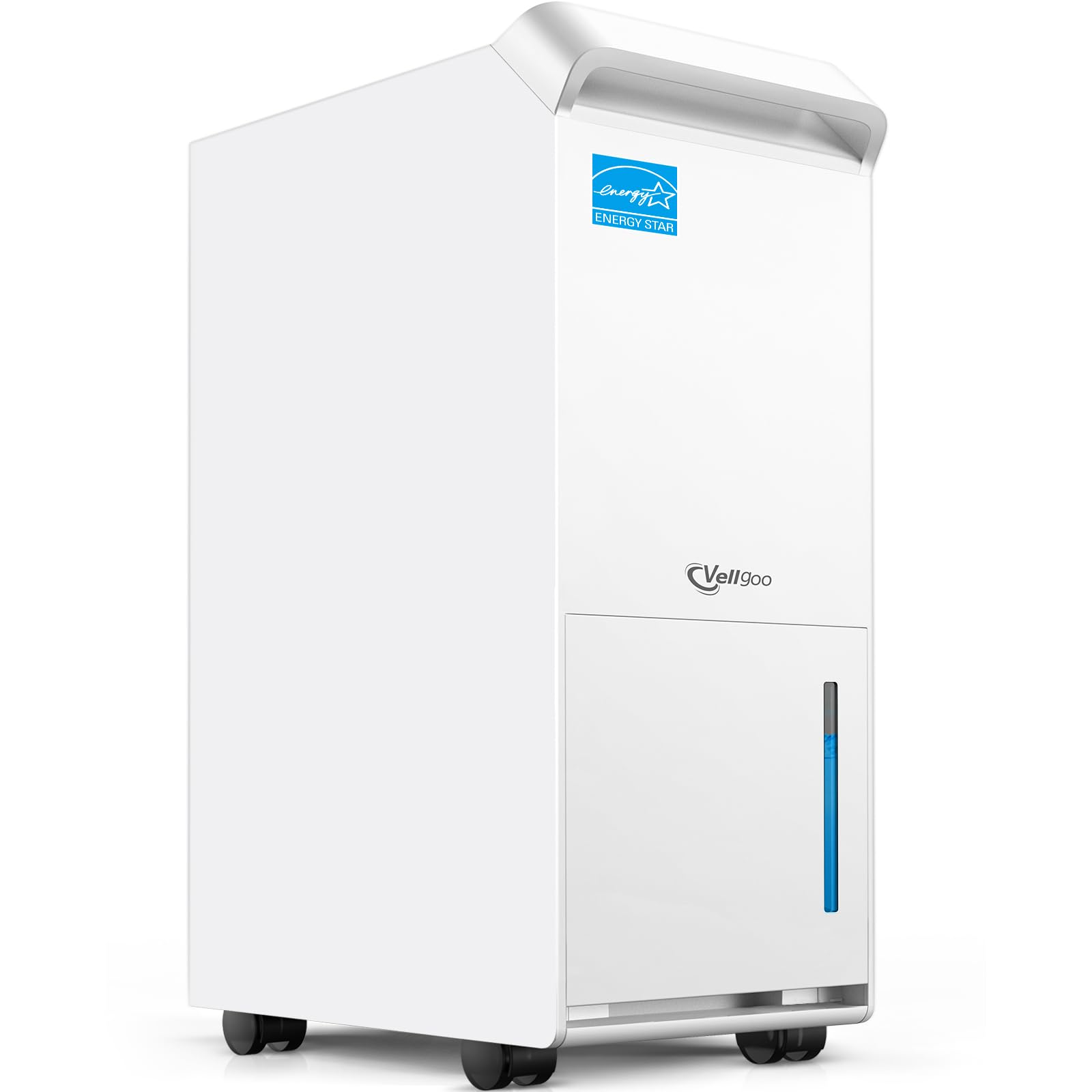
A high-capacity portable unit like the Vellgoo Max 64-pint covers up to 4,000 sq. ft. without any ductwork.
If you are weighing specific models, our pillar guide to the best whole-room dehumidifiers for 2026 compares the leading high-capacity portables head to head, and our deep dive on the Vellgoo Max 64-pint is a good example of what an energy-efficient large-room unit looks like in practice.
What you actually get for the money: the pros and cons
Whether a dehumidifier is "worth it" comes down to what damp is costing you now versus what control costs you going forward. Here is the honest balance sheet.
The case for buying one (the pros)
The strongest argument is health and structural protection, and it is not marketing. The EPA is unambiguous: to discourage mold, you should "keep indoor humidity below 60 percent (ideally between 30 and 50 percent) relative humidity" (EPA). Above 60% relative humidity, mold can colonize any organic surface that also carries a little dust. A dehumidifier is the most direct tool for holding a damp space inside that safe band year-round.
The other pros stack up quickly:
- It protects what you own. Sustained damp warps wood, rusts tools, mildews fabric, and ruins stored cardboard and electronics. Avoiding even one mold remediation job, which routinely runs into four figures, can pay for the appliance outright.
- The air feels better. Lower humidity makes the same temperature feel cooler and less stuffy, which is why dehumidifying can let you lean less on air conditioning in shoulder seasons.
- It deters pests and odors. Dust mites and many pests thrive in humidity above 50%, and that "basement smell" is largely a moisture problem.
- Modern units are far cheaper to run than they used to be. An ENERGY STAR certified dehumidifier "uses 20% less energy" than a conventional model of the same capacity (ENERGY STAR). That efficiency gap compounds over a humid season.
The case for waiting (the cons)
No honest answer skips the downsides.
- Up-front cost, especially for ducted systems. As covered above, a permanent whole-house install is a $1,500-to-$4,600 project (HomeGuide). That is a hard sell if your moisture problem is confined to one room.
- It adds to your electric bill. A portable unit drawing around 400 watts and running 10 hours a day costs roughly $19 a month at $0.16 per kWh, per Jackery's running-cost breakdown. Lighter use can keep it under $10. Rates vary widely across the U.S., so your number could be lower or notably higher.
- Maintenance is on you. Filters need cleaning, tanks need emptying (unless you run a drain hose), and the coils need airflow. Neglect cuts performance.
- It treats the symptom, not always the source. If water is actively intruding through a foundation crack or a failed grade, a dehumidifier manages the air but does not fix the leak. Diagnose the source first.
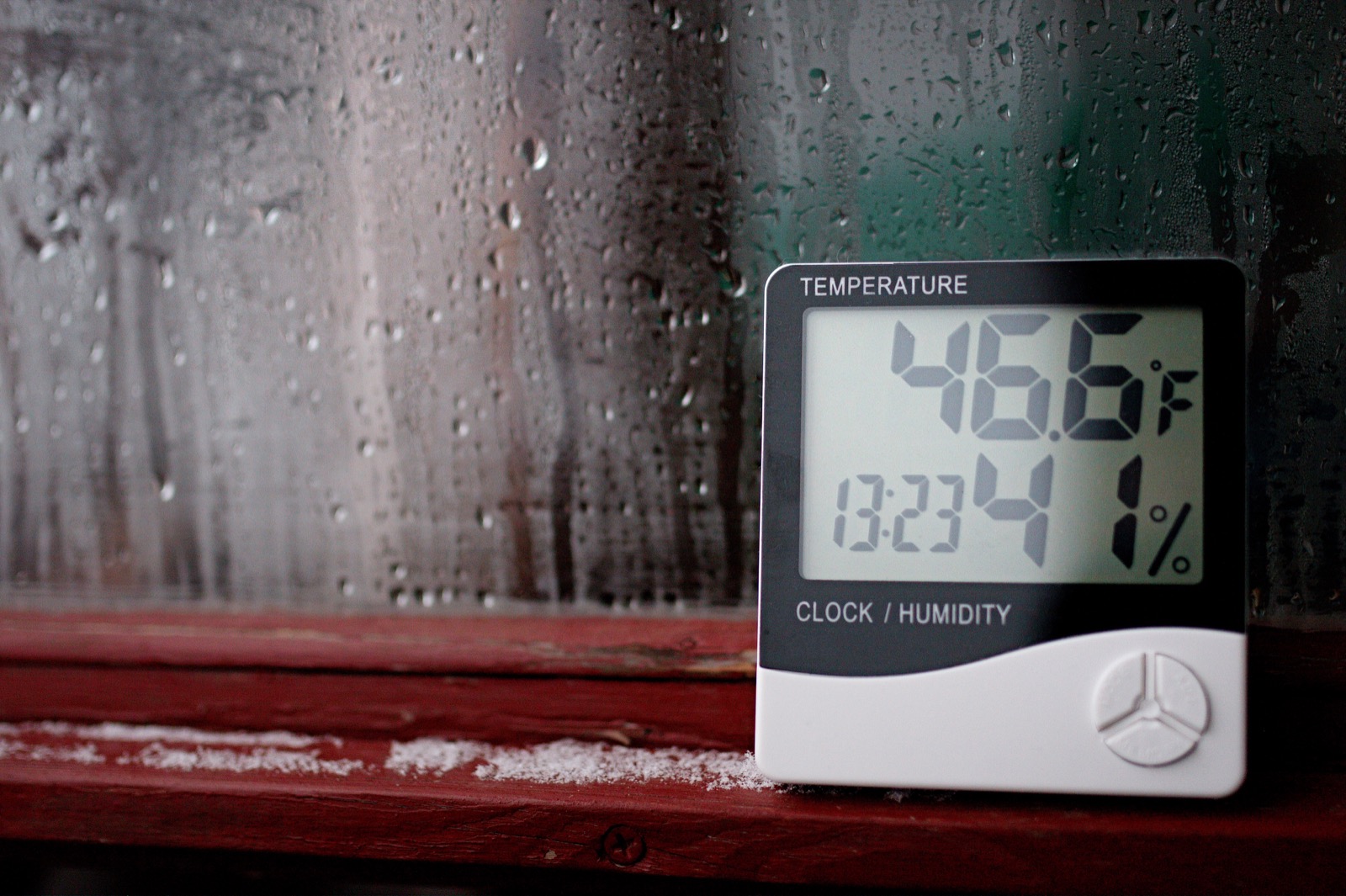
A $10–$50 hygrometer tells you whether you actually have a humidity problem before you spend on a solution.
Whole house dehumidifier vs portable: which is the better value?
This is the heart of the decision, so let us be concrete about when each one wins.
When the ducted whole-house system earns its price
A permanent ducted system makes sense when the damp is genuinely whole-home, not room-specific. Think of a humid climate where every floor sits above 55% RH through summer, or a household where convenience and silence matter enough to justify the spend. Because these units route through your ductwork, they can hold a consistent target across many rooms at once, something no single portable can match. Independent reviewers at Bob Vila note that whole-house models shine precisely in that hands-off, multi-room scenario.
There is also a long-run efficiency argument. Ducted whole-home units, operated as a single integrated system, can be more efficient per pint removed than running several portables scattered around a house, which is one reason they appeal in large, persistently damp homes. The trade is the install cost and the loss of portability.
When the high-capacity portable wins
For the vast majority of single-problem-area buyers, the portable is the better value, and it is not close. If your trouble is one basement, one garage, one large room, or one floor, a large-capacity plug-in unit delivers most of the moisture-control benefit at a fraction of the price, with no installer and no permanent commitment.
Crucially, the efficiency gap has narrowed. The best modern portables now carry the same ENERGY STAR certification as built-in systems, and manufacturers build them around high-efficiency rotary compressors and improved coil designs. The Vellgoo Max 64-pint, for instance, is listed as an ENERGY STAR Most Efficient model and is advertised to deliver "up to 50% higher energy efficiency" than older designs, with continuous drainage via a 6.56-foot hose so it can run unattended much like a built-in unit (full specs on the manufacturer's Vellgoo product page). That combination, large coverage plus low running cost plus set-and-forget drainage, is exactly why a portable answers the "worth it" question for so many people.
If energy efficiency is your deciding factor, our review of the Vellgoo Max 64-pint digs into how its ENERGY STAR rating translates into real seasonal running cost, and how it stacks up against the other large-room contenders in the 2026 buyer's guide.
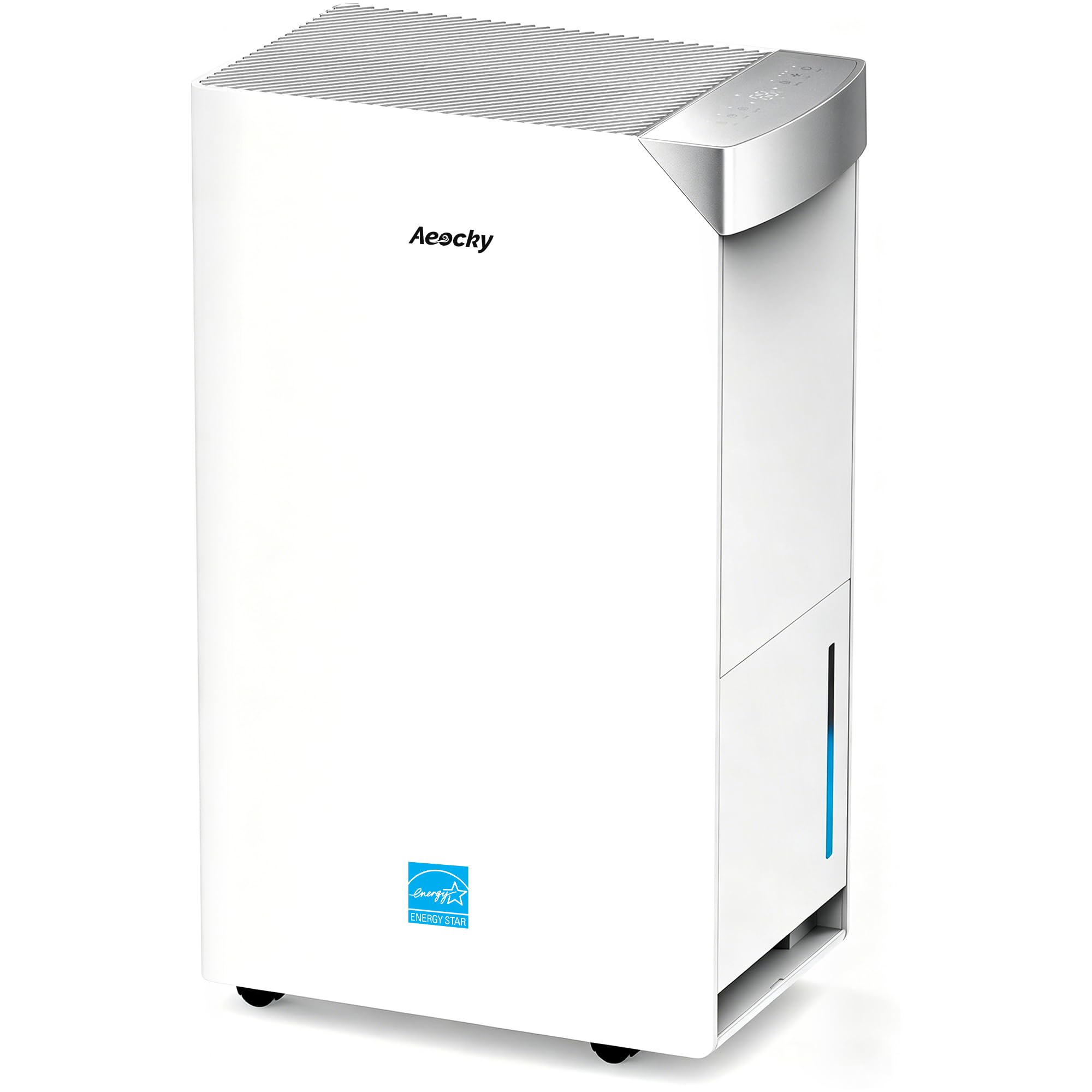
High-capacity portables like the AEOCKY 74-pint cover up to 4,500 sq. ft., rivaling a built-in system's reach without the install cost.
Getting the size right is what makes it "worth it"
A dehumidifier that is too small for the space will run constantly, cost more to operate, and still lose the battle. Buy the wrong size and even a good unit feels like a waste of money. So sizing is not a detail. It is the difference between a worthwhile purchase and a regret.
Why the numbers on the box changed
If you are comparing an old unit to a new one and the capacities look strange, here is why. The Department of Energy revised its dehumidifier test procedure, lowering the test temperature to 65°F to better reflect typical basement conditions. As Sylvane explains, the updated conditions are 65°F and 60% humidity, milder than the previous 80°F-range standard, so a unit tested under the new standard reports a smaller pint rating than the same machine would have under the old one. In practice that means a newer 50-pint unit is not weaker than an older 70-pint of similar build; the ruler changed.
How to match capacity to your space
Capacity is rated in pints of water removed per 24 hours, and the right number depends on both square footage and how damp the space is. Consumer Reports advises sizing by both factors: a merely "slightly damp" room needs far less capacity than one that is "extremely wet" with standing-water signs. As a rough guide, even a 400-square-foot room that stays genuinely wet can justify a 30-to-39-pint unit, and a large or very damp area pushes you toward the 50-pint-and-up class.
For a whole room or a whole floor, that math points squarely at the high-capacity portables in this cluster, which are rated for thousands of square feet. We work through the full sizing method, step by step, in our companion guide on what size dehumidifier you need for a whole room. Get this part right and the appliance pays you back. Get it wrong and even the best unit underdelivers.
Running cost: the number that decides "worth it" over a season
A dehumidifier's sticker price is a one-time event. Its electricity draw is forever, so it deserves a clear look.
The good news is that running cost is modest and controllable. As noted above, a 400-watt portable running 10 hours a day costs about $19 a month at $0.16/kWh (Jackery). You can drive that lower by doing three things:
- Buy ENERGY STAR certified. The 20% efficiency advantage over a conventional unit is free money over a humid season (ENERGY STAR).
- Set a sensible target, not the lowest possible. Aim for the EPA's 30–50% band rather than chasing a bone-dry 35%. Once you are below the mold threshold, pushing lower just burns power for no health benefit (EPA).
- Use auto/comfort mode. Letting the unit cycle to hold a humidity setpoint, rather than running flat-out, cuts both runtime and cost.
The way efficiency is measured matters here too. ENERGY STAR rates dehumidifiers by Integrated Energy Factor (IEF), "in liters of water removed per kilowatt-hour," and a higher IEF means a more efficient machine (ENERGY STAR). When you compare two units of the same pint rating, the one with the higher IEF will quietly cost you less every month it runs. That single spec is worth more attention than most shoppers give it.
A back-of-envelope break-even for the portable
It helps to put the two product types on the same line. Take a typical high-capacity portable at a few hundred dollars against a mid-range ducted install. Using the figures cited above, a portable might cost you on the order of $19 a month in a humid month and $0 in the dry off-season, so call it roughly $80 to $120 across a single humid season of heavy use. A ducted system erases the tank-emptying chore and runs across the whole house, but you start from a $1,500-to-$4,600 hole before it removes a drop (HomeGuide). For a single damp basement, the portable's running cost would have to compound for many seasons before it approached the ducted system's up-front spend — which is the arithmetic behind the recommendation. The ducted unit only flips the math when it is genuinely doing whole-home work that several portables can't, or when the convenience and silence carry real value for your household.
Installation: DIY portable or call a pro?
Your answer to "worth it" should factor in what it takes to get the thing working, and the two product types could not be more different here.
A portable needs no installation at all. Unbox it, roll it into place, plug it in, and optionally clip on a drain hose so you never empty a tank. That is the whole process. It is the strongest practical argument for the portable route.
A ducted whole-house system is the opposite. Industry cost guides are blunt that this is not a weekend DIY job: an HVAC team typically spends 3 to 6 hours on a standard install, longer when new duct runs, a condensate pump, or a dedicated circuit are involved, with labor commonly running $400 to $1,200 on top of the equipment (Angi). The guides also warn that improper installation can cause expensive damage, so professional install is strongly recommended. If you are searching "whole house dehumidifier installation near me," budget for that labor as part of the true cost, and weigh it honestly against a portable you could set up in five minutes.
So, are whole-room dehumidifiers worth it?
Pulling it together, here is the verdict.
For a defined problem area, a basement, a garage, a large living space, or a single floor, a high-capacity portable dehumidifier is almost always worth it. It removes you from the mold-risk zone the EPA warns about, protects belongings and structure, makes the air feel better, and modern ENERGY STAR models keep the monthly bill modest. At a few hundred dollars with zero installation, the value case is strong and the downside is small.
A permanently ducted whole-house system is worth it for a narrower group: homeowners with genuine whole-home, multi-room moisture in a humid climate, who value silence and total hands-off operation enough to absorb a $1,500-to-$4,600 install. For everyone else, that spend is hard to justify when a portable solves the actual problem.
The deciding move is to be honest about the size and source of your moisture. Measure your humidity with a cheap hygrometer, identify which spaces are actually above 50–60% RH, fix any active water intrusion first, then size the unit to the wettest space. Do that, and the right dehumidifier stops being an expense and starts being one of the better-value comfort and protection upgrades you can make.
When you are ready to choose a specific model, start with our 2026 guide to the best whole-room dehumidifiers, then read the Vellgoo Max 64-pint review to see what an efficient, large-coverage portable looks like up close.
Related Posts